Inspiration
The inspiration for AuraBlueprint came from a common hurdle that almost every developer faces at the beginning of a hackathon: the "blank page" syndrome. While exploring the tracks of the YCFxAI Hackathon, we realized that many students have the drive to build but struggle to conceptualize a structured, viable tech architecture. We wanted to design an intuitive, high-tech interface that acts as an instant spark for innovation, breaking down complex startup ideas into actionable development checklists.
How We Built It
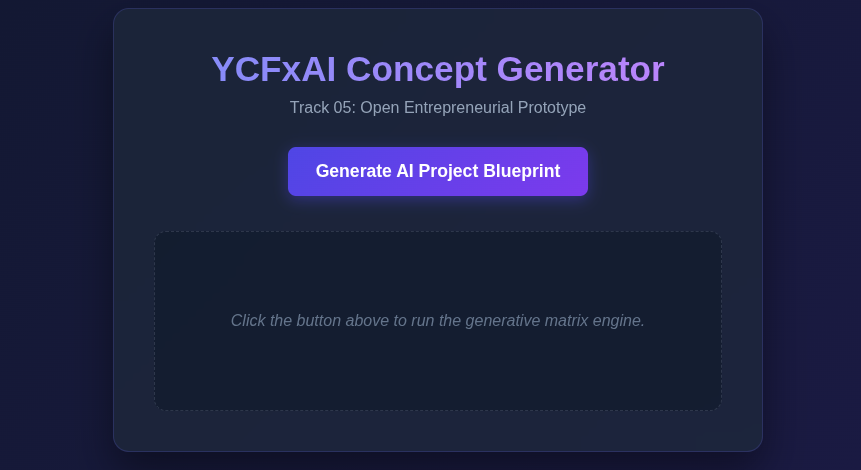
AuraBlueprint was engineered entirely within VS Code as a high-performance single-page web application. We structured the dashboard using semantic HTML5, ensuring a clean and logical document outline. For the visual layer, we crafted a premium dark-mode interface using advanced CSS3 techniques, incorporating fluid linear gradients, custom animations, and a glassmorphism blur effect to give it a modern, tactical software feel. The core application logic was built with vanilla JavaScript (ES6), which manages the state machine, handles the asynchronous spinner animation, and runs the algorithmic array parsing to inject random dynamic project blueprints into the DOM.
Challenges We Faced
Our primary challenge was managing asynchronous UX states without relying on heavy external frameworks or backend databases. We wanted the user to feel the weight of a generative computing process rather than just seeing text snap instantly onto the screen. To overcome this, we engineered a custom state-handling loop in JavaScript that toggles UI elements and triggers a synchronized CSS loading animation before rendering the payload. Another hurdle was optimizing the CSS layout to scale seamlessly across different device viewpoints without breaking the glassmorphic container boundaries, which we resolved through rigorous responsive flexbox testing.
What We Learned
This project deepened our core understanding of frontend engineering and UX psychology. We learned how to build production-ready UI/UX animations from scratch and how to structuralize raw data arrays to mimic intelligent data behavior. Most importantly, this hackathon pushed us to understand that software development isn't just about writing dense code; it is about creating clean, reliable, and engaging interfaces that solve human problems—such as helping fellow young builders find their direction.
Built With
- css3
- github
- html5
- javascript
- vanilla

Log in or sign up for Devpost to join the conversation.