Inspiration
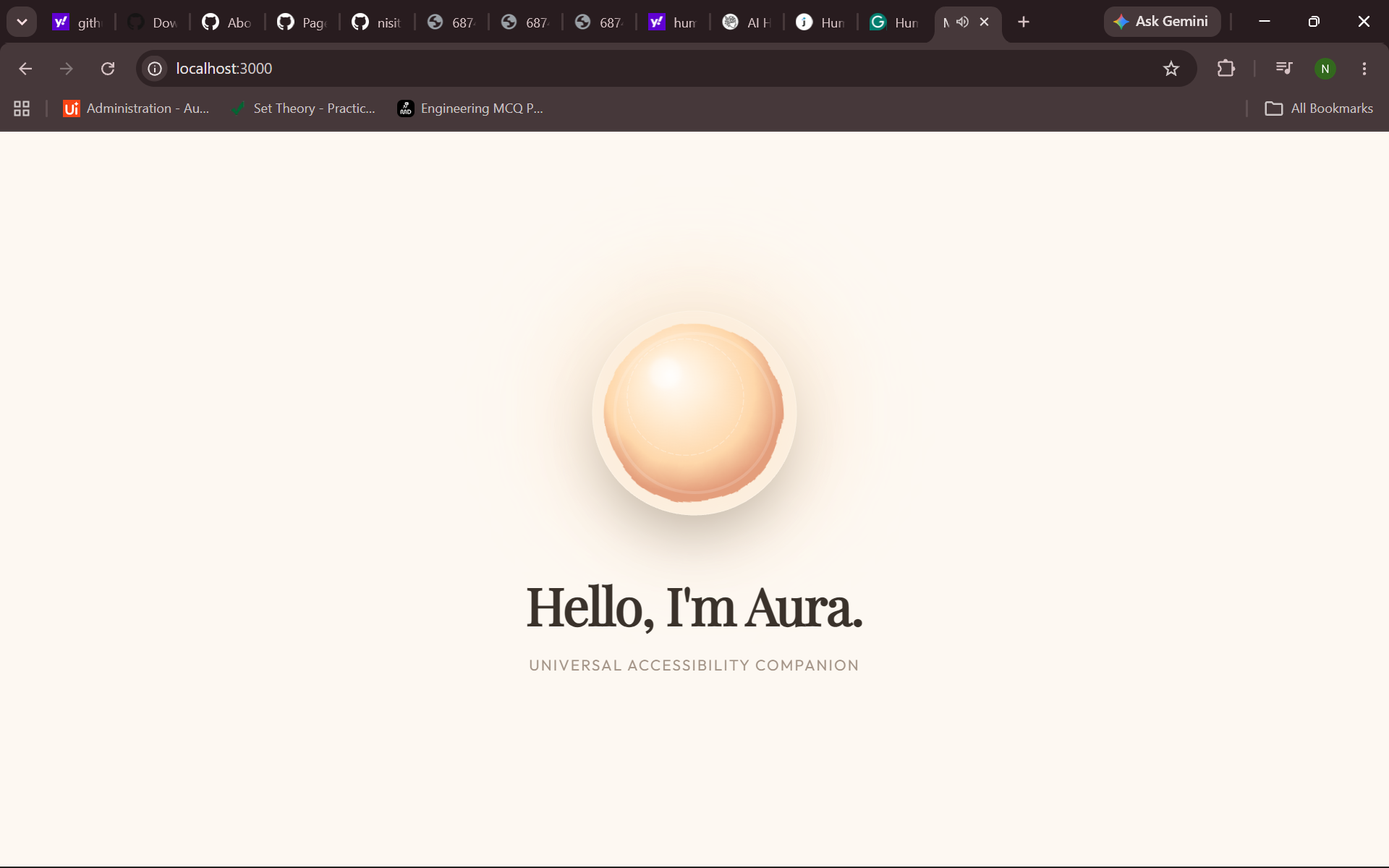
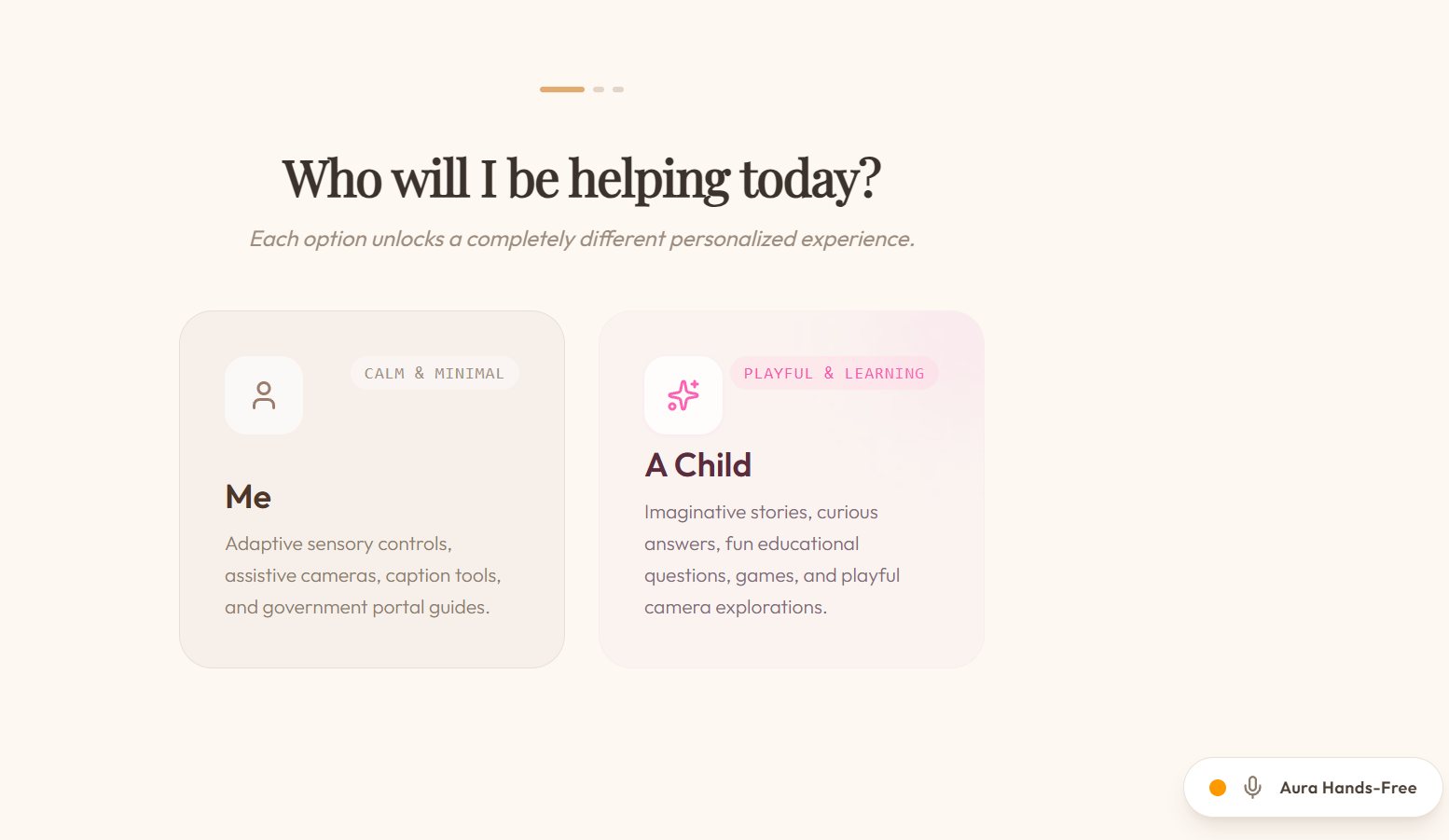
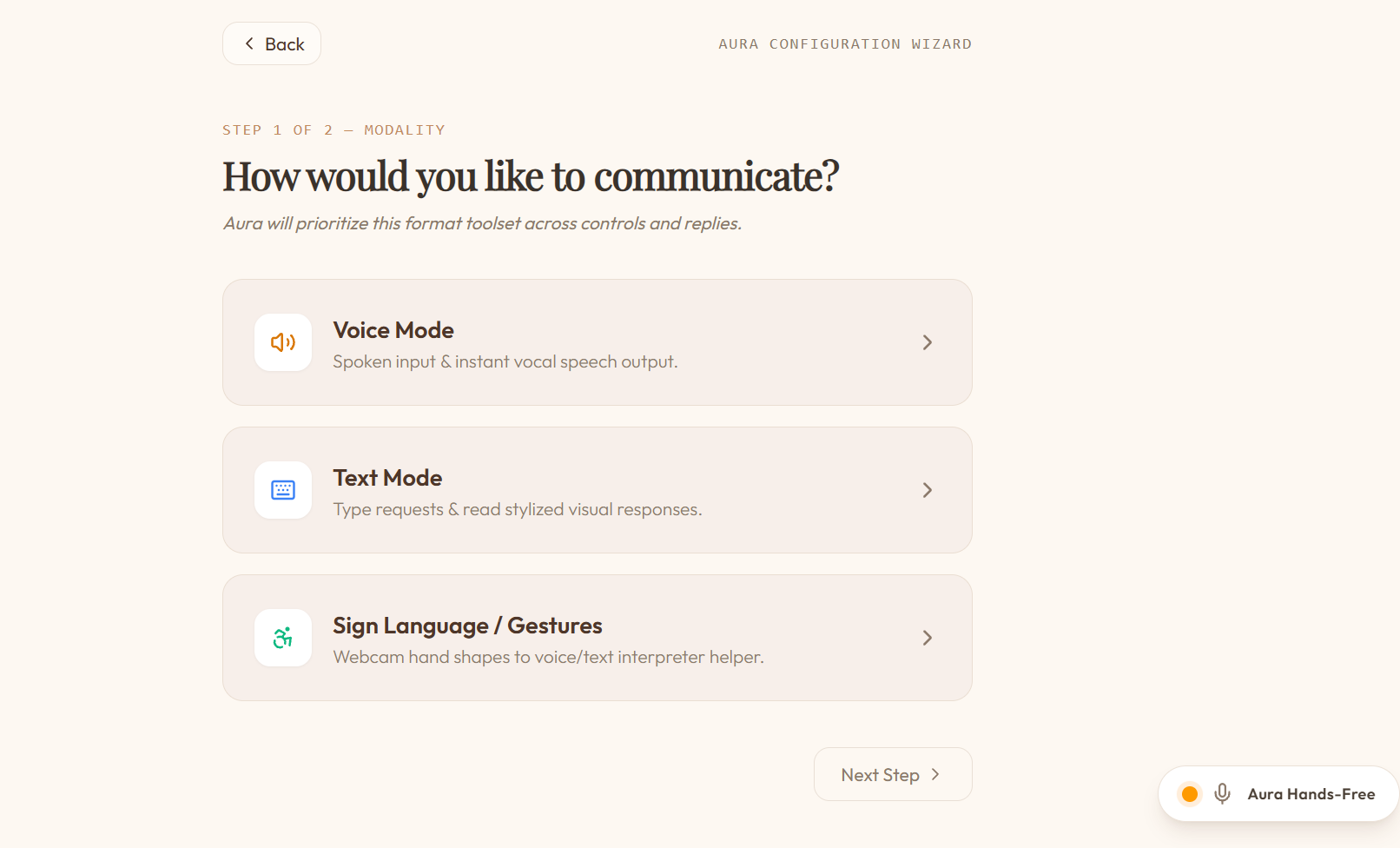
People with disabilities often deal with unnecessary barriers when they’re using digital services, government portals, and regular everyday places. While a lot of accessibility tools solve one little thing at a time, very few actually give a unified experience, one that can “read” what the person is seeing around them, explain complicated stuff, and also automate tasks in the real world. We kind of imagined AURA as more than a typical AI assistant it’s like an intelligent accessibility companion that helps users move around, make sense of information, and finish daily activities with more confidence. and, honestly, more independence too.
What it does
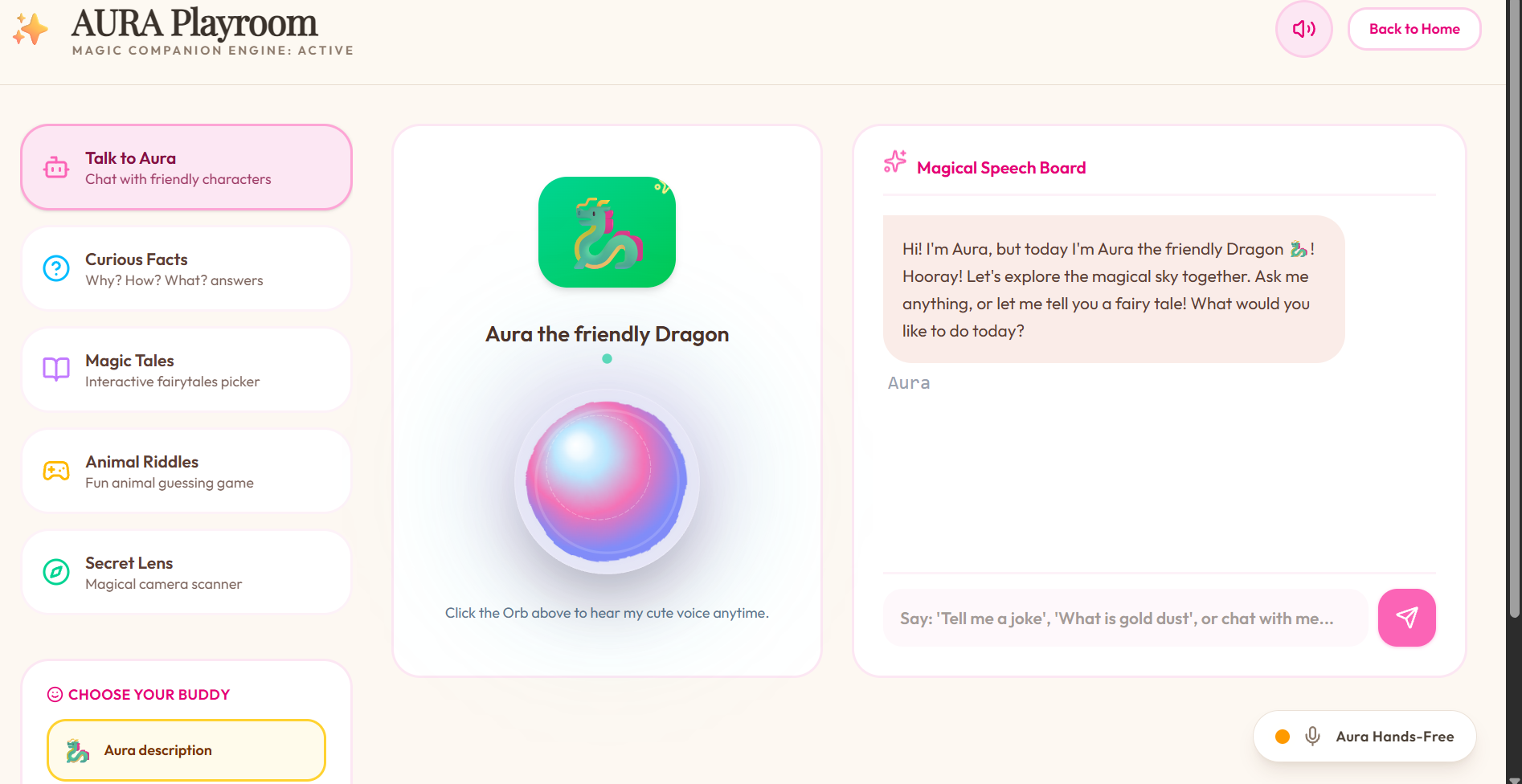
AURA blends multimodal AI with thoughtful automation, so it can deliver end-to-end accessibility support.
Its main abilities include:
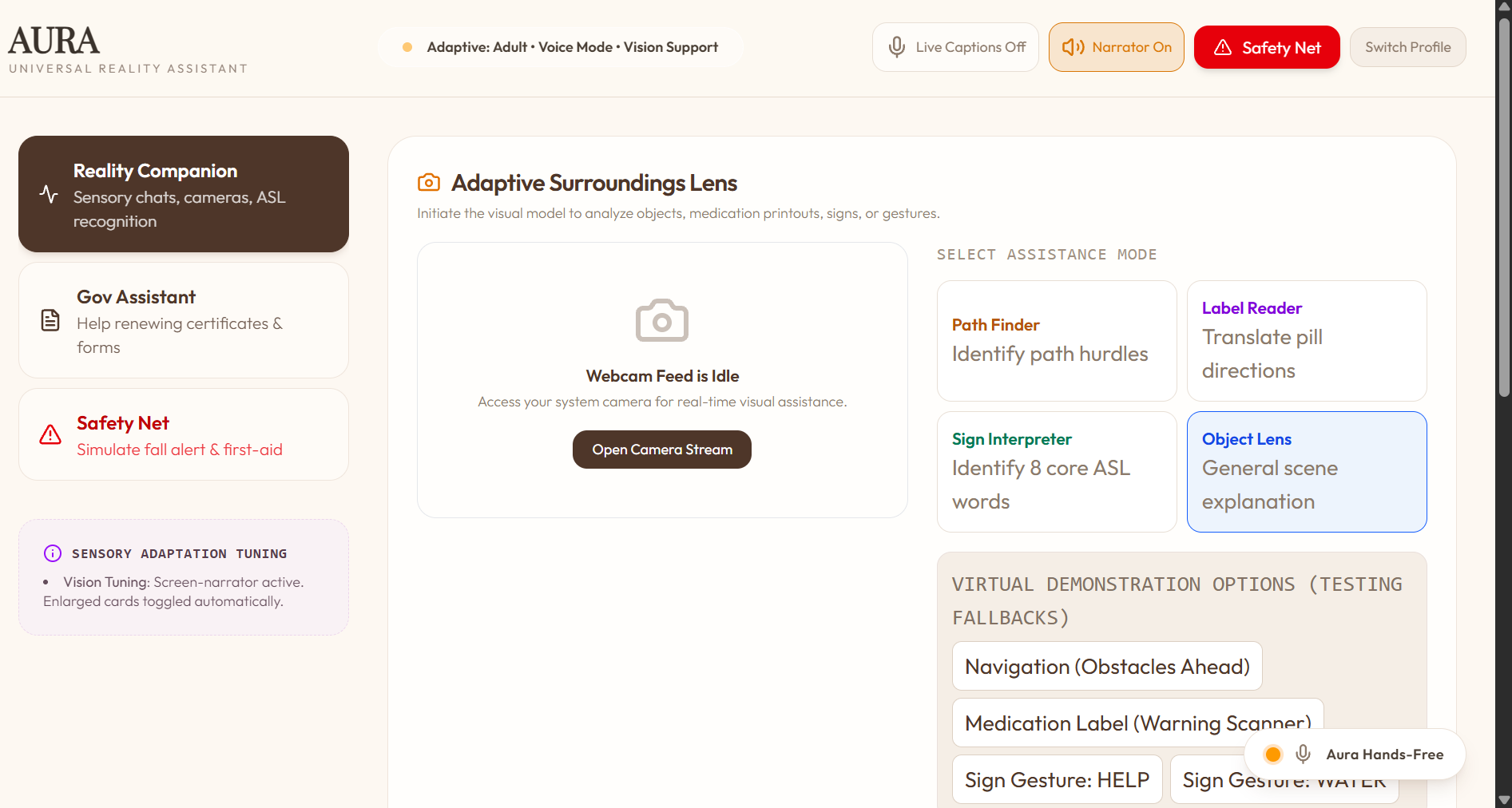
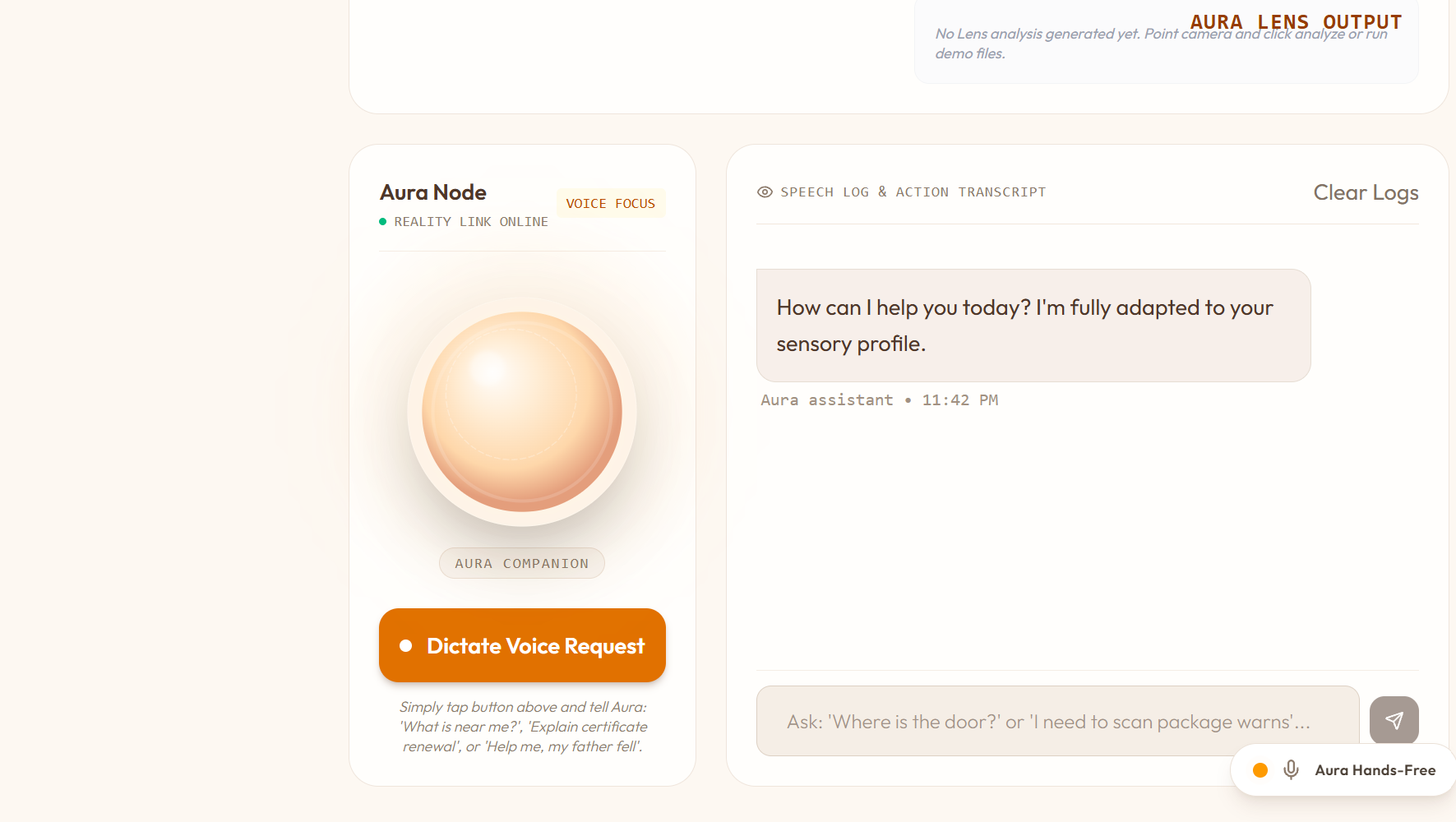
- Reality Companion that understands the user’s surroundings through computer vision.
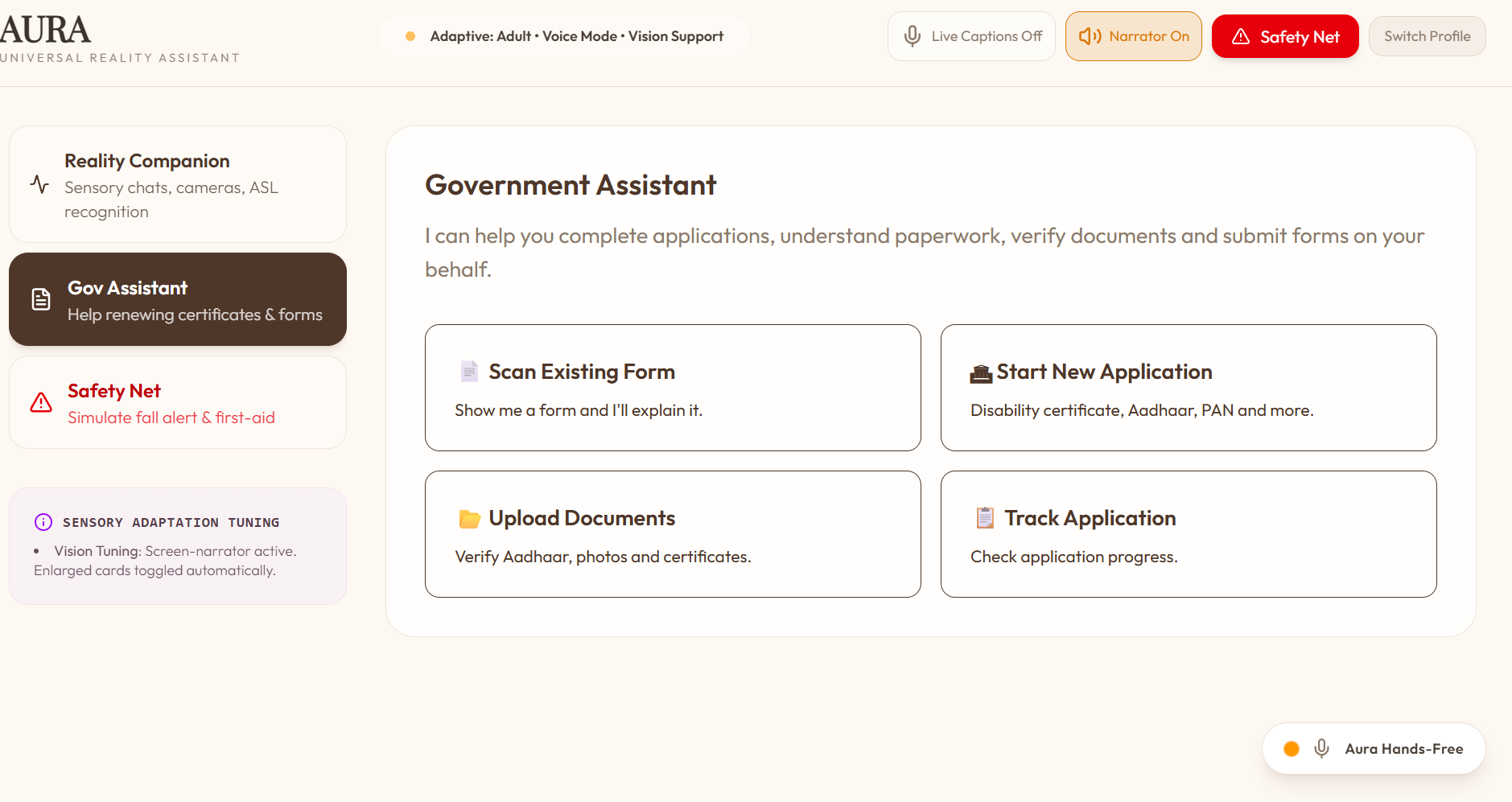
- Government Assistant that makes government paperwork less confusing , explains forms, and helps users step by step through applications.
- Document Intelligence that looks at uploaded documents, pulls out key details, and then describes them in plain language.
- Aura Profile Vault that securely stores verified user information, so the person doesn’t have to repeat the same data entry again and again.
- Eligibility Engine that suggests government schemes and benefits based on the user’s profile.
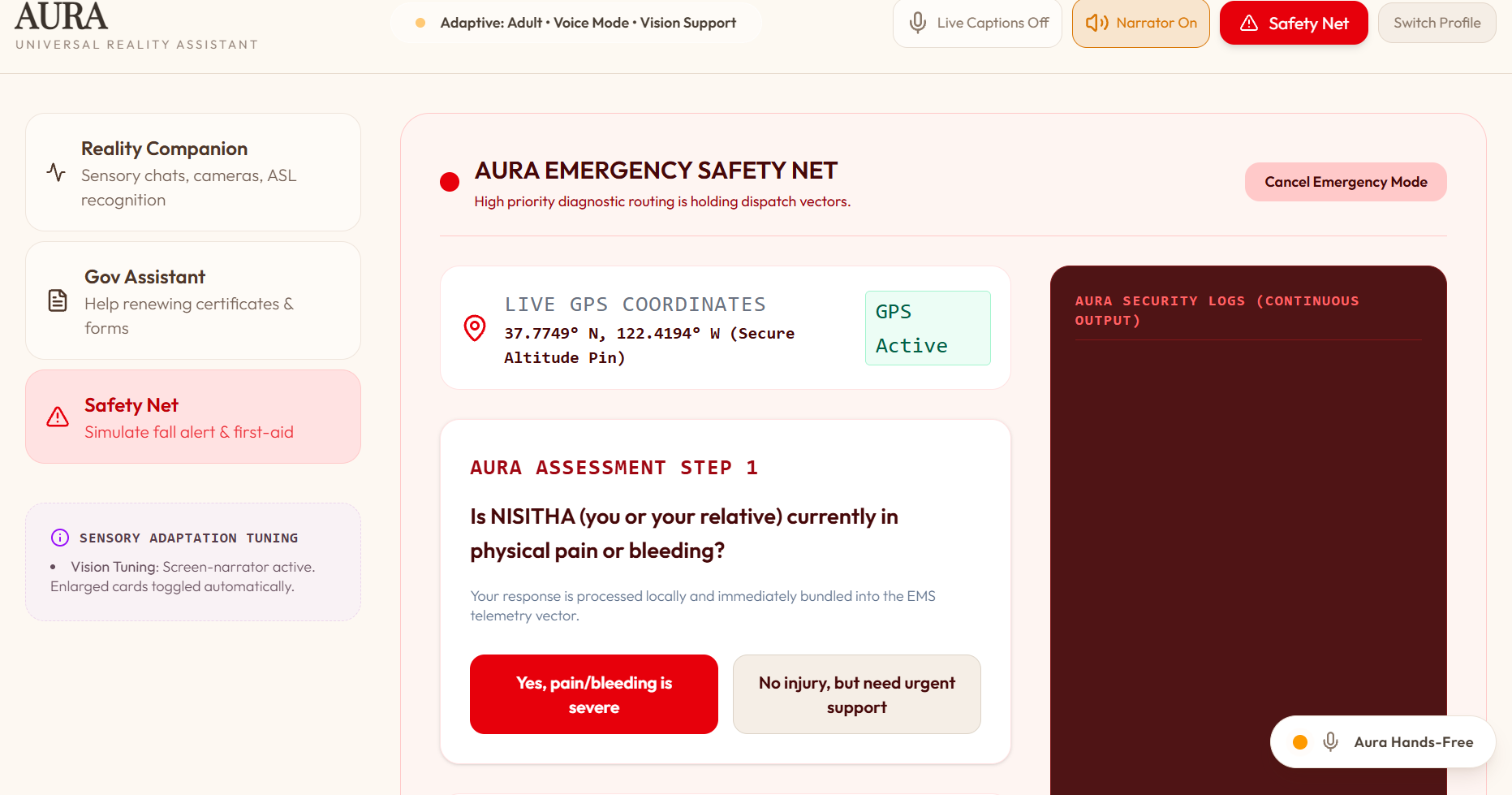
- Emergency Assistance designed to provide accessible support during high-pressure, critical situations.
- UiPath Automation that takes care of repetitive workflows such as browsing government portals, filling forms, uploading documents, and tracking applications
How we built it
So we built AURA with React TypeScript, Vite and Tailwind CSS… yeah, all together, to make it feel responsive and accessible for different people not just “works on my machine” kind of situation. For the intelligence layer we used the Gemini API plus Gemini Vision, so it can do conversations, understand scenes, interpret what it’s looking at, analyze documents, and give contextual help. We also rely on OCR , to pull structured information out of scanned papers. Not the fancy part, but honestly the part that saves time. To make it actually useful in the real world we centered the whole thing around UiPath Studio, UiPath Agent Builder, UiPath Maestro, and API Workflows. That’s what lets AURA automate stuff like government portal interactions, application submissions , document uploads, plus status tracking without the whole manual back and forth.
Accomplishments that we're proud of
We created a unified accessibility platform rather than isolated accessibility features. We combined multimodal AI with intelligent automation, and used it to solve real-world tasks. We designed a Government Assistant that helps simplify complex paperwork, and automates repetitive processes. We built an adaptive document intelligence workflow that extracts, and also explains information from official documents.
What we learned
This project reinforced that meaningful accessibility goes far beyond interface design. True accessibility combines intelligent understanding with automation to remove barriers and empower independence.
We also gained valuable experience integrating multimodal AI with UiPath's automation capabilities, demonstrating how AI
Built With
- agent
- api
- automation
- builder
- cloud
- css
- express.js
- gemini
- git
- maestro
- node.js
- ocr
- react
- studio
- tailwind
- typescript
- uipath
- vision
- vite
- workflows

Log in or sign up for Devpost to join the conversation.