-
-
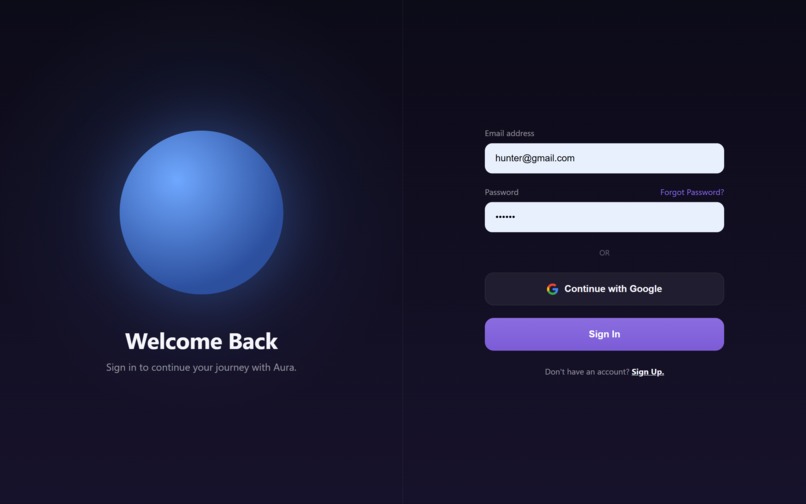
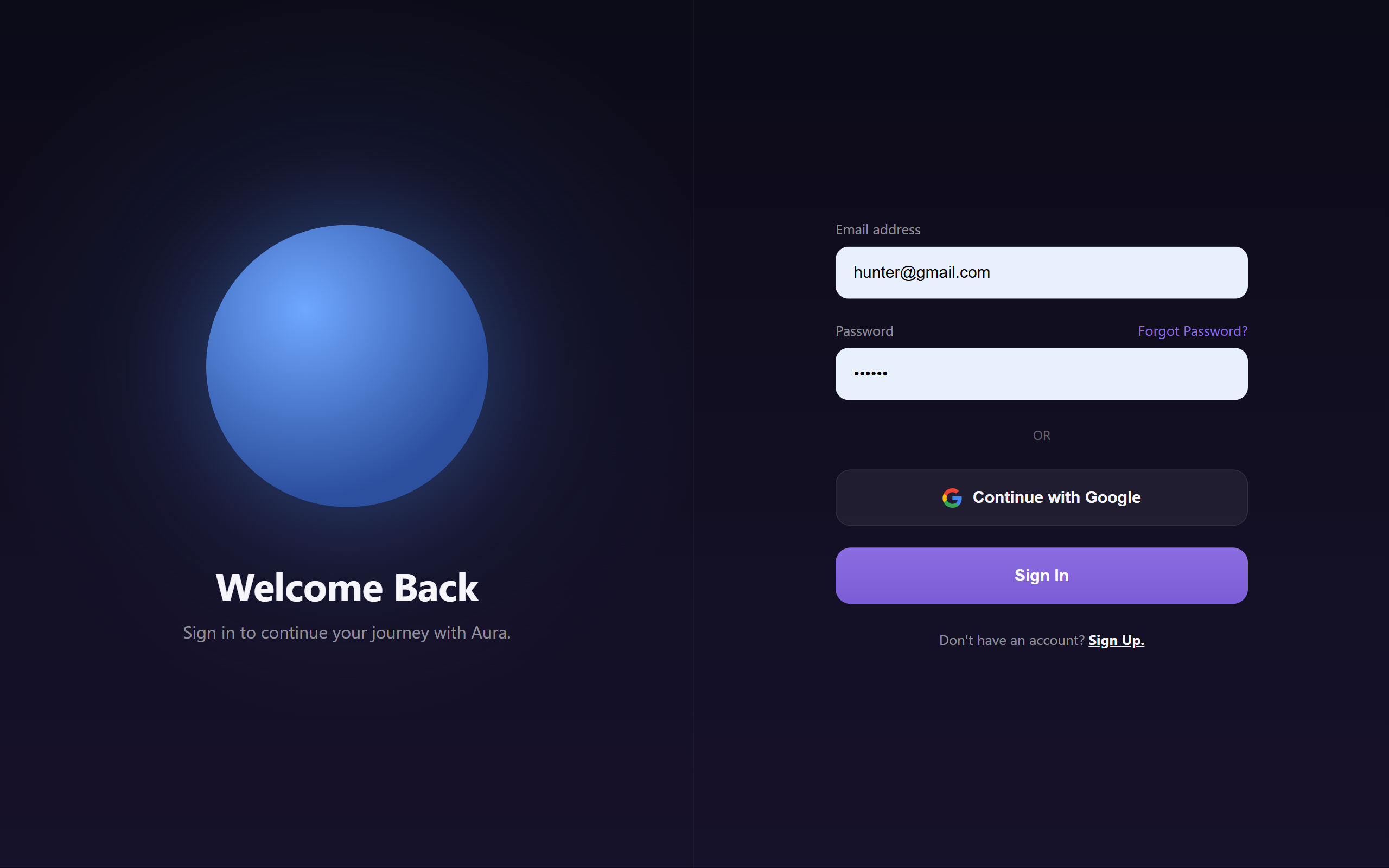
The Login Page
-
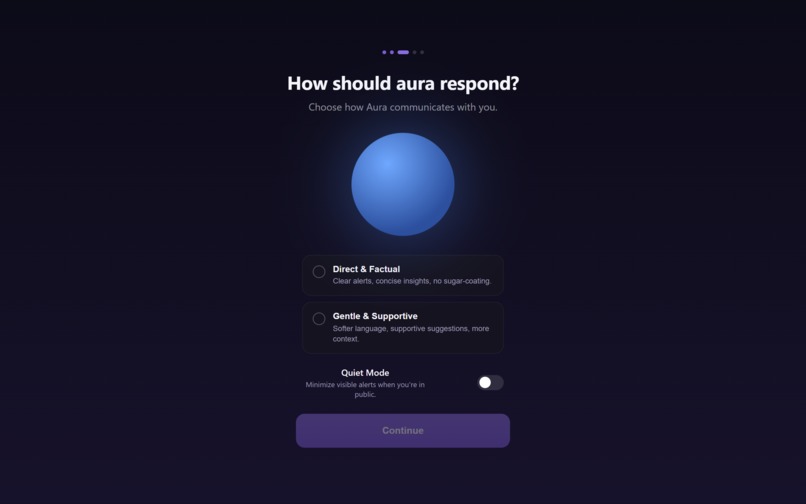
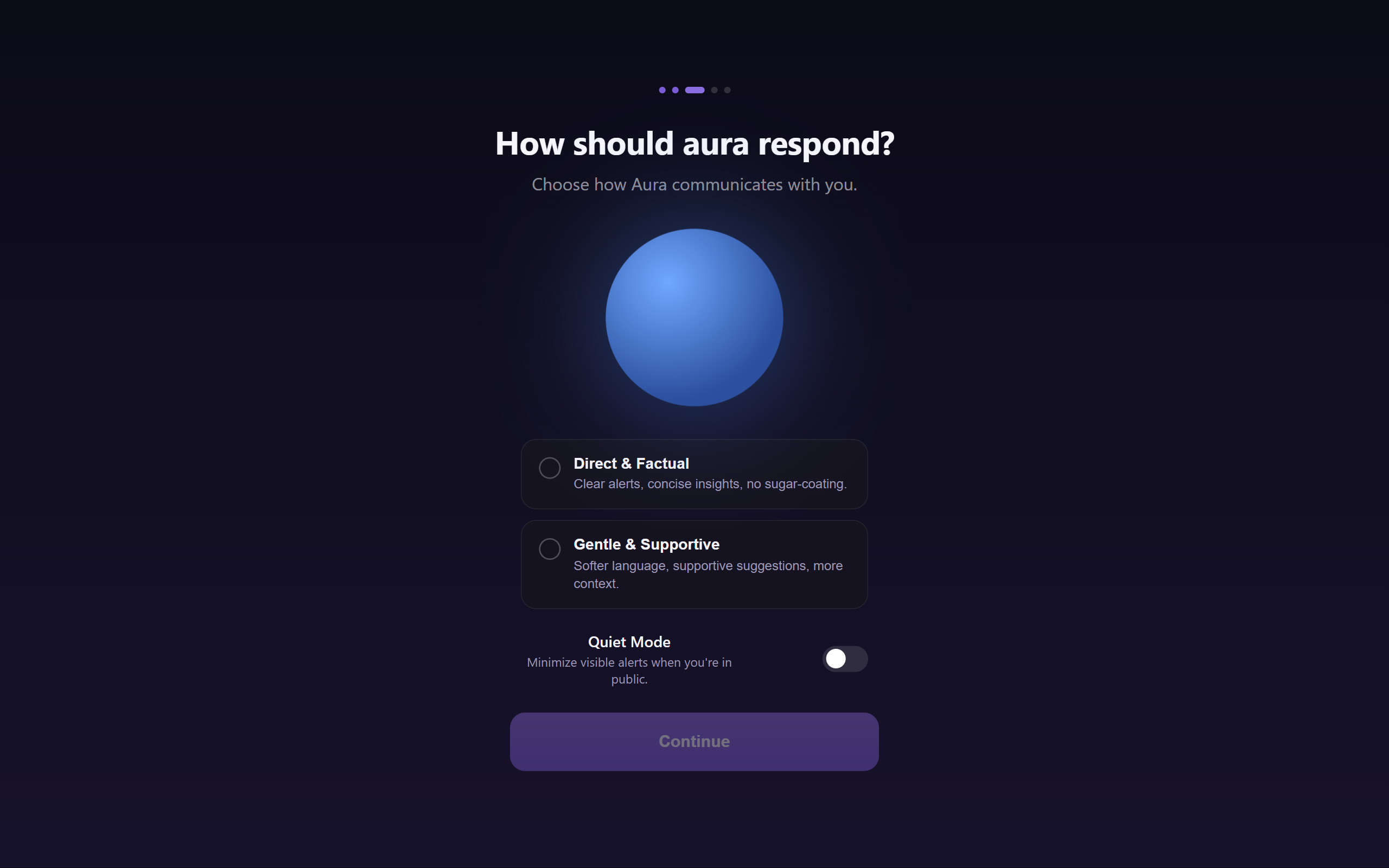
The Onboarding Process
-
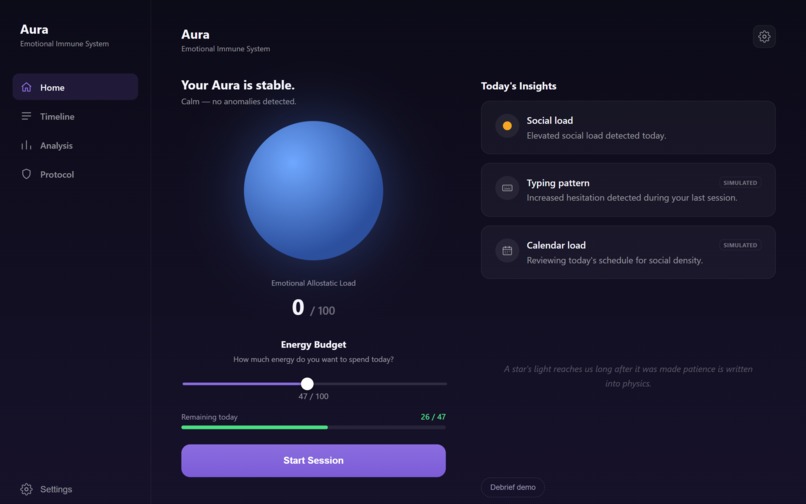
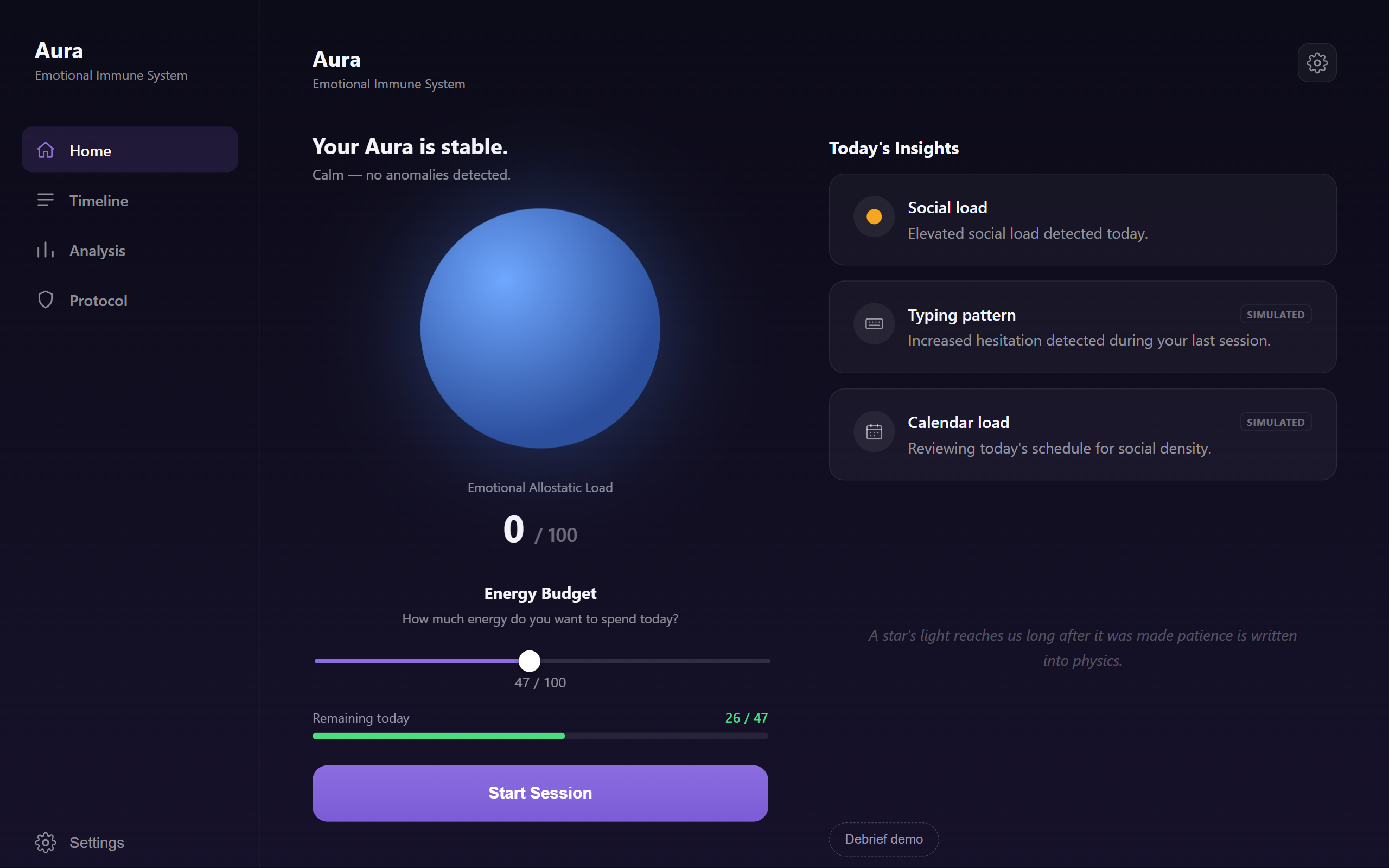
The User Dashboard
-
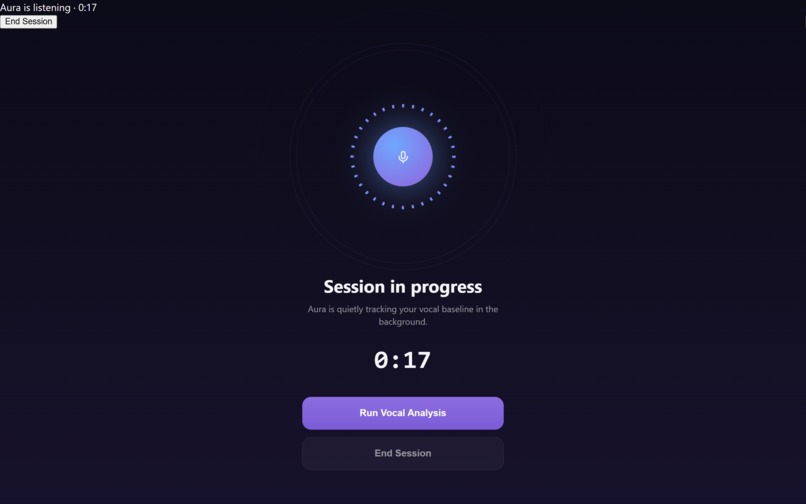
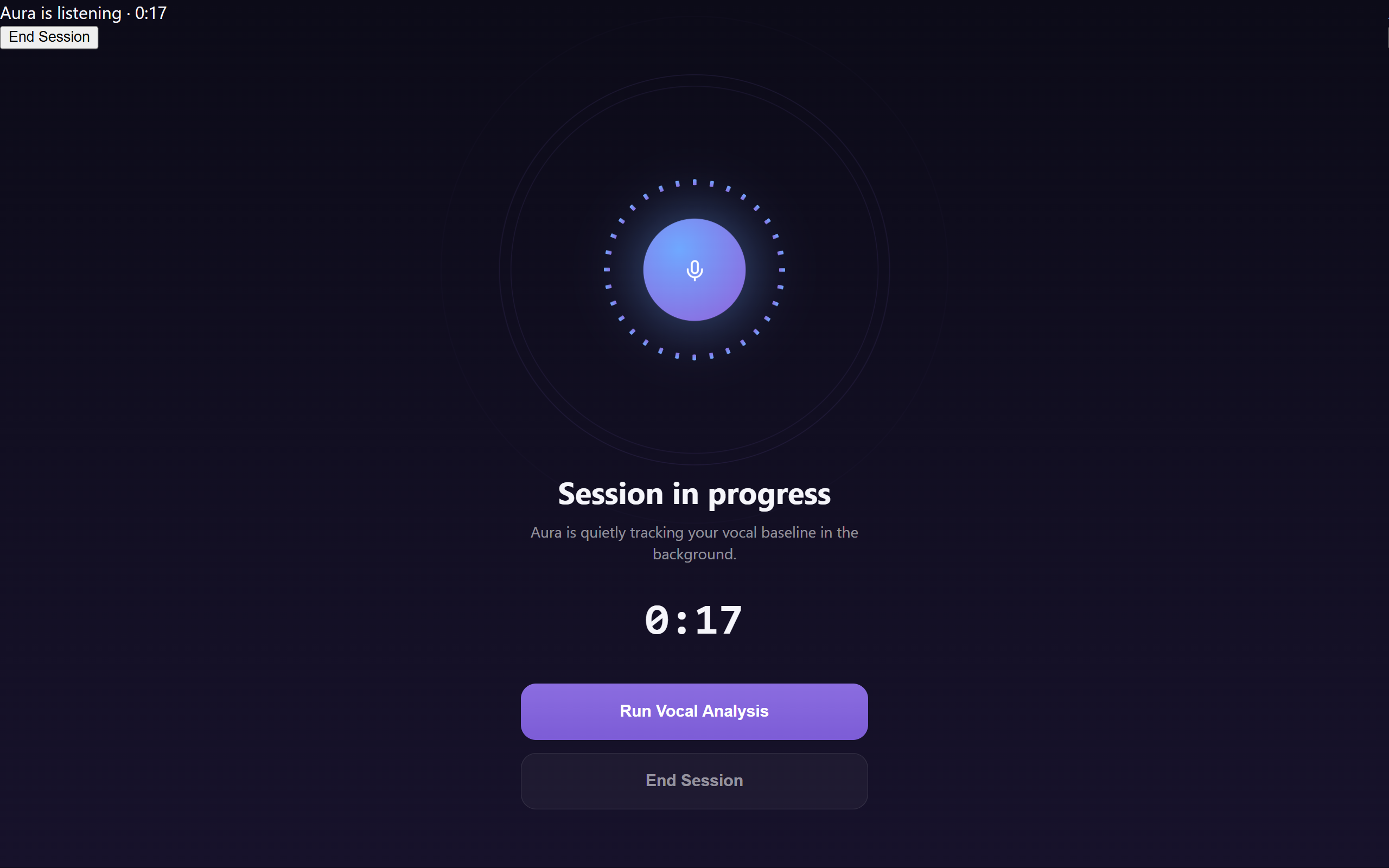
The User Session
-
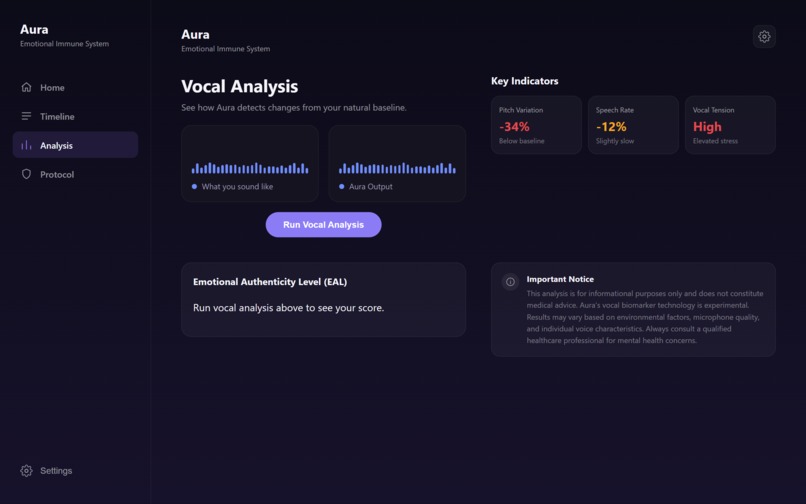
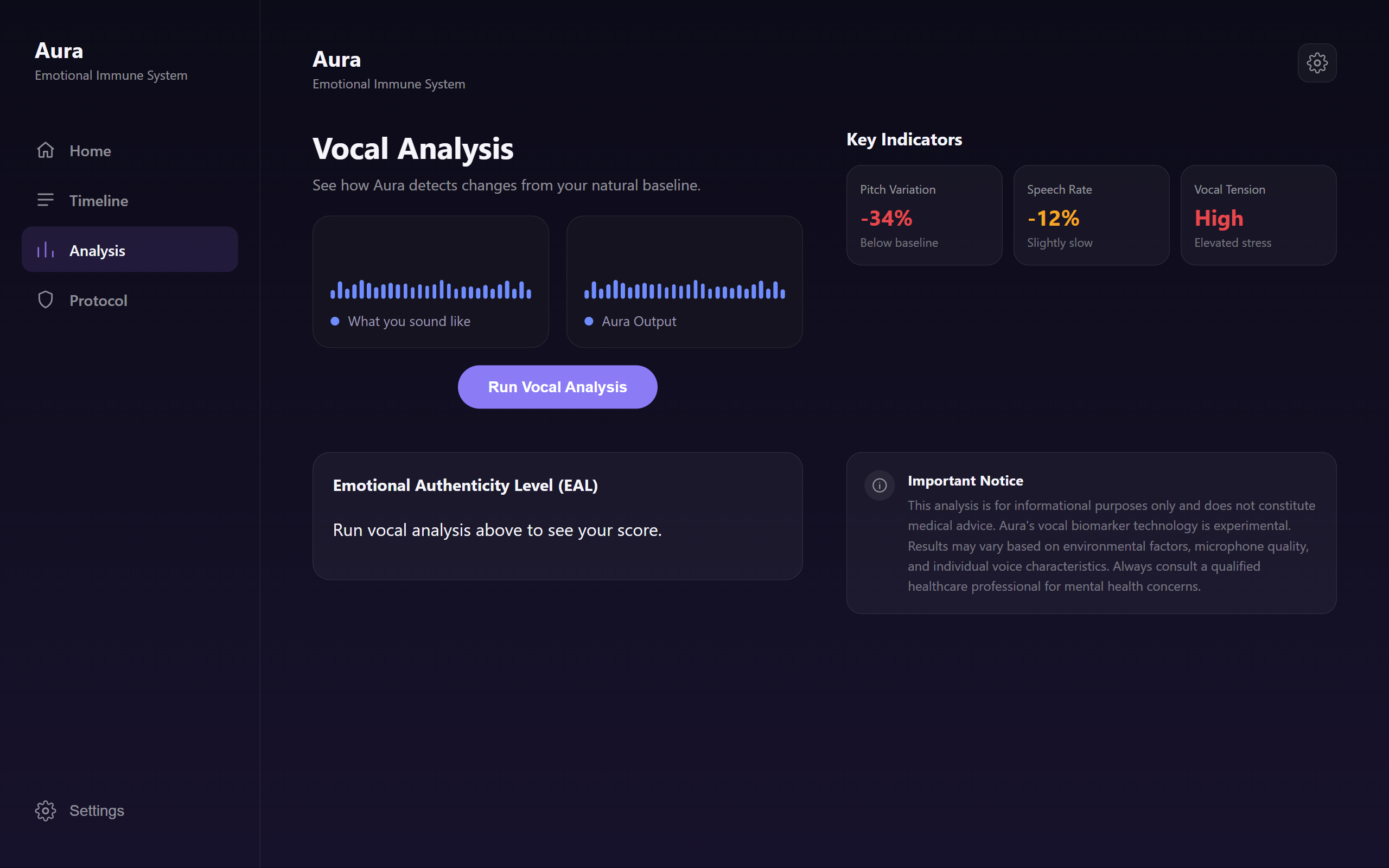
The Session Analysis
-
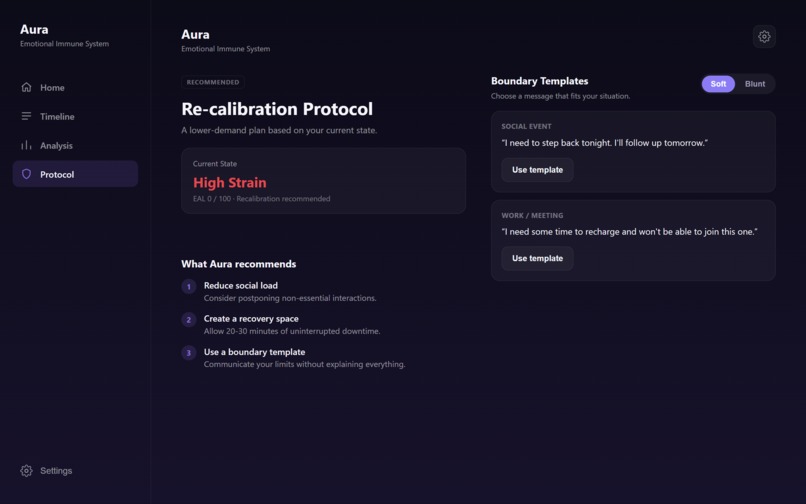
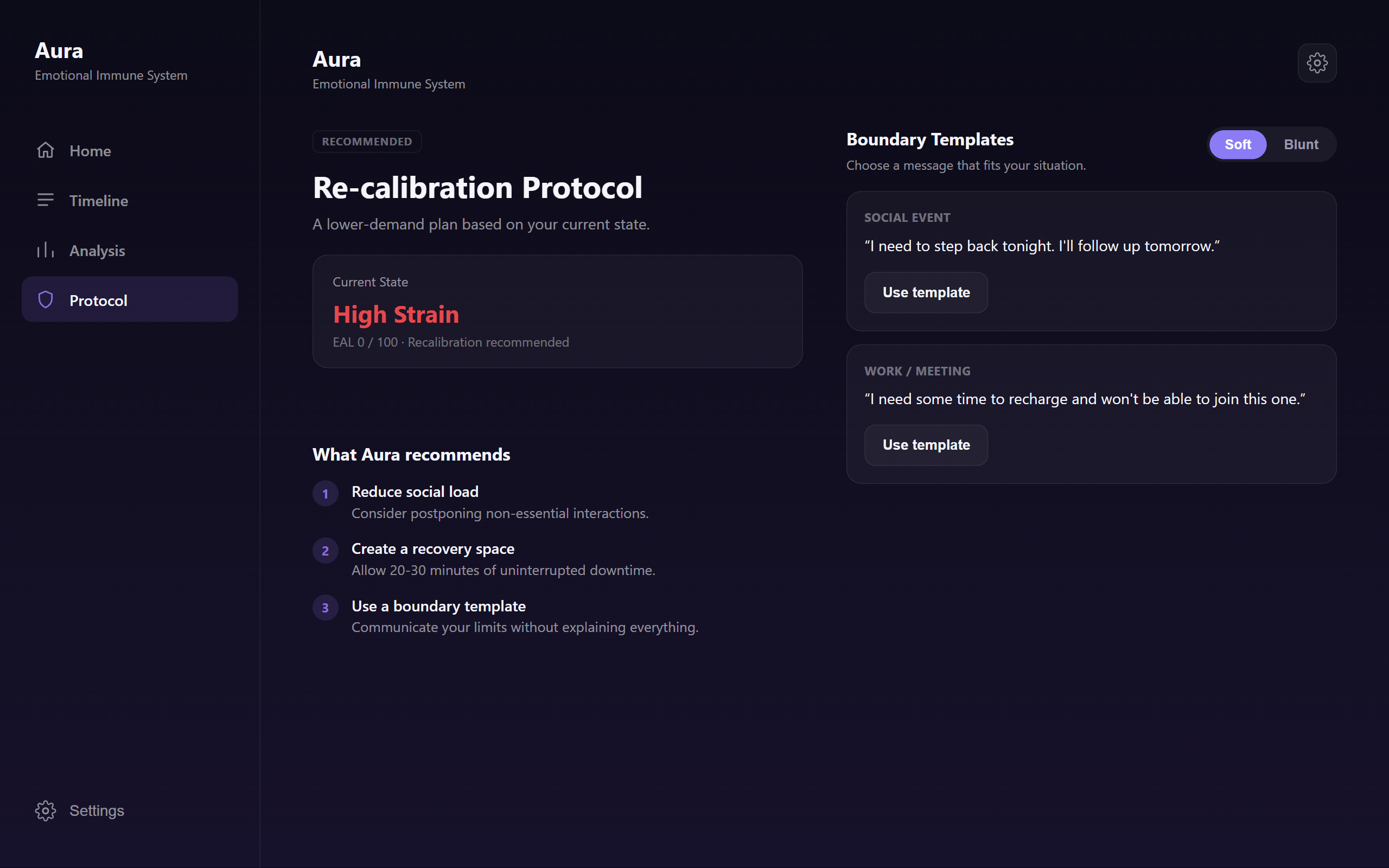
The Recalibration Protocol
Inspiration
"I'm fine."
It's one of the most common response to the question "How are you?". For people living with high-functioning depression, anxiety, paranoia, or who are neurodivergent, "I'm fine" is less an answer and more just something we say without thinking too much, it's basically the easiest way to not get into it, avoid the whole conversation, or stop someone from getting the wrong idea about how we're actually doing.
Basically we wanted to build something that actually sits in that gap, the space between what someone says they feel and what they're actually feeling deep down. Most mental health apps are honestly kind of basic for example: mood trackers, journaling prompts, breathing exercises like it's just one box that should fit everybody.
But we wanted AURA to start somewhere else, with the people who are usually overlooked by that whole model, because their emotional signals just don't look the way software expects them to.
What it does
AURA is essentially a mental health companion you can talk to. As you speak, it's not just listening to what you're saying but how you're saying it, and from that it calculates an Emotional Authenticity Level score basically how close what you're saying you feel is to what you're actually feeling underneath. You can even log events to it, and it checks stuff like your typing speed too, to see if you're typing slower than before, and much more.
So if you tell AURA "I'm okay" but you're saying it flat, or guarded, or you're clearly overstimulated, it's not just gonna take "okay" at face value. It's trained to actually tell the difference between someone who's genuinely settled and someone who's masking, like performing calm because that's just easier than getting into what's actually going on. Over time this means AURA picks up on the people generic wellness apps usually miss people with high-functioning depression, anxiety, paranoia, and neurodivergent folks whose emotional expression just doesn't fit the neurotypical default.
How we built it
The frontend is built in React with Vite with multiple pages and components covering the product design, onboarding, the conversational check-in flow, and score visualization, all documented in a full technical reference. Our team split across frontend and backend, and honestly collaborated in real time across different time zones, so a lot of our "building" was really just syncing up making sure the emotional-scoring logic our backend was training could actually show up honestly on the interface, instead of just getting flattened into some generic mood-ring UI.
The AI at AURA's core is trained to actually tell the difference between the different flavors of "I'm fine" the genuinely-fine kind versus the masking kind using patterns in tone, pacing, and word choice, not just plain sentiment analysis.
But before we even trusted any of that modeling, we went and actually talked to neurodivergent people about how masking works for them. That research shaped the product more than literally anything else we did.
The research that shaped AURA
A few things came straight out of those conversations and it changed how we thought about the product:
1) Masking isn't always what you'd expect: For a lot of autistic people, masking doesn't really change how they speak day to day a lot naturally speak bluntly, monotonously, or with what's called an "autism accent," basically low intonation that doesn't show emotion the way neurotypical speech does. Masking is more about hiding the visible traits and putting on a different, more neurotypical-passing personality acting more extroverted to fit in, same reflex as acting fine for a parent when you're actually in a mood.
2) Overstimulation has a shape: One person put it perfectly: it starts as irritability, fidgeting, restlessness, can't focus on anything except whatever's overstimulating them then it shifts into shutdown, going quiet, not wanting to be around people anymore.
3) Most people don't even notice they're doing it: It's usually a safety mechanism built up since childhood, from being treated as an outcast or "weird." It gets so automatic it stops feeling like a performance at all which is exactly why a system that only listens to words is gonna miss it.
4) Sometimes there's just no words: When people are overstimulated a lot of the time they genuinely can't speak or explain what's happening. One idea that stuck with us: color-coded phrase cards, a low-effort way to communicate a state without needing to find the words in real time. That's directly shaping features we want AURA to have going forward.
Challenges we ran into
To be frank, the biggest challenge wasn't even technical, it was more like how do you build a system that detects "faking fine" without treating normal self-regulation like it's a problem, and without assuming everyone masks the exact same way? Our research made it clear there isn't one. Autism accent, monotone speech, sensory shutdown, even neurotypical people code-switching between friend groups, all of that can look similar from the outside but mean completely different things. Getting that detail in, instead of just flattening it into one "authenticity" number, took a lot of back and forth between what the AI could actually detect and what our contributors told us really reflected their experience.
Accomplishments that we're proud of
We're proud that AURA wasn't just built off assumption but it's grounded in real conversations with neurodivergent people about how masking actually shows up for them, and that research directly shows in how the product behaves, not just something tacked on as a mission statement. We're also proud we shipped a complete, documented frontend (multiple pages, full component set, and a technical reference) collaborating in real time with a partner across different time zones during the hackathon.
What we learned
We learned that emotional authenticity isn't just one thing, and any tool claiming to detect it has a responsibility to be built with the people it's trying to serve, not just for them. We also came away understanding masking way better as a survival strategy, not a character trait something learned in childhood for safety, not something that needs "fixing."
What's next for Aura
We want move from the simulated audio to actual real-time mic input, and build out the real feature extraction pipeline in JavaScript/Web Assembly so it's not just fake data anymore. We also want real calendar integration through OAuth, so it can actually pick up on stuff like back-to-back meetings instead of a hardcoded demo calendar, and proper opt-in typing-pattern tracking that never reads what you're typing, just how.
Down the line we're thinking full edge-AI so nothing ever leaves your device, plus wearable integration like resting heart rate and sleep, and letting users optionally share their capacity with people they trust. And obviously the color-coded phrase cards from our research that's still top of the list.
Built With
- fastapi
- figma
- javascript
- librosa
- matplotlib
- node.js
- npm
- pip
- python
- react
- supabase
- three
- vite
- wsl


Log in or sign up for Devpost to join the conversation.