-
-
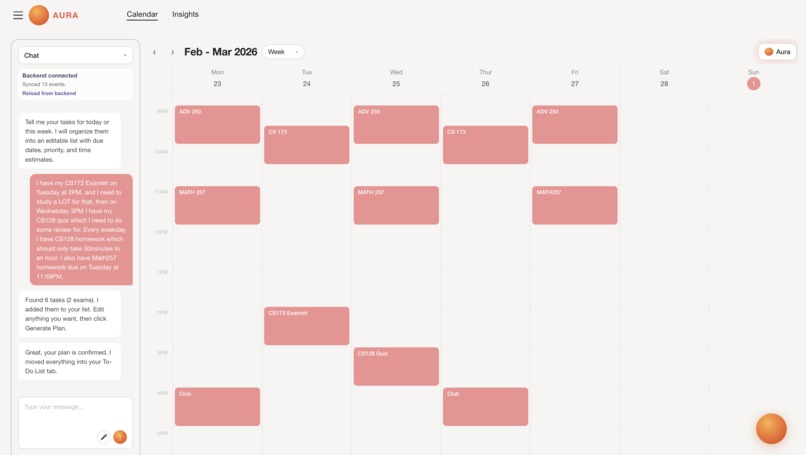
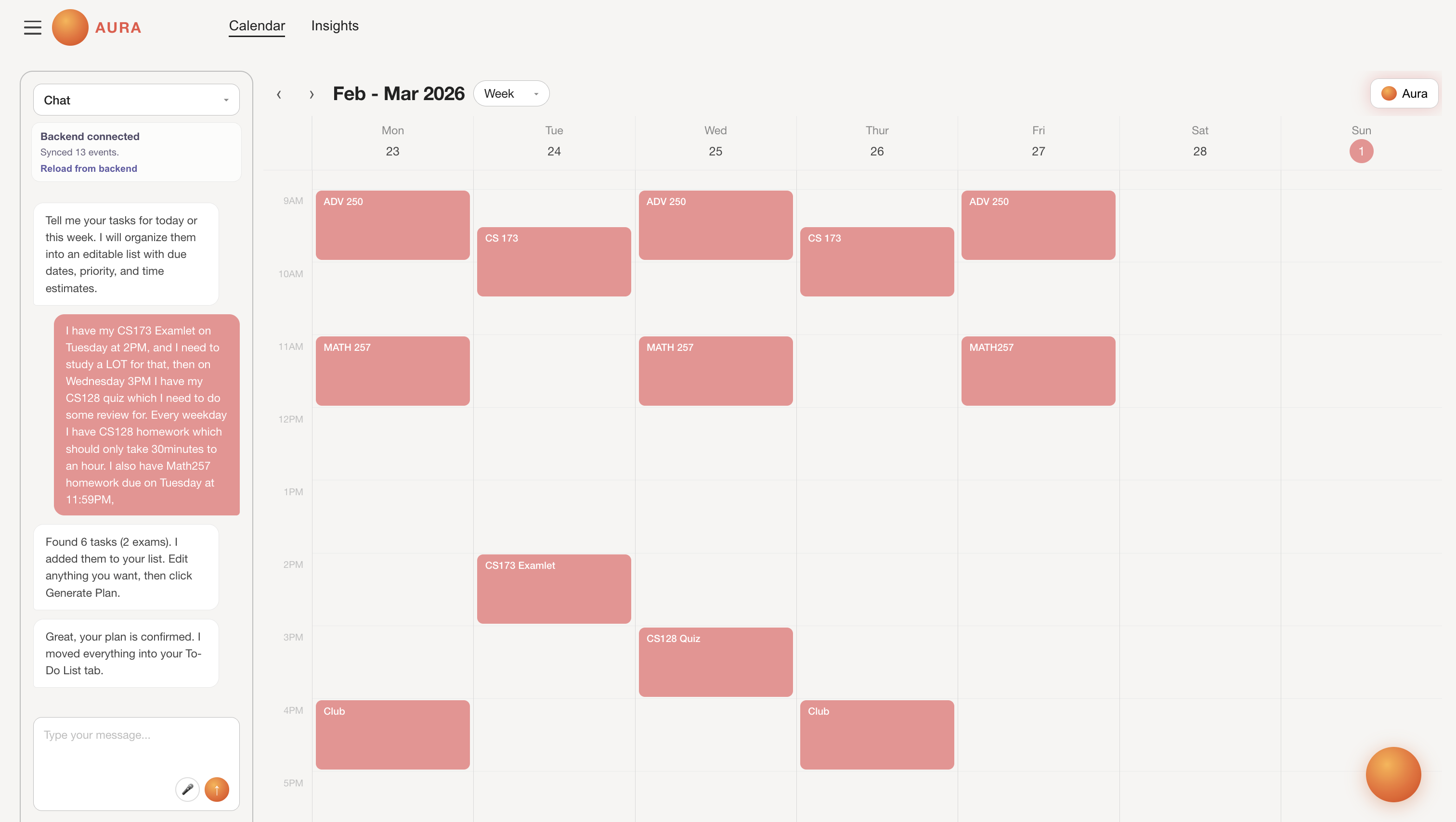
Schedule Page
-
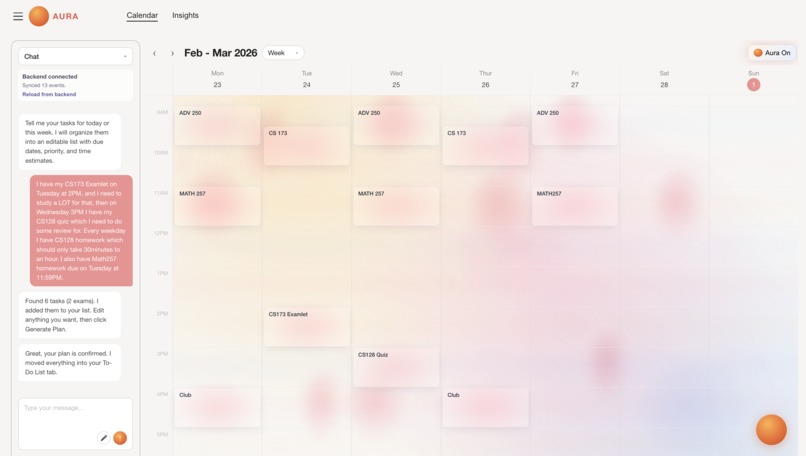
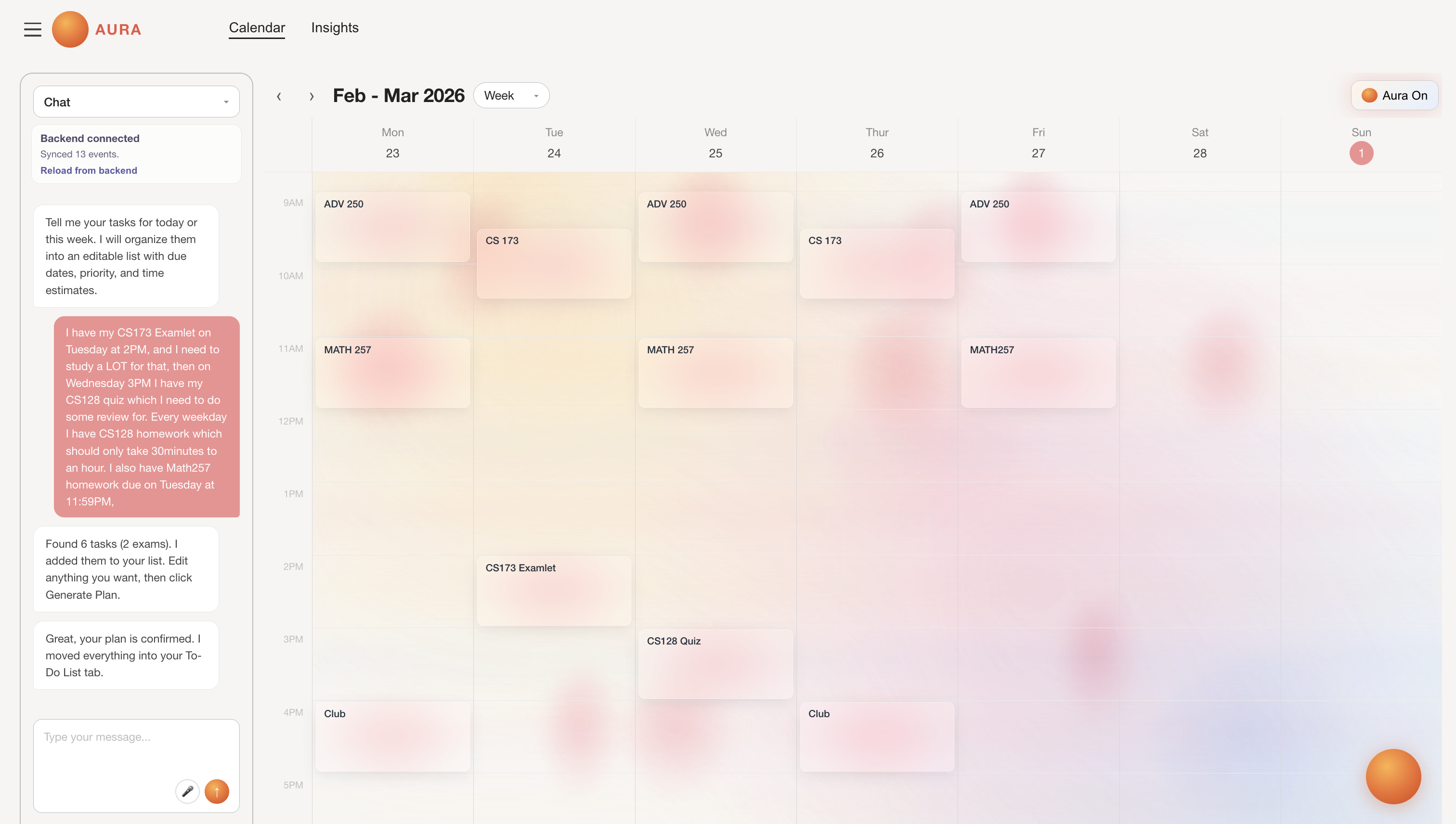
Aura Mode
-
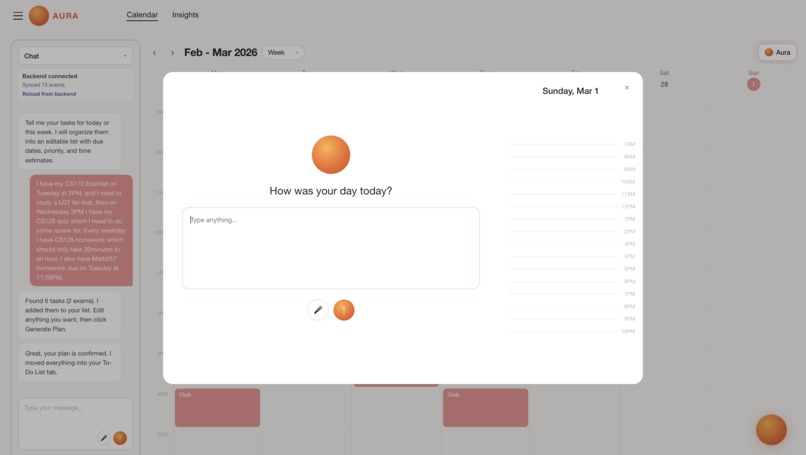
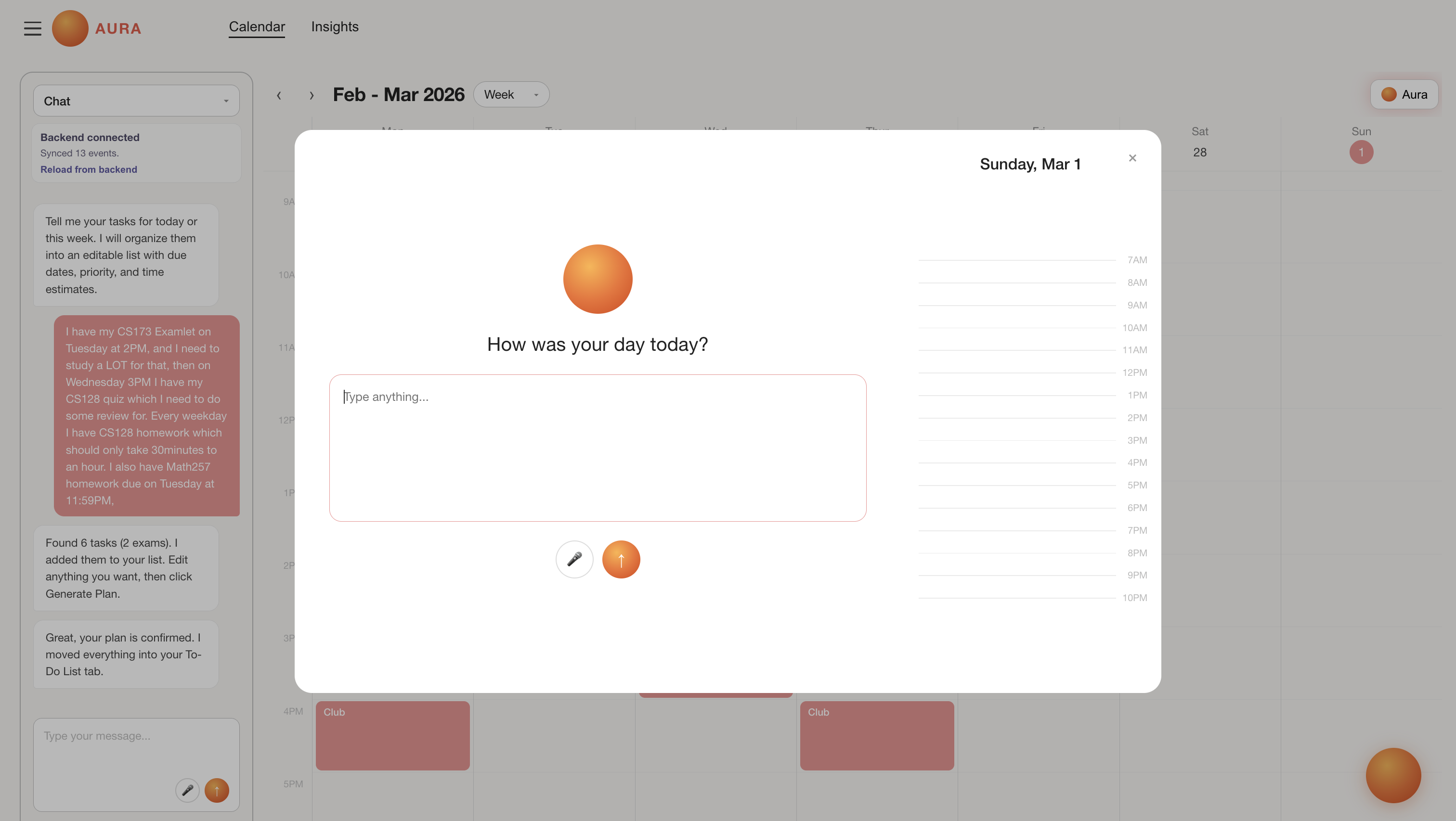
Log Page
-
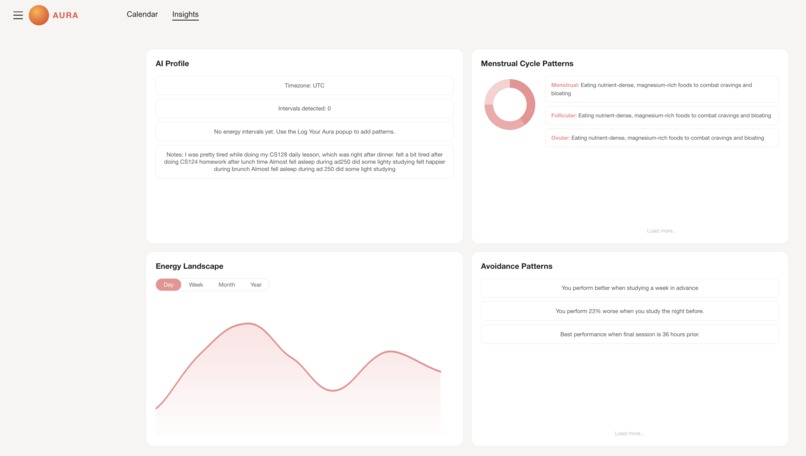
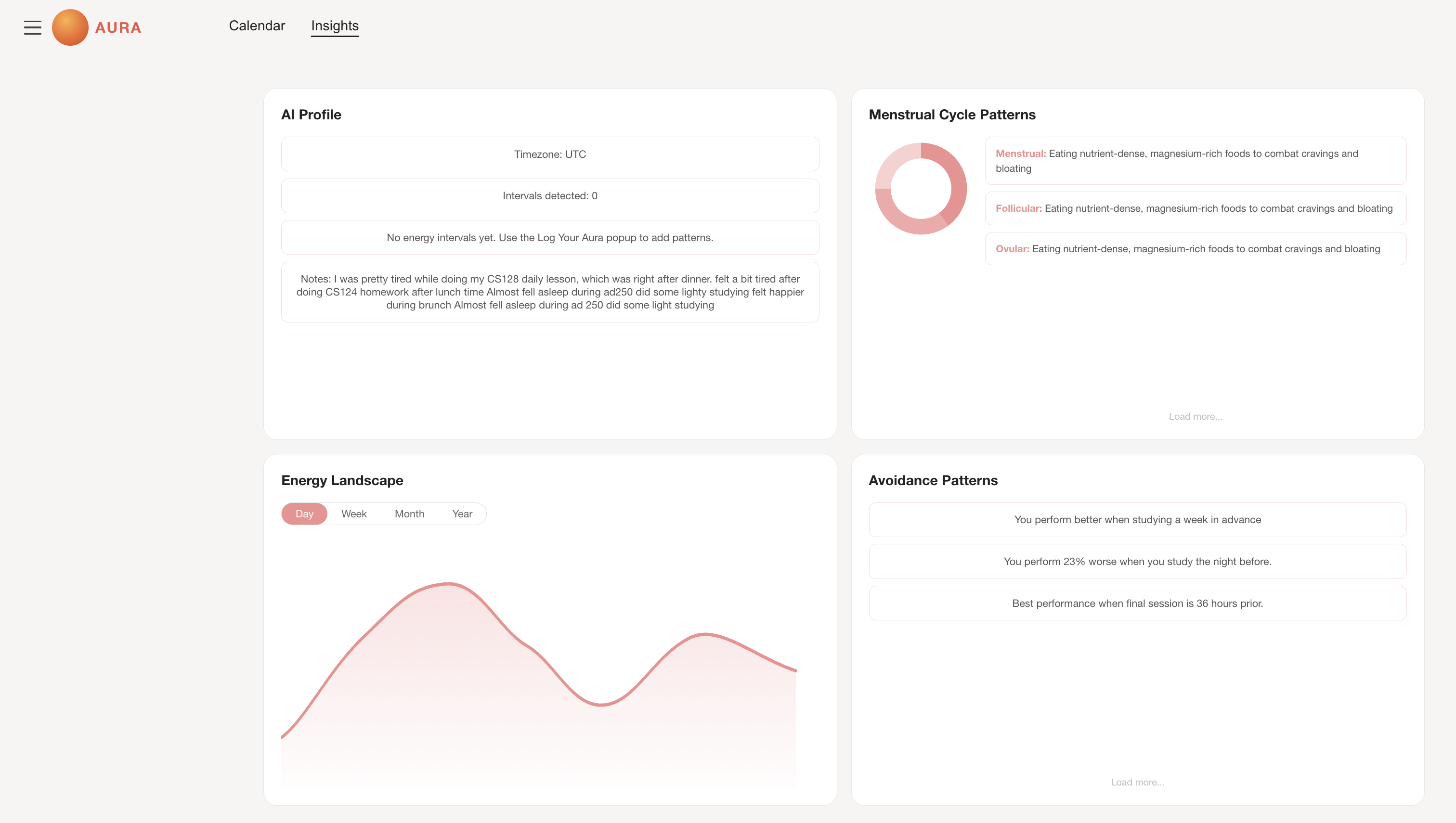
Insights Page
Problem
We live in a constant state of mental fragmentation. Tasks, messages, deadlines, workouts, and meetings all compete for attention, and even on “productive” days, there’s always something unfinished quietly weighing on you. At the same time, people constantly guess when they’ll have the energy to do meaningful work. Many schedule demanding tasks during predictable energy crashes or cram before exams even though they know it reduces performance. The real bottleneck isn’t time, it’s cognitive misalignment and decision fatigue.
Solution
Aura is an adaptive, energy-aware scheduling system that continuously models a user’s cognitive and biological patterns. By tracking energy levels, stress signals, task completion history, avoidance behavior, and performance trends, Aura dynamically reorganizes tasks to match predicted cognitive capacity. It schedules demanding work during peak focus windows, protects low-energy periods, detects repeated delays as avoidance signals, and breaks large tasks into smaller, actionable steps. Instead of forcing users to decide what to do next, Aura creates a schedule that works with their natural rhythms, minimizing decision fatigue and improving productivity.
What It Does
Aura allows users to input tasks and deadlines and then dynamically prioritizes them based on cognitive and energy patterns. It schedules tasks that require high focus during historically optimal periods, protects low-energy times, detects avoidance patterns, and automatically breaks larger tasks into smaller steps. By aligning work with cognitive and biological states, Aura helps users focus on what matters most without overloading their mental capacity.
How We Built It
At the heart of Aura is an interval-based energy model. Instead of treating time as empty calendar slots, we structure it into meaningful constraints with hard blocks like sleep, high- and low-energy intervals, stress windows, and existing commitments. Users can quickly log energy patterns or describe their day naturally, and those inputs are converted into structured JSON intervals that represent how they actually function over time.
For scheduling, the algorithm scores tasks based on priority, hours until deadline, and duration, then places them into available intervals while respecting hard constraints and energy levels. This ensures optimization with heavy cognitive work being placed in high-energy windows, lighter tasks filling in dips, and long-term goals being distributed in an optimal way. For the AI components, we host Qwen3-32B using vLLM on H100 GPUs via Modal. We specifically decided to go this route because it gives us low-latency inference and is very fast at performing rollouts, it is cost efficient with Modal, and it allows for flexibility to upgrade or fine-tune models without rebuilding infrastructure.
The frontend was designed to be minimal and calm, reducing cognitive load, while the backend handles real-time scheduling optimization and adaptive prioritization.
Challenges We Ran Into
- Translating abstract energy levels into quantifiable signals
- Detecting task avoidance versus legitimate rescheduling
- Balancing automation with user control
- Limited hackathon time for advanced predictive features
Accomplishments That We're Proud Of
We successfully built a responsive system that adapts to a user’s cognitive and biological patterns rather than just managing static tasks. Within a short timeframe, we implemented a feedback loop where user input meaningfully influenced future scheduling decisions. We also achieved a balance between technical complexity and interface simplicity, delivering a lightweight, intuitive frontend powered by adaptive scheduling logic.
What We Learned
- Productivity bottlenecks are often cognitive, not temporal
- Adaptive feedback loops are more challenging than static features
- Evolving systems must balance complexity with simplicity in the interface
- What's Next for Aura
- Integrate longer-term performance modeling and wearable data for more precise energy tracking
- Explore reinforcement-style optimization for task scheduling
- Improve stress forecasting for high-pressure deadlines
- Build energy-aware productivity infrastructure that adapts to humans rather than forcing humans to adapt to schedules
Built With
- css
- fastapi
- gemini-api
- html
- modal
- pydantic
- python
- qwen
- react
- typescript
- uvicorn
- vite


Log in or sign up for Devpost to join the conversation.