-
-
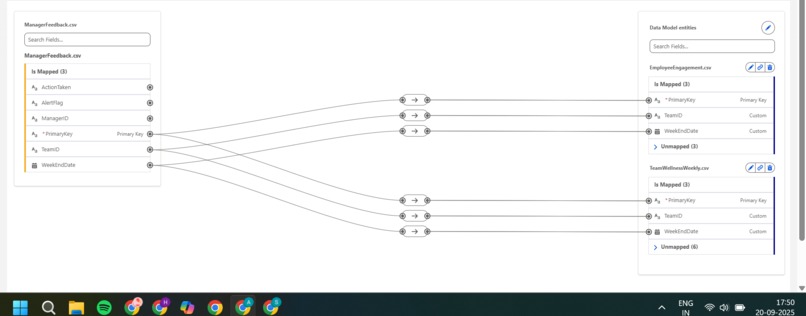
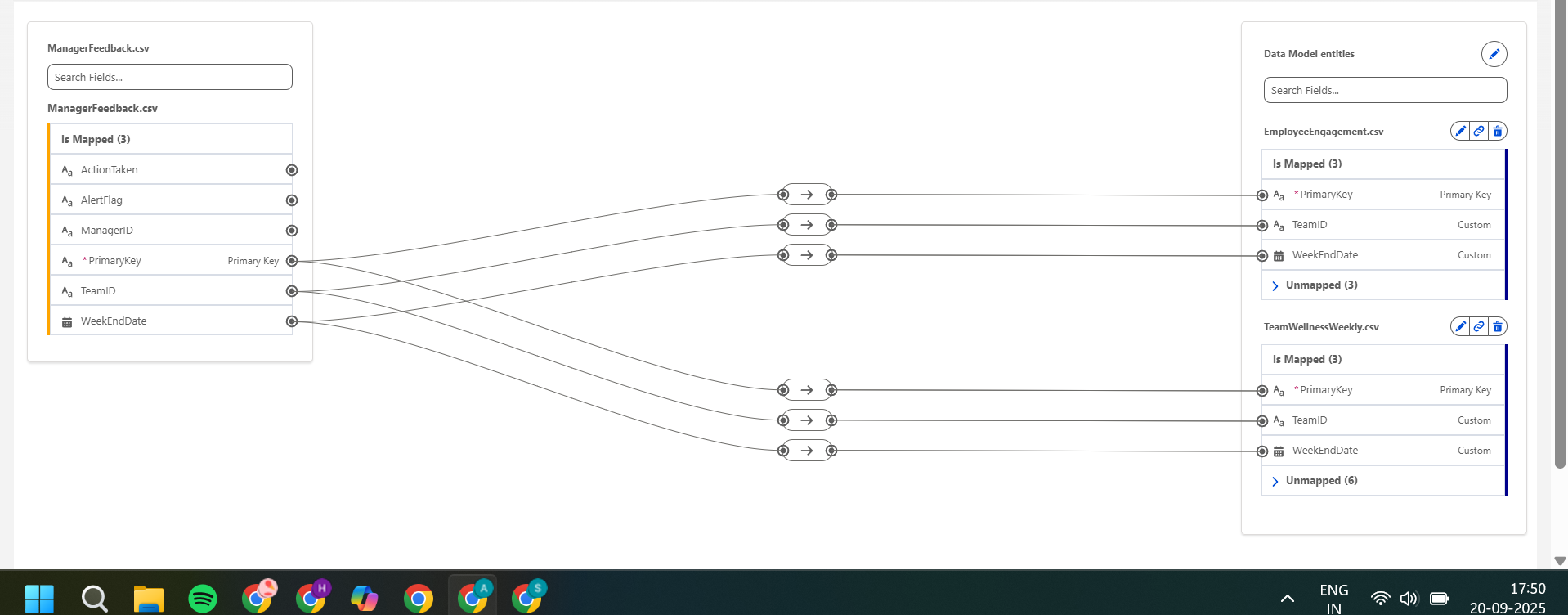
The final Data Model in Salesforce Data Cloud, joining three separate data sources into a single, unified view of team wellness.
-
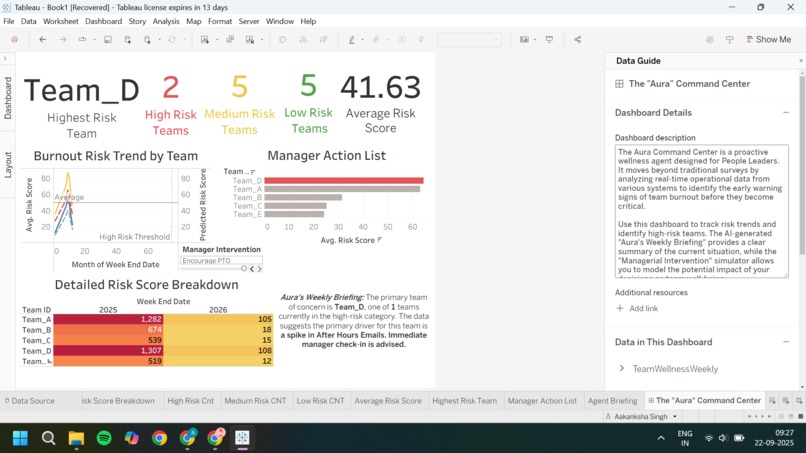
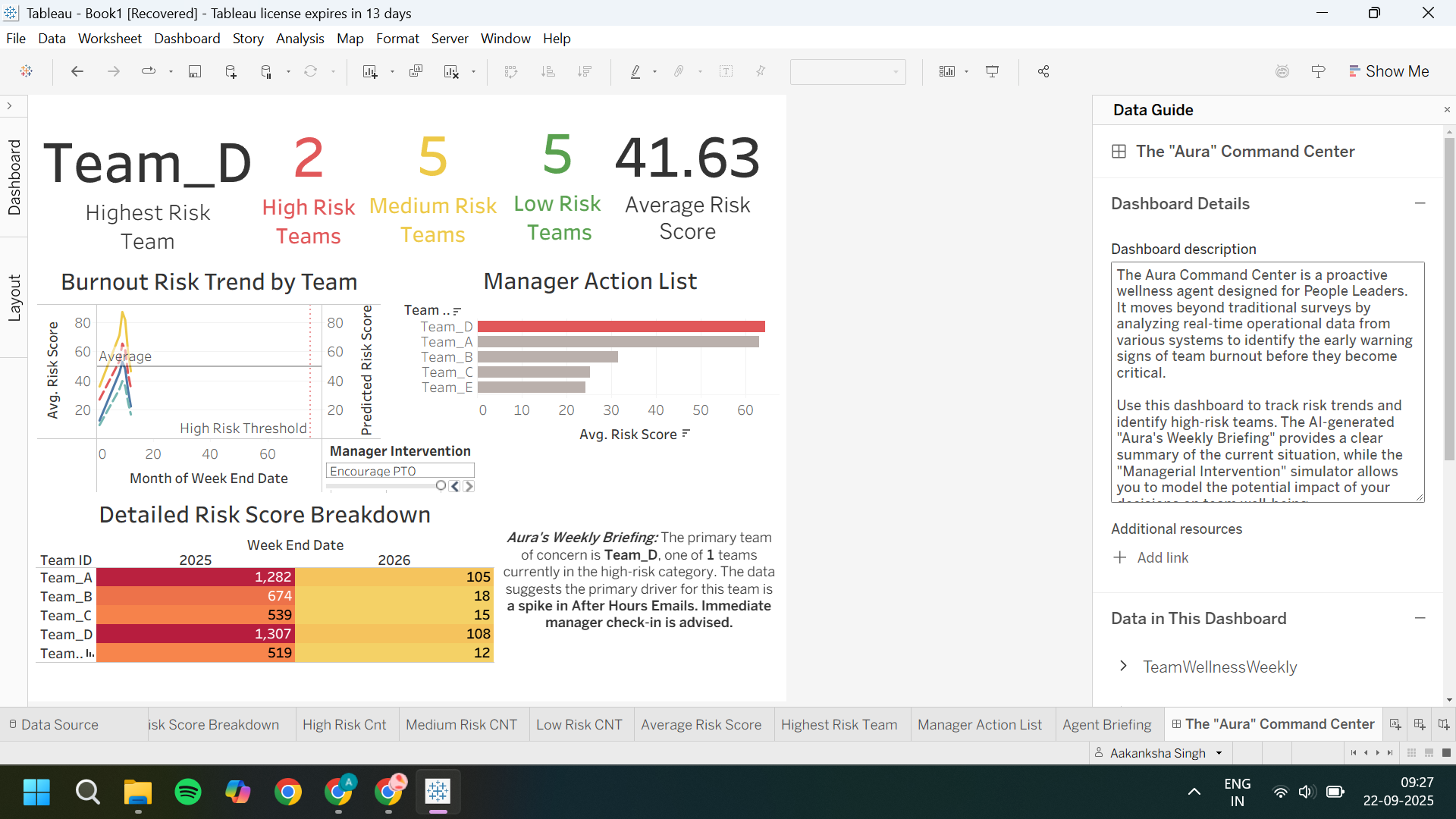
The Aura Wellness Command Center: A unified dashboard providing at-a-glance KPIs, risk trends, and a prioritized action list for leaders.
-
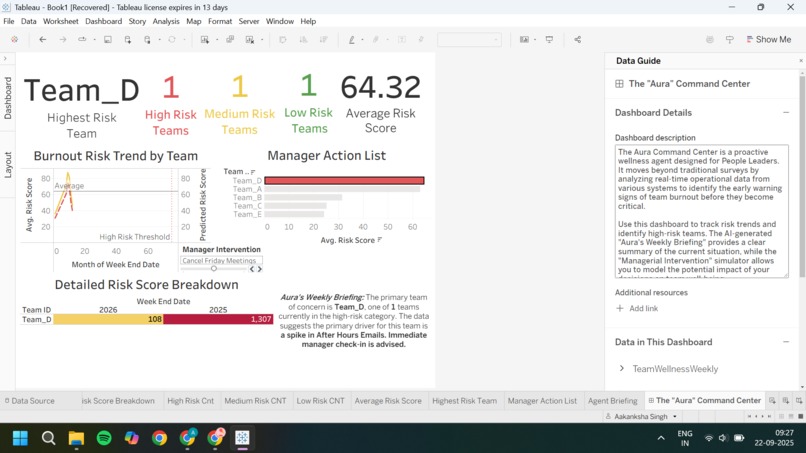
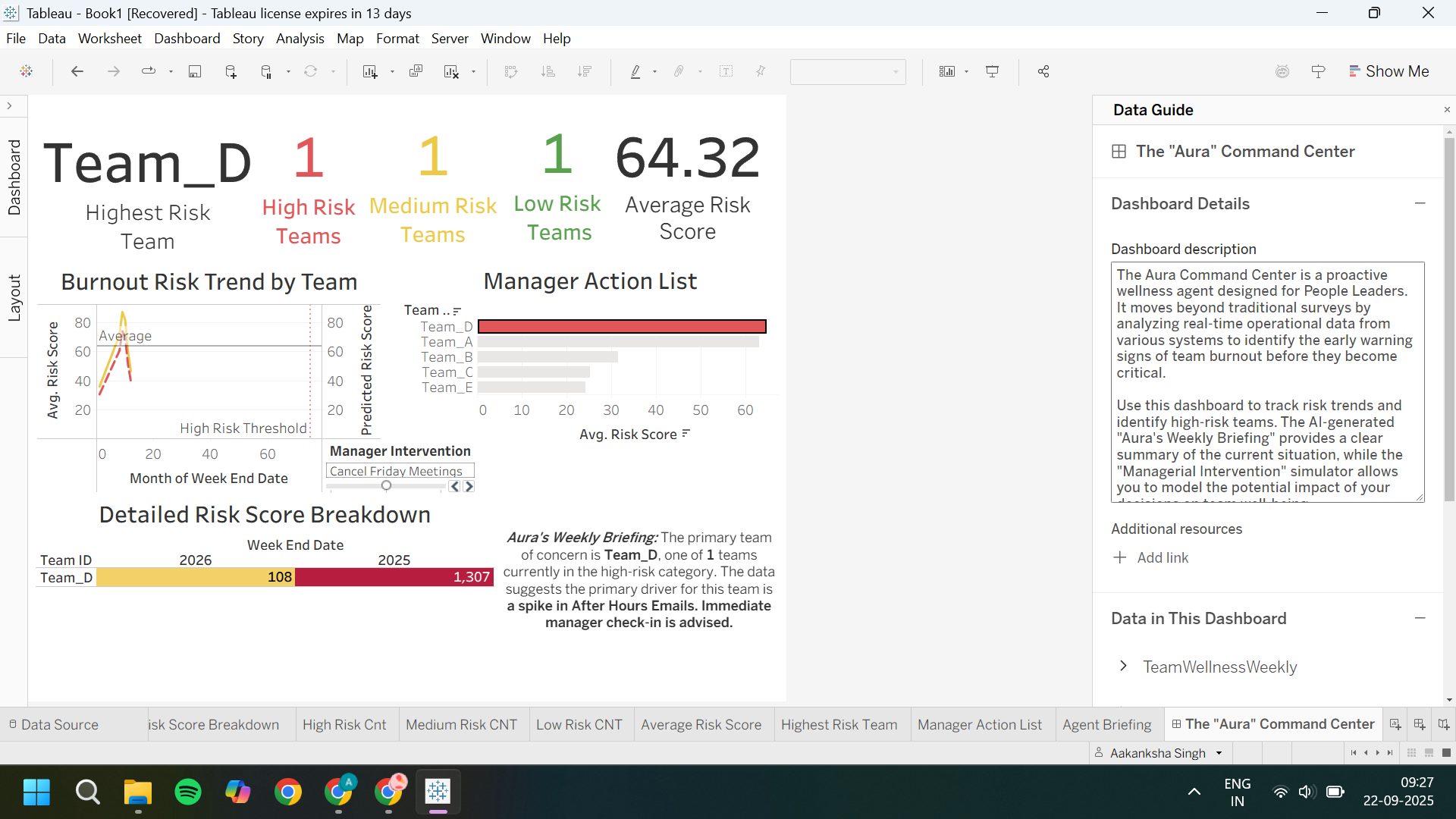
Clicking on a high-risk team, like 'Team_D,' in the "Manager Action List" instantly filters the entire command center.
-
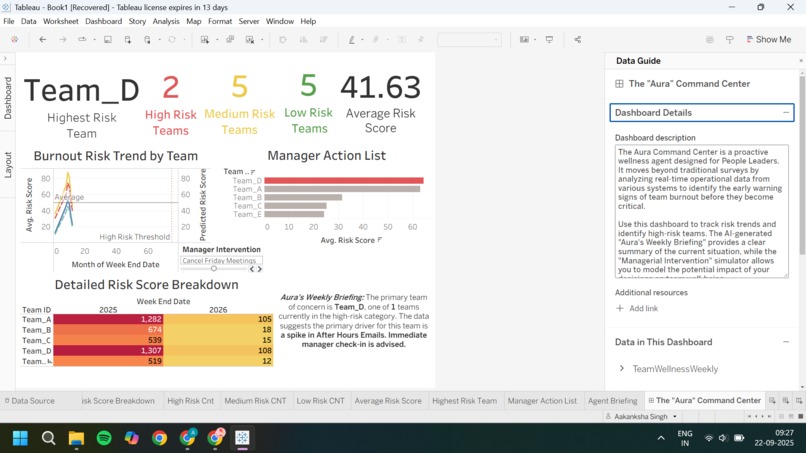
The interactive 'What-If' Scenario Simulator lets managers see the potential impact of their decisions, turning insight into foresight.

Inspiration
Our inspiration came from a critical business problem that's often treated with outdated solutions: employee burnout. We saw that most companies are reactive, relying on annual surveys that act as an autopsy on a problem that has already happened. We were driven by a simple question: "What if we could build a system that acts more like a proactive, caring co-pilot for leaders, rather than a reactive report?" We wanted to create a tool that could identify the early warning signs of team stress in real-time, using the data that companies already have, to foster a healthier and more innovative workplace.
What it does
Aura is a proactive wellness agent built on the Tableau Next platform. It transforms raw, anonymized operational data from disparate systems (like CRM and project management tools) into a clear, actionable Burnout Risk Score. The dashboard provides three key "agentic" features for leaders:
- The Agent's Voice: A dynamic, AI-generated summary that explains the current risk situation in natural language, pinpointing the highest-risk team and its primary data driver.
- A What-If Simulator: A predictive tool that allows managers to model the potential impact of their decisions (like "Encourage PTO") on their team's future risk score.
- Guided Analytics: A fully interactive experience that allows leaders to seamlessly filter and explore the data to understand the nuances of their team's health.
How we built it
The project was a rapid journey through the entire Tableau Next ecosystem. We began by prototyping the dashboard in Tableau Desktop using local CSV files to quickly iterate on the design and build the advanced features, such as the table calculations for the "Agent's Voice" and the parameters for the "What-If" simulator.
The core of the project was then migrating this solution to the provisioned Salesforce platform. This involved:
- Uploading the raw data into Salesforce Data Cloud and creating three distinct Data Streams.
- Building a unified Data Model Object (DMO) by creating relationships between the streams and adding a formula-based Primary Key to serve as a single source of truth.
- Utilizing Tableau Cloud's Web Edit feature to connect the final dashboard to the live
AuraMasterDataDMO.
Challenges we ran into
Our biggest challenge was a critical platform access issue in the final 48 hours of the hackathon. After successfully building the DMO in Data Cloud and migrating the dashboard to the provisioned Tableau Cloud site, a sudden and persistent login error completely locked us out of the environment. This prevented us from recording the final, fully connected demo. This forced us to adapt our submission strategy, relying on screenshots of the completed platform work and demonstrating the dashboard's full functionality using the local workbook to ensure we could still present our complete vision.
Accomplishments that we're proud of
We are incredibly proud of successfully building a fully functional, end-to-end data pipeline, from raw CSVs to a unified DMO in Salesforce Data Cloud, all within the hackathon timeframe. Creating the advanced "Agent's Voice" and "What-If Simulator" features felt like a major accomplishment, as it elevated the project from a simple report to a truly interactive and intelligent tool. Most of all, we're proud of our resilience; facing a complete platform lockout so close to the deadline was daunting, but we pivoted quickly to create a comprehensive submission package that still tells the full story of our work.
What we learned
This hackathon was a deep dive into the entire Tableau Next ecosystem. We learned the intricacies of Salesforce Data Cloud, from creating data streams and relationships to writing DMO-level formulas. We also mastered advanced Tableau features like table calculations and parameters to create an "agentic" user experience. Strategically, we learned the immense value of having a contingency plan and the importance of documenting our work with screenshots, which ultimately became a critical part of our final submission.
What's next for Aura: The Proactive Wellness Agent
The vision for Aura is just beginning. The next steps would be to fully implement the end-to-end automation:
- Integrate Salesforce Flow: Trigger proactive, actionable alerts directly to managers in Slack when a team's risk score crosses a critical threshold.
- Incorporate Einstein AI: Move from our rule-based risk score to a predictive machine learning model in Einstein to identify complex patterns and improve accuracy.
- Add Calendar Integration: Allow Aura to proactively suggest rescheduling meetings or blocking off "focus time" in a team's calendar as a direct intervention.
Built With
- salesforce
- salesforcedatacloud
- salesforceflow
- tableau
- tableaunext
- tableauparameters
- tableautablecalculations


Log in or sign up for Devpost to join the conversation.