-
-
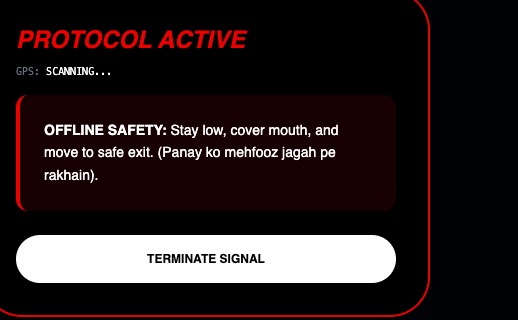
Bilingual safety instructions in English and Roman Urdu, ensuring life-saving protocols are accessible to everyone during a crisis
-
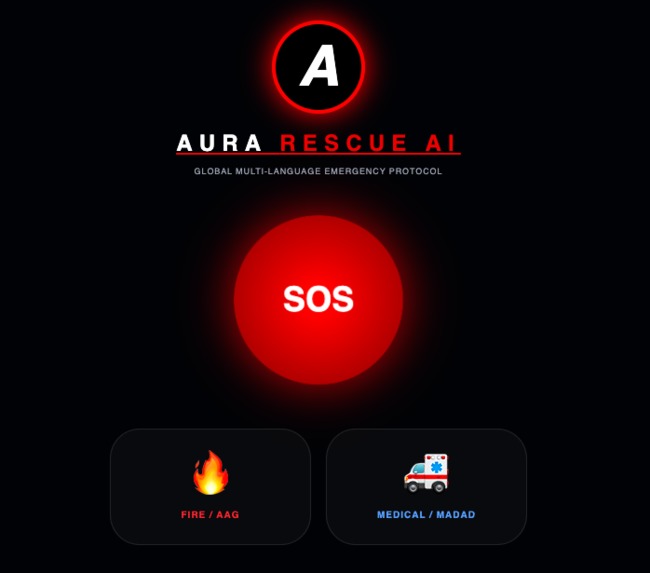
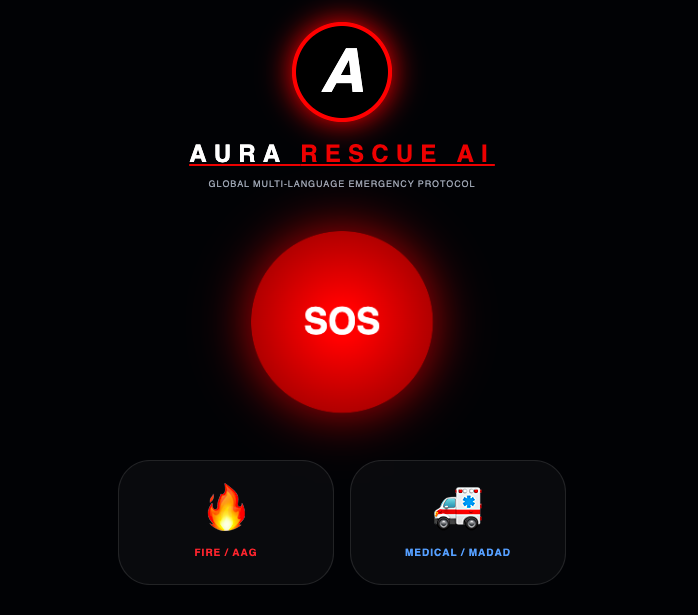
The AURA Rescue AI home screen featuring a prominent SOS trigger and dedicated emergency categories for Fire and Medical assistance
-
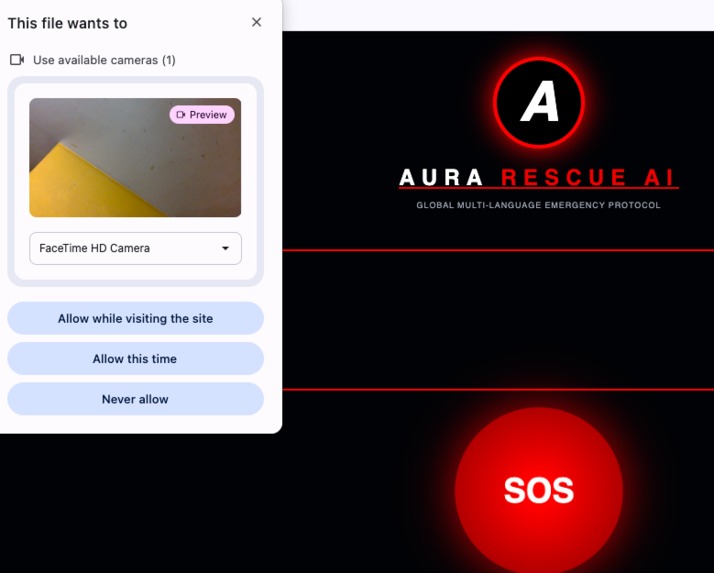
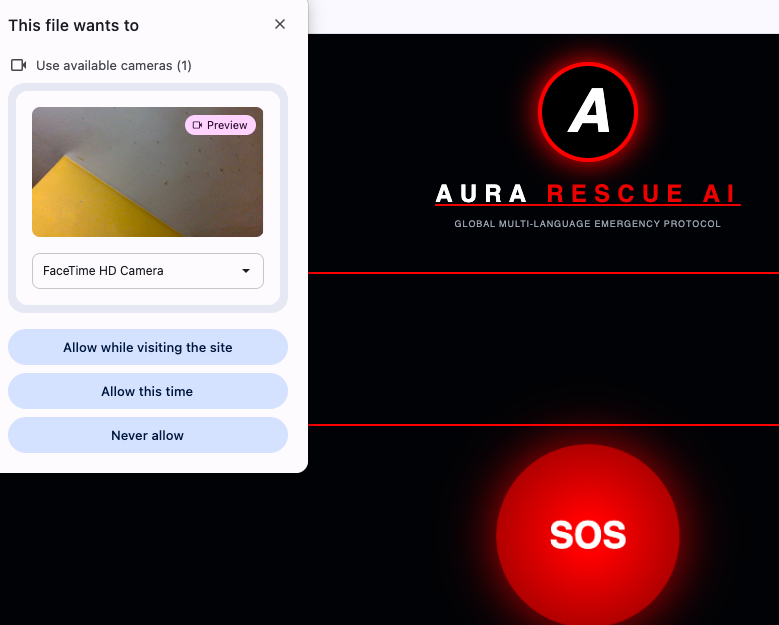
Seamless camera and hardware integration allows Gemini AI to provide real-time visual intelligence for local emergency assessment
InspirationComing from a city like Karachi, I've seen firsthand how chaotic emergencies can be. In critical moments, every second counts, and language barriers or slow responses can literally cost lives. My inspiration was to build a tool that acts as a digital guardian—providing instant, life-saving instructions in any language, ensuring no one has to face a disaster alone. I wanted to empower ordinary people with extraordinary AI tools to save lives.
What it doesAURA Rescue AI is a multimodal emergency response system designed to provide instant assistance when every second counts.
Multimodal Emergency Analysis: It uses the camera to analyze the scene and provides real-time, life-saving instructions through Gemini 1.5 Flash.
Universal Language Support: The system automatically provides protocols in English, Roman Urdu, and other local languages to ensure everyone can understand the instructions.
Instant SOS Trigger: With a single click or a device shake, it activates an emergency protocol that bypasses local delays.
Satellite GPS Tracking: It fetches the user's precise coordinates to assist rescue teams in locating the person in distress.
Privacy-First Intelligence: All visual data is processed locally in the browser, ensuring user privacy is never compromised during an emergency.
How we built itAs a non-developer, building this project was a journey of learning and discovery.
Core Intelligence: I used the Gemini 1.5 Flash API to handle the complex reasoning and multi-language translation required for emergency protocols.
Frontend Development: The application was built using HTML5 and Tailwind CSS to ensure a fast, responsive, and mobile-friendly interface.
Real-time Integration: I implemented JavaScript to handle live camera feeds and GPS geolocation directly in the browser.
Privacy Logic: I designed the system to process data locally, ensuring that sensitive information like live video is never sent to a permanent server.
Challenges we ran intoTechnical Learning Curve: Being a non-developer, the biggest challenge was understanding how to connect a simple HTML page to a powerful AI like Gemini.
Live Hardware Access: Implementing real-time camera permissions and GPS tracking without a complex backend required a lot of trial and error.
API Security: Balancing the need for an active prototype while keeping the Gemini API key safe was a major concern.
Local Processing: Designing the logic so that data is processed locally for privacy, rather than being stored, was technically demanding for my first project.
Accomplishments that we're proud ofFrom Zero to AI: I am incredibly proud of building a functional AI application from scratch despite not having a traditional developer background.
Multimodal Success: Successfully integrating live camera feeds with Gemini’s reasoning to provide real-time instructions was a huge milestone.
Bilingual Intelligence: Creating a system that can bridge the gap between English and local languages like Roman Urdu to save lives.
Privacy-First Prototype: Building a tool that prioritizes user safety and data privacy by processing everything locally in the browser.
What we learnedThe Power of Low-Code/No-Code: I learned that with tools like the Gemini API, even someone without a deep coding background can build impactful AI solutions.
Multimodal AI Logic: I discovered how to structure prompts so that AI can "see" through a camera and provide logical, step-by-step reasoning for emergencies.
Web Hardware Integration: I learned the technicalities of browser permissions for live video and GPS, and how to handle them securely.
Privacy and Ethics: I gained a deep understanding of why user data privacy is paramount and how to build "Privacy-by-Design" prototypes.
What's next for AURA Rescue AIOffline Functionality: Developing a lightweight, offline-first version of the app to ensure it works even in areas with poor internet connectivity.
Direct Emergency Services Integration: Partnering with local rescue departments (like Edhi or Chhipa in Karachi) to send automated alerts directly to their dispatch systems.
Wearable Integration: Connecting the app to smartwatches to monitor vital signs (like heart rate) and trigger alerts automatically if someone collapses.
Community-Led Rescue: Creating a "Nearby Hero" feature that alerts trained first-aid volunteers in the immediate vicinity of a disaster.

Log in or sign up for Devpost to join the conversation.