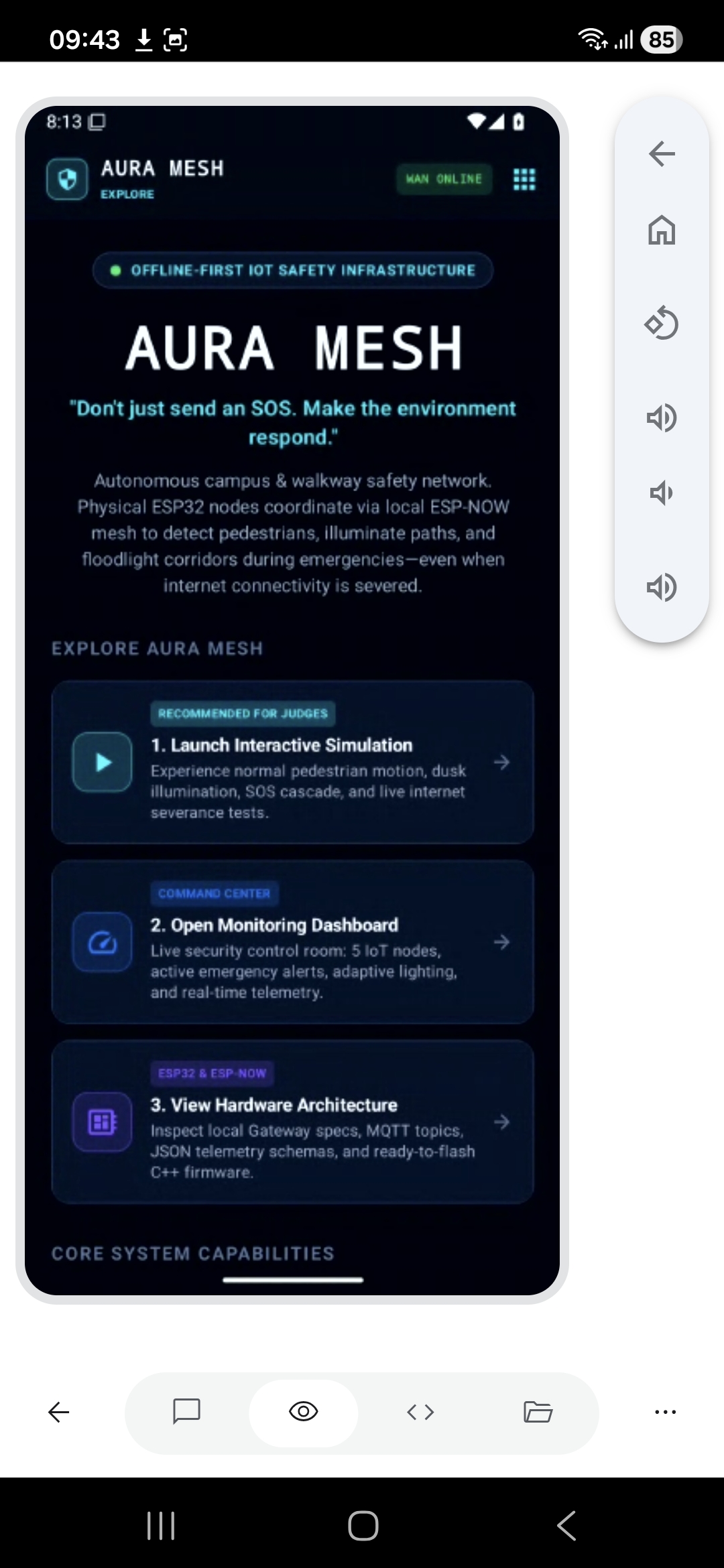
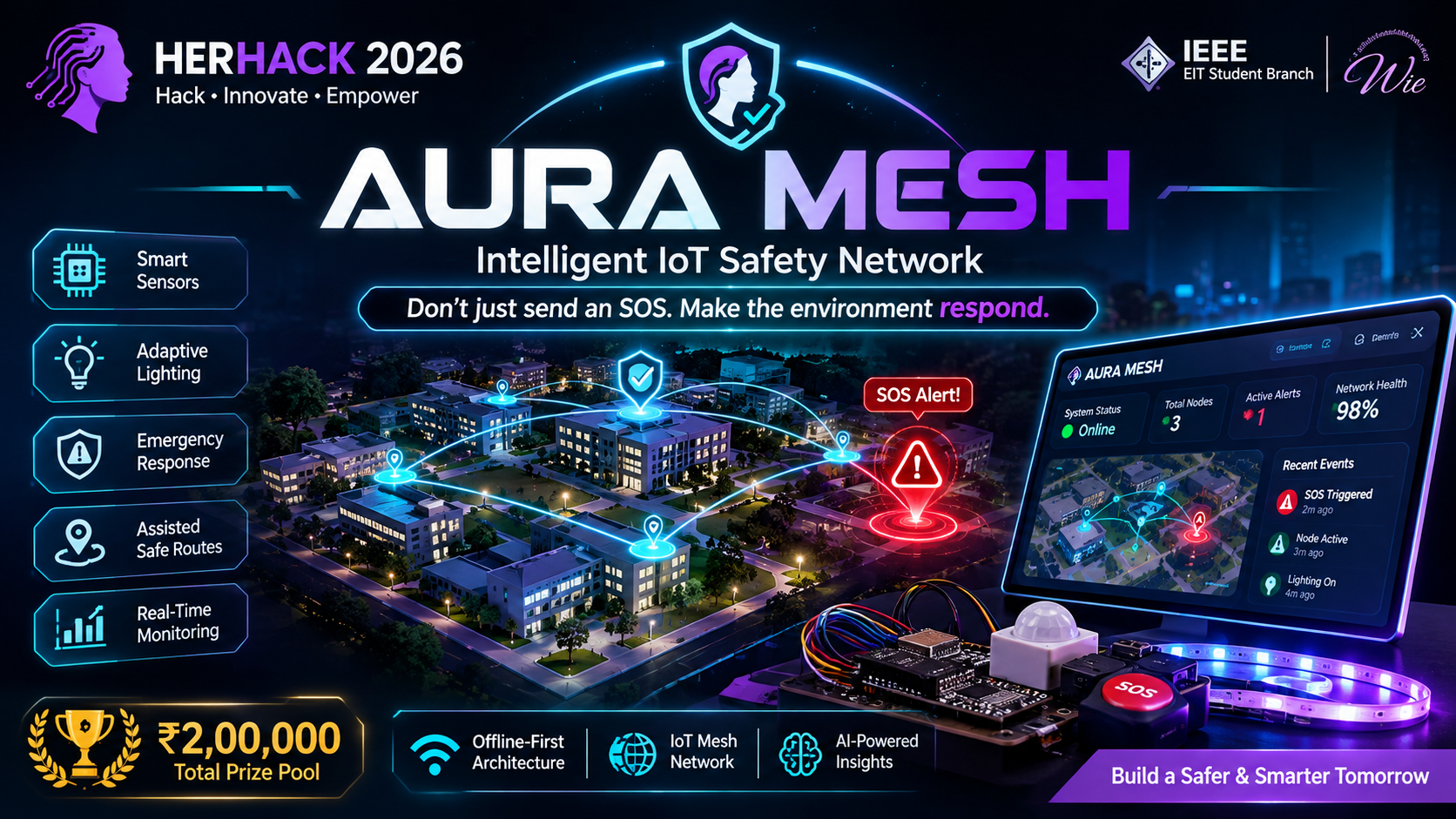
AURA MESH
Don't just send an SOS. Make the environment respond.
Inspiration
Public spaces, educational campuses and pedestrian pathways can become difficult to navigate when lighting is inadequate, security assistance is distant, or internet connectivity is unavailable.
Most conventional safety solutions focus on sending alerts through individual smartphones. We wanted to explore a different approach: what if the surrounding infrastructure itself could respond?
This inspired AURA MESH, an offline-first intelligent IoT safety infrastructure that connects physical sensor nodes to create a coordinated, responsive environment.
What it does
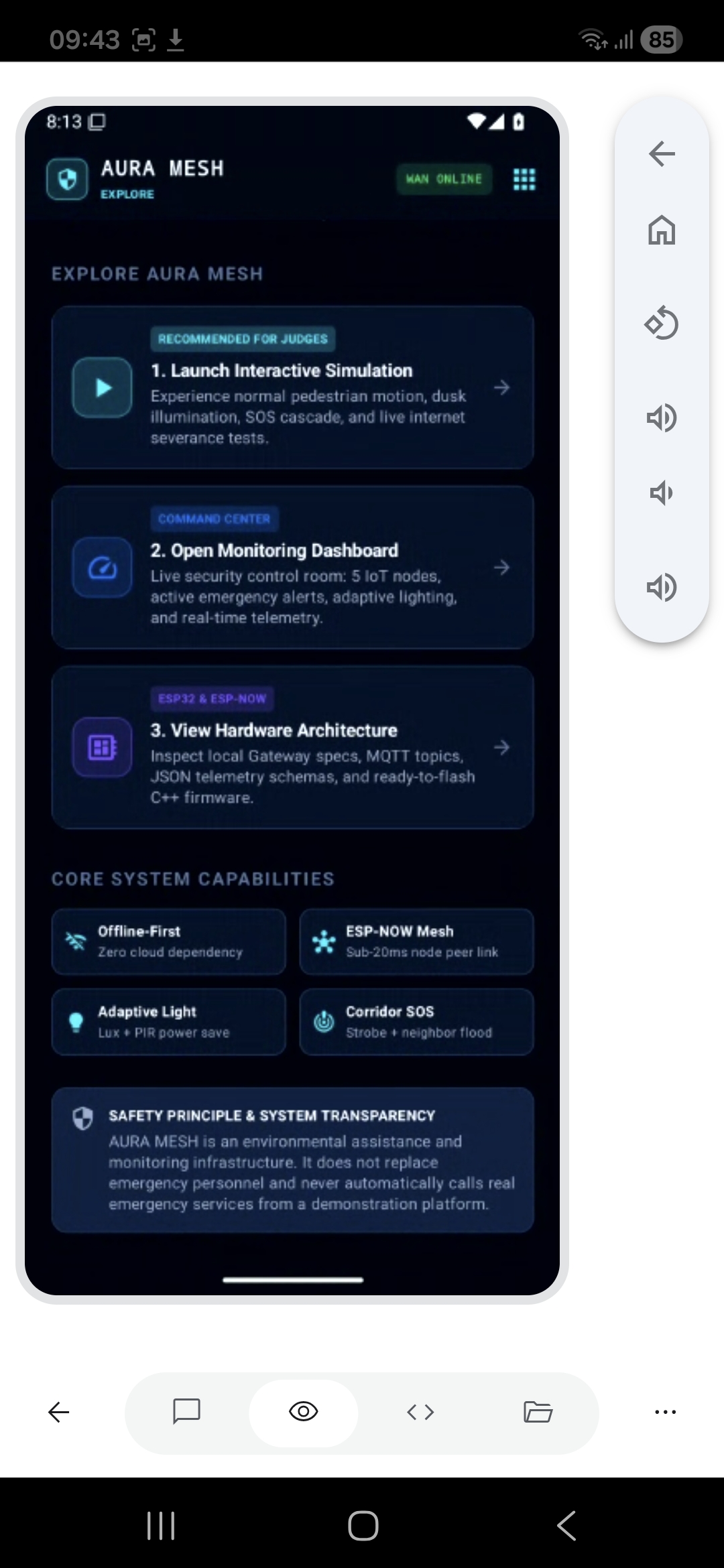
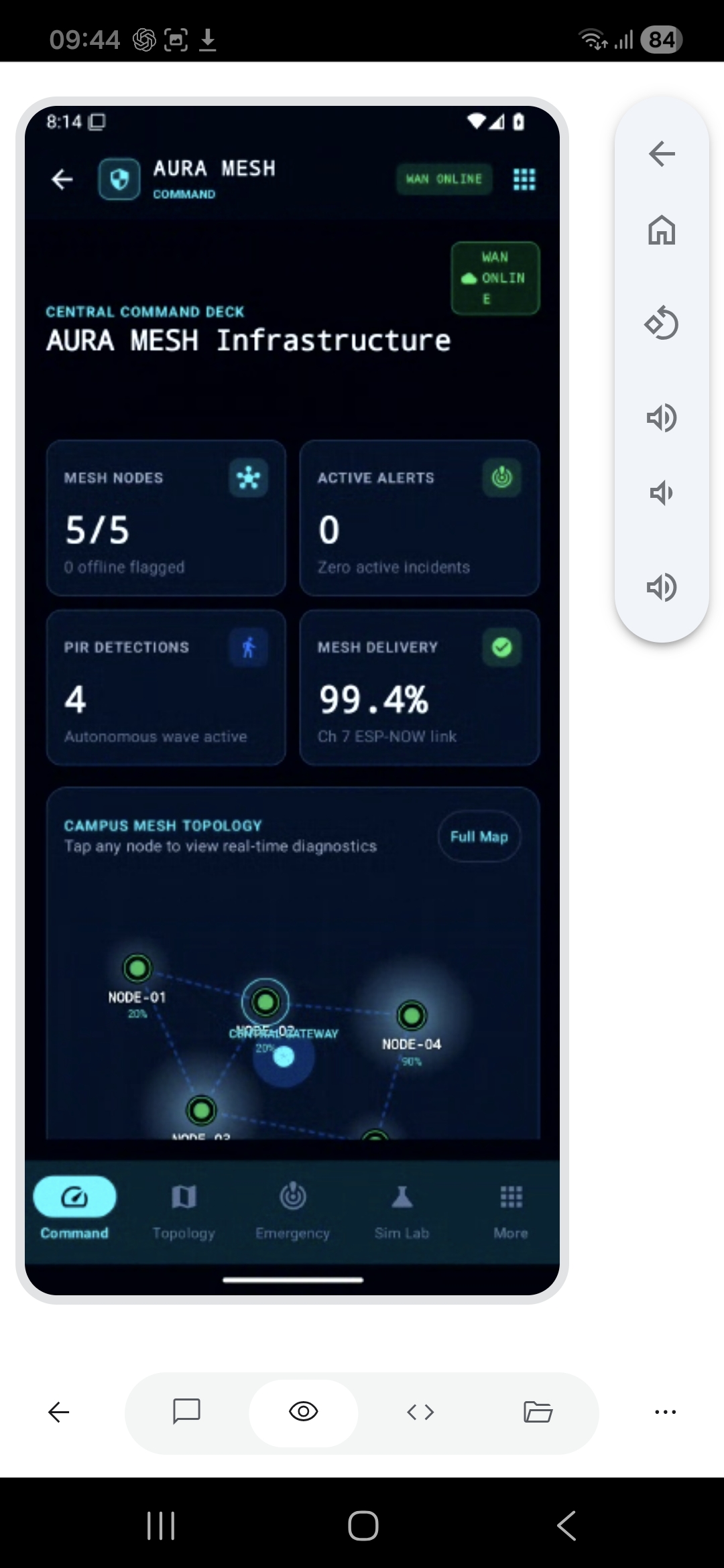
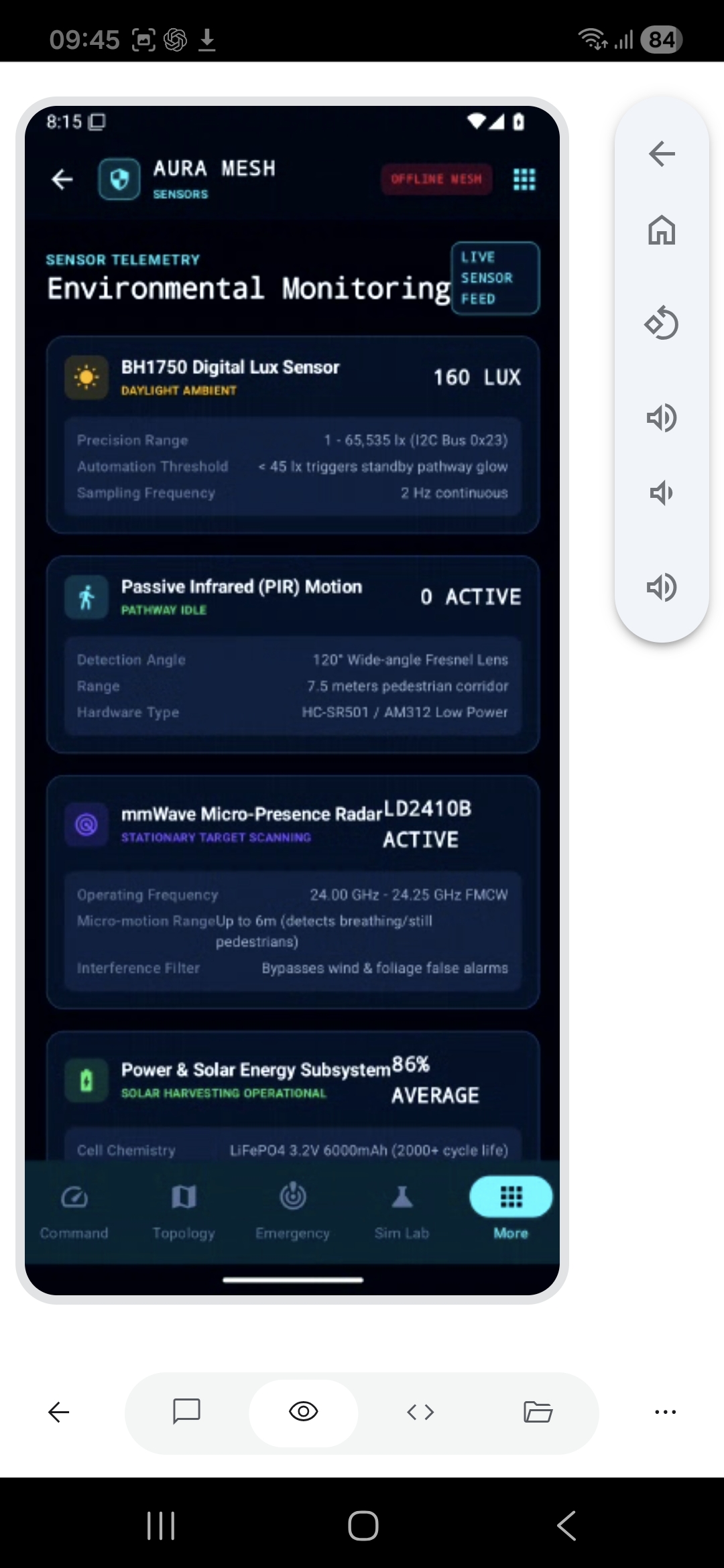
AURA MESH connects distributed IoT nodes equipped with motion sensors, ambient-light sensors, emergency buttons and intelligent lighting controls.
The nodes work together to:
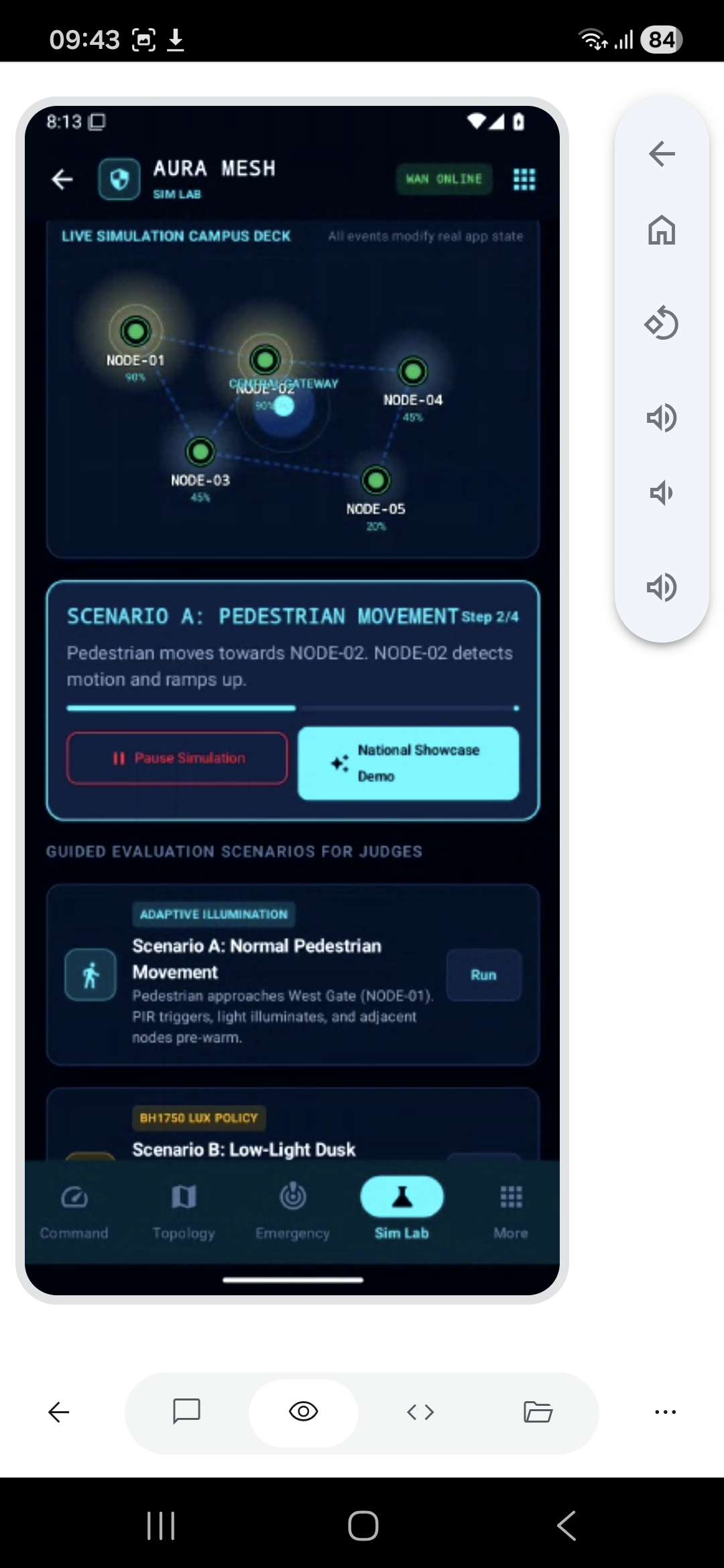
- Detect pedestrian movement.
- Automatically adjust pathway lighting according to environmental conditions.
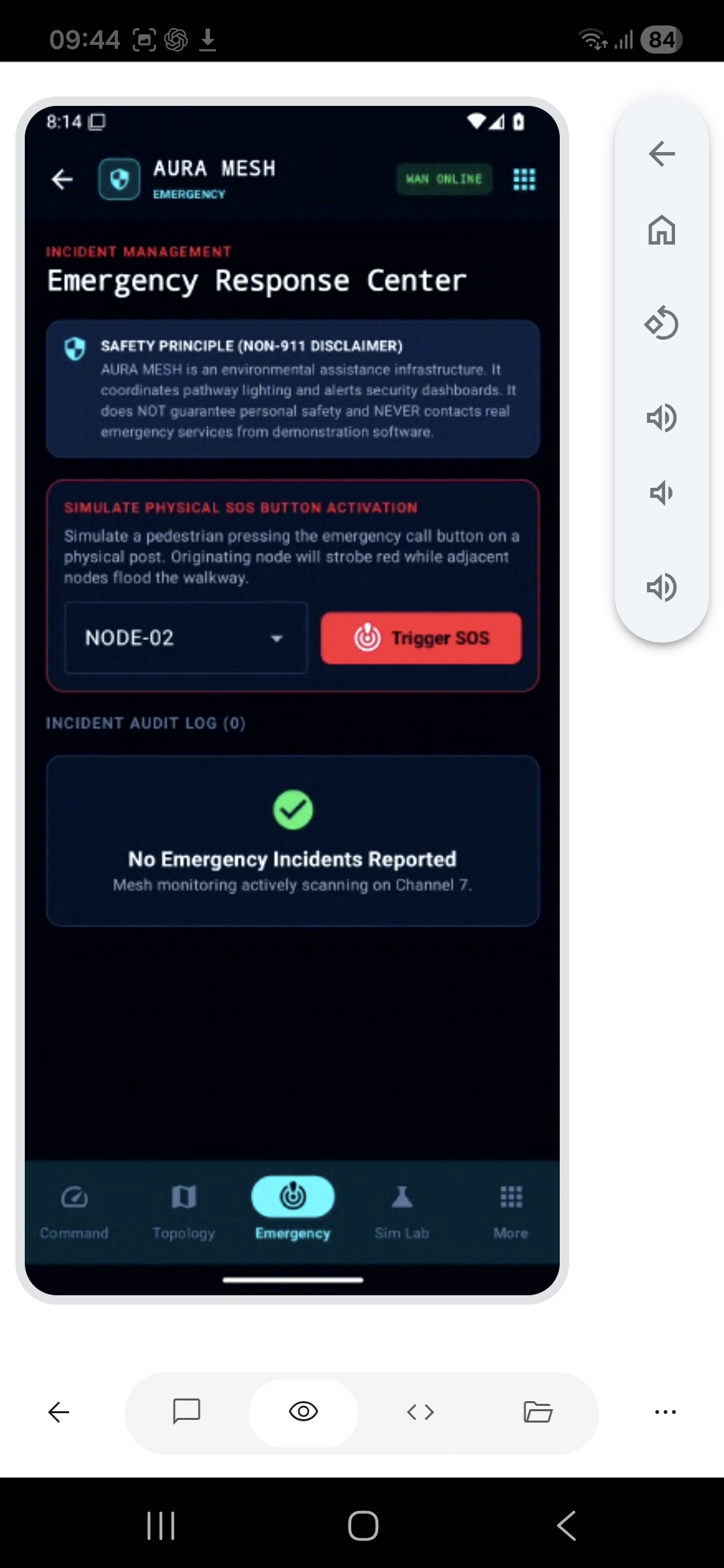
- Allow physical emergency SOS activation.
- Coordinate nearby lighting and alert responses.
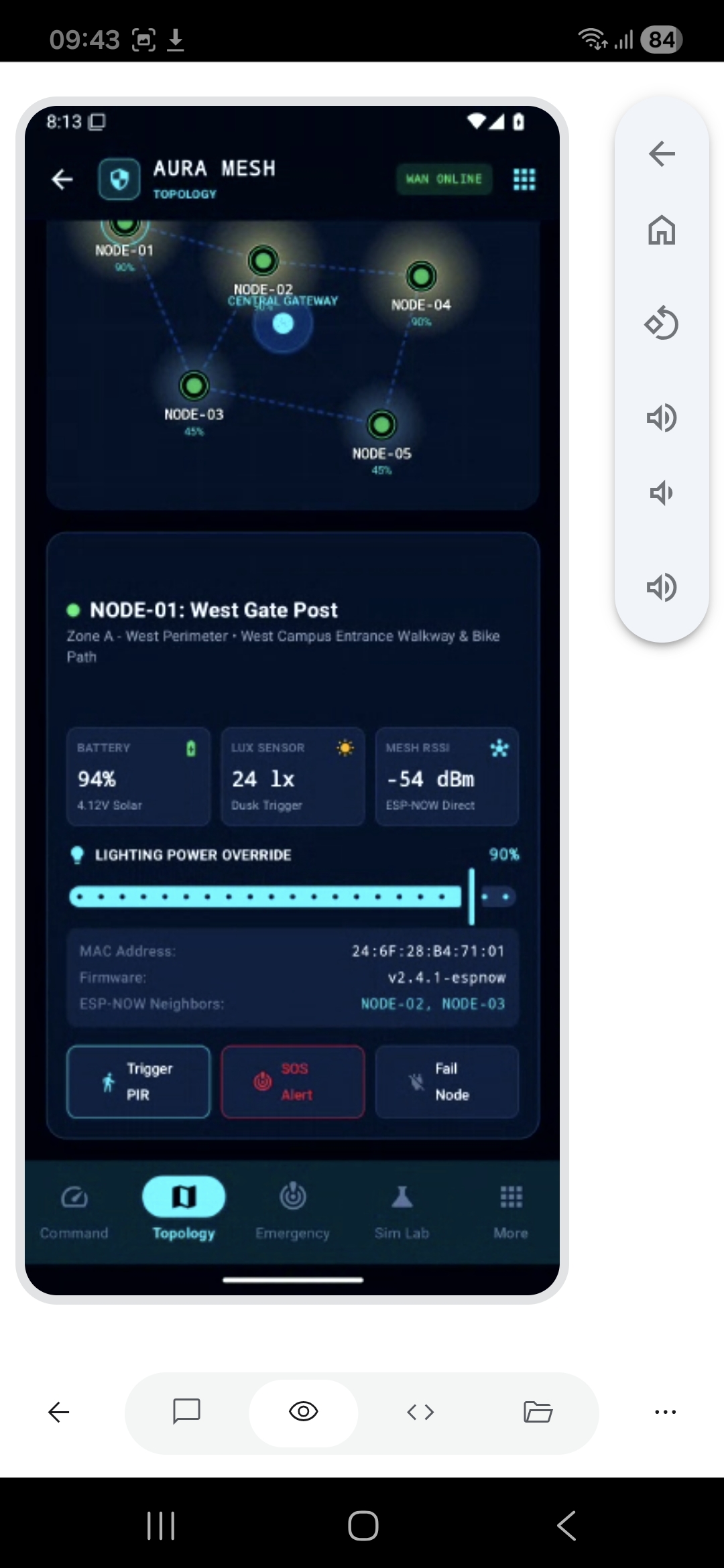
- Monitor connected devices and network health.
- Provide assisted route illumination.
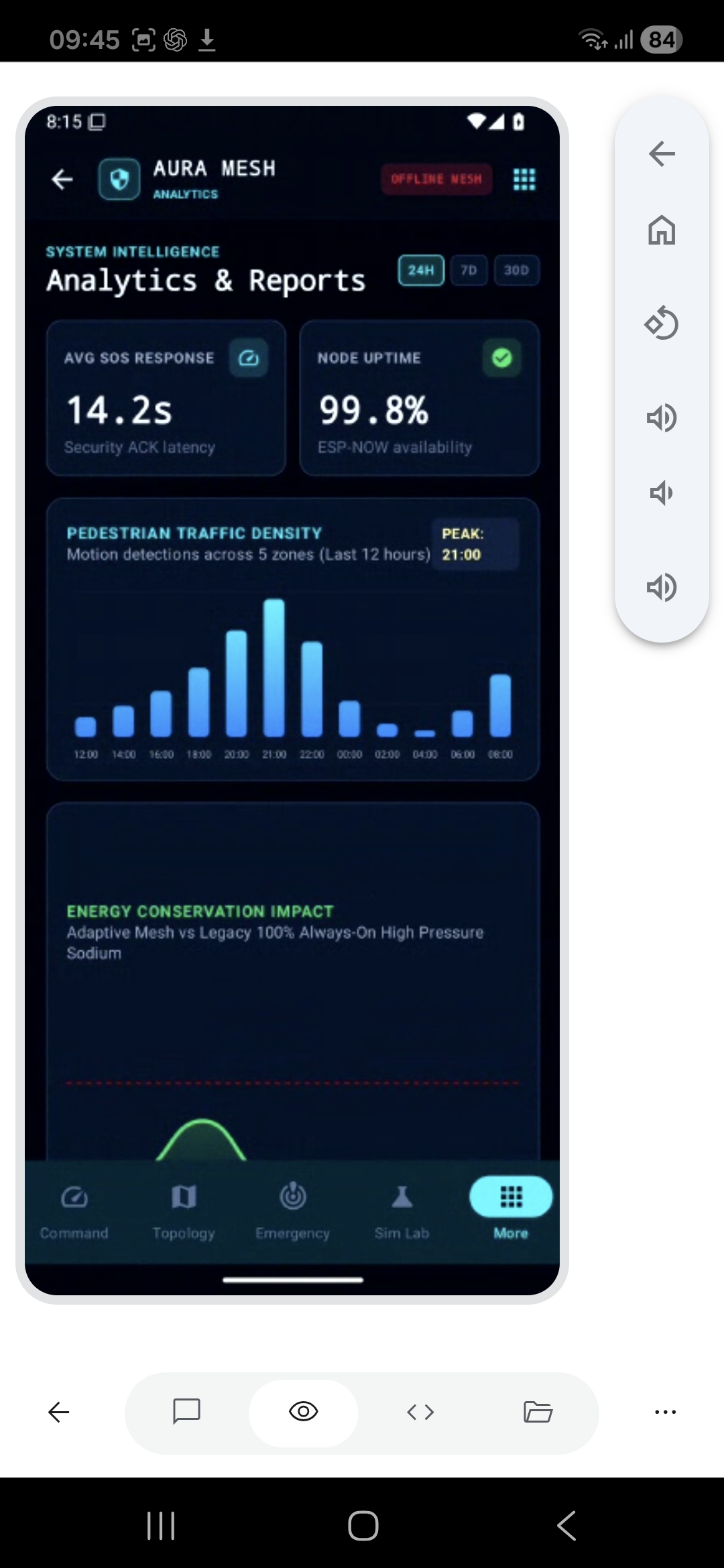
- Maintain incident records and system analytics.
Its central idea is simple: safety infrastructure should be capable of responding locally, not merely waiting for someone to open an application.
How we built it
The system is designed around ESP32-based IoT nodes.
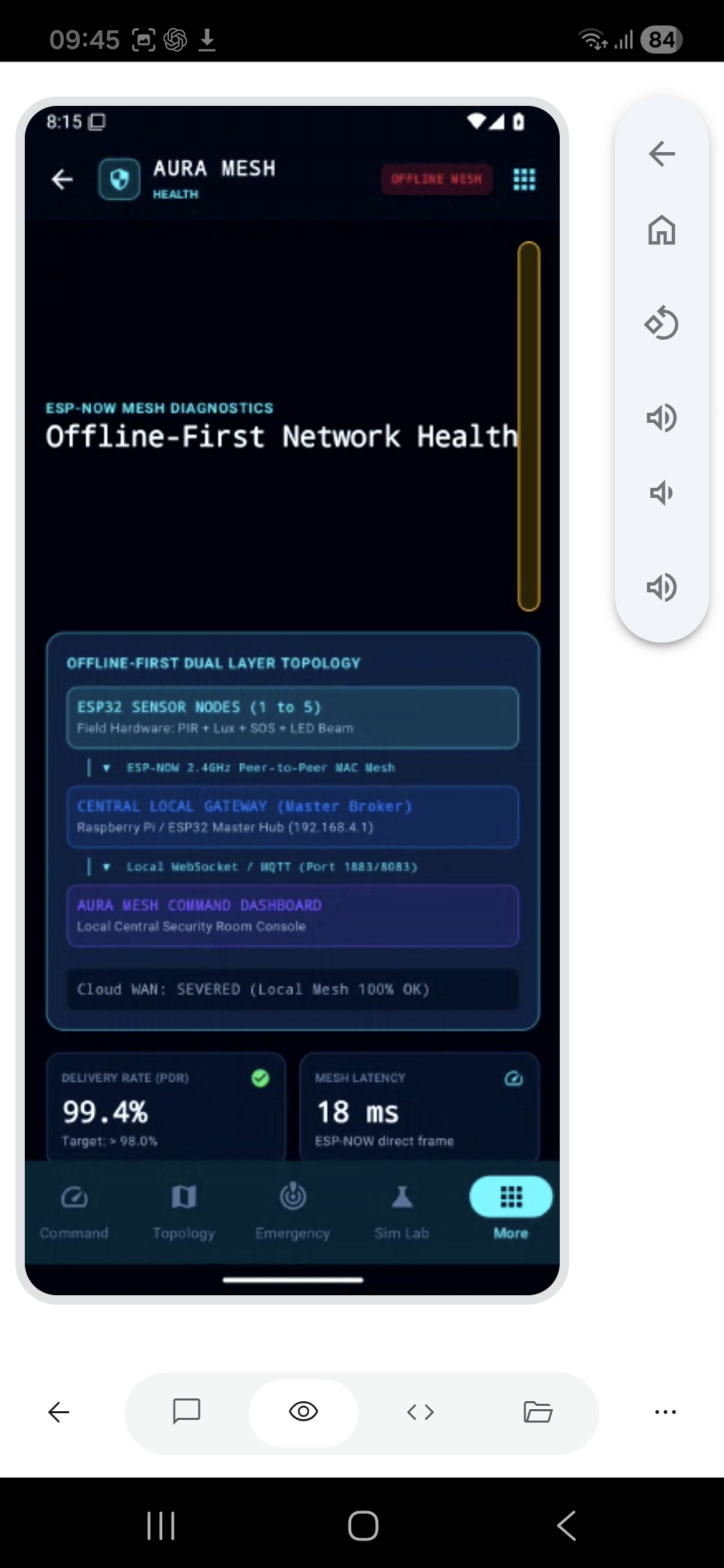
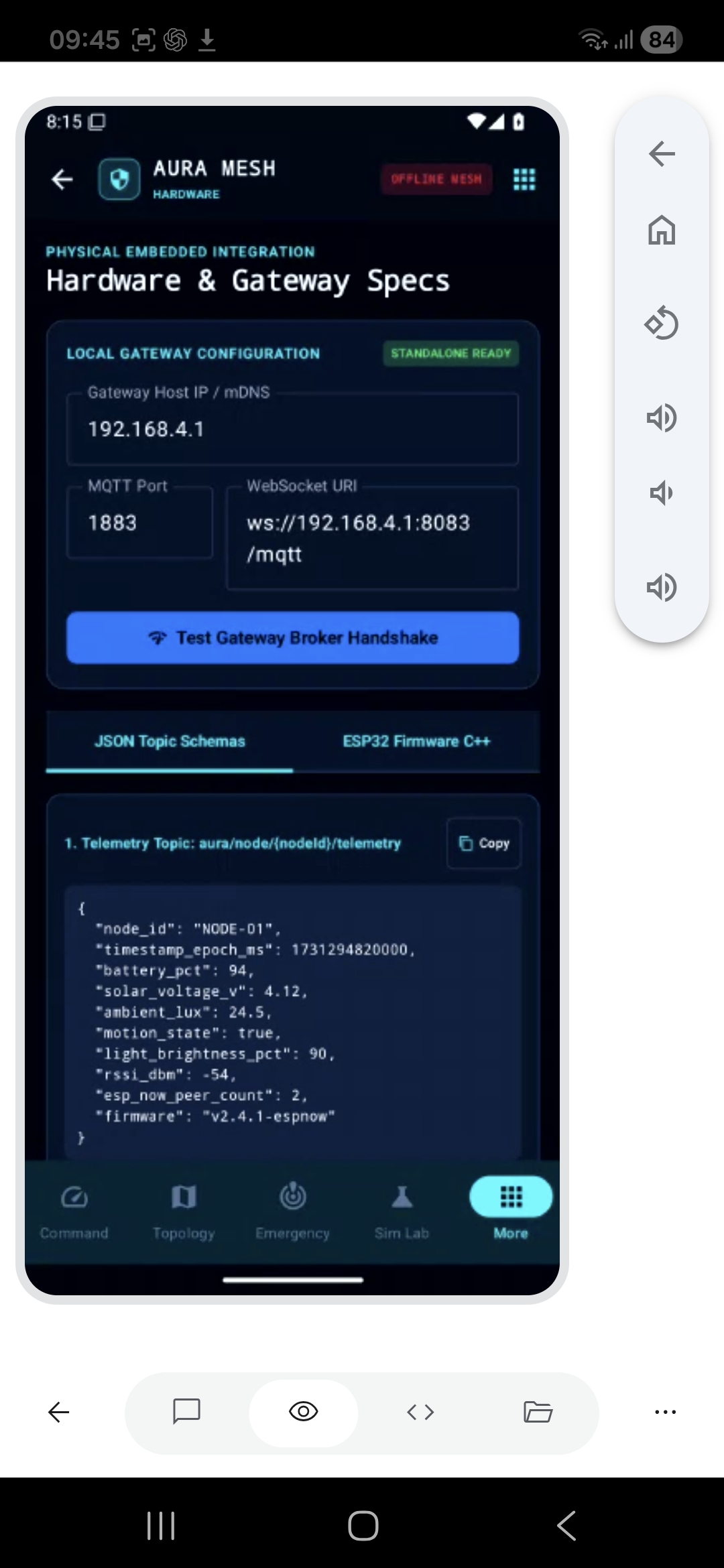
ESP-NOW supports local communication between ESP32 devices, while a local gateway provides communication between the hardware network and the AURA MESH dashboard through MQTT and WebSockets.
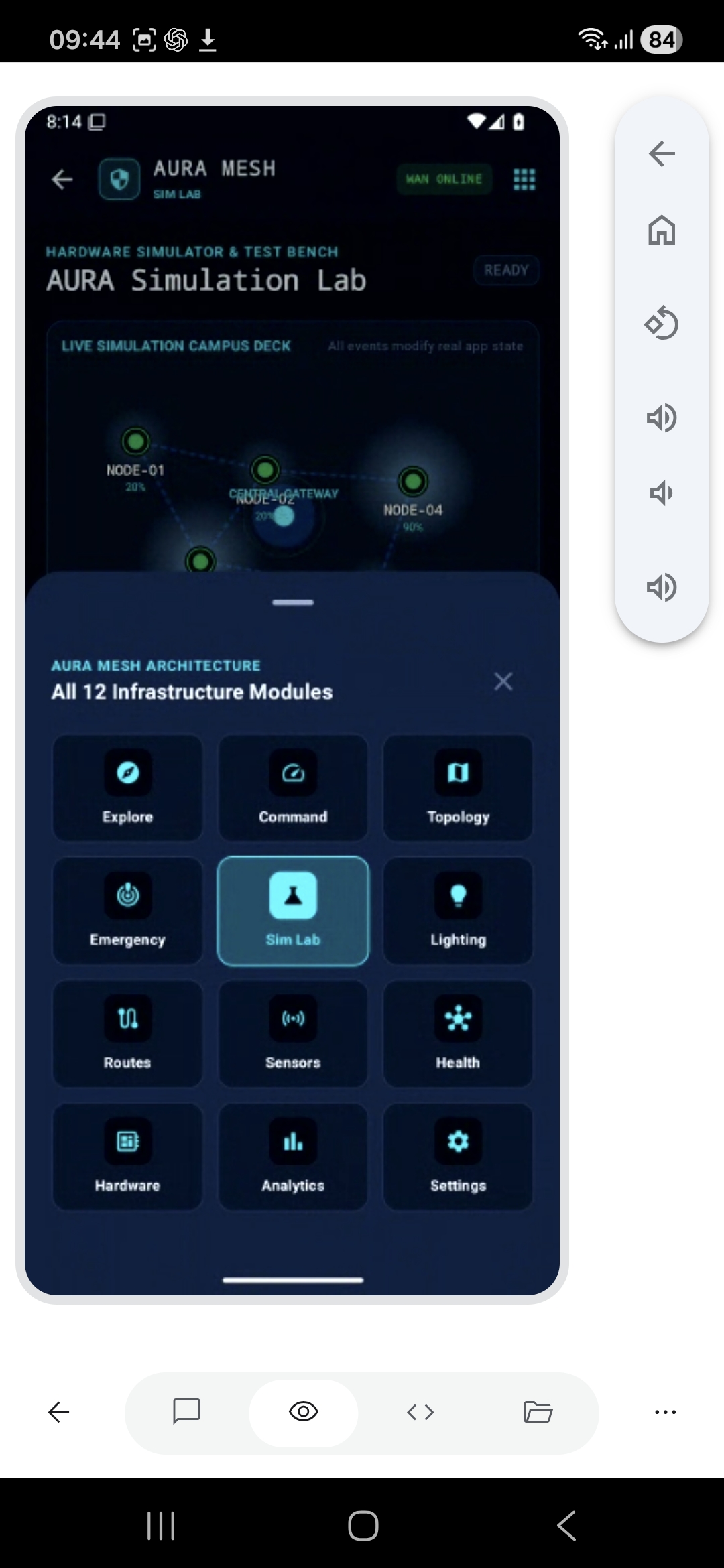
The software platform uses a modular architecture with a real-time monitoring interface, node management, emergency response workflows, adaptive lighting controls, analytics and an interactive simulation environment.
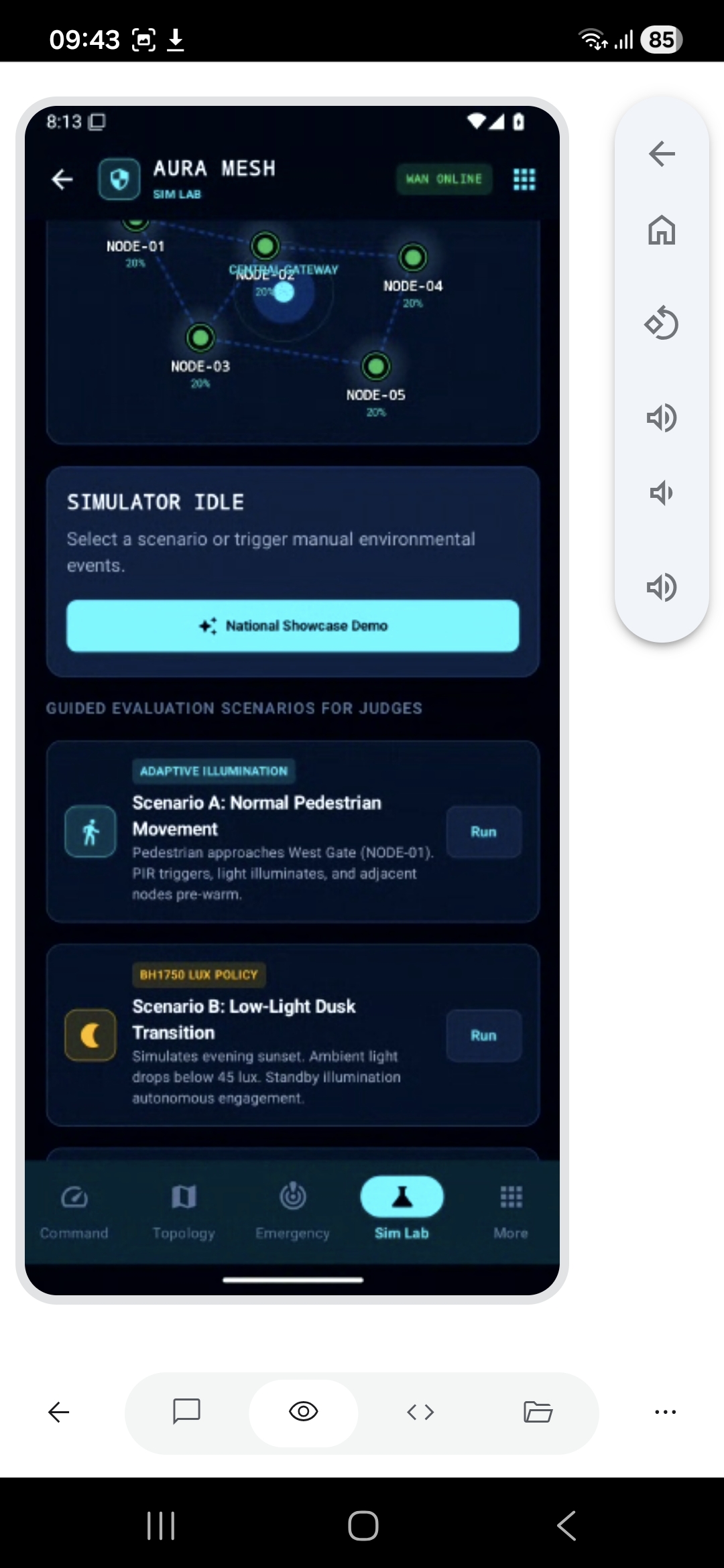
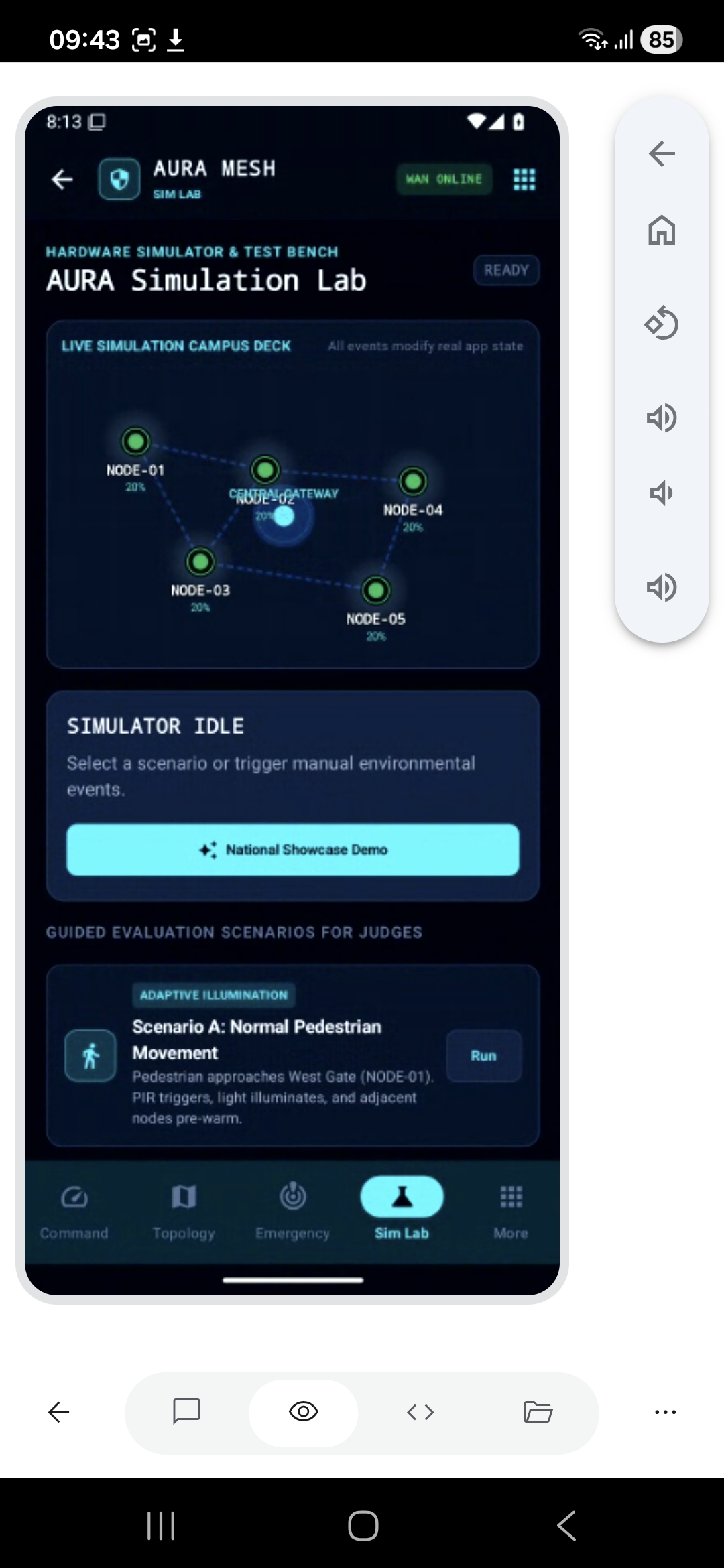
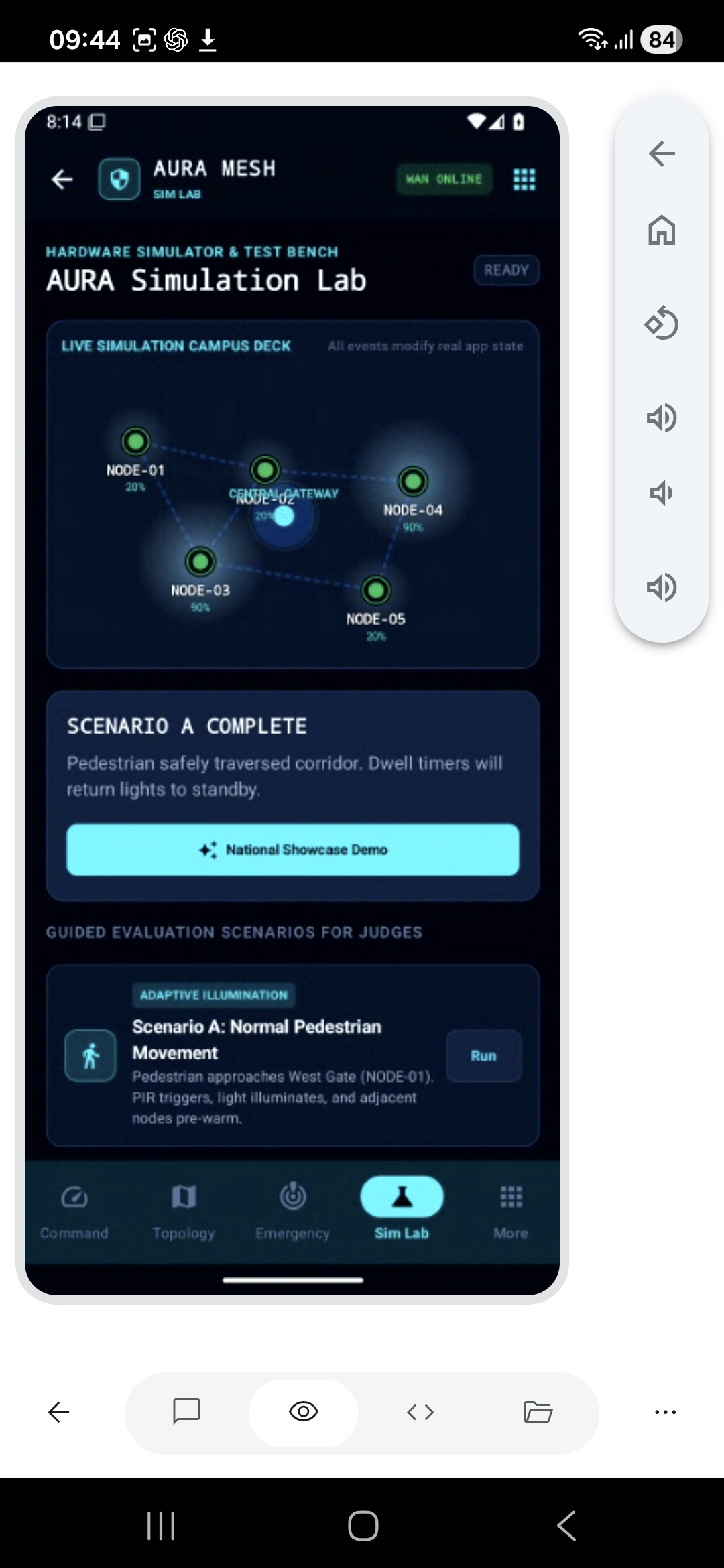
The simulator allows users to explore pedestrian detection, emergency activation, internet disconnection and node failure scenarios.
The architecture separates physical sensor measurements from simulated data so that demonstrations remain transparent.
What makes it different
Unlike a conventional panic-button application, AURA MESH focuses on infrastructure-level coordination.
Its key differentiators are:
- Offline-first local emergency coordination.
- Distributed sensor-based lighting automation.
- Physical SOS integration.
- Network health and node failure monitoring.
- Assisted route illumination.
- A unified monitoring and incident-management dashboard.
The system also avoids unnecessary facial recognition, continuous audio recording and personal surveillance.
Challenges and engineering
The major engineering challenge is designing reliable communication between distributed nodes while maintaining useful local functionality during internet outages.
Other challenges include handling sensor failures, validating emergency messages, preventing duplicate events, maintaining accurate node status and ensuring that the dashboard reflects actual hardware conditions.
We address these through structured device messages, node identification, event timestamps, connection monitoring and separation of local hardware operations from cloud-dependent features.
Impact and future scope
AURA MESH is designed for educational campuses, public walkways, residential communities and other pedestrian environments.
Future development could include additional sensor types, larger mesh deployments, predictive maintenance, energy optimization and integration with institutional security systems.
Our long-term vision is to make public infrastructure more responsive, accessible and reliable.
Our vision
AURA MESH represents a shift from individual emergency applications towards connected, intelligent safety infrastructure.
Don't just send an SOS. Make the environment respond.# Inspiration
What it does
How we built it
Challenges we ran into
Accomplishments that we're proud of
What we learned
What's next for AURA MESH: Intelligent IoT Safety Network
Built With
- ai
- chatgpt
