-
-
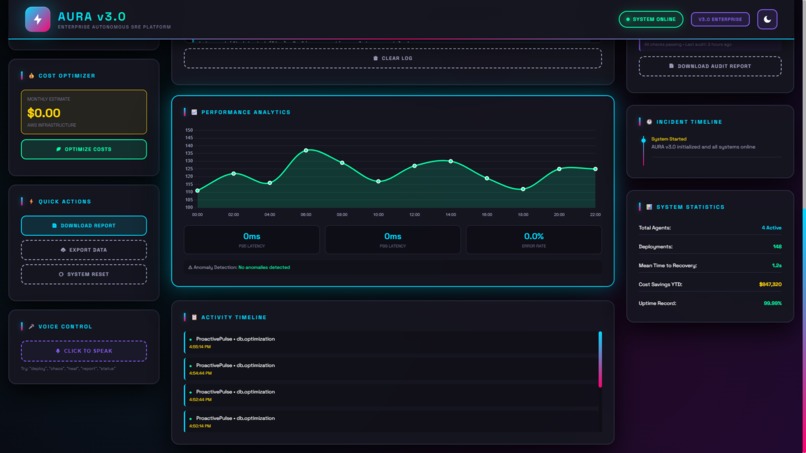
Multi-signal correlation graph showing alert clustering, timeline evolution, and root-cause indicators.
-
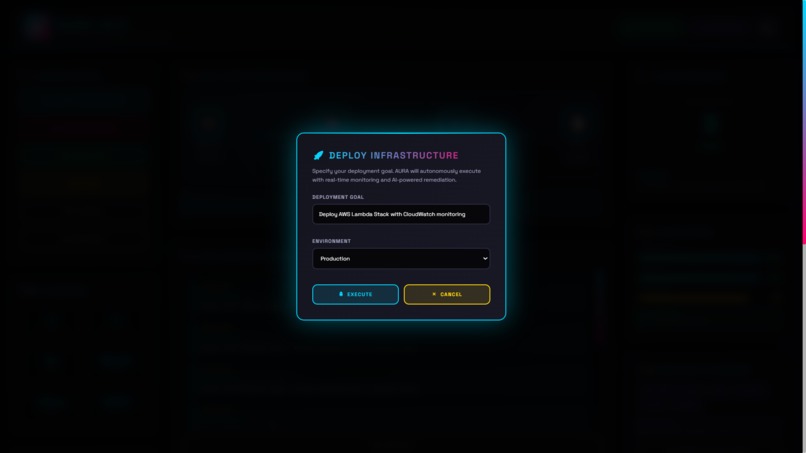
LLM-generated prioritized actions with risk tagging and human-approval safeguards.
-
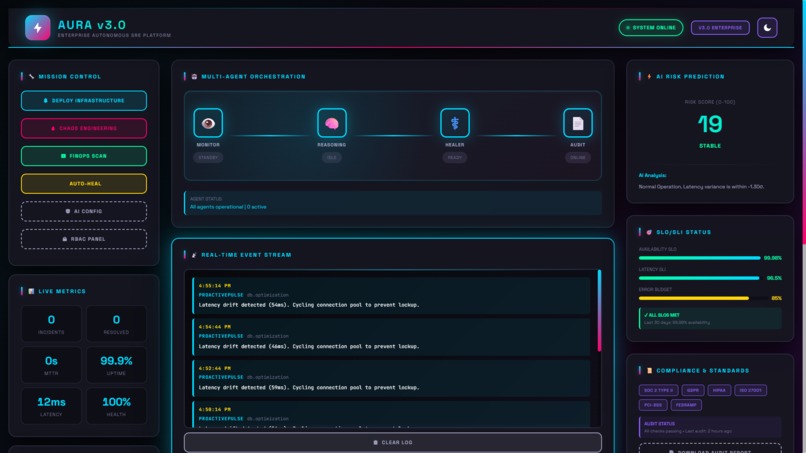
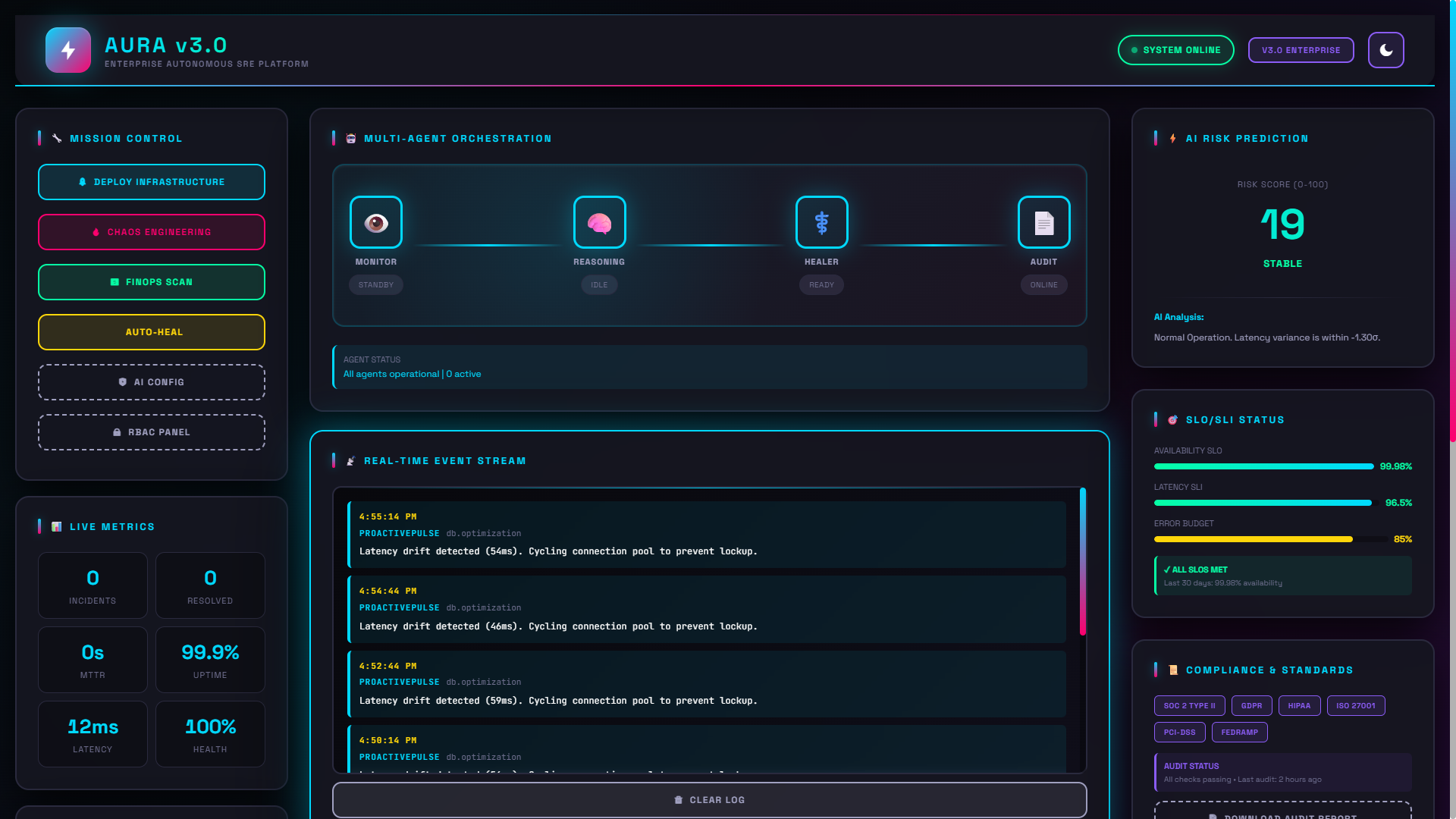
Unified incident view with correlated AWS alerts, severity scoring, and real-time AI-generated summary.
-
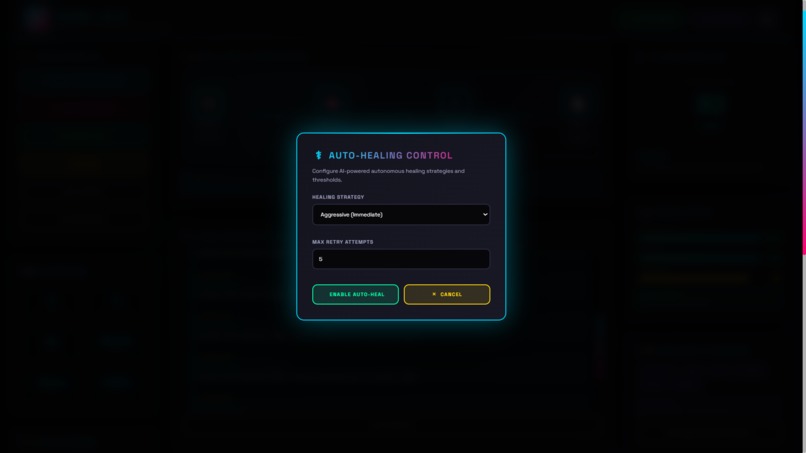
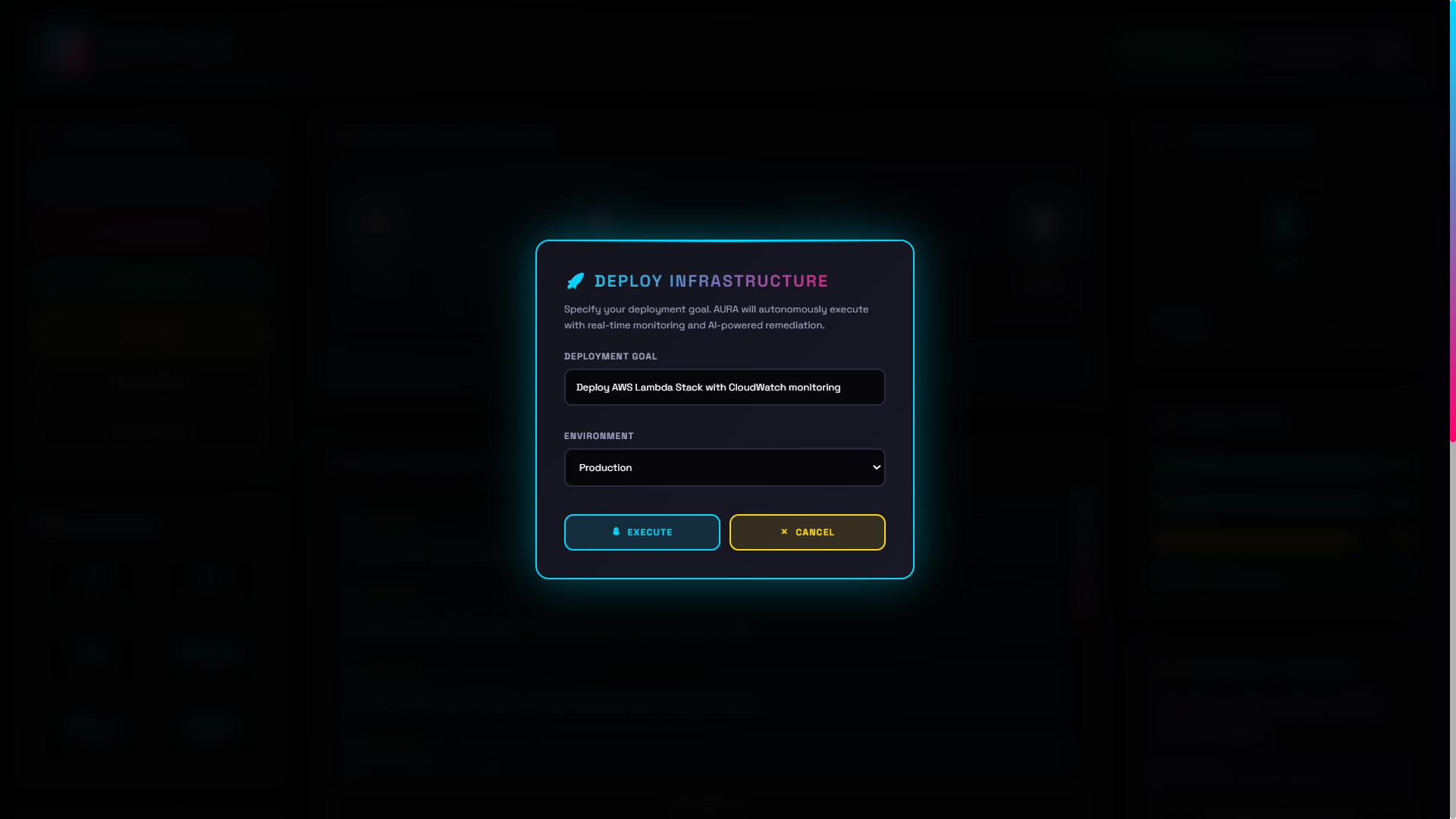
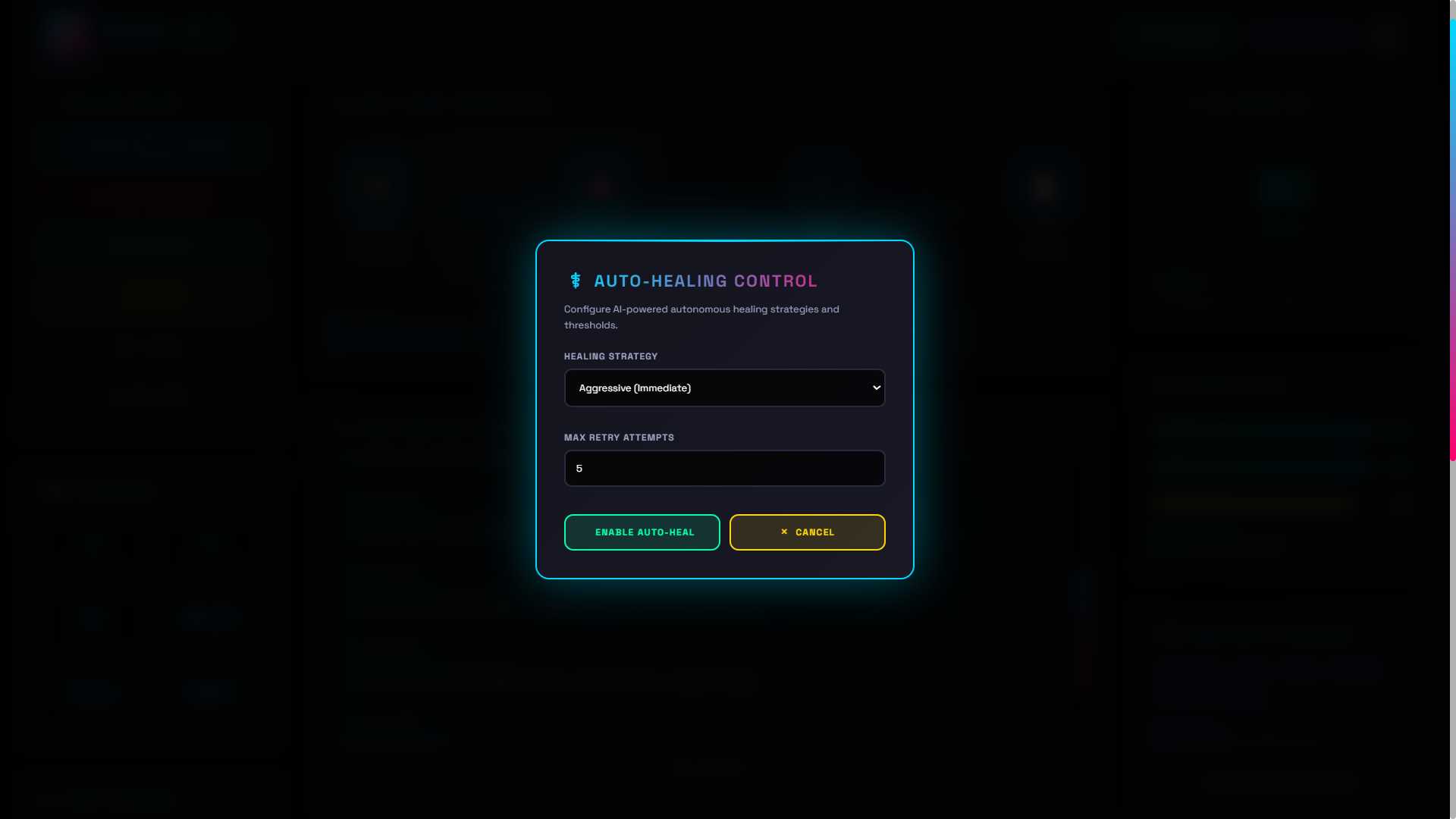
Guarded automation flow using Lambda and Systems Manager with explicit approval control.
-
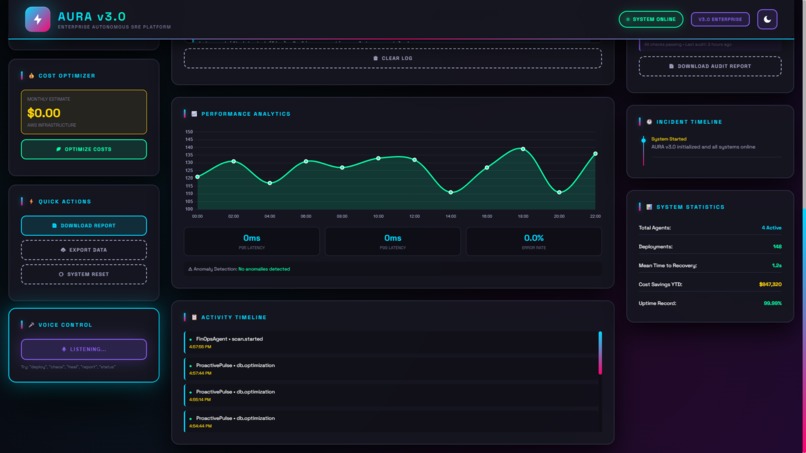
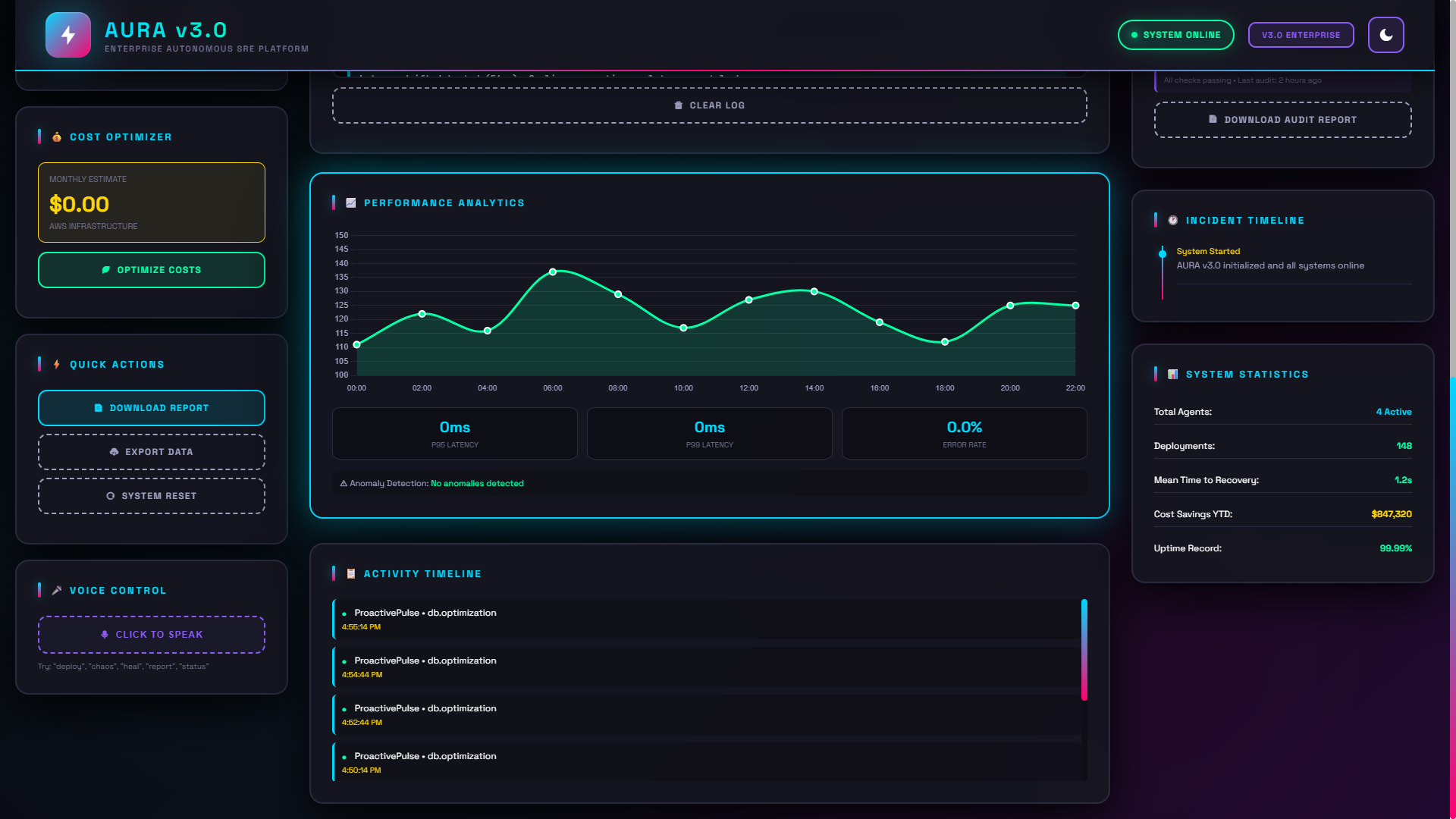
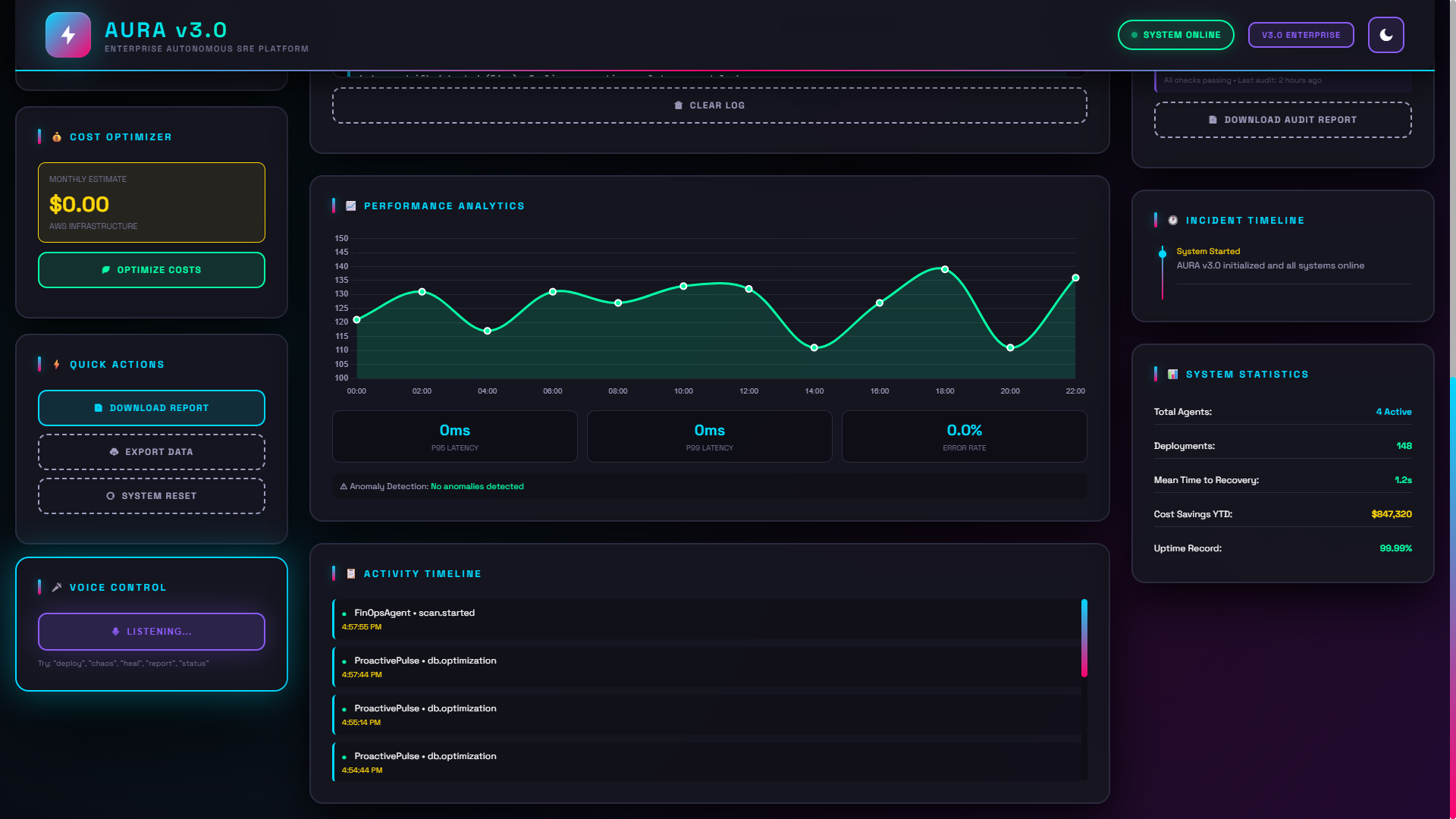
Real-time status tracking, resource impact metrics, and auditable decision history.
Inspiration
Modern cloud teams don’t fail because they lack monitoring — they fail because they are drowning in signals.
Security and SRE teams receive alerts from CloudWatch, GuardDuty, Security Hub, and other AWS services, but correlation, prioritization, and coordinated response still happen manually across dashboards, chats, and static runbooks.
AURA was built around a simple question:
What if every team had an AI Incident Commander that could think clearly under pressure, correlate AWS signals in real time, and guide responders step-by-step?
What it does
AURA is an AI-powered Incident Commander for AWS environments.
It:
Ingests alerts and logs from AWS services
Correlates related events into structured incidents
Generates concise, context-aware incident summaries
Recommends prioritized next actions
Orchestrates guarded runbooks using AWS Lambda and Systems Manager
Maintains a live, auditable incident timeline
Instead of responders switching between dashboards and guesswork, AURA provides:
Situational awareness → Decision support → Controlled automation
How we built it
AURA follows a layered architecture aligned with AWS best practices:
- Ingestion & Normalization Layer
Alerts from CloudWatch, EventBridge, GuardDuty, and Security Hub are normalized into a unified incident schema.
- Enrichment & Context Layer
We enrich signals with metadata such as service ownership, severity mapping, and resource context.
- AI Analysis Layer
An LLM-driven analysis engine:
Correlates multi-alert incidents
Generates structured summaries
Suggests ranked response actions
Explains reasoning for transparency
- Orchestration Layer
Safe playbooks are executed via:
AWS Lambda
AWS Systems Manager
Controlled approval gates
- Web Dashboard
Built with React + Next.js frontend and FastAPI backend, providing:
Real-time incident view
Action approvals
Timeline tracking
Post-incident logs
The architecture separates intelligence from automation to ensure safe, explainable AI-assisted operations.
Challenges we ran into
- Signal Noise vs. Real Incidents
Multiple alerts from different services often describe the same root cause. Designing correlation logic that avoids duplication while preserving context required careful modeling.
- AI Consistency
LLMs can produce vague suggestions. We had to:
Structure prompts tightly
Constrain outputs into defined schemas
Ensure recommendations are actionable, not generic
- Safe Automation Boundaries
We explicitly defined:
What can be auto-executed
What requires human approval
What should remain advisory
This balance was critical to align with responsible AI and security practices.
Accomplishments that we're proud of
Built a working AI-assisted incident response architecture aligned with AWS patterns
Converted “AI copilot” theory into a practical Incident Commander model
Implemented explainable recommendations instead of black-box automation
Designed a modular system that can extend to security, reliability, and generative-AI workloads
Most importantly, AURA reduces cognitive overload during incidents — where clarity matters most.
What we learned
Incident response is fundamentally a context management problem
AI is most valuable when it structures chaos, not when it replaces humans
Automation must be guarded, auditable, and explainable
Clear architectural separation (ingestion → enrichment → AI → orchestration) dramatically improves reliability
We also learned that strong AI systems depend more on structured inputs and constraints than raw model power.
What's next for AURA Incident Commander
Next steps include:
Deeper integration with IAM, asset inventory, and identity context
Agentic multi-step playbooks for complex incidents
Slack / Teams integration for collaboration
Automated post-incident RCA report generation
Support for generative-AI workload monitoring
Adaptive learning from past incidents
Our goal is to evolve AURA into a central incident intelligence layer for AWS environments
Built With
- amazon
- amazon-web-services
- cloudwatch
- eventbridge
- fastapi
- guardduty
- hub
- lambda
- manager
- mongodb
- next.js
- python
- react
- security
- systems
- typescript

Log in or sign up for Devpost to join the conversation.