-
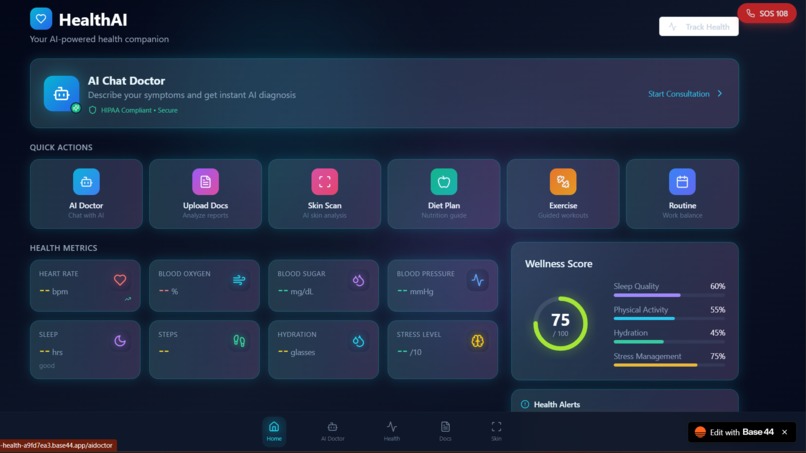
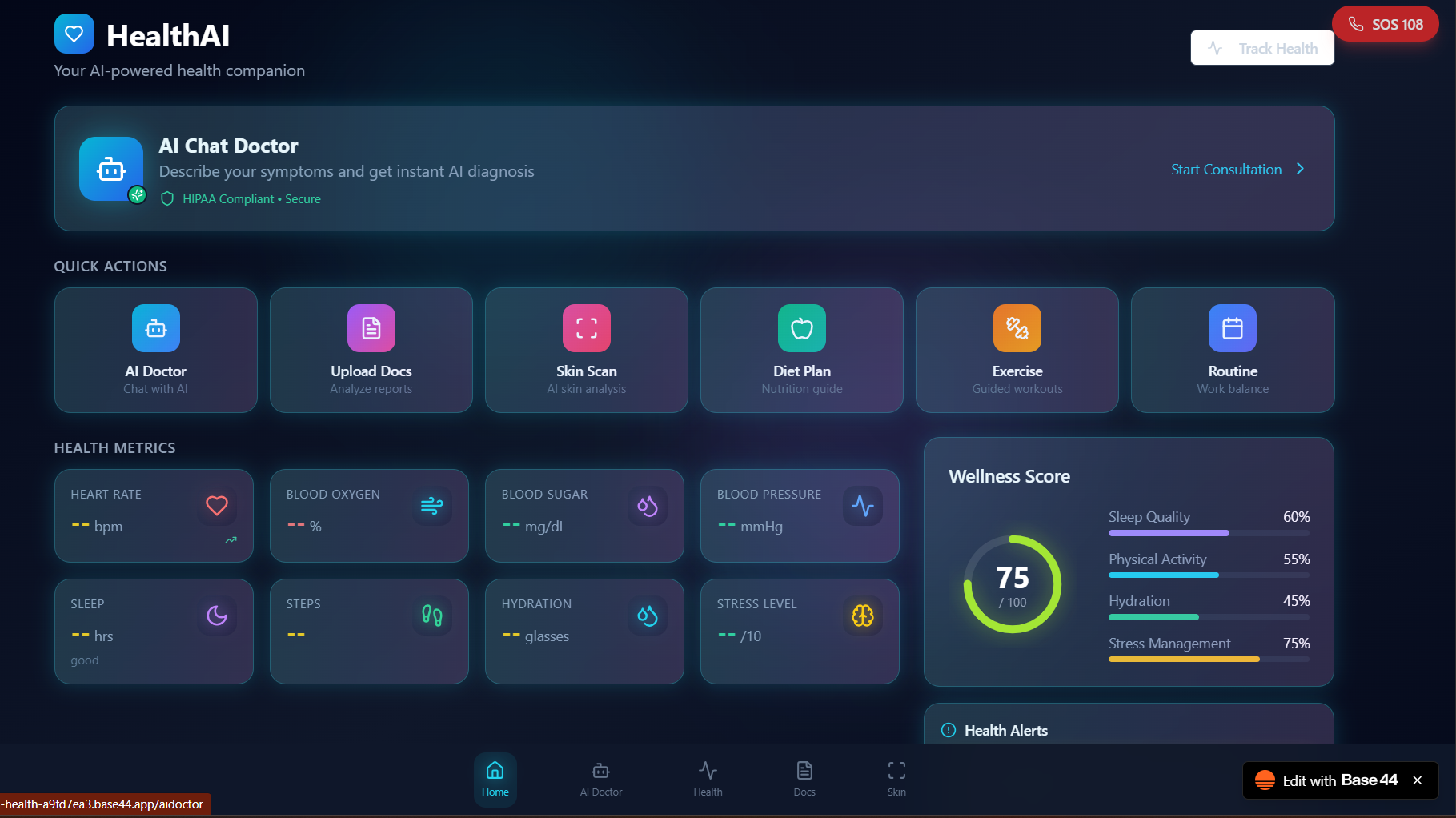
HOME PAGE
-
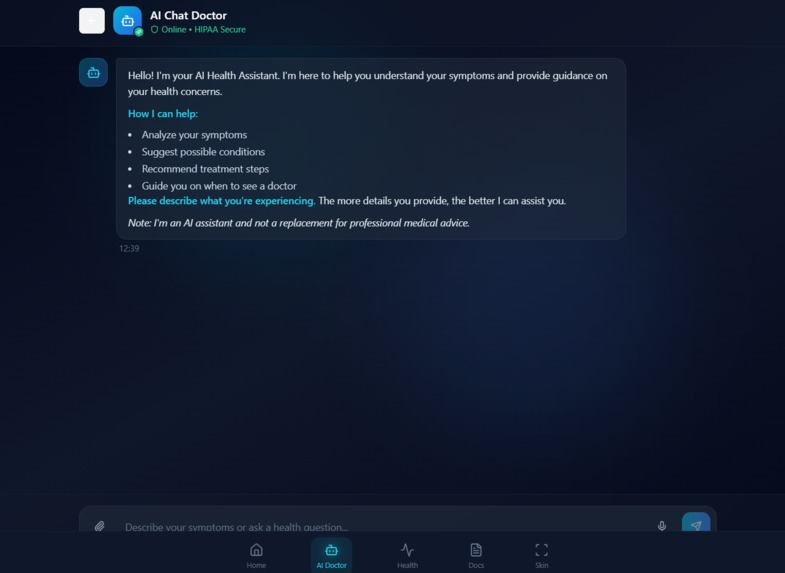
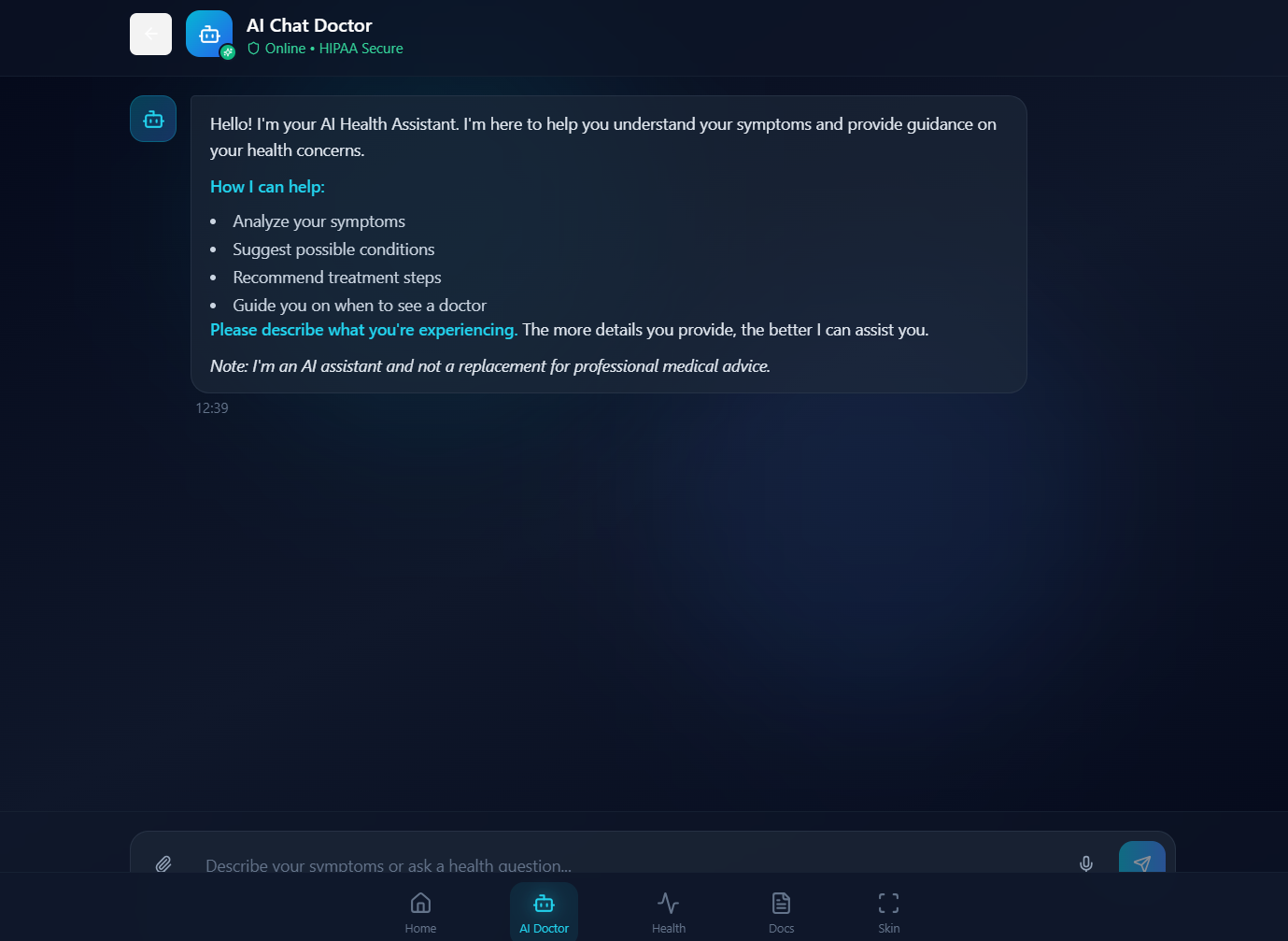
AI CHAT DOC
-
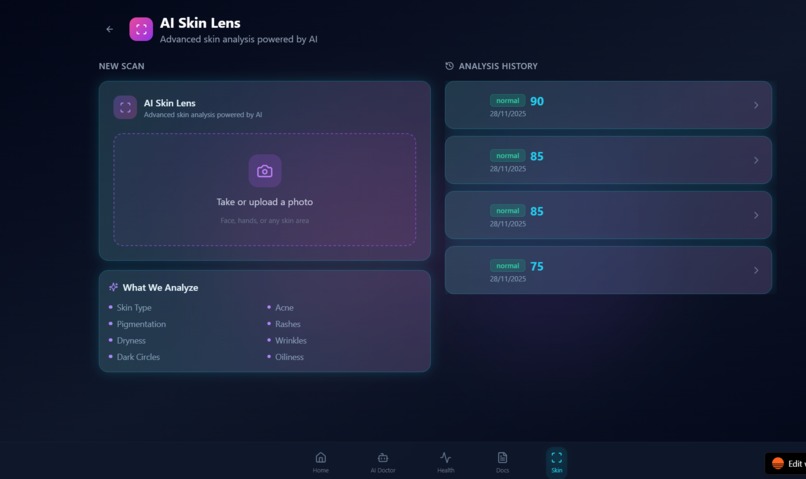
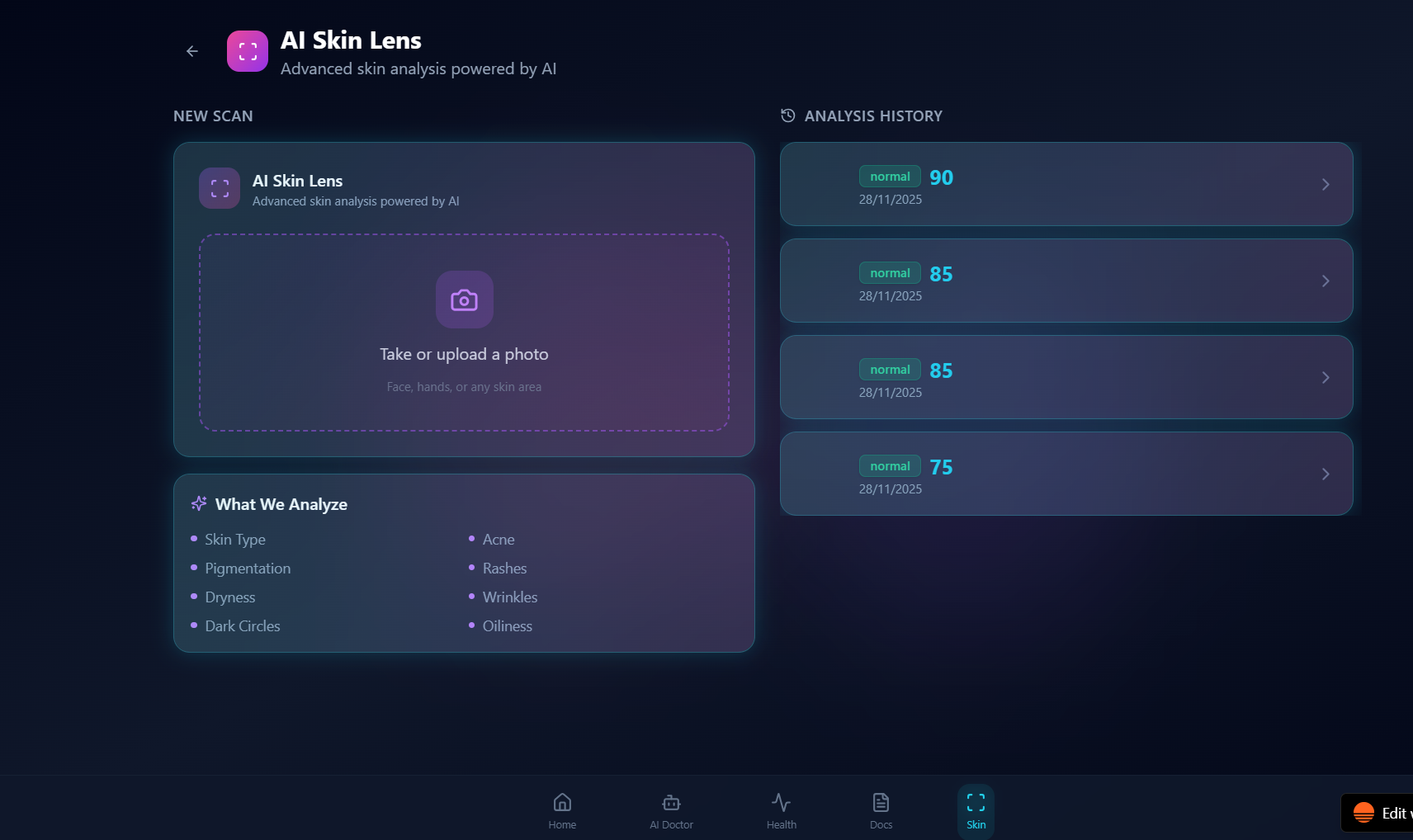
SKIN SCAN
-
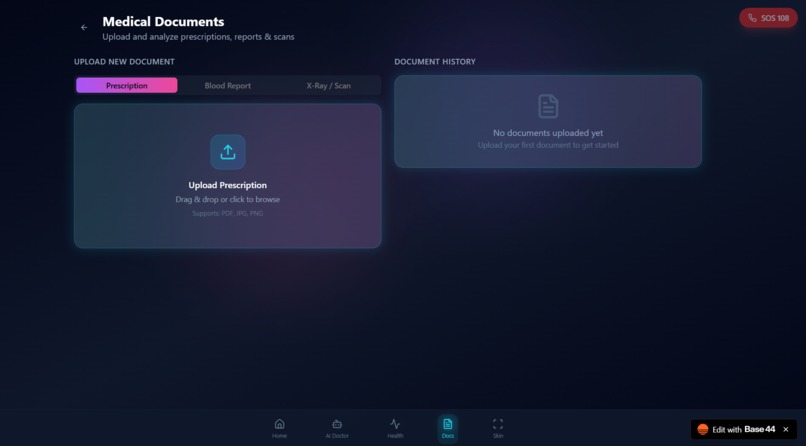
MEDICAL REPORT
-
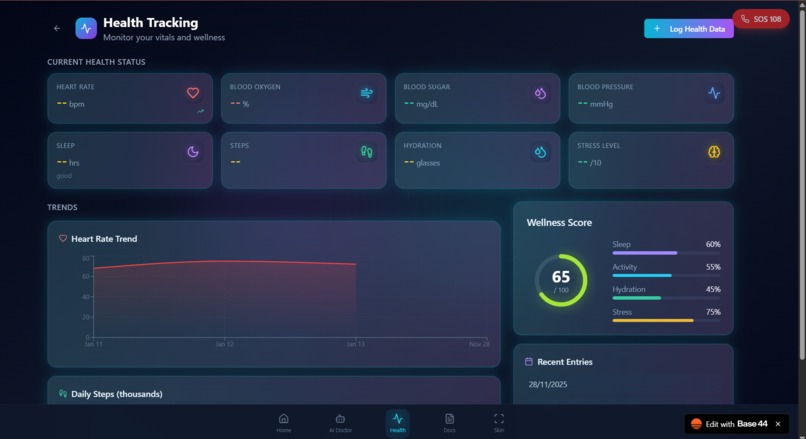
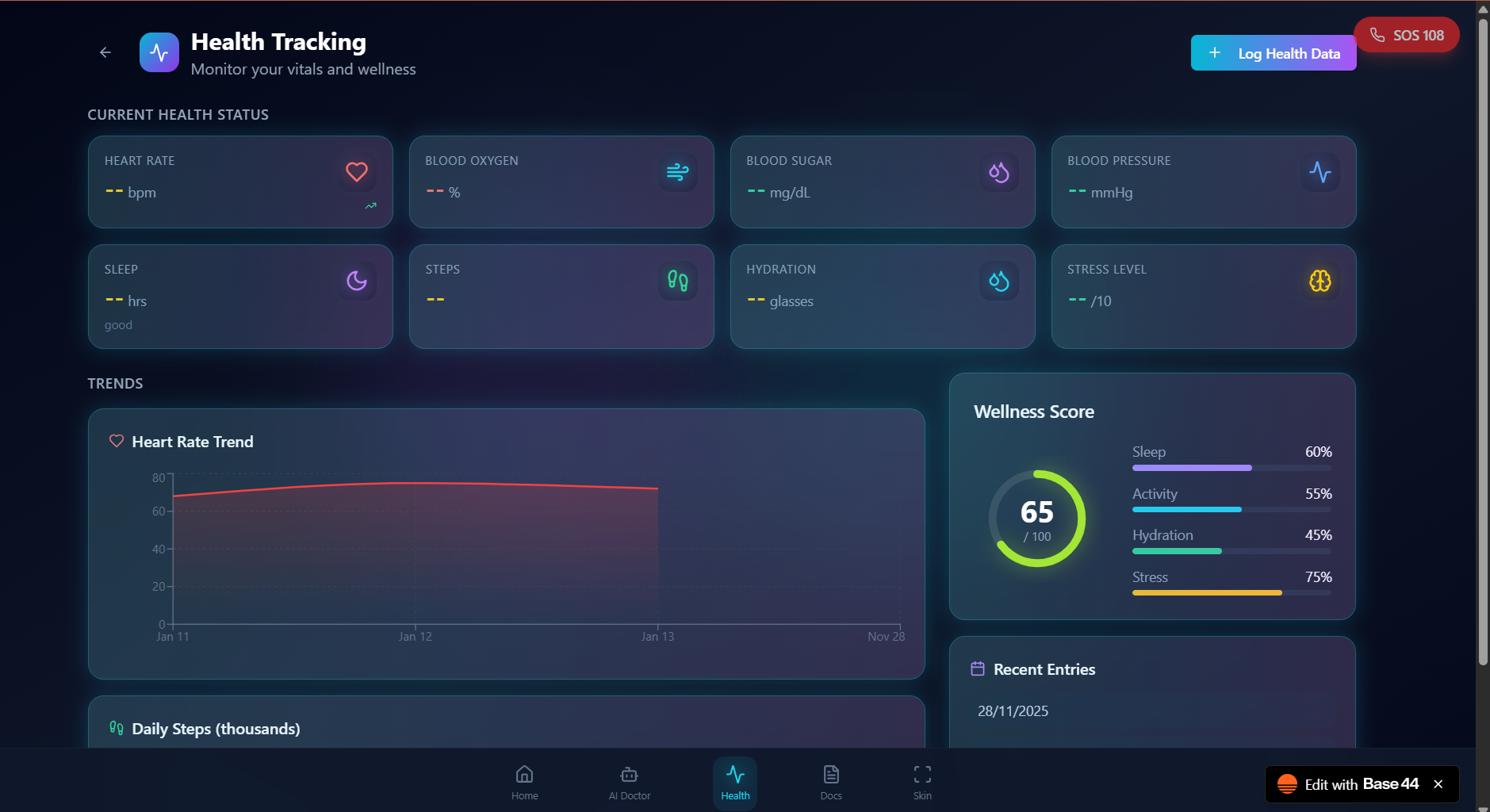
HEALTH TRACK
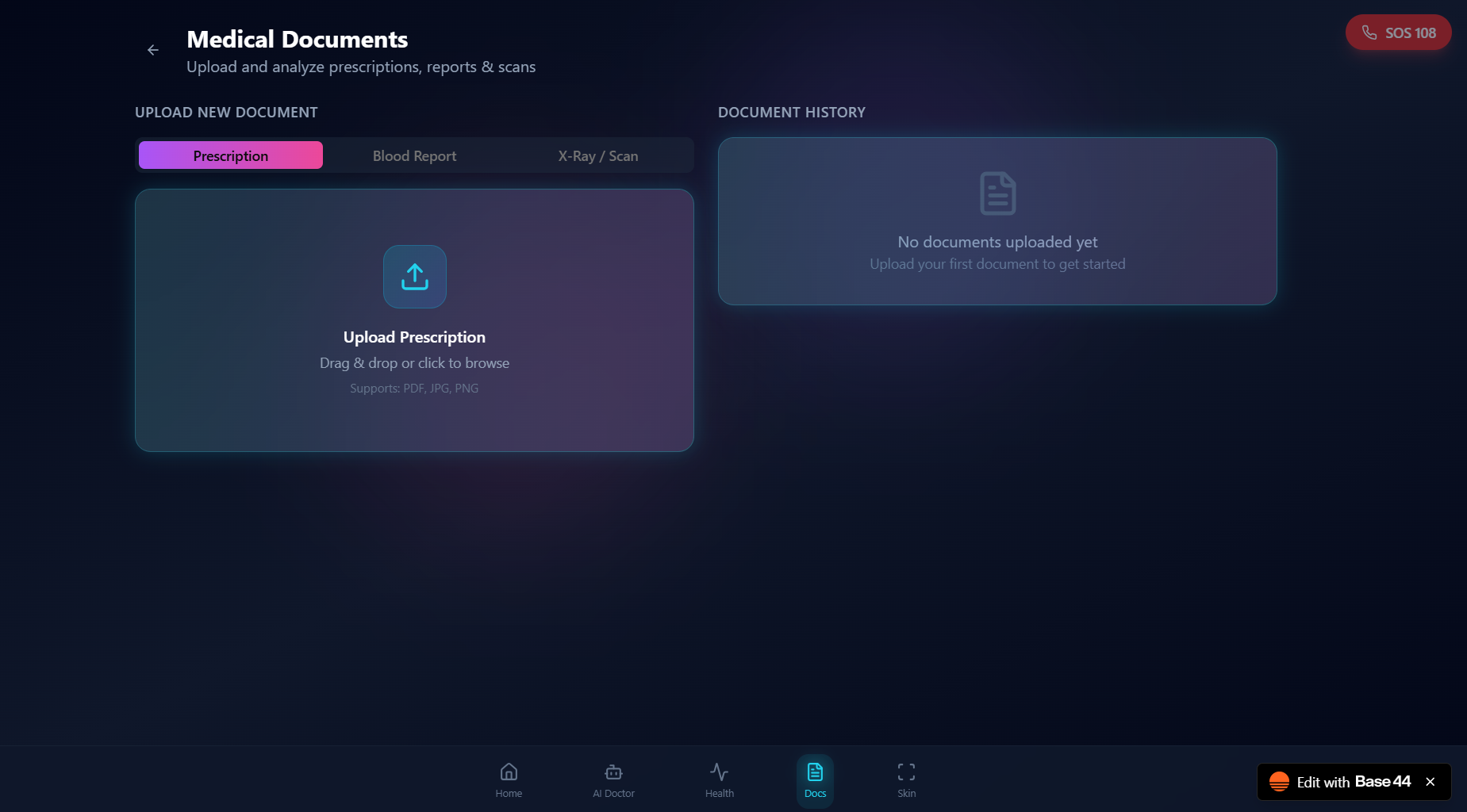
InspirationThis project was inspired by a common problem: people often struggle to understand their symptoms, read prescriptions correctly, or decide when to visit a doctor. I wanted to design a system that makes healthcare more accessible, intelligent, and immediate. Seeing rapid advancements in AI and clean futuristic UI design motivated me to imagine an all-in-one digital healthcare companion that feels both powerful and trustworthy.
What it doesWhile working on this project, I gained knowledge in several areas:
How conversational AI can be designed to understand symptoms and communicate naturally.
Basics of medical reasoning and how symptoms relate to possible diagnoses.
Modern UI/UX concepts such as minimal interfaces, glassmorphism, and structured layouts.
Health analytics and how multiple vital parameters combine to form a health profile.
How probabilistic logic underpins AI decision making.
For example, I explored how diagnosis suggestions can be expressed using Bayes’ theorem:
𝑃 ( Diagnosis ∣ Symptoms
)
𝑃 ( Symptoms ∣ Diagnosis ) ⋅ 𝑃 ( Diagnosis ) 𝑃 ( Symptoms ) P(Diagnosis∣Symptoms)= P(Symptoms) P(Symptoms∣Diagnosis)⋅P(Diagnosis)
This helped me understand how AI prioritizes certain outcomes based on user input.
How we built it
- Conceptual Planning
I began by outlining all major features: the AI Chat Doctor, prescription verification, skin analysis, diet planning, vitals tracking, hospital finder, productivity insights, and wellness dashboards.
- UI and Design
I drafted wireframes and screen layouts using a futuristic blue-white medical theme. The interface focused on clarity, minimalism, and intuitive navigation while still maintaining a high-tech feel.
- AI Logic Framework
I created flow diagrams for symptom analysis, follow-up question generation, diagnosis scoring, and thresholds for escalating serious cases.
- Data Structuring and Computation
To combine various health metrics, I experimented with weighted models such as:
Health Score
𝑤 1 ( Sleep ) + 𝑤 2 ( Hydration ) + 𝑤 3 ( Steps ) + 𝑤 4 ( Blood Sugar ) Health Score=w 1
(Sleep)+w 2
(Hydration)+w 3
(Steps)+w 4
(Blood Sugar)
This allowed me to model overall wellness in a structured way.
- Prototype Integration
I connected UI screens with mock AI outputs and example medical datasets to demonstrate how the system responds to user input, checks prescriptions, analyzes skin conditions, and recommends diets and exercises.
Challenges we ran intoEnsuring the AI guidance felt accurate while avoiding unrealistic medical claims.
Designing follow-up questions that were logical and helpful.
Creating a futuristic interface that still remained simple to use.
Understanding how to structure and interpret medical data for AI workflows.
Integrating multiple independent modules (symptoms, diet, skin, vitals, hospitals) into one consistent system.
Developing a risk-scoring method for decision escalation:
Escalate if ∑
𝑖
1 𝑛 𝑟 𝑖
𝑇 Escalate if i=1 ∑ n
r i
T
Where 𝑟 𝑖 r i
represents different risk indicators and 𝑇 T is a predefined threshold.
Accomplishments that we're proud of
One of our major accomplishments is successfully designing an integrated AI system that can understand symptoms, analyze reports, detect errors in prescriptions, and guide users with medical clarity. We are also proud of building a prototype interface that combines futuristic aesthetics with genuine usability. Another achievement was developing the logic behind risk assessment and escalation, ensuring that the AI knows when to recommend real medical intervention. Bringing together multiple features—skin scanning, diet planning, health tracking, productivity insights, and wellness dashboards—into one seamless experience is something we consider a significant milestone in this project.
What we learned
This project helped me understand how AI can meaningfully support healthcare by combining diagnostics, lifestyle planning, and continuous monitoring. It strengthened my technical skills, improved my design thinking, and gave me experience in building a comprehensive, user-focused digital product.
What's next for Aura-health
The next steps for Aura-Health include expanding medical datasets to improve the accuracy of diagnosis suggestions and adding deeper integrations with wearable devices to enhance real-time health monitoring. We plan to incorporate more advanced machine learning models for skin analysis, nutrition planning, and stress prediction. Another future direction is building a secure backend system for encrypted storage of medical reports and user health history. Ultimately, we aim to move toward a more clinically validated version of the AI assistant by collaborating with healthcare professionals and exploring regulatory pathways for medical-grade applications.
Built With
- base44

Log in or sign up for Devpost to join the conversation.