-
-
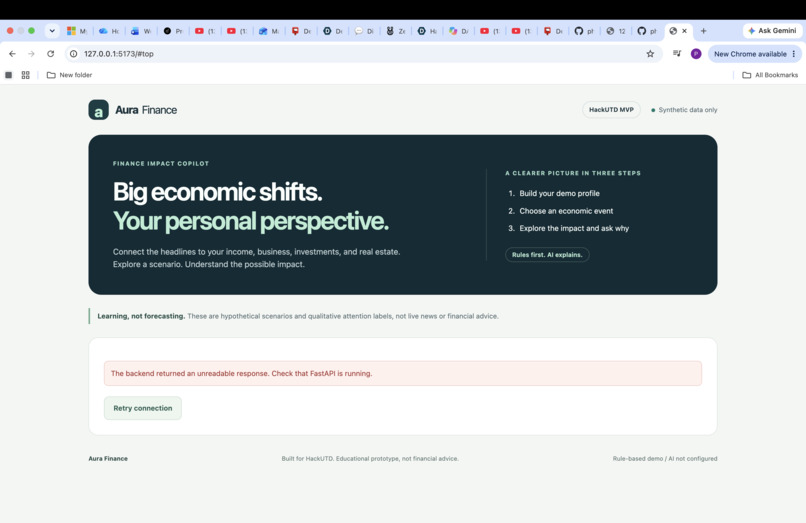
Aura Finance landing page showing the economic event scenario and impact dashboard.
-
-
-
-
-
Inspiration
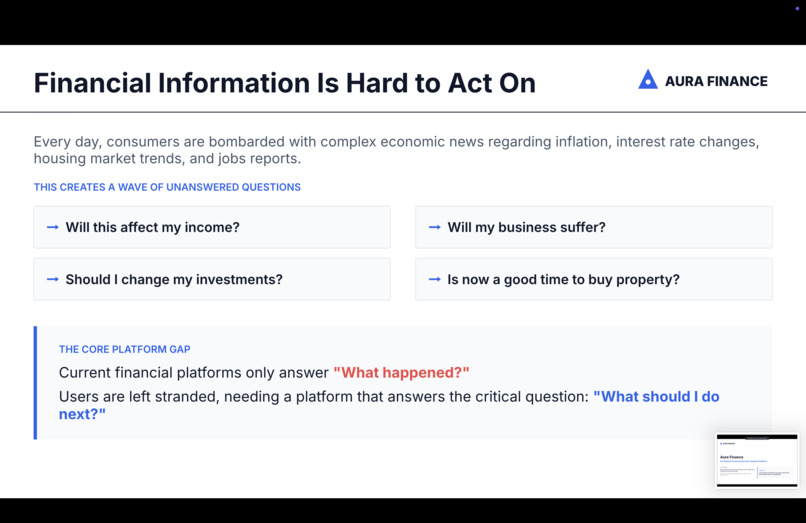
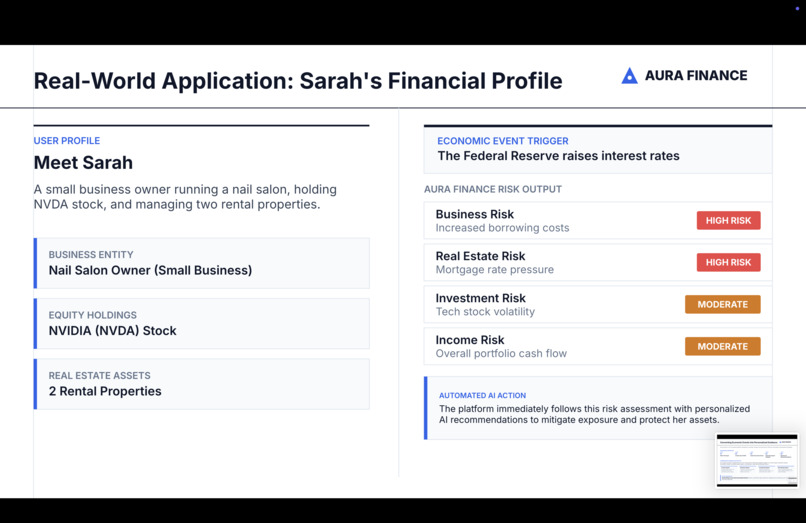
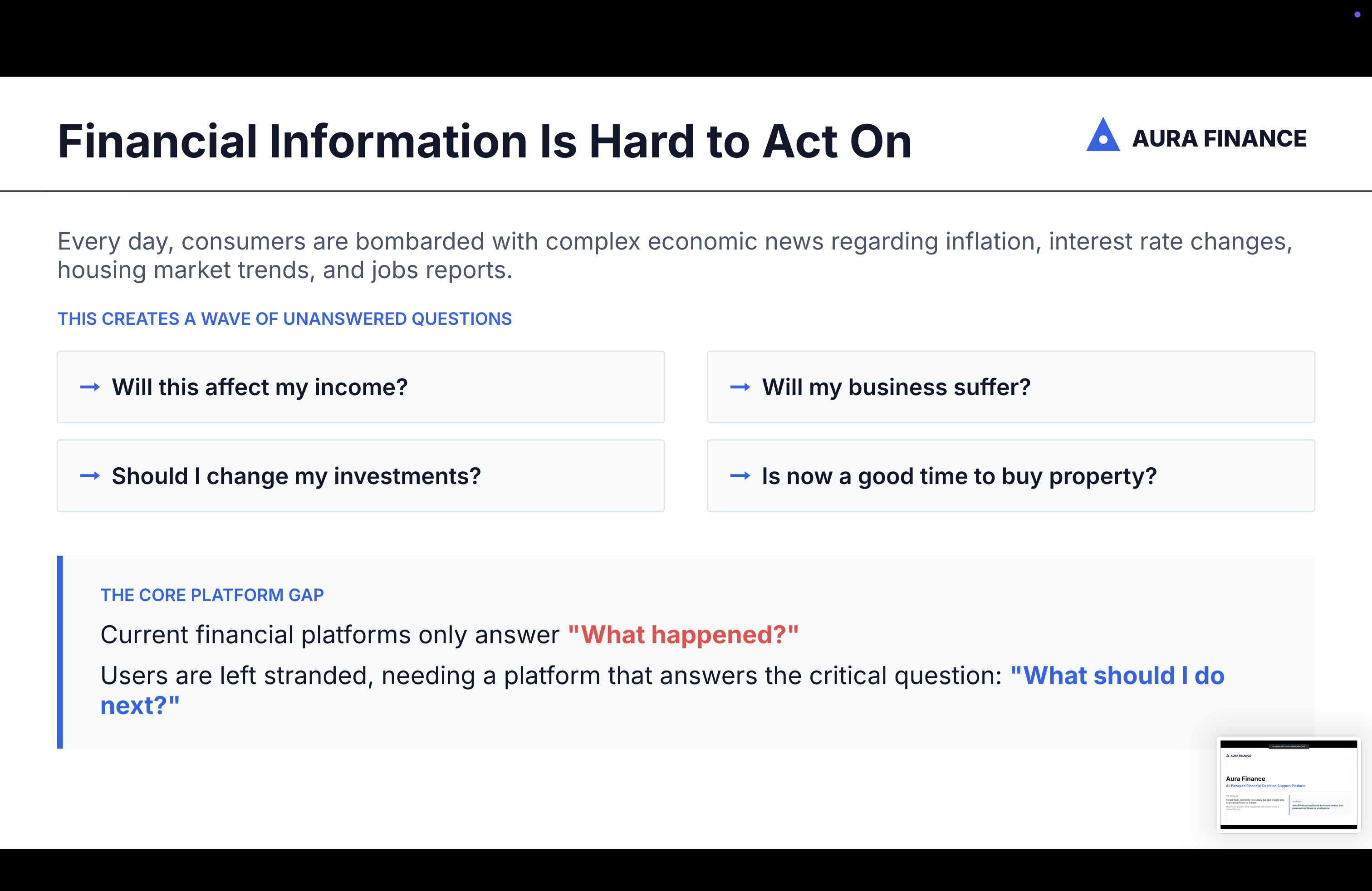
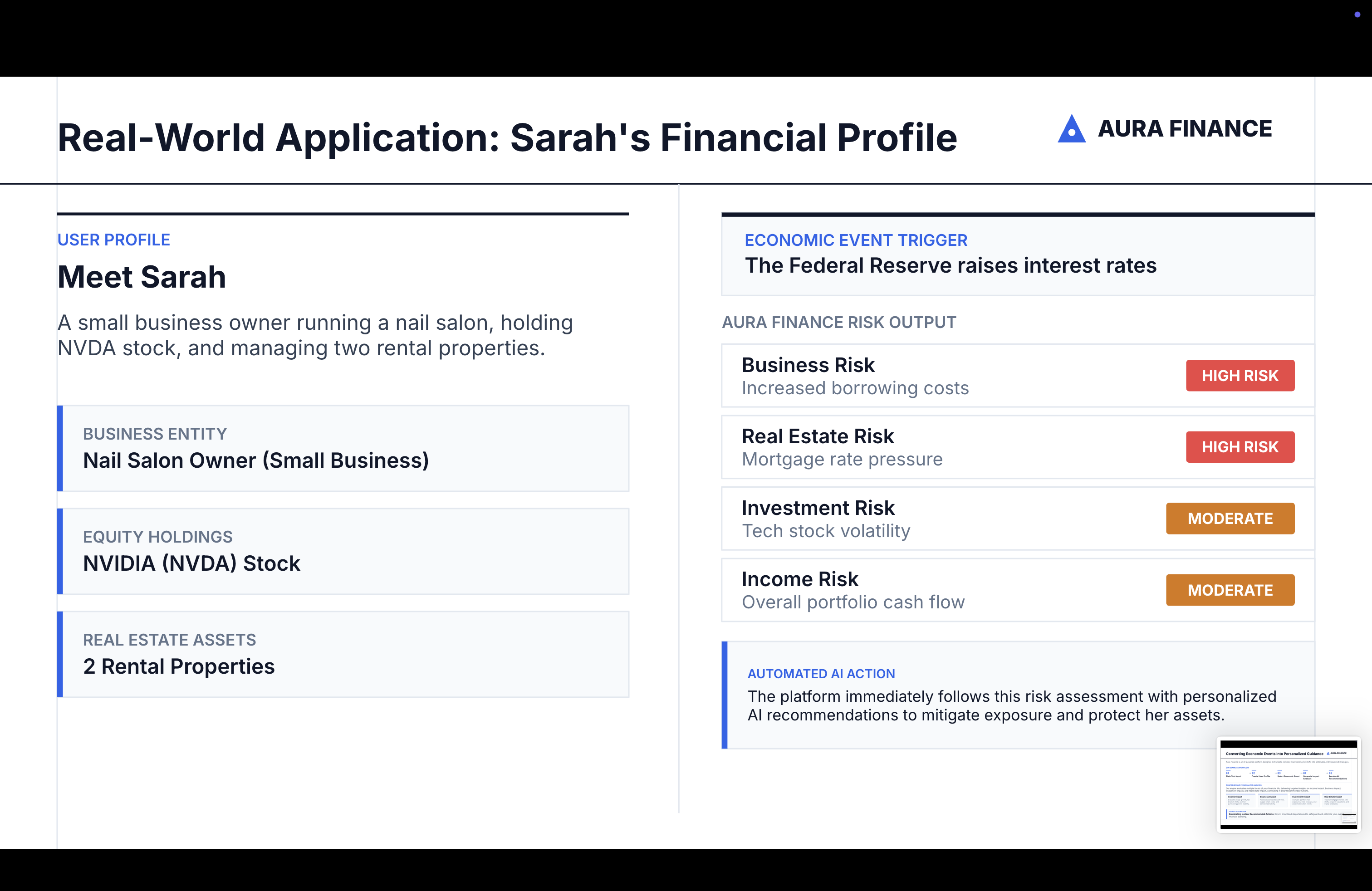
Financial news is everywhere. Every day we hear about inflation, interest rate hikes, jobs reports, housing market trends, and stock market volatility. Yet for most people, those headlines feel disconnected from their daily lives. As students, we realized that while there is an overwhelming amount of financial information available, very few tools answer the question people actually care about: "What does this mean for me?" A Federal Reserve rate hike might be important, but what does it mean for a college student looking for a job? A small business owner running a nail salon? Someone investing in stocks? A family thinking about buying a home? The idea for Finance Impact Copilot came from our own frustration trying to connect economic news to real-life decisions. We wanted to build something that could translate complex economic events into personalized, understandable insights that anyone could use. Instead of making people learn economics first, we wanted economics to work for people.
What it does
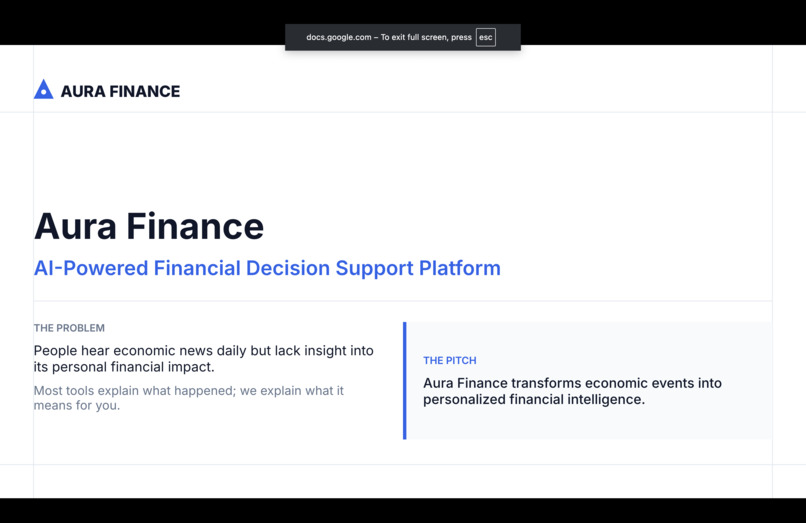
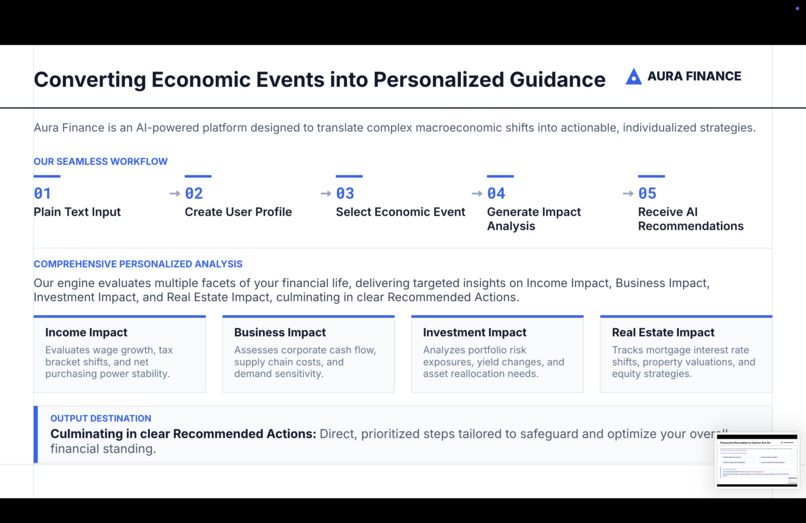
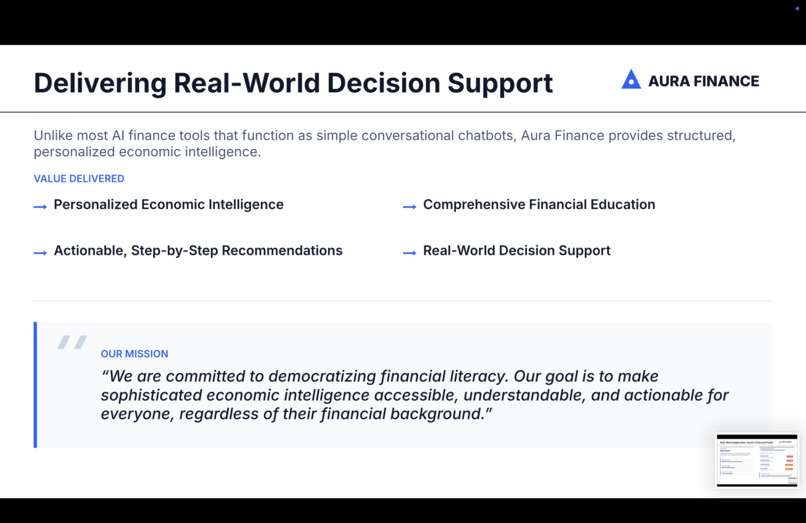
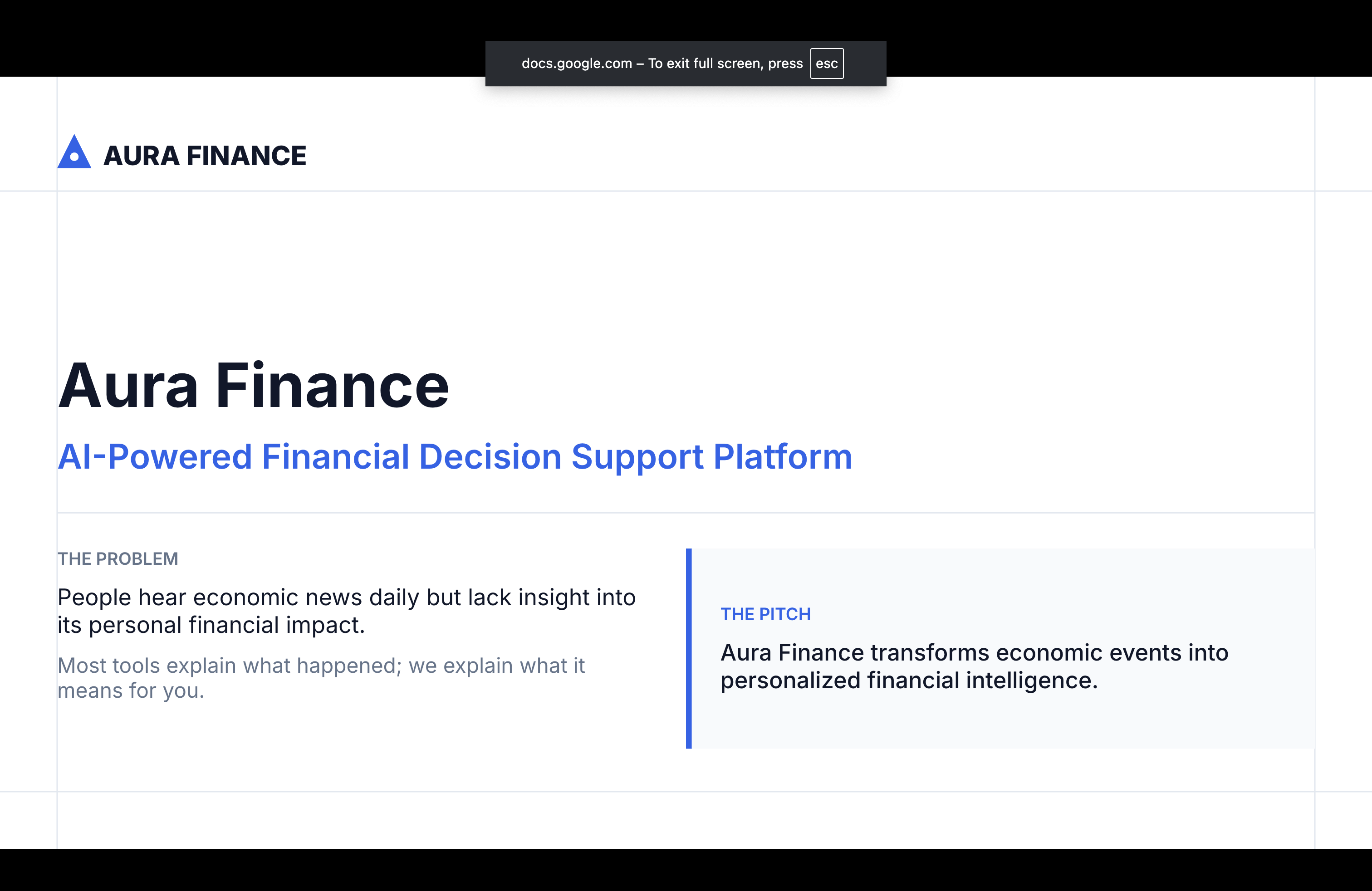
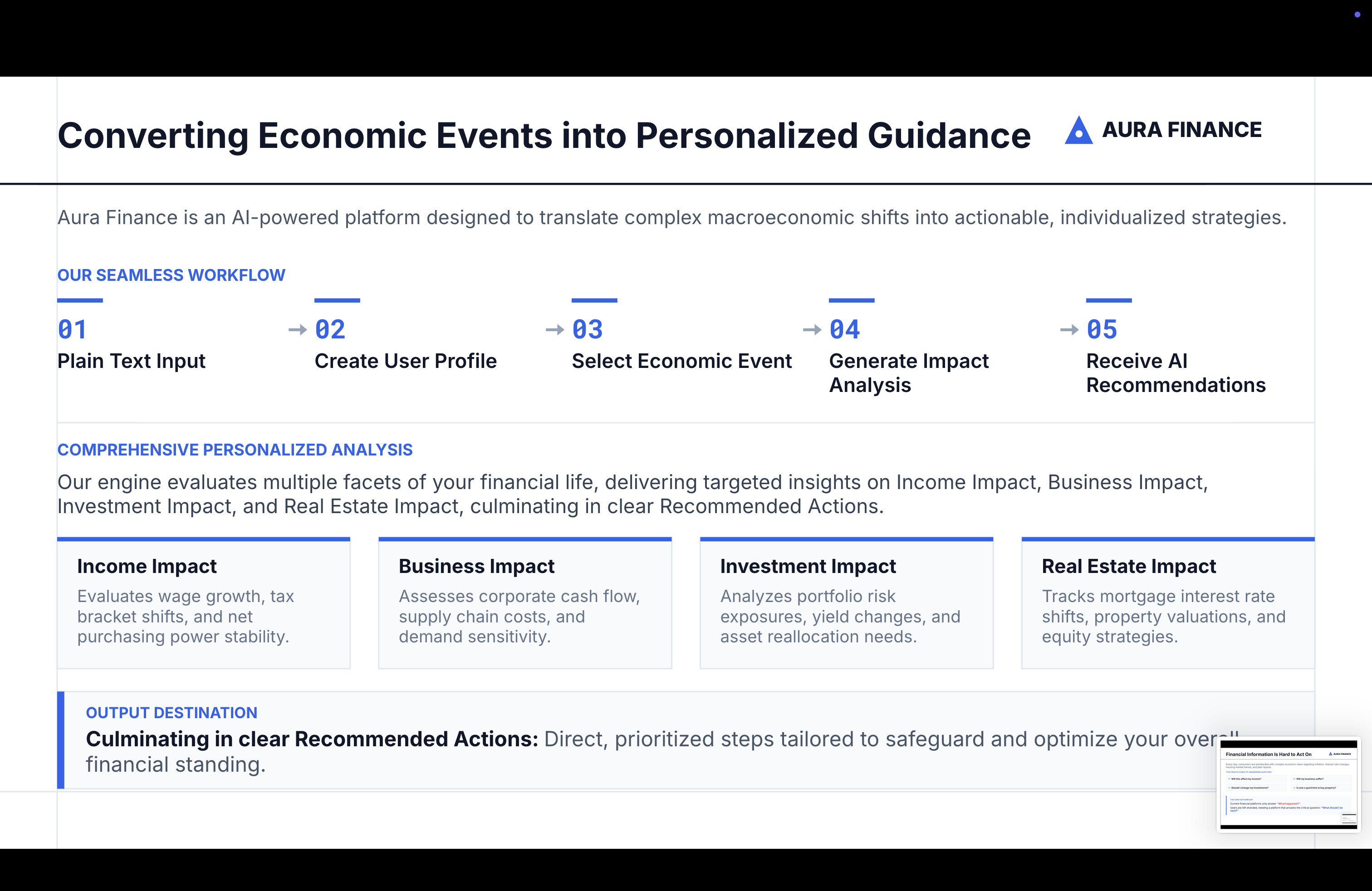
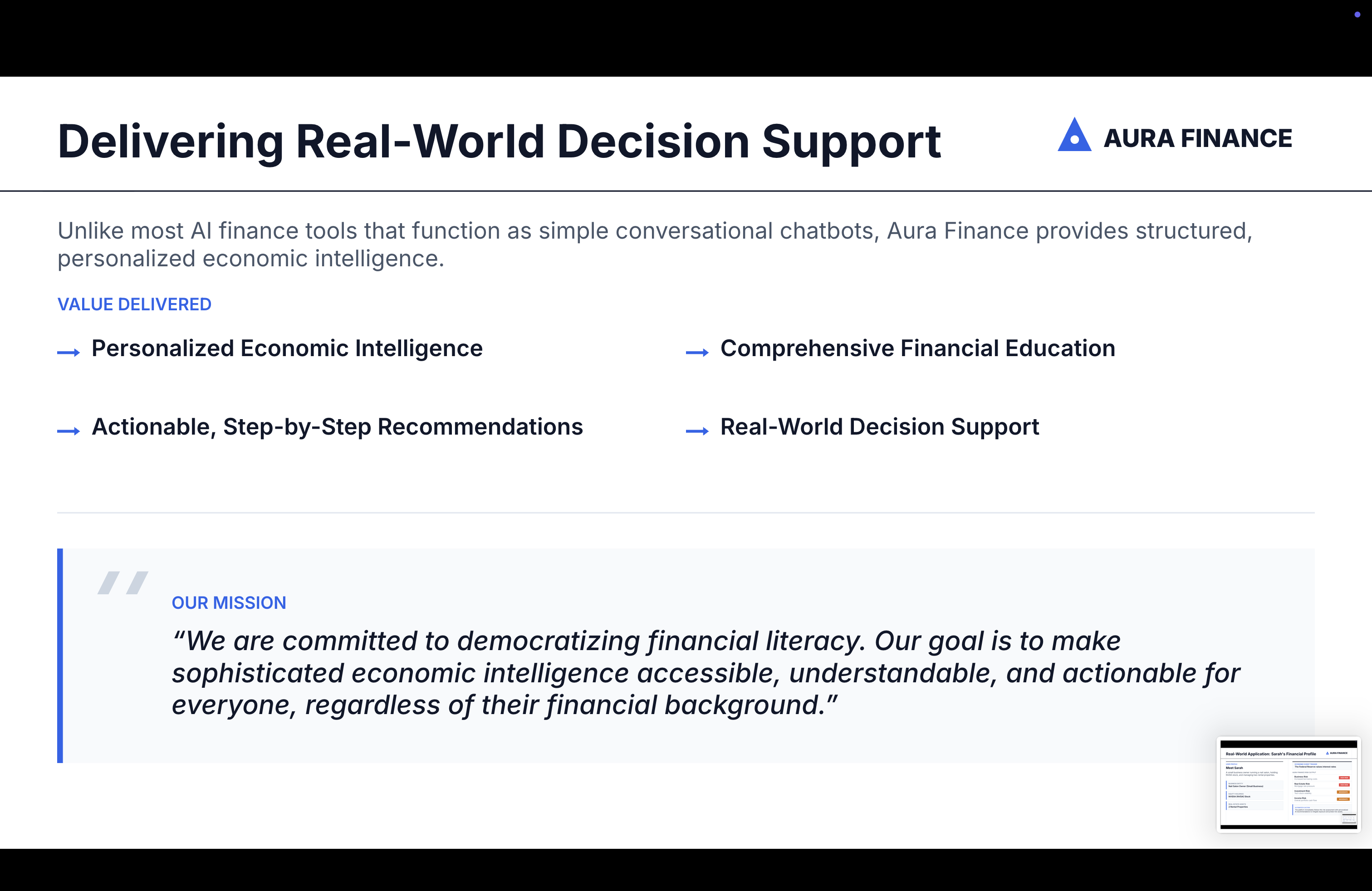
Aura Finance is an AI-powered financial decision support platform that helps users understand how major economic events affect their personal financial situation. Users create a simple financial profile that includes information such as: Occupation Income range Business ownership Investment holdings Real estate assets The platform then analyzes economic events such as: Inflation reports Interest rate changes Employment reports GDP trends Housing market developments Instead of displaying generic financial news, the system explains the potential impact on a user's income, business, investments, and real estate holdings. It also provides AI-generated recommendations, educational explanations, and risk assessments in plain language. Our goal was to make economic intelligence accessible to everyone, not just economists and finance professionals.
How we built it
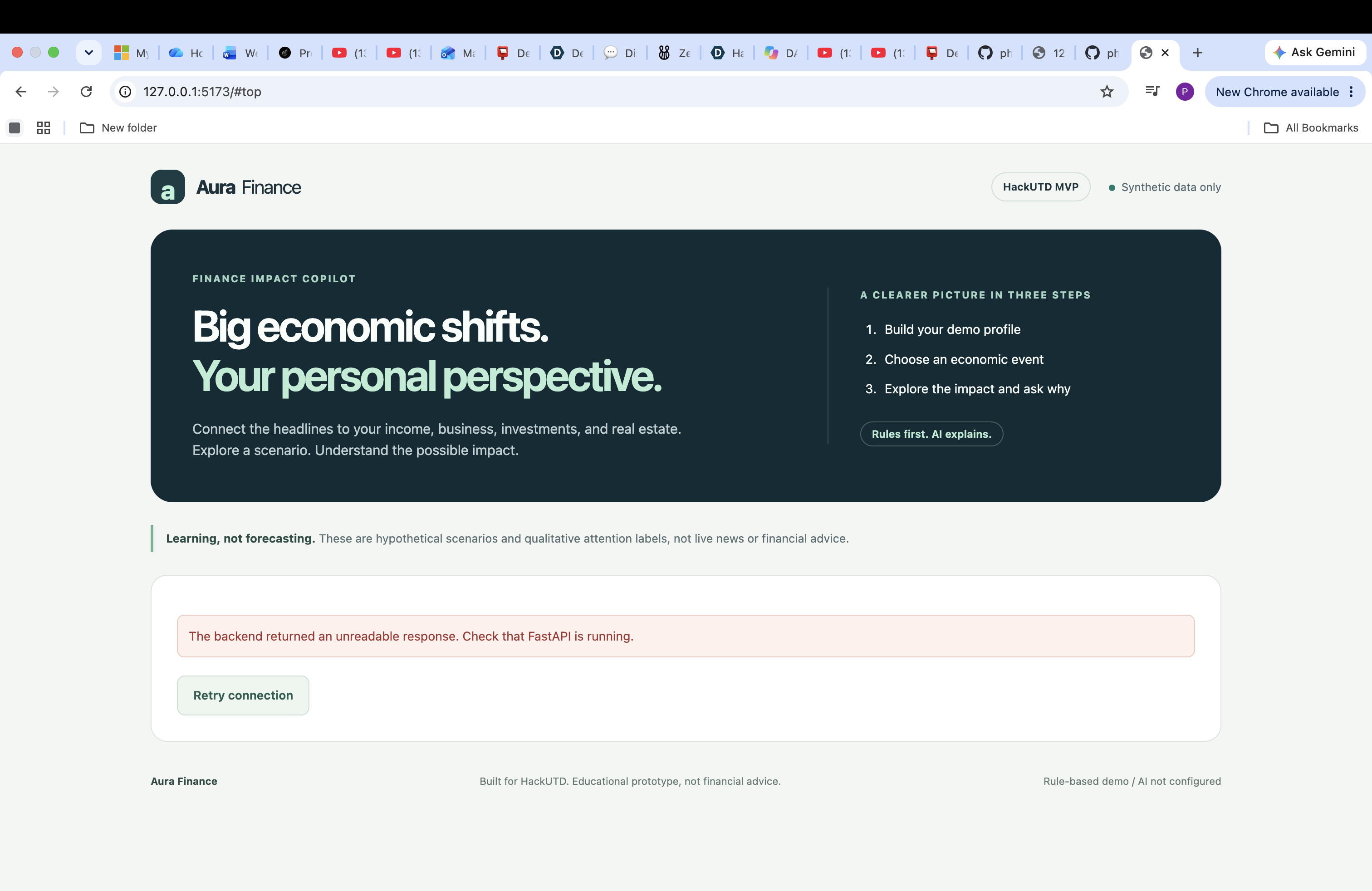
We designed the project around a simple principle: deliver meaningful value within a hackathon timeframe. Our architecture combines: React for the frontend experience FastAPI/Python for backend services SQLite for lightweight data storage OpenAI-compatible AI models for explanations and recommendations Rule-based financial logic to provide consistent impact assessments We created several key components: Personal Financial Profile Economic Event Analyzer Personalized Impact Engine AI Financial Advisor Financial Knowledge Base Market Sector Impact Analysis Dashboard One of our biggest design decisions was combining AI-generated explanations with structured business rules. Rather than relying entirely on a language model, we used predefined financial logic to make the analysis more transparent and easier to explain during our demo.
Challenges we ran into
Like many hackathon teams, our biggest challenge was time. We had ambitious ideas ranging from portfolio analysis to advanced market intelligence, but quickly realized we could not build everything within a weekend. One of the most valuable lessons was learning how to reduce scope without losing the core vision. We continuously asked ourselves: "What is the smallest version of this product that still solves a real problem?" Another challenge was balancing AI creativity with financial accuracy. Financial advice is a sensitive area, so we focused on educational insights and decision support rather than predictions or professional financial recommendations. We also spent significant time refining the user experience. Financial concepts can be intimidating, and we wanted the platform to feel approachable for someone with no finance background.
Accomplishments that we're proud of
What we learned
This project taught us much more than how to build software. We learned that understanding the user problem is often more important than adding more features. We learned how difficult it is to transform complex economic concepts into simple, actionable insights. From a technical perspective, we gained experience with: AI-assisted application development API integration Backend and frontend collaboration Financial data modeling Product design under tight deadlines Most importantly, we learned the value of storytelling. The strongest version of our project was not "an AI finance chatbot." It was a platform that helps ordinary people understand how economic events affect their financial future. Once we framed the project around that human problem, every design decision became clearer.
What's next for Aura Finance
Aura Finance started as a hackathon project, but we believe the idea has potential beyond a weekend competition. Future improvements include: Real-time economic data integration Portfolio upload and analysis Personalized economic alerts Bloomberg Challenge support tools Expanded educational content Retrieval-Augmented Generation (RAG) using economic reports and Federal Reserve publications More advanced sector and market intelligence features We also want to explore partnerships with universities, investment clubs, and financial literacy programs to help people especially students better understand how the economy impacts their careers and financial decisions. Our long-term vision is simple: Make economic intelligence as accessible as checking the weather. Because everyone is affected by economic events, everyone should be able to understand them.
Built With
- artificial-intelligence
- automation
- chatbot
- dashboard
- data-visualization
- decision-support
- economic-intelligence
- education
- fastapi
- financial-analysis
- financial-literacy
- fintech
- generative-ai
- machine-learning
- openai
- personal-finance
- predictive-analytics
- productivity
- python
- rag
- react
- recommendation-engine
- sqlite
- web-app
