-
-
-
-
-
-
-
-

Icon and logo
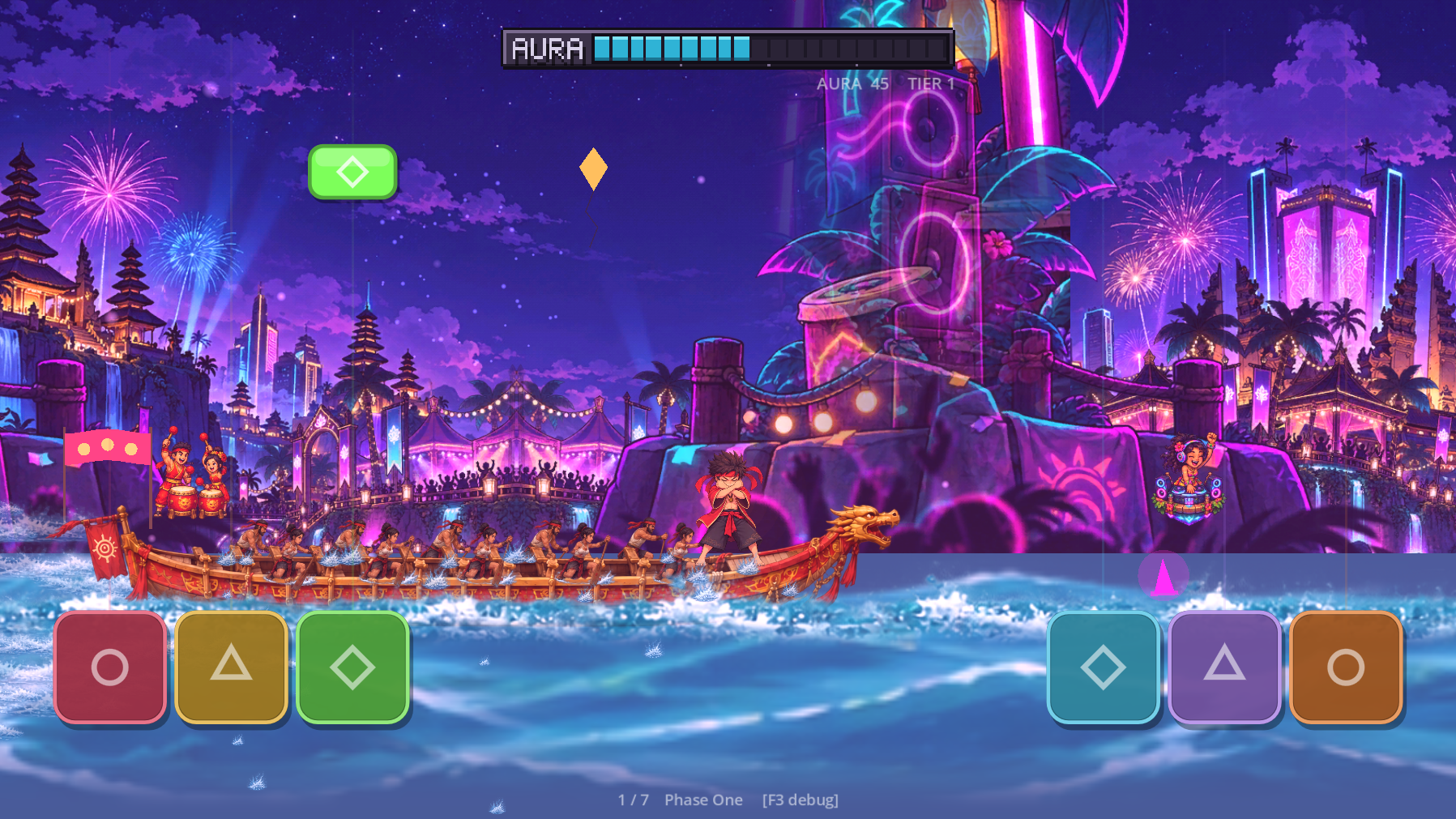
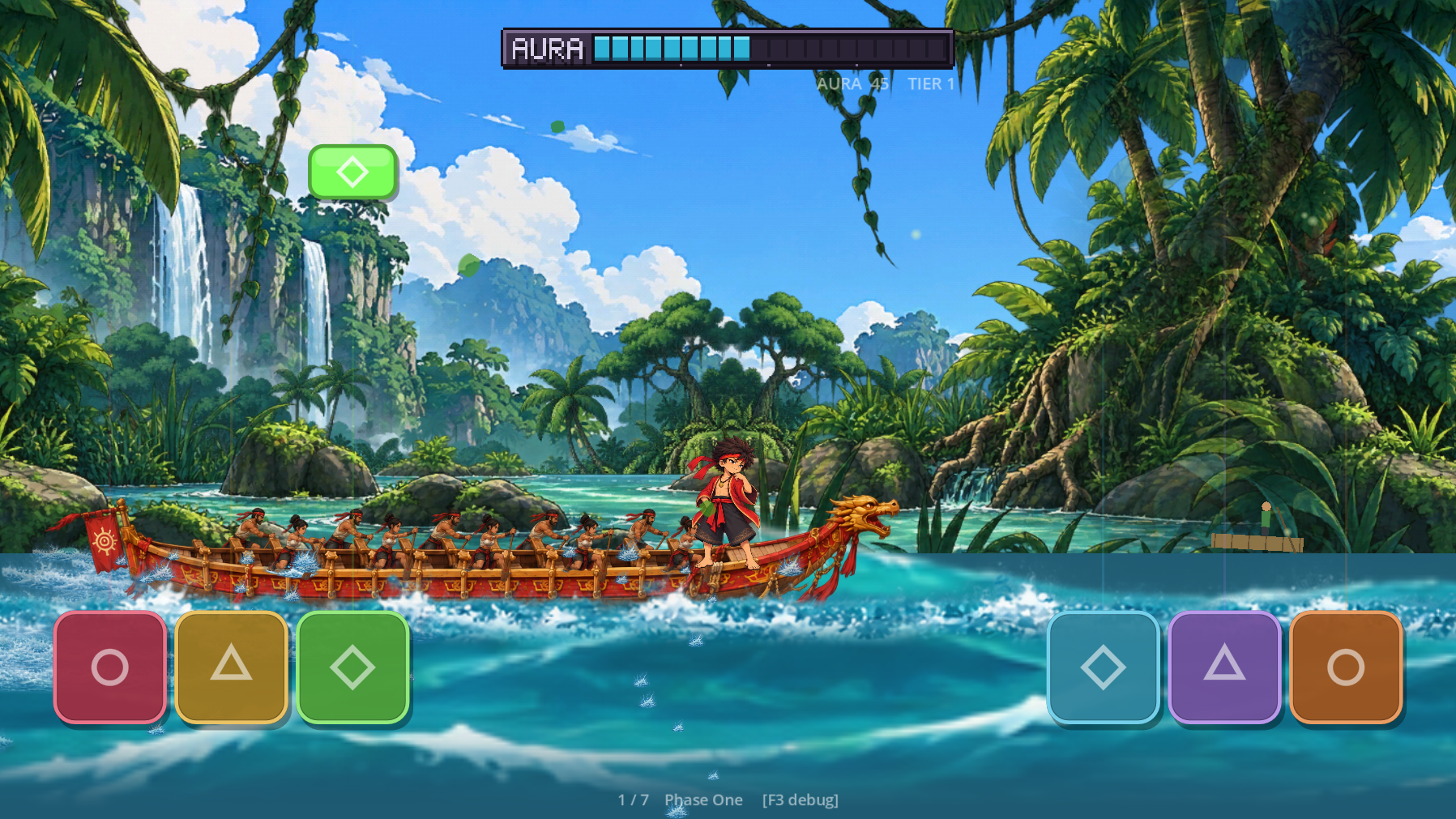
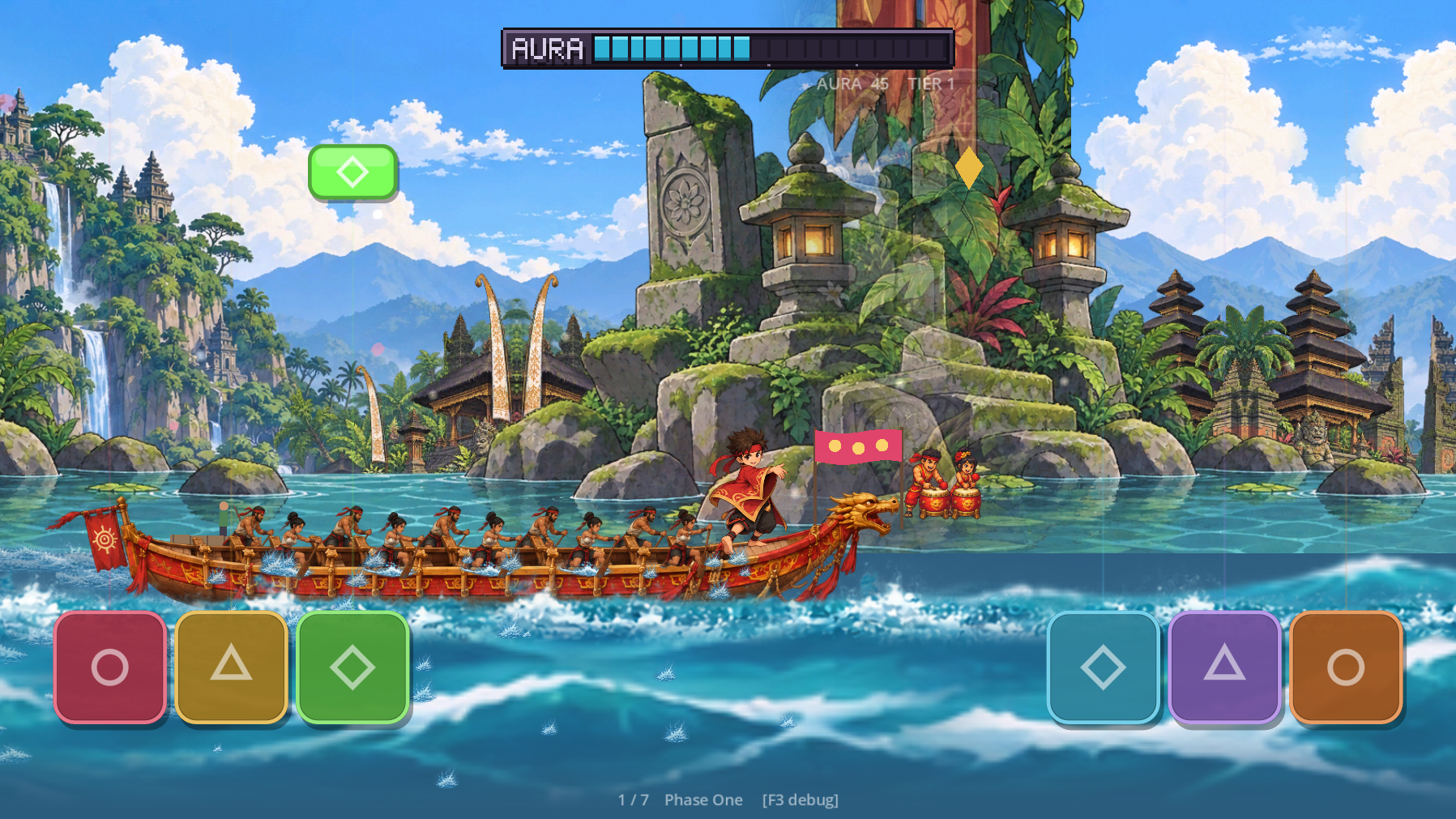
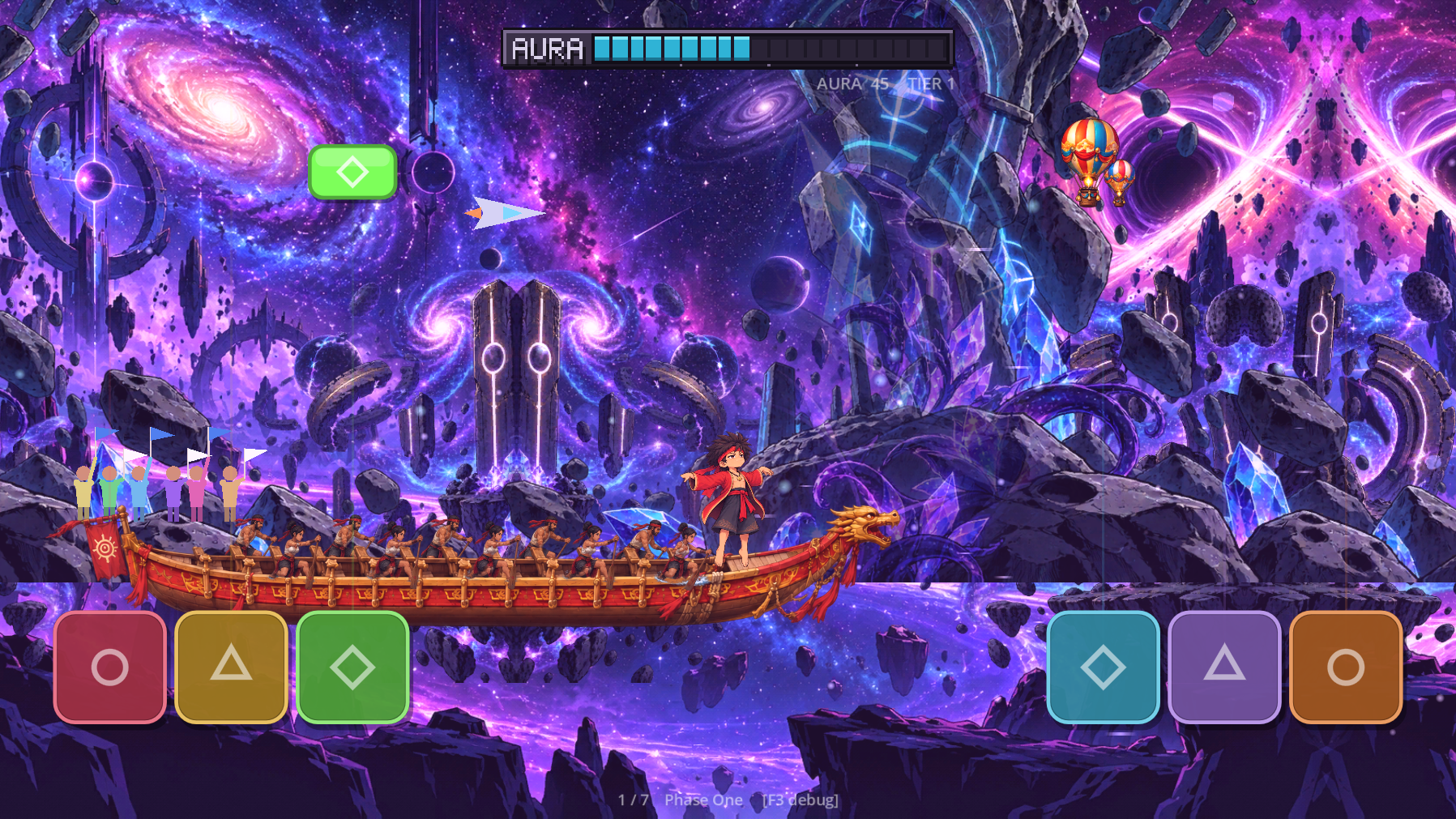

Aura Farmer — From a River Race to Absolute Cosmic Chaos
Inspiration
What happens when you combine traditional Southeast Asian boat racing, rhythm games, anime transformations, and an absolutely ridiculous amount of energy?
You get Aura Farmer.
The original inspiration came from Pacu Jalur, the spectacular traditional Indonesian boat races, and particularly the young dancers performing at the front of the racing boats. We decided to take that idea and push it to completely unreasonable extremes.
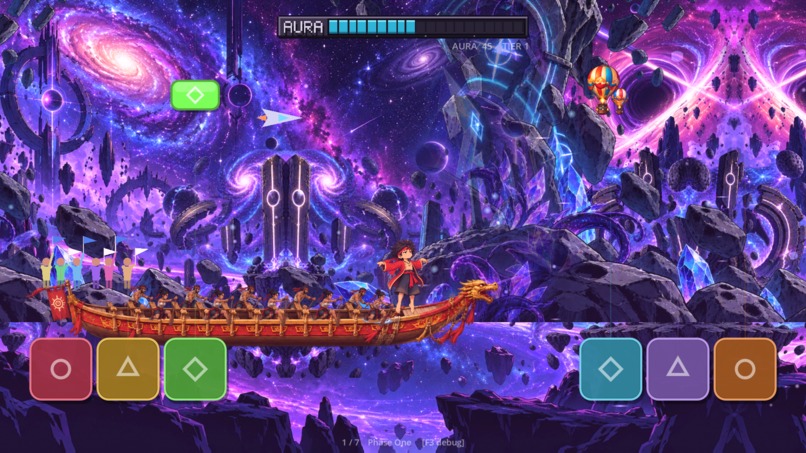
What if the dancing kid could build up so much Aura that the boat started defying physics? What if a traditional river race eventually took you through neon cities, violent storms, famous world landmarks, the sky, and finally into deep space?
Thats the idea, to make it a fun and worldwide (and space) travel.
What it does
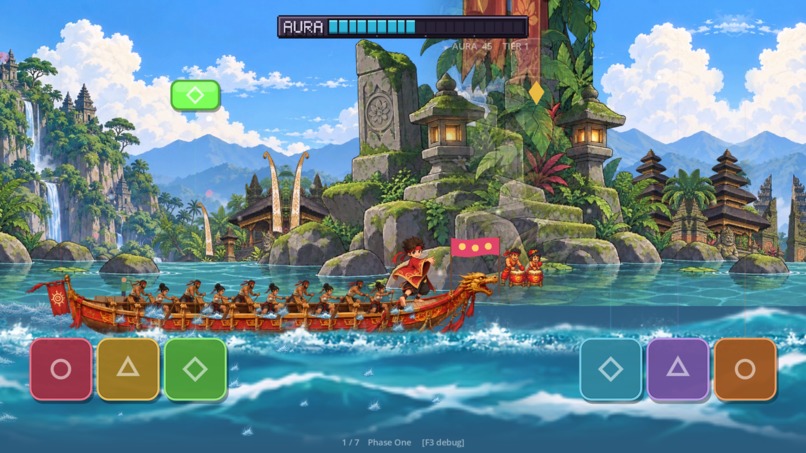
Aura Farmer is a mobile rhythm game where you farm Aura, perform increasingly spectacular moves, and take an ordinary boat race all the way into outer space.
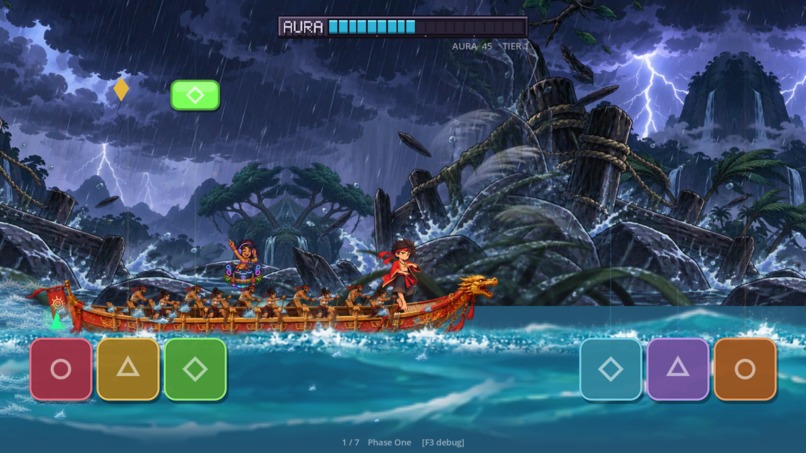
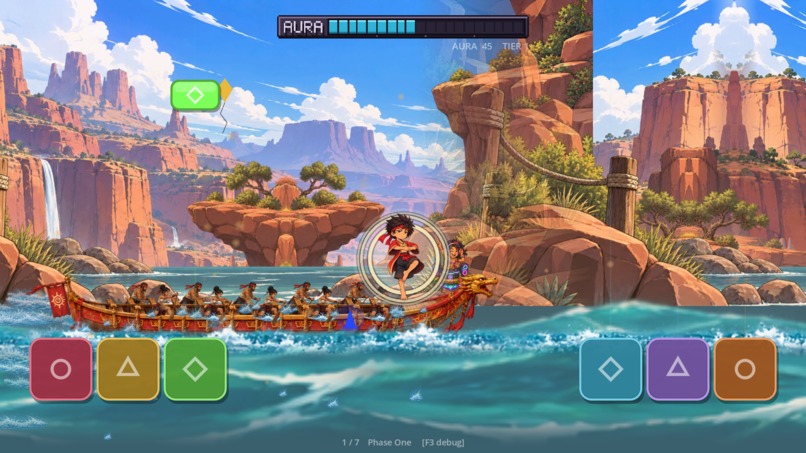
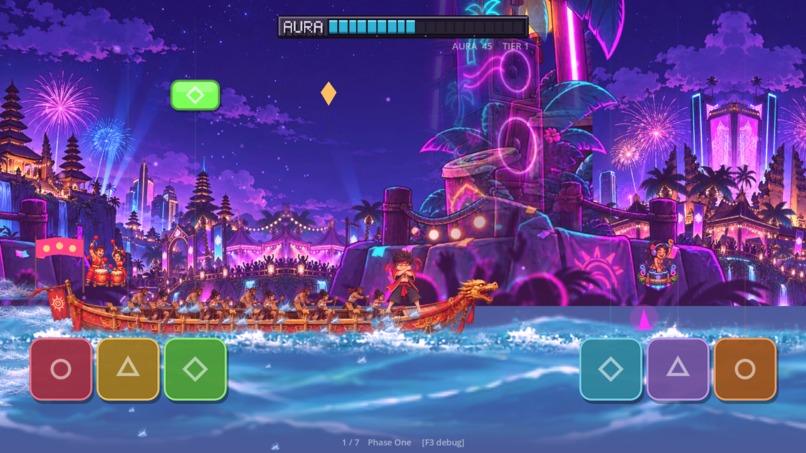
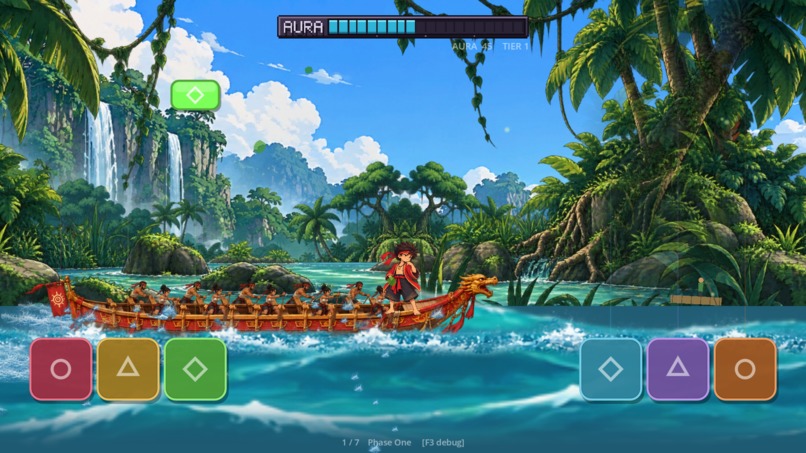
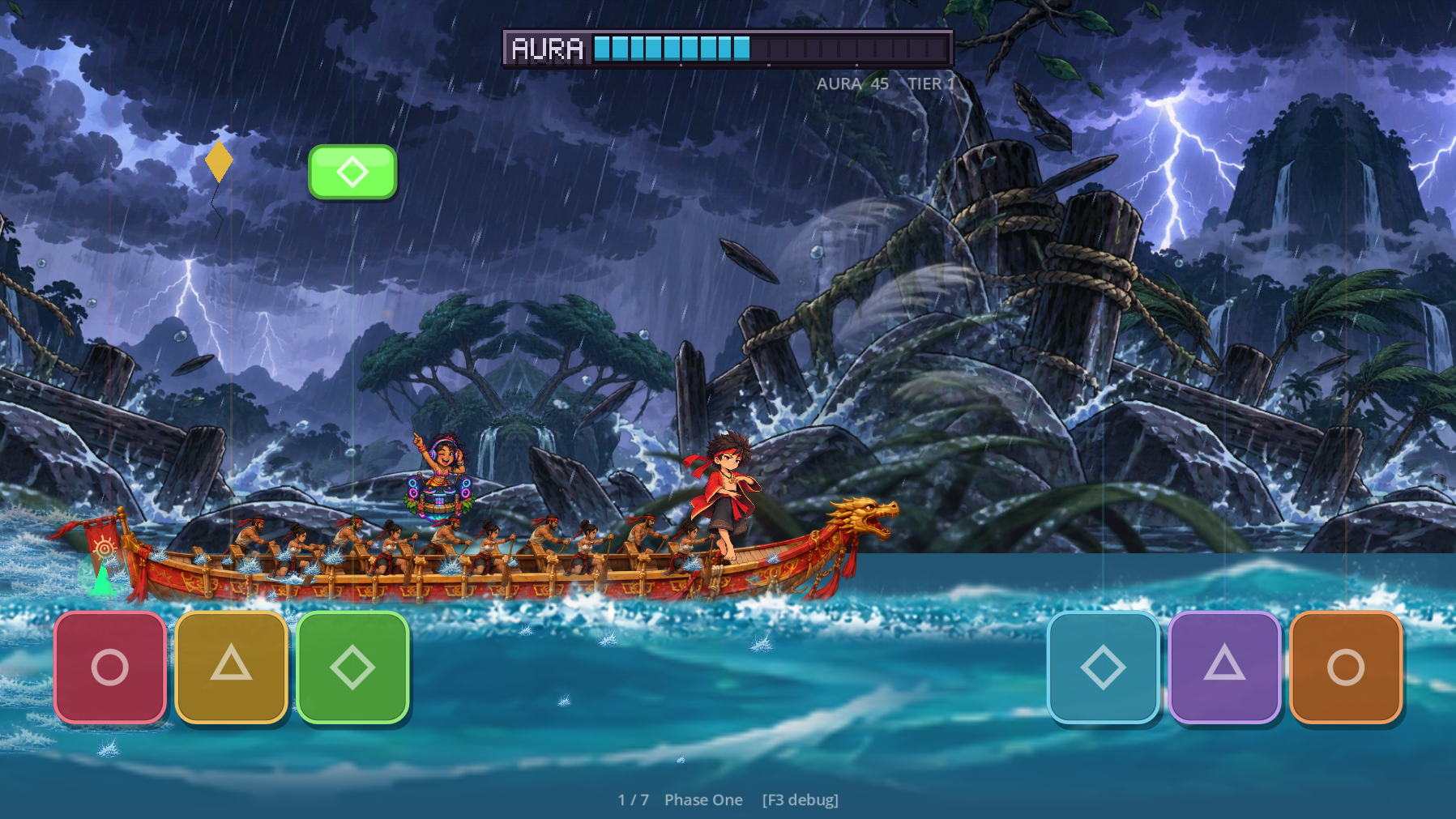
The game is designed for landscape mobile play. Six rhythm lanes are split across the left and right sides of the screen, leaving the center free for the real spectacle: your boat and its impossibly confident little dancer.
Successful performances build Aura, increase your score, and unleash increasingly outrageous visual effects. Miss too many notes, however, and your Aura begins to disappear. Lose your momentum completely, and your run comes to an end.
There are no traditional levels to complete or difficulty menus to navigate. Instead, Aura Farmer is one continuous, increasingly demanding musical journey.
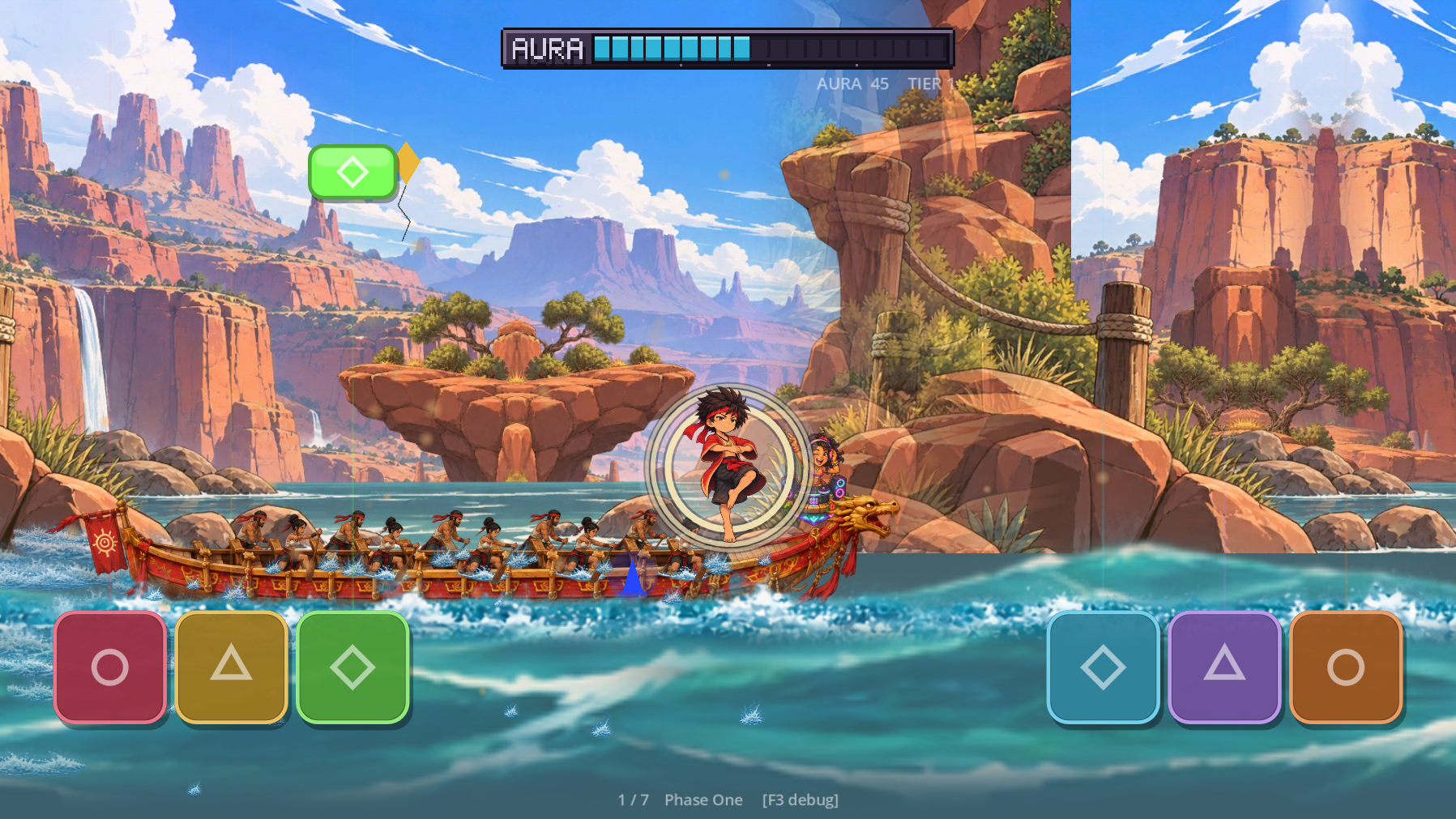
The character performs martial arts, classical ballet, aerial kicks, acrobatics, and dramatic anime-inspired power moves. He can even transform into a fiery Garuda, tiger, or dragon.
Spectators cheer, rival boats appear, creatures leap out of the water, and eventually astronauts, aliens, and cosmic animals join the madness.
The objective is simple: keep the rhythm, keep your Aura alive, and see just how far this ridiculous journey can go.
How we built it
Aura Farmer was built in Godot as a mobile-first, 2D game.
We adopted an AI-assisted development workflow, using Claude and Codex to help implement systems, review code, automate testing, and iterate on gameplay. Generative AI also became an important part of our visual asset production process.
Rather than creating a conventional level-based game, we developed a continuous-run architecture capable of connecting multiple songs, gameplay-intensity changes, twelve distinct environments, animated scenery, and increasingly elaborate visual effects.
The world uses layered 2D backgrounds, parallax scrolling, atmospheric effects, animated environmental objects, and special transition structures to create the illusion of travelling through a constantly evolving environment.
The animation pipeline became a project of its own. We developed an expanding library of character animations, ranging from simple rhythmic gestures to martial arts, ballet, spectacular aerial movements, and animal transformations.
We also created automated validation and asset-processing workflows to make integrating large quantities of artwork more manageable.
Challenges we ran into
Our biggest challenge was discovering that a rhythm game can be technically correct and still be incredibly boring.
Early versions featured simple directional tapping. Everything worked, but after a couple of minutes, there wasn't much reason to keep playing.
We experimented with increasingly elaborate systems: procedural rhythmic phrases, larger touch controls, a dual-input design combining tapping and sliding, and more complex interactions.
At some point we had to redesign the game around six rhythm lanes, with falling notes, sustained holds, rapid-tap sequences, and patterns tied to the actual music to keep a balance between difficulty and playability.
The second major challenge was visual consistency.
Generating an animation is relatively easy. Generating dozens of animations featuring exactly the same character, with consistent proportions, resolution, positioning, and movement, is an entirely different problem.
Our early animation library suffered from inconsistent character sizes, blurry assets, accidental movement between frames, and noticeable stylistic differences.
We had to develop preprocessing, normalization, and validation workflows rather than relying on runtime corrections.
Finally, we faced a fundamental design contradiction: players need to concentrate on the rhythm inputs, but we also want them to enjoy the increasingly absurd spectacle happening in the middle of the screen.
Finding the balance between challenging gameplay and visual entertainment has influenced almost every subsequent iteration.
Accomplishments that we're proud of
We're particularly proud that Aura Farmer has evolved from a small rhythm-game experiment into an entire continuous audiovisual journey.
The game features twelve themed environments, beginning in a tropical jungle and progressing through increasingly unexpected locations before reaching deep space.
We've developed a large animation library featuring dance, martial arts, acrobatics, Aura-powered attacks, and transformations inspired by Southeast Asian mythology and spectacular anime action.
We also built a flexible world-animation system populated by racing boats, cheering crowds, musicians, wildlife, mythical creatures, and eventually extraterrestrial visitors.
Another accomplishment is our development workflow. By combining AI-assisted programming, automated testing, asset validation, and repeated Android builds, we've been able to experiment quickly and make substantial changes without constantly rebuilding the entire game from scratch.
Perhaps our most important accomplishment, however, was being willing to discard mechanics that weren't enjoyable.
We learned that a working feature isn't necessarily a good feature, and that sometimes the biggest improvement comes from simplifying an overly complicated design.
What we learned
Building Aura Farmer has taught us three important lessons.
First, rhythm must come before complexity. Adding more buttons, mechanics, or visual effects cannot compensate for interactions that don't feel connected to the music.
Second, AI accelerates production, but consistency still requires engineering and artistic direction. Generating dozens of images is one thing; turning them into a coherent, reusable animation library is another.
Third, spectacle and gameplay must support each other. Aura Farmer isn't supposed to be just another rhythm game with an animated background. The boat, the music, the increasingly outrageous transformations, and the player's performance should feel like parts of the same escalating experience.
We've also learned to challenge our own assumptions. Several ideas that sounded fantastic on paper simply weren't enjoyable on a touchscreen.
Actual gameplay testing repeatedly proved more valuable than elaborate design documents.
What's next for Aura Farmer
Our immediate priority is refining the complete mobile experience: polishing the six-lane rhythm system, improving the relationship between musical phrases and gameplay, and making every tap, hold, and rapid-tap sequence feel satisfying.
We're also continuing to improve character animation consistency and visual presentation, particularly the moments when our protagonist transforms, levitates, or unleashes spectacular Aura effects.
Additional work includes polishing the animated environments, integrating more spectators and environmental surprises, expanding the soundtrack, and improving performance across Android devices.
We want to develop a distinctive visual language that combines colorful 2D animation with dramatic black-and-white manga sequences and the energy of classic arcade games.
Ultimately, the vision is simple.
Start with a kid dancing on a traditional racing boat.
Give him increasingly impossible amounts of Aura.
And see how long the universe can survive.

Log in or sign up for Devpost to join the conversation.