-
-
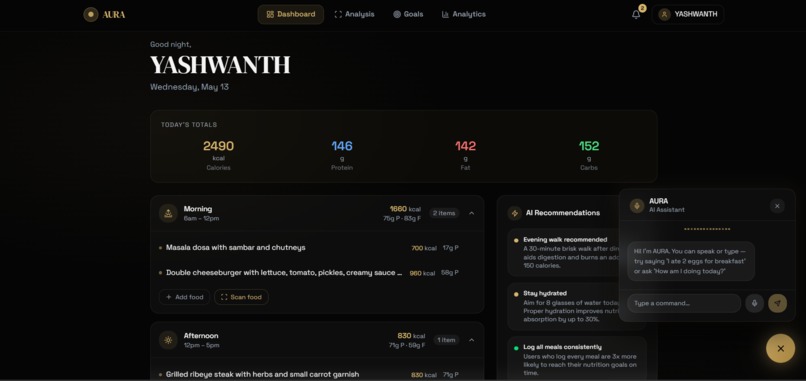
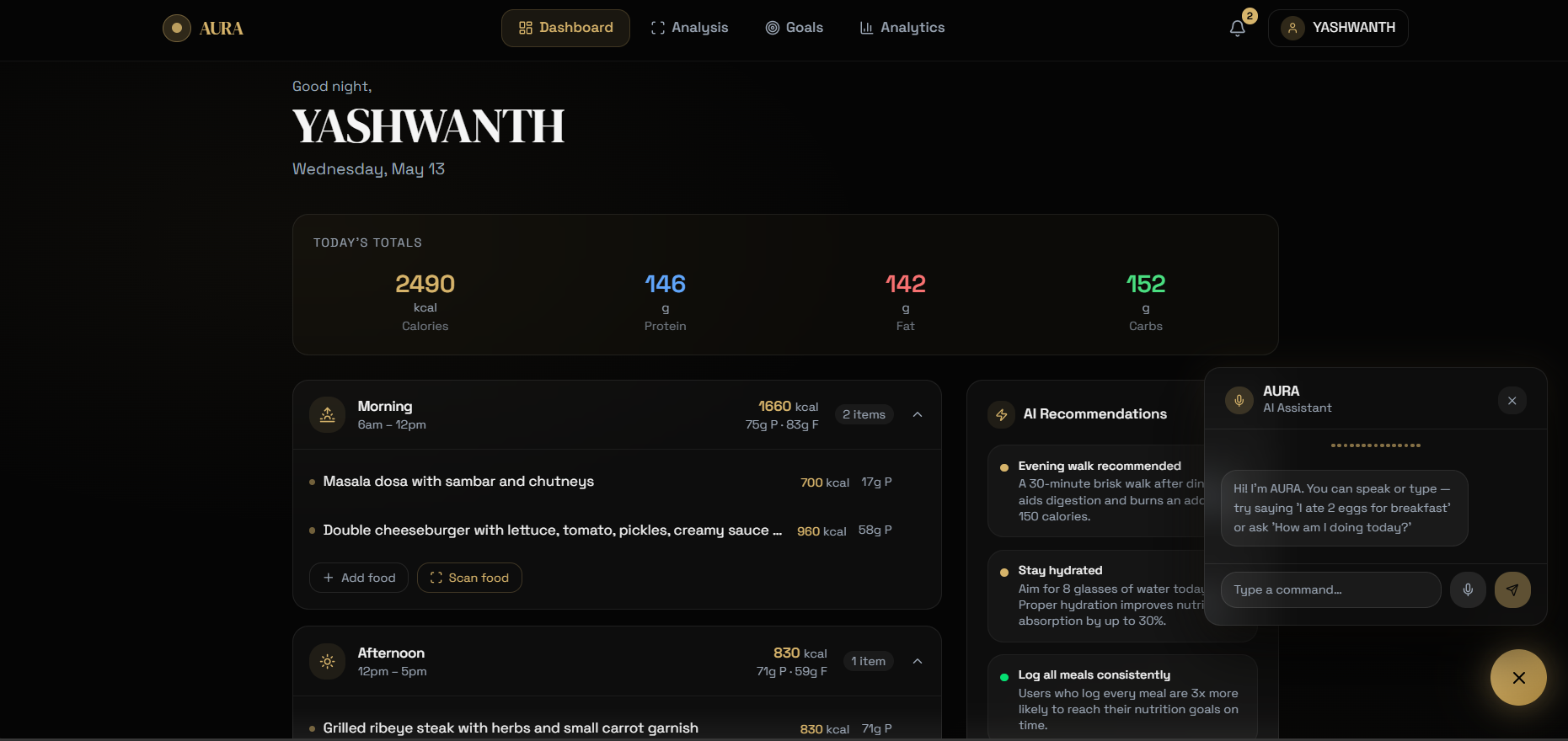
this my dashboard
-
Inspiration
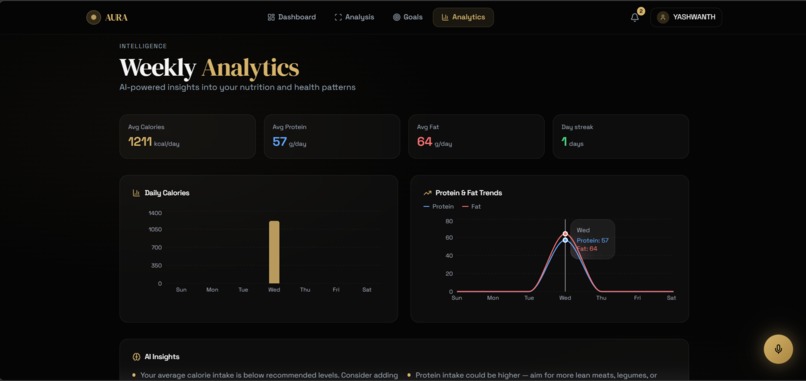
Growing up, I watched family members struggle with managing their diet and health without any real-time guidance. Calorie counting apps felt tedious, and most people gave up within days. I wanted to build something that thinks for you — a smart health companion that removes the friction from healthy living. That vision became AURA AI Health Tracker.
What I Learned
Building AURA taught me how to integrate computer vision models for real-world food recognition, handle multi-slot meal tracking with dynamic nutrition aggregation, and design AI recommendation pipelines that adapt to individual user goals and age groups. I also deepened my understanding of building responsive, user-first interfaces that make complex data feel simple. How I Built It
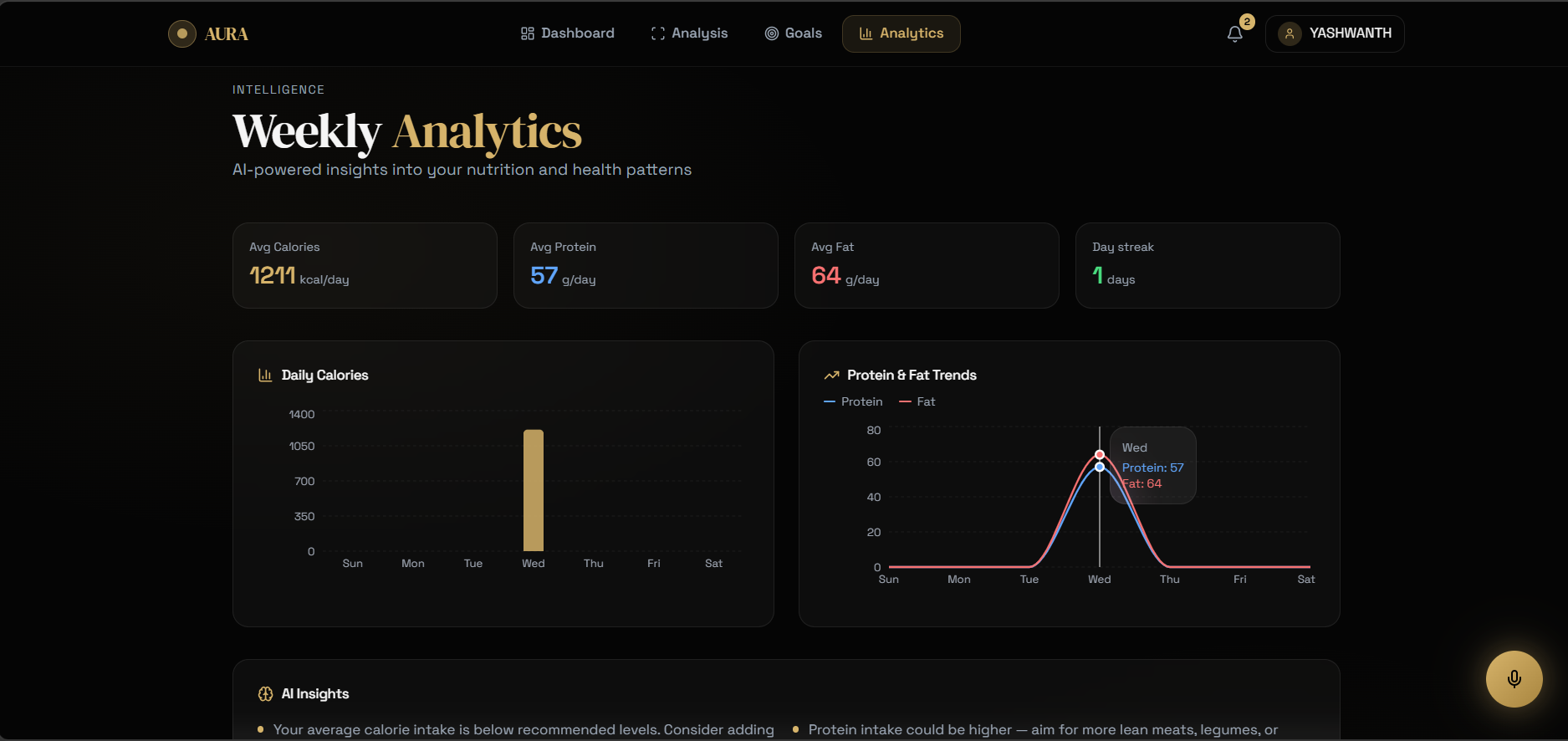
AURA was built using React.js for the frontend with a clean, mobile-friendly UI. The backend runs on Node.js/Express, managing user profiles, meal logs, and health records stored in MongoDB. The AI food recognition engine uses computer vision to detect and classify food items from camera scans or uploaded photos. A nutrition database maps detected items to calorie, protein, and fat values. I also integrated a voice assistant using NLP for hands-free logging and a smart notification system for meal and water reminders.
Challenges I Faced
The biggest challenge was achieving accurate food recognition across diverse Indian and international dishes. Training the model to distinguish visually similar foods (like dal and soup) required significant iteration. Another challenge was designing the predictive health forecasting engine — correlating daily intake patterns with risk indicators like obesity and diabetes needed careful data modeling. Balancing feature richness with a clean, non-overwhelming UX was an ongoing design challenge throughout development.
Built With
- api
- claude
- computer
- css
- css3
- express.js
- html5
- javascript
- jwt
- mongodb
- node.js
- python
- react.js
- replit
- reptil
- rest
- tailwind
- tensorflow.js
- vision


Log in or sign up for Devpost to join the conversation.