-
-
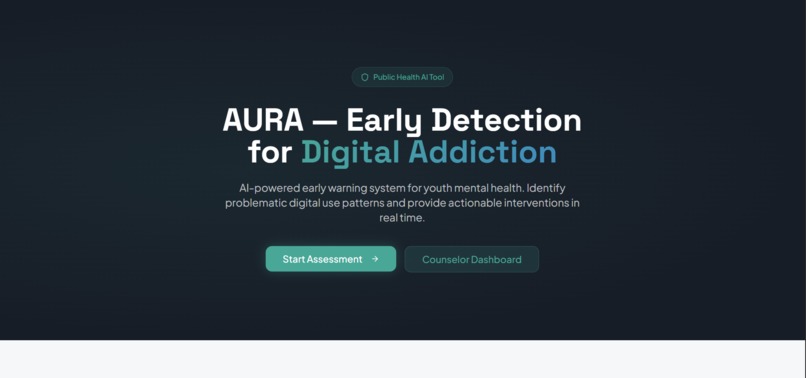
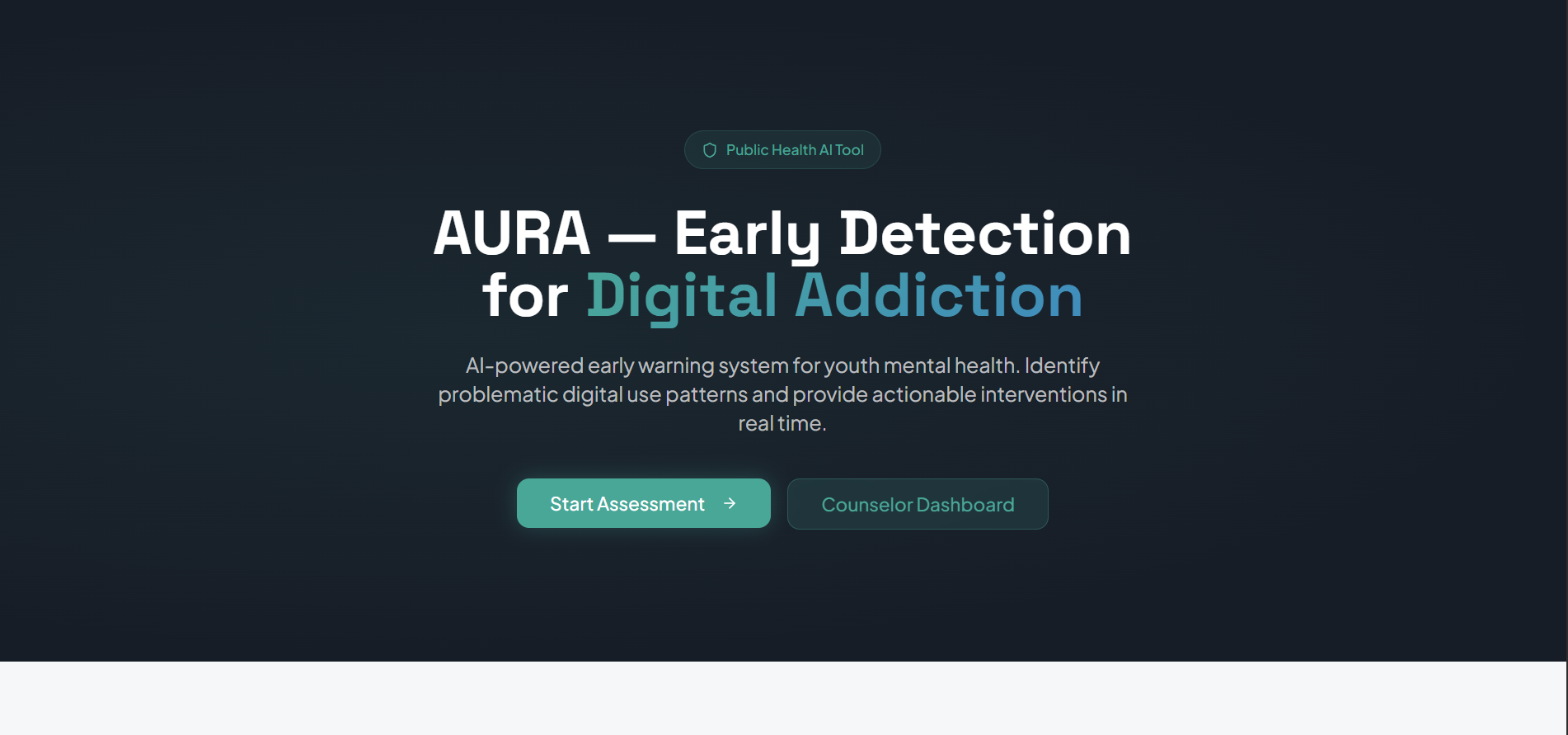
ui
-
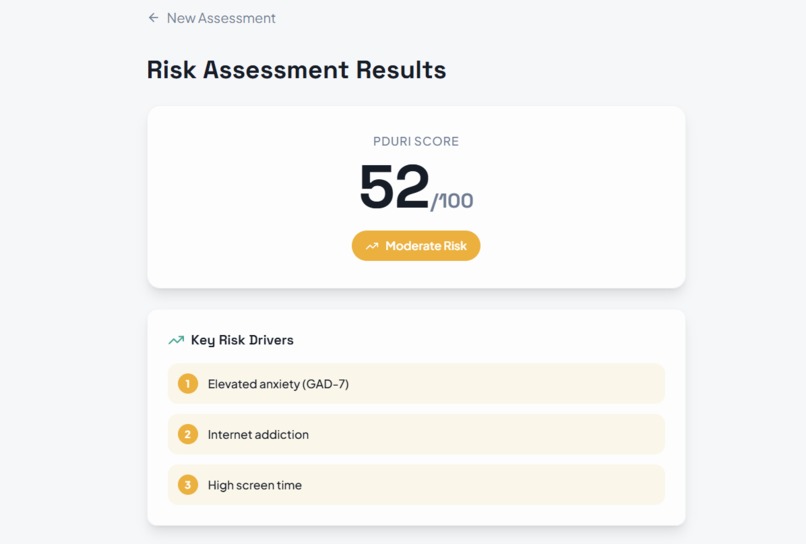
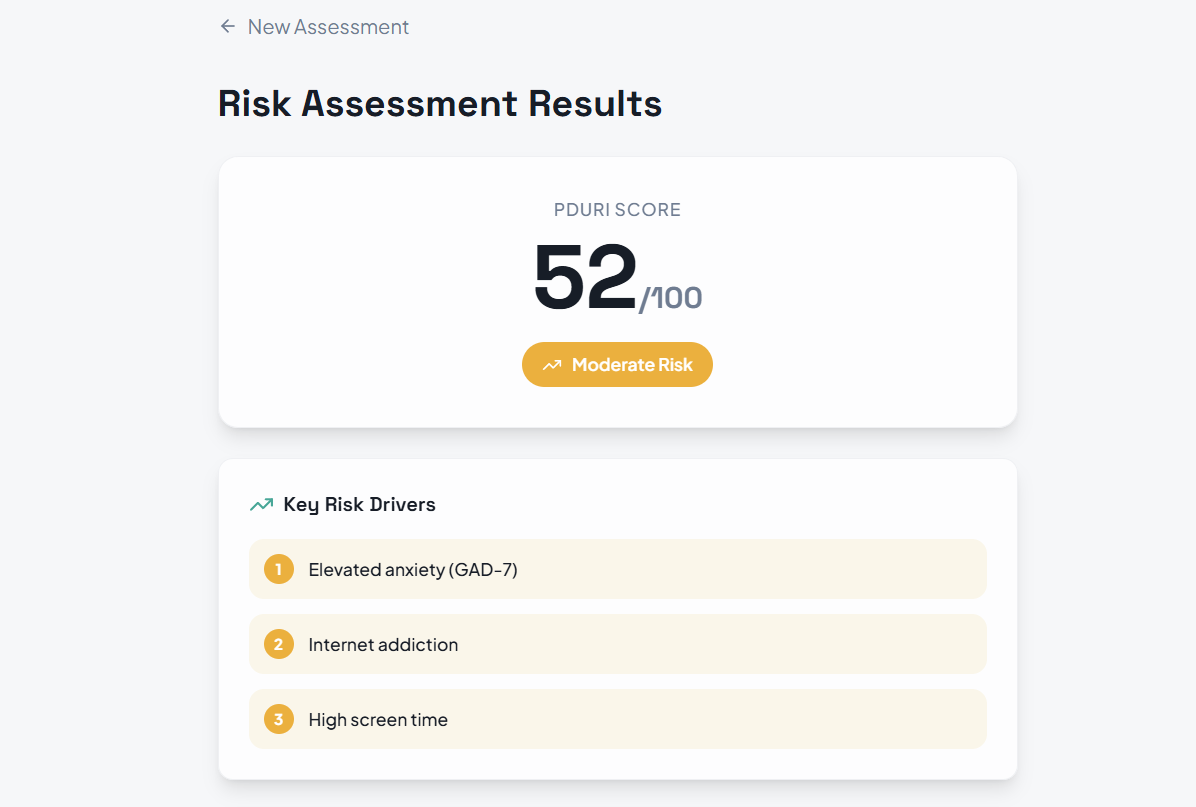
assesment results
-
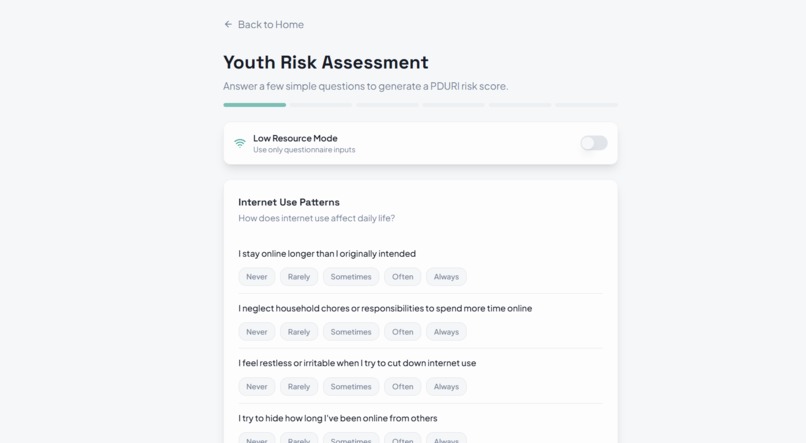
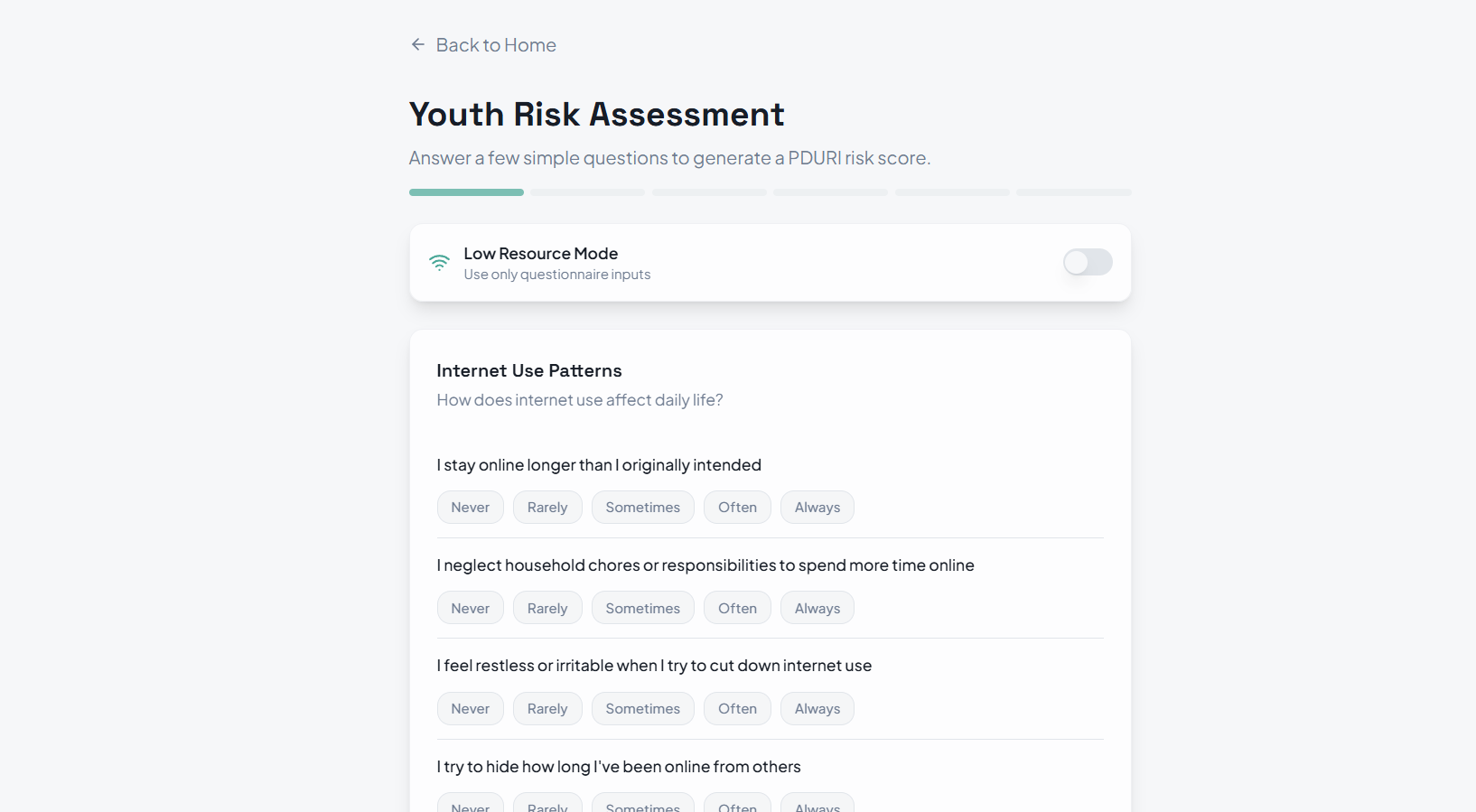
Form page
-
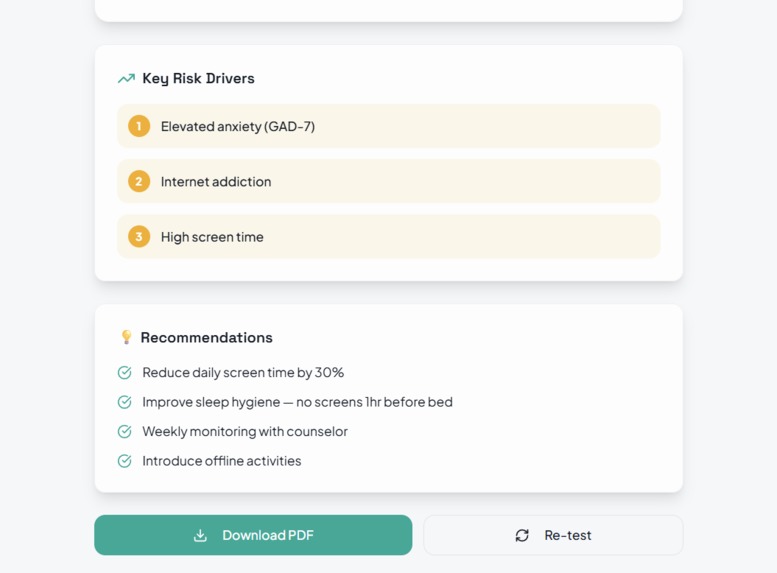
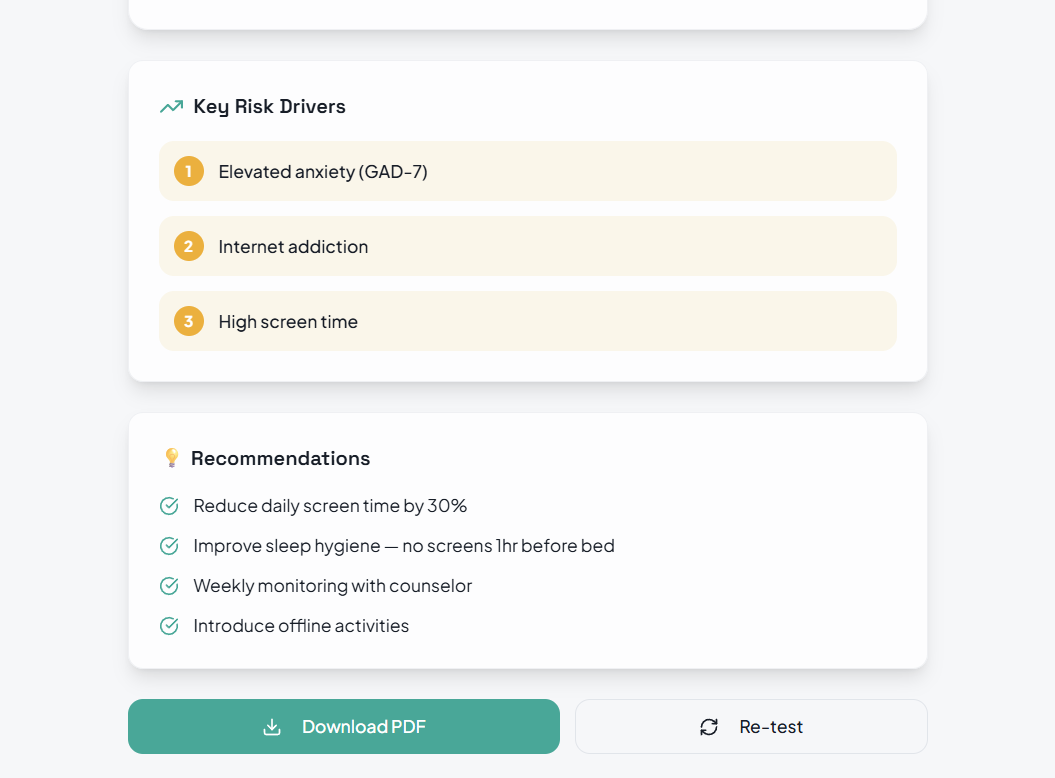
report and insights
Inspiration
It doesn’t begin with addiction.
It begins in the brief breaks between classes, in the kitchen, in the metro, at the dinner table, at 2 AM.
Scrolling. One more video. One more reel.
It looks harmless.
It is harmless.
Until it isn’t.
Sleep starts to break down.
Grades begin to slip.
Anxiety begins to creep in.
Conversations begin to disappear.
And by the time anyone realises what is happening, one is often too deep in the loop. The problem is visible, but the cause is not.
We can detect diseases early.
We can detect health risks early.
We can even detect depression early.
But for a problem affecting millions of young people every day,
there is no early warning system for problematic digital usage.
Especially in:
- schools where there is one counselor for every 200 students
- schools in rural or disadvantaged environments
- institutions in environments where behavioural data is scarce
Most tools available today either:
- allow for screen time tracking without understanding the impact
- utilise chatbots to make guesses about emotions
Neither of these options tells you:
- Who is at risk
- why they are at risk
- what to do next
So we asked,
What if we tried to detect problematic digital use early?
Before it leads to anxiety, sleep disorders, and academic decline?
That question led to the origin of AURA.
What it does
'AURA' is an AI-powered early warning system that detects and explains the risk of digital addiction in youth and recommends actionable interventions.
It combines three layers:
1. Psychometric Signals
- IAT
- GAD-7
- PSQI
- SAS-SV
2. Behavioral Signals
- Screen time
- Night-time usage
- Device interaction patterns
3. AI Prediction Layer These are fused into a unified risk index:
$$ PDURI = 100 \times (0.35 \cdot PS + 0.35 \cdot BS + 0.30 \cdot APS) $$
Output:
- Risk Score (0-100)
- Risk Level (Low, Moderate, High)
- Key Drivers
- Recommended Actions
How we built it
Data
We created a synthetic dataset grounded in validated clinical scales and available datasets from Kaggle, ensuring realistic patterns and meaningful correlations. Equity variables such as urban/rural were included.
Machine Learning
- Model: Random Forest
- Inputs: Psychometric + behavioral features
- Output: risk classification and probability
We prioritized interpretability, speed, and robustness.
Product
We built a prototype with:
- structured input interface
- real-time scoring
- dashboard with explanations and interventions
Challenges we ran into
Data availability
Real-world datasets are restricted due to privacy and ethics.
→ Solved using a clinically grounded synthetic dataset
Complexity vs time
Initial design was too heavy for a hackathon.
→ Simplified to a hybrid rule-based + ML system
Actionability
Scores alone are not useful.
→ Added explanations and intervention suggestions
Equity constraints
Many tools assume high connectivity.
→ Designed a system that works with minimal inputs
Accomplishments that we're proud of
- Built a working AI-powered screening prototype within 48 hours
- Designed a hybrid system that works even without behavioral data
- Created a realistic synthetic dataset with meaningful correlations
- Delivered actionable outputs, not just predictions
- Built for real-world users like school counselors and NGOs
- Built a solution that can run even in low resource setting such as low internet connectivity and poor smartphone penetration
What we learned
- Interpretability is critical in health-related AI systems
- Data design is as important as model design
- Simplicity leads to better real-world usability
- Impact comes from enabling action, not just detection
What's next for 'AURA'
- Pilot testing in schools and NGOs .
- Mobile-first deployment for accessibility .
- Integration with mobile based application for tracking real time health biomarkers for more personalised and accurate assessments
- Multi-language support .
- Integration with public health systems .
- Expansion into broader youth mental health screening .
Built With
- codex
- git
- lovable
- numpy
- numpy-(data-processing-&-synthetic-dataset-generation)-scikit-learn-(random-forest-model
- pandas
- python
- scikit-learn
- streamlit
- vscode


Log in or sign up for Devpost to join the conversation.