-
-

Loading Screen
-
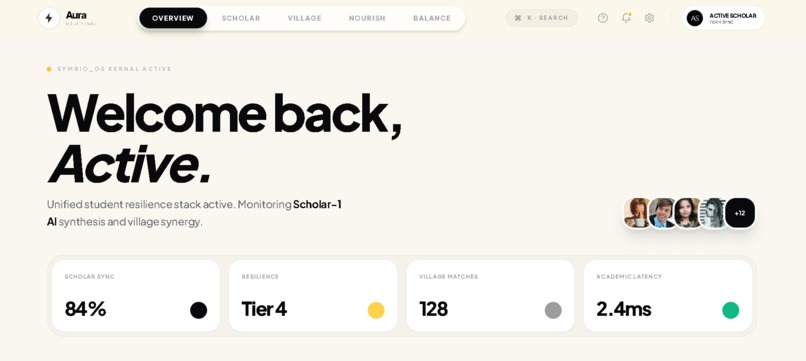
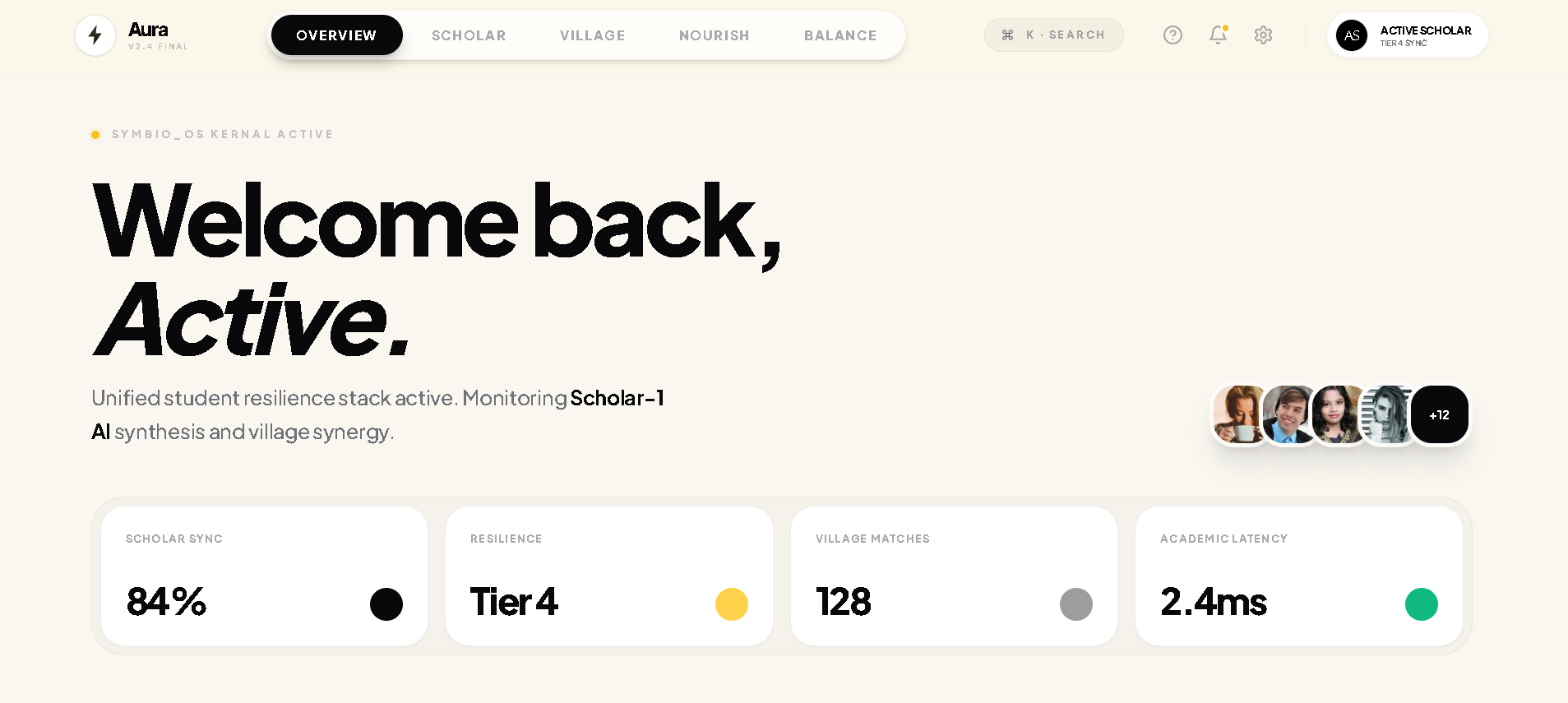
Overview Screen
-
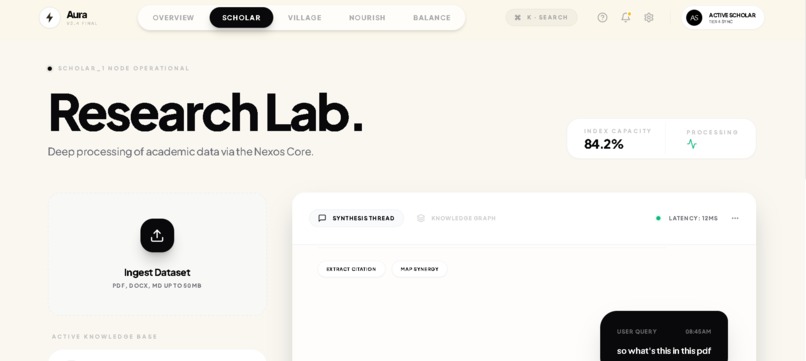
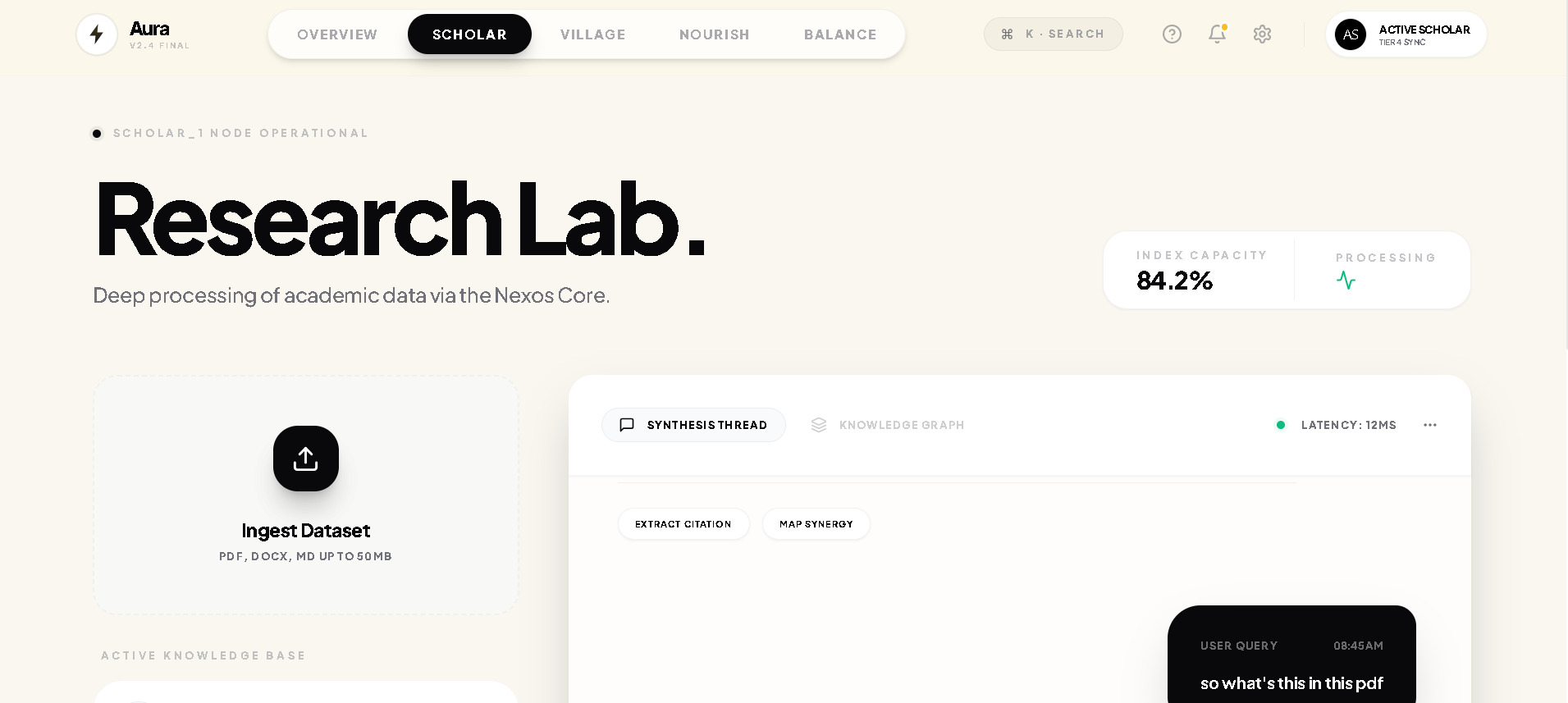
Scholar Screen
-
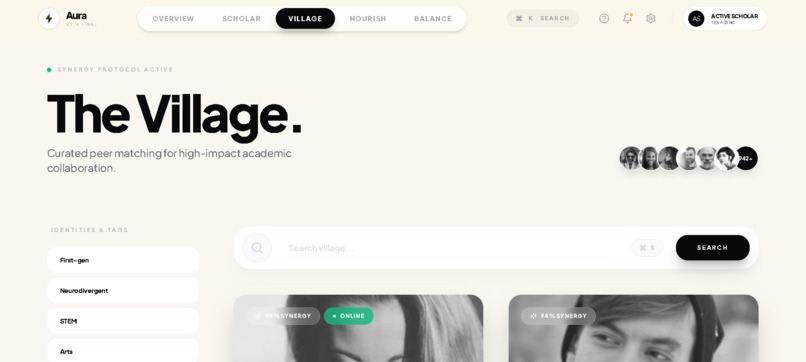
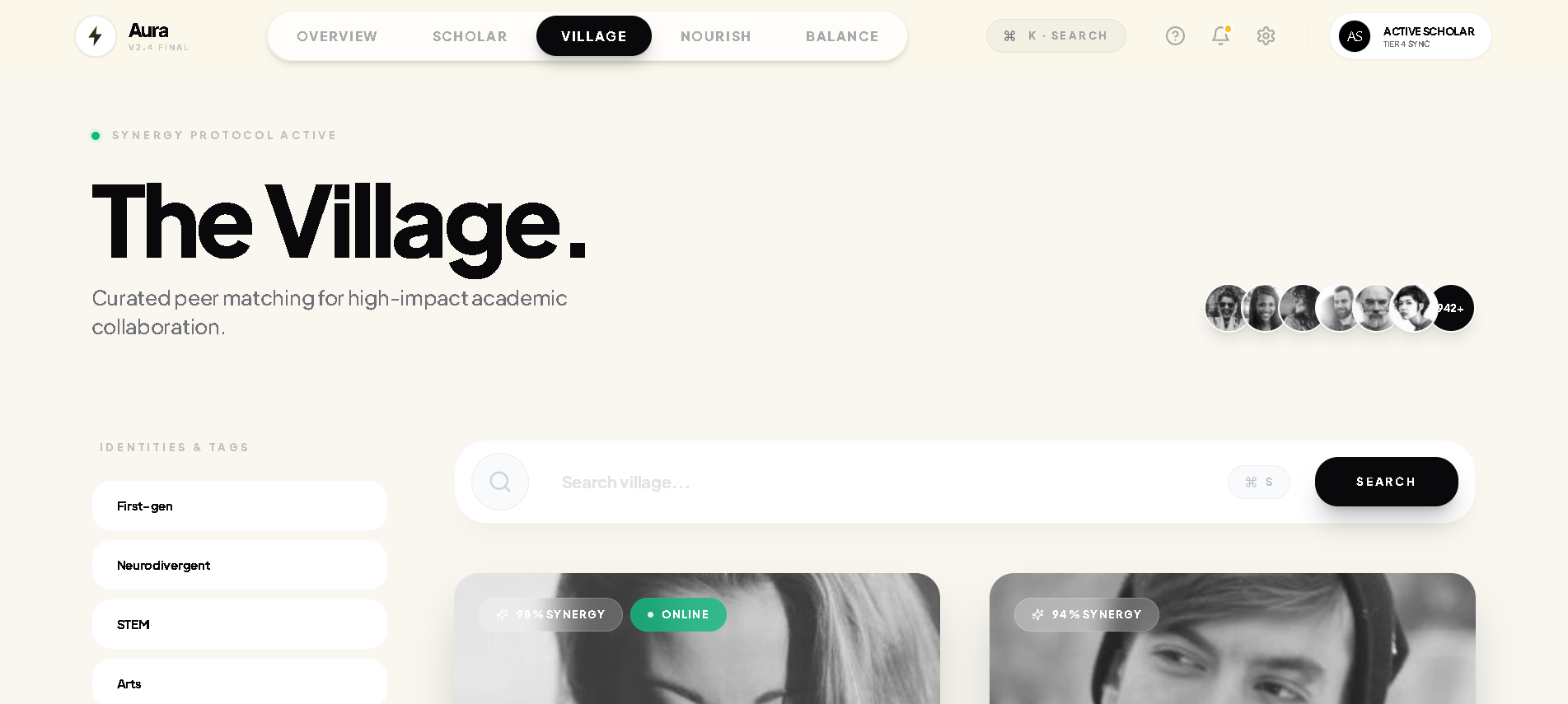
Village Screen
-
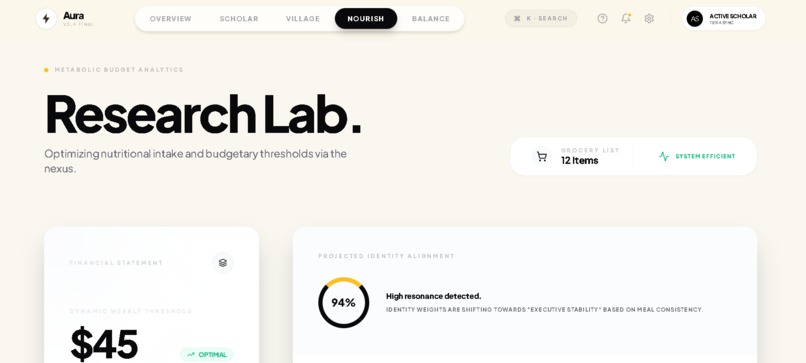
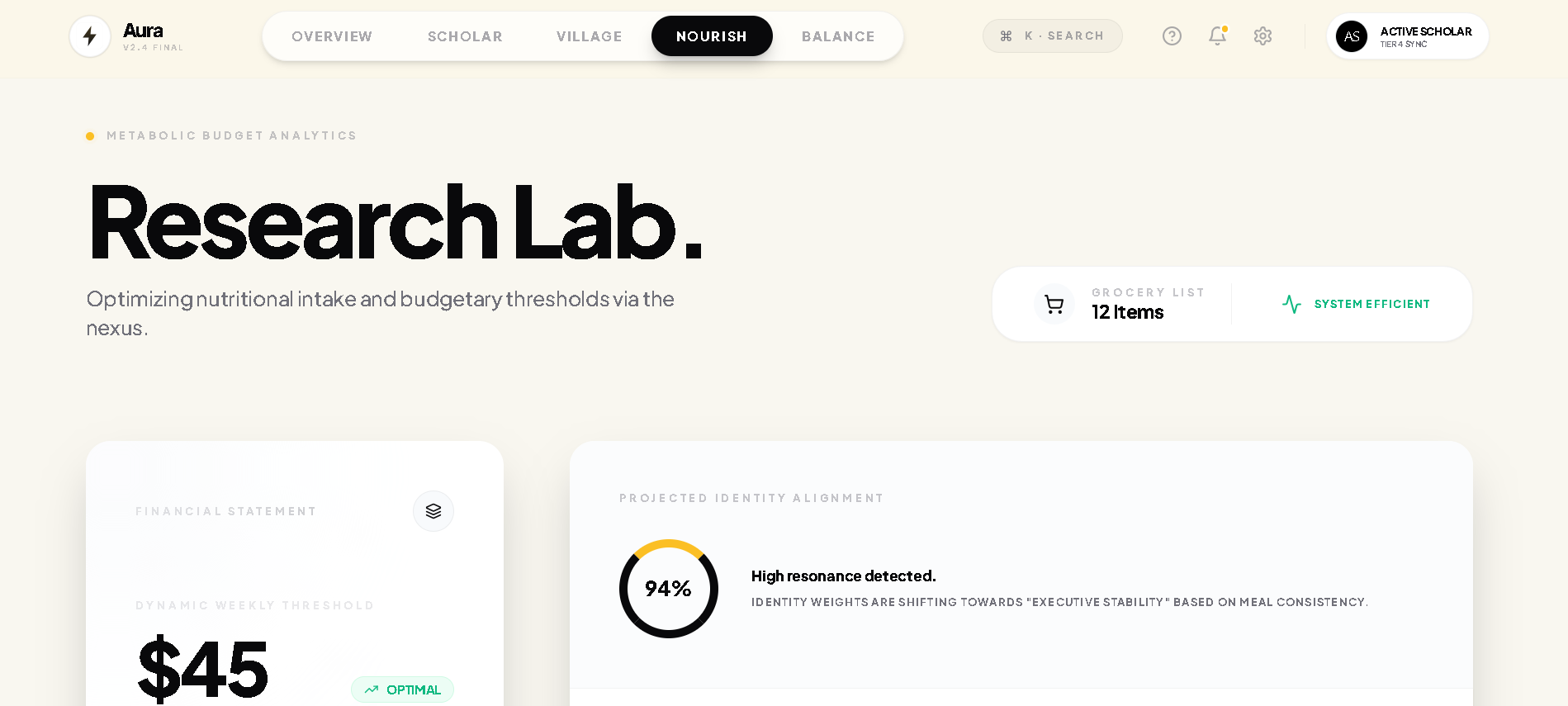
Nourish Page
-
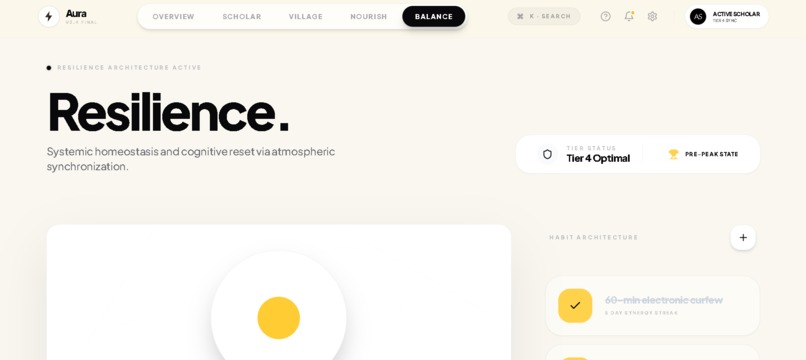
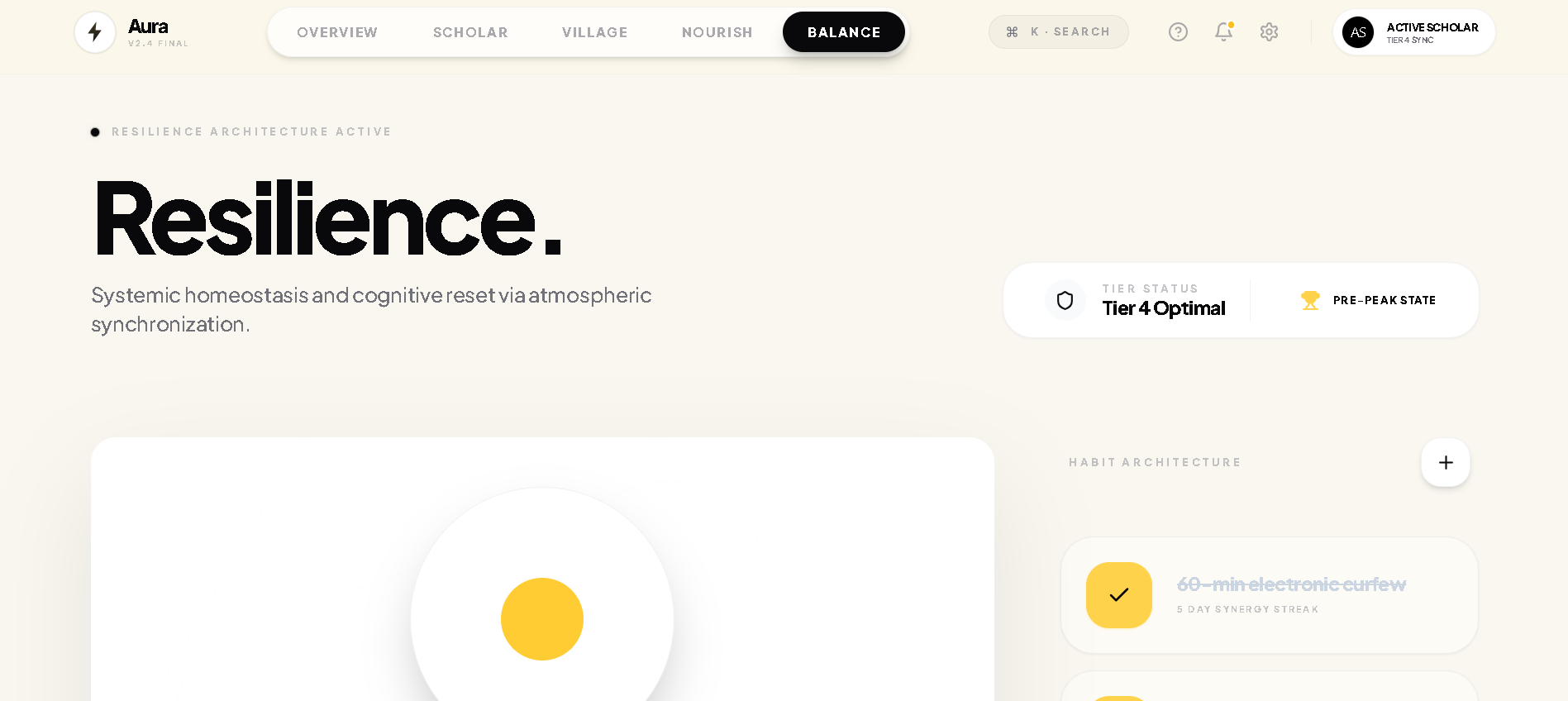
Balance Screen

Inspiration
As a second-year student in India, I experienced "fragmentation burnout"—the stress of jumping between separate apps for assignments, health, and social life. I was inspired to build Aura, a tool that treats students as humans rather than just academic workers. My goal was to create a "symbiotic" relationship between a student's responsibilities and their well-being.
What it does
Aura is a comprehensive "Student OS" that integrates four essential pillars of student life into a single, cohesive dashboard:
Scholar: A central hub for academic management, tracking assignments and deep-work goals.
Nourish: A wellness module that monitors physical and mental health to ensure students stay energized and avoid burnout.
Balance: A visual time-management system that helps users reclaim their schedule and prioritize high-value activities.
Village: A community-centric space designed to foster peer connection and collaborative success.
How we built it
I engineered Aura using a modern, high-performance tech stack focused on reliability and speed:
React & TypeScript: Utilized for a type-safe, component-driven architecture that minimizes runtime errors.
Vite: Chosen as the build tool for near-instant development cycles and optimized production performance.
Tailwind CSS & shadcn-ui: Employed to create a professional "Bento-grid" style interface that is both beautiful and fully accessible.
Framer Motion: Integrated to provide fluid transitions and a premium user experience.
Backend Services: Implemented a structured API layer (api.ts) to manage data flow across different life modules efficiently.
Challenges we ran into
One of the primary challenges was designing a unified data model that could handle diverse information—from academic deadlines to wellness metrics—without creating a cluttered UI. I had to develop a modular folder structure to isolate features while maintaining a shared global state through a central service layer. Additionally, ensuring the sidebar navigation and mobile responsiveness worked perfectly across all devices required building a custom use-mobile hook.
Accomplishments that we're proud of
Holistic Integration: Successfully merging academic productivity with mental health tracking in a way that feels natural, not forced.
Premium UI/UX: Achieving a high-fidelity aesthetic using shadcn components and custom Tailwind configurations that score high on the hackathon's "Aesthetics" criteria.
Clean Codebase: Maintaining a professional-grade repository with ESLint, TypeScript, and Vitest configurations, ensuring the project is scalable and maintainable.
What we learned
Building Aura reinforced the importance of Domain Isolation in software architecture; keeping the "Scholar" logic separate from "Nourish" logic was key to managing complexity. I also learned that great student tools must be "human-centric"—focusing on the user's state of mind (their "Aura") rather than just their output.
What's next for Aura: A Symbiotic Student OS
The roadmap for Aura includes:
AI-Powered Insights: Implementing local data analysis to suggest the best times for "Deep Work" based on a student's wellness patterns.
Collaborative Villages: Expanding the "Village" module to allow real-time study groups and resource sharing.
Cross-Platform Sync: Developing a dedicated mobile application to ensure Aura is always accessible, even without a browser.
Built With
- css
- framer-motion
- html
- javascript
- lucide-react
- radix
- shadenui
- sqlite
- tailwindcss
- texhstack-query
- typescript
- ui
- vite
- vitest


Log in or sign up for Devpost to join the conversation.