-
-
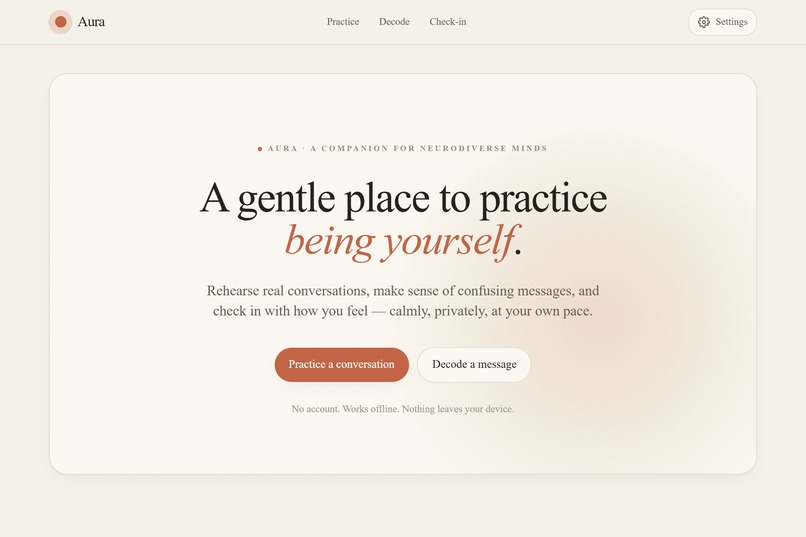
Landing
-
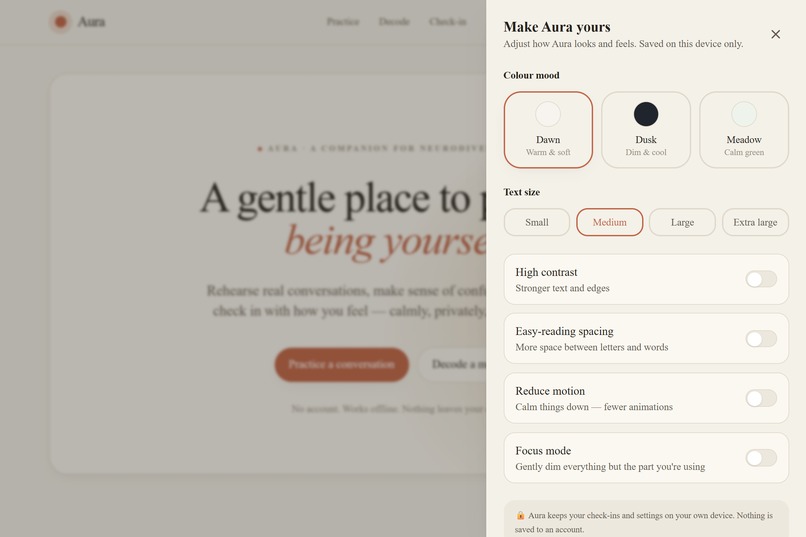
Settings
-
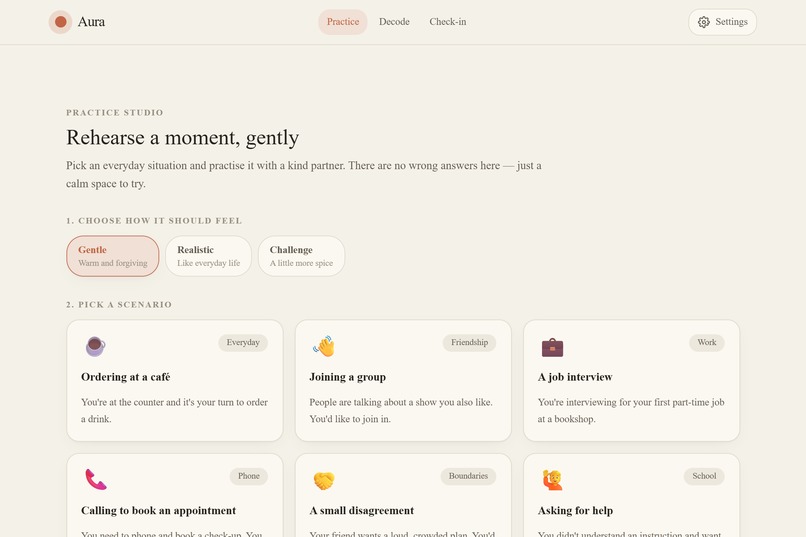
practic-picker
-
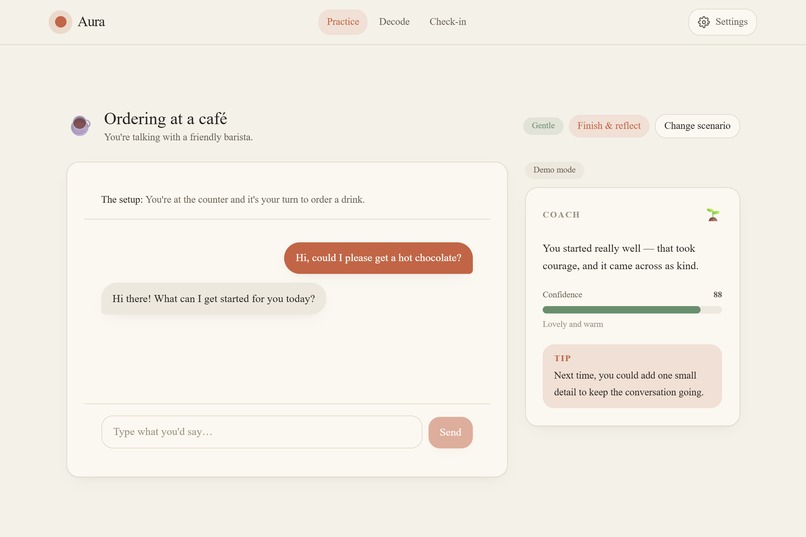
practice-coach
-
decode
-
mood-trend
-
check-in
Inspiration
I kept noticing how much social tech is built around being fast and being constant. Streaks, instant replies, notifications that never stop. For a lot of autistic and neurodiverse people, those are the exact things that make socializing tiring. What people around me actually wanted wasn't a way to be more social. It was a quiet place to work things out before being put on the spot.
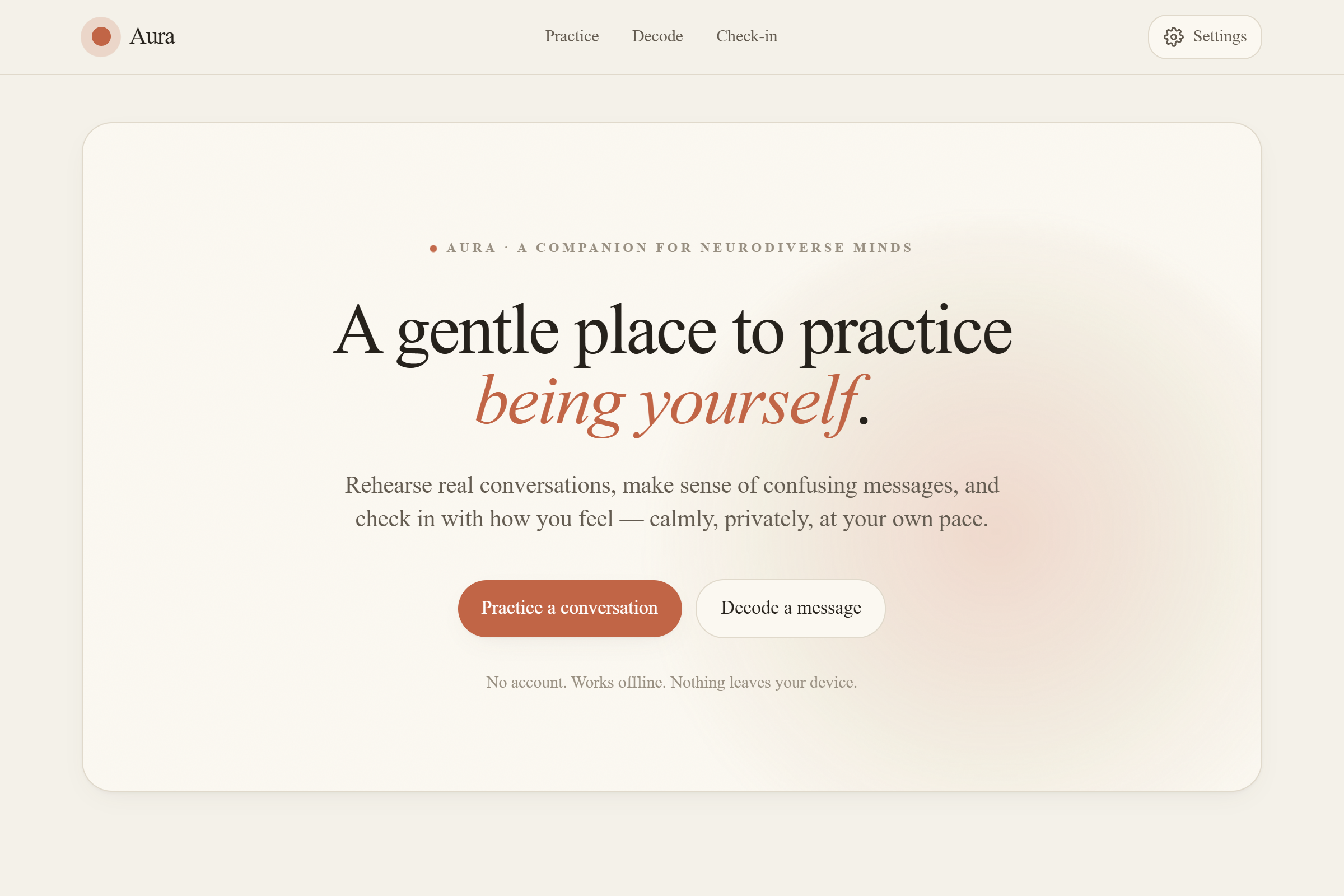
So that is what I tried to make. Three situations came up over and over: getting through an actual conversation, figuring out what a message really means, and noticing how you feel before it piles up. Aura is one small, calm tool for each of those.
I built it for the Youth Code x AI hackathon, in the "AI That Actually Helps People" track. The event supports the Akhil Autism Foundation, so building something genuinely for the autism community, and not just about it, was the point from the start.
What it does
Aura has three tools, and each one is meant to take some of the pressure out of a real moment.
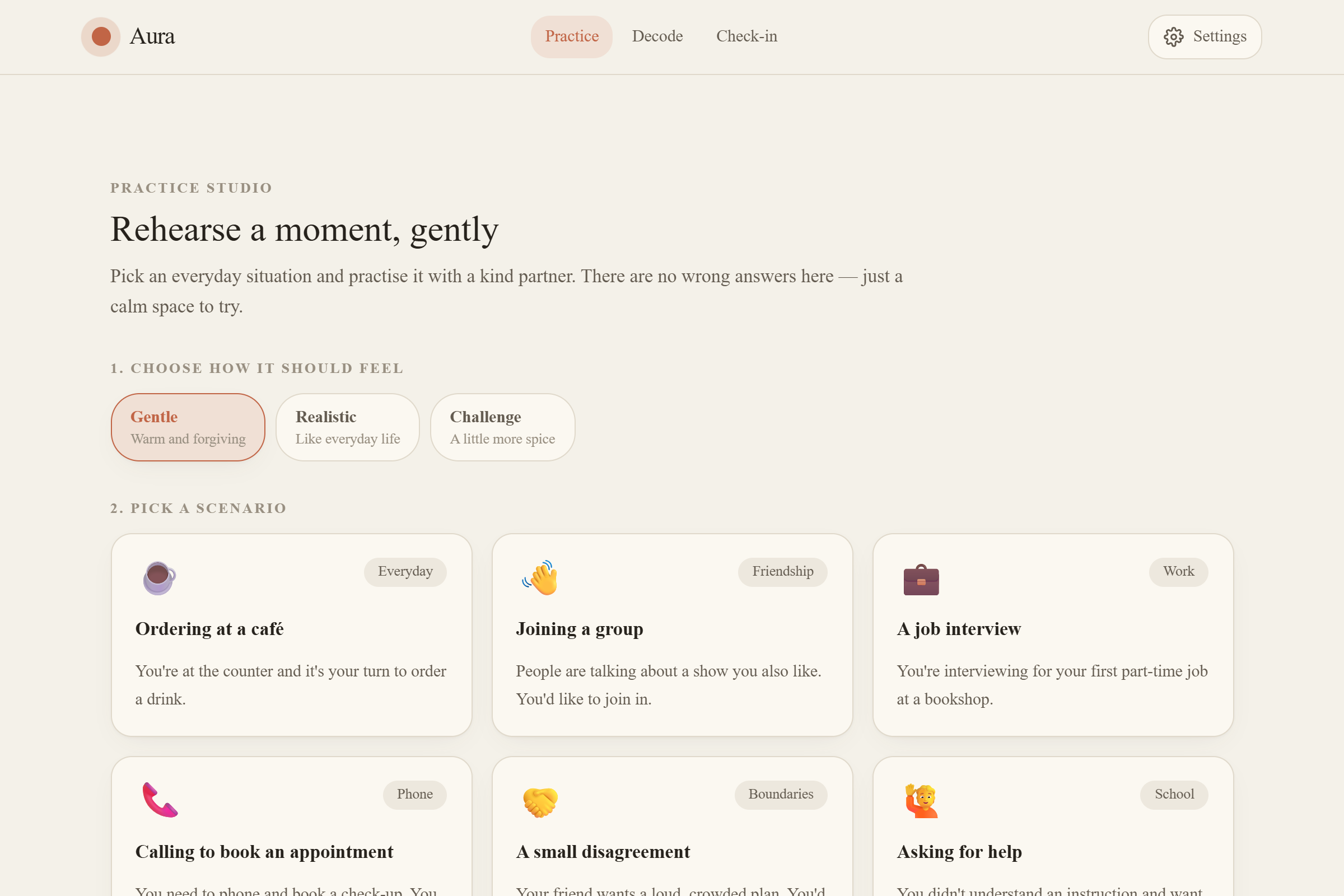
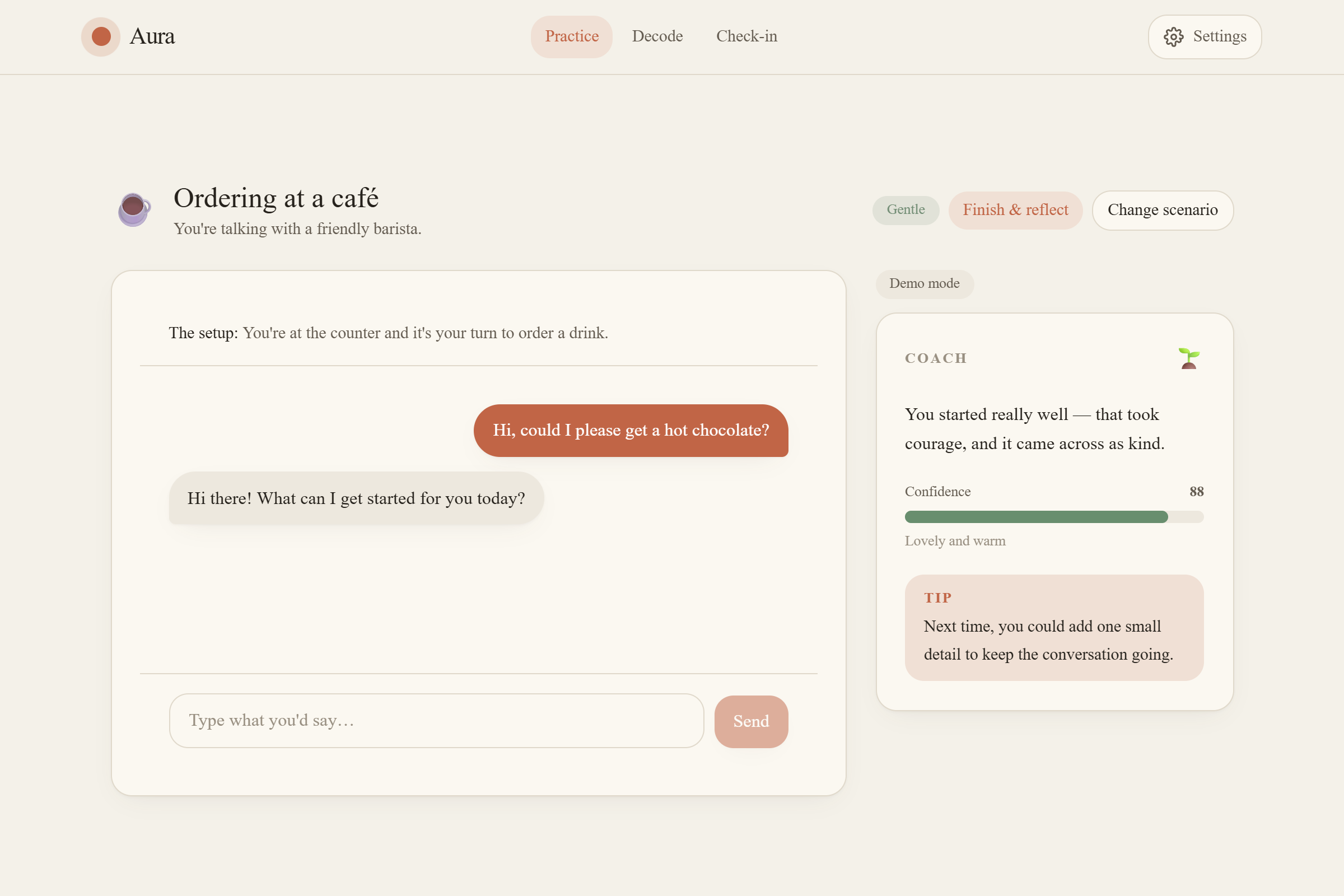
Practice lets you rehearse everyday situations like ordering at a café, a job interview, joining a group, a phone call, or a small disagreement. You talk to a patient AI character that stays in role and never rushes you. If you don't know how to start, you can tap a suggested opening line. As you go, a coach panel gives you kind, specific feedback and a confidence meter, and when you are done there is a gentle summary of how it went. There is no score and nobody judging you.
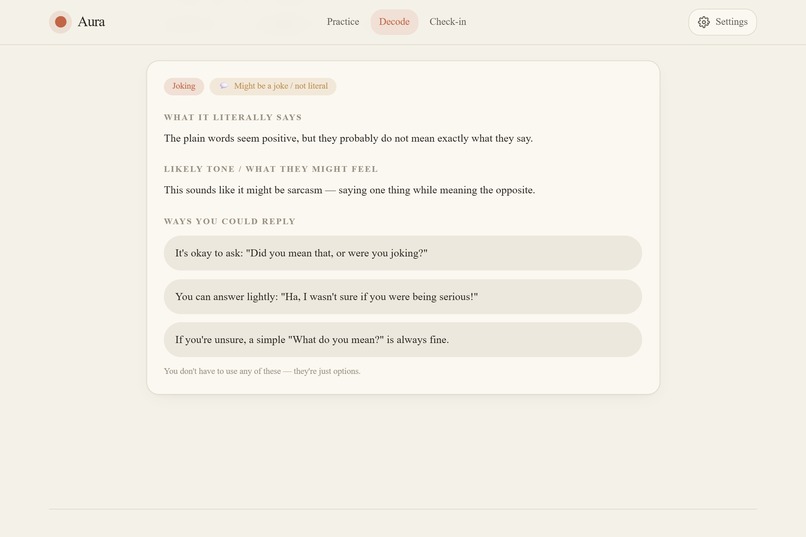
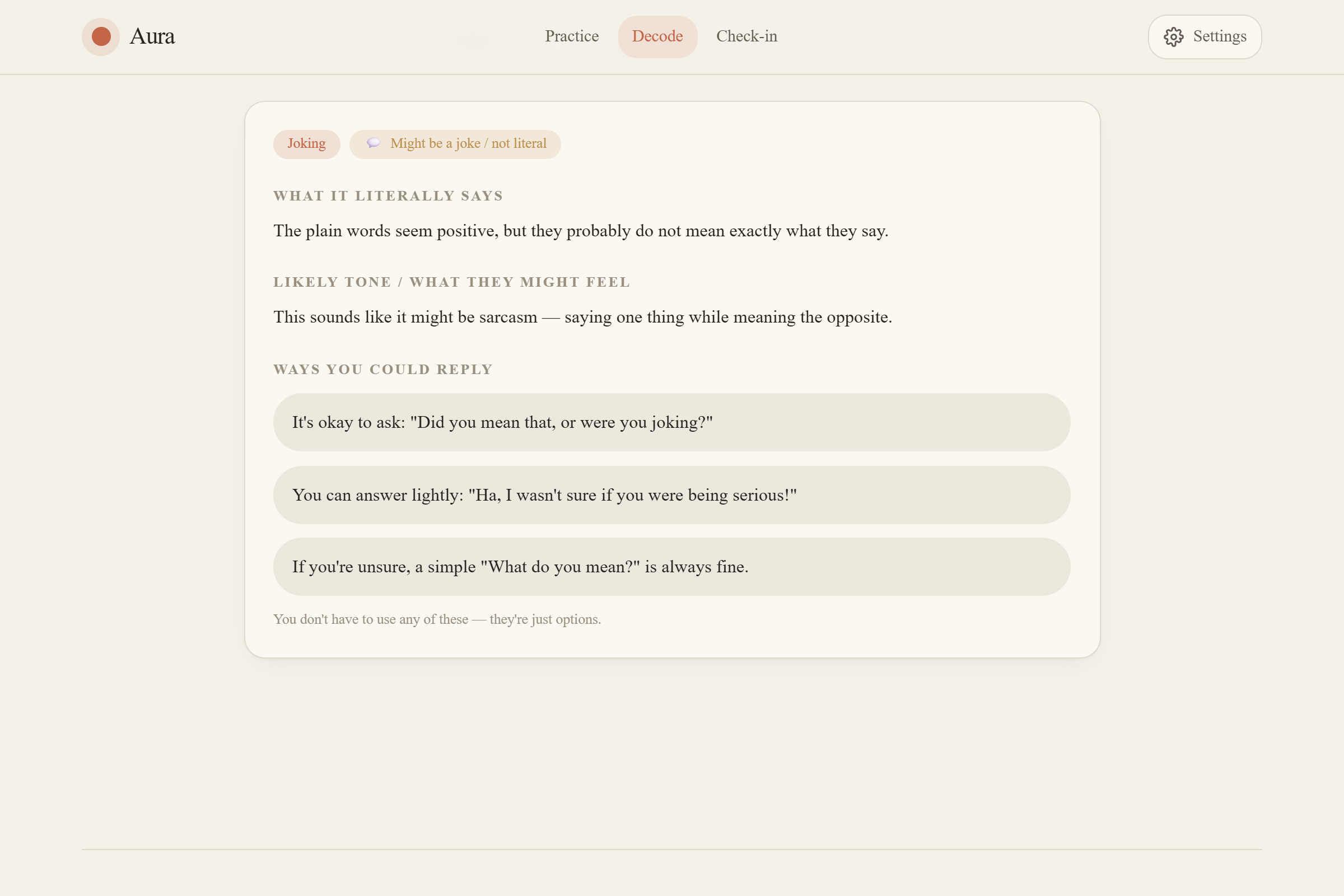
Decode is for messages you can't quite read. You paste a confusing text, DM, or email, or you just describe what happened, and Aura explains what it literally means, what tone it is probably in, whether it might be sarcasm or a joke, and a few calm ways you could reply. It is basically the friend you message to ask "wait, what did they mean by that?"
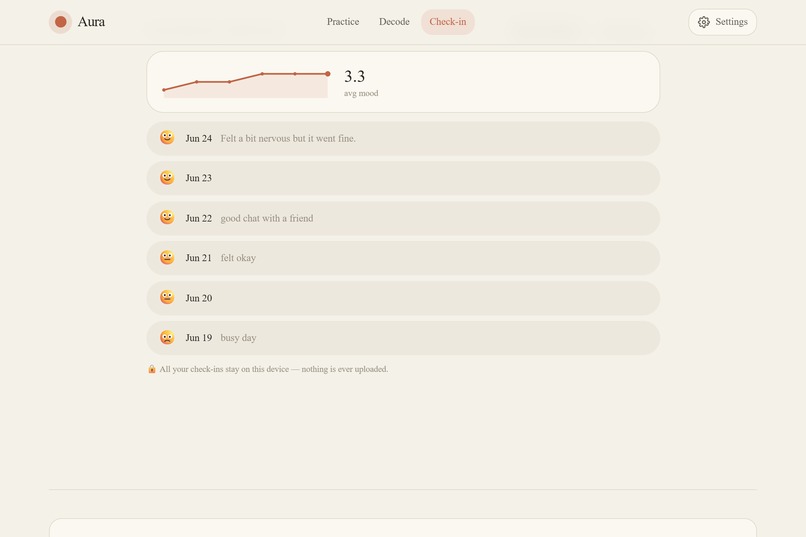
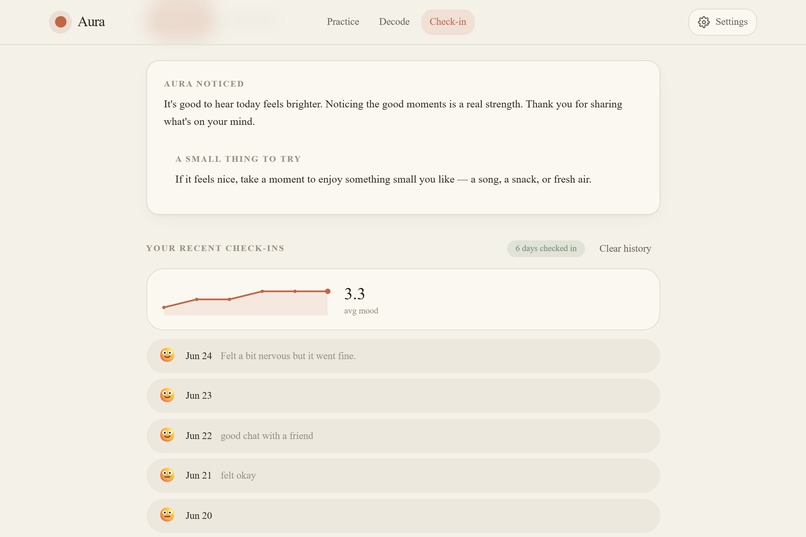
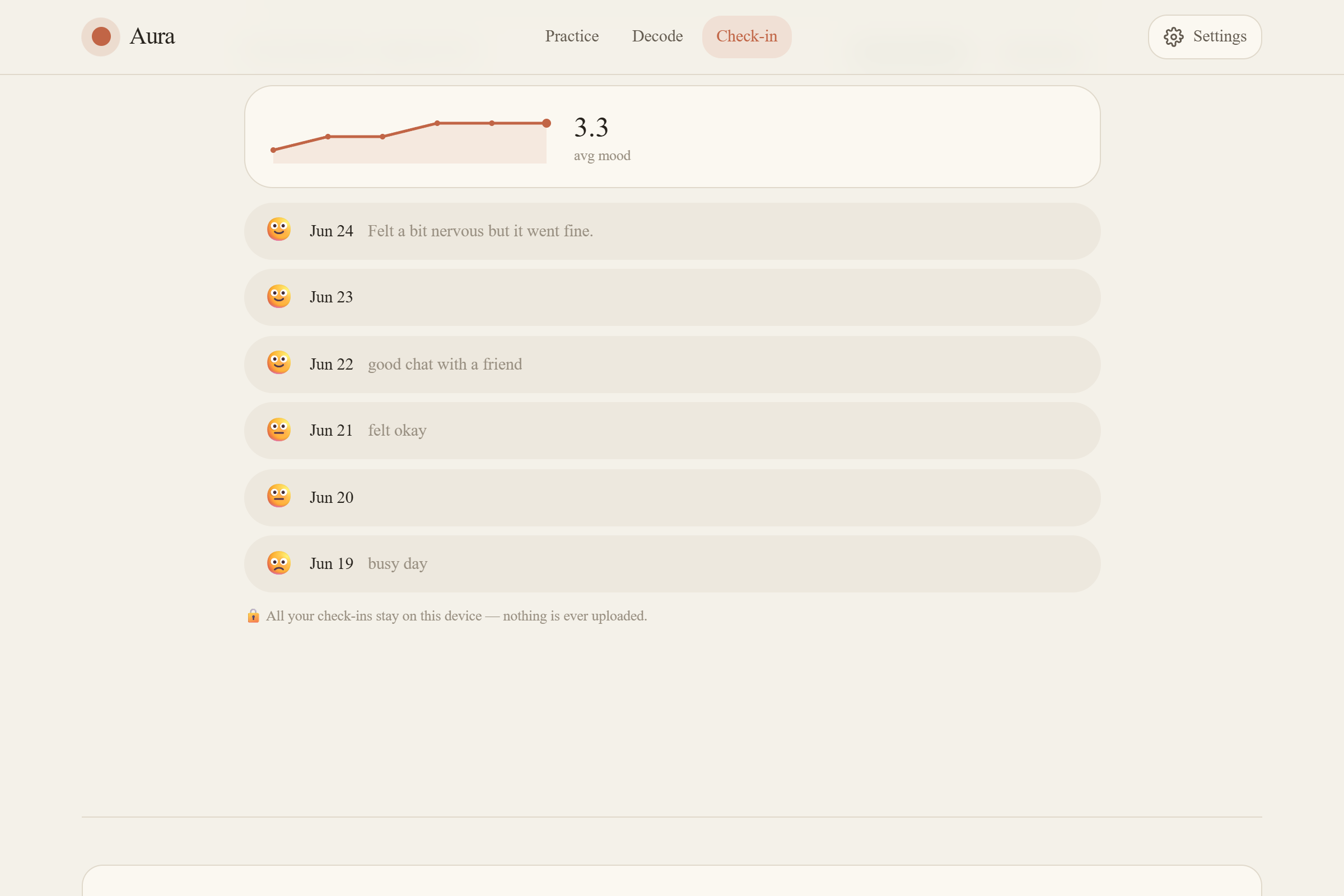
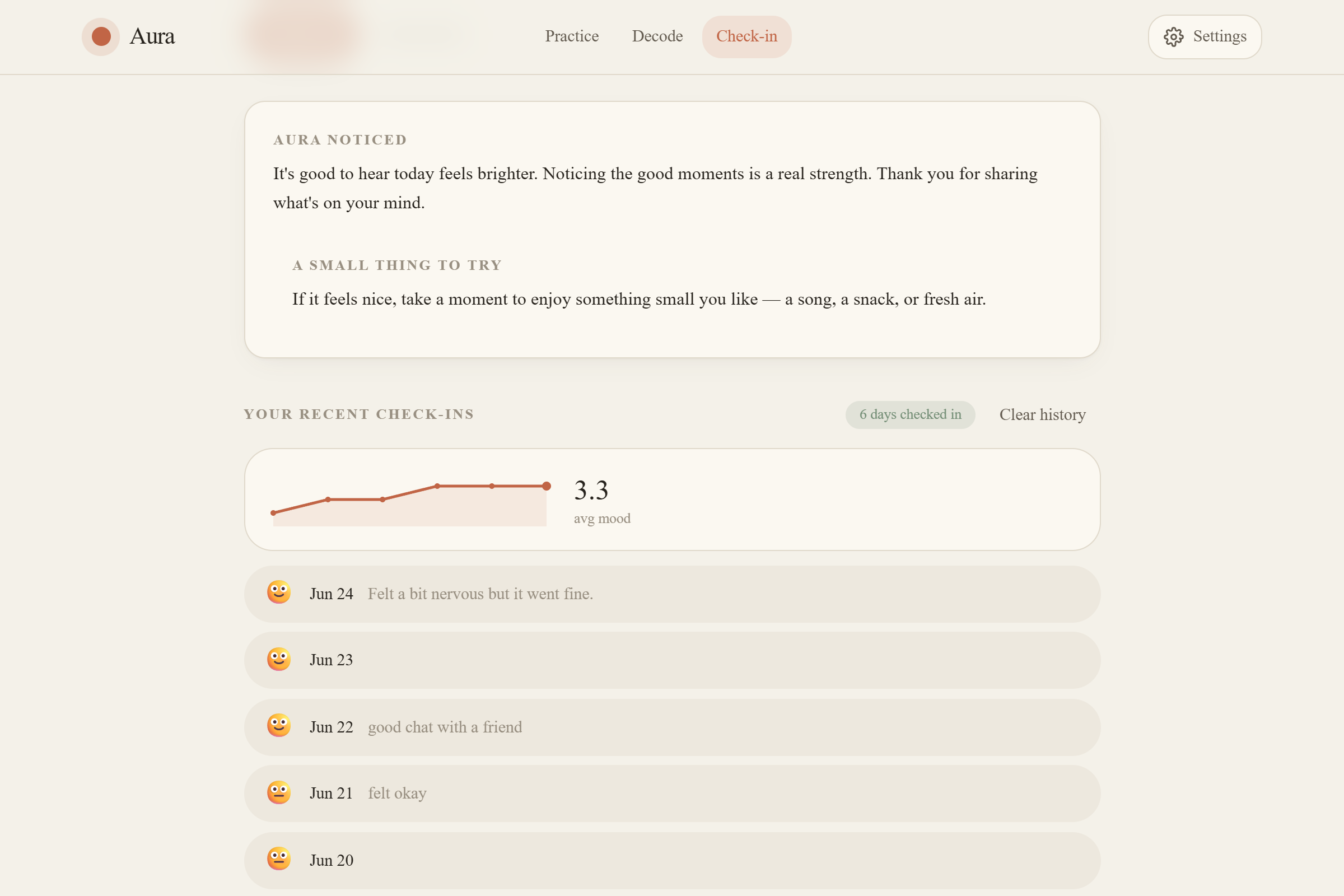
Check-in is a quick mood log. You pick how you feel, add a note if you want to, and Aura responds with something warm and one small grounding idea. It also draws a little trend line of your recent moods so you can see how things have been going. All of it is saved only on your device.
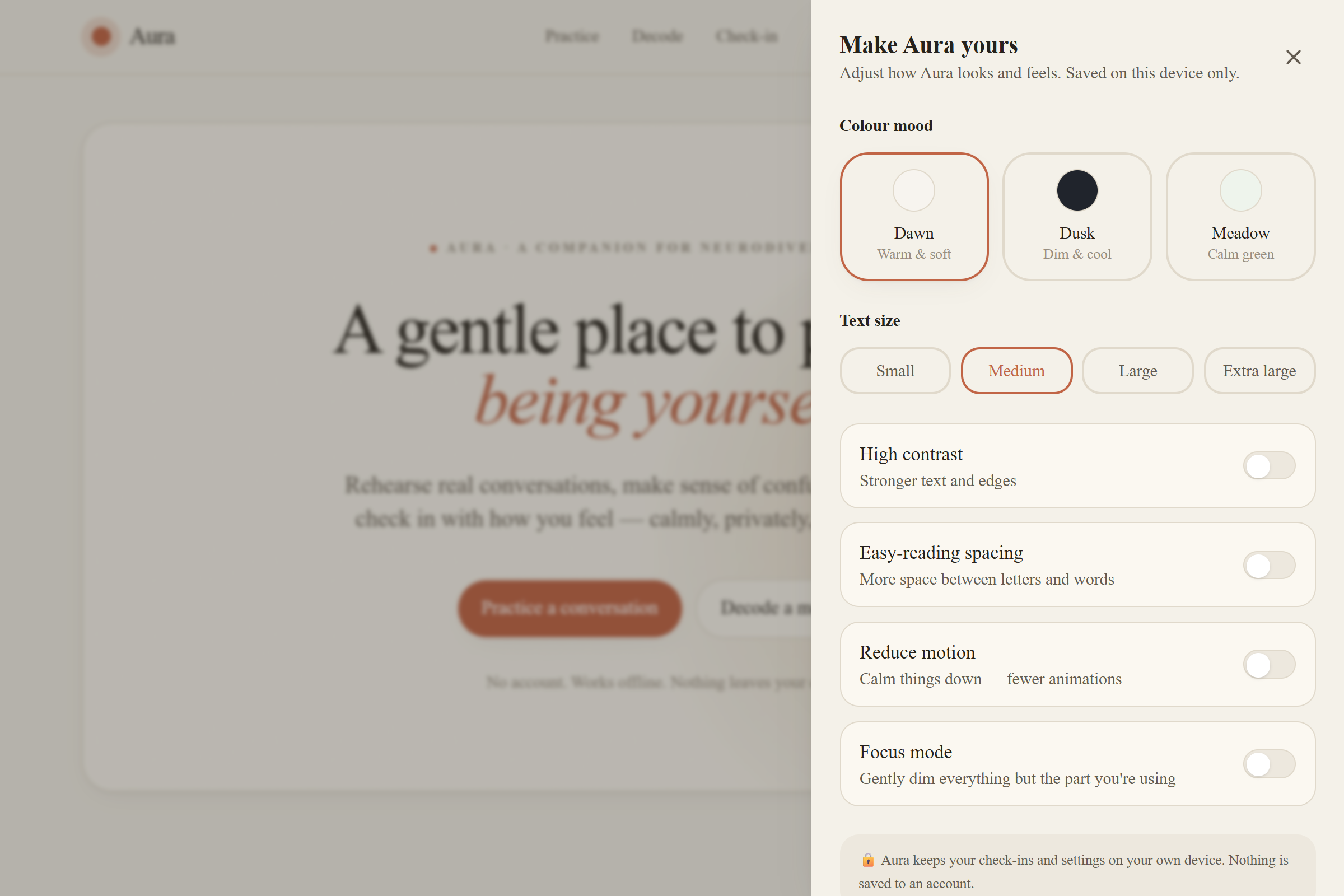
Around all of that is a settings panel for your senses, so the app itself never becomes the stressful part. And every page has a calm footer with real helplines, because anything in this space should take that seriously.
How I built it
The app is Next.js 14 with the App Router, written in TypeScript and styled with Tailwind. The conversations, the message decoding, and the check-in responses all run through one API route that talks to Claude using the official Anthropic SDK, with a different system prompt for each tool so the tone fits.
Privacy was a design decision, not something I added at the end. There is no account and no database. Your check-ins and settings live in your browser's local storage and never leave your device.
It also had to keep working when things go wrong. If there is no API key or no internet, every tool falls back to hand-written responses instead of throwing an error, so a demo never breaks on a bad network.
The theming works by keeping every colour as a CSS variable and flipping a few data attributes on the page, so switching themes, contrast, or text size happens instantly with no flicker. For the look, I used a warm paper-coloured background, an editorial serif called Fraunces for the headings, Atkinson Hyperlegible for everything else, and one soft breathing circle as the signature. I wanted it to feel calm but still have a point of view, not generic. It is deployed on Vercel.
Accessibility and inclusive design
This is the part I care about most, and it shaped every screen rather than being bolted on at the end. Some of what is in the settings panel:
- Three calm color moods (a warm one, a dim cool one for light sensitivity, and a soft green one)
- Atkinson Hyperlegible text, plus a dyslexia-friendly spacing option
- Adjustable text size and a high-contrast mode
- A reduce-motion option that also respects your device's own setting
- A focus mode that quietly dims everything except what you are working on
Underneath that there is a skip-to-content link, real buttons and links, clear focus outlines, and live regions so a screen reader reads out each AI reply as it appears. The onboarding is short and you can skip it. Nothing nags you, and there is nothing to keep a streak on.
Social impact
About 1 in 36 young people is autistic, and for a lot of them social situations are a daily source of stress. Aura doesn't try to change anyone. It just gives them a private, no-judgment way to prepare, understand, and check in with themselves on their own terms. That is the whole idea behind the track, and since the hackathon supports the Akhil Autism Foundation, it points straight back to people who already do this work.
Challenges I ran into
The hardest part was tone. For this audience, a reply that is a bit too clinical, too upbeat, or too vague can actually make things worse, so I spent a lot of time on the prompts and the fallback text to keep Aura warm and plain without being patronising.
Getting the theme to load with no flash took some care too. I had to read the saved settings before the page paints, which meant a small script that runs first and a rule that no component is ever allowed to hard-code a color.
Keeping it calm without it going bland was a real balance as well. Calm designs slip into boring very easily. Sticking to a warm palette, one nice serif, and a single soft accent is what kept it feeling deliberate.
What I learned
Building for a specific group means caring about things most apps skip, like motion, contrast, literal wording, and knowing when to say less. I also learned that privacy and good design do not have to fight each other. Keeping everything on the device made the app both simpler and easier to trust. And writing the fallback responses taught me as much about the right tone as the actual prompts did.
What's next
More practice scenarios, including ones people can write themselves, and maybe spoken practice with voice in and out. An optional encrypted export so someone can move their check-in history between their own devices without a server ever seeing it. Helplines that adjust to wherever the user is. And most importantly, sitting down with autistic young people and educators to make sure the language is right.
Built With
- anthropic-claude
- framer-motion
- next.js
- node.js
- react
- tailwind-css
- typescript
- vercel

Log in or sign up for Devpost to join the conversation.