-
-
Aura Introduction
-
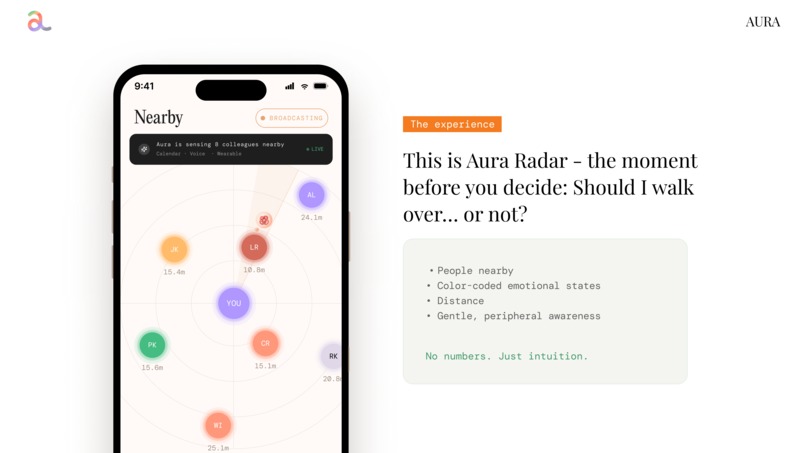
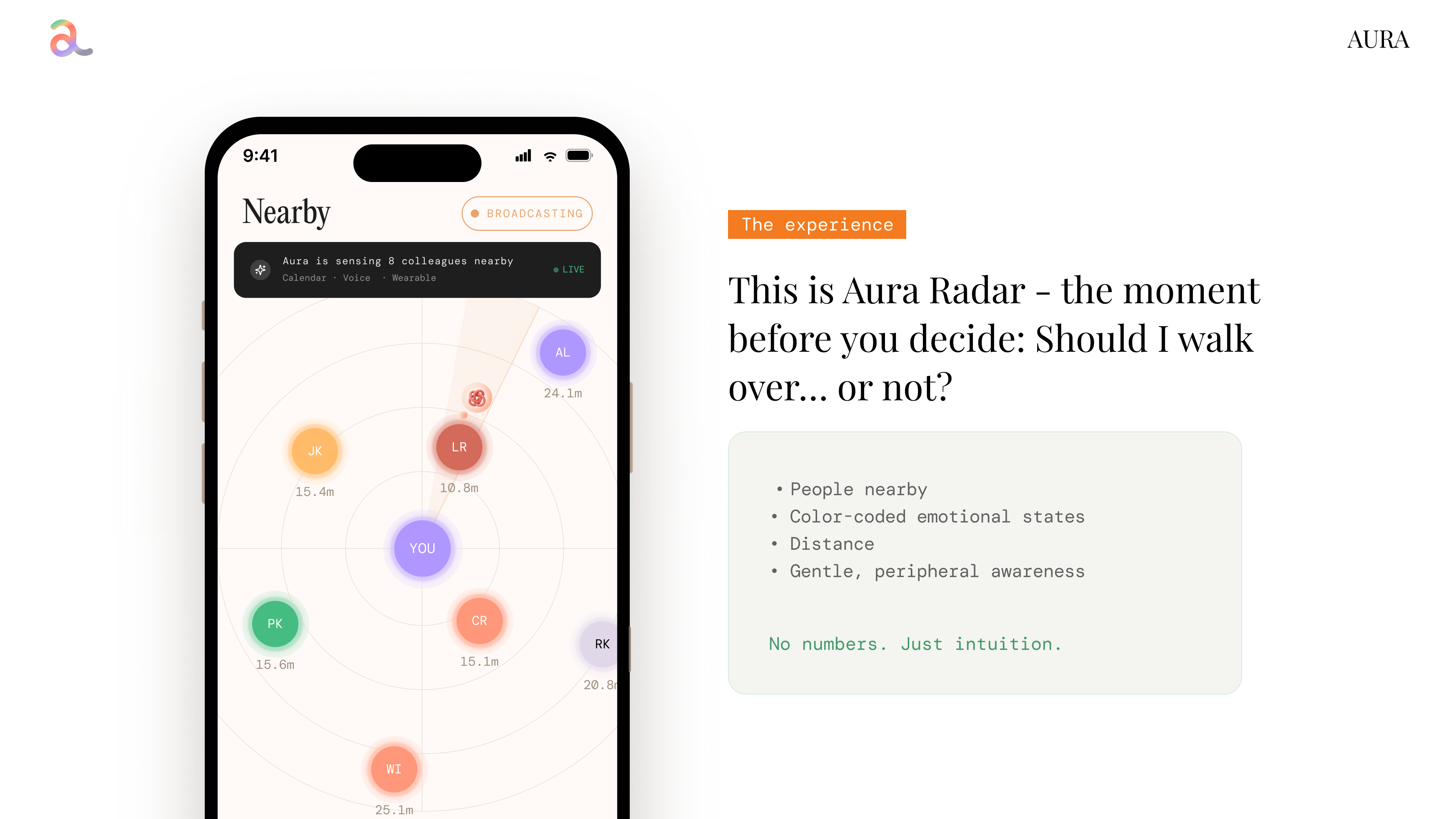
Radar - Home
-
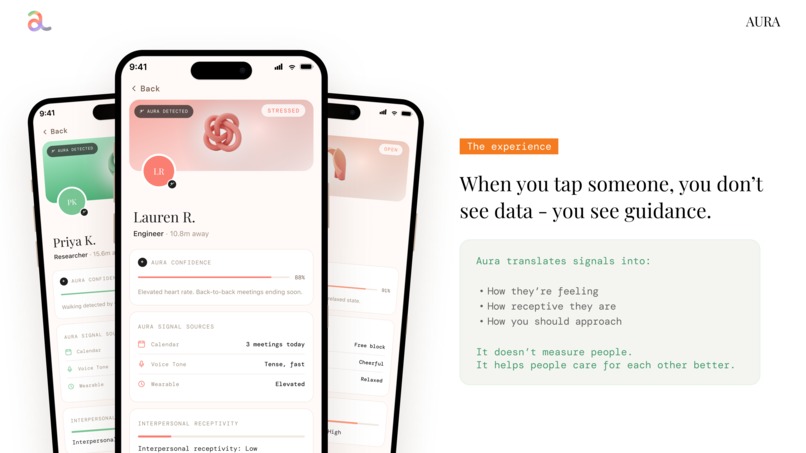
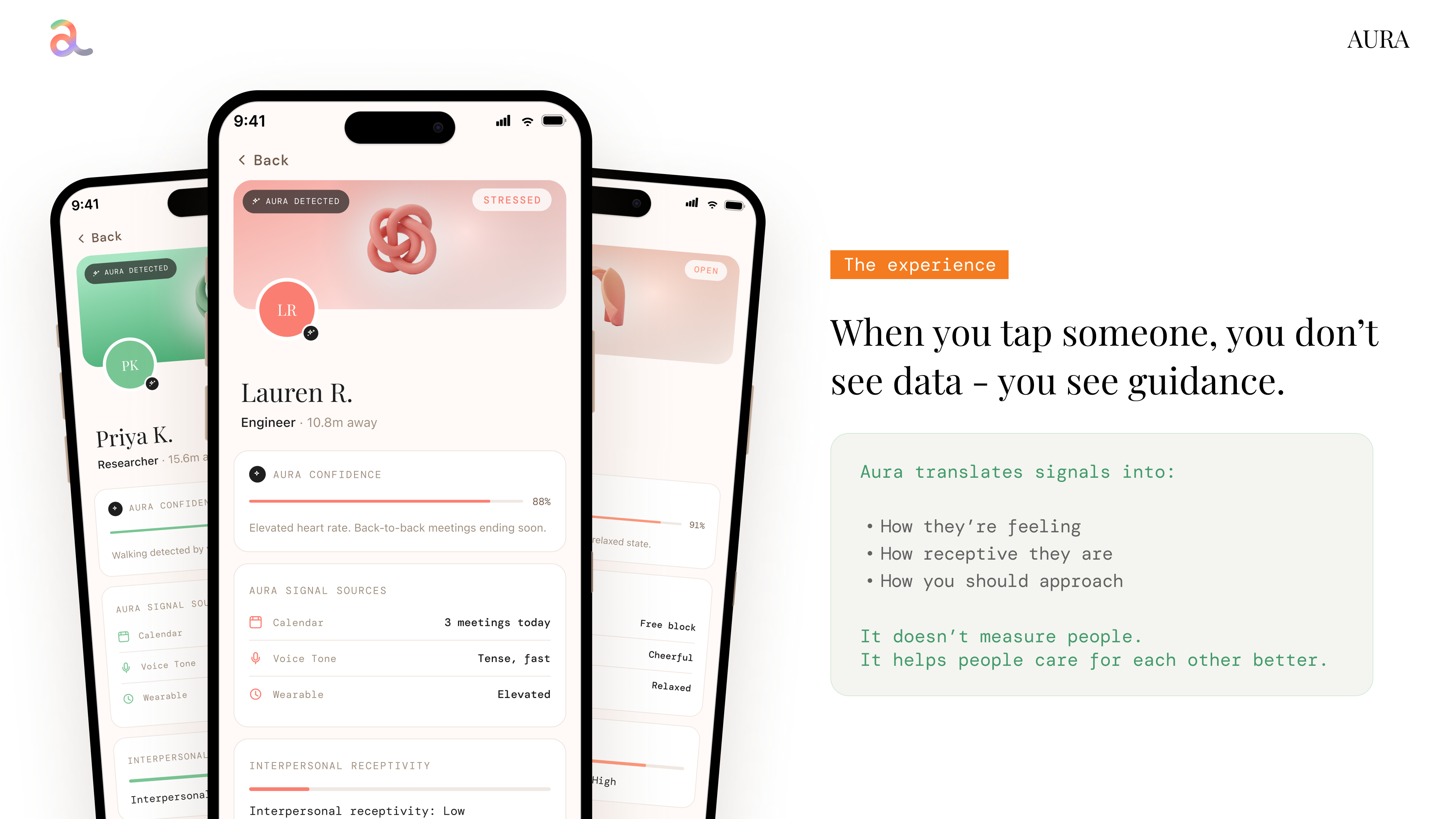
Presence cards
Inspiration
We kept noticing the same thing, people at work constantly guessing whether it's a good time to approach someone. Walking over anyway. The moment breaking. The relationship taking a small hit it didn't need to take. Companies invest billions in physical office spaces, gyms, campuses, wellness rooms. But nobody has invested in the emotional layer. The one that lives between people. That gap is what inspired AURA.
What it does
AURA is a workplace tool that gives you a new sense, the ability to feel the emotional climate around you before you approach someone. It reads your wearable, calendar, and phone behaviour, synthesises your emotional state on-device, and lets you share a simple presence signal with your team. Consensually. Privately. With zero manual input.
How we built it
We split into two parallel tracks from the start. Deepika led the design, building the full app experience in Figma across five surfaces: onboarding, the Radar, presence cards, My Presence, and My Day. Every screen was designed around the consent model and the seven-state emotional status system. Saha developed the concept and narrative, the problem framing, the use cases, and the pitch structure that ties the product together. We used Figma and Figma Make for all design and prototyping, and built interactive prototype to stress-test the flows and visual system before committing to final screens.
Challenges we ran into
Building trust into every interaction. Making emotional data feel warm, not clinical. And staying disciplined, cutting every feature that served novelty over genuine human need.
What we learned
The problem isn't that people don't care about each other. It's that they're too overwhelmed to notice. Designing for that realisation changed everything, AURA isn't a productivity tool, it's a human awareness layer. We also learned that the line between helpful and surveillance lives entirely in the design decisions. We spent as much time on what AURA would never do as on what it would.
Built With
- figma
- figmamake
- gemini


Log in or sign up for Devpost to join the conversation.