Inspiration
Managing money is more than keeping track of income and expenses. It involves making everyday decisions, planning for the future, balancing commitments, setting goals, and knowing when to spend and when to save.
I often thought it would be nice to have a companion with whom we could discuss our finances, explore possibilities, plan our goals, and make better financial decisions. Something beyond a traditional banking or budgeting application. An assistant that understands our financial circumstances and helps us think through our decisions rather than simply displaying numbers and charts.
That idea became AURA.
I envisioned an AI-powered financial companion that could understand a person's financial situation, help them plan their finances, discover things they might want to purchase, evaluate whether those purchases make financial sense, and assist them throughout the process.
I wanted to bring financial management and everyday purchasing into one connected experience. Instead of switching between different applications to understand your finances, research products, compare prices, and make payments, what if you had one intelligent companion to help you through that entire journey?
That was the idea behind AURA: making financial management more personal, conversational, and intelligent.
What it does
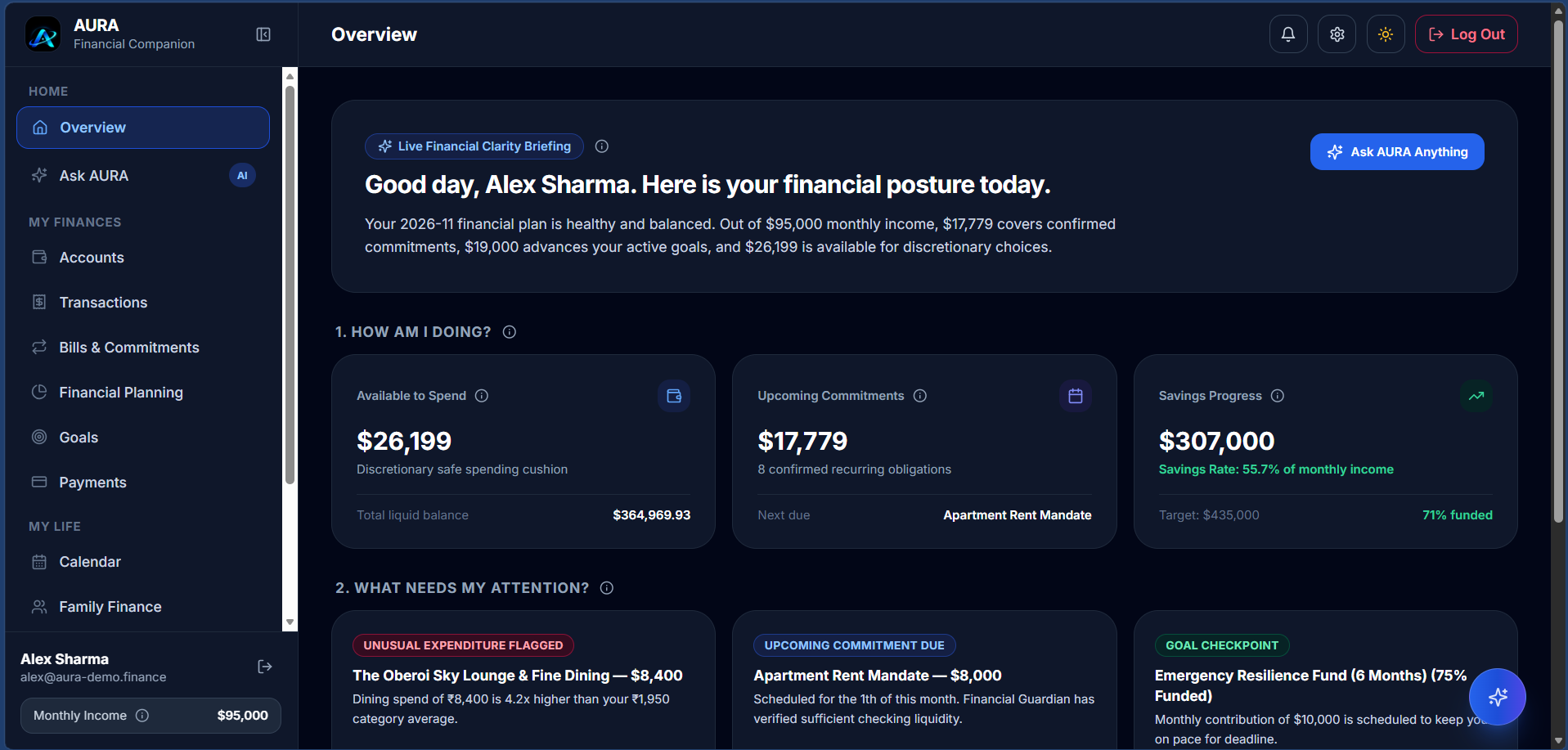
AURA is an AI-powered financial companion that helps people understand their finances, plan their goals, discover products, and make more informed purchasing decisions.
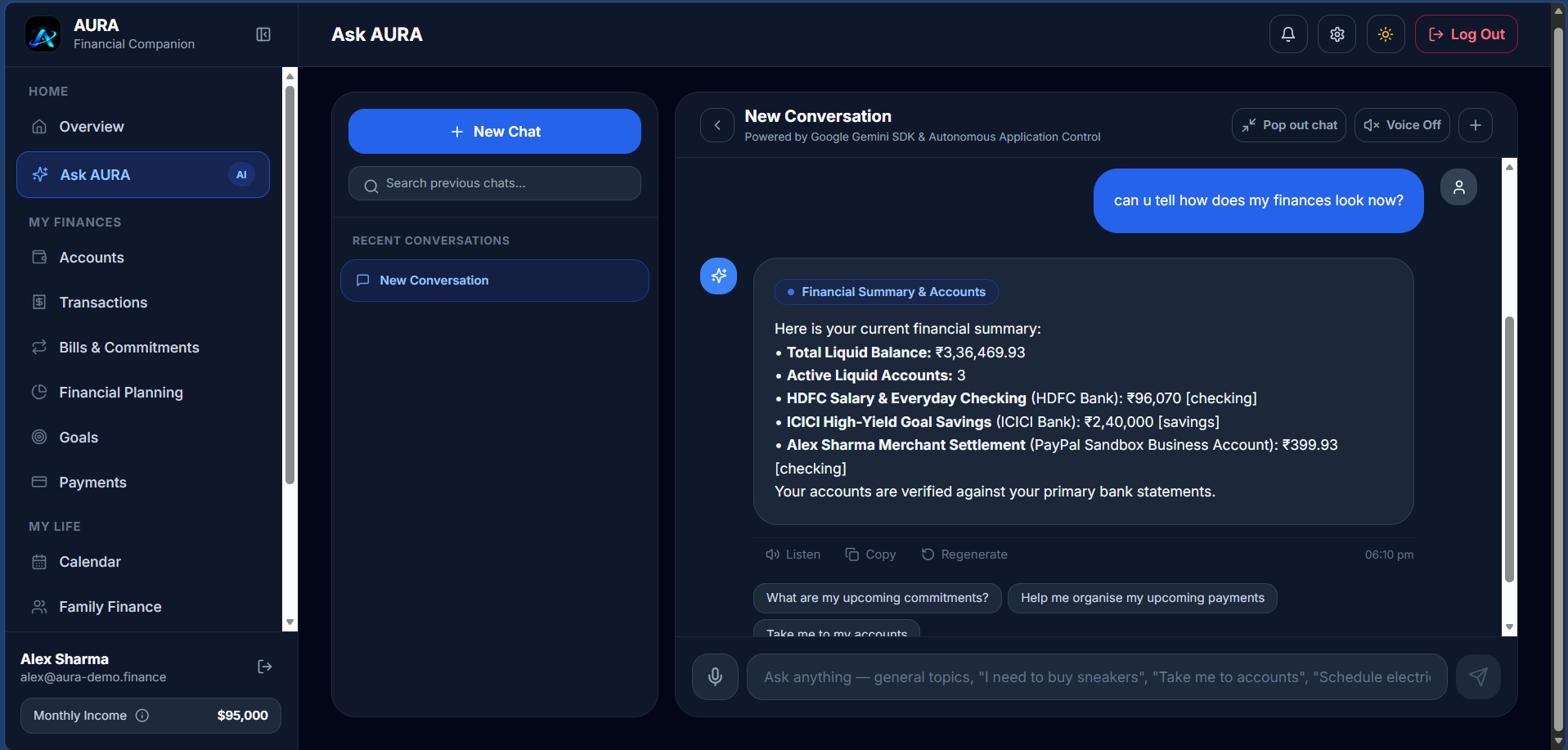
At its heart is Ask AURA, an AI assistant designed to interact with users and help them throughout their financial journey.
Here are some of its key capabilities:
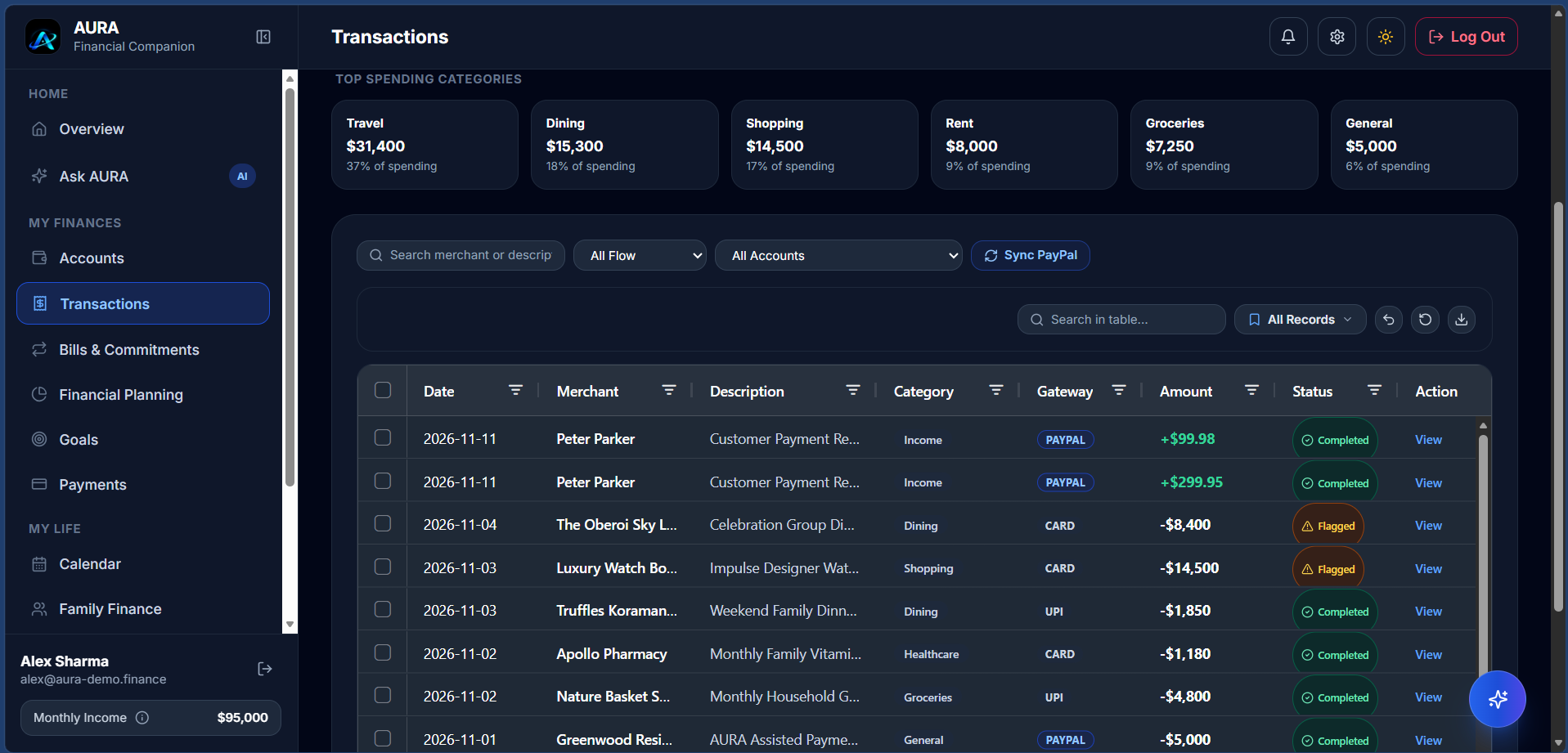
Personal Financial Management: Connects with PayPal to bring financial information into AURA, helping users understand their transactions, spending patterns, and financial activity.
AI Financial Companion: Ask AURA allows users to discuss their finances naturally, seek explanations, explore financial decisions, and receive personalised assistance.
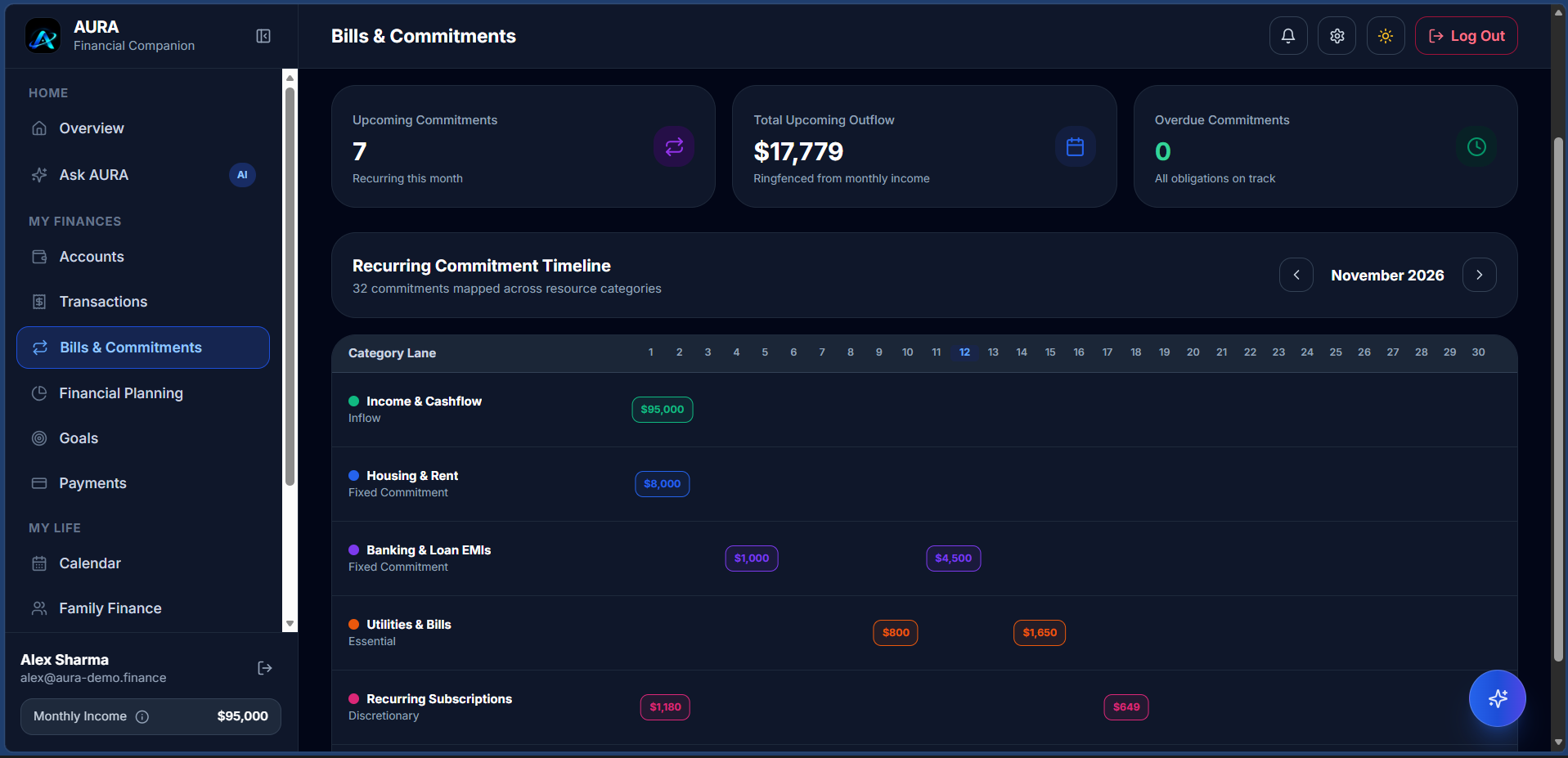
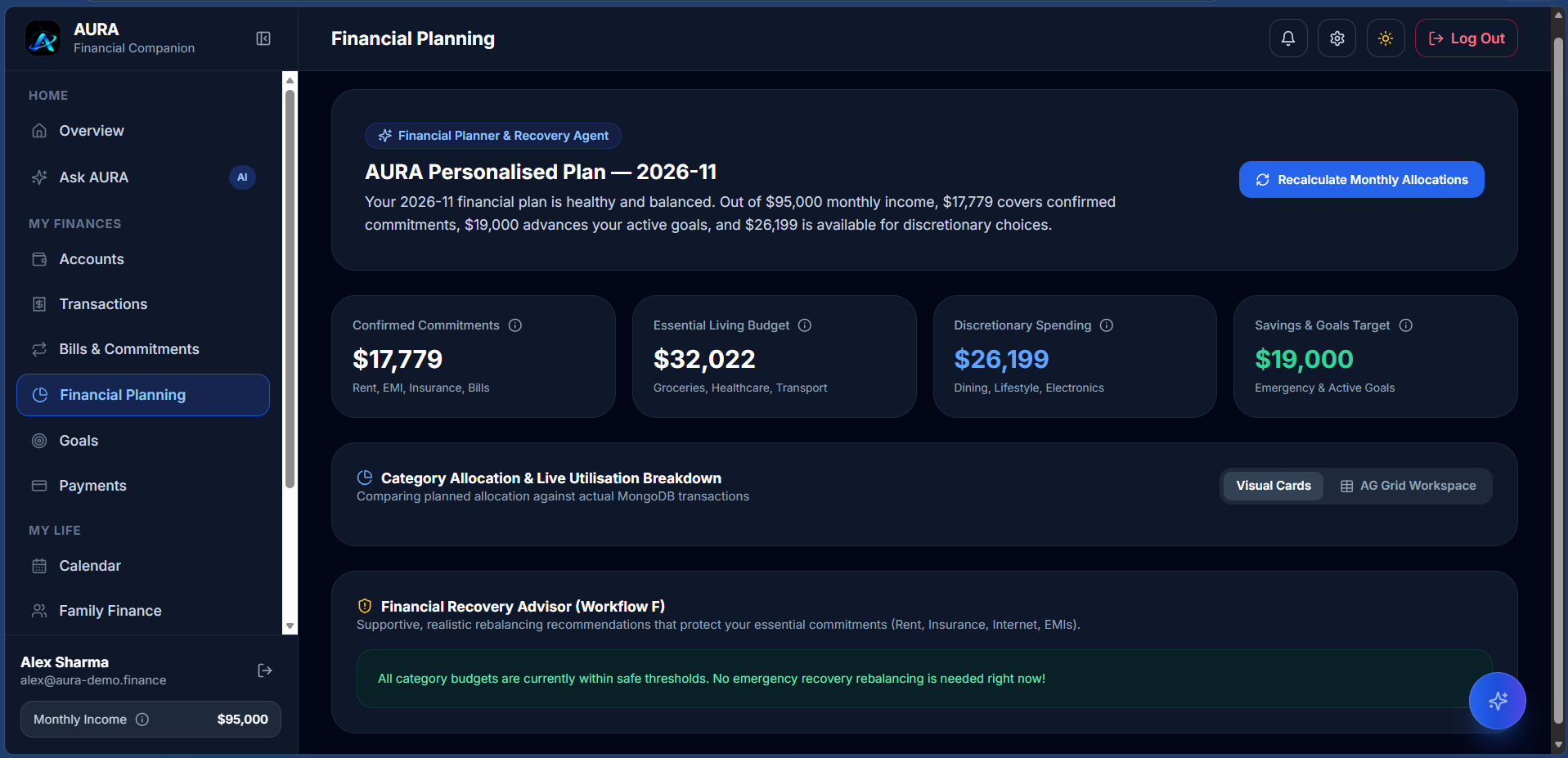
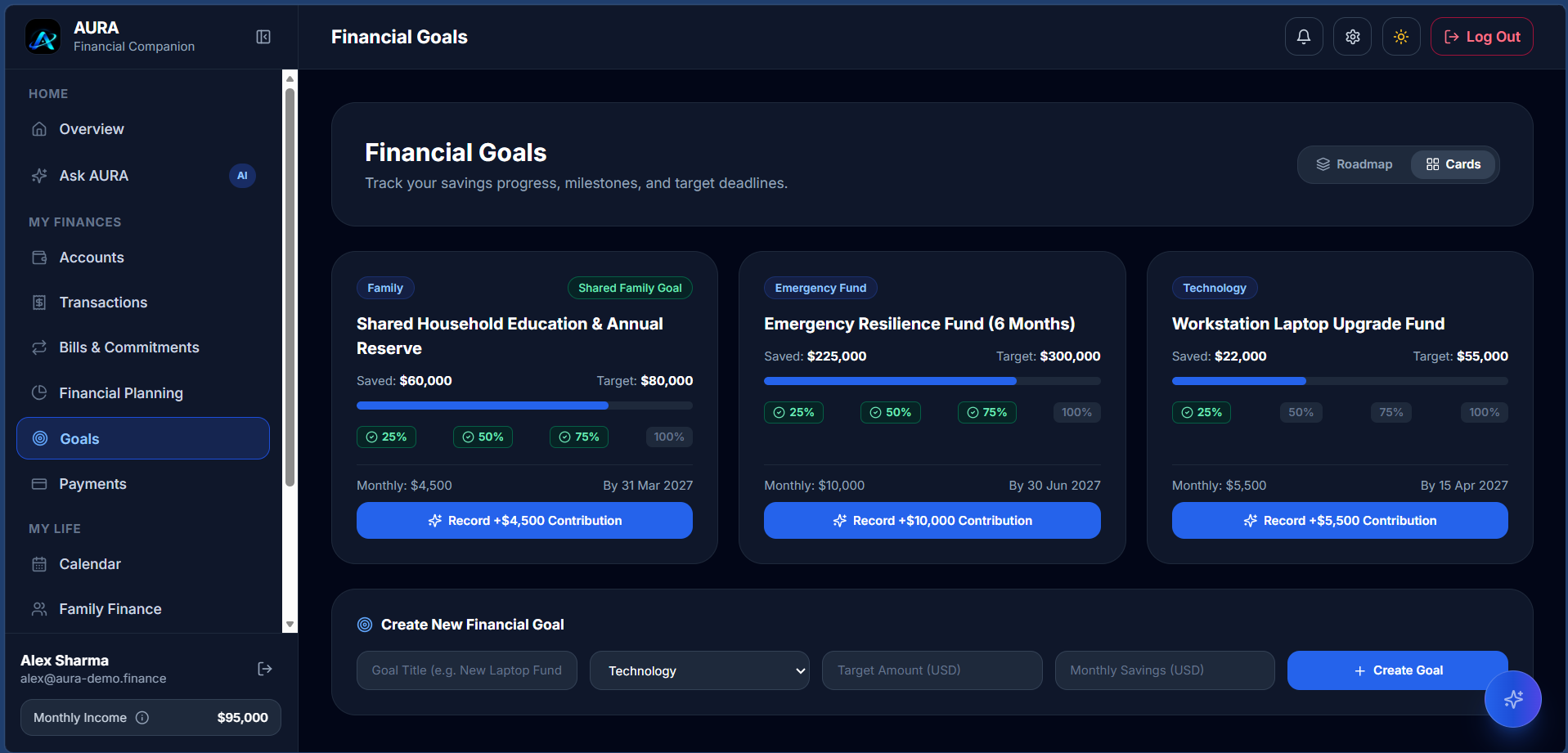
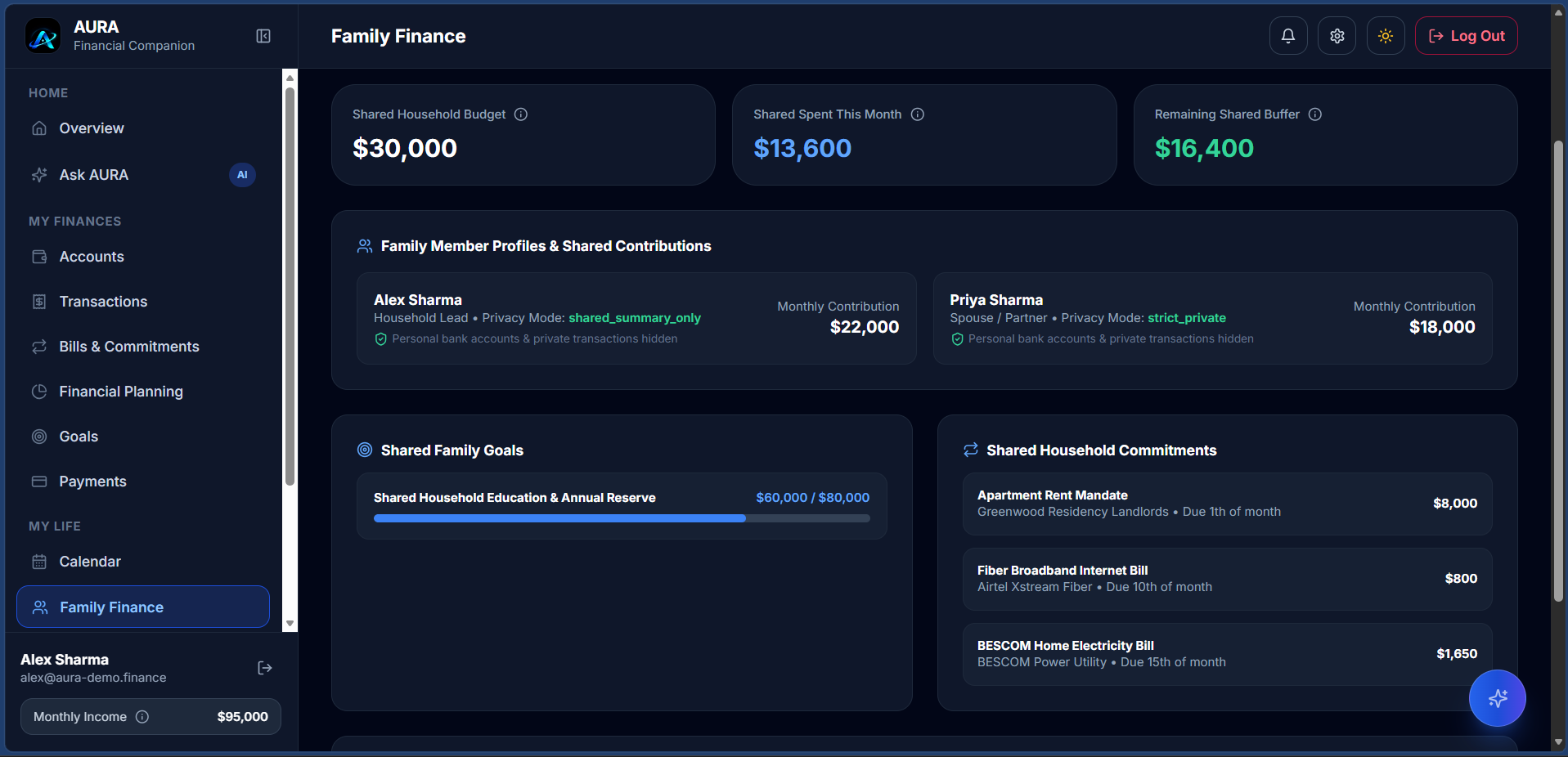
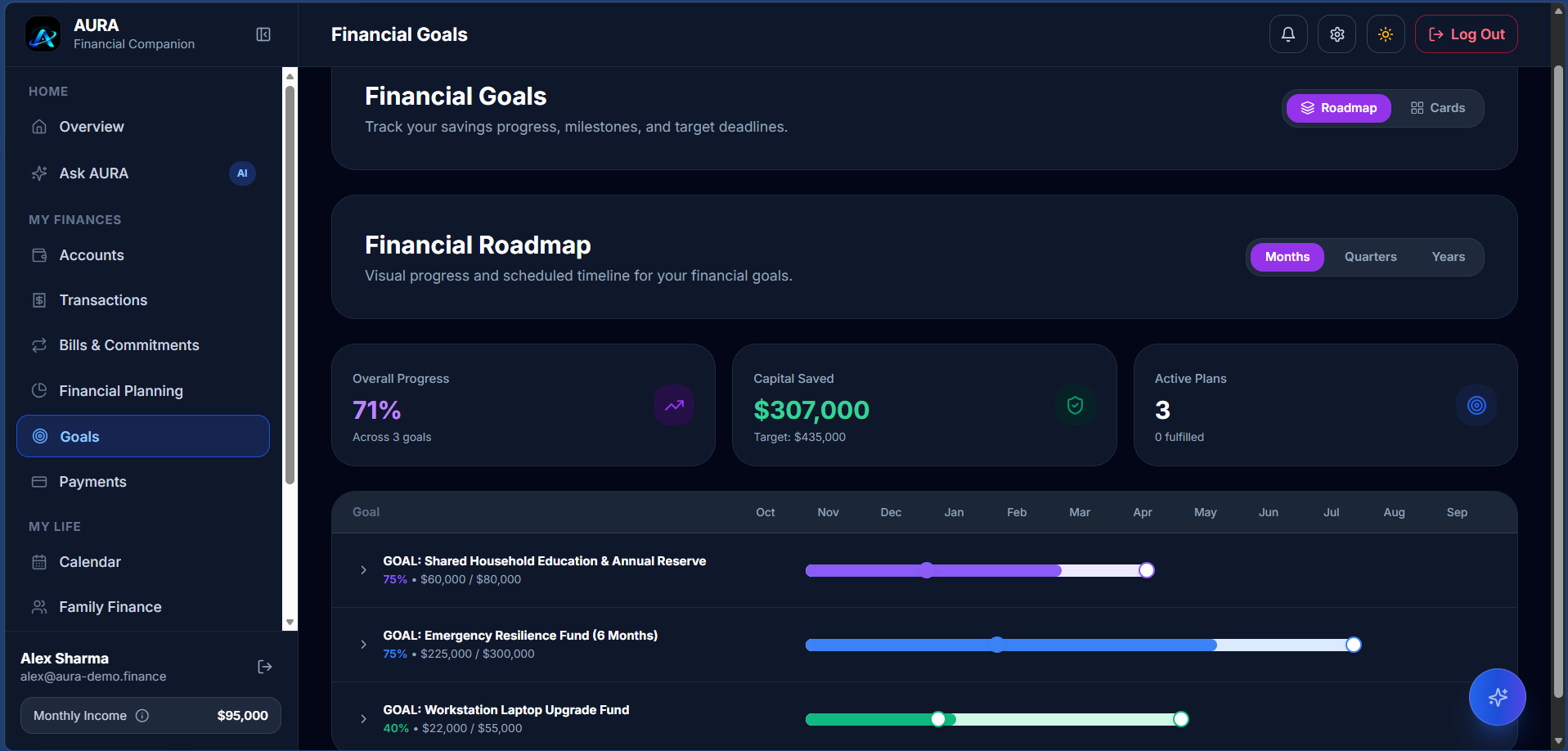
Financial Planning and Goals: Users can establish financial goals, organise commitments, plan savings, and monitor their progress. Ask AURA can help them think through their plans and make adjustments.
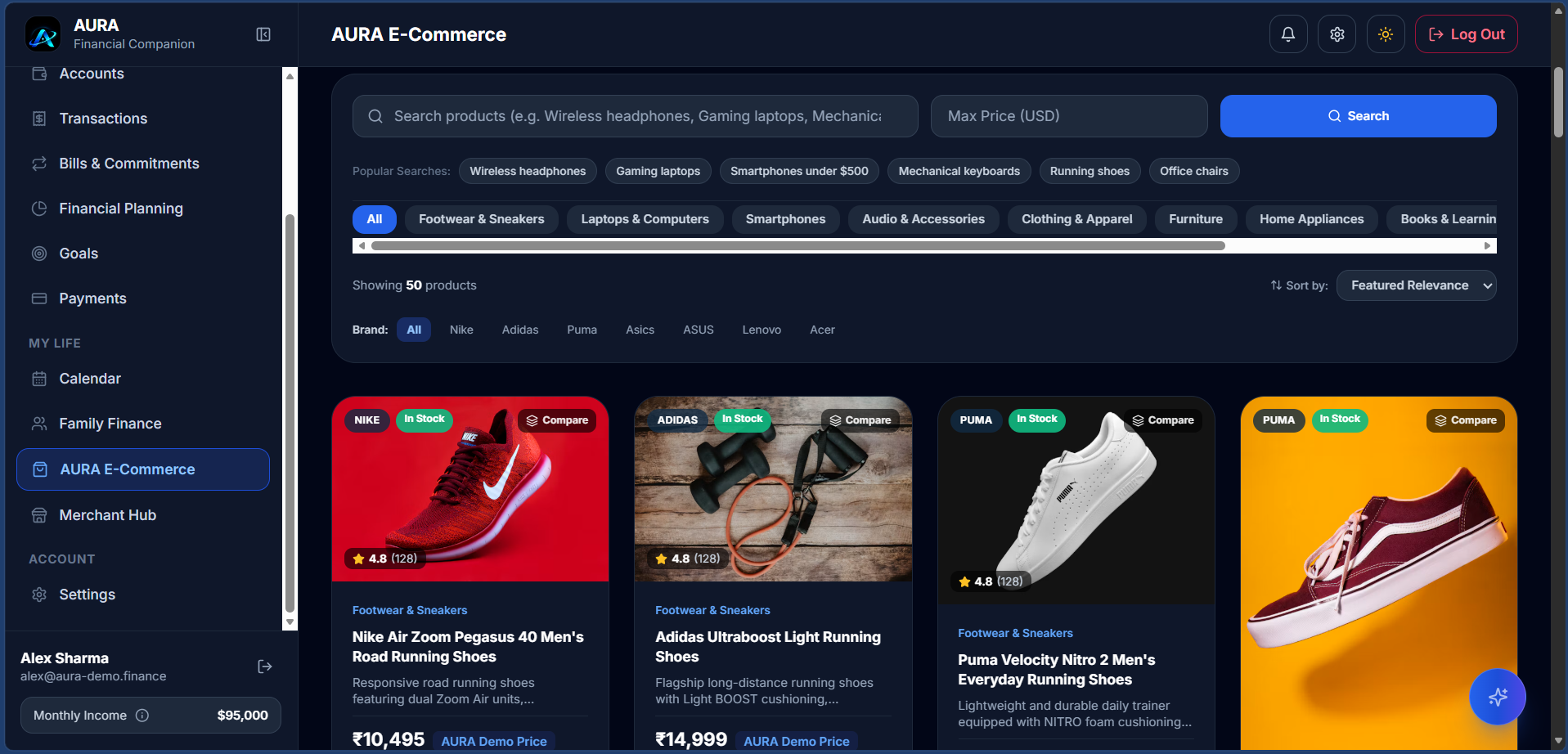
AI-Powered Commerce: Through AURA Commerce, users can discover real products from different retailers, explore product information, compare alternatives, and evaluate their purchasing decisions.
Financially Informed Shopping: Ask AURA can help users assess whether a product is suitable for their financial circumstances by considering available financial information, upcoming commitments, and savings goals.
PayPal-Powered Checkout: Users can proceed through a PayPal checkout experience and explicitly authorise their payments. AURA maintains the distinction between preparing a purchase and actually executing a payment.
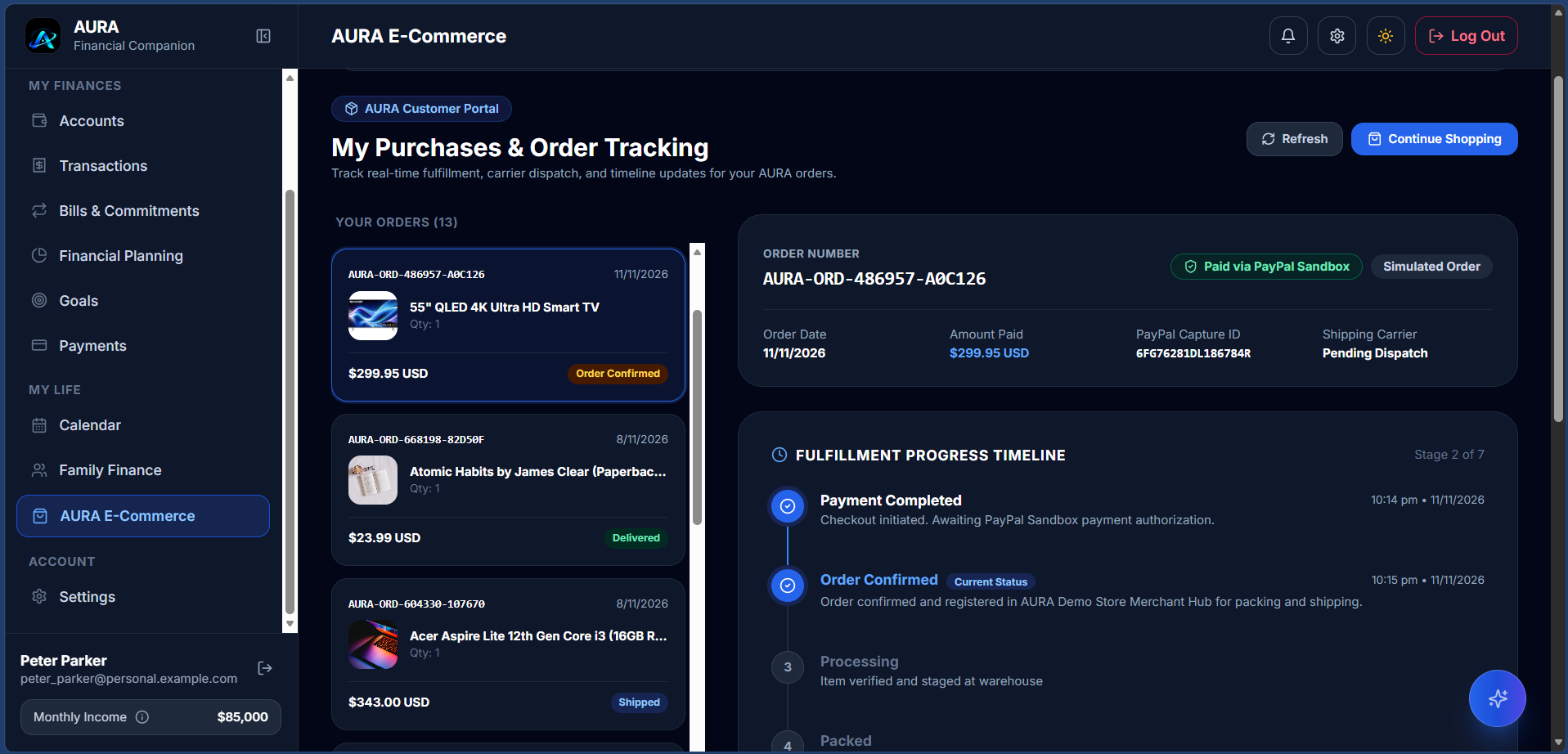
Merchant Hub: Businesses can manage orders associated with their merchant account, update fulfilment statuses, and provide customers with order progress information.
The larger idea is to connect financial awareness with everyday decisions. AURA shouldn't just tell people where their money went. It should help them think about where their money should go next.
How we built it
AURA was developed as a web-first application, combining financial services, AI orchestration, product discovery, data visualisation, and interactive planning tools.
The application uses a modern frontend and backend architecture, with integrations across several platforms.
PayPal Developer Platform forms the foundation of AURA's payment experience. We integrated PayPal authentication and payment functionality, using Sandbox accounts to develop and test the checkout workflow. This allows users to connect through PayPal and authorise payments through a protected checkout process.
Google Gemini powers Ask AURA, enabling natural-language conversations and AI-assisted interactions. We extended the assistant beyond answering questions by connecting it to application actions, allowing it to navigate between pages, search for products, retrieve information, and initiate multi-step workflows.
Channel3 powers AURA Commerce by providing product discovery capabilities. It allows users to search for products across retailers and explore actual product information rather than relying on manually created product catalogues.
AG Grid is used to provide interactive financial data experiences, particularly for working with transaction records and structured information.
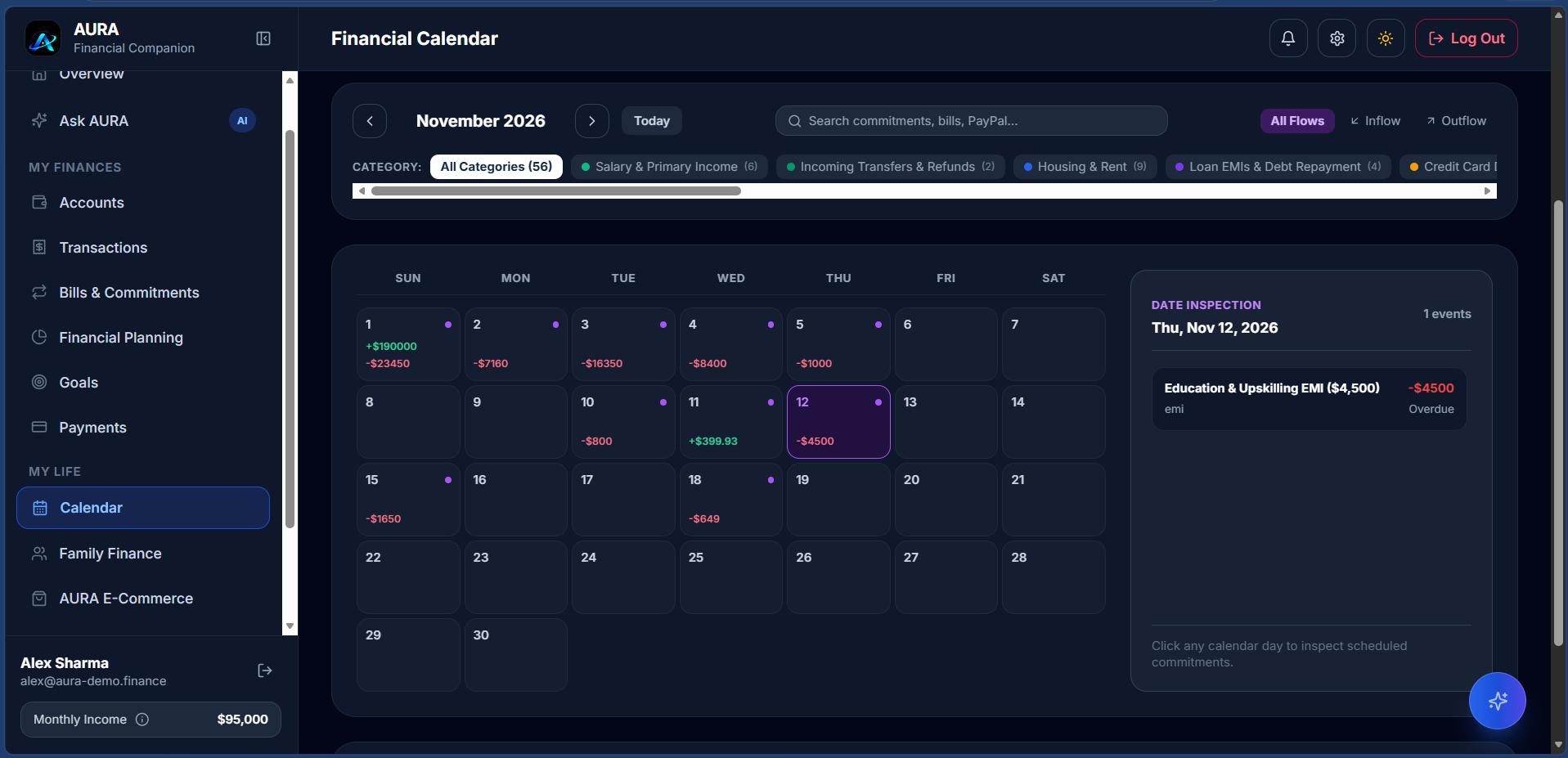
Bryntum contributes to AURA's planning and scheduling experience, helping users visualise financial timelines and organise their goals.
APIMatic was incorporated into the developer-facing API experience to improve API documentation and developer accessibility.
Astropods was integrated into the backend agent orchestration architecture to support specialised AI-driven workflows.
Beyond these integrations, we developed the application around a central AI orchestration system. Ask AURA can identify user intentions, execute application actions, navigate between pages, and coordinate multiple steps while maintaining conversation continuity.
One important part of the implementation was making sure that the integrations did not operate as isolated features. We wanted them to work together as parts of one coherent financial experience.
Challenges we ran into
One of the biggest challenges was integrating the different APIs and making sure everything worked correctly.
Initially, connecting AURA with PayPal was particularly challenging. Authentication, access tokens, API permissions, payment authorisation, and transaction retrieval all required careful implementation and debugging.
Beyond PayPal, integrating the different sponsor technologies presented another major challenge. Bryntum, Channel3, AG Grid, APIMatic, Astropods, and the other tools each had their own APIs, documentation, integration requirements, and expected workflows.
Getting each individual integration to work was only part of the problem. Making them communicate with one another, synchronise information, and behave consistently within the same application was considerably more difficult.
Another challenge was developing Ask AURA into something more than a conventional chatbot. We wanted it to perform actual application operations rather than simply respond with instructions or links. This involved building an orchestration mechanism connecting AI decisions with frontend navigation, page readiness, and action execution.
AURA Commerce was another interesting challenge. Connecting product discovery with financial analysis and PayPal checkout meant bringing together several different workflows that were not originally designed to operate as one system.
There was also the challenge of time.
AURA was a solo project developed within a 12-day period. I started working on it relatively late, but I still wanted to build something meaningful rather than settle for a basic proof of concept.
Balancing the scope, learning unfamiliar integrations, debugging issues, implementing features, and making the overall experience coherent within such a short period was demanding.
There were moments when getting one integration to work would introduce problems somewhere else. Ensuring that everything worked together was one of the most time-consuming parts of the project.
Accomplishments that we're proud of
One of our biggest accomplishments was bringing together several different technologies to create a connected financial experience within just 12 days.
A particularly exciting development was AURA Commerce.
Initially, product discovery and shopping were not even part of the original idea. However, as the project evolved, I realised that purchasing decisions were closely connected to personal financial management.
That led to the idea of allowing users to discover products, compare alternatives, discuss their financial suitability with Ask AURA, and proceed to a PayPal checkout.
What makes this especially interesting is the integration between AI and the actual application. Users can interact with Ask AURA conversationally and have it navigate through AURA Commerce, perform searches, retrieve product information, and assist with purchasing workflows.
We are also proud of integrating PayPal into the application, implementing an AI-powered assistant capable of executing application actions, and bringing together several sponsor technologies within one project.
Another accomplishment was developing the Merchant Hub experience, connecting customer purchases with merchant-side order management and fulfilment workflows.
But perhaps the accomplishment I value most is simply that I managed to build something this ambitious as a solo developer in 12 days.
It wasn't always easy, and there is certainly more to improve. Nevertheless, taking an idea and turning it into a working application with multiple integrations and connected workflows is something I consider a meaningful achievement.
What we learned
One of the biggest lessons I learned from this project is the importance of planning and prioritisation.
I initially had a very ambitious vision for AURA. I kept imagining additional capabilities, more intelligent workflows, and different ways the application could help users.
However, I realised that having a big vision is not the same as having a well-defined implementation plan.
It is easy to imagine a product with dozens of impressive capabilities. The real challenge is making even one or two important workflows work correctly from beginning to end.
I learned that a few well-executed features are more valuable than a large collection of partially working features.
I also learned a great deal about integrating external APIs, handling authentication, managing asynchronous operations, connecting frontend and backend systems, and coordinating AI-driven actions.
Most importantly, I learned that building a product is not just about implementing individual features. It is about making those features work together to solve an actual problem.
If I were starting AURA again, I would spend more time defining the core user journeys, establishing clear priorities, and validating the essential workflows before expanding the scope.
What's next for AURA
I would love to continue developing AURA beyond the hackathon.
My first priority would be simplifying the overall experience. AURA has several capabilities, but I want to make the application more intuitive, less overwhelming, and easier for people to use, regardless of their technical background.
I also want to make Ask AURA considerably more intelligent and capable.
I envision an assistant that understands the user's preferences, remembers relevant context with their permission, recognises what they are currently doing in the application, and provides assistance that is genuinely relevant to their circumstances.
I would also like to expand its responsibilities in financial planning, improve its ability to analyse financial situations, and make its product recommendations more meaningful by considering individual needs, goals, and financial commitments.
Another area of improvement would be making the entire purchasing and merchant fulfilment experience more seamless and reliable.
Ultimately, I don't want AURA to become just another application that displays financial statistics or provides generic AI-generated advice.
I want it to become a companion that helps people understand their money, think through their decisions, plan for what matters to them, and spend more intentionally.
The vision remains simple: Your money, your goals, your decisions. AURA is here to help you make them count.

