Inspiration
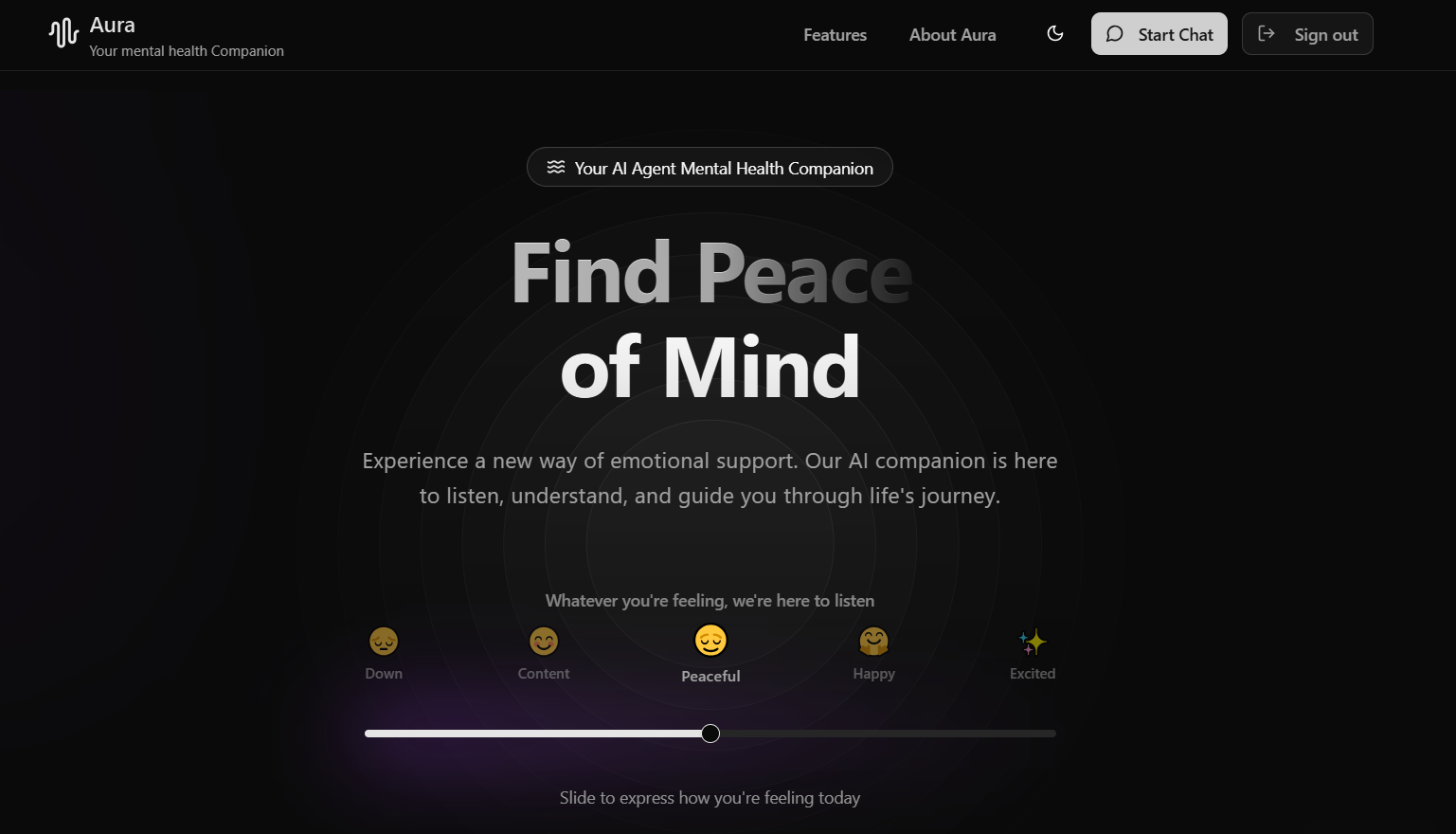
The inspiration for Aura came from a desire to make mental health support more accessible, interactive, and data-driven. With the growing need for remote wellness tools, we set out to build a platform that combines AI-driven therapy, mood tracking, and engaging activities to help users manage their mental well-being in a modern, approachable way.
What it does
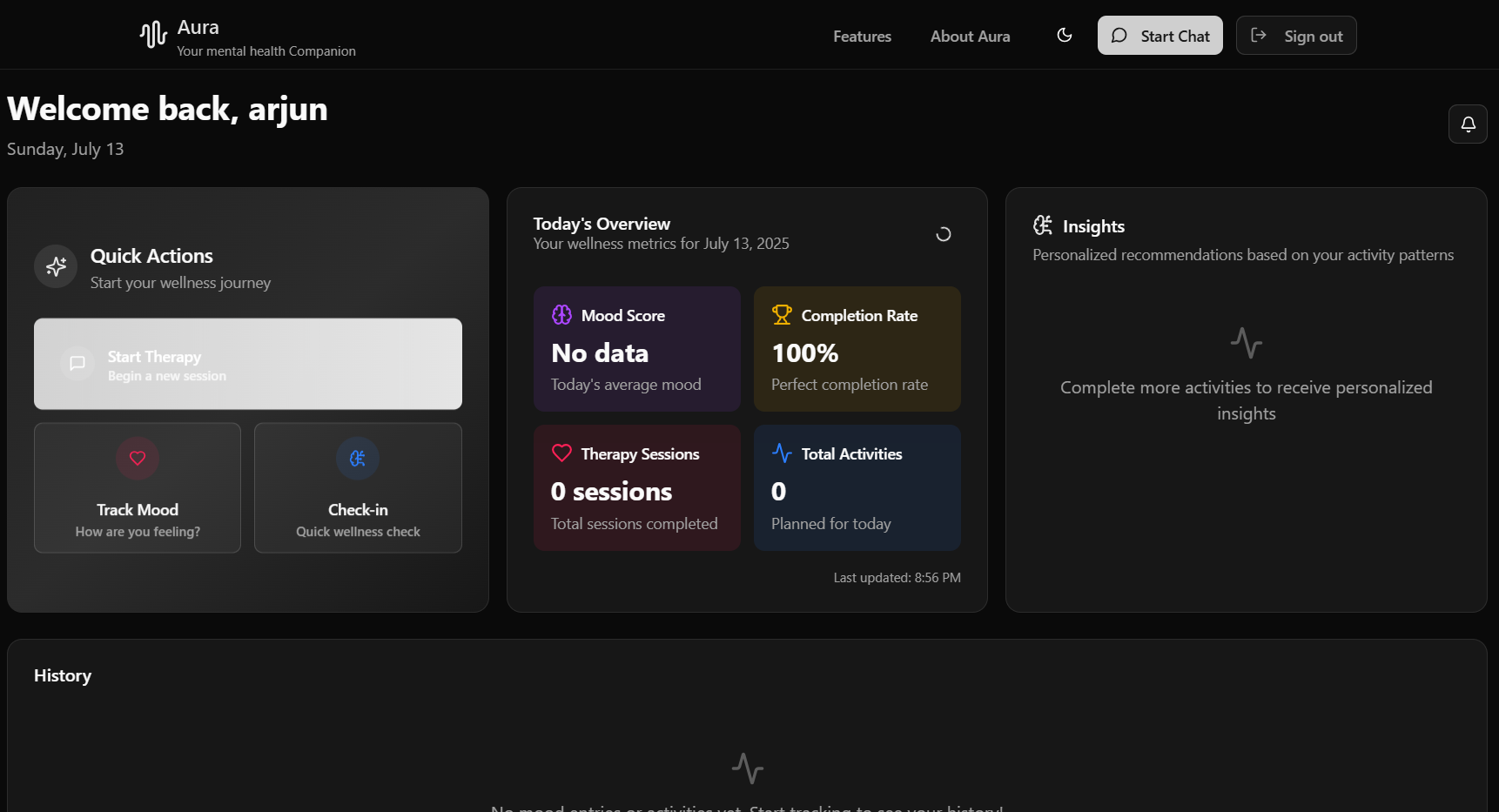
Aura is a full-stack web application that empowers users to:
- Track their mood and log daily activities
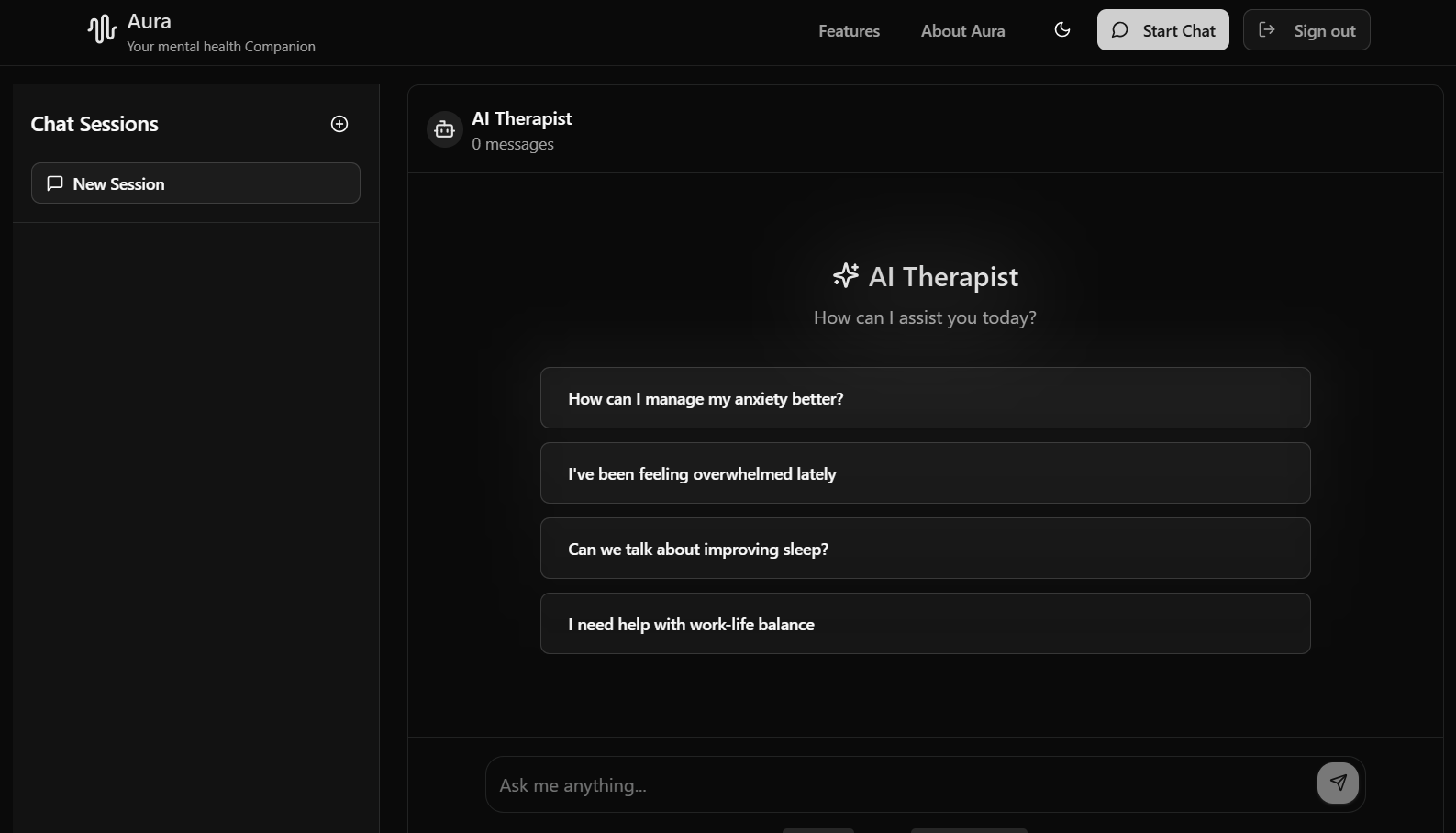
- Engage in AI-powered therapy chat sessions
- View real-time wellness stats and personalized insights on a dashboard
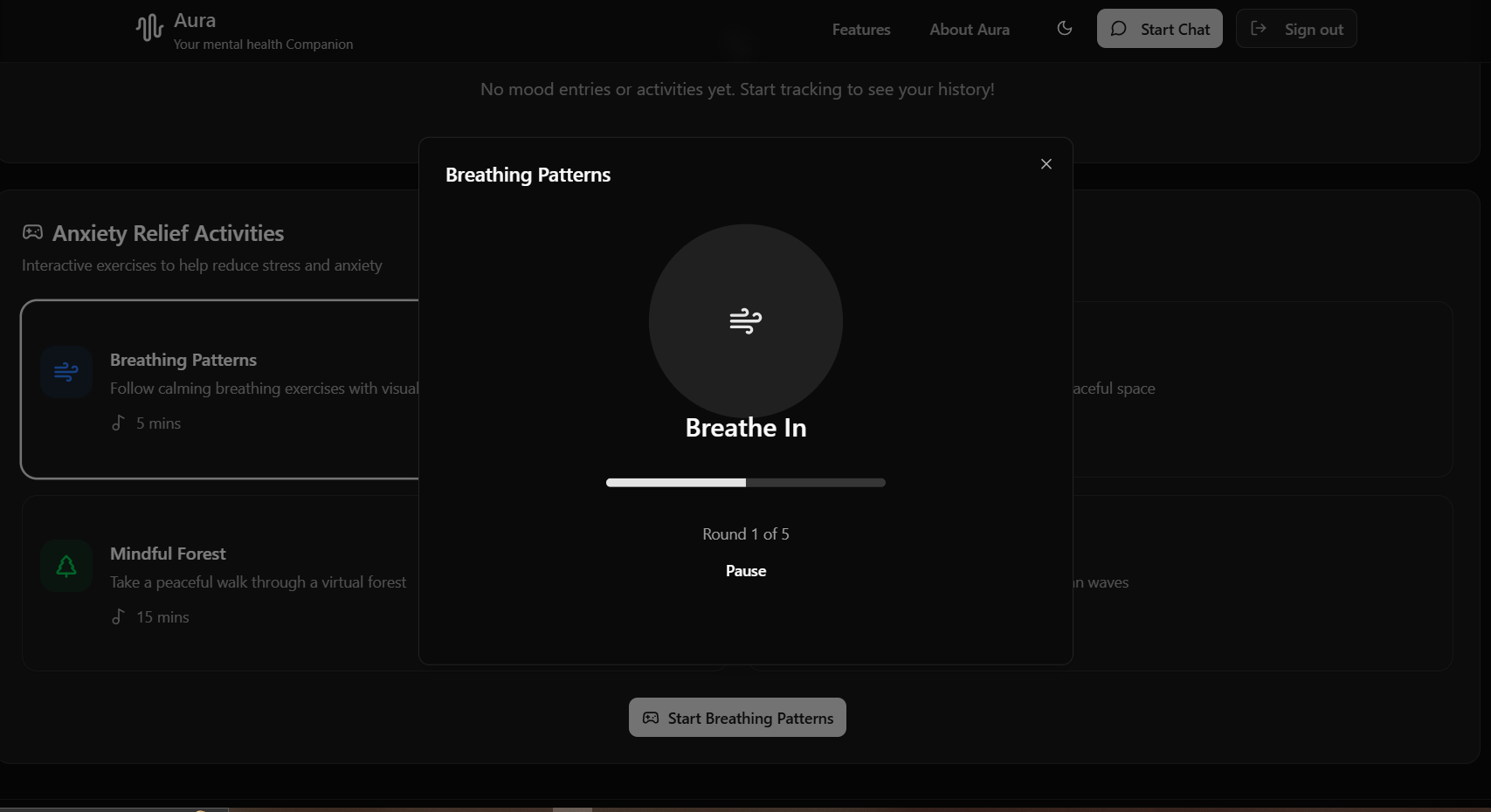
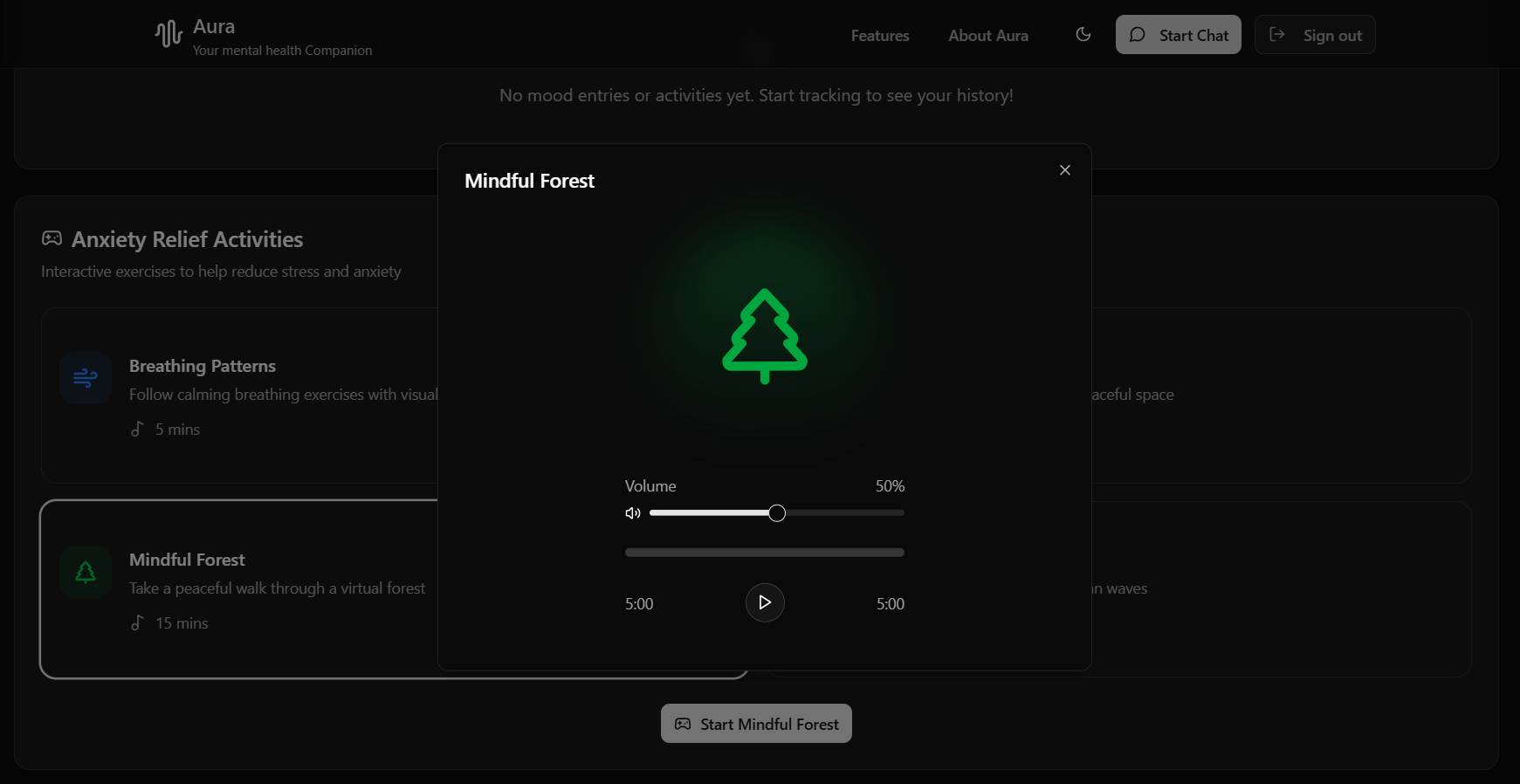
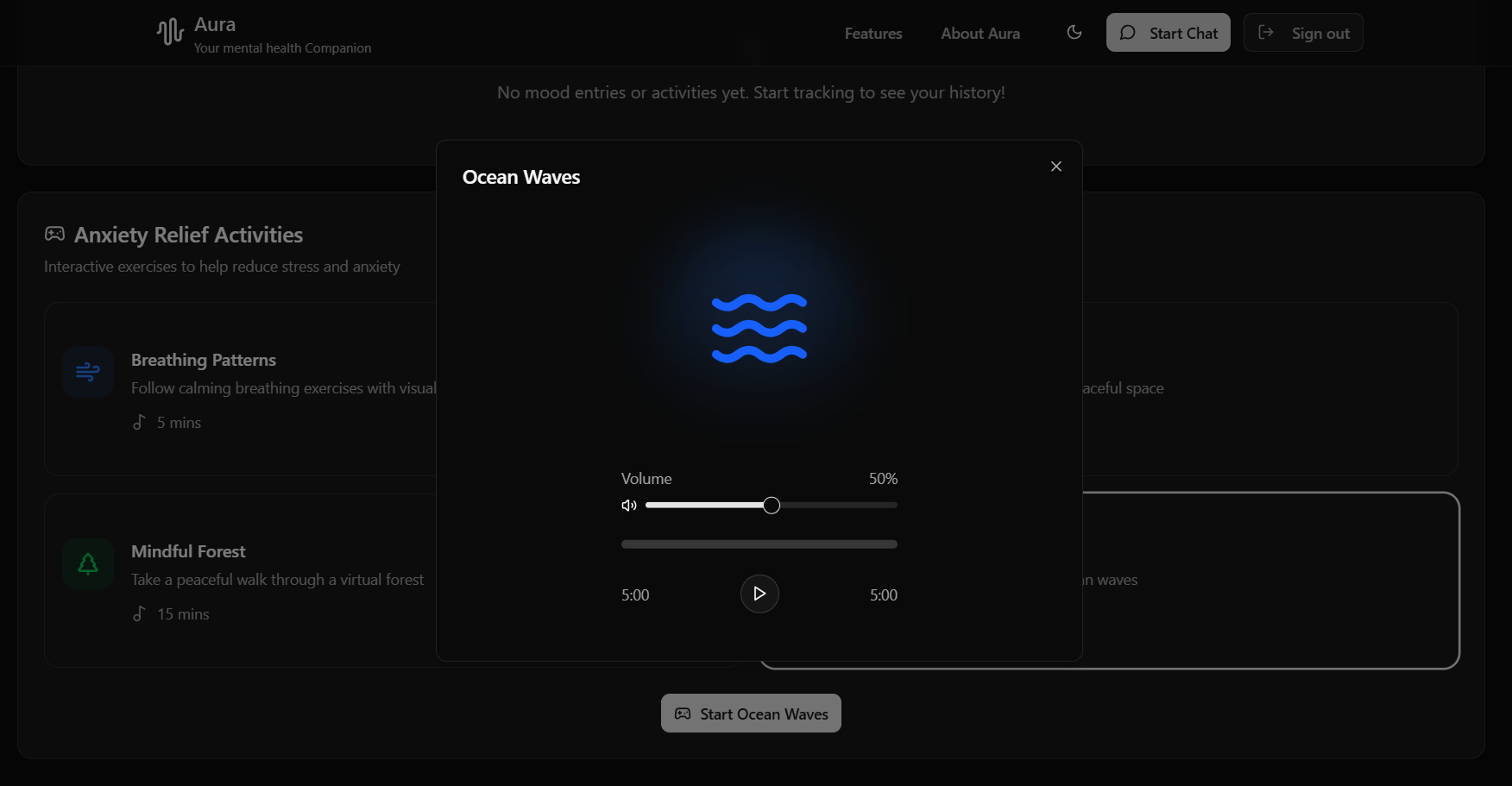
- Participate in interactive games and mindfulness activities
- Review their mood and activity history, all in one place
How we built it
- Frontend: Built with Next.js and React, using TypeScript for type safety. The UI is modular, featuring components for mood tracking, activity logging, therapy sessions, and games.
- Backend: Node.js with Express, connected to MongoDB for persistent storage. The backend exposes RESTful APIs for authentication, mood/activity management, and chat sessions.
- Authentication: JWT-based authentication ensures secure access to user data and actions.
- Real-time Data: The dashboard fetches real-time stats and history from the backend, updating mood scores, activity logs, and session counts dynamically.
- AI Integration: Therapy chat sessions are powered by AI, providing users with conversational support and personalized insights.
- DevOps: The project uses environment variables for configuration and supports both local and cloud deployment.
Challenges we ran into
- Data Consistency: Keeping mood and activity data in sync between frontend and backend, especially with real-time updates and multiple users.
- Authentication Flow: Handling token storage, session expiration, and protected routes required careful design to avoid security pitfalls.
- State Synchronization: Ensuring the UI always reflects the latest data after every user action, especially when mixing static demo data and real backend data.
- Error Handling: Building robust error messages and fallback UI for network/API failures.
- Windows File Locks: Encountered file locking issues on Windows (e.g.,
.next/trace), which required process management and cleanup scripts.
Accomplishments that we're proud of
- Seamless integration of AI-powered therapy chat with mood and activity tracking
- Real-time dashboard updates and personalized insights
- Clean, accessible, and engaging UI/UX for wellness tracking
- Robust backend API design and secure authentication
What we learned
- Deepened our understanding of full-stack integration, state management, and MongoDB data modeling
- Gained experience in building robust RESTful APIs and handling asynchronous data fetching in React
- Explored modern UI/UX patterns for wellness apps
- Learned to handle real-world development issues, like file locks and error boundaries
What's next for Aura
- Mobile App: Expand Aura to mobile platforms for on-the-go wellness tracking
- Improved Features: There are quite some features that are not yet fully functional and that's where the focus is going to be
- Advanced Analytics: Add more advanced mood and activity analytics, including trends and recommendations
- Community Features: Enable group sessions, peer support, and community-driven activities
- Integrations: Connect with wearables and third-party health apps for richer data
- Accessibility: Continue improving accessibility and inclusivity for all users
Aura is a step toward blending technology and empathy, aiming to make mental health support more approachable, interactive, and data-driven.
Built With
- inngest
- mongodb
- nextjs

Log in or sign up for Devpost to join the conversation.