-
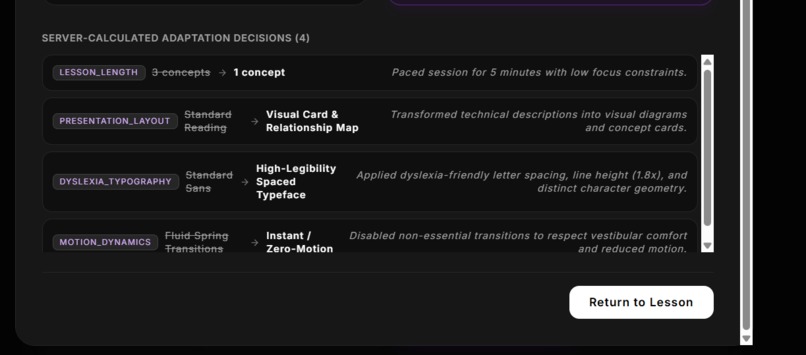
other section of adaptive Diff
-
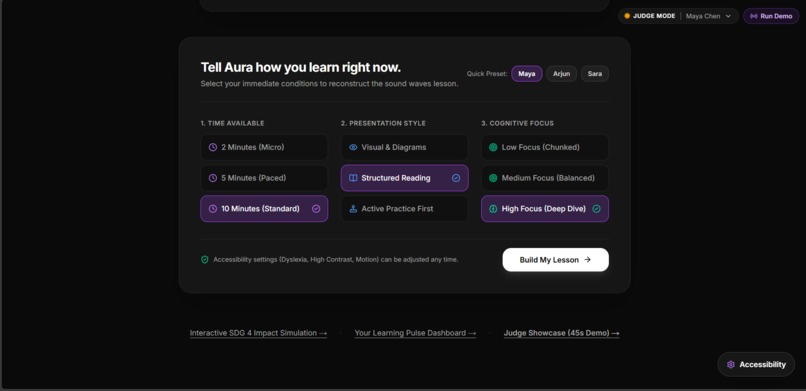
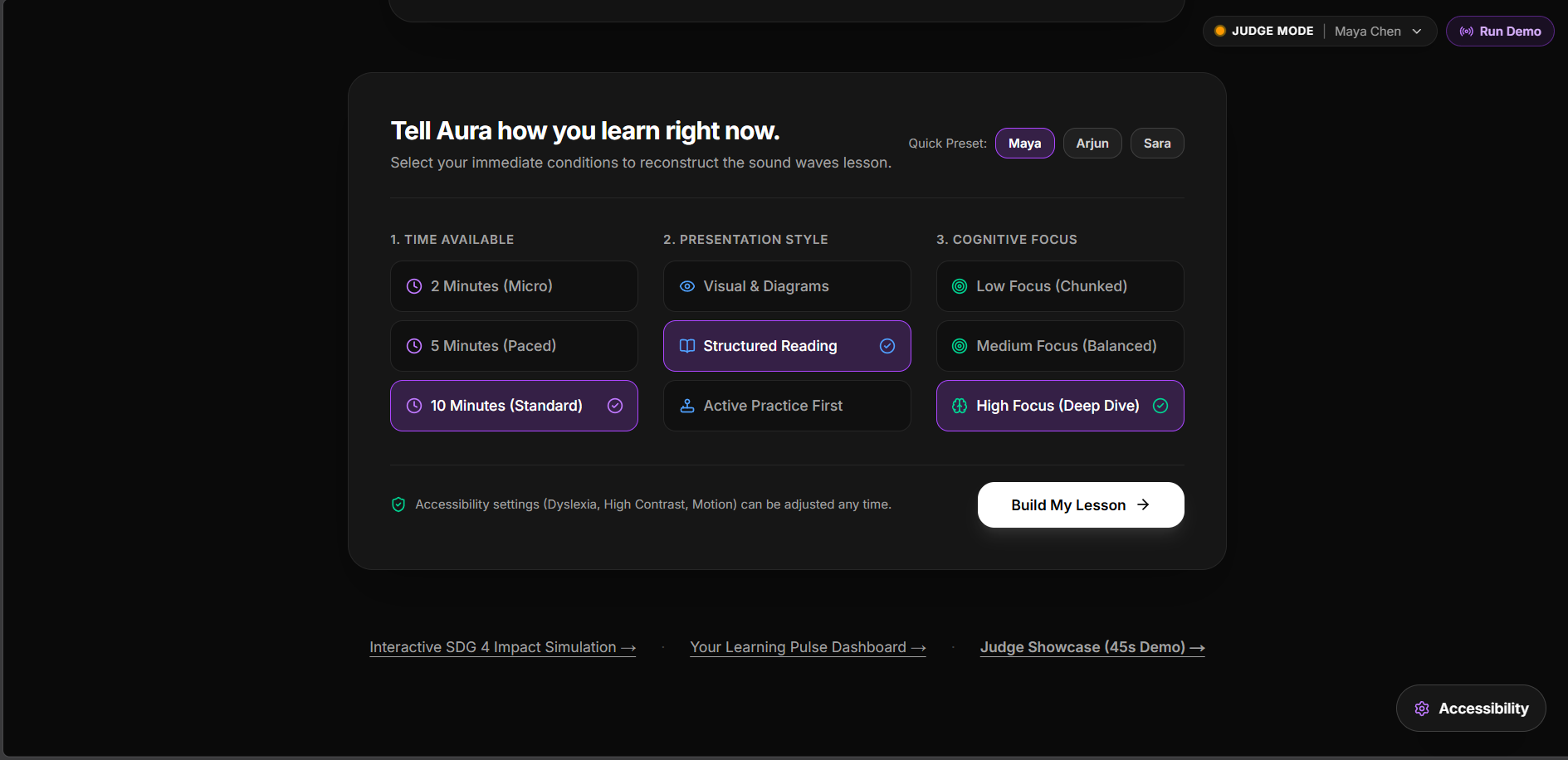
how you learn
-
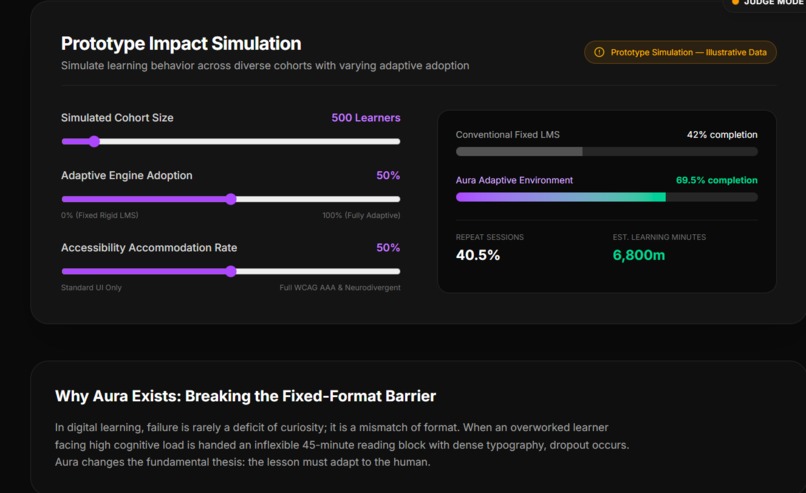
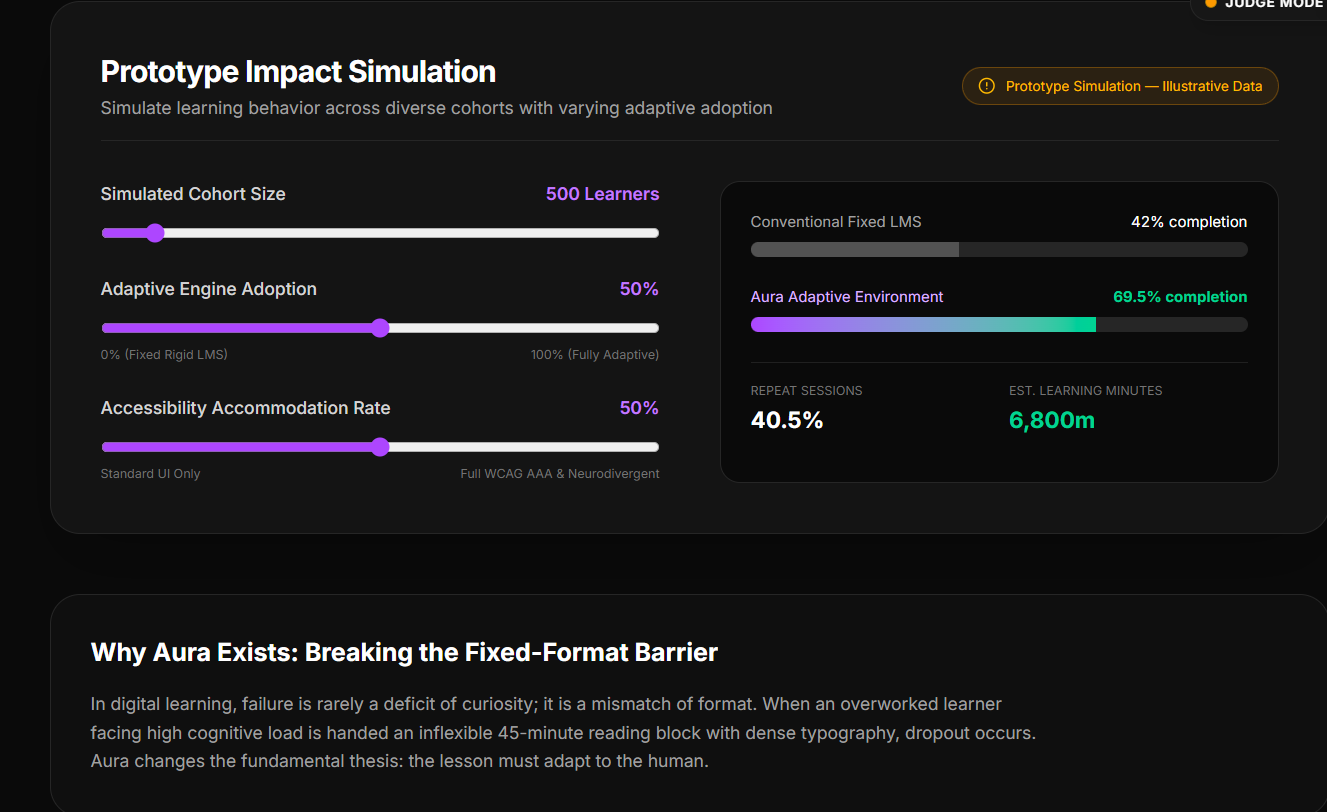
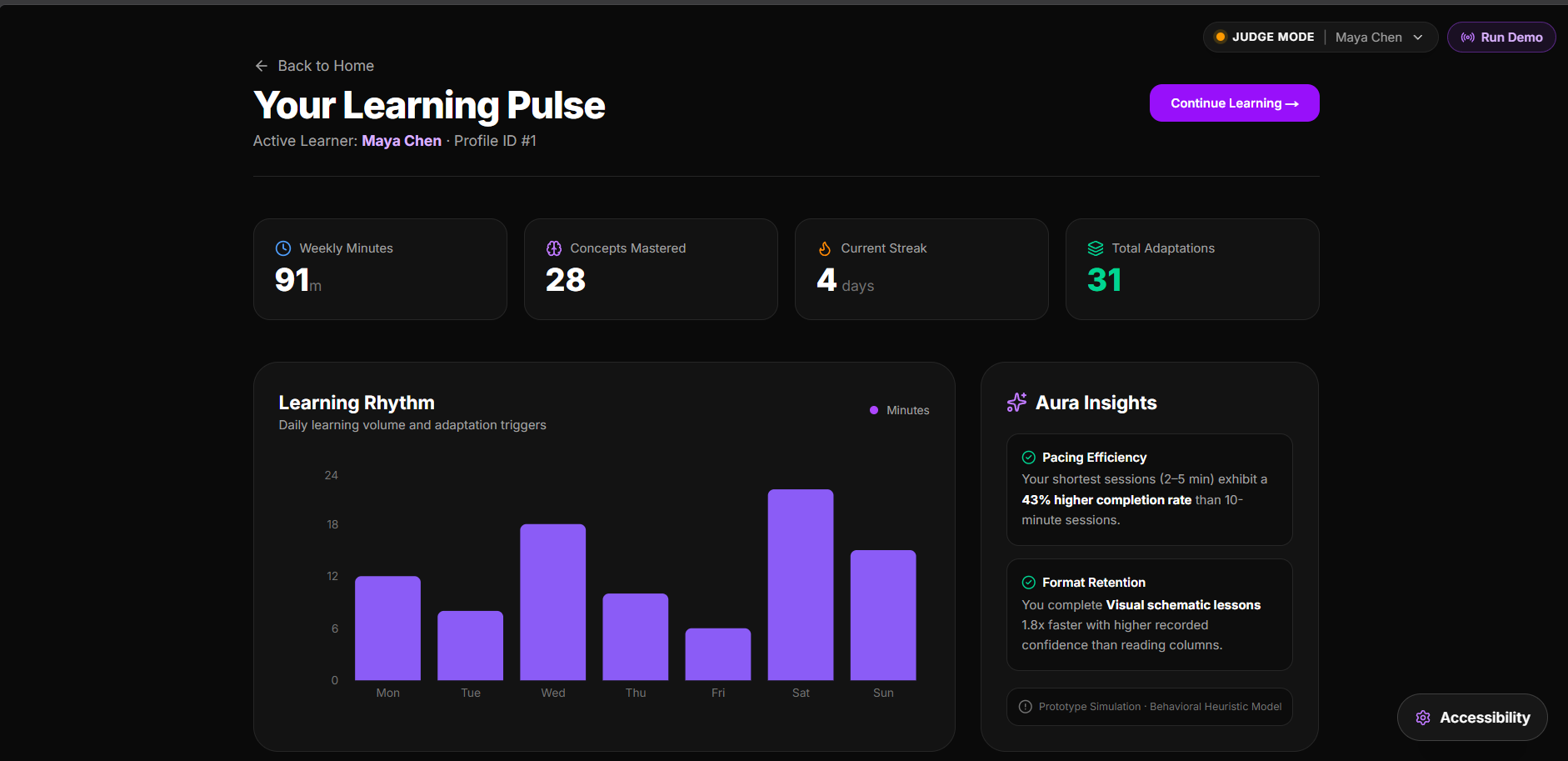
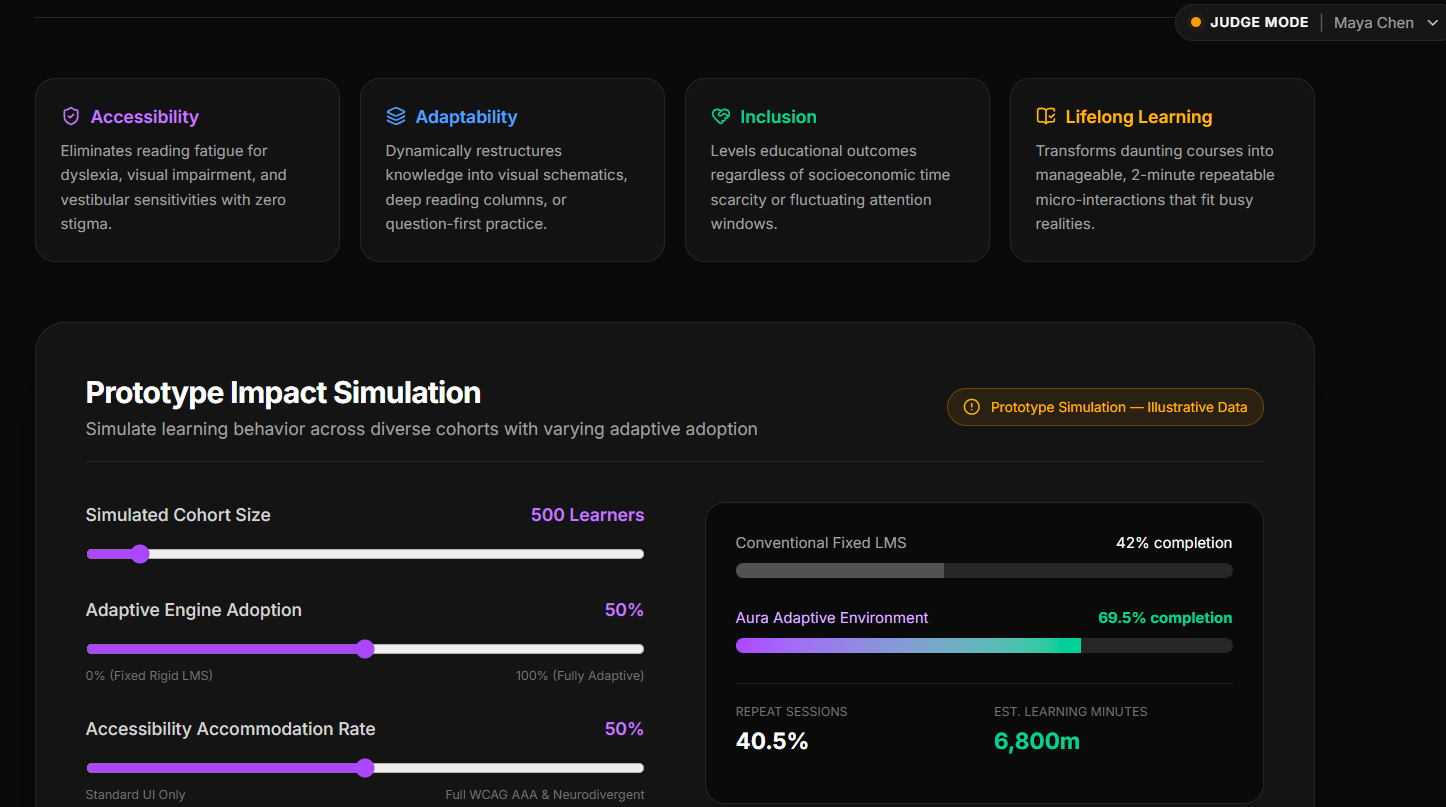
prototype impact simulation
-
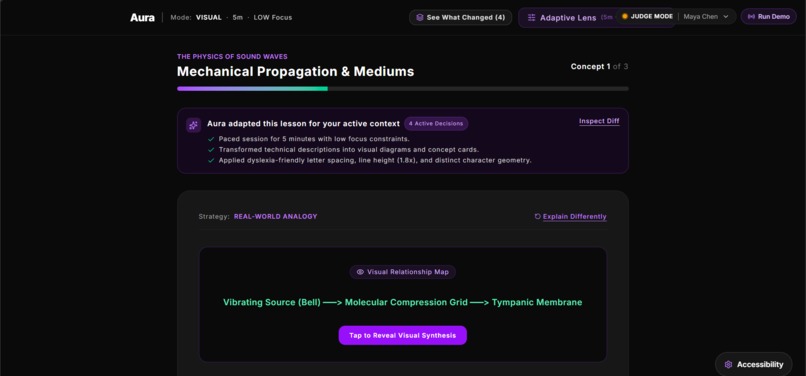
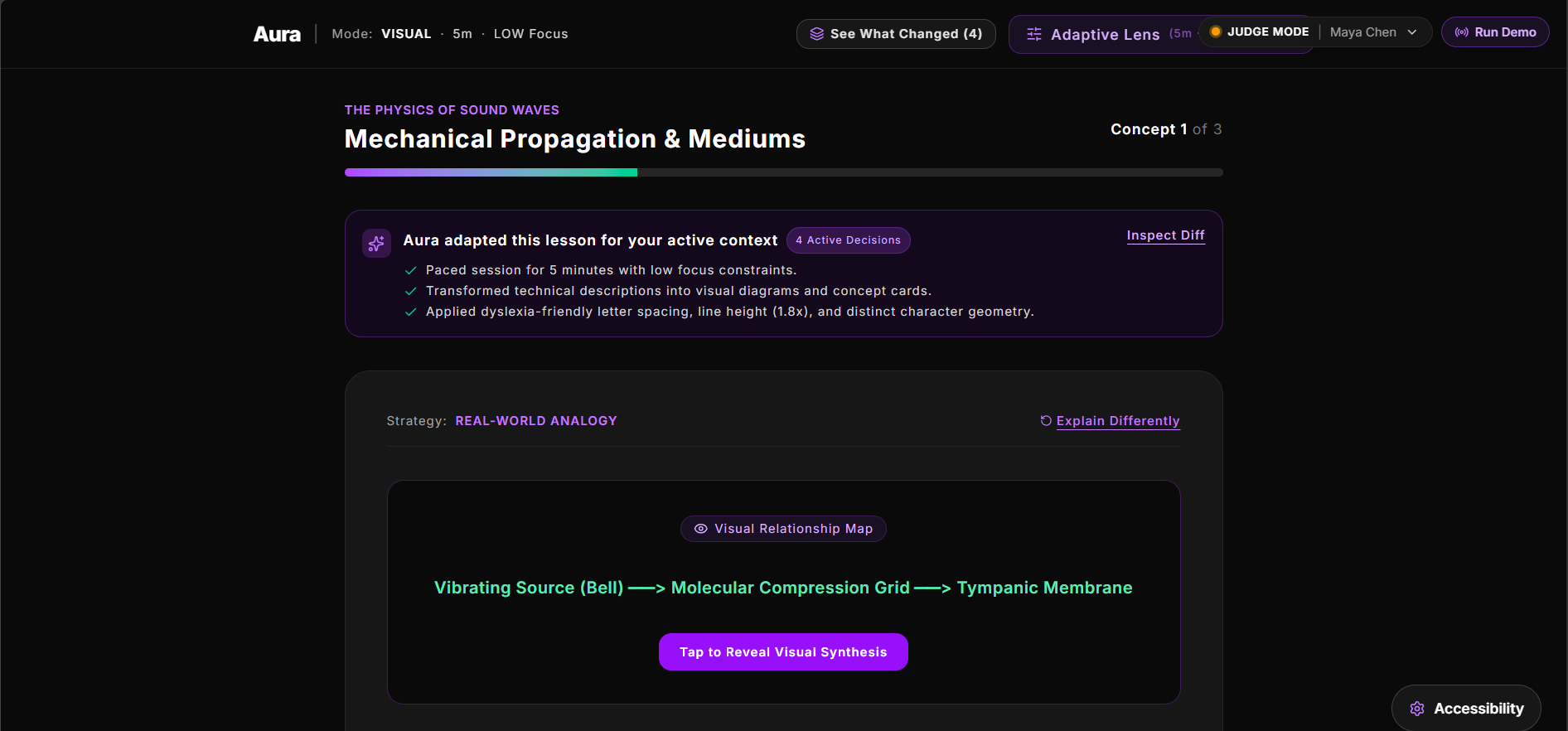
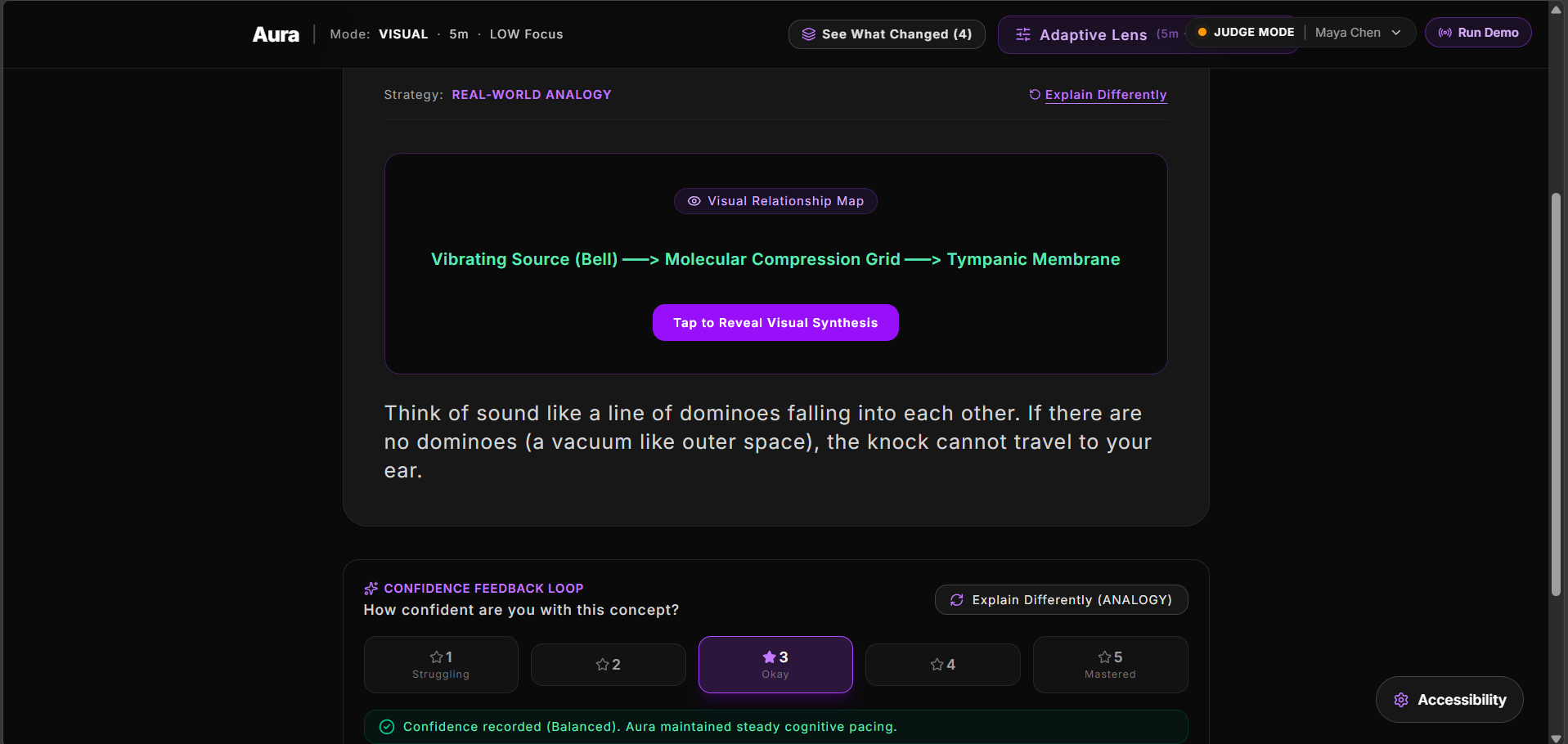
mechanical propagation & mediums
-
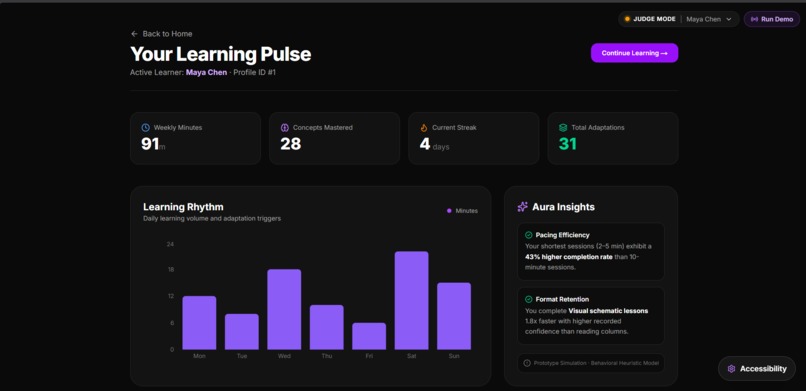
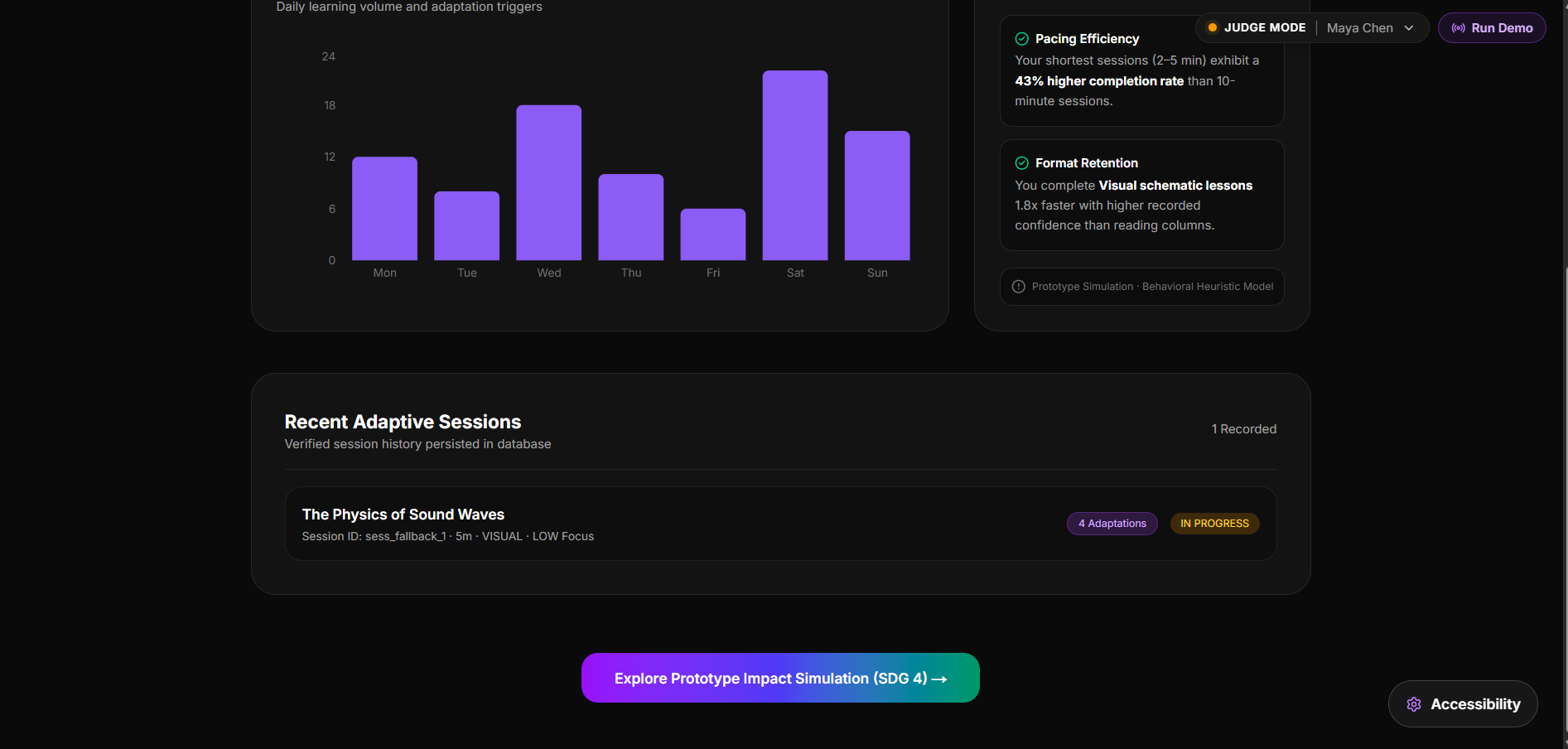
your learning pulse
-
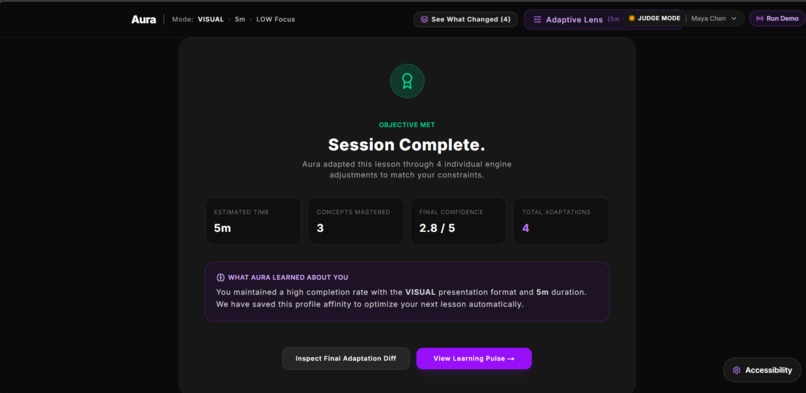
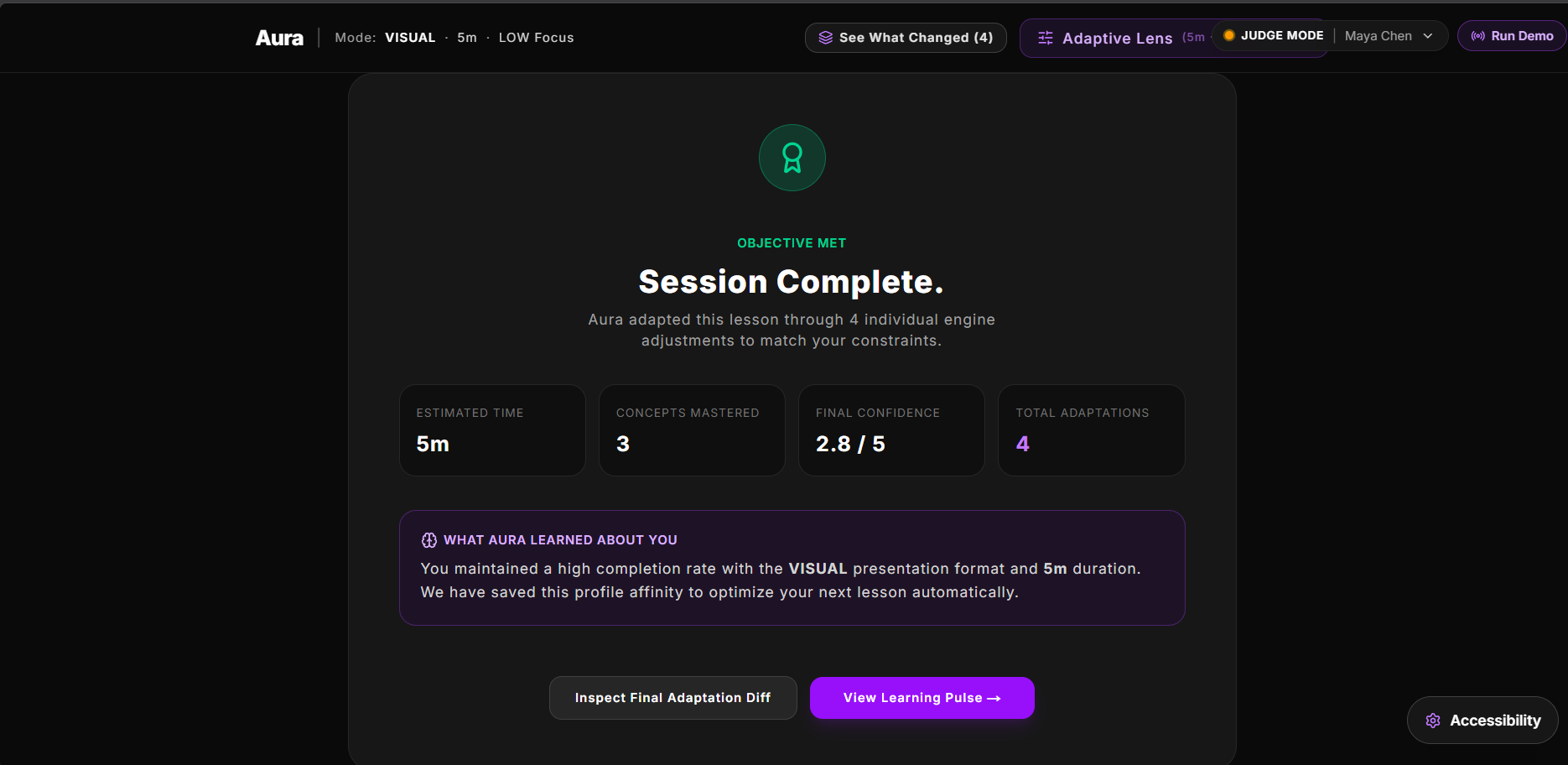
review session
-
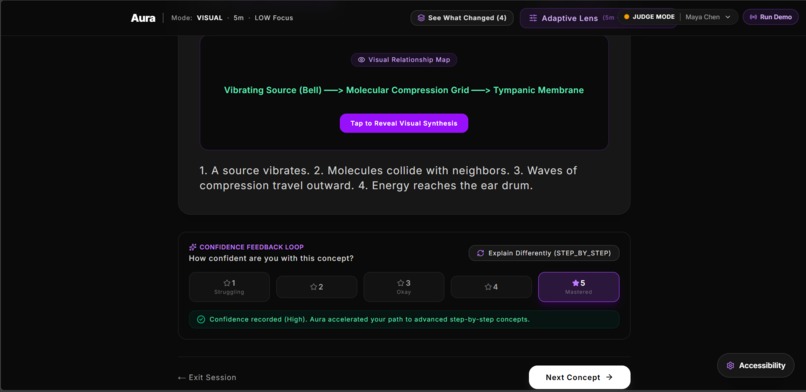
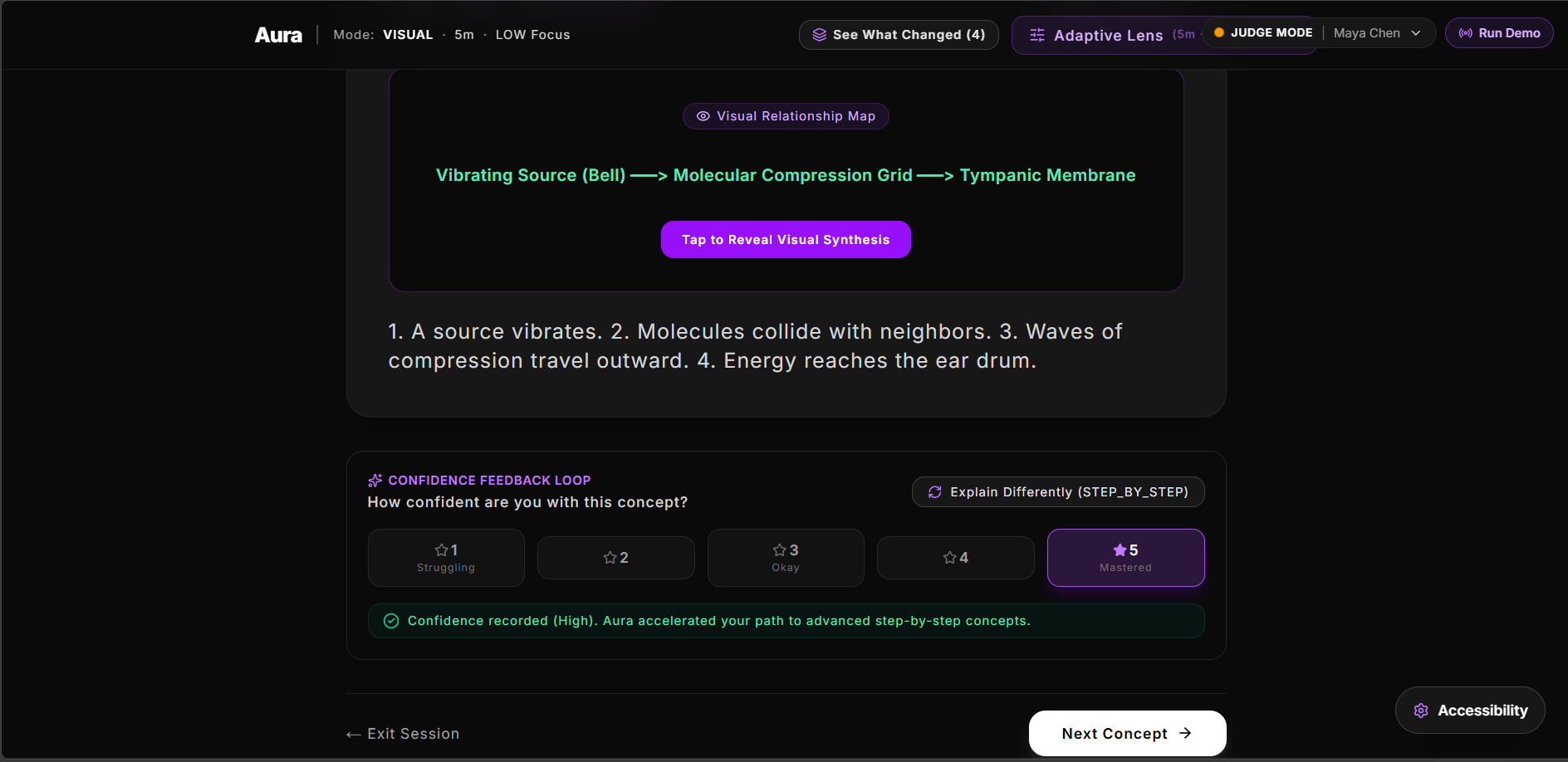
diffrent rating will display diffrent text
-
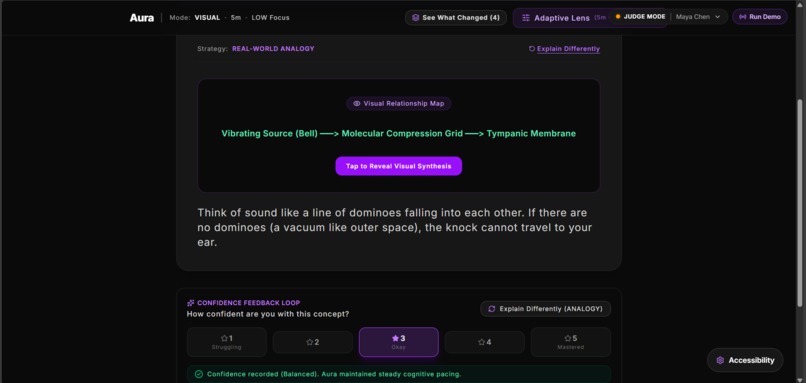
learning and chnage style based on rating
-
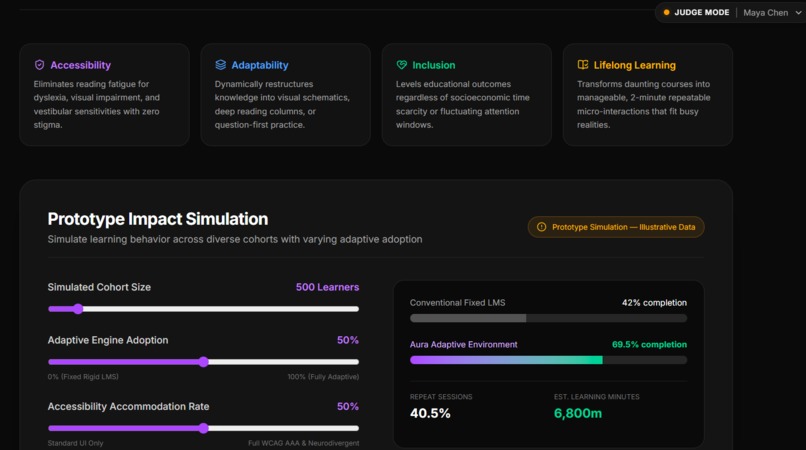
prototype impact simulation
-
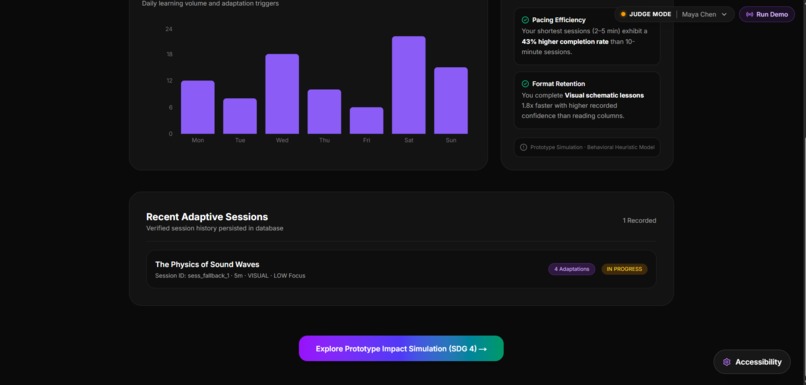
your learning pulse
-
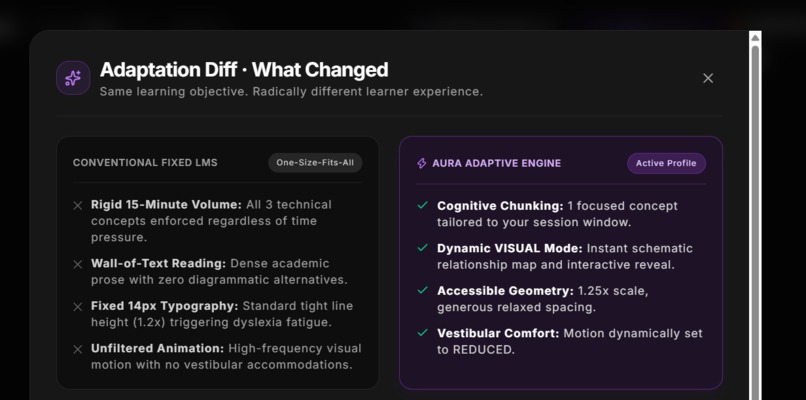
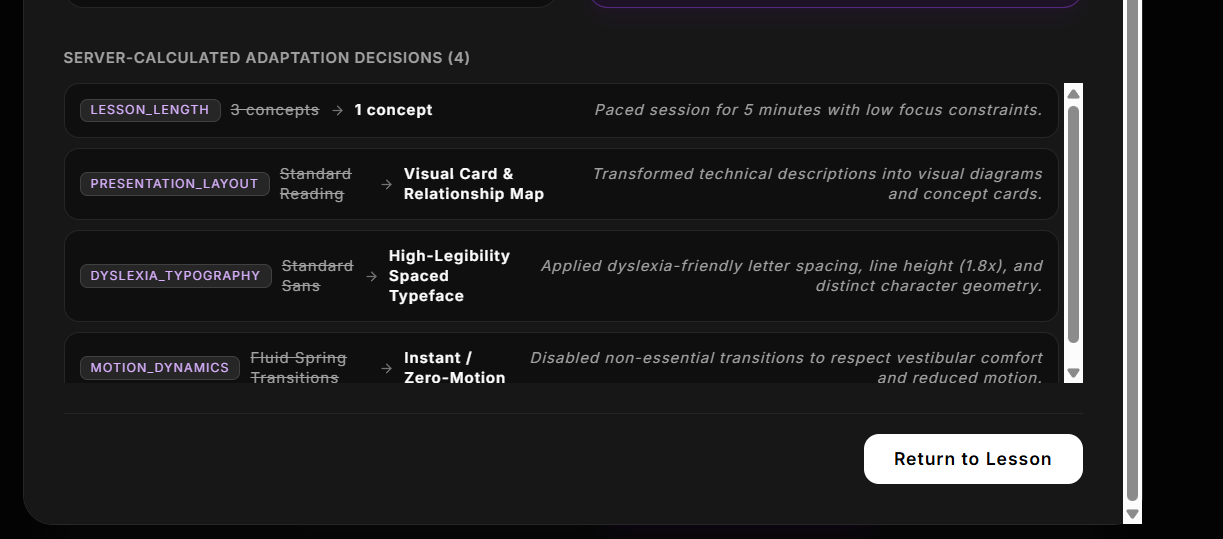
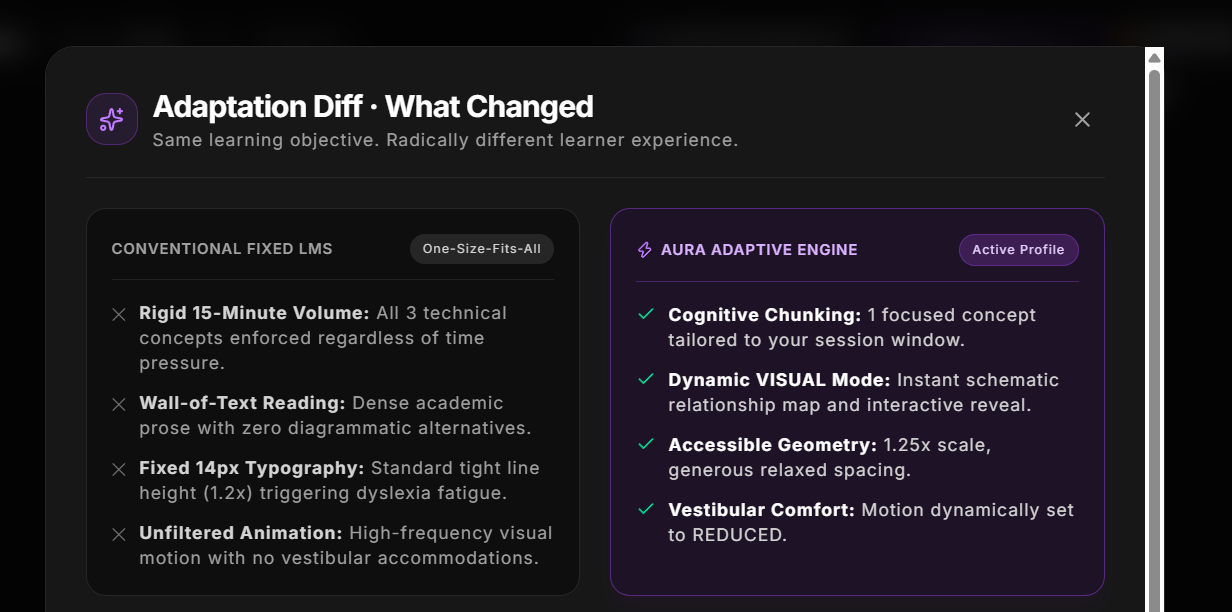
adaptive Diff- What Changed
-
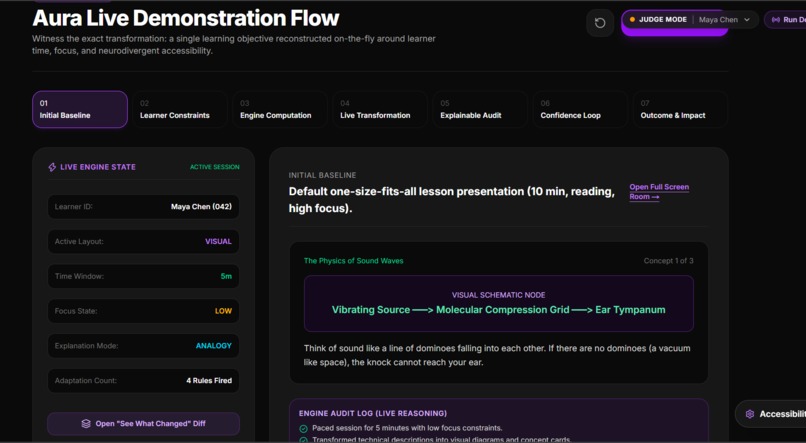
Run Demo
-
Dashboard
Inspiration
Today’s digital education has a fundamental flaw: it forces the learner to adapt to the lesson. We believe it should be the exact opposite. While targeting UN SDG 4 (Quality Education), we realized that "inclusive" education isn't just about access; it's about adaptability. Static flashcards and generic videos leave behind neurodivergent students, learners with low focus, or those with severe time constraints. Aura was inspired by the need to build a learning environment that genuinely molds its content delivery based on the student's real-time cognitive and accessibility needs.
What it does
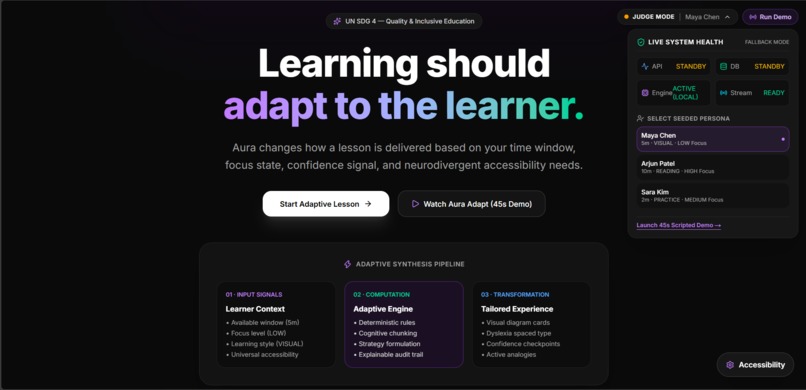
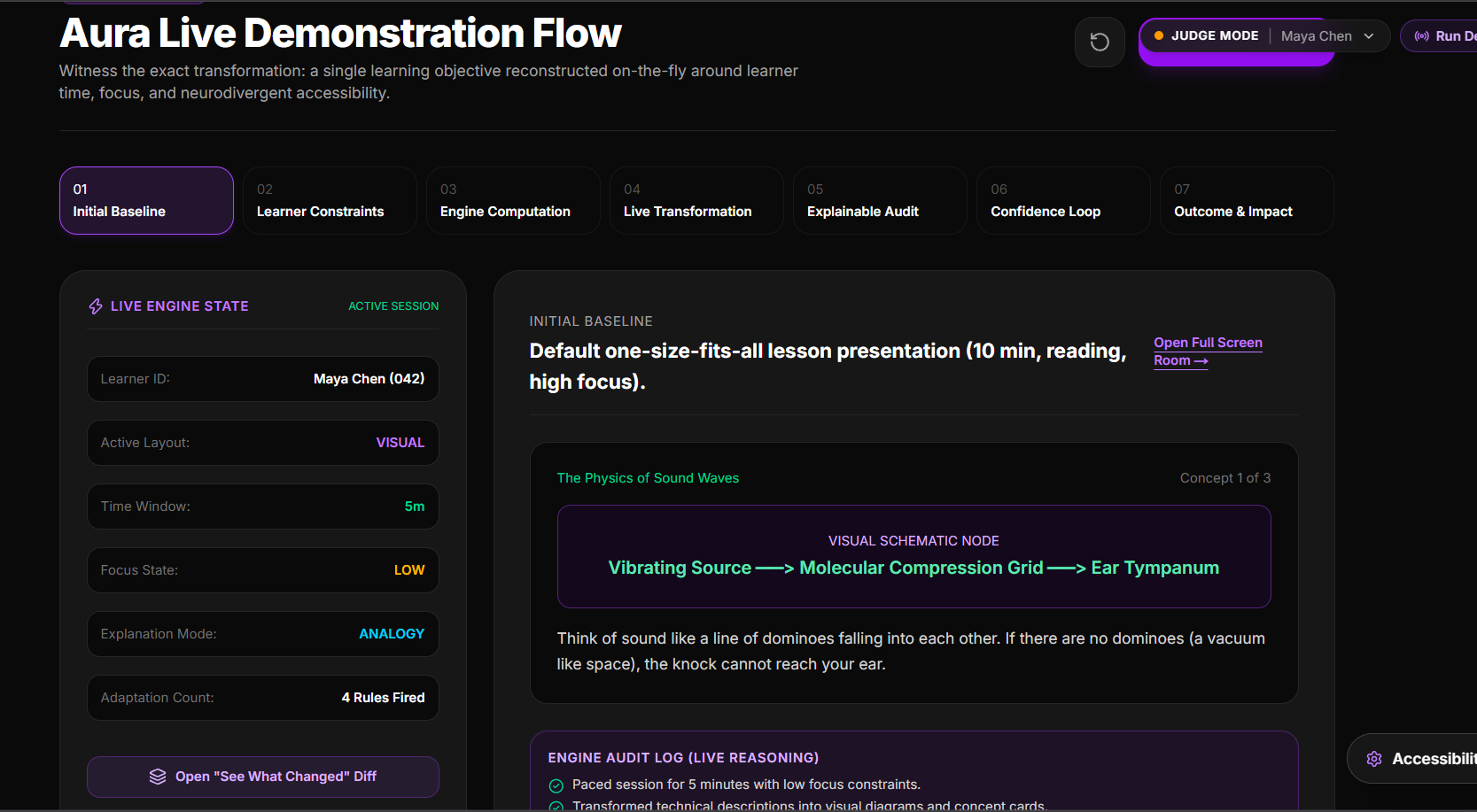
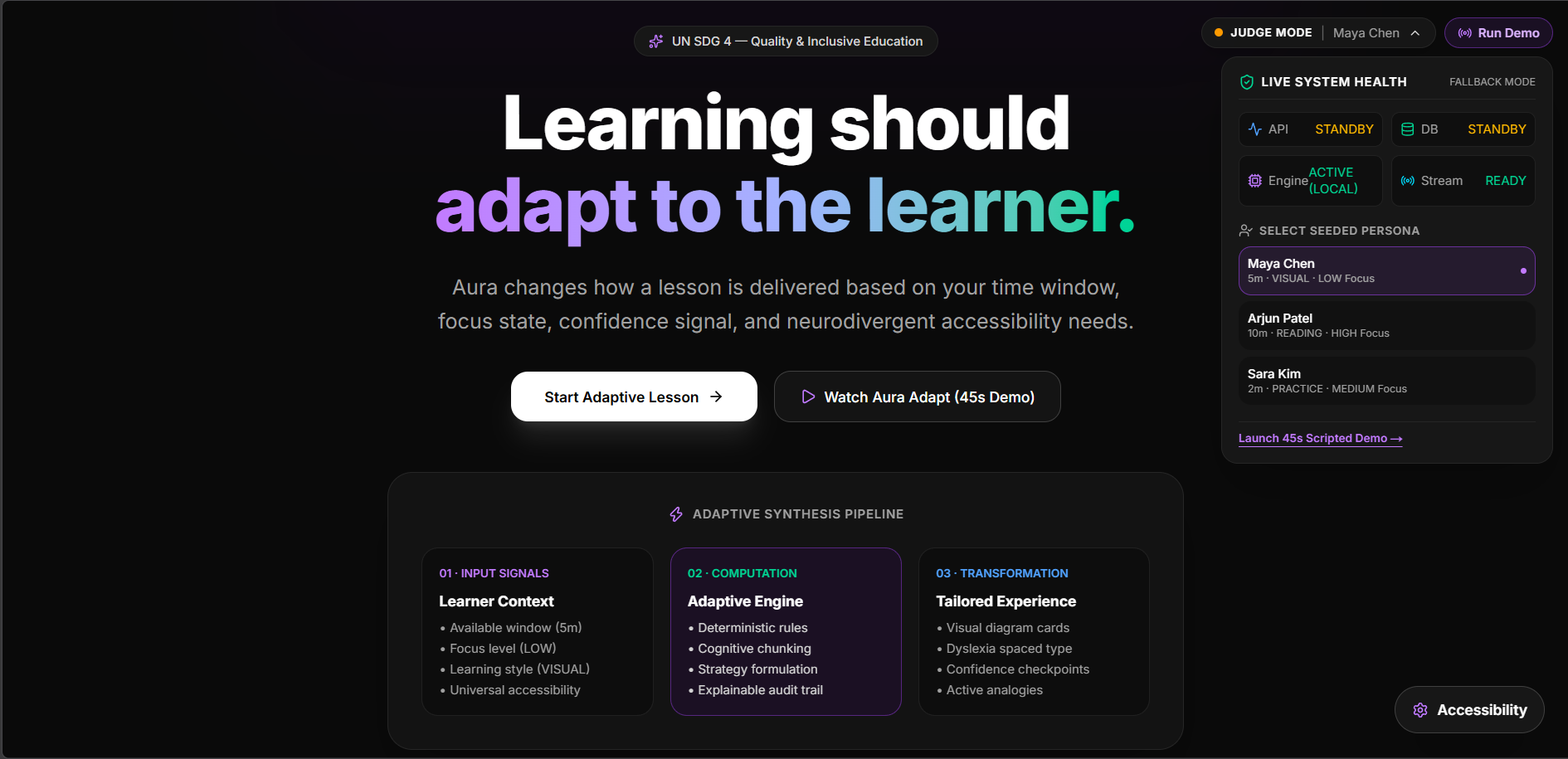
Aura is a highly accessible, full-stack adaptive learning product. Instead of a one-size-fits-all lesson, Aura asks for the learner's current context: available time, focus level, preferred learning style, and accessibility requirements.
Based on these inputs, Aura dynamically transforms the lesson. It doesn't just change the background color—it alters content density, cognitive chunking, typography, and explanation strategies.
Dyslexia-Friendly & Accessibility Modes: Instantly shifts to readable typography, increased spacing, and high-contrast layouts.
Adaptive Lens: Adjusts the lesson from a dense 10-minute reading session to a 2-minute highly visual summary based on user focus.
Adaptation Diff: A signature "See what changed" feature that provides an explainable audit trail of why the UI and content shifted (e.g., "Content density reduced because your focus level is Low").
How we built it
We focused on delivering an unforgettable, premium user experience. The frontend is engineered using Next.js (App Router), styled with Tailwind CSS, and animated fluidly using Framer Motion.
To ensure a flawless live presentation during the hackathon, we implemented a sophisticated "Judge Mode / Demo Fallback". This allows the deterministic adaptation rules and UI transformations to run natively and reliably in the browser. The entire application is deployed globally via Vercel for instant, zero-latency access.
Challenges we ran into
Designing a UI that can dynamically shift its entire layout, typography, and content density without breaking the aesthetic was incredibly difficult. Ensuring that the "Dyslexia Friendly" mode and "High Contrast" toggles actually improved accessibility—rather than just applying random CSS filters—required careful token management and semantic HTML structuring.
Accomplishments that we're proud of
We are incredibly proud of the Adaptive Synthesis Pipeline. It proves that educational software can be beautiful, expensive-looking, and deeply accessible all at once. The micro-interactions (like the staggered fade-ins and 3D card flips) combined with a genuine accessibility-first architecture makes Aura feel like a polished, enterprise-grade product rather than a weekend hack.
What we learned
We learned that true accessibility goes far beyond screen readers. Cognitive accessibility—adapting the actual length, tone, and visual density of text for someone who is overwhelmed or losing focus—is a massive, untapped area in EdTech.
What's next for Aura
The next step is connecting this polished frontend to our planned Modular Monolith Backend. We will implement a Spring Boot (Java) orchestrator with a PostgreSQL database to persist LearnerProfiles, LearningSessions, and power a server-side AdaptiveLearningEngine that learns from the student's "Confidence Loop" over time.
Built With
- framer-motion
- next.js
- react
- tailwind-css
- typescript
- vercel

Log in or sign up for Devpost to join the conversation.