-
-
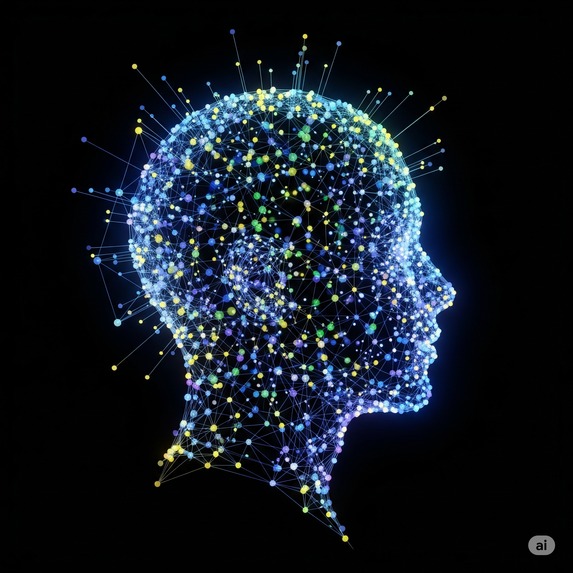
Aura- personal knowledge graph forming the silhouette of a human mind
-
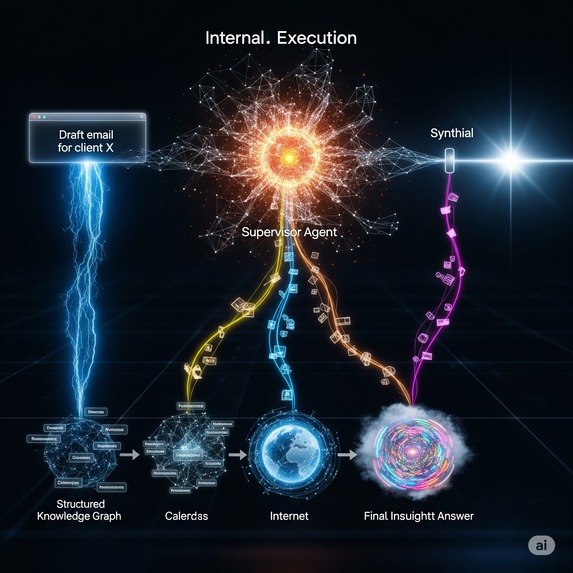
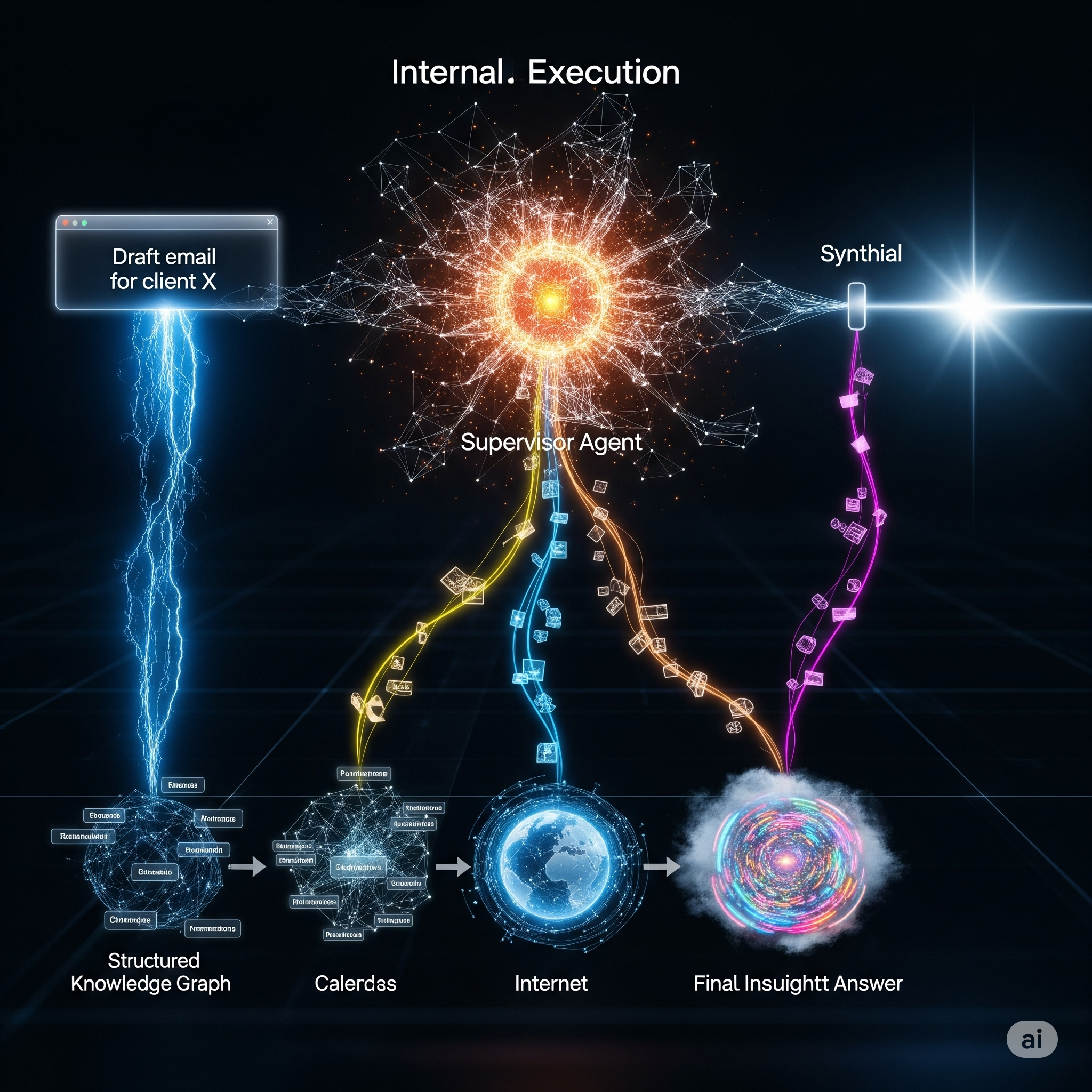
Aura's internal architecture
-
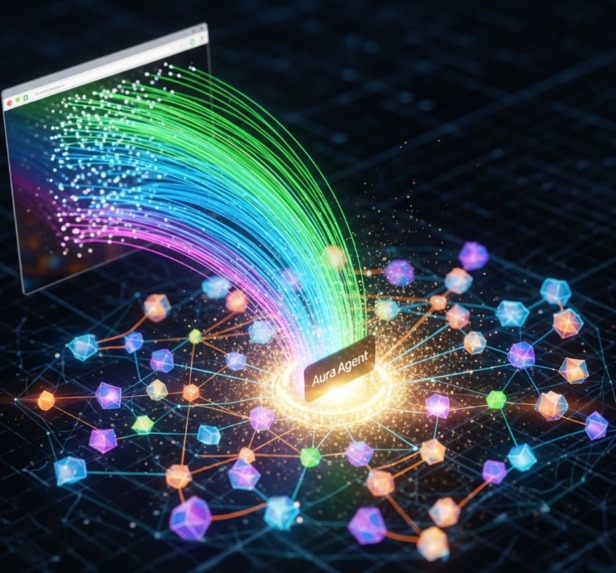
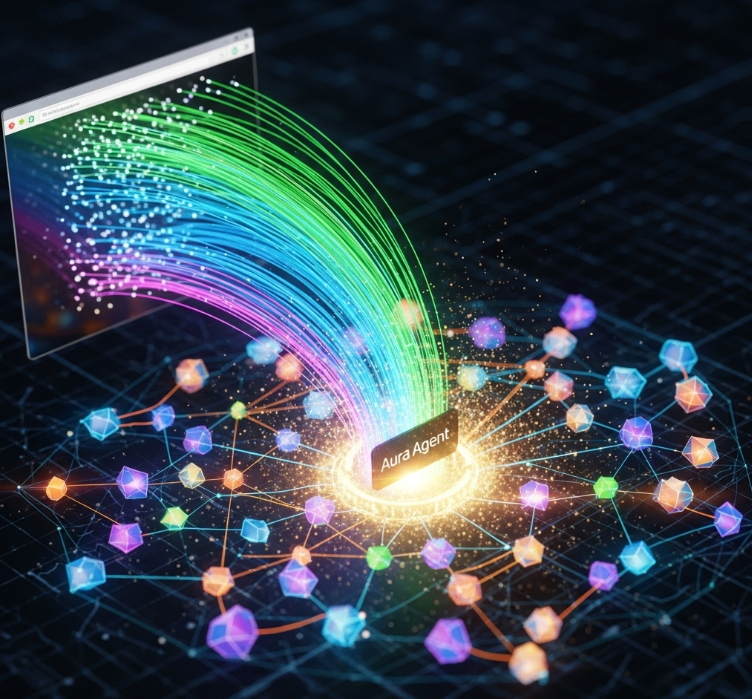
dynamic, evolving nature of personal knowledge graph "Aura"
Inspiration
Our inspiration was to push the boundaries of personalization beyond a standard recommendation engine. We realized our digital lives are fragmented; the music we love, the movies we watch, and the ideas we have are all locked in separate apps. We were inspired to build a system that could unify this scattered personal context into a "Living Knowledge Graph." The goal was to create a tool not just for discovery of new things, but for self-discovery, by using an AI to reveal the hidden patterns and connections within a person's own unique taste profile.
What it does
Aura is a proactive AI assistant that acts as an intelligent partner for your digital life. Its primary interface is a chat window within its browser extension. You can go to any website, open Aura, and instantly start a conversation about the content on that page. Aura reads the site's information and combines it with its deep, personal knowledge of your preferences, goals, and history to provide uniquely insightful answers that a generic chatbot never could.
Beyond contextual chat, Aura builds a "Living Knowledge Graph" of your world. With every conversation and every piece of information you effortlessly save with a right-click, the graph grows richer and more interconnected. This means Aura isn't static; it evolves with you. Over time, it develops a nuanced understanding of who you are, allowing it to provide proactive suggestions and personalized insights that become more helpful and insightful with every interaction.
How we built it
Aura is built on a modern, multi-agent architecture designed for robust and intelligent operation.
Orchestration: The system is conducted by a Supervisor agent built with LangGraph. This supervisor analyzes user requests, creates multi-step plans, and delegates tasks to specialized tools.
Knowledge Base: The "brain" is a hybrid knowledge base running locally. We use NetworkX to store the explicit, factual graph of nodes and relationships in a file, and FAISS (HNSW) to provide a super-fast, dynamic vector index for semantic search.
AI & APIs: The core of our project is the Qloo API, which we use as our primary tool for cultural enrichment. The supervisor also uses OpenAI's GPT-4o-mini for reasoning and planning, and is equipped with a Tavily Search tool for real-time web access.
Backend & Frontend: A FastAPI server exposes the supervisor, which is accessed by a Chrome Extension built with HTML, CSS, and JavaScript that features both a chat popup and a right-click context menu.
Challenges we ran into
Our biggest challenge was architecting the knowledge base. We explored simpler options but realized that to achieve a truly "living" graph, we needed a hybrid NetworkX + FAISS model that could handle both semantic meaning and factual connections. Another significant hurdle was prompt engineering for our LangGraph supervisor. The planner agent would often generate malformed or incomplete arguments for its tools, which we solved through several iterations of making our instructions and examples much more explicit. Finally, correctly implementing the two-step Qloo API workflow (searching for an entity ID, then getting insights) required careful logic to handle cases where an entity might not be found.
Accomplishments that we're proud of
We are most proud of our multi-agent architecture. The supervisor's ability to create and execute a multi-step plan—for example, updating its internal knowledge graph with a new movie and then proactively calling the Qloo API to find related book and music recommendations—is the core accomplishment of this project. We're also incredibly proud of the quality of the insights the system can generate. By successfully combining the user's personal context with Qloo's rich cultural data, our demo shows Aura making a genuinely surprising and insightful recommendation that a traditional system never could.
What we learned
This hackathon was a deep dive into the future of personalization. We learned that the most powerful insights come from combining a user's explicit personal context (their "personal graph") with a rich, implicit cultural context (Qloo's "taste graph"). We also learned that for complex, multi-step tasks, a multi-agent architecture using a framework like LangGraph is far more reliable than a single, monolithic prompt. Finally, we learned that the quality of an AI agent's actions is directly proportional to the precision of its instructions; clear and robust prompt engineering was the key to our success.
What's next for Aura
The ultimate vision for Aura is to be an indispensable partner for navigating both your inner and outer worlds. The next steps are:
Passive Data Ingestion: Evolve beyond the right-click capture to a system that can passively and privately learn from Browse history to build the knowledge graph automatically.
Deeper Integrations: Connect directly with other personal data sources like Spotify, Google Calendar, or email to create an even richer and more holistic understanding of the user.
Enhanced Agentic Actions: Give the supervisor more tools, allowing Aura to not just recommend, but to act on the user's behalf—like creating a new playlist based on a Qloo recommendation or adding a suggested event to your calendar.
Built With
- css
- faiss
- fastapi
- html
- javascript
- langchain
- langgraph
- networkx
- python


Log in or sign up for Devpost to join the conversation.