-
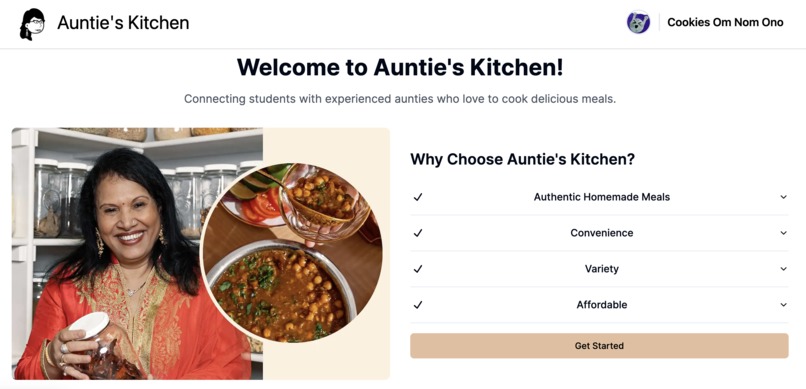
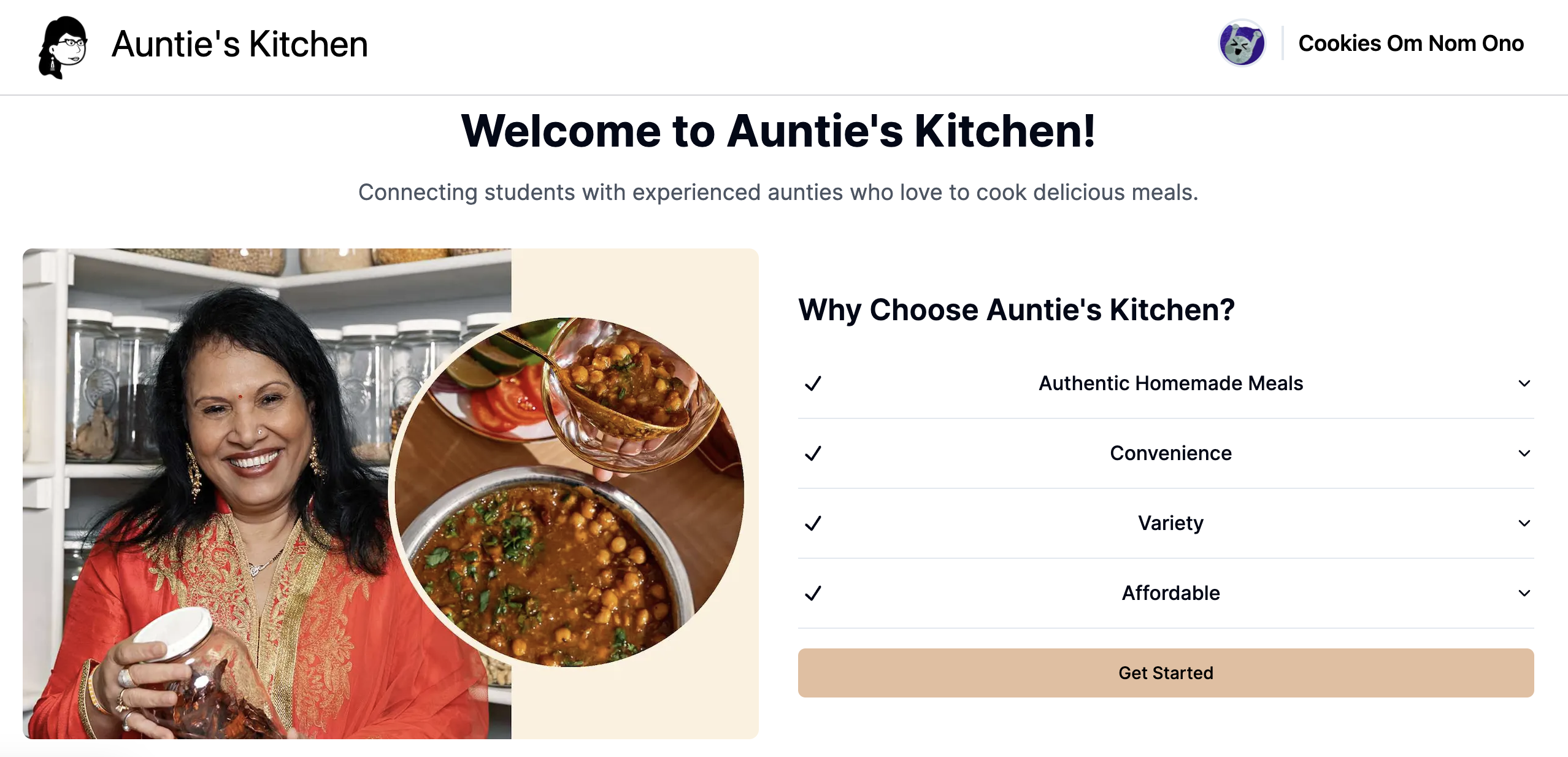
Landing Page
-
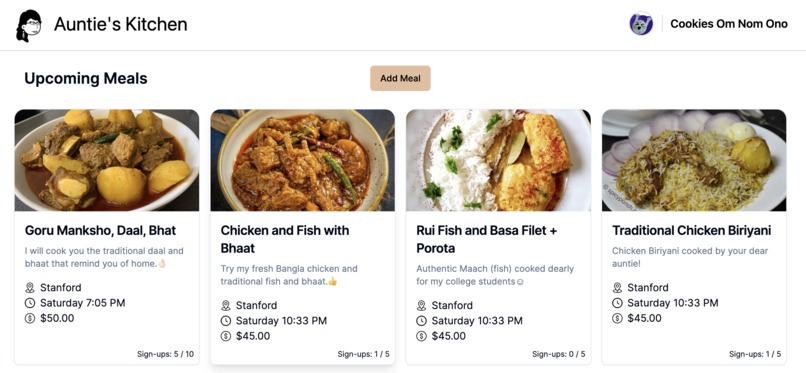
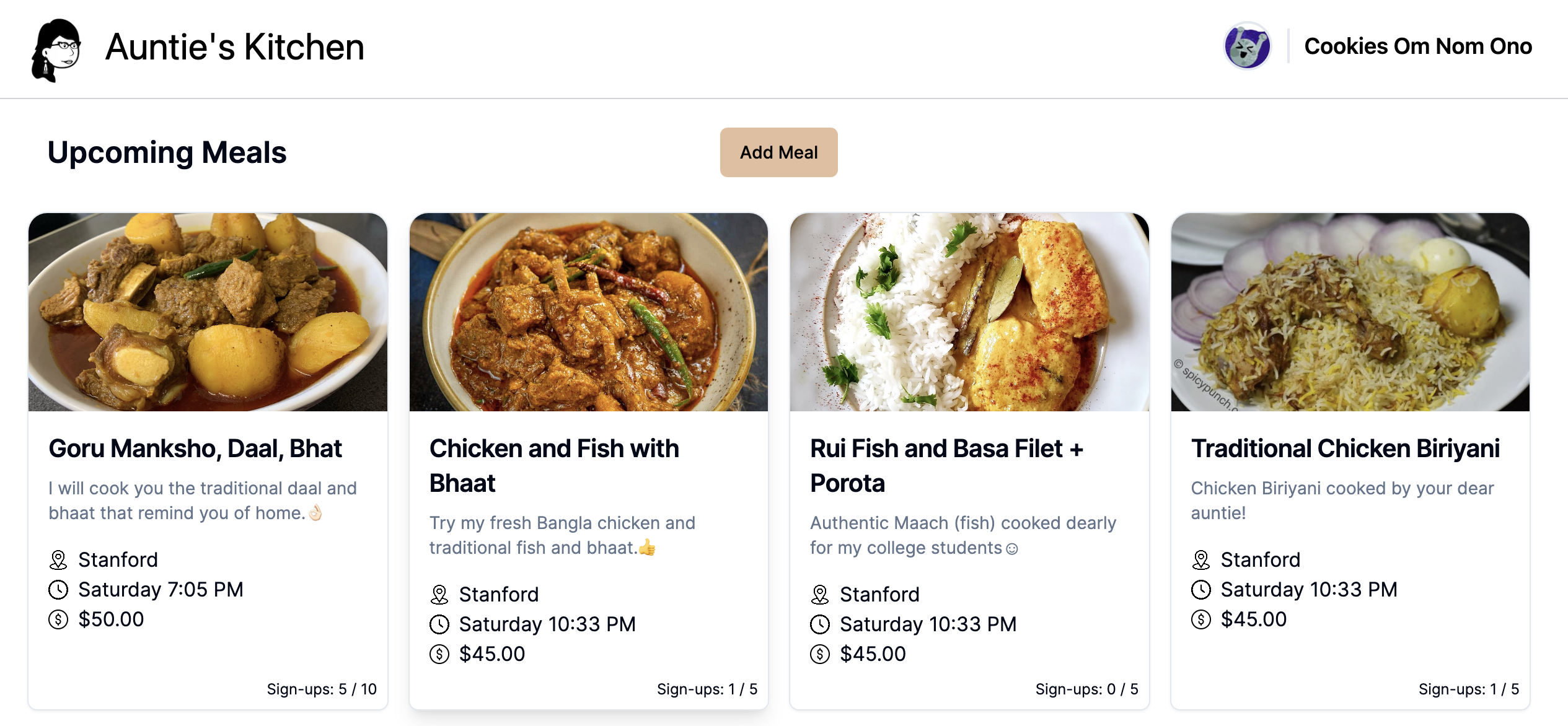
Auntie Dashboard for creating and monitoring meals
-
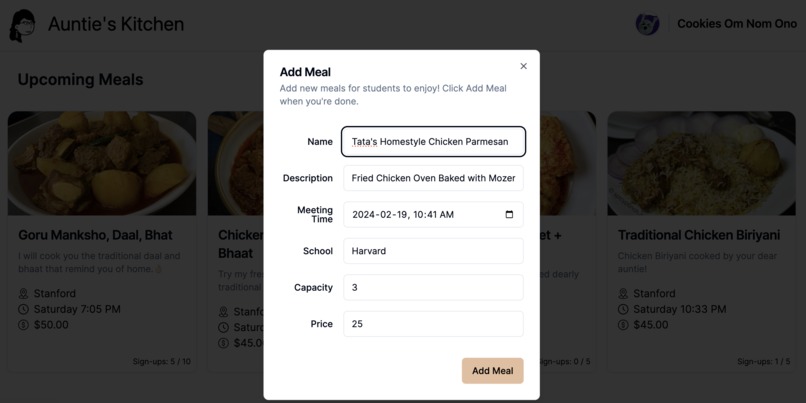
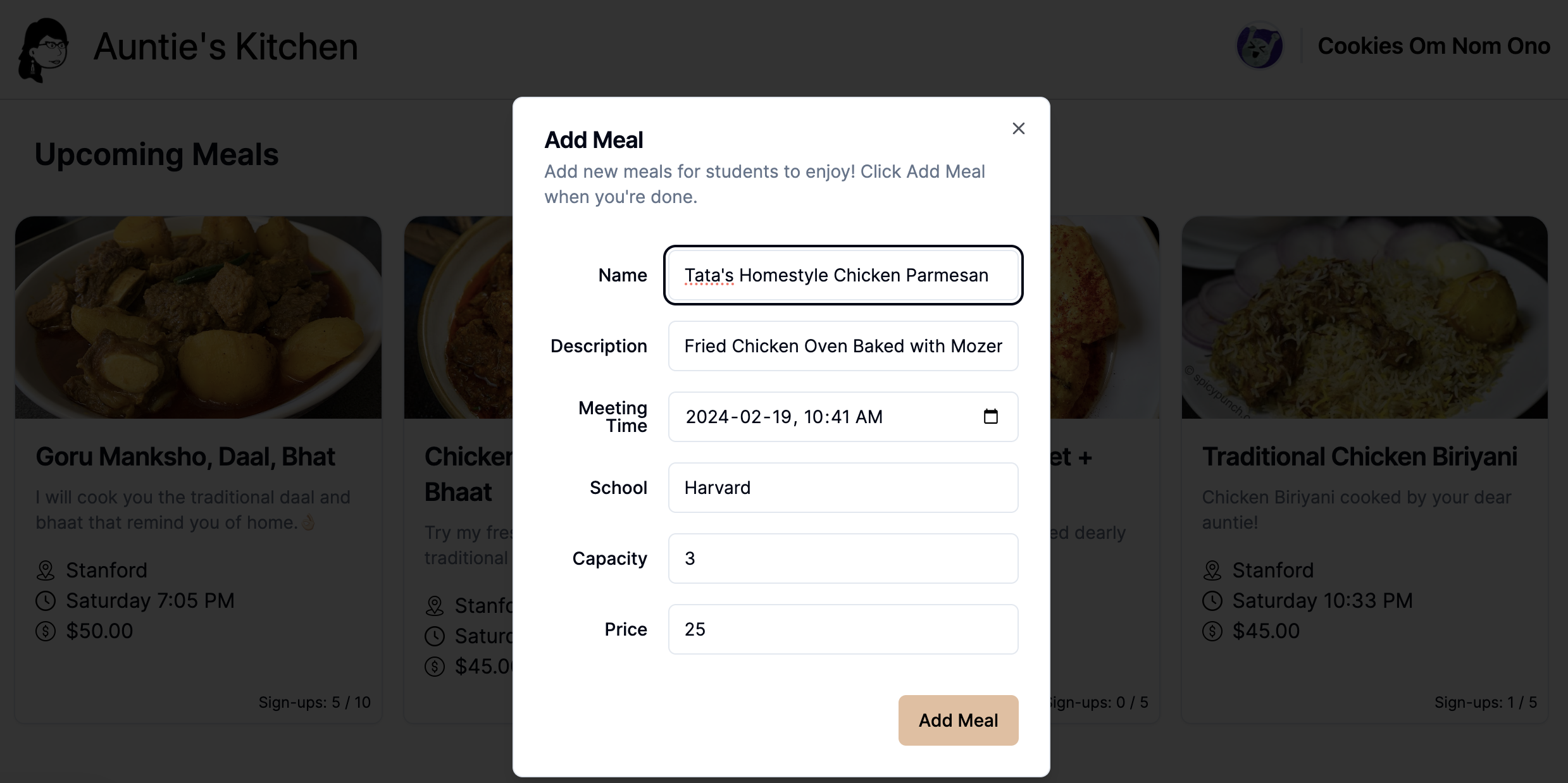
Creating a meal
-
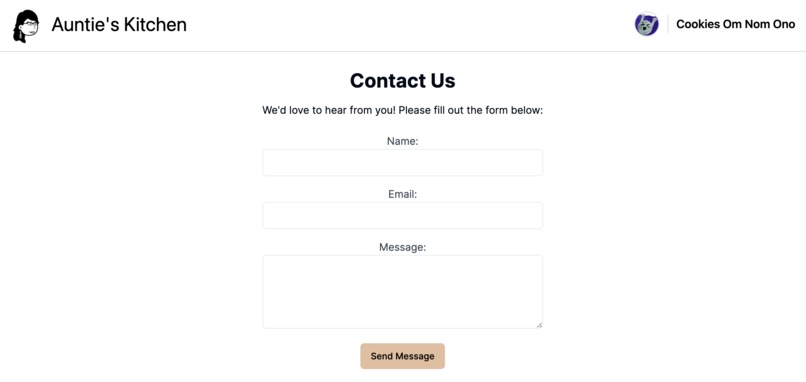
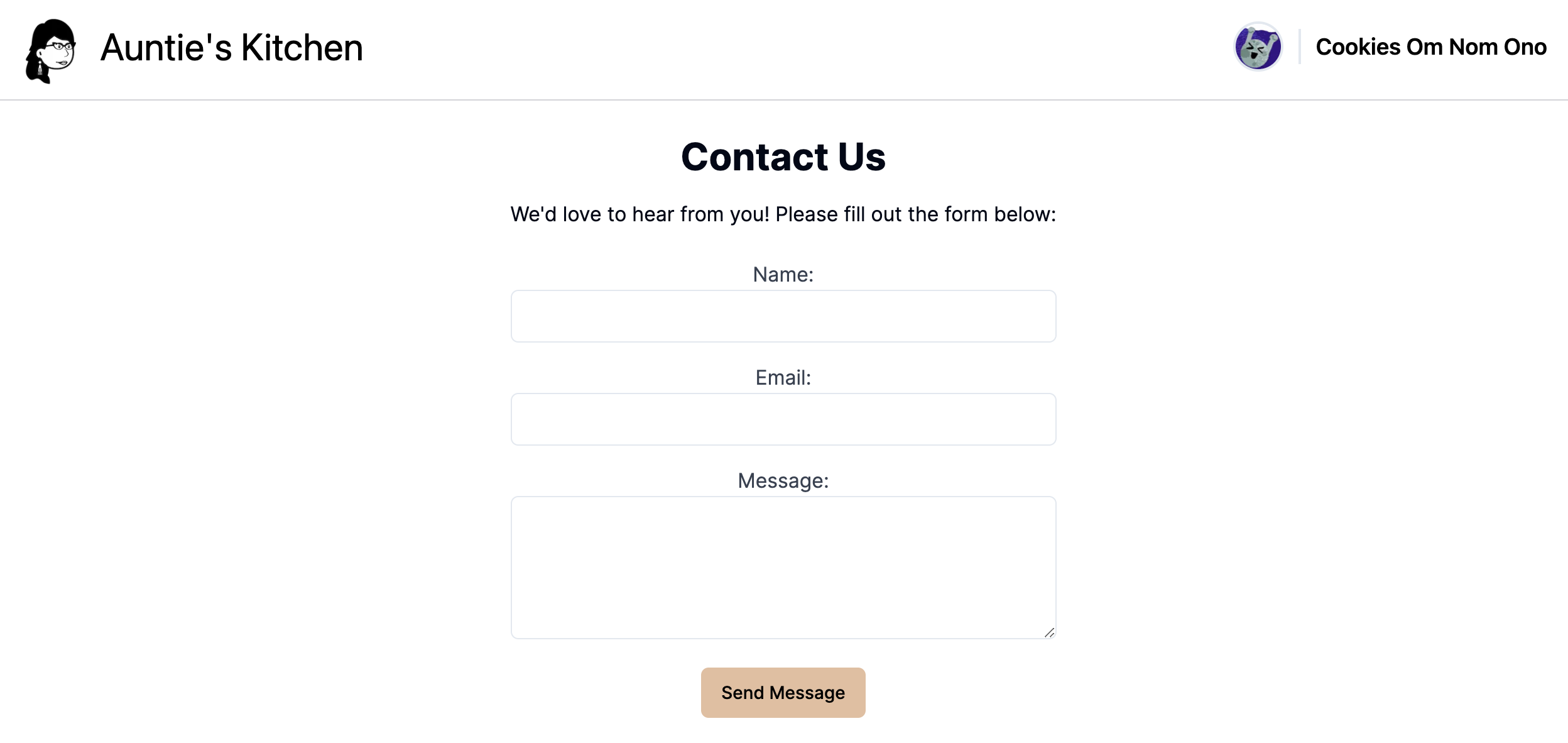
Contact Us Page
-
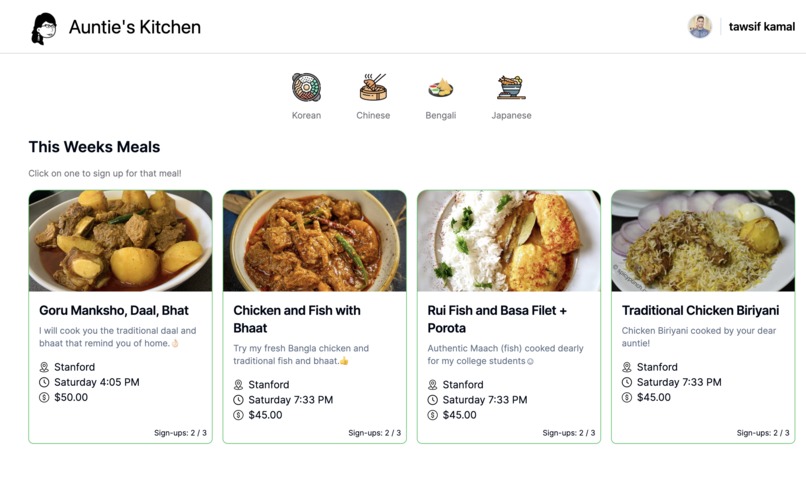
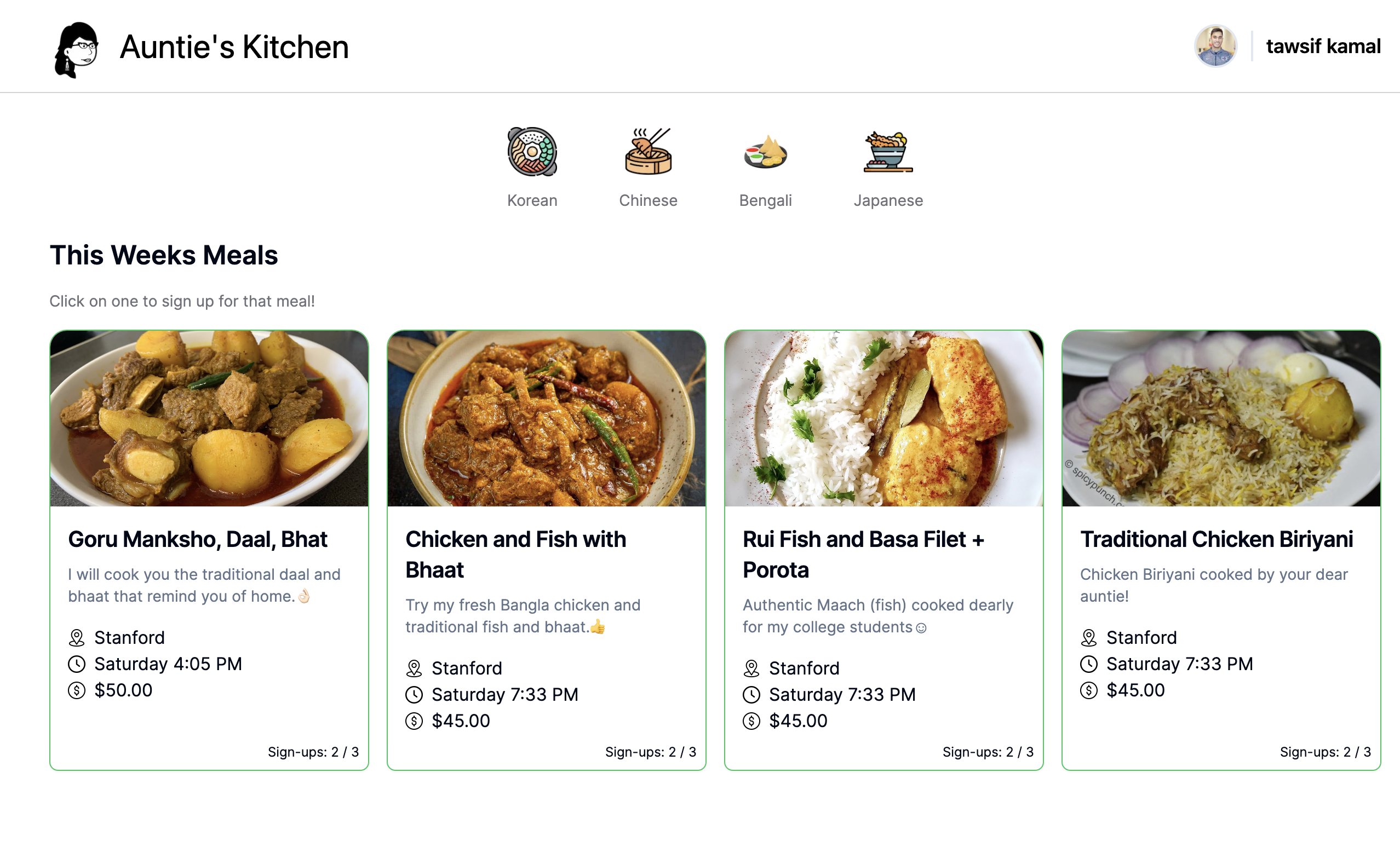
Student Dashboard for viewing meals for the week
Inspiration
A homecooked chicken biriyani; Chinese dumplings on the dinner table. The only problem? We, college students, are away from home.
And we deeply miss home-cooked meals.
So much so, that a survey conducted on college students showed that 77% of respondents ranked home-cooked meals in the top 3 things they miss from home.
On the other hand, aunties, uncles and mothers love to cook. They find great joy in feeding their young ones.
So, what if there was a way to connect local aunties to college students, and finally have a way to satisfy the craving for home-cooked meals?
Introducing Aunties Kitchen!
What it does
Auntie’s Kitchen connects “aunties” with local college students. Students are able to explore different homecooked meals from different cultural backgrounds that are being delivered each week to their campus and can place an order. For aunties, we simplified the process of scheduling and managing who they’re making meals for.
At least for our initial product, aunties can create weekly meals that students are able to sign up for. The aunties then go to the colleges they chose to deliver for and students are able to pay and meet the auntie.
How we built it
- The frontend and backend is built using Next.js with Typescript both hosted on the same server
- Authentication for the aunties and the students was done using NextAuth and Google OAuth2.
- The data for students, aunties, and meals are stored in a MongoDB database. We utilize RestAPIs to create, retrieve, update, and delete the entities involved.
- Deployed our web application using Vercel
- Utilized Shadcn components and composed our styles using Tailwind CSS
- Collaborated using Github and Git for version control
Challenges we ran into
- Setting up user authentication had a lot of moving pieces
- There were some styling issues with Tailwind CSS and getting it to work with Shadcn components
- Next.js 14 had a lot of new updates that some teammates were not aware of. Learning those new features needed some time
Accomplishments that we're proud of
In the beginning, we were thinking about how to make something that would be the most technically complex and trying to force LLMs or AI into our application. But, after some ideation, we realized we needed to solve an actual problem. Thus, we framed our thinking from solution -> problem, to problem -> solution. And eventually, we came up with Auntie’s Kitchen. We feel accomplished in the sense that even though this application is not as technically complex, it solves a problem that many students have.
What we learned
We learned that it’s more important to work on something that is a genuine problem as opposed to building “wouldn’t it be cool if” products. We had all these ideas involving AI and workflow automation but at the end of the day, we felt that the problem with homecooked meals was something that just resonated more with us.
What's next for Auntie's Kitchen
Aside from additional product improvements, one potential next move for Auntie’s Kitchen is to offer the services we give to aunties to restaurants. Many restaurants want to do large orders on a weekly or monthly basis but the systems in place to do so are really messy and oftentimes just a massive group chat. The value for restaurants is that they’re able to do a bulk order and earn a large chunk of money from one delivery as well as service customers not in their local area. The value for users is that they can order from restaurants they love even if it’s one that’s far away, with little to no delivery fees.
Built With
- github
- google-cloud
- mongodb
- nextjs
- tailwind
- typescript


Log in or sign up for Devpost to join the conversation.