-
-
This is the logo for Augmented Reality with the British Museum.
-
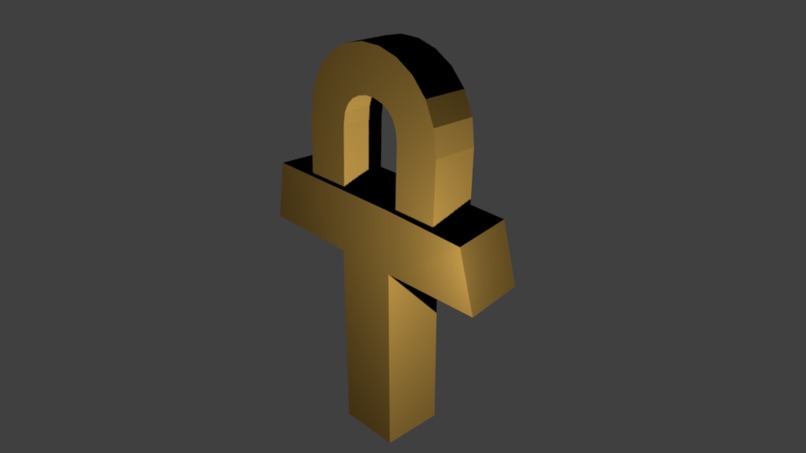
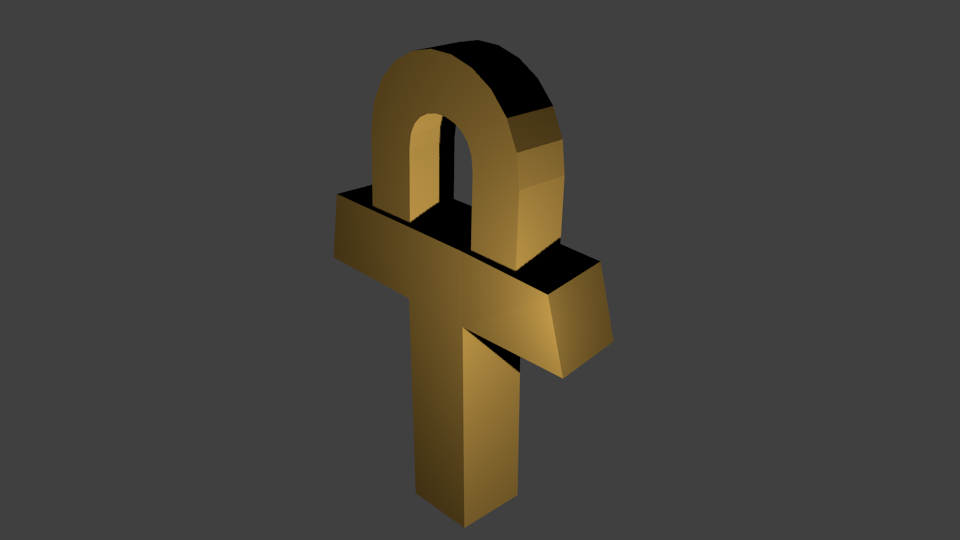
This is the ankh symbol I quickly whipped up in Blender 3d in order to use it for PlayCanvas with the help of Zappar's Universal AR SDK.
-
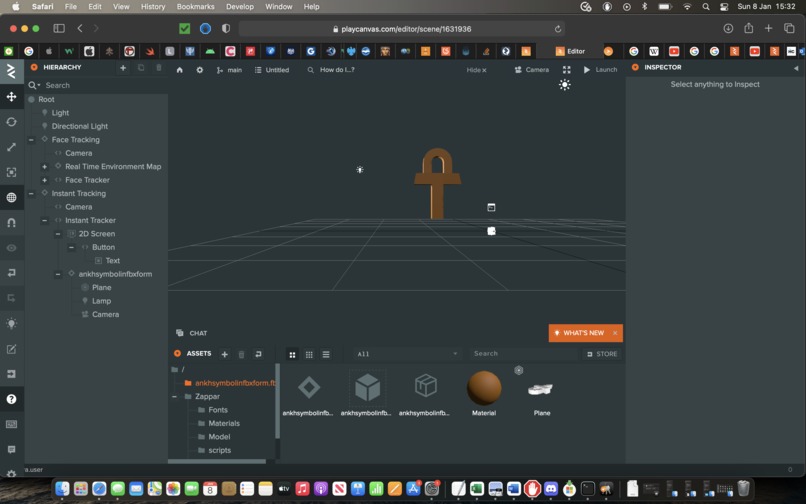
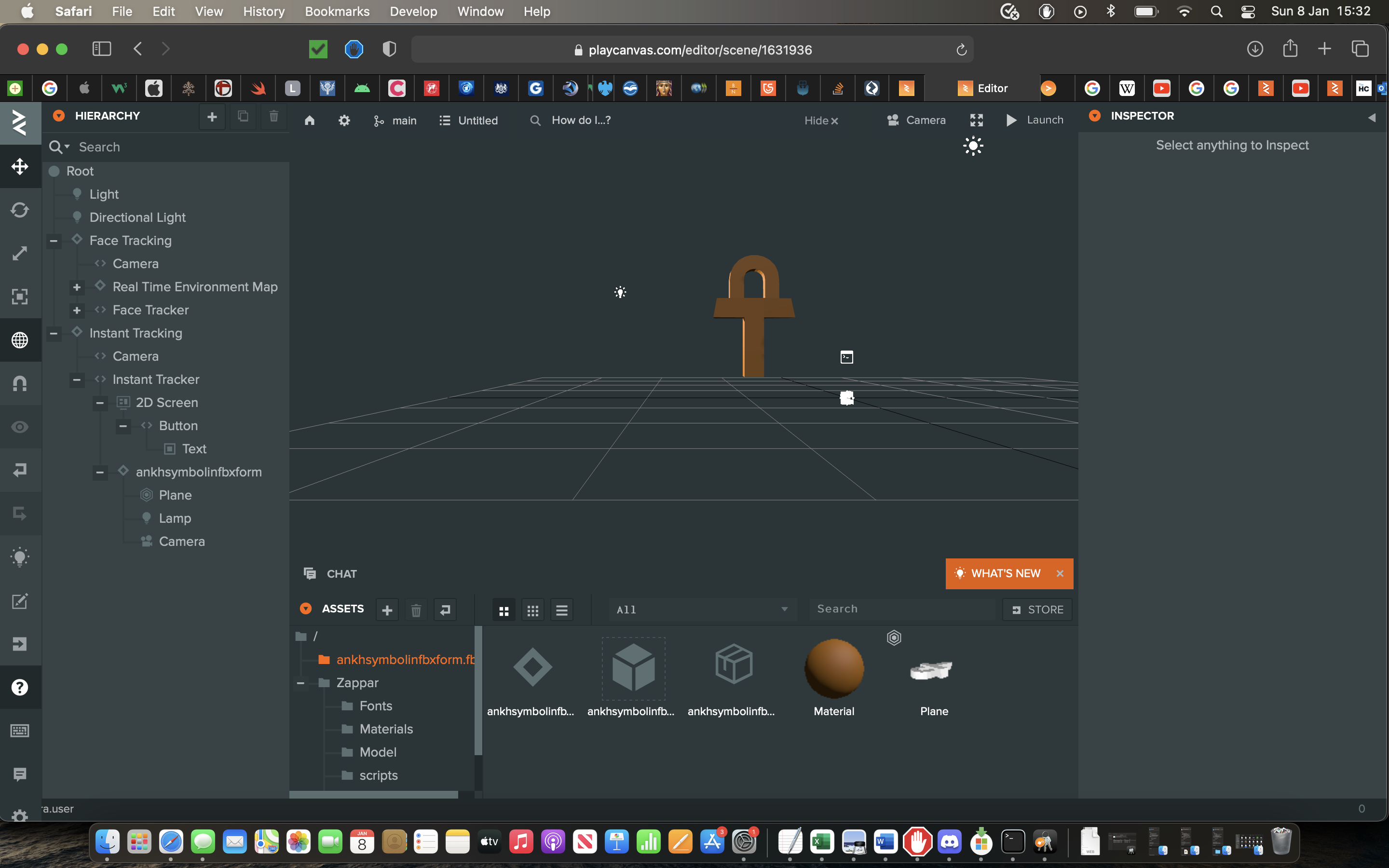
This is the development of the scene in action.
Inspiration
As someone who used to live near the British Museum in London, England, it's an institution that I'm really passionate about. I really loved visiting the exhibitions they held, such as one on Pompeii as well as one on the history of Germany since its reunification. The British Museum is a living encyclopedia of humanity, encompassing the history of everyone from Ancient Egypt through to the present day and beyond.
However, the British Museum as well as other museums have attracted controversy in recent times over some of the artifacts they hold. The contention is that some of these items were looted by Britain during the imperial/colonial era and should be returned back to where they were taken from - a good example of this are the Benin bronzes, which were taken from West Africa (approximately spanning modern-day Nigeria/Benin/Togo) and placed in the British Museum. Other museums in continental Europe, such as some in Germany, have since returned the artifacts. However, there is an alternative view, and one that I happen to agree with even as someone with Nigerian ancestry, is that the artifacts should generally remain in countries such as Britain. This is because Britain is more politically stable than many countries in West Africa, and the return of the artifacts to West Africa and other places poses the risk of these items being lost forever either through (civil) war, corruption or being sold on the black market.
One of the good things about augmented reality (AR) in this particular context is that it opens up the ability for people to experience the artifacts that museums hold without ever having to leave their own home or travel to a future destination. I created this augmented reality environment in the hopes that there would be less of a need for museums like the British Museum to return historical artifacts to places where they may be lost forever and a greater emphasis on sharing the experiences for all of humanity through the leveraging of technology.
This project uses Universal AR by Zappar and PlayCanvas. It also uses a model I quickly built in the 3d program Blender 3D of the Ancient Egyptian symbol known as the ankh
This has been submitted in the Education category.
What it does
This project is for demonstrative purposes - of course, it has to be, as the British Museum is extremely large and so faithful reproductions of all the exhibits there would take a lot of time, far exceeding the timeline of this hackathon - but this particular project displays an Ancient Egyptian symbol known as ankh which was used within Ancient Egypt to symbolise life. This project allows you to see an ankh within your natural environment. The imagination does not have to do much work to imagine this being used for other well-known elements of Ancient Egypt such as mummies, pharaohs and sphinxes.
How we built it
This was built with PlayCanvas and the ZapWorks Universal AR.
Challenges we ran into
A challenge I ran into were time constraints, but that's normal with hackathons. With that said, I found the tutorials on YouTube presented by ZappAr very helpful and educational.
Accomplishments that we're proud of
Although I am familiar with augmented reality (AR), I have never used it in a practical setting myself. I am proud this hackathon enabled me to get my feet wet in augmented reality. Despite prior experience with 3D models, this is also the first time I've used a .fbx file.
What we learned
I learned about ZappAR. I had never heard of the company until this hackathon, despite the company and myself both being based in London, England.
What's next for Augmented Reality with the British Museum
With the Augmented Reality with the British Museum project, it is hoped that people can enjoy artifacts that the British Museum holds wherever they are in the world. Furthermore, this project moves the debate beyond whether historical artifacts should or should not be returned to places that might not be particularly stable right now: with augmented reality, all of humanity can enjoy and learn from historical artifacts based in Western countries. It is also hoped that people can experience different eras of humanity through their phone. Augmented Reality really opens the way to revolutionise how history classes are taught. Furthermore, augmented reality has the potential to contribute to conservation efforts: for example, many ancient sites were destroyed by the Islamic State (ISIS) in the Middle East. With augmented reality, it is possible that these sites can still be somewhat conserved for the enjoyment of humanity.
Built With
- blender
- playcanvas
- zapparuniversalar


Log in or sign up for Devpost to join the conversation.