-
-
ELSA
-
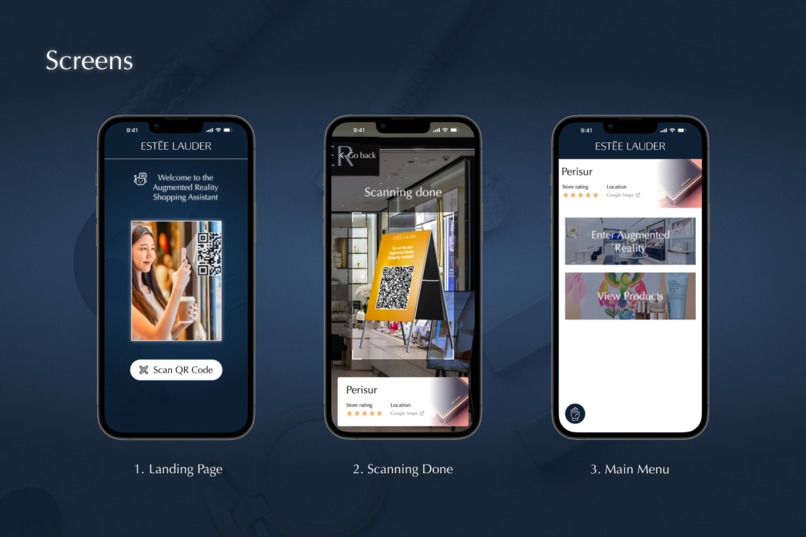
Landing, Scanning, Main Menu
-
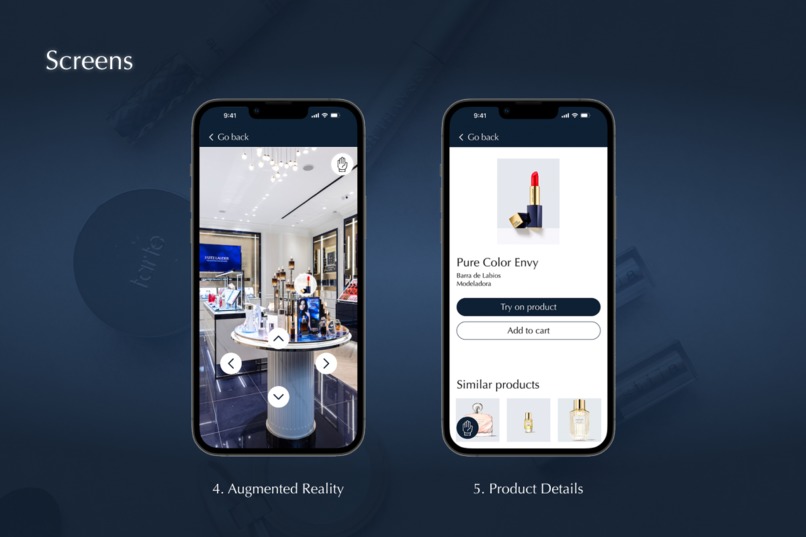
Augmented Reality, Product Details
-
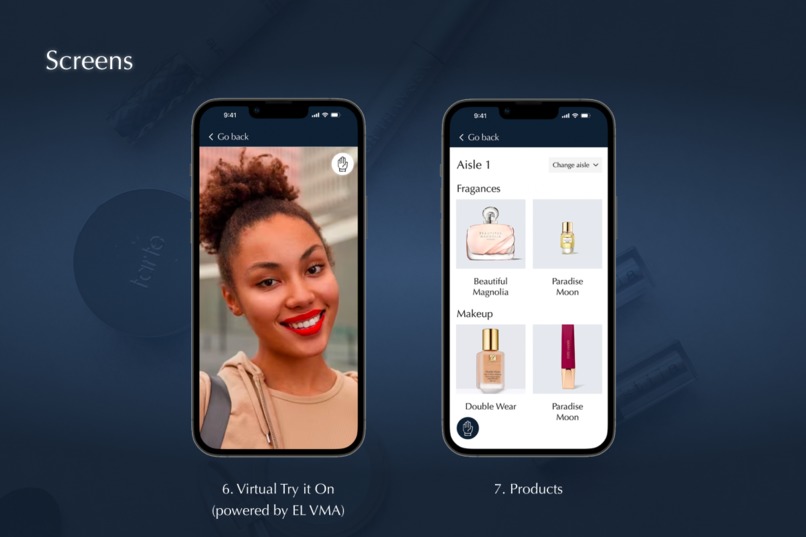
Virtual Try-it-on, Products

Inspiration
We have noticed that there are many challenges people with disabilities face not only in the whole society, but also in the beauty industry. We decided to focus on two groups of people. Firstly those who have physical disabilities and mobility impairments such as spinal cord injuries, amputations, arthritis, obesity, etc. Secondly we targeted people with developmental disabilities such as autism. We knew we wanted to create a solution for the beauty shopping experience for these group of people.
What it does
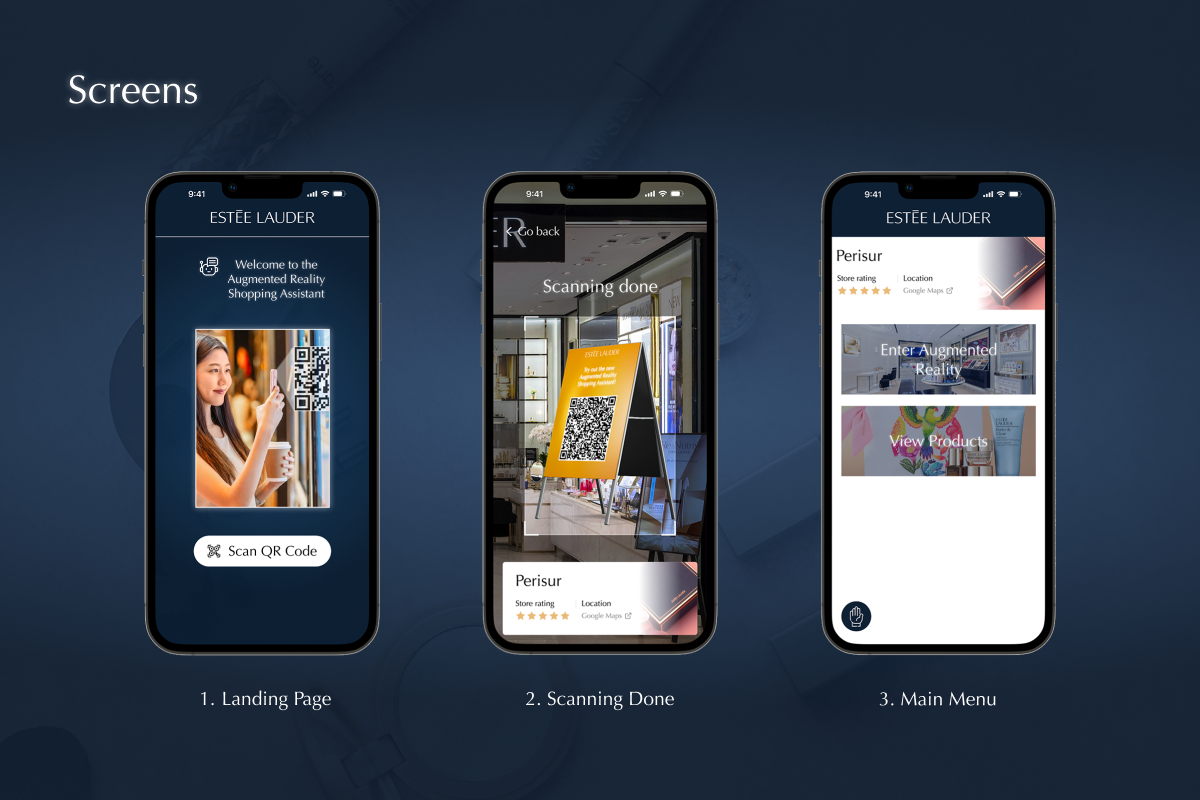
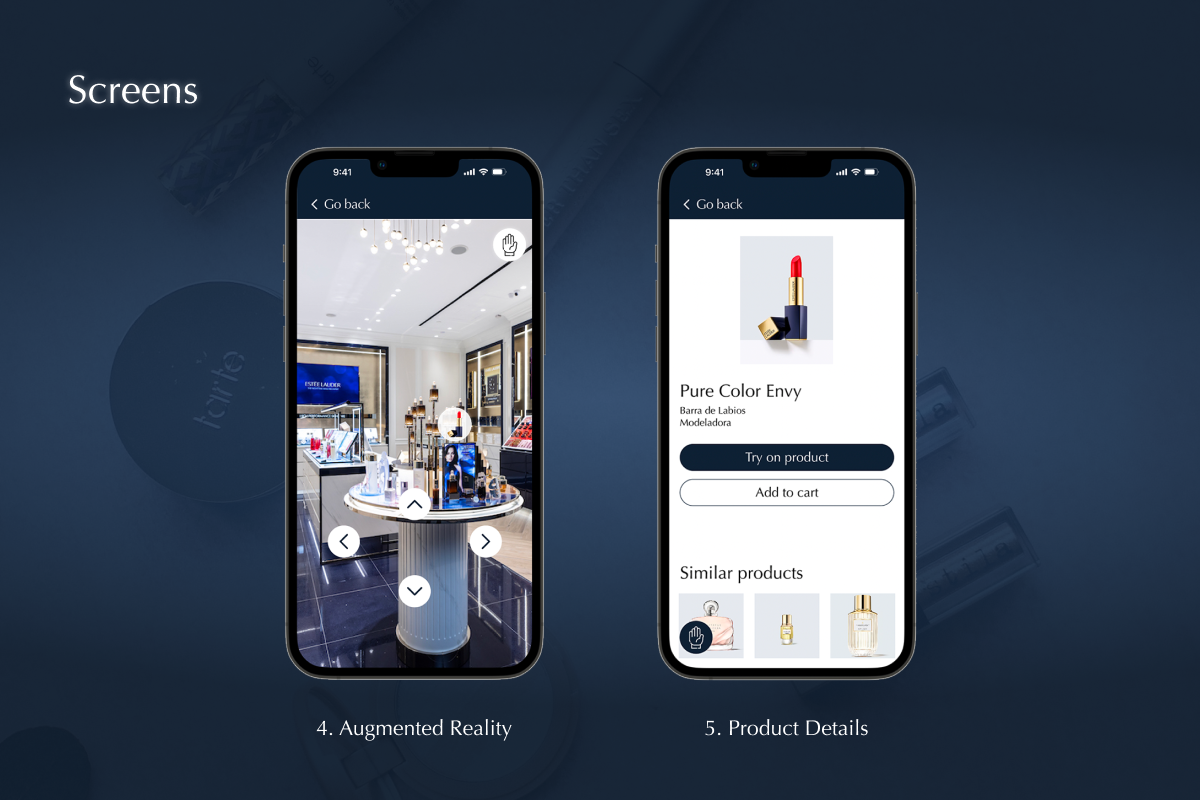
Estée Lauder's Augmented Reality Shopping Assistant (Lauder Lens) is an app that provides an inclusive solution for all people who want to browse products at one of the stores. The user enters the app and scan the store's QR code (there is a unique QR for each store). The user can now enter the Augmented Reality experience from that specific store and browse the store directly from its phone. It can select a certain product, and get details of it. It can even use the "Try it on" feature to see how the make up would look, and get recommended products. It has unique features such as a "Get an assistant" button to get help directly from one of the store's assistants. Finally the user also has the ability to add a product to the cart, where it will be able to buy it from the phone, and then show the digital ticket at the store to receive the product.
How we built it
Lauder Lens was built in a couple of weeks after doing a research on what are the main problems people with disabilities face. We focused on developing sections such as the problem identification, solution, marketing strategy, competitive landscape, etc. The interactive prototype was done in Figma.
Challenges we ran into
Finding a real solution to the problems that people with disabilities face. It was important to not come up with a solution without bases, and really tackle a problem that will improve the beauty shopping experience for all the population, focused on people with disabilities.
Accomplishments that we're proud of
We believe we have created a viable idea that will improve the shopping experience, in-person and online for people with disabilities. We are happy with how the prototype turned out as it shows our vision of the product. The research also helped us to understand how viable it is to develop this product in the market.
What we learned
We learned that there are more people than we think have some kind of disability (16% of the population) and that we can improve their life experiences, not only when in the beauty industry, but as a whole, by taking into consideration their needs and problems.
What's next for Estée Lauder Shopping Assistant
There is a lot of future work that can be done to ELSA. As an example, it can have an implementation with Artificial Intelligence when a user logs into the app, and suggest products based on the product acquired in the past. The AI can also be useful when digitally trying on the make up to suggest certain products based on the facial features. We believe that the future for Lauder Lens is bright and we are looking forward to building it.
Built With
- figma


Log in or sign up for Devpost to join the conversation.