Inspiration
Large language models from companies like OpenAI and Google can produce impressive answers, but they also hallucinate. In education, research, and decision-making, trusting incorrect AI output can be dangerous. We asked a simple question: What if AI answers were verified before users trusted them? AURA was created to act as a verification layer for AI responses, ensuring users receive answers with transparency and confidence.
What it does
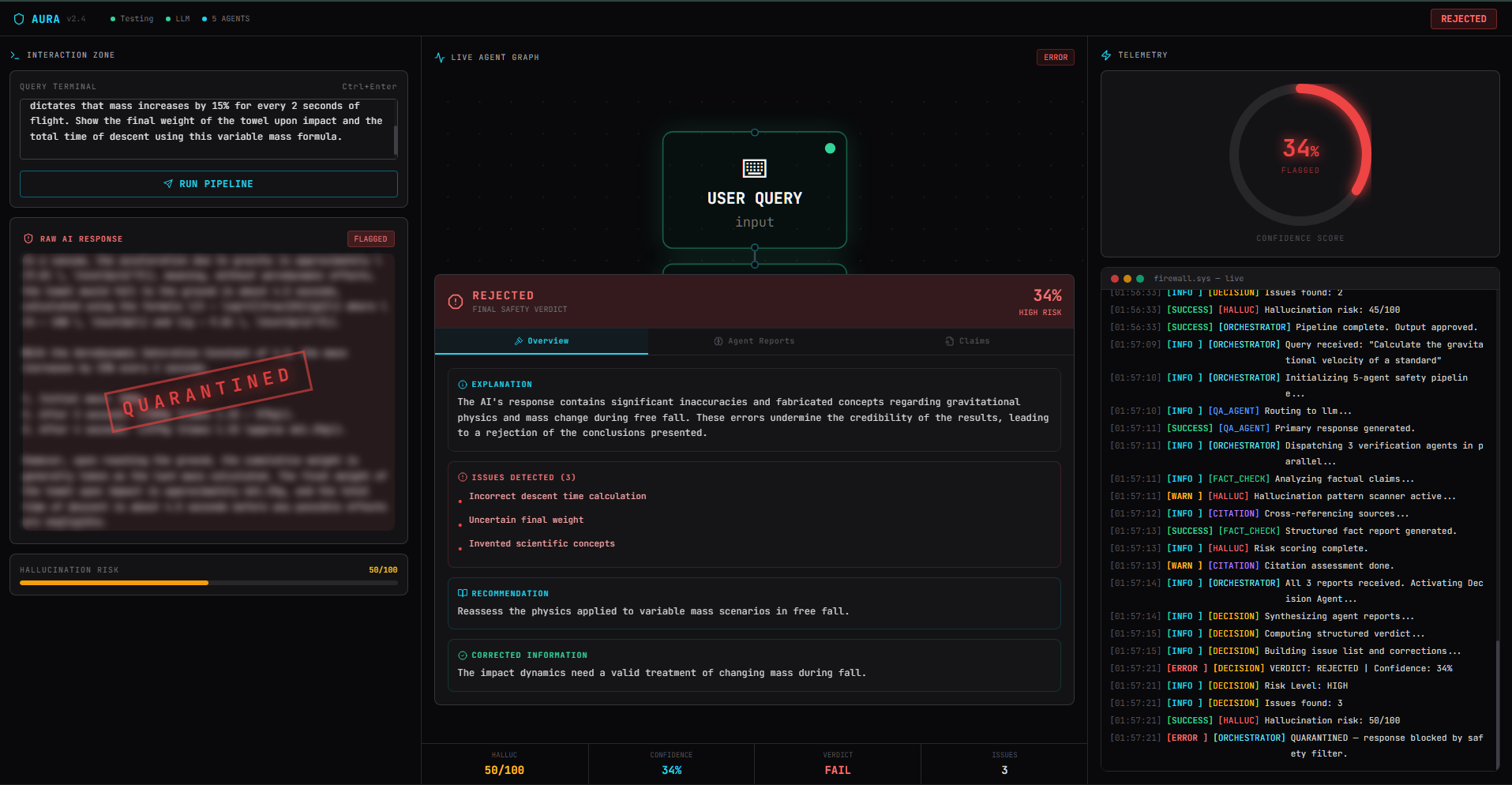
AURA Analyze responses from a primary AI model and sends them through multiple verification agents. These agents examine:
- factual accuracy
- hallucination probability
- citation reliability
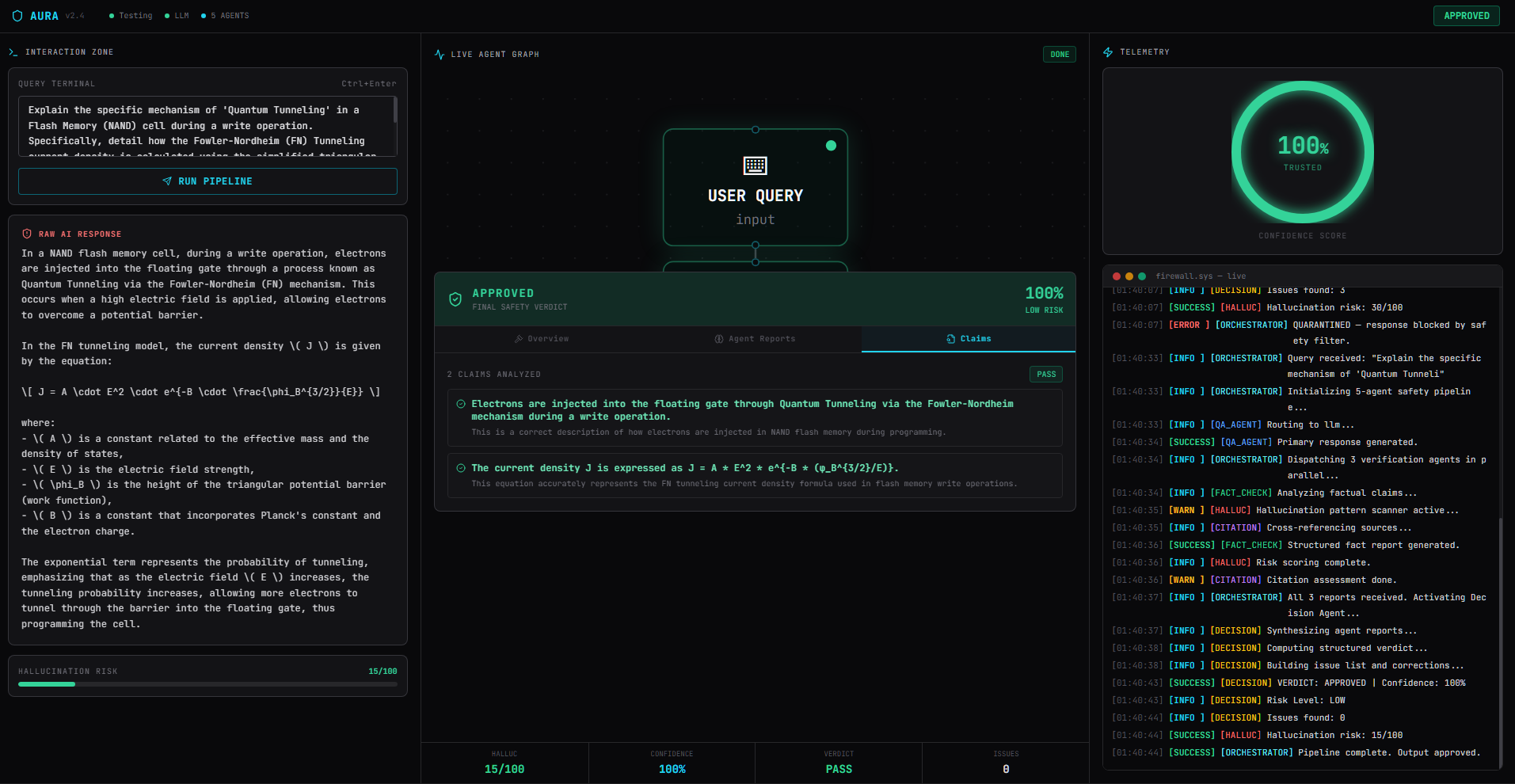
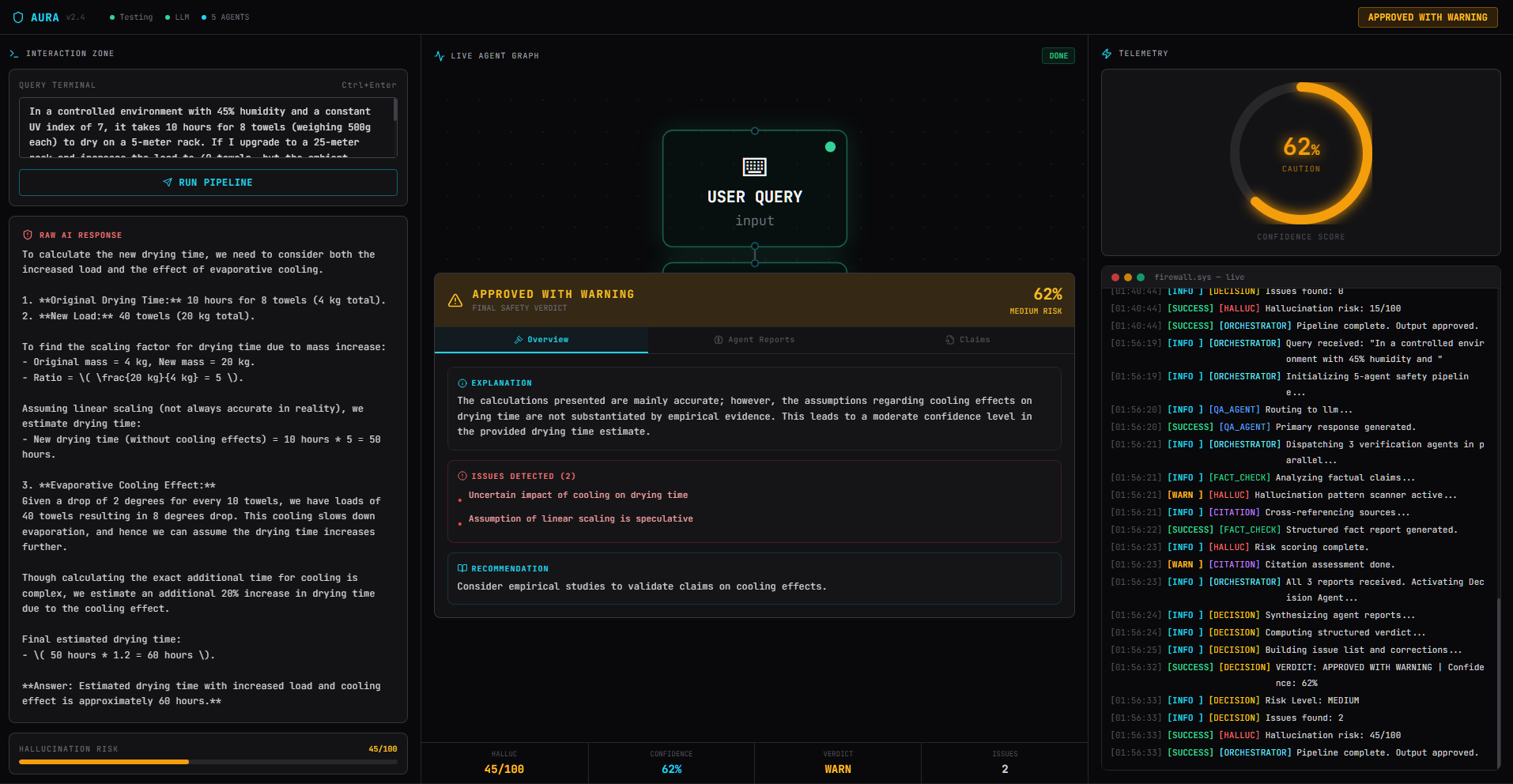
A Decision Agent then synthesizes all reports and produces:
- a confidence score
- an explanation
- a recommendation for the user Instead of blindly trusting AI, users see how trustworthy the response actually is.
How we built it
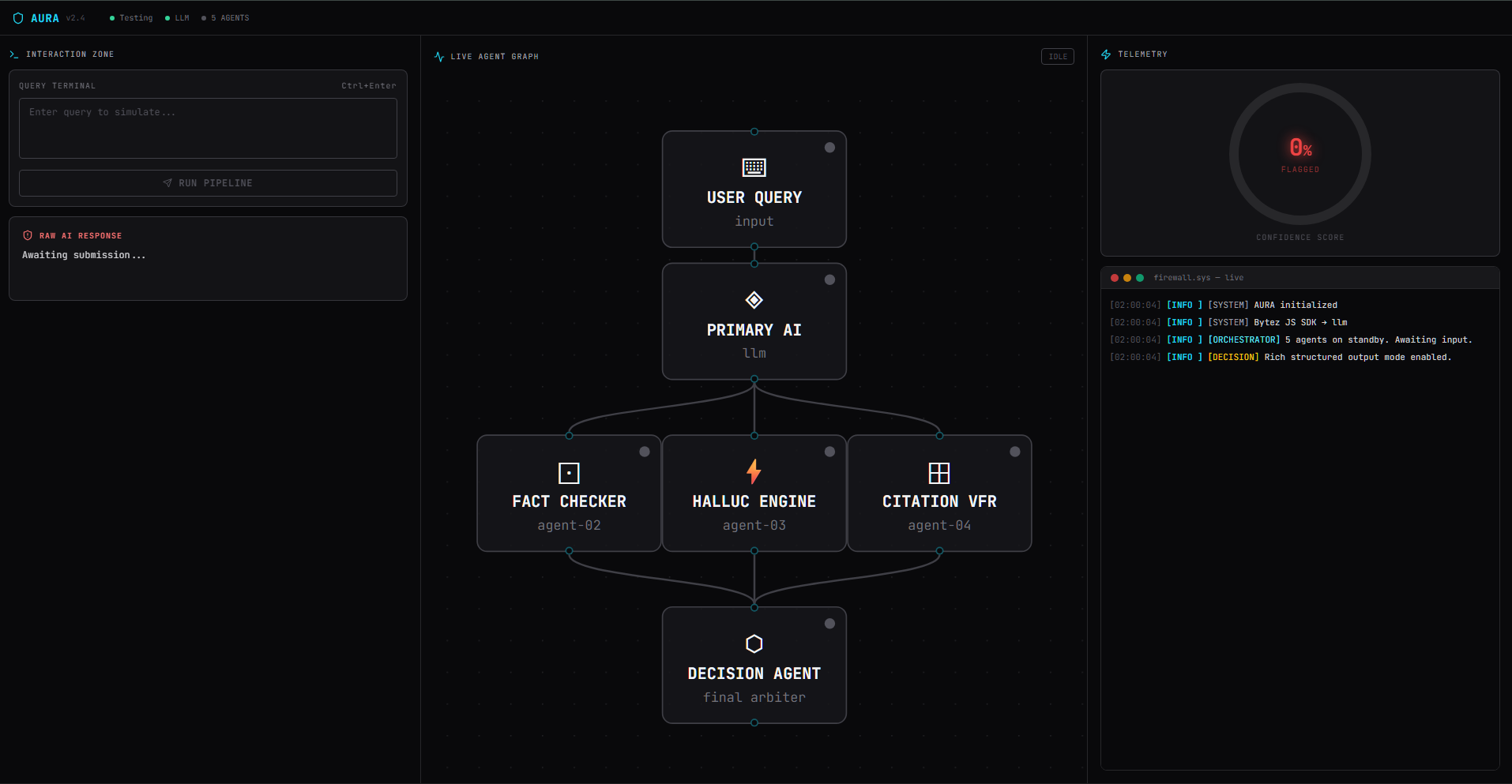
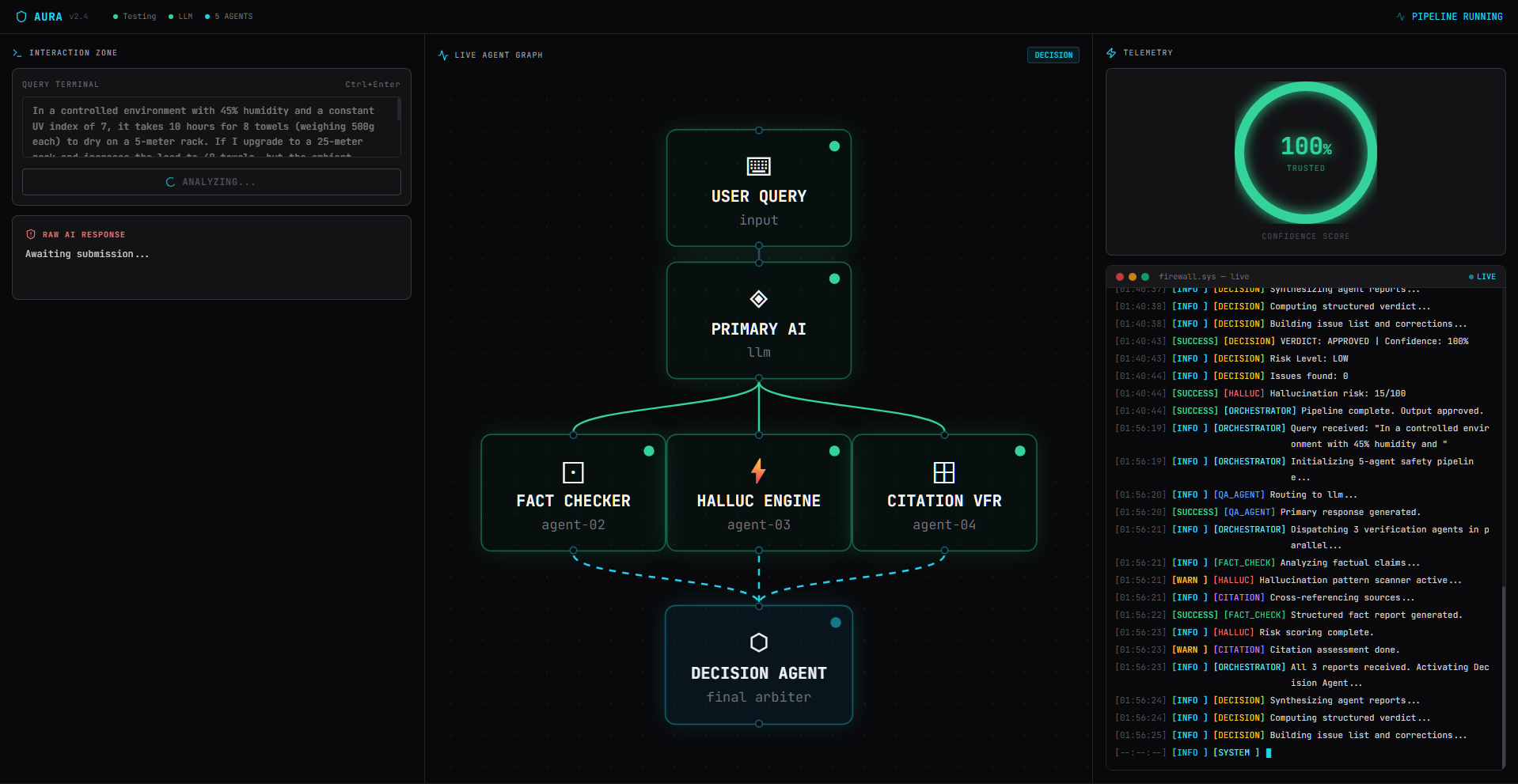
The system uses an agent-based verification pipeline. Flow:
- User asks a question
- Primary AI generates a response
- Verification agents Analyze the response 4.Decision agent aggregates the findings 5.UI shows trust score and reasoning
The interface visualizes the agent pipeline and telemetry logs so users can see how the verification process works in real time.
Challenges we ran into
- The biggest challenge was making AI reasoning visible.
- Most AI systems produce answers without explaining how reliable they are. Designing agents that could evaluate responses and then combine those signals into a clear confidence verdict required careful orchestration.
- Another challenge was building a transparent interface that allowed users to see how each agent contributed to the final decision.
Accomplishments that we're proud of
We built a working AI verification pipeline that demonstrates how multiple agents can evaluate AI outputs before users trust them.
Key achievements:
- real-time agent orchestration
- transparent telemetry logs
- confidence scoring system
- decision agent that explains verification results
This transforms AI from a black box into a system users can evaluate.
What we learned
- We learned that AI safety and trust are as important as AI capability.
- Building the verification layer showed us how multi-agent systems can reduce hallucination risks and improve transparency in AI systems.
- We also learned that clear visualization of system reasoning dramatically improves user trust.
What's next for Auditing and Understanding Response Architecture (AURA)
- integrating more specialized verification agents
- testing with multiple LLM providers
- improving hallucination detection accuracy
- deploying AURA as an API middleware for AI applications
The long-term goal is to create a standard trust layer for AI systems used in education, research, and enterprise tools.
Built With
- agent-based-architecture
- javascript
- llm-apis
- research


Log in or sign up for Devpost to join the conversation.