Inspiration
Finance teams handle expense claims, receipts, supplier quotes, approvals, and payments across many steps. When those workflows are disconnected, unusual activity can be harder to catch and decisions can be harder to trace. I built AuditAI to bring expense auditing and procurement into one workspace, with AI to help surface issues and people responsible for the important decisions.
What it does
AuditAI combines two workflows:
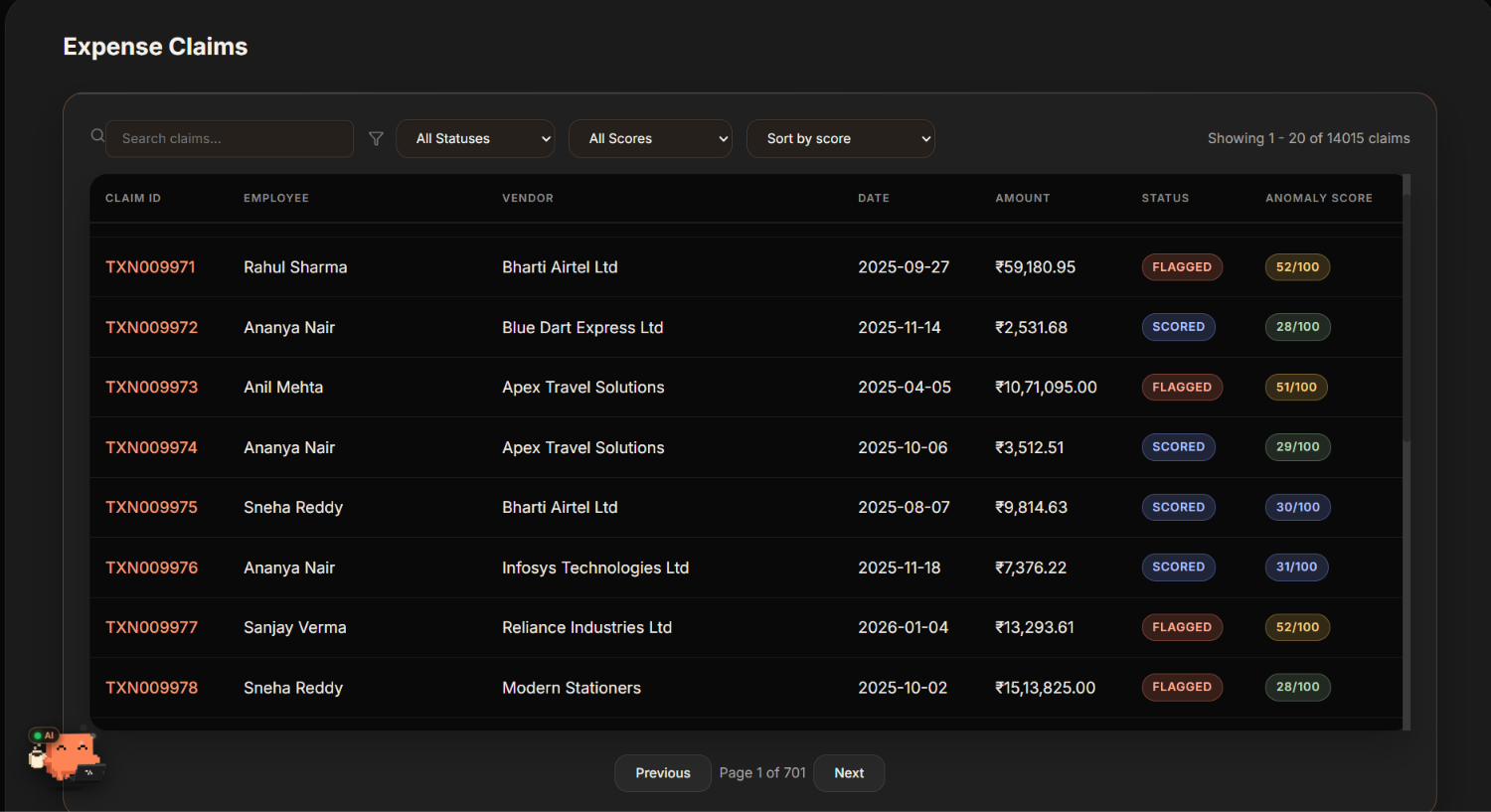
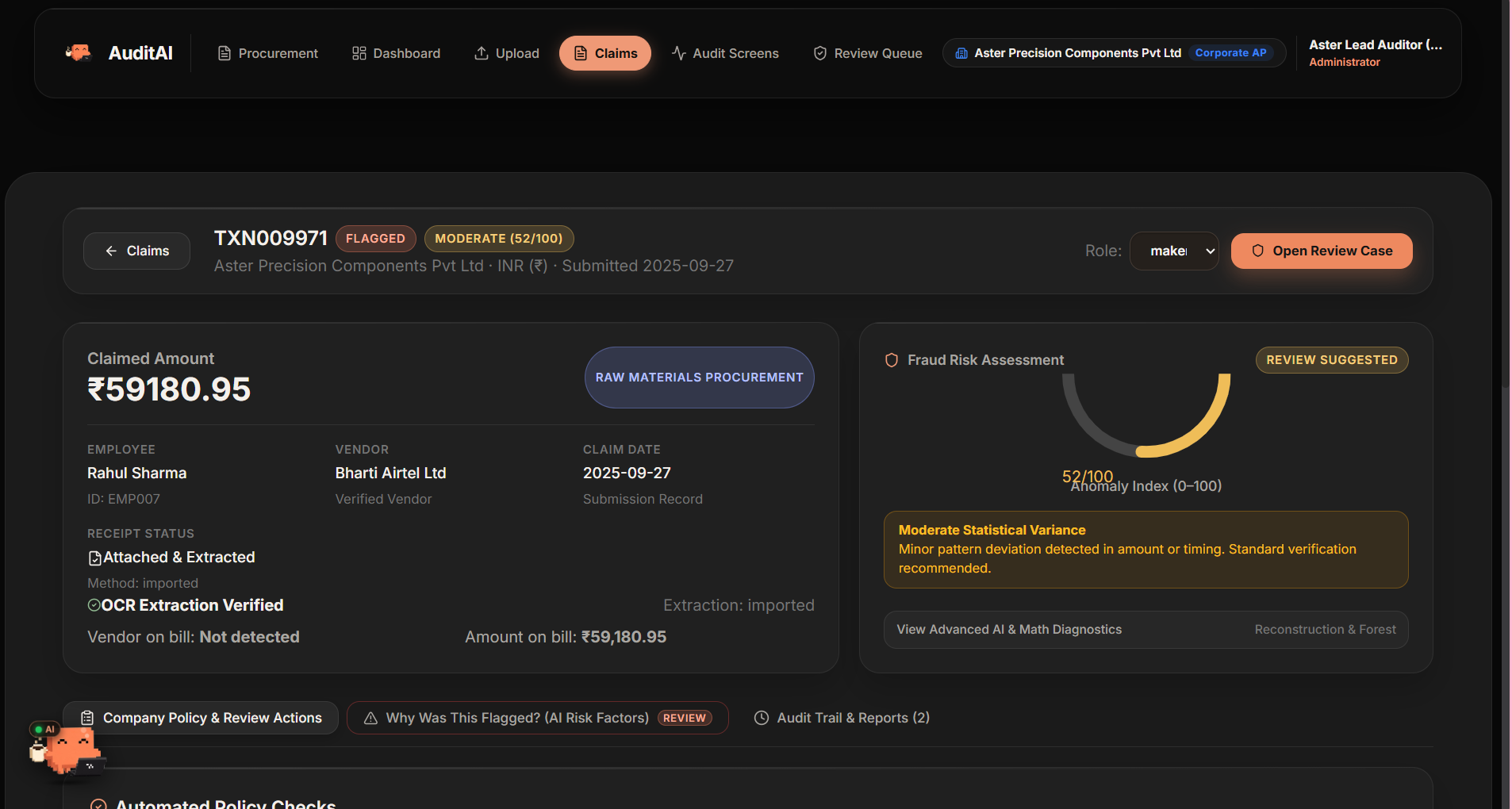
- Expense auditing: Extracts receipt details with OCR, scores claims for unusual patterns, and gives reviewers evidence to investigate. A maker-checker flow ensures that a different person reviews and signs off on a recommendation.
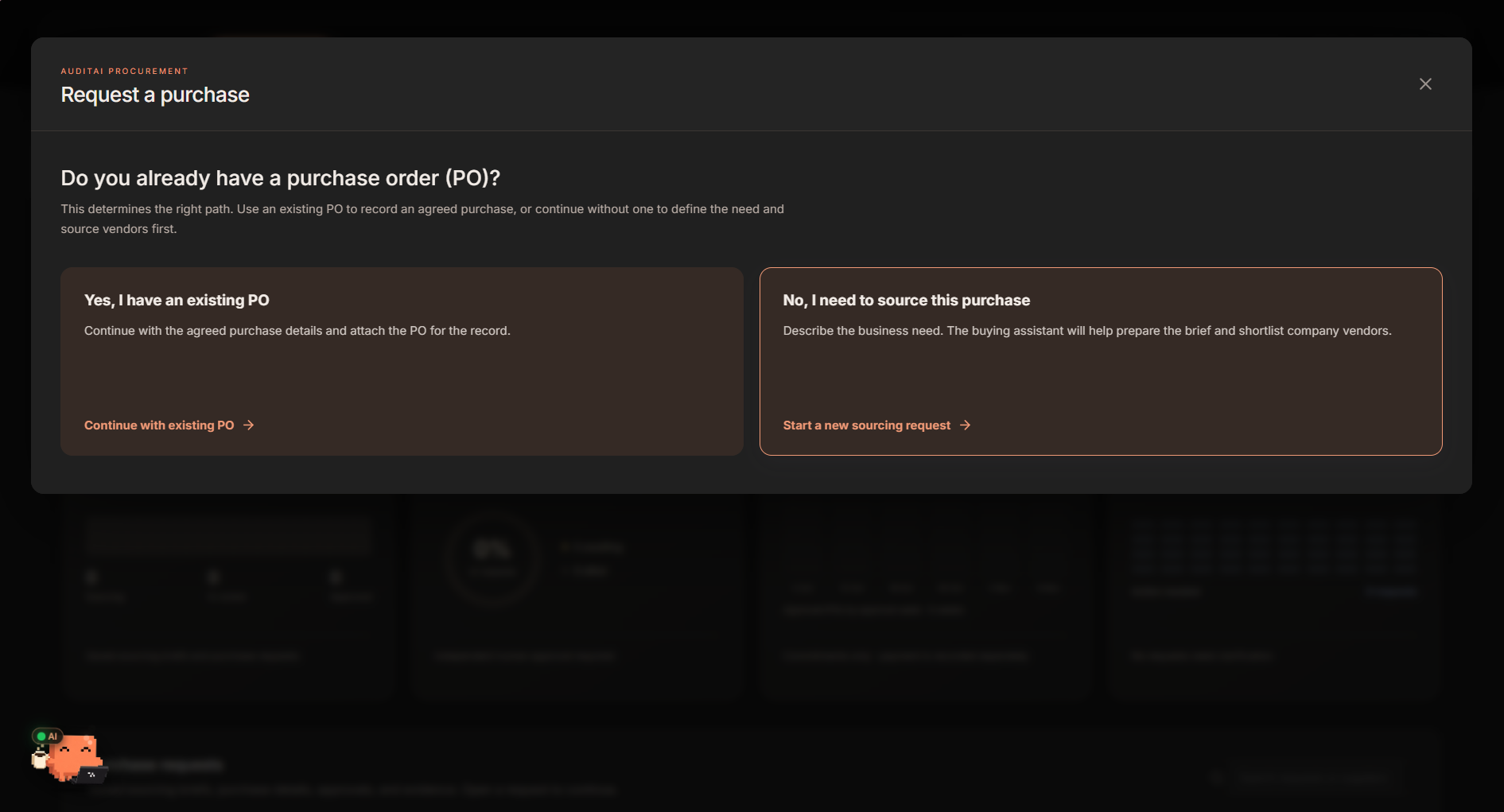
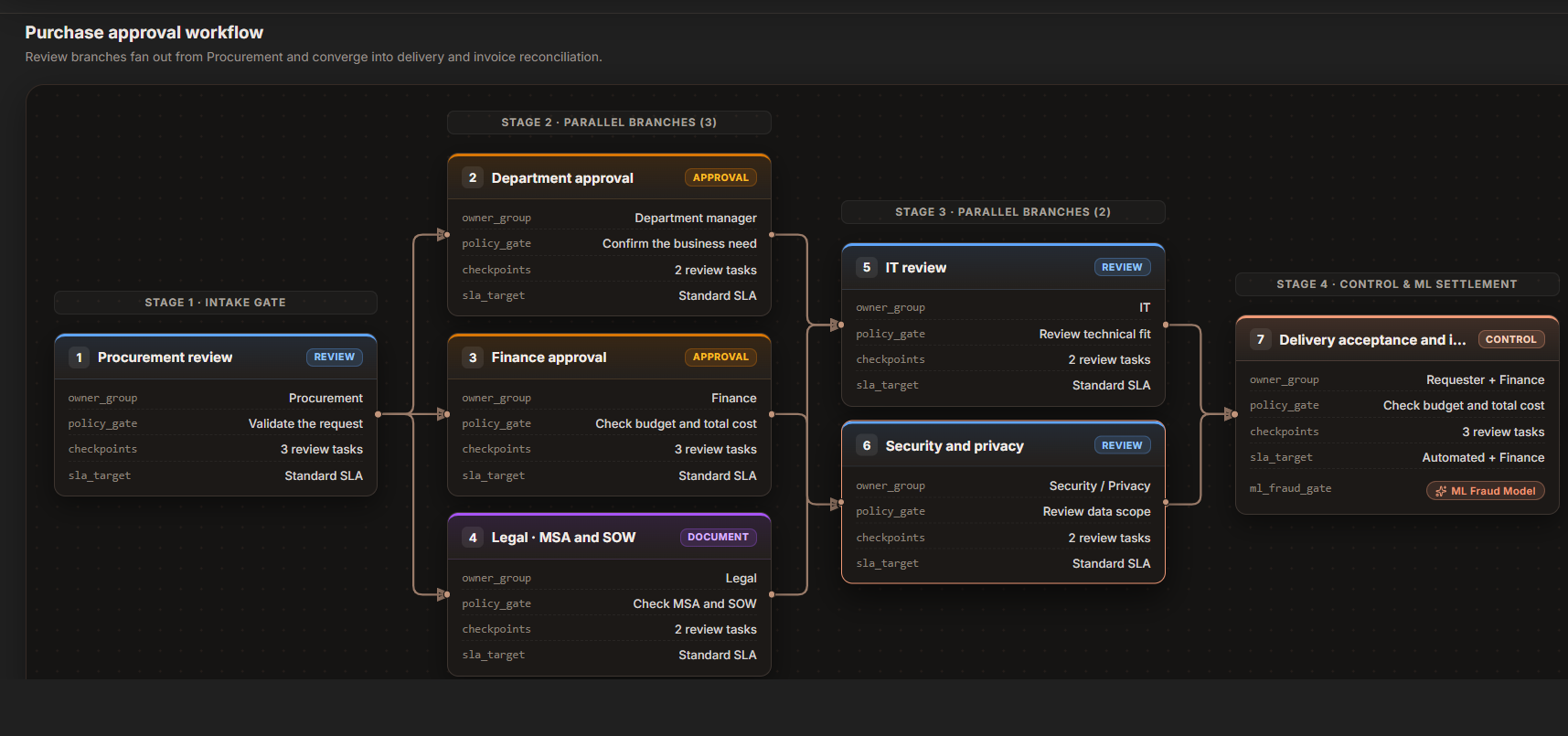
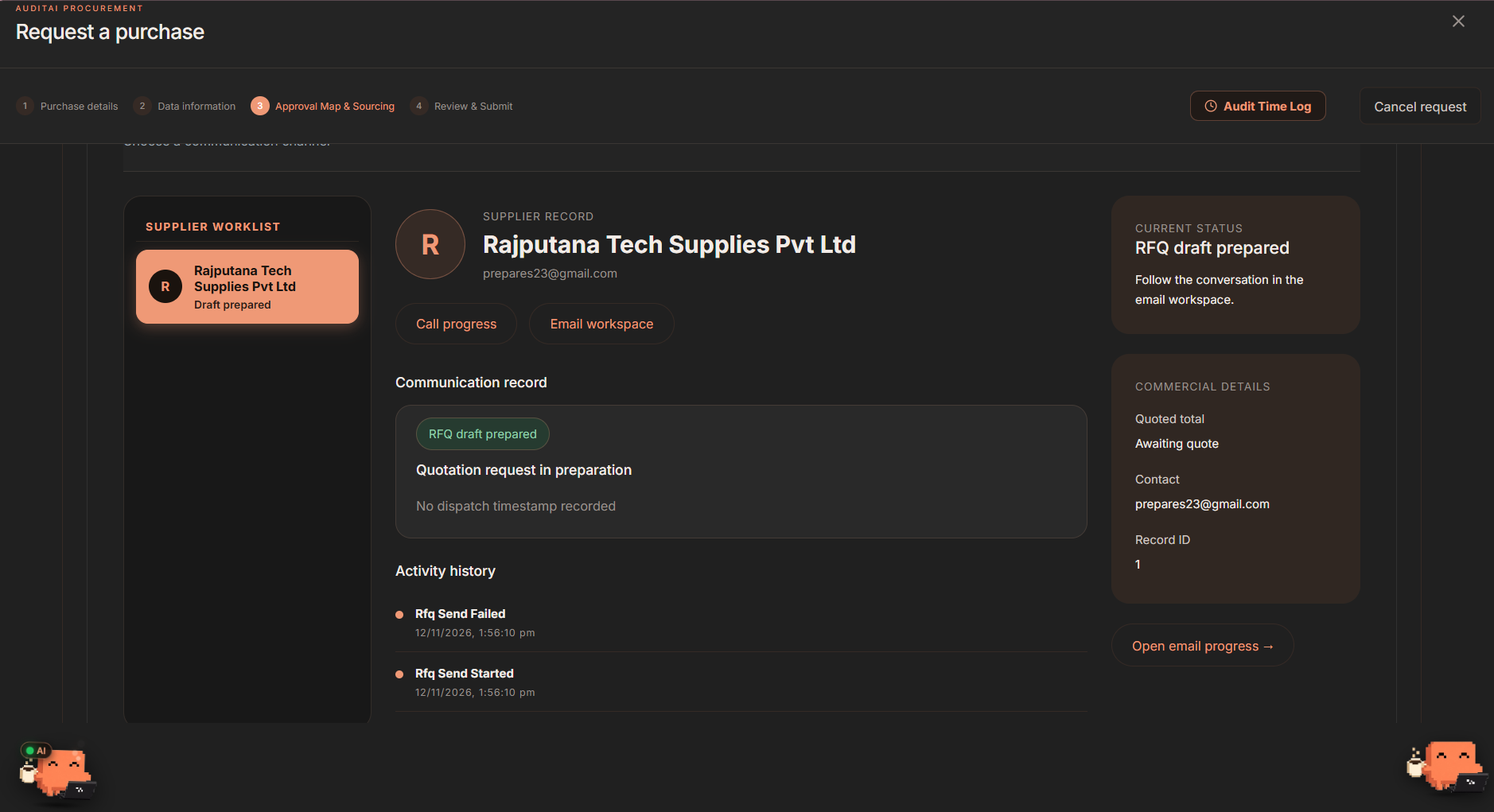
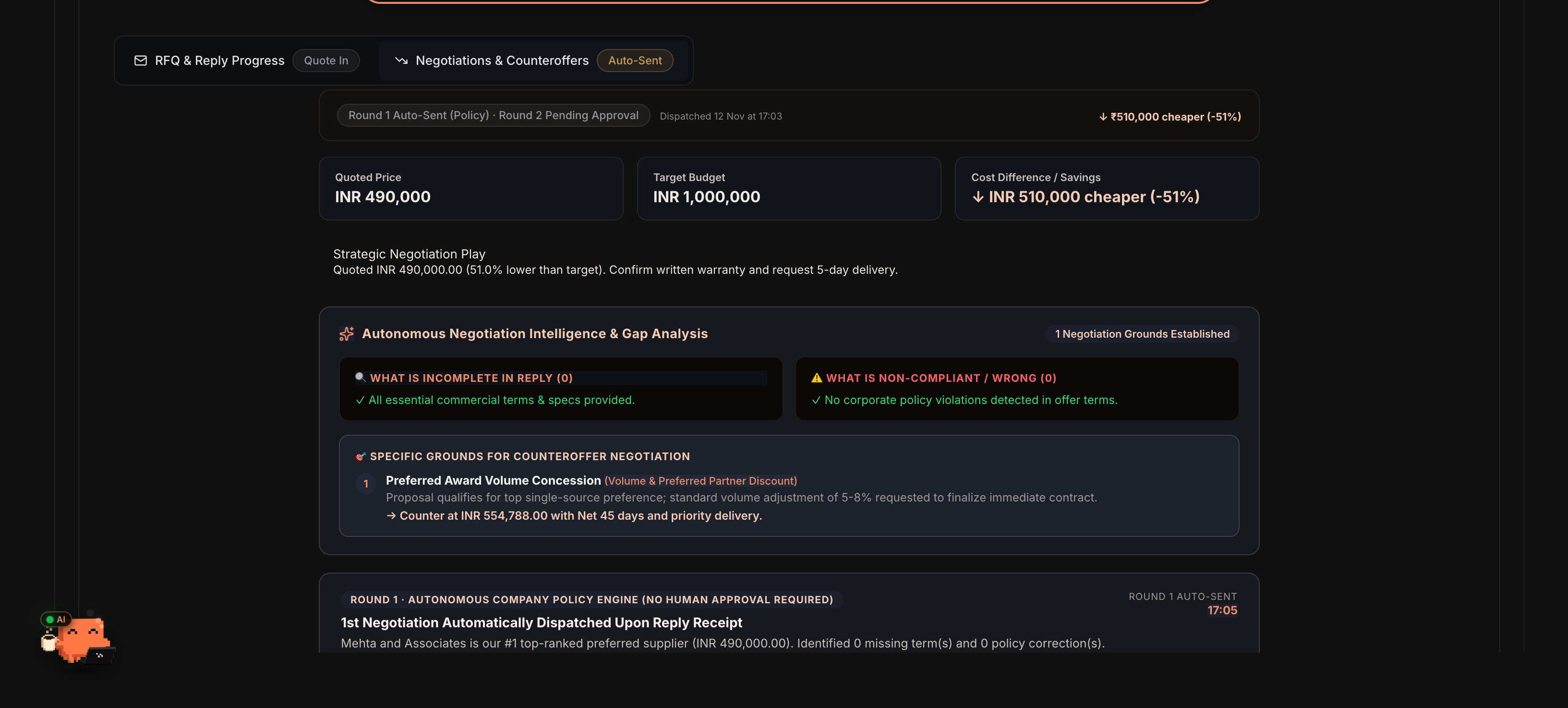
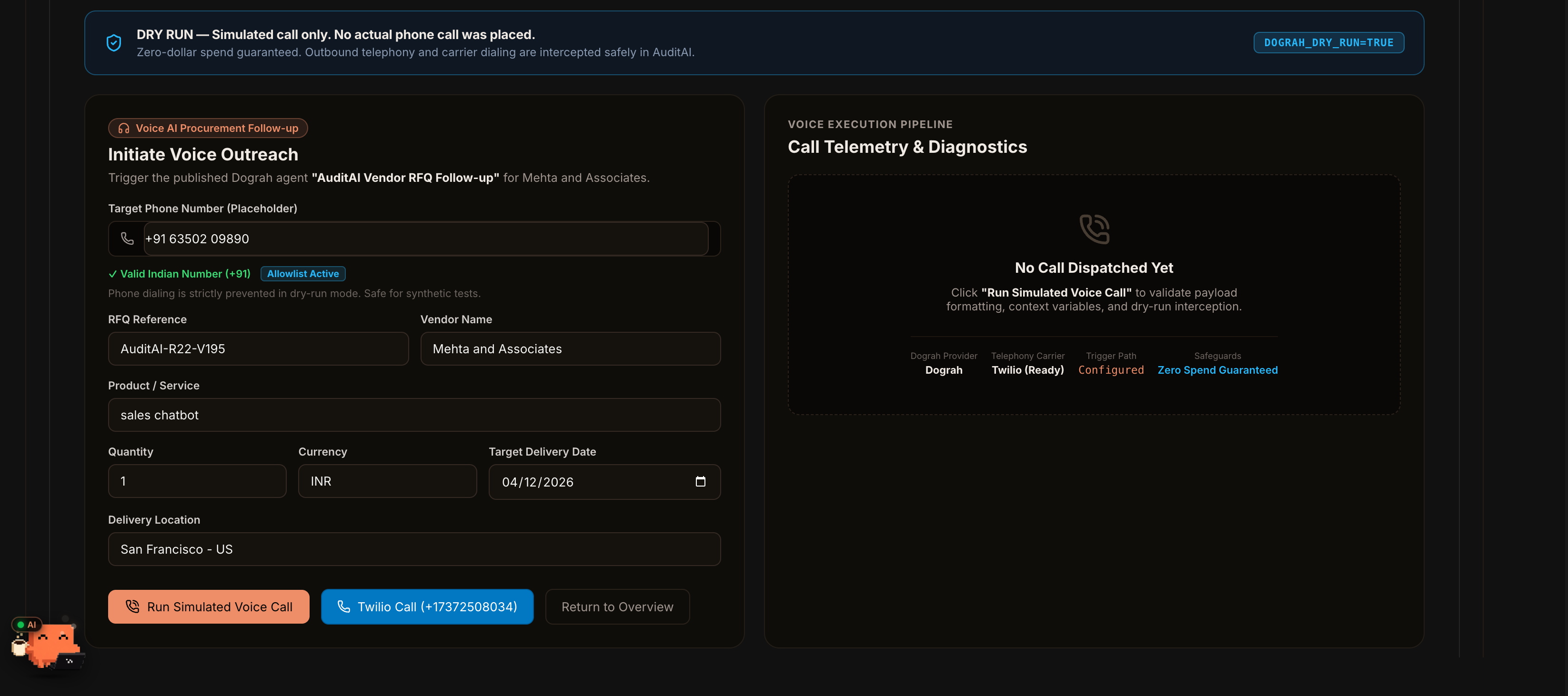
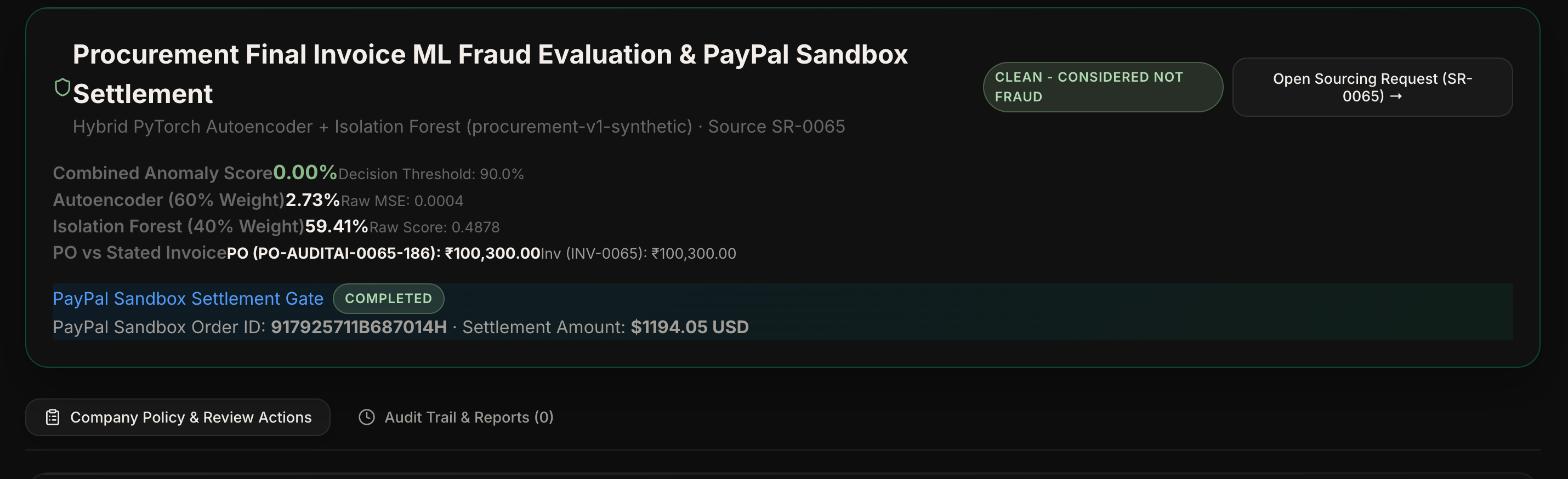
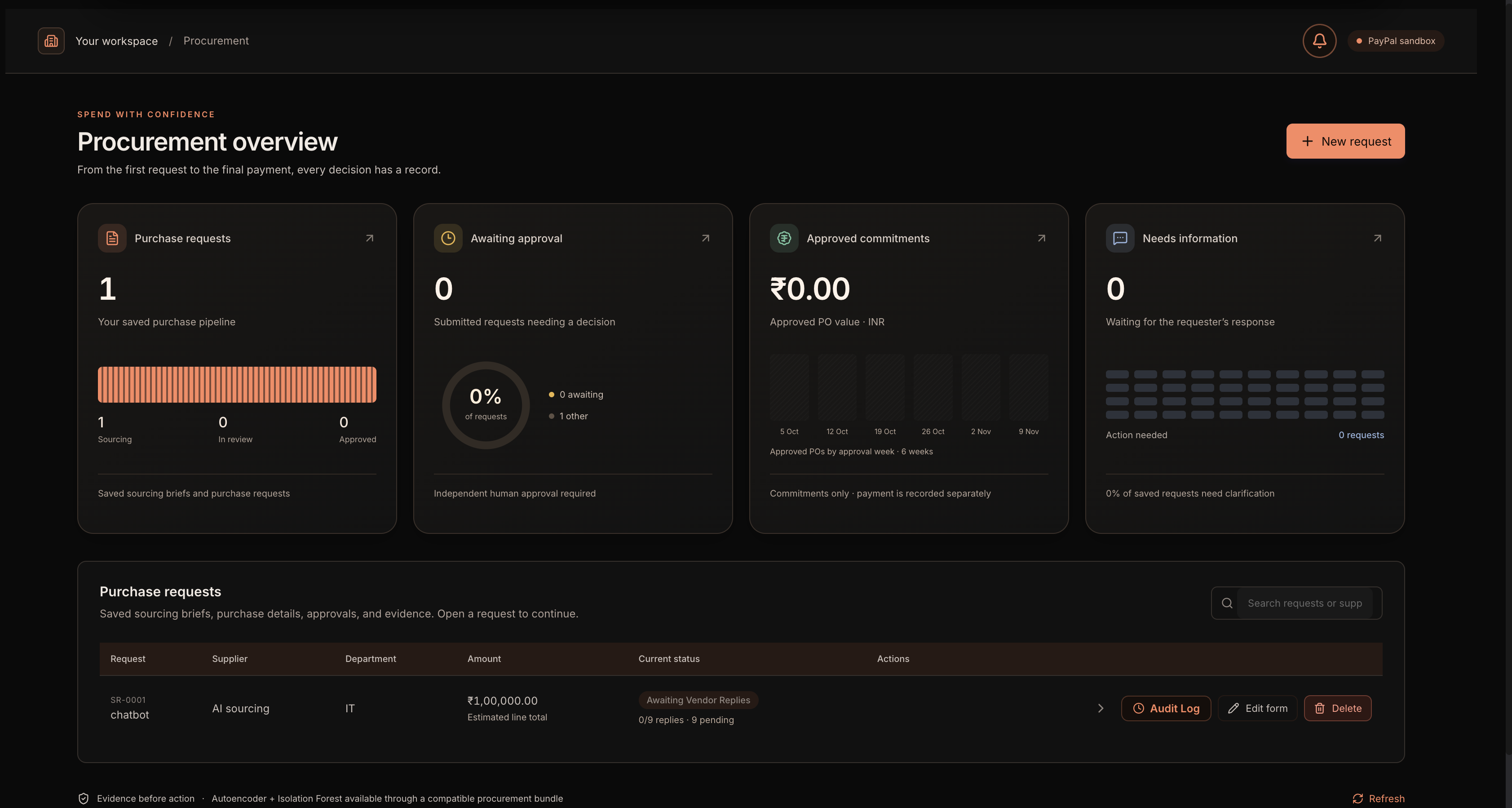
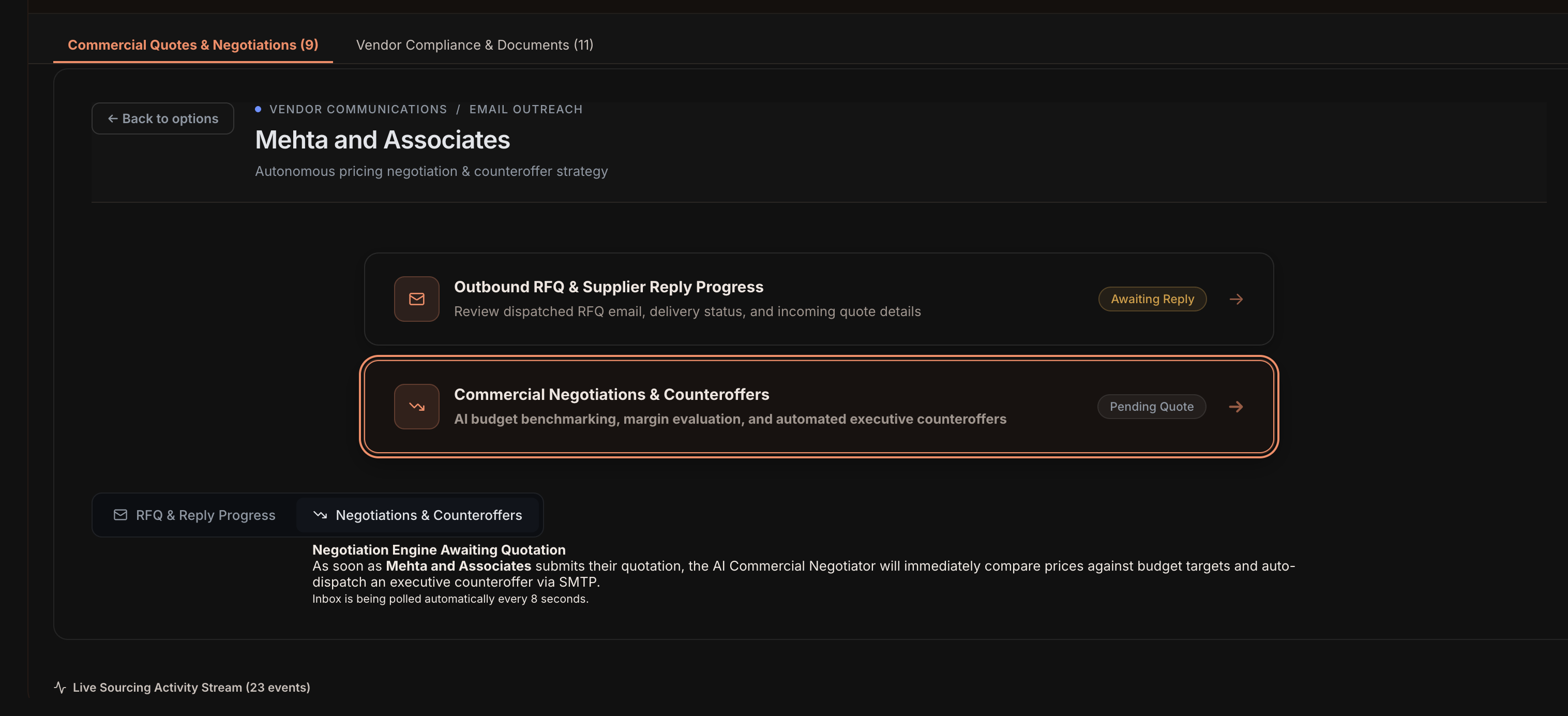
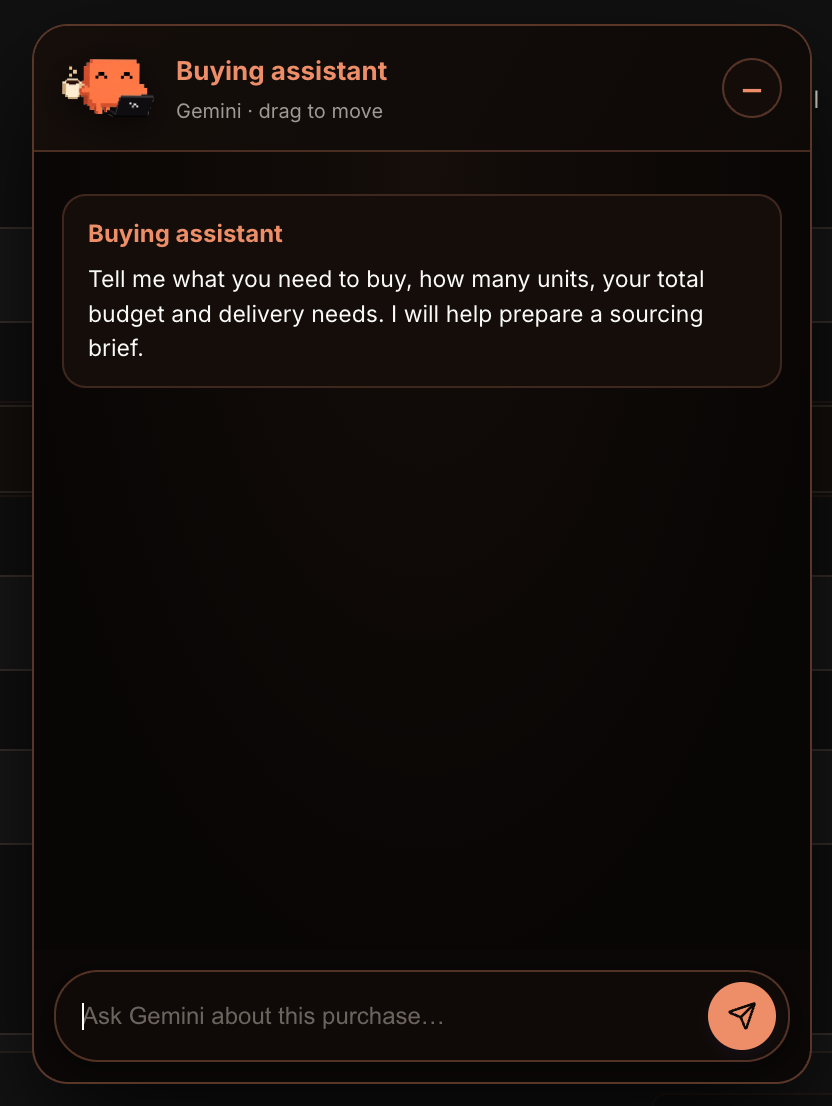
- Procurement: Guides purchase requests through approval routing, supplier outreach, quote comparison, purchase orders, and invoice matching. Eligible USD payments can be made through PayPal’s sandbox.
Anomaly scores help prioritize review; they are not probabilities of fraud. Final supplier selection, approvals, and payment decisions stay with people.
How we built it
I built both the expense auditing platform and the procurement workflow, then integrated them around a shared company identity and role-based access. The application uses a React and Vite frontend with a FastAPI backend. The expense workflow combines receipt OCR with behavioral anomaly detection, while the procurement workflow tracks requests, approvals, sourcing, quotes, and payment steps.
Challenges we ran into
The two workflows had different data models, permissions, and approval rules. I had to connect them without blurring who can access or approve each action. Preserving separation of duties, keeping an audit trail, and making the system handle missing model or external-service configuration clearly were important parts of the integration.
Accomplishments that we're proud of
I’m proud to have built a unified platform that covers both expense review and procurement, with shared authentication and clear human approval points. The maker-checker workflow, evidence-backed anomaly review, supplier sourcing process, and PayPal sandbox payment path bring key finance steps together in one application.
What we learned
I learned that useful AI in finance depends on more than model scores. Reviewers need evidence they can understand, access must be controlled, and important decisions need a traceable human approval process. I also learned how much care it takes to integrate complex workflows with different roles and data structures.
What's next for AuditAI
Next, I want to make deployment and external-service setup smoother, strengthen the available model and data validation, and continue improving the evidence reviewers see when investigating anomalies. I also plan to expand procurement integrations while keeping approvals and final decisions under human control.
Built With
- fastapi
- machine-learning
- ocr
- paypal
- postgresql
- python
- react
- shap
- sqlite
- vite
