Inspiration
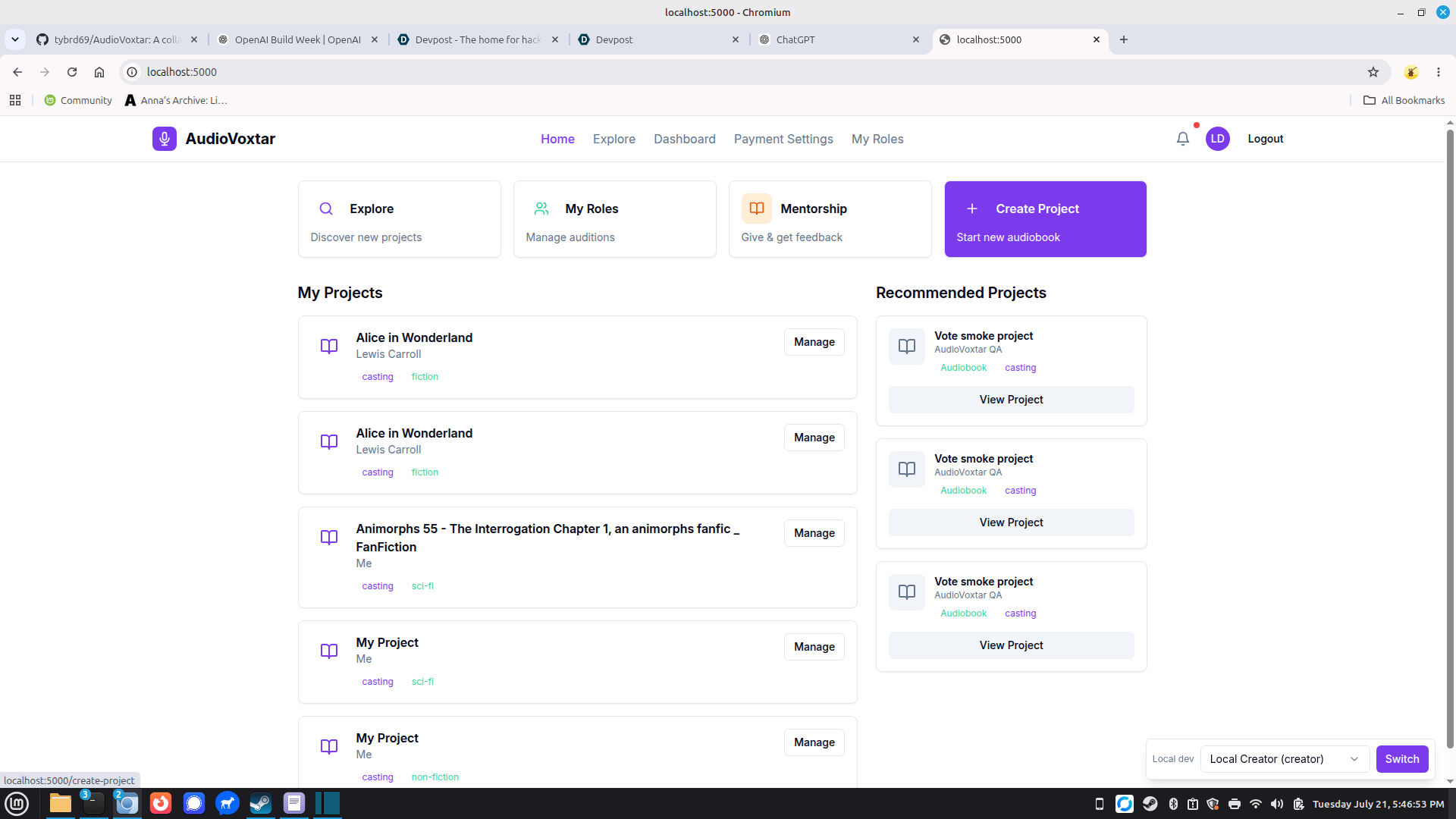
AudioVoxtar is an audiobook collaboration and production platform for organizing characters, auditions, casting decisions, and downstream production work.
A major gap existed before that workflow could begin: someone still had to turn a manuscript into castable roles, useful audition lines, and actionable performance direction. That process is time-consuming, and using generative AI introduces another risk—it can invent evidence, silently assign uncertain speakers, or present creative interpretation as fact.
For Build Week, I created AudioVoxtar — Manuscript-to-Cast Prep, a grounded, human-reviewed bridge between manuscript analysis and AudioVoxtar’s audition workflow.
What it does
The workflow begins with a deterministic evidence package produced by the separate AudioVoxtar Book Analyzer. AudioVoxtar strictly validates that package, then presents four casting and performance profiles linked to source evidence.
The creator can:
- inspect the source evidence behind each suggestion;
- edit creative casting and performance guidance;
- approve, reject, or leave profiles unresolved;
- preserve ambiguous speaker lines instead of forcing an assignment;
- prepare an approved-only audition-ready preview;
- download a deterministic, redacted decision artifact.
The system visibly separates source facts, creator-supplied character identity, deterministic Analyzer conclusions, AI-generated creative suggestions, and creator decisions.
Six typed-unknown lines remain unresolved throughout the demo. They are never silently assigned and are excluded from audition recommendations.
How I built it
AudioVoxtar and the deterministic Book Analyzer existed before Build Week. The Build Week work was the strict connection between them and the complete review vertical slice.
Across two repositories and nine bounded commits, I added:
- a versioned
audiovoxtar.cast-prep.analysisJSON contract; - deterministic package export and a committed golden fixture;
- strict recursive validation in AudioVoxtar;
- an OpenAI Responses API service using GPT-5.6 and strict structured output;
- post-generation evidence and guardrail validation;
- a validated cached fallback;
- an authenticated creator review interface;
- an approved-only decision-artifact contract;
- focused unit, privacy, and Playwright tests;
- provenance, fallback-preflight, and human-demo evidence.
Codex acted as a scoped engineering partner throughout the build. I used it to plan each phase, implement contracts and services, create tests, review repository evidence, and document the final submission. I retained the key product decisions and kept each Codex task limited to one repository and one bounded milestone.
Challenges and lessons learned
The biggest challenge was designing AI assistance without allowing AI to become the source of truth. Deterministic speaker attribution remains authoritative, every material creative suggestion must cite supplied evidence, and unknown remains a valid result.
Live structured generation was implemented, but the available provider attempts did not produce a verified live result. Instead of hiding that limitation or risking the demo, I made the fallback path a first-class feature. The recorded demonstration uses a clearly labeled, independently validated cached proposal and never presents it as live output.
I also learned that provenance and failure behavior are part of the product experience—not just backend safeguards. A creator should always know where a claim came from, what remains uncertain, what they changed, and what has actually been approved.
The result is a polished vertical slice that gives AudioVoxtar a safer front door: deterministic evidence first, creative assistance second, and explicit human approval before anything moves toward audiobook production.
No AudioVoxtar database or project records are written by this demo, and it does not claim full-product, beta, or production readiness.
Built With
- api
- codex
- express.js
- gpt-5.6
- json
- node.js
- openai
- playwright
- postgresql
- pytest
- python
- react
- responses
- schema
- typescript
- zod

Log in or sign up for Devpost to join the conversation.