-
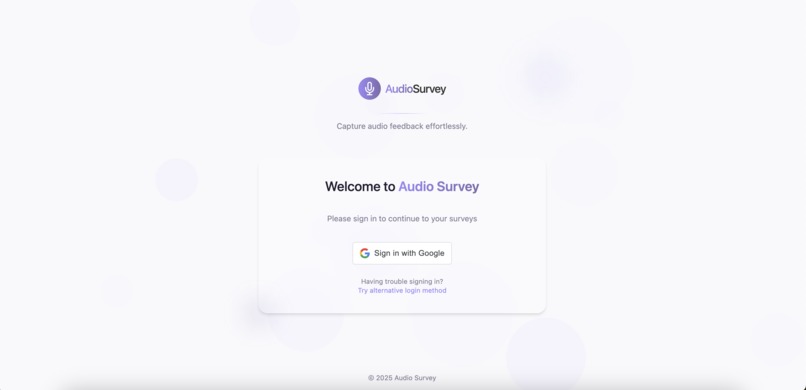
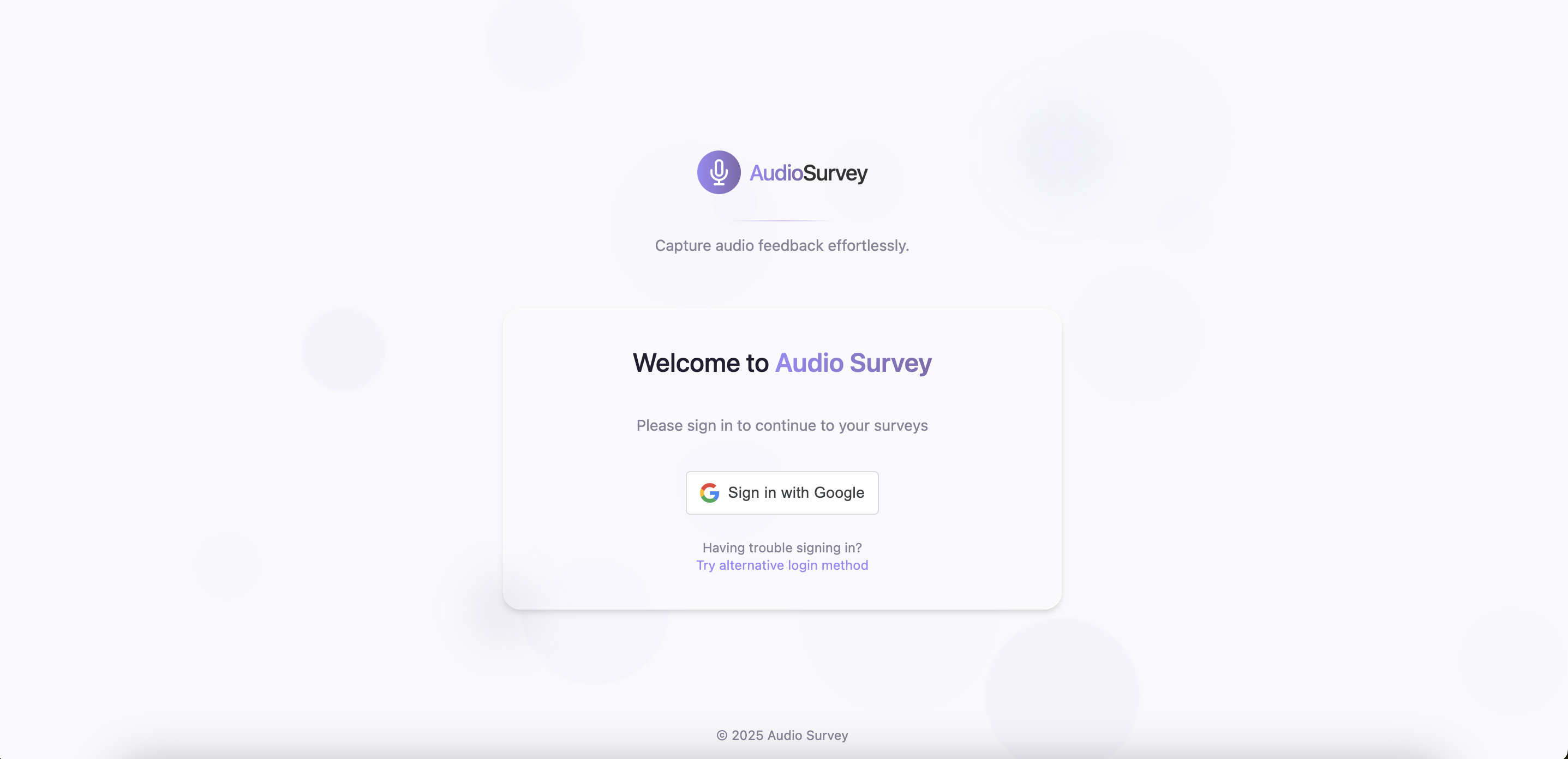
Landing Page
-
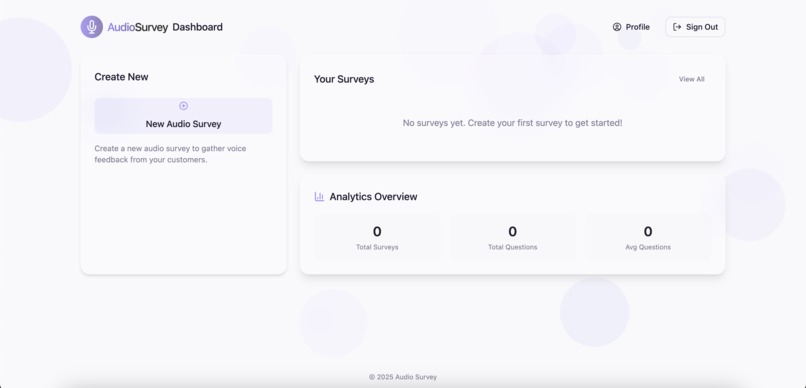
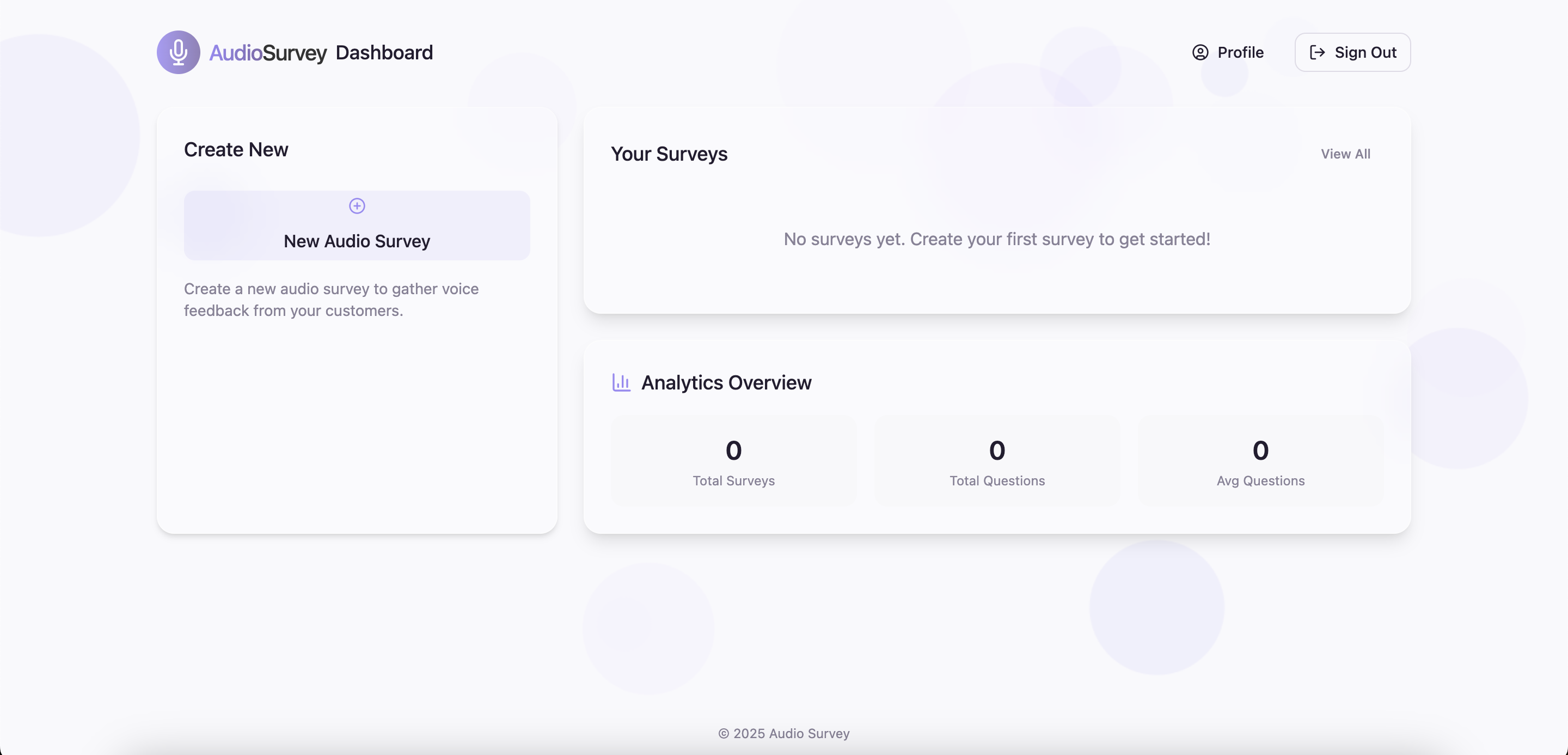
Dashboard
Project Story: AudioSurvey - Conversational Audio Survey Platform
Overview: In the era of rapid digital transformation, surveys have largely remained static and tedious, with long lists of text fields that often discourage full responses. We introduce AudioSurvey, a unique audio-to-audio survey platform designed to make gathering insights as engaging and efficient as a conversation. Instead of filling out endless forms, users engage in a natural conversation with an AI-powered assistant who asks them questions and listens to their spoken responses. This makes the survey-taking experience more personal, accessible, and faster, breaking down the barriers of traditional survey formats.
Problem:
Traditional surveys often overwhelm users with multiple text boxes and rigid forms, leading to survey fatigue and incomplete responses. People are more likely to drop off when faced with long, repetitive, or complicated surveys. For many, especially those who prefer not to type or have limited literacy skills, these surveys can feel like a chore. There's a need for a survey solution that feels more like a real-world conversation, saving time and increasing completion rates.
Solution:
AudioSurvey provides an audio-first approach to surveys, where users engage in a natural, free-flowing conversation with an AI. Using speech-to-speech technology and natural language processing (NLP), the AI listens to responses, processes the data in real-time, and asks follow-up questions or moves to the next query based on the conversation’s context. The result? A more intuitive, efficient, and human-like survey experience. Added bonus being very low latency, making for a smoother experience!
How It Works:
User Engagement: The survey starts with an introduction from a friendly, conversational AI assistant. The assistant greets the user, explains the purpose of the survey, and lets them know they can respond with voice instead of text. Users can start speaking whenever they're ready.
Audio-Based Responses: As the AI asks questions, the user responds with their voice. These questions are designed to feel more like a dialogue than a set of instructions. The AI listens to the responses, processes them, and continues the conversation based on the user's answers. For example, if the user mentions a particular interest or experience, the AI might follow up with more relevant questions.
Dynamic Feedback: The AI adjusts the survey flow in real time based on responses. If a user provides a detailed answer, the AI may ask for further elaboration. If the user gives a brief answer, the AI can prompt them for more information.
Natural Language Processing: The system uses NLP to analyze the spoken responses. Instead of relying on keywords, it interprets meaning, context, and sentiment, ensuring that the conversation feels natural and intuitive.
Survey Completion: At the end of the conversation, the AI thanks the user and summarizes their responses, this is then relayed to the creator of the survey.
Key Features:
Conversational UI: The survey feels like an interactive conversation, reducing the feeling of a formal, cold form. Audio-to-Audio Conversion: Low latency, smooth transitions. AI-Powered Follow-Ups: The AI asks tailored questions based on previous answers, creating a dynamic survey experience. Accessibility: Ideal for users with limited literacy and accessibility, those on-the-go, or those who prefer speaking to typing. Improved Engagement: With audio, users can be more expressive and give richer, more nuanced responses compared to text-based surveys. Instead of plain text, a conversation can be had. Personalized Experience: The survey feels customized to the user’s input, making it feel more relevant and valuable.
Use Case:
Imagine a company conducting a market research survey about a new product. Instead of having customers fill out long text-based forms, they simply engage in a conversation with the AI assistant. The assistant might start by asking, "What do you think about our new product?" Based on their answer, the assistant could delve deeper into specific features or ask for feedback on design and usability. The process is quicker, more engaging, and feels more human.
Potential Impact:
Higher Completion Rates: By reducing the burden of traditional survey forms and making the process feel more engaging, AudioSurvey can significantly increase survey completion rates. More Authentic Insights: Voice allows for more natural expression, helping users provide richer, more nuanced feedback. Inclusive Design: The platform is more accessible, catering to people with diverse literacy levels, or those who might struggle with traditional text-based surveys. Efficient Data Collection: Real-time AI processing ensures faster data collection and instant analysis, helping organizations act on insights more quickly. Future Goals:
Multilingual Support: Add support for multiple languages to make AudioSurvey accessible to a global audience. Integration with Analytics Tools: Seamlessly integrate with data analytics platforms to turn the audio responses into actionable insights. Voice Customization: Allow organizations to personalize the voice assistant with different tones, accents, or personalities to match their brand's voice. Hackathon Vision:
In this hackathon, we aim to prototype the core functionality of AudioSurvey, focusing on creating a smooth, real-time audio-to-audio survey experience. Our goal is to showcase how AI-powered conversations can transform the way surveys are conducted, making them more inclusive, engaging, and effective.
Check our GitHub repository here!

Log in or sign up for Devpost to join the conversation.