-
-
Home
-
Audioposting
Inspiration Audiopost was an idea I had been carrying with me for a while, one of those startup dreams you first share in voice notes with your best friend, laughing and riffing late at night. She’s no longer here, but every time I listen to those old voice messages, I remember the raw, honest, beautiful way we communicated. I always thought: this should be a social platform. Thanks to this hackathon and Bolt.new, I finally had the tools and the push to bring it to life.
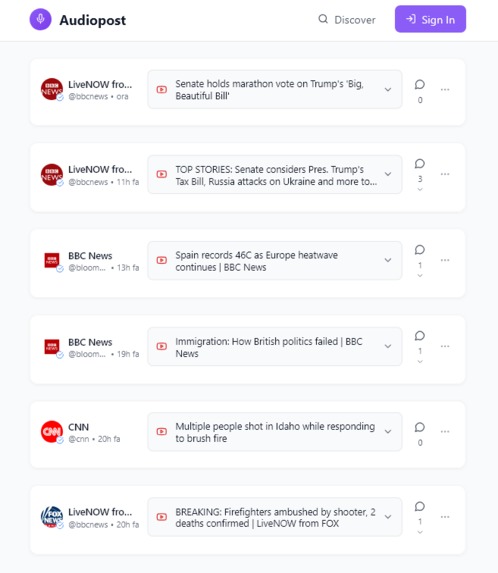
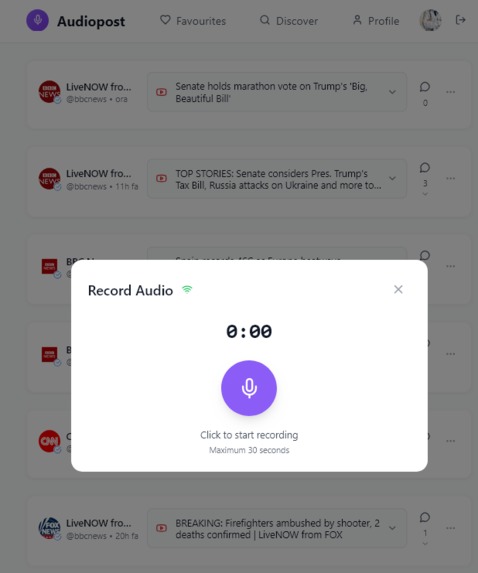
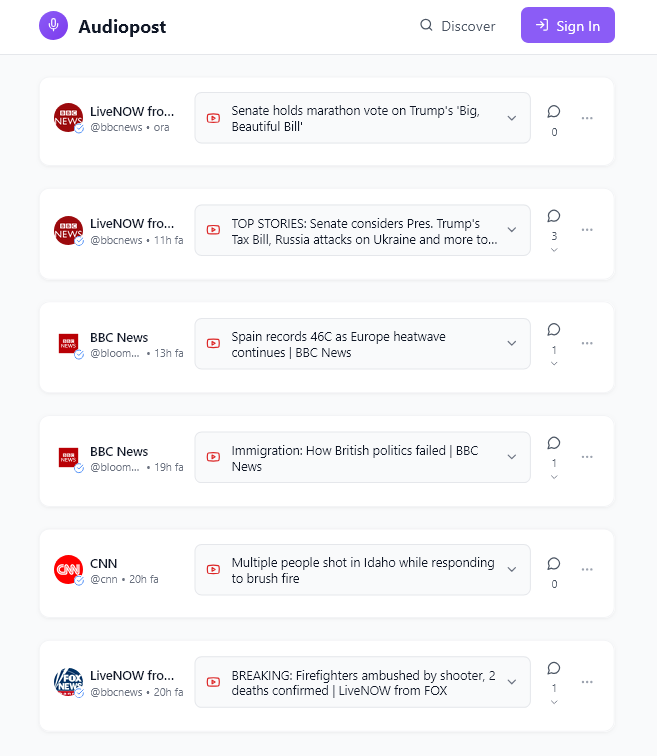
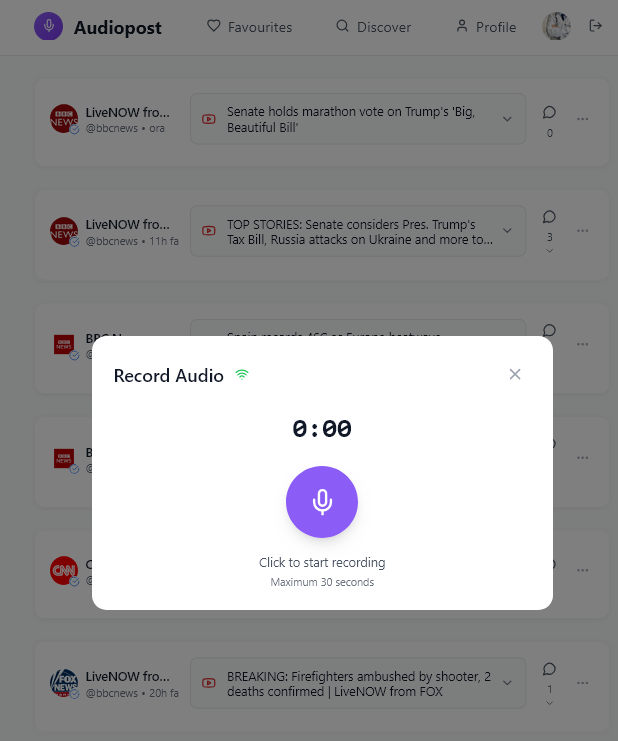
What it does Audiopost is a voice-first microblogging platform. No text, no images, no video, just short audio messages, up to 30 seconds. Users post audio by holding a record button, and others can reply with their own voice. The main feed works like X.com/Twitter, but with one-level nested replies like Facebook, making conversations easier to follow. Brands can also post content, and users reply exclusively through voice, creating a space of authentic, audio-only interaction.
How we built it I used Bolt.new to rapidly prototype the interface and core features. I focused on clean UX for recording, posting, and playing audio, and mimicked familiar social behaviors like liking, reposting, and commenting, but all centered around voice. Everything is kept intentionally simple: press, talk, post.
Challenges we ran into Working with audio meant dealing with browser compatibility, permissions, recording limits, and playback consistency, especially on mobile. Also, adapting a familiar social structure (like Twitter) to a completely different medium (voice) came with UX challenges: how to make things feel fast, expressive, and intuitive without overwhelming the user.
Accomplishments that we're proud of Bringing Audiopost to life in just a few days and turning a personal, emotional idea into a working MVP is something I’m incredibly proud of. Seeing the first voice conversations happening on the platform felt surreal. It’s no longer just an idea.
What we learned Voice has a unique power. It’s more intimate, more expressive, and sometimes more efficient than text. But it also requires different UX patterns, different privacy considerations, and a new way of thinking about asynchronous interaction. We also learned that people are craving more human, less polished ways to connect online.
What's next for Audiopost Next steps: Add user authentication and follower/following logic Improve audio playback UX and waveform visualization Build a minimal moderation layer Launch private beta with real users and early brand partners Explore monetization features for creators and branded voice drops And most of all: keep it real, human, and voice-first, just like we imagined it.
Built With
- bolt
- firebase
- whisper


Log in or sign up for Devpost to join the conversation.