Inspiration
We're a trio of a violinist, a cellist, and an calligrapher who all met in Stanford's intro CS course last fall. We loved it so much that we knew we had to keep going, and TreeHacks was the perfect opportunity to immerse ourselves in our first hackathon. We knew we wanted to combine our interests in music, art, and CS to create something special, and so AudioArt was born.
What it does
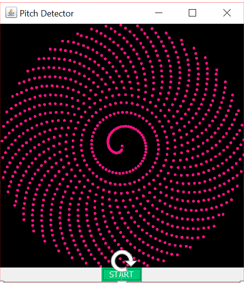
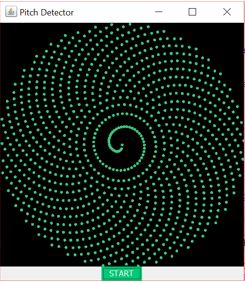
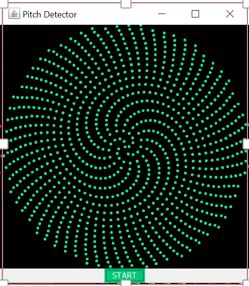
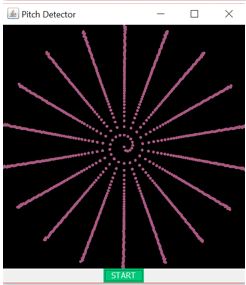
AudioArt is a unique platform that detects audio input, and uses varying pitches to dynamically generate a phyllotactic spiral in real time. The program detects pitches in sequence, and uses the frequency of each pitch to determine the seed angle and RBG color of a phyllotactic spiral that is generated specifically for that pitch. The resulting phyllotactic spirals are displayed in a graphics window, and create a colorful, animated piece of digital artwork.
How we built it
We implemented open-source pitch-detection code to detect audio input and convert it to numerical data. We then designed a mathematical algorithm that uses Java Swing interactors to generate a customized phyllotactic spiral using this data.
Challenges we ran into
Implementing multithreading in order to accomplish multiple tasks concurrently, while also transferring information to one of the threads.
Accomplishments that we're proud of
We're incredibly proud to have finished our first ever hackathon! All three of us team members have less than two quarters of computer science under our belts, so successfully building AudioArt within 36 hours was an exciting achievement.
What we learned
We learned to be persistent, even when we encountered bugs that seemed impossible to fix. Furthermore, we learned to successfully integrate open-source software into our code, and to use multithreading to run multiple processes simultaneously. Most of all, we experienced what it was like to code under a time crunch.
What's next for AudioArt
We hope that in the future, we'll be able to extend AudioArt to generate many more works of art based on audio input. Our ultimate goal is to create an immersive experience that seamlessly bridges music and visual art, and which uses elements like volume, tone, tempo, and dissonance to represent unique patterns through art.

Log in or sign up for Devpost to join the conversation.