Project Story: AI-Powered Call Analysis System
Inspiration
The inspiration behind this project came from a personal frustration with how many companies handle customer service interactions. Whether it's long hold times, poor communication, or a lack of empathy in conversations, these experiences often leave customers dissatisfied and unheard. I wanted to create a solution that could help businesses not only improve the quality of service they provide but also ensure their agents are better equipped to handle customer needs effectively. Ultimately, my goal was to help companies focus on providing better service by using advanced technology to analyze and enhance call interactions.
What I Learned
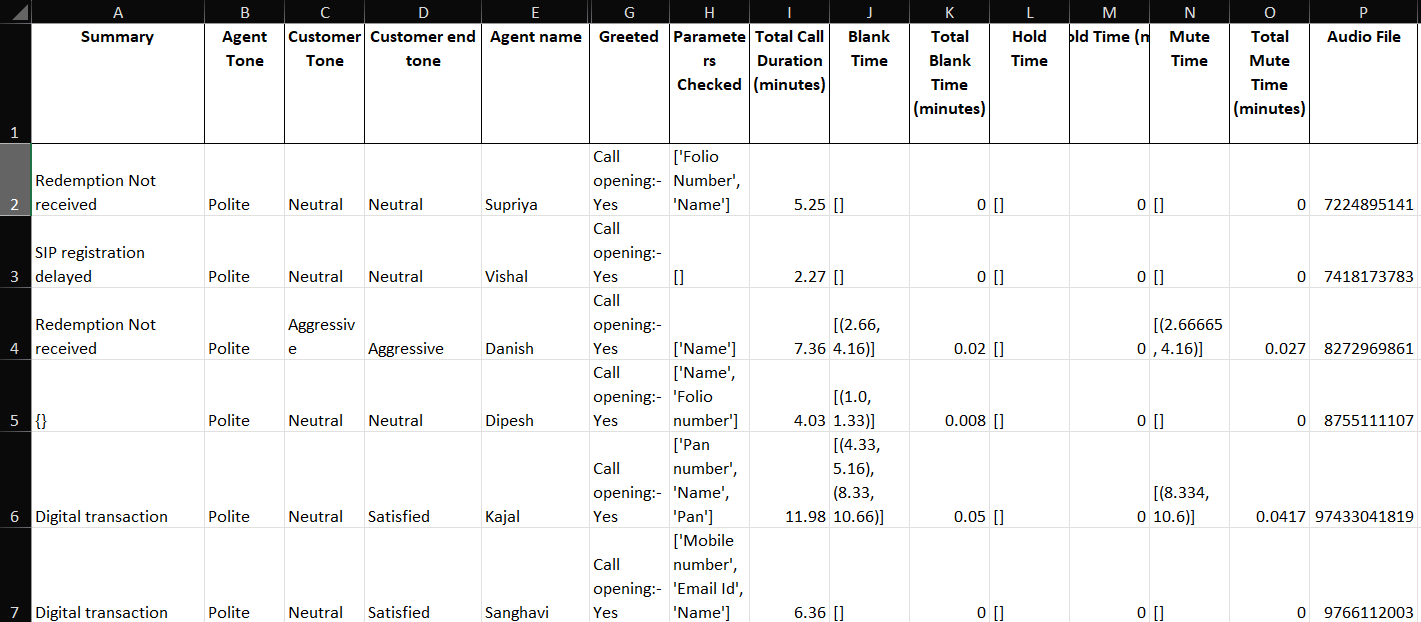
Throughout this project, I learned a great deal about the power of audio processing and natural language understanding. Understanding the nuances of human speech, like tone and sentiment, plays a critical role in analyzing agent-customer dynamics. I also deepened my knowledge of AI-driven solutions that can assess conversations on a deeper level—measuring hold times, muting periods, and communication effectiveness—allowing for a more comprehensive understanding of call quality.
How I Built the Project
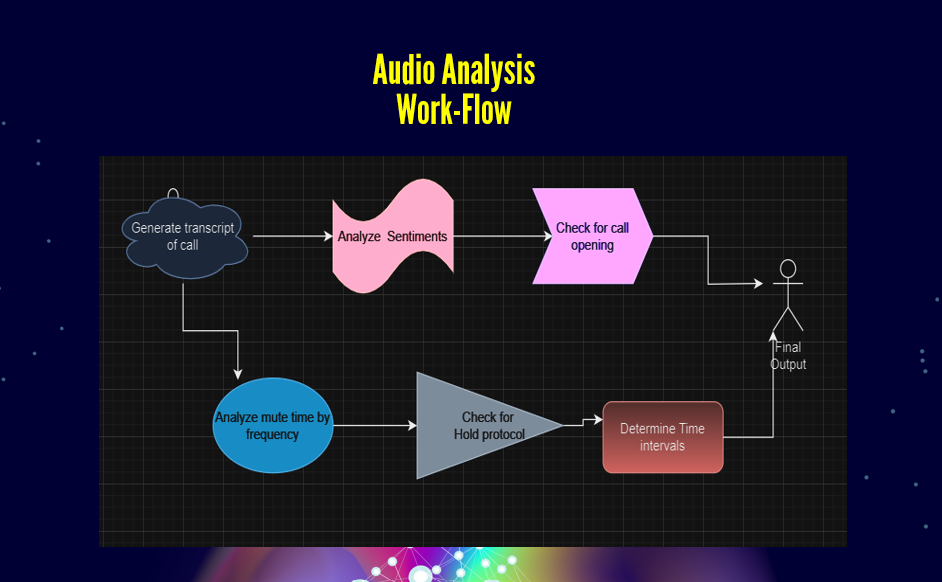
The project is built on a combination of sophisticated audio processing tools and natural language processing (NLP) algorithms. First, I utilized tools to detect silence, measure hold and mute times, and capture tonal shifts in the conversation. Next, I integrated NLP models to understand the sentiments and emotional tone behind the words spoken by both agents and customers. These models help generate comprehensive call summaries, offering actionable insights into each interaction.
To ensure scalability, the system was designed to process large volumes of calls, and it’s built using APIs to provide detailed reports with ease. The ultimate goal was to make the system versatile enough for integration into customer service platforms, improving overall agent performance and customer satisfaction.
Challenges Faced
One of the main challenges was achieving accurate tone detection for both agents and customers, as different individuals express emotions in various ways. Capturing and analyzing these subtle differences required fine-tuning of the models. Another hurdle was measuring hold and mute times consistently across different audio formats and call lengths—this demanded precise audio processing techniques to ensure accurate data collection.
Additionally, ensuring the system was easy to integrate with existing customer service platforms required balancing complexity with usability, which involved significant testing and refinement.
Conclusion
By harnessing AI-driven technology, this system aims to improve how companies evaluate and handle customer service calls. The insights it provides can help businesses boost customer satisfaction, train their agents more effectively, and ultimately deliver a higher standard of service.
Tagline
"AI-Powered Call Insights for Better Customer Service"
Built With
- ai
- generative
- lambda-(for-serverless-processing)-**databases**:-postgresql-(for-storing-call-data-and-summaries)-**apis**:-openai-api-(for-leveraging-gpt-3.5-models)
- languages**:-python-**frameworks**:-fastapi-(for-building-apis)
- streamlit-(for-dashboards)-**platforms**:-aws-(for-cloud-hosting-and-scalability)-**cloud-services**:-aws-s3-(for-audio-storage)
- whisper-(for-speech-to-text-processing)-**ai-models**:-openai-llm-3.5-models

Log in or sign up for Devpost to join the conversation.