-
-
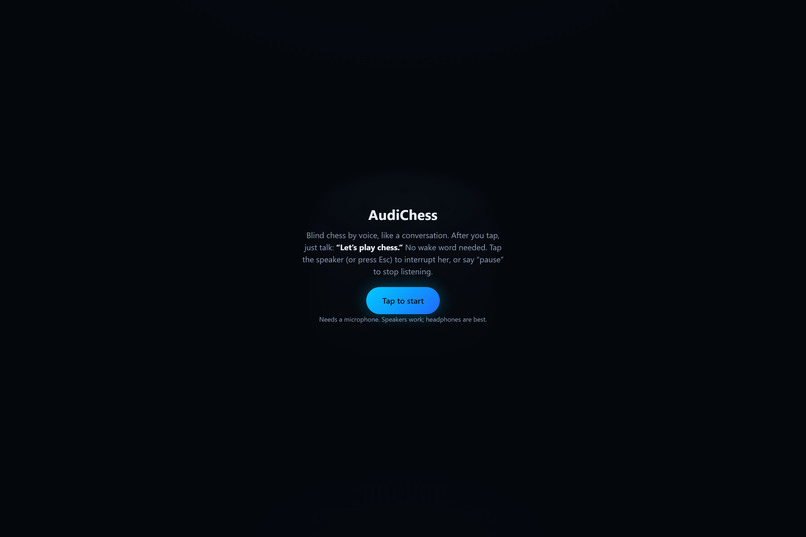
One tap to start, then it’s hands-free. Talk naturally and play a full game of chess by voice.
-
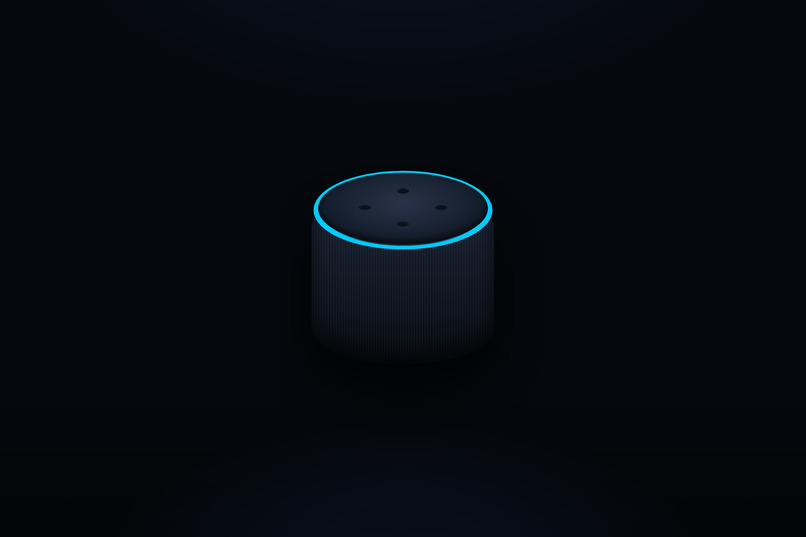
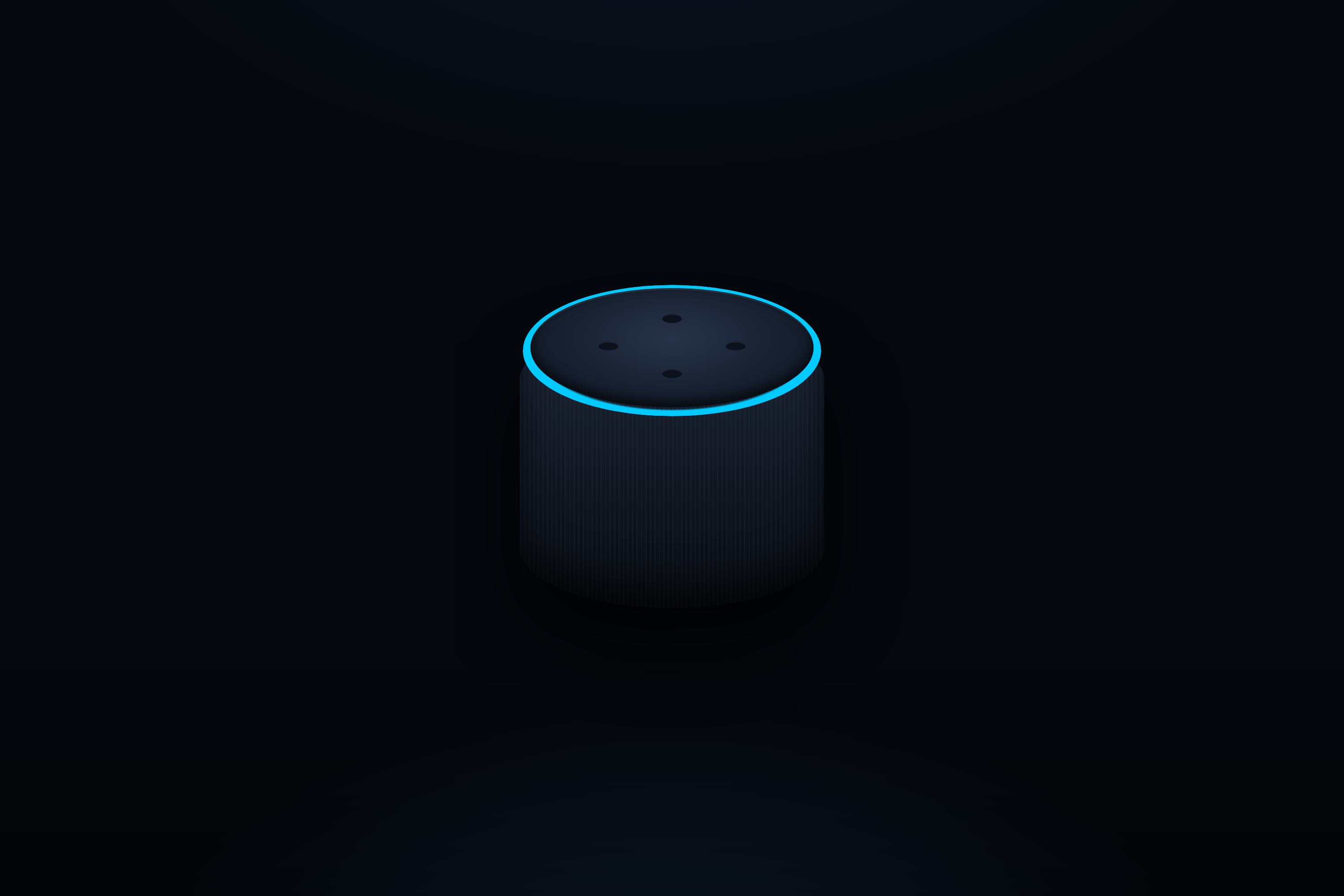
The AudiChess speaker: no board and no screen. The blue ring lights up when she talks. Just say “Let’s play chess.”
Inspiration
Some chess players can play a whole game without looking at the board. Blind and visually impaired players play every game that way. That got us thinking: what if you could just talk to Alexa and play chess, with no screen and no board?
We tried it with today's voice assistants, and it didn't go well. They lose track of the board, sometimes make moves that aren't even legal, and when you say "knight e4" they hear "night forever." We wanted to build a chess partner that really listens, really knows the board, and is fun to play against.
What it does
AudiChess lets you play chess with Alexa using only your voice. You say "Let's play chess," pick your colour and how hard you want it, and start playing.
You: Let's play chess.
Alexa: Sure! White or black? And easy, medium or hard?
You: White, easy.
You: D four.
Alexa: You play pawn to d4, I play pawn to d5. This is the Queen's Pawn Game.
- Talk normally. Say "knight f3," "castle kingside" or just "e4," the way you'd say it to a friend.
- Ask anything. You can't see the board, so you can ask "What's on e5?", "Am I winning?", "What opening is this?" or "Give me a hint."
- Pick your level. It goes from complete beginner to really, really strong.
- Enjoy the trash talk. She acts like a friendly rival, not a teacher. She'll tease you when you make a mistake and compliment you on a good move, but she won't give you hints unless you ask.
How we built it
We split the work into three parts:
- A voice that listens and talks back, using Amazon Nova 2 Sonic, so the conversation sounds natural.
- A "brain" that runs the conversation. It works out what you meant and how to reply, and it follows a set of instructions on how to be a good blind-chess opponent.
- A chess expert behind the scenes. It keeps track of the board and uses Stockfish, a real chess engine, to choose the moves. The AI never makes up moves. It only says what the chess engine tells it.
We tested it constantly: hundreds of practice questions, whole simulated games, and plenty of real games played out loud.
Challenges we ran into
Getting it to hear chess properly. Chess words are hard for voice recognition. "Rook g5" came back as "book g five," "e3" as "me three," and "undo" once as "unbelievable, isn't it." We rebuilt the listening part four times in eight days and taught the app to work out the most likely move from what it heard.
Keeping the AI in check. The voice AI sometimes "heard" things nobody said, or suddenly stopped listening. The talking AI kept giving away the best move when you only wanted to chat. We added safeguards so she stays fun to play against and never ruins the game.
Making "easy" actually easy. Even the easiest setting of the chess engine was too strong for beginners. We built our own easier levels that play more like real people, mistakes included, so beginners can actually win.
Accomplishments that we're proud of
- You can play a full game of chess by voice alone, with no screen.
- She never makes an illegal move and never invents things about the board.
- Beginners can win on easy, and strong players get a real fight on hard.
- She has a personality, and it's fun to play against her.
What we learned
- Test with real voices early. Computer voices worked perfectly in our tests. Real people talking showed us all the problems.
- Let each part do what it's best at. The voice handles talking, the AI handles conversation, and the chess engine handles chess.
- Small details make it feel human. Short answers, a bit of teasing and knowing when to stay quiet made a bigger difference than we expected.
What's next for AudiChess
- Bringing it to real Alexa devices.
- A coach mode for players who want to learn, not just compete.
- More voices and adjustable speaking speed, for players who rely on listening to every move.
Try it: d2ammv4cvnzsu5.cloudfront.net (Chrome or Edge, with a microphone)
Built With
- agent-skills
- amazon-bedrock
- amazon-cloudfront
- amazon-cognito
- amazon-dynamodb
- amazon-nova-2-lite
- amazon-nova-2-sonic
- amazon-web-services
- aws-cloudformation
- aws-lambda
- aws-sam
- aws-secrets-manager
- chess.js
- css3
- esbuild
- html5
- javascript
- mcp
- node.js
- stockfish
- streamable-http
- typescript
- vitest
- web-audio-api
- websocket


Log in or sign up for Devpost to join the conversation.