-
-
Slide 4
-
Slide 10
Inspiration
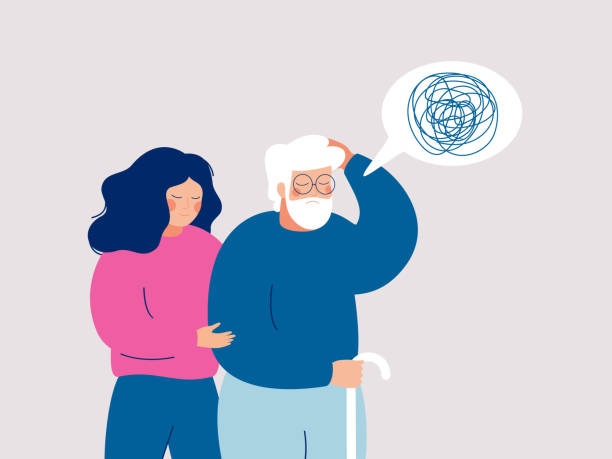
Dementia is a syndrome many worry about, with no cure and climbing numbers who suffer from this, early detection can help to ease the transition into this state. This allows patients and loved ones to walk through this aging process together. However, dementia consultation fees aren't exactly the cheapest, tied in with the inconvenience of going to the doctor's, many individuals seek help at a later stage, allowing symptoms to develop at rollercoaster rates. Therefore, our team - Audere, has decided to create an app that helps individuals get a glimpse of the potential likelihood he/she gets dementia.
What it does
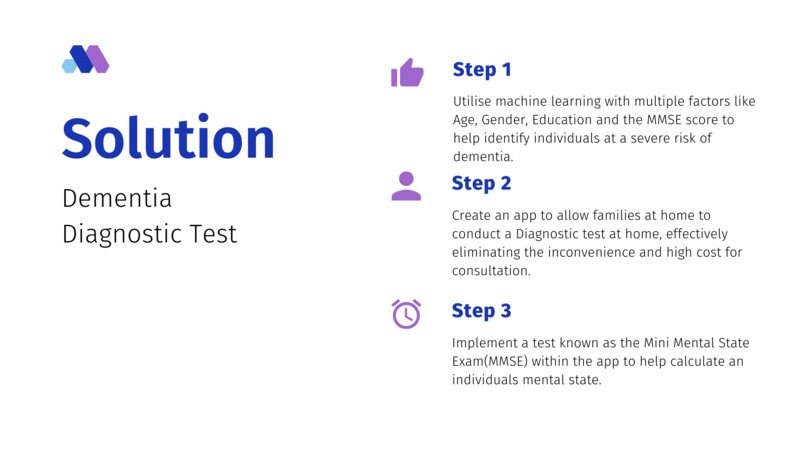
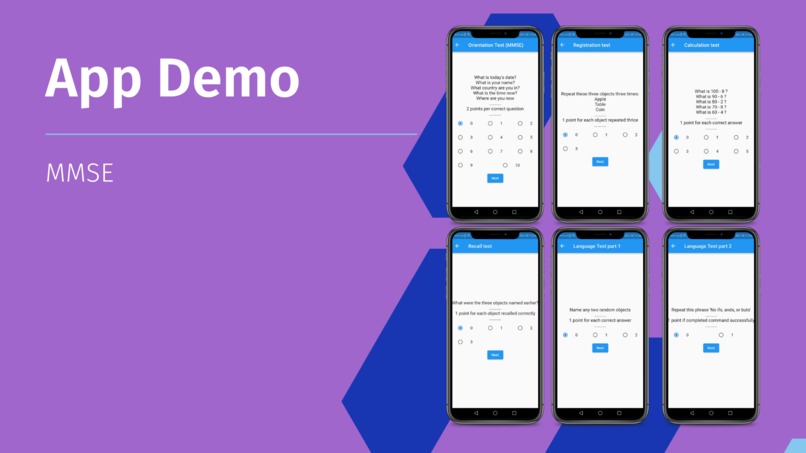
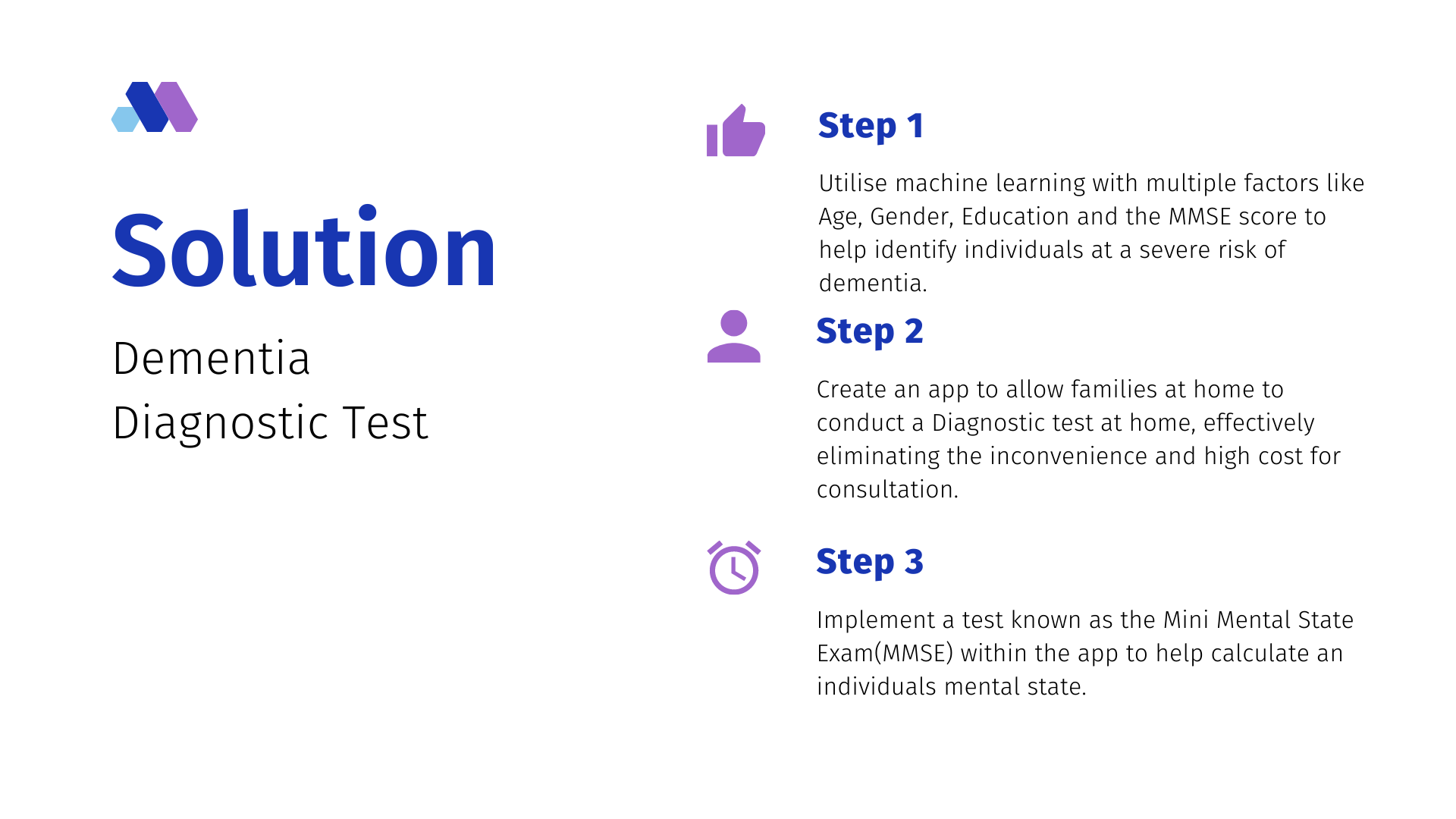
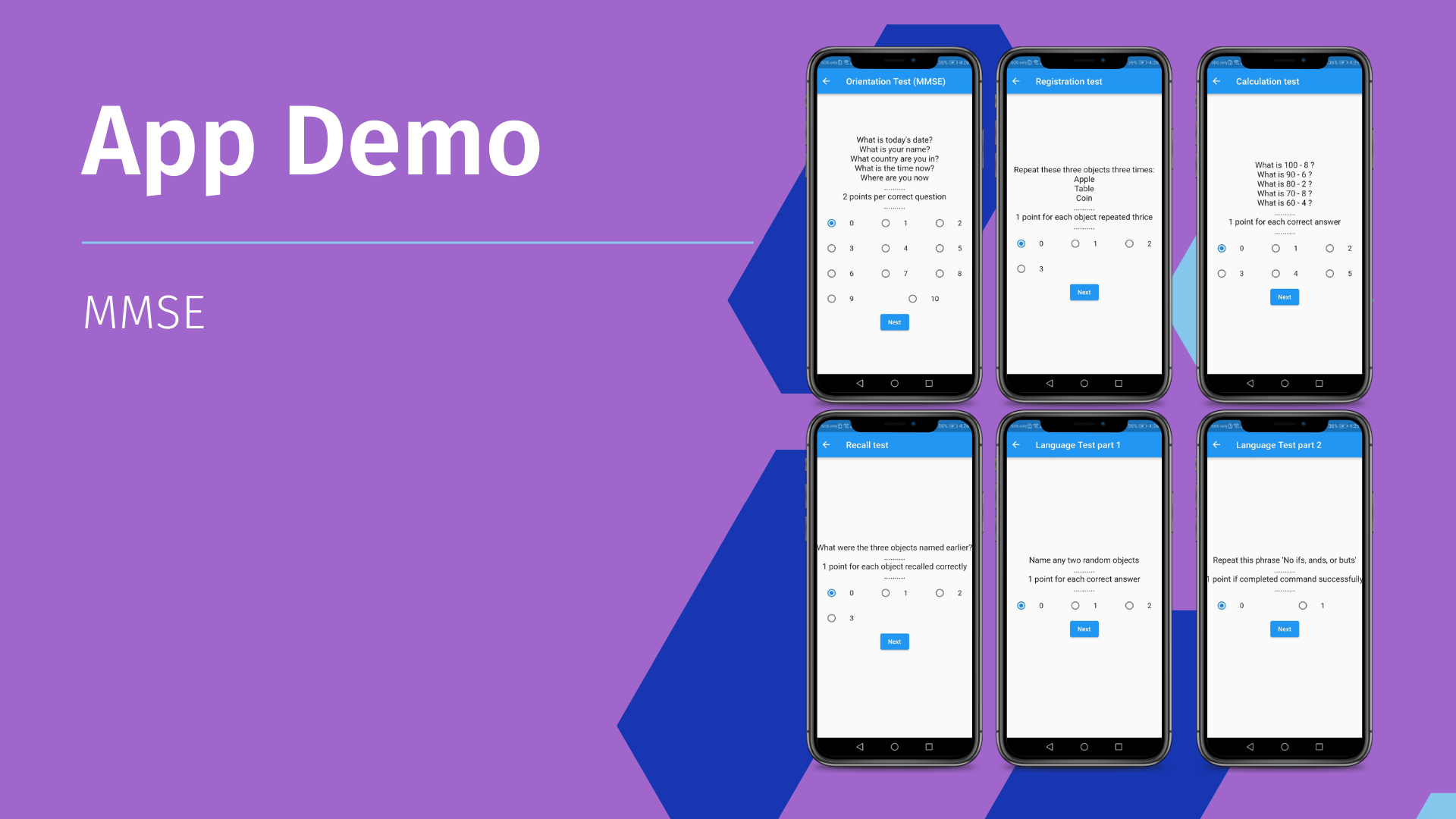
Our App takes in user factors like Age, Gender, Years of Education and factors them into a logistic regression model we calculated. In addition, we also factor in Mini Mental State Exam scores to help predict the likelihood a user gets dementia and outputs them in the result screen. It is an offline test that helps prepare users and their families at their own convenience.
How we built it
First, we had to utilize the four factors to deduce a Logistic Regression Model in predicting the matter. For this, we used the 'MRI and Alzheimers' dataset from Kaggle that contained the factors mentioned above, trimmed and cleaned the dataset in R Studio and produced the Logistic Regression Model.
We then took it to Android Studio, where we implemented our App outline with Flutter/Dart which provides an interactive platform that eventually runs the LR Model to our resulting output.
Kaggle Dataset
App Demo
Challenges we ran into
Our LR Model has a confidence level of 85% in predicting the likelihood an individual gets dementia. Although a high probability, we were not satisfied with a 'might be' situation and we were determined to find the 'surest' way to deduce the likelihood. Unfortunately, some other factors that could help in predicting include MRI scans and Socio-Economic Status, factors that we do not have access to due to being relatively private information.
Accomplishments that we're proud of
Given the short time span, producing a model with a relatively high confidence level is something we are proud of. We used the knowledge we gained from our course and along with mathematical logic to produce a great model. On top of that, creating a functioning app in such a short period of time was definitely a feat for us. Learning a new programming language for some groupmates and supervising the conduct of code really helped to unify and align our trains of thought.
What we learned
In this hackathon, we have learnt that teamwork and communication is essential. Constant feedback and re-alignment allowed us to further develop and refine the edges of our project, a task that would be impossible for a solo mission or a team that doesn't communicate. Having constant support and nurturing teammates to help push and motivate us surely improves your state of mind when working.
What's next for Audere - Dementia Diagnostic Test
The potential for DDT to grow is unbound. We will seek the opportunity to work with other organisations like Health Promotion Board and SingPass MyInfo, whereby factors like MRI scans can be made available for anonymised use in our Regression Model, predicting more accurate results. In the long term we hope that our app is able to extend from Singapore's current Healthcare system to the World.


Log in or sign up for Devpost to join the conversation.