-
-
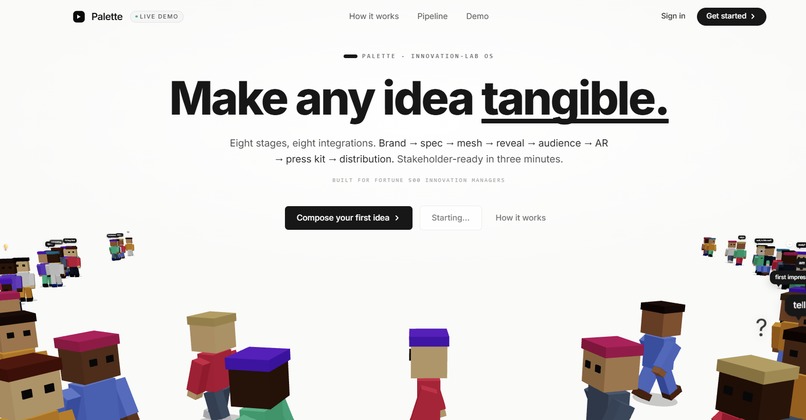
Landing page
-
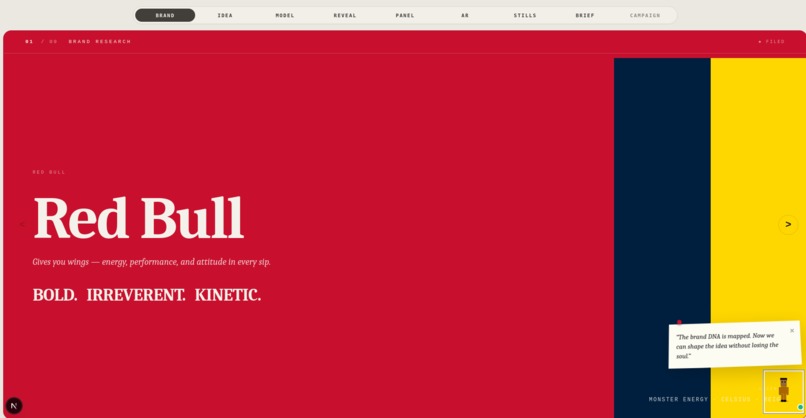
Brand Research/ Design Prototyping
-
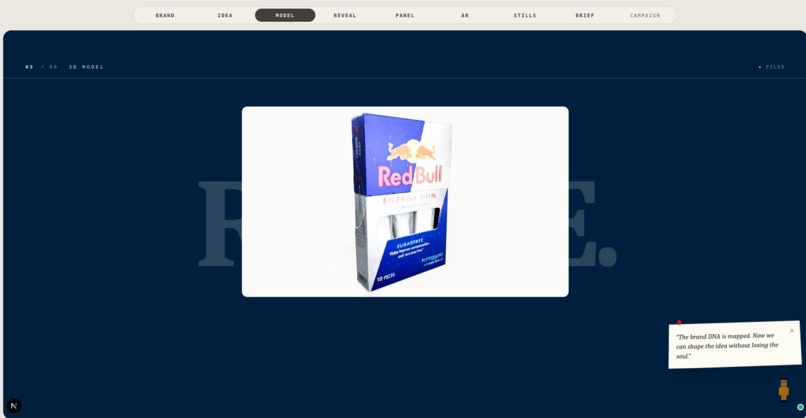
3D Modelling with GLB Export Functionality
-
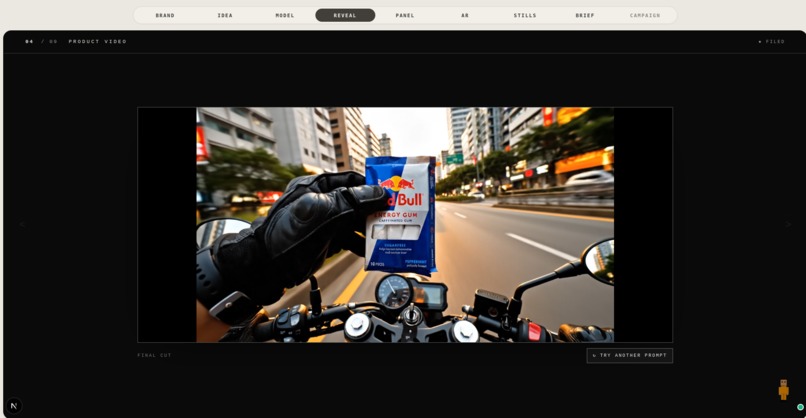
Multimedia Prototyping
-
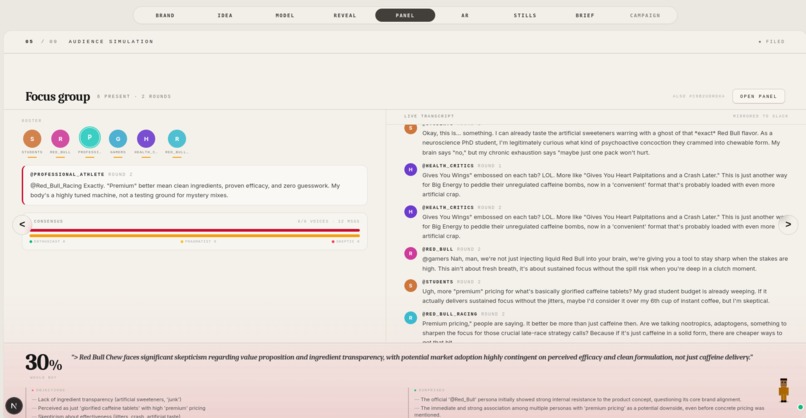
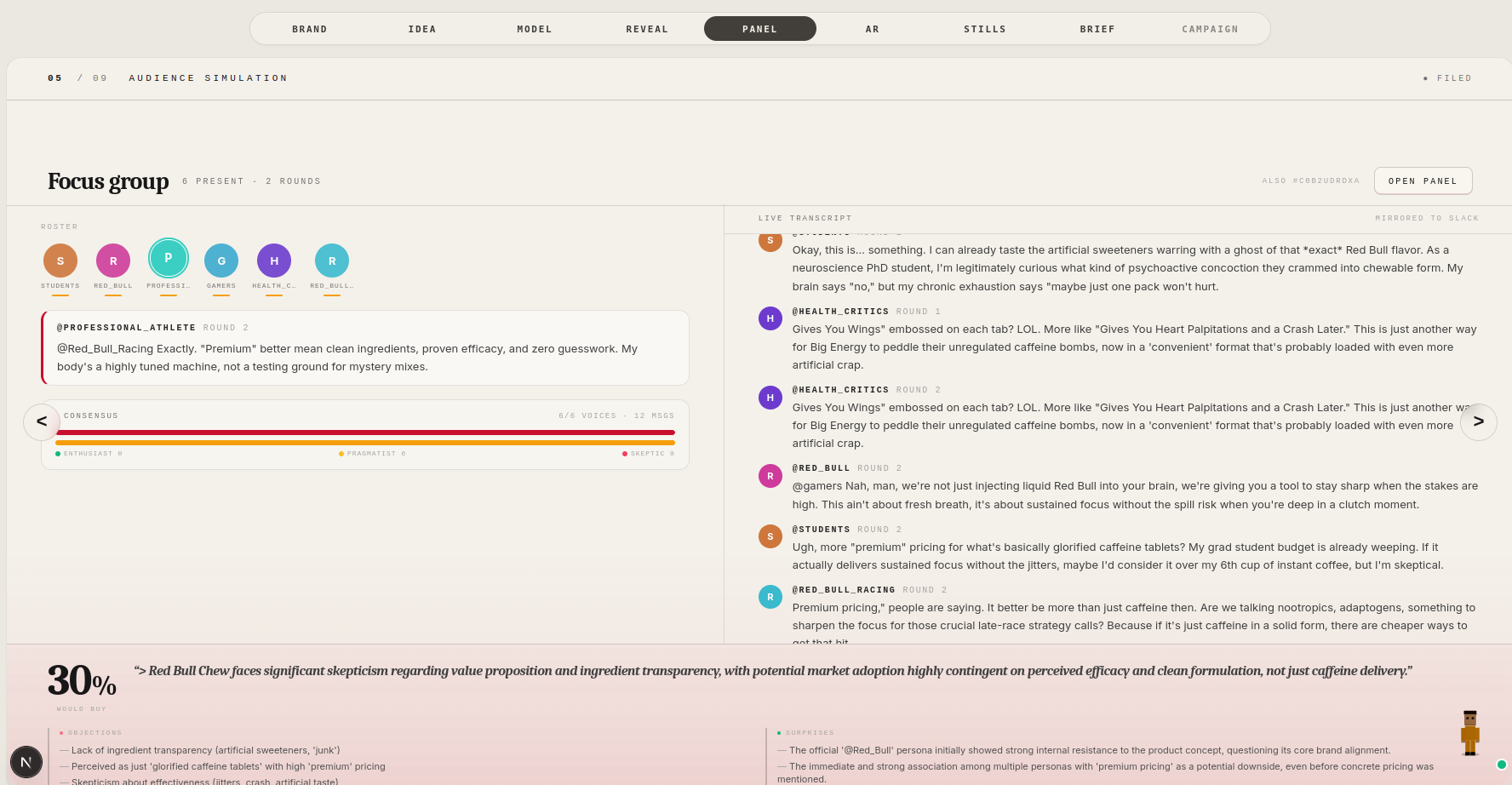
Simulated User Reviews
-
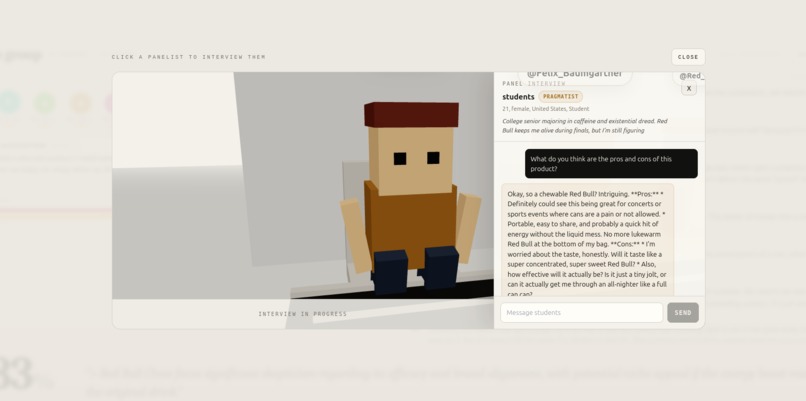
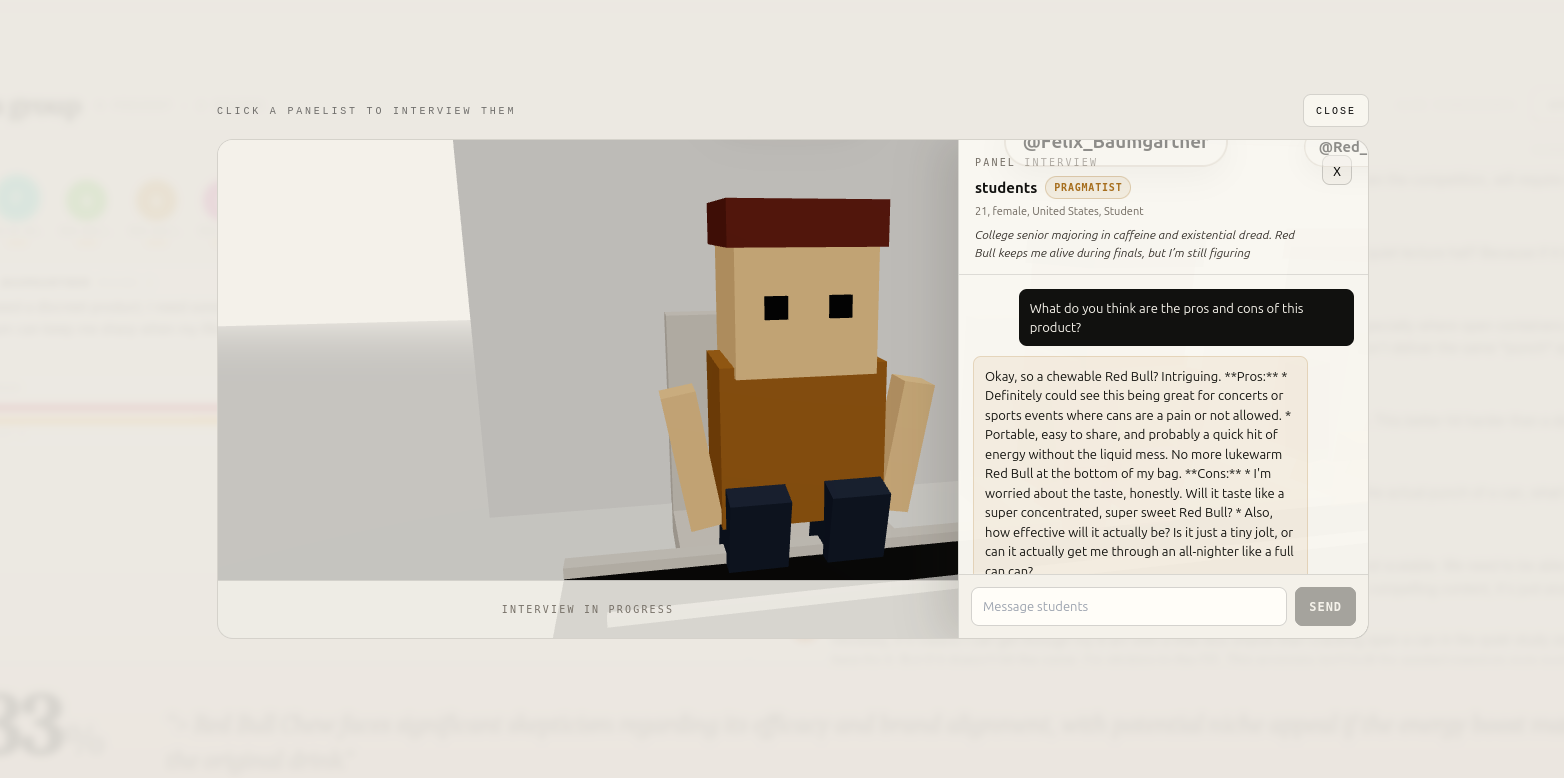
Demographic Persona Interviews
-
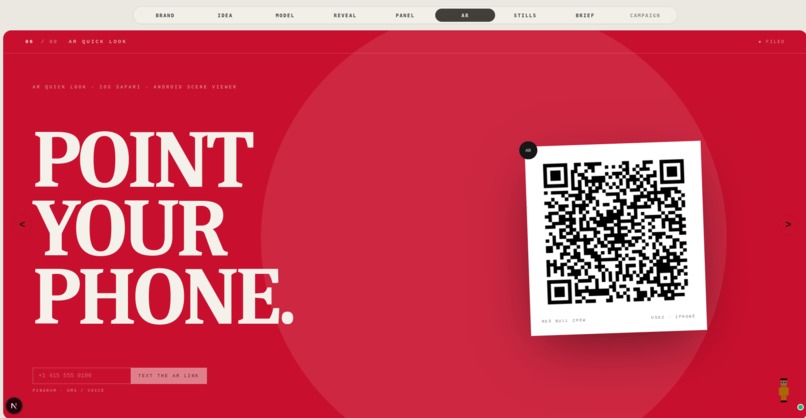
AR and PingGram Implementation
-
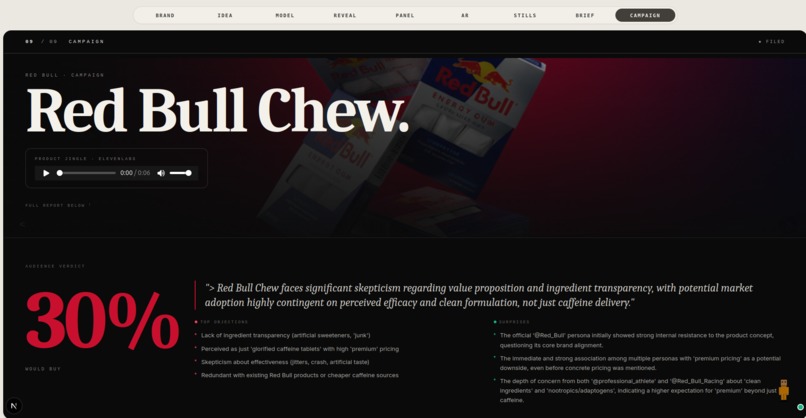
Photoshoots + Campaign Management
-
Pipeline
Auctopus: One Product Idea, Tested Against it All!
About the Project
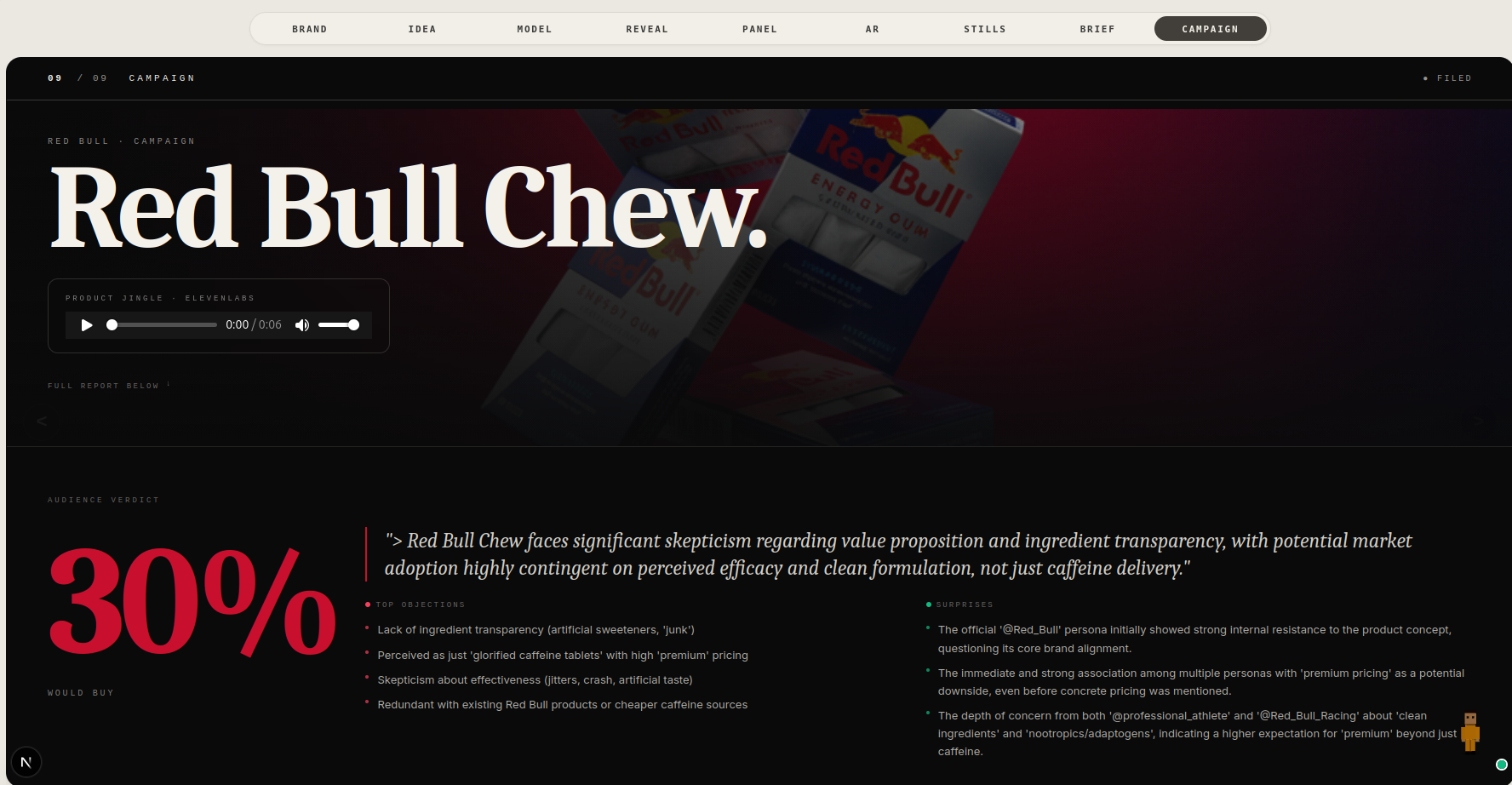
Say you're an innovation manager at a Fortune 500 and you want to know: is Red Bull caffeinated gum actually a good idea? You can't just ask a few friends. Launching, manufacturing, and distributing a product can cost hundreds of thousands of dollars, so traditionally you'd run focus groups, one demographic at a time, one city at a time. It's slow, expensive, and doesn't scale.
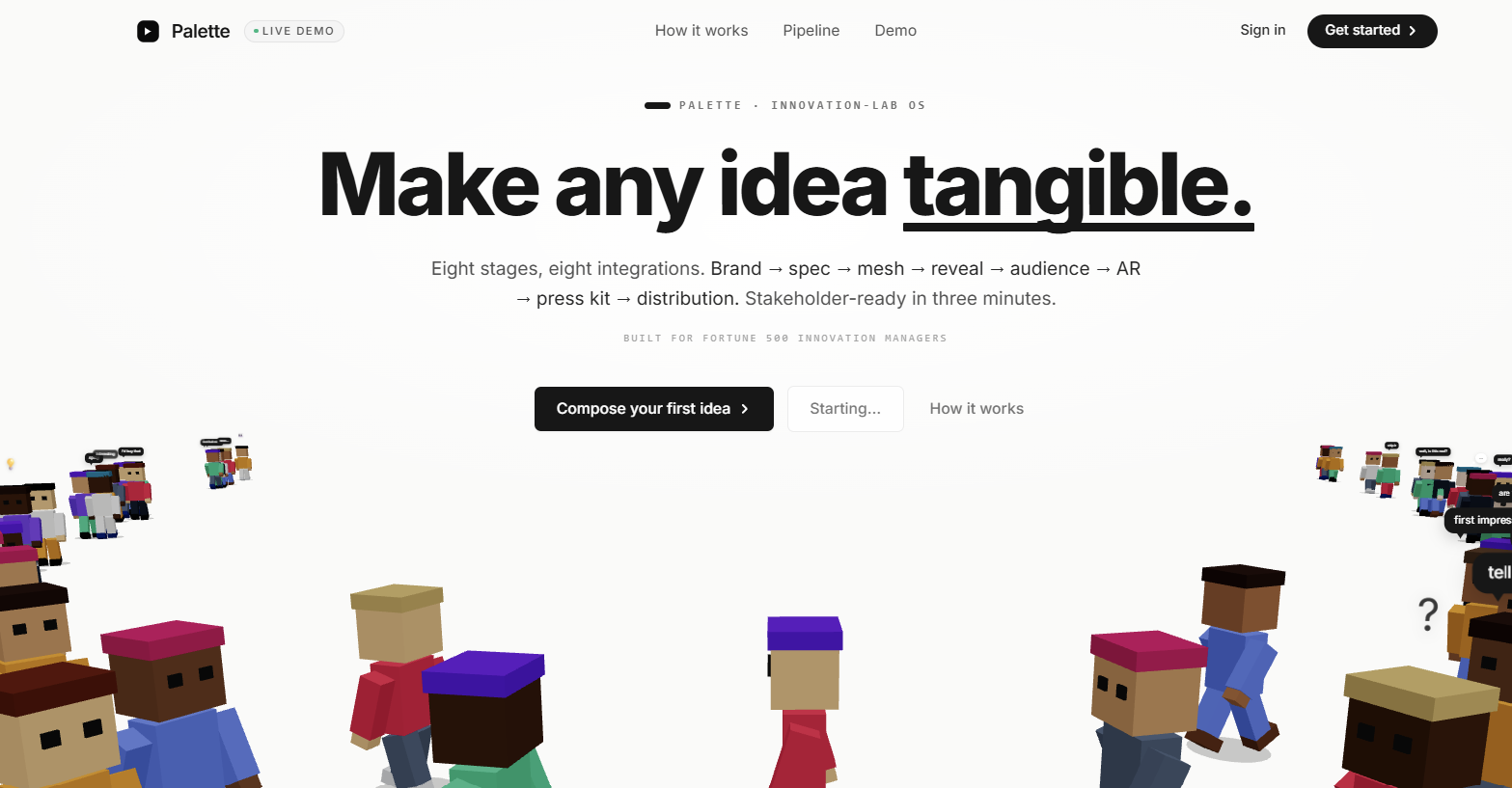
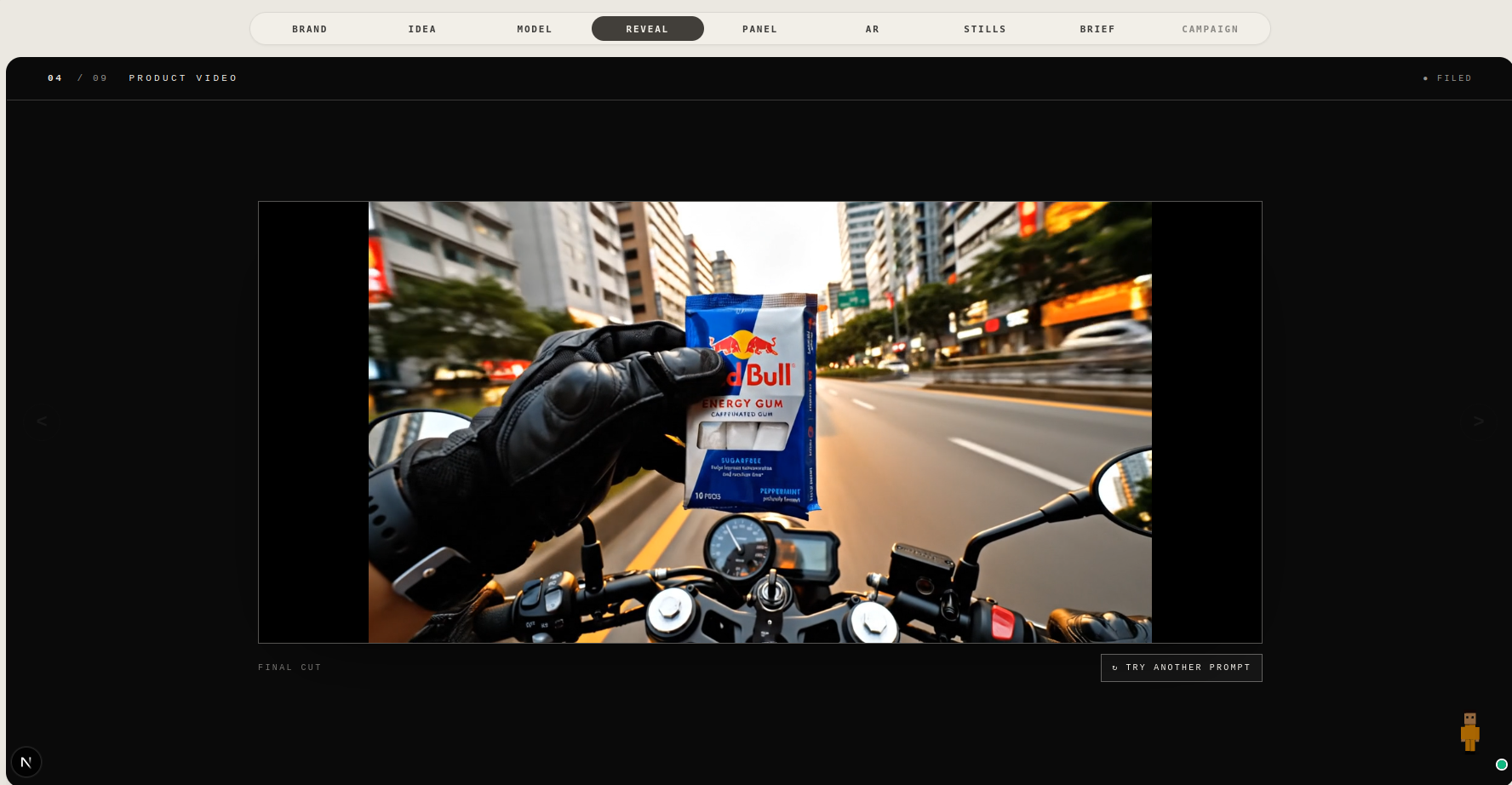
Auctopus changes that. You drop in a company name and some supporting documents, and the platform takes you from raw product idea all the way to a tangible, interactive 3D prototype your stakeholders can actually see and touch. Brand research, concept validation, 3D model, product video, audience simulation. Think of it as a comprehensive toolkit that will help you gauge what it would look like to take that product from idea to reality.
So your whole product validation work is all in one pipeline, streaming live to your screen.
What Inspired Us
As builders, we love to move fast. Nothing frustrated us more than the idea that validating a product concept requires months of logistics and focus groups. We're big fans of agents, and when we saw how much of the product testing process was just repetitive information gathering at scale, it felt like the perfect thing to automate. We also wanted to go deep on sponsor integrations, so we designed Auctopus from the start to use as many of the provided tools as genuinely possible, not just bolt them on at the end.
How We Built It
The whole pipeline is a linear async chain inside a single Next.js Route Handler, streaming progress to the UI via Server-Sent Events. Every stage either succeeds, fails loudly, or short-circuits to a clearly marked stub.
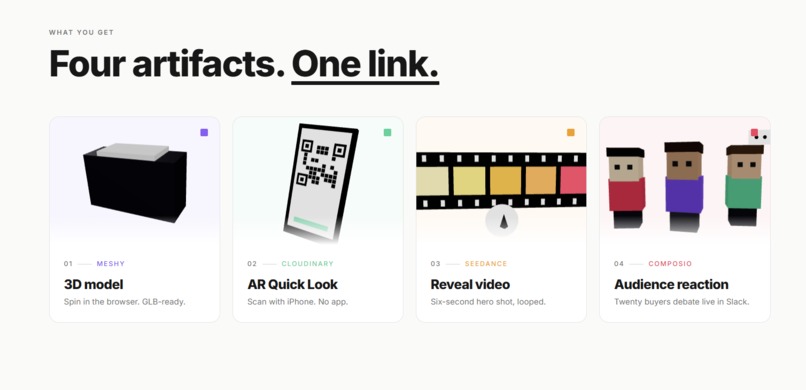
The pipeline stages:
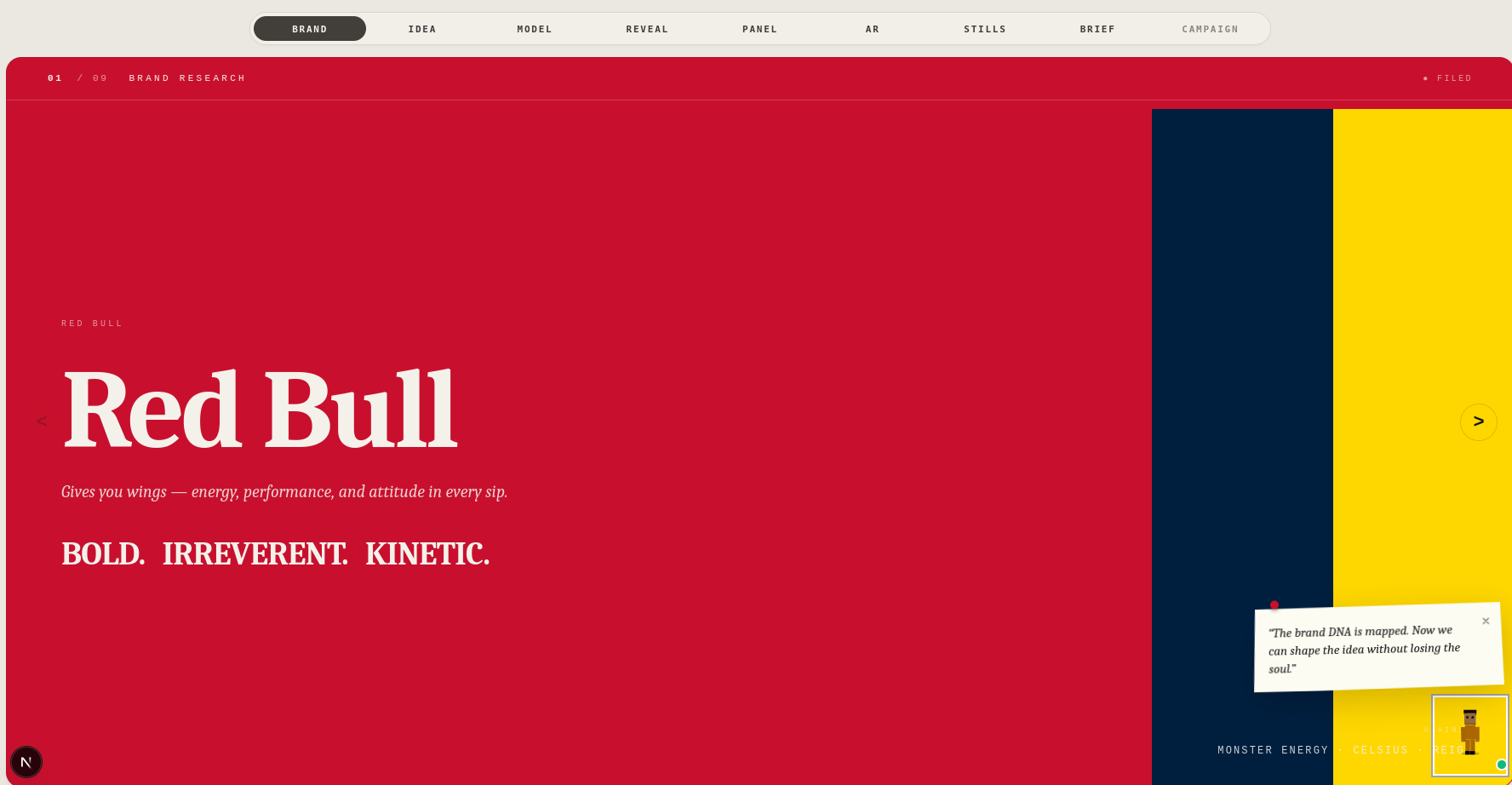
- Stage 01 + 02: Gemini 2.5 Pro (via OpenRouter) researches the brand and maps out the product idea using uploaded documents like annual reports and corporate strategy docs
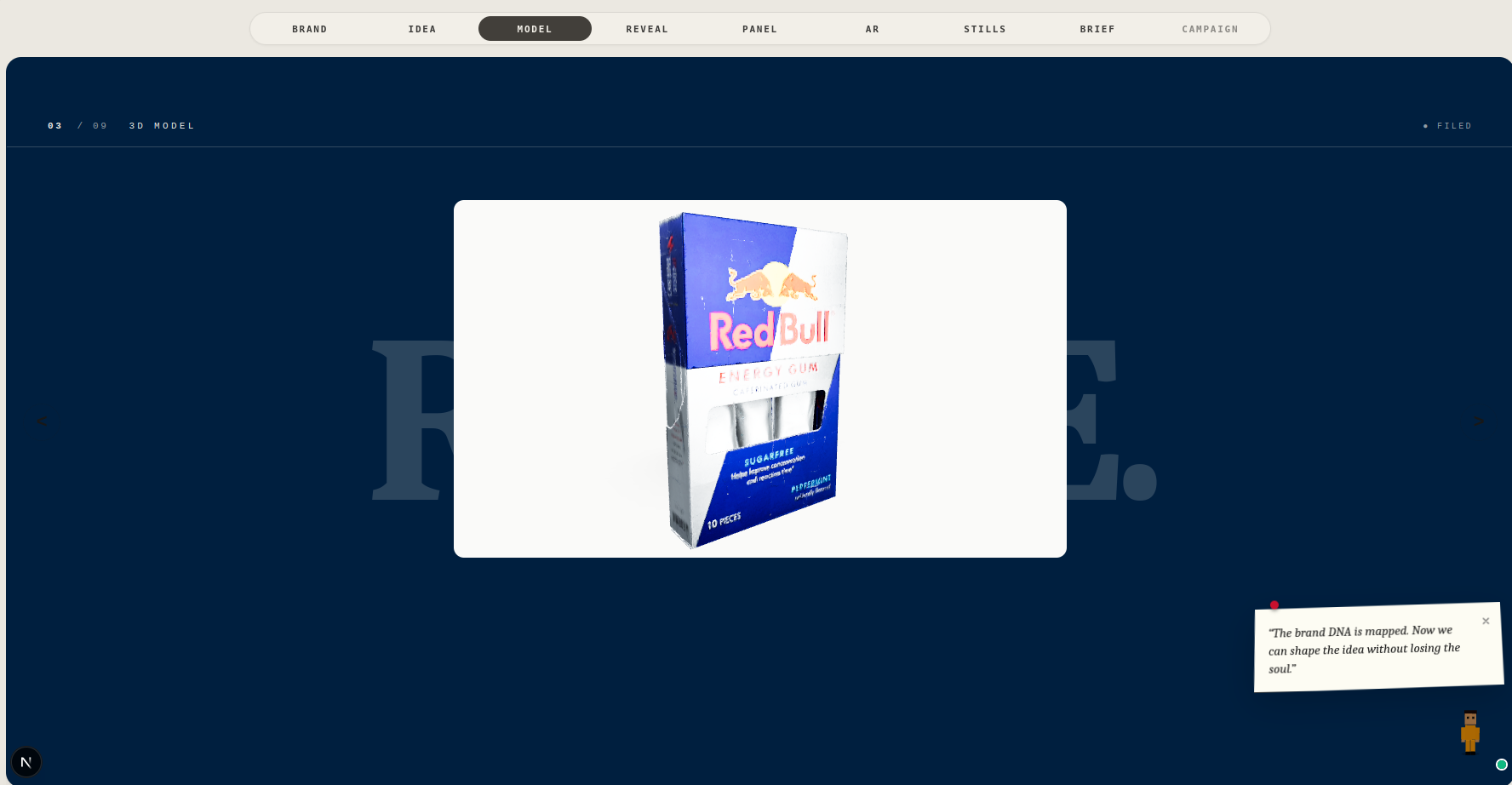
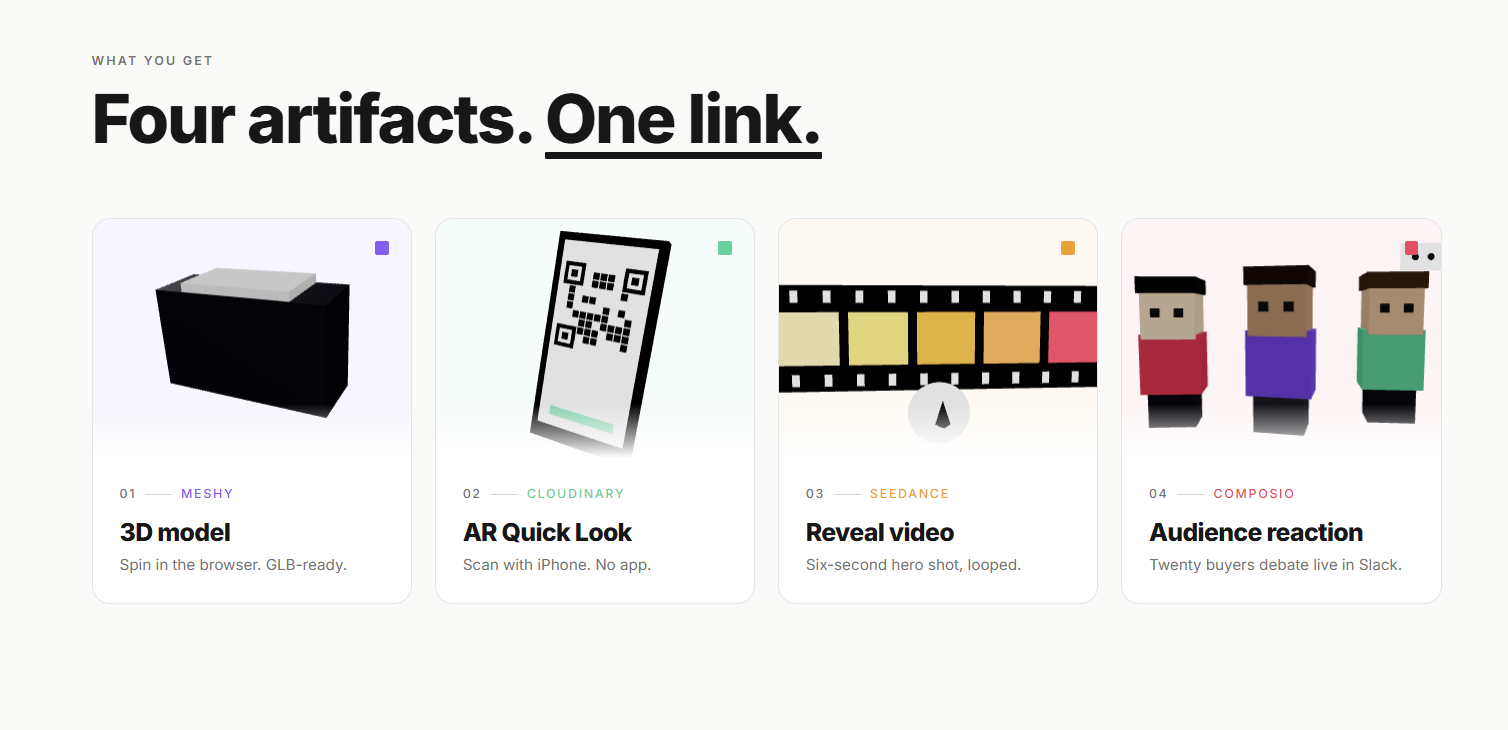
- Stage 03: Meshy converts the concept into a fully interactive 3D GLB model from text
- Stage 04: Veo 2 generates a product video, with nano-banana generating the first frame
- Stage 05: MiroShark runs audience simulation across five distinct AI personas backed by Neo4j, streaming results live
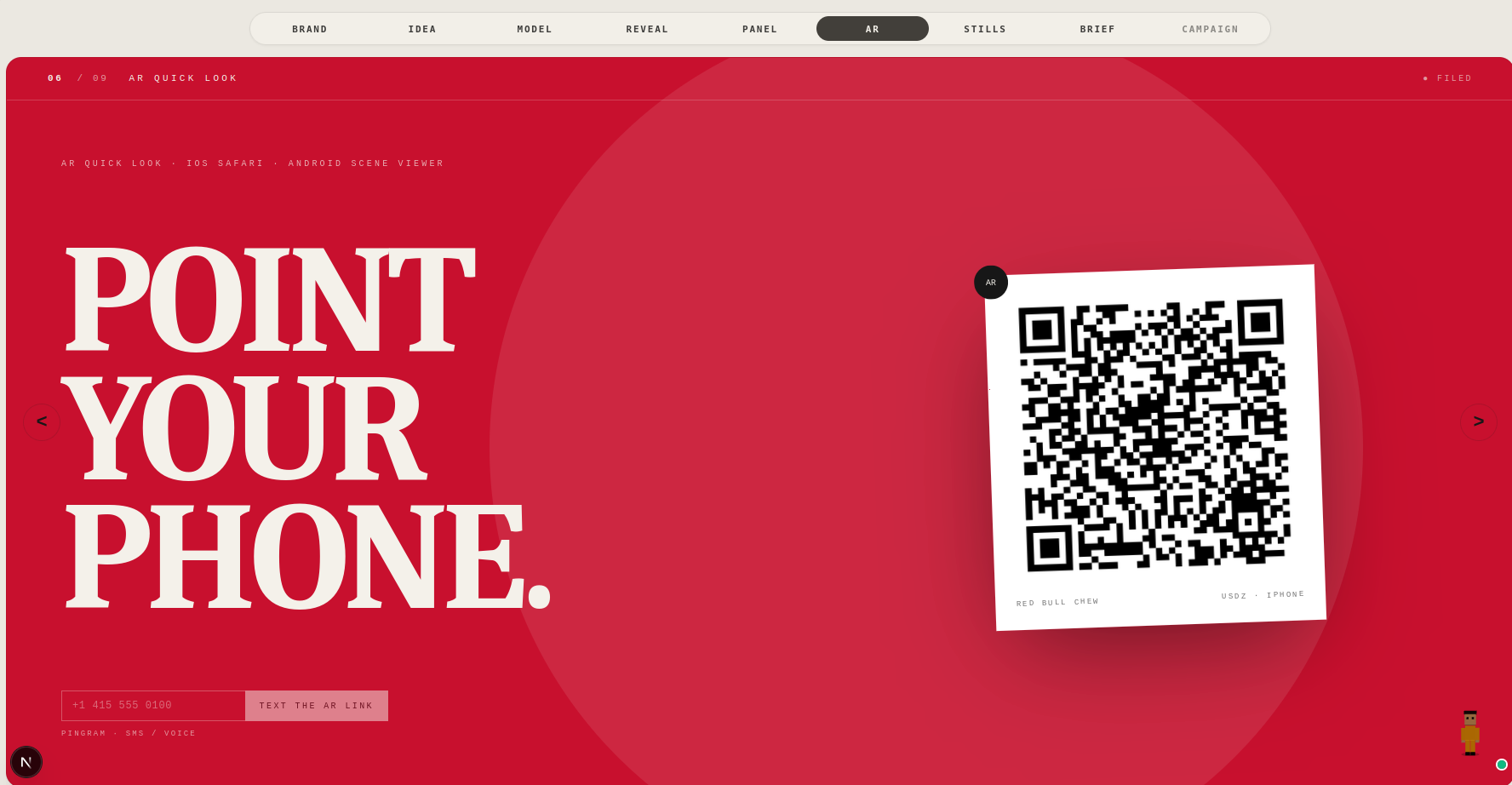
- Stage 06 + 07: Cloudinary handles USDZ delivery for Apple AR Quick Look and 360 degree stills
- Stage 08: Composio pushes the full output to Slack, Notion, Google Sheets, Google Calendar, and more allowing to talk with each other on slack, create extensive databases of user feedback and so much more!
How we used each sponsor:
Aucctus AI (main track): Auctopus is a direct response to the Aucctus brief. Innovation managers input their company, upload supporting documents, and the system researches the brand, maps out the idea, and generates an interactive 3D prototype they can take to their product development teams. The whole pipeline is built around this exact user journey, end to end.
Composio: We used Composio as the distribution layer for the entire pipeline. After simulation completes, Composio triggers real multi-step actions, posting the full persona report to a Slack channel, logging the run to Notion, and scheduling a follow-up in Google Calendar. It is not a single test call; it is the backbone of how results reach the team.
Cloudinary: Every piece of rich media in Auctopus runs through Cloudinary. The 3D model gets delivered as a USDZ file for Apple AR Quick Look via Cloudinary's CDN, 360 degree product stills are generated using Cloudinary's camera transform pipeline, and all uploads and media assets are managed and served through their platform.
Pingram: Pingram powers our SMS and email notification layer. When a pipeline run completes, users get a real notification delivered through Pingram so they do not have to sit watching the screen.
CyStack: We used CyStack Locker as our secrets vault. All API keys are prefetched at dev startup via the lockerpm Python SDK through a predev hook, and the app falls back gracefully when not configured. No secrets ever touch the codebase (No more accidentally leaking my API keys!)
Polarity: We used Polarity throughout development to evaluate code quality and catch issues early. We used paragon to help review PRs and generate a comprehensive suite of test cases
Backboard: We used Backboard to manage the conversation layer for our AI calls to OpenRouter and Gemini. Also makes it super easy if we need to switch LLMs In the future!
What We Learned
Having eight stages chained together taught us a lot about failure handling fast. A silent failure in stage three breaks everything downstream in a way that is hard to debug. We got much better at making failures loud and obvious early. It was also really hard to lock in when everybody was having so much fun!
Challenges
The stack has a lot of moving parts, and that was really hard to manage. We were juggling Meshy, Veo 2, MiroShark, Cloudinary, and Composio all chained together, so when something broke it was rarely obvious where. Also, we were doing a lot of computationally expensive work so we had to run our tests very wisely. On top of that, 0 sleep, too much celsius, but somehow we got this done!
Thanks and see you SOON!
Built With
- aucctus
- backboard.io
- cloudinary
- composio
- cystack
- docker
- gemini
- next.js
- pingram
- polarity


Log in or sign up for Devpost to join the conversation.