-
-

Landing page
-
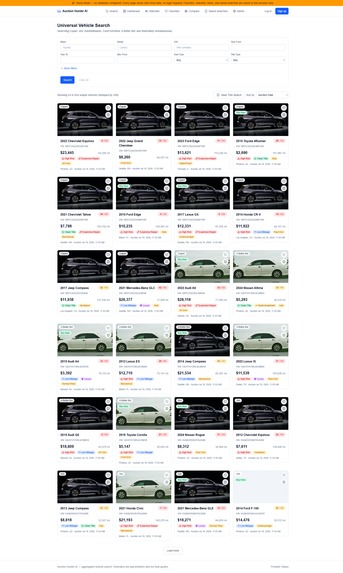
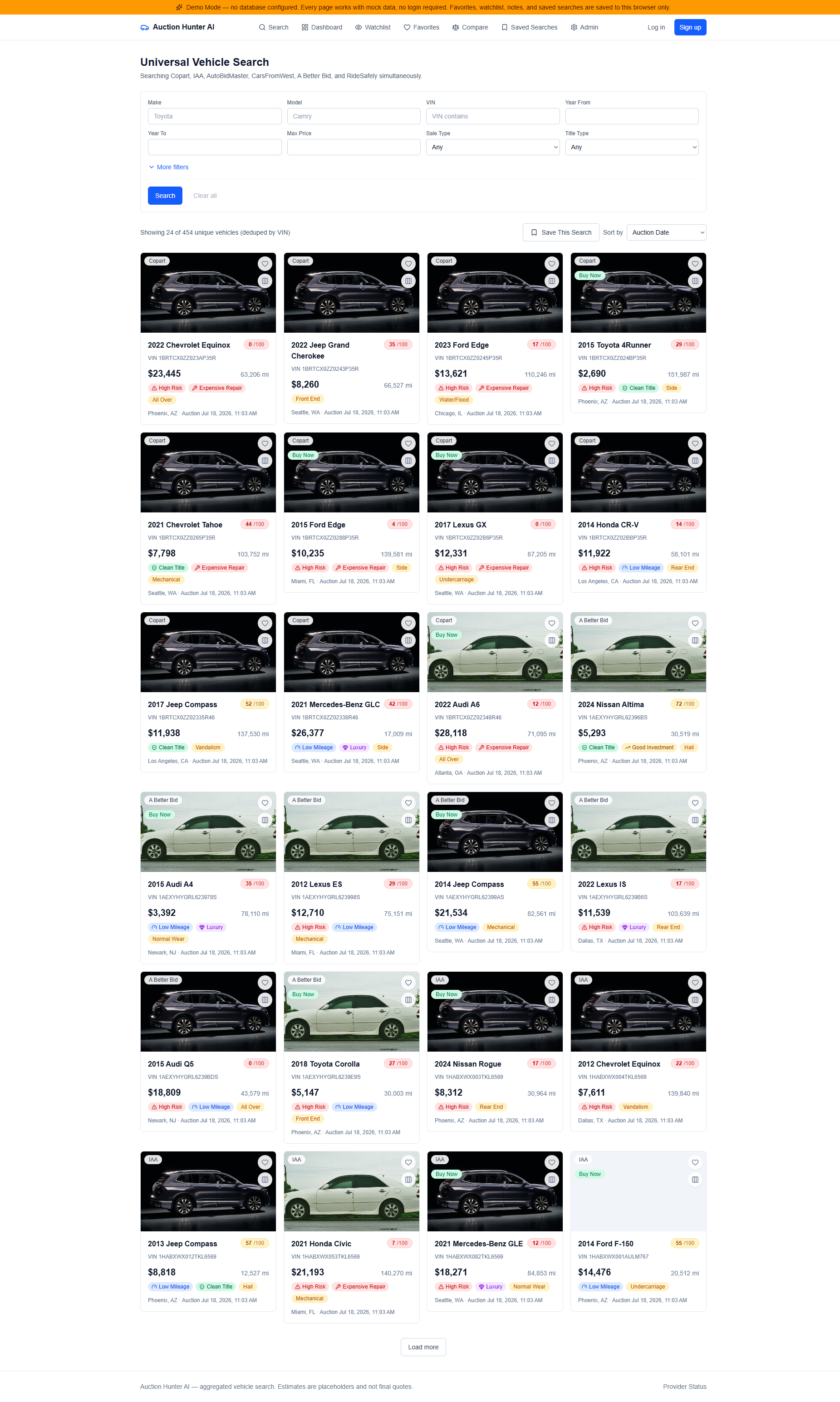
Search
-
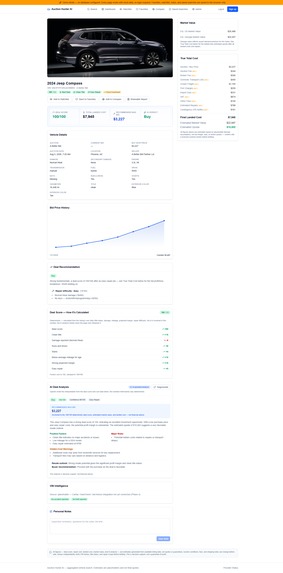
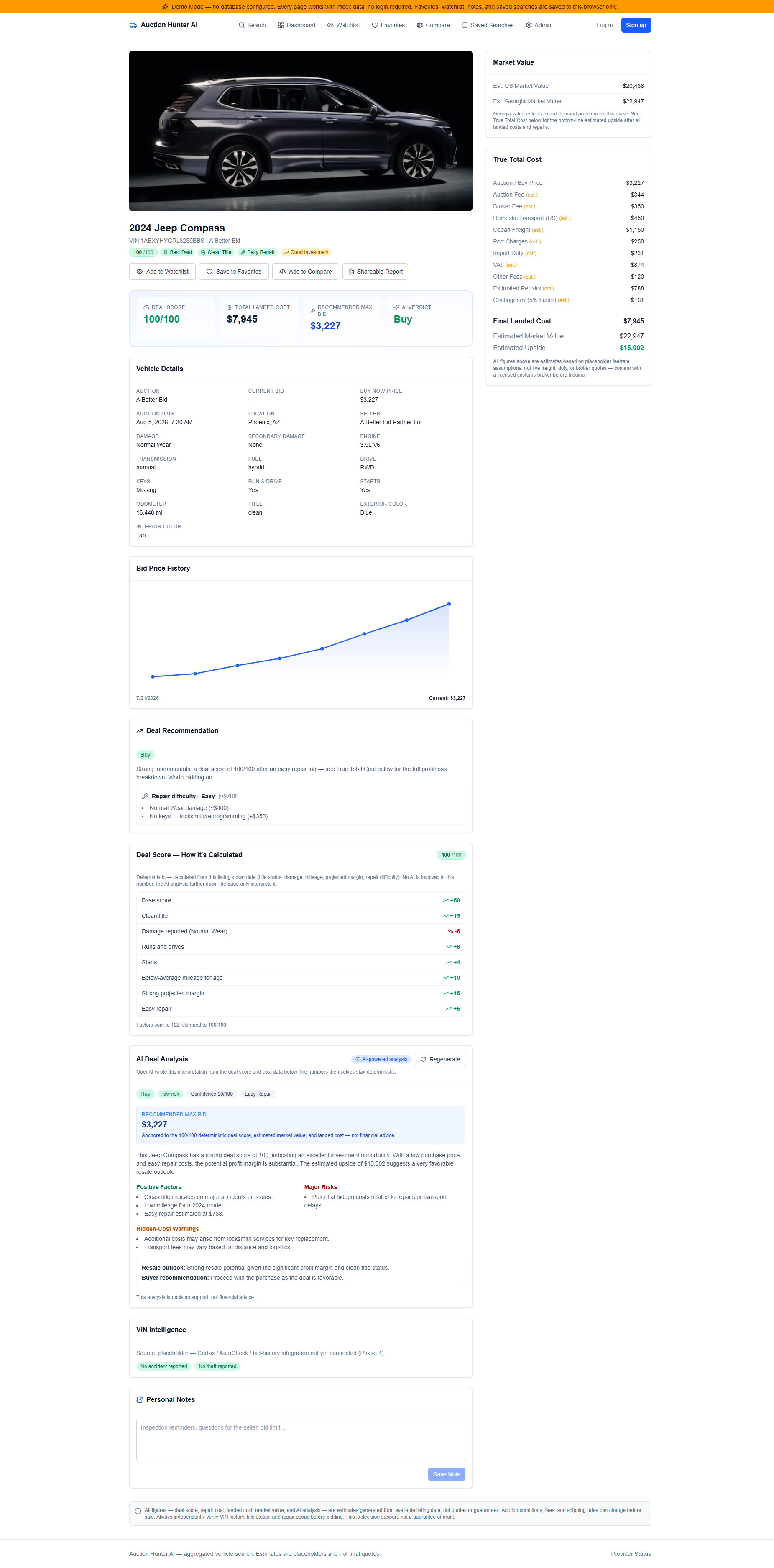
Vehicle Detail
-

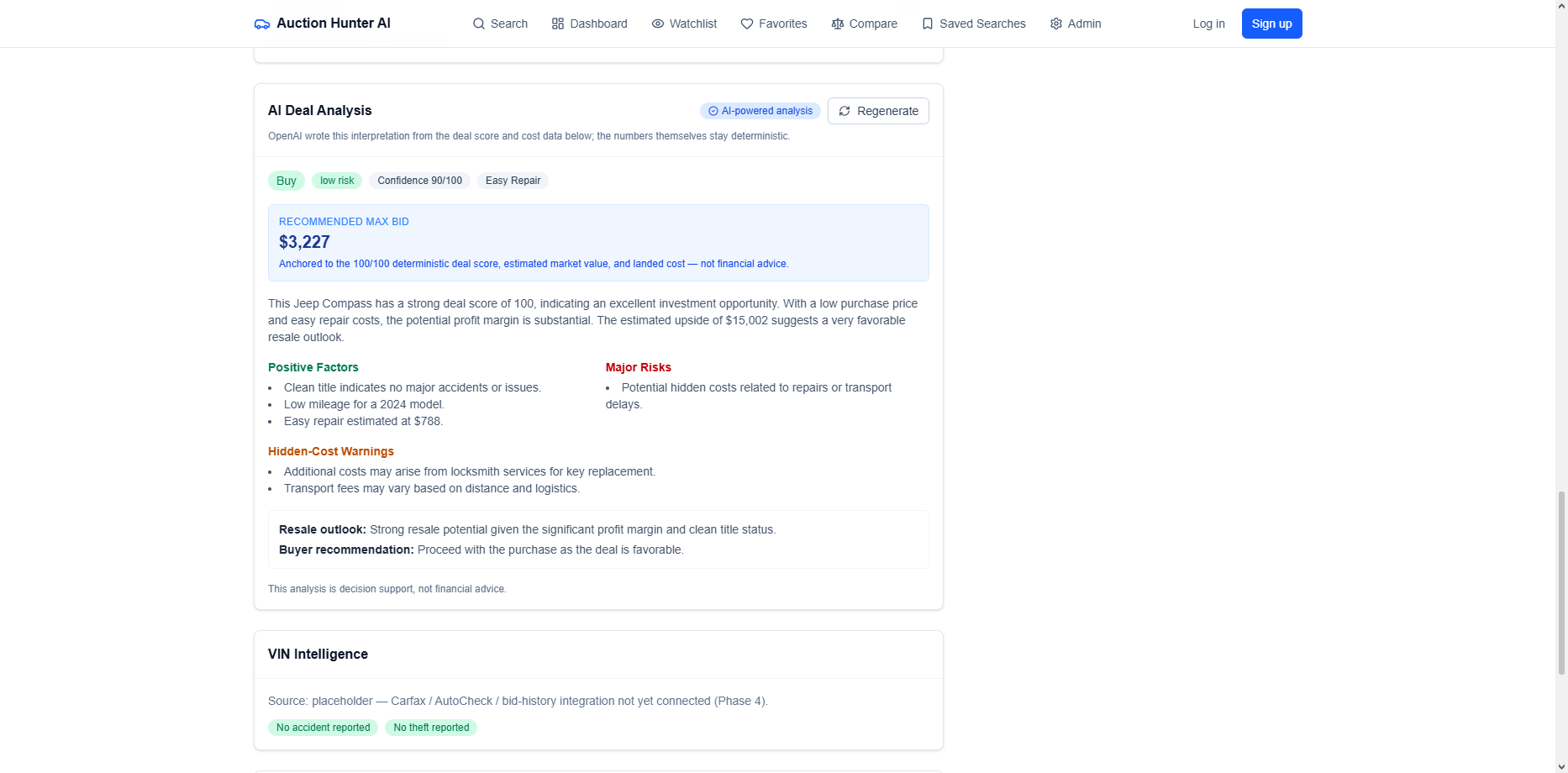
AI Analysis
-
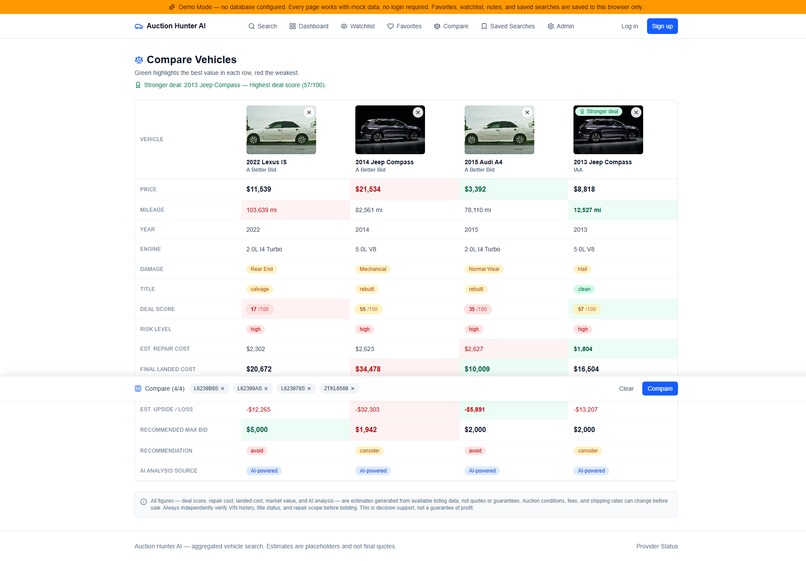
Compare
-
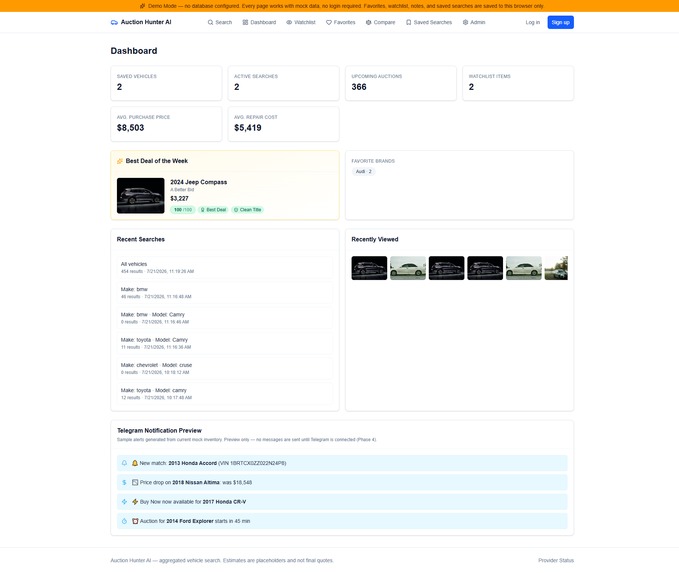
Dashboard
-
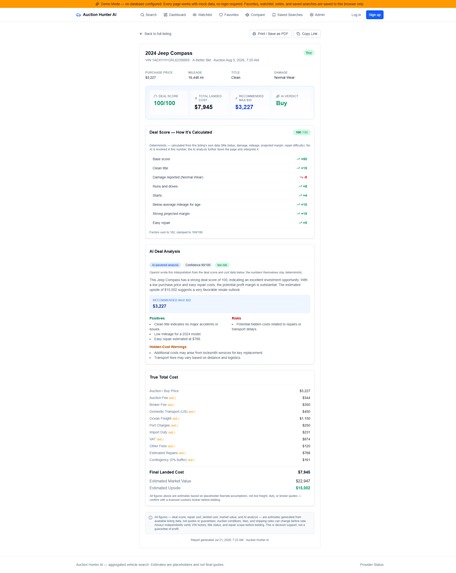
Report

Inspiration
Buying a vehicle from an online auction is much more complicated than comparing auction prices. Buyers must estimate auction fees, inland transportation, ocean shipping, import taxes, repairs, and many hidden costs before placing a bid.
Many buyers make expensive decisions because they focus only on the auction price and rely on manual calculations or intuition.
Auction Hunter AI was created to solve this problem by combining deterministic cost calculations with AI-powered analysis that helps buyers understand whether a vehicle is actually worth bidding on.
What it does
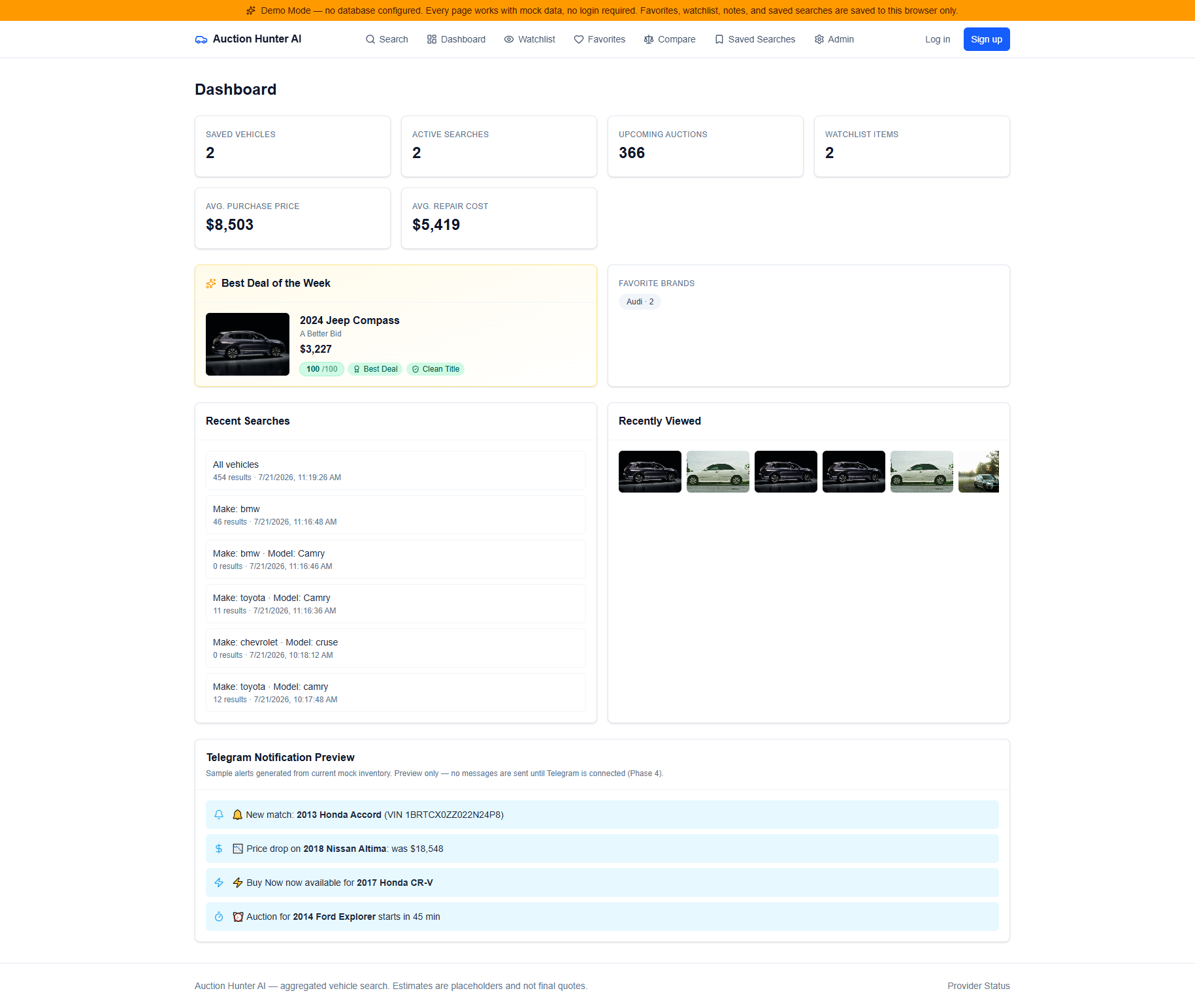
Auction Hunter AI aggregates vehicle listings from multiple auction providers into a single search experience.
For every vehicle it:
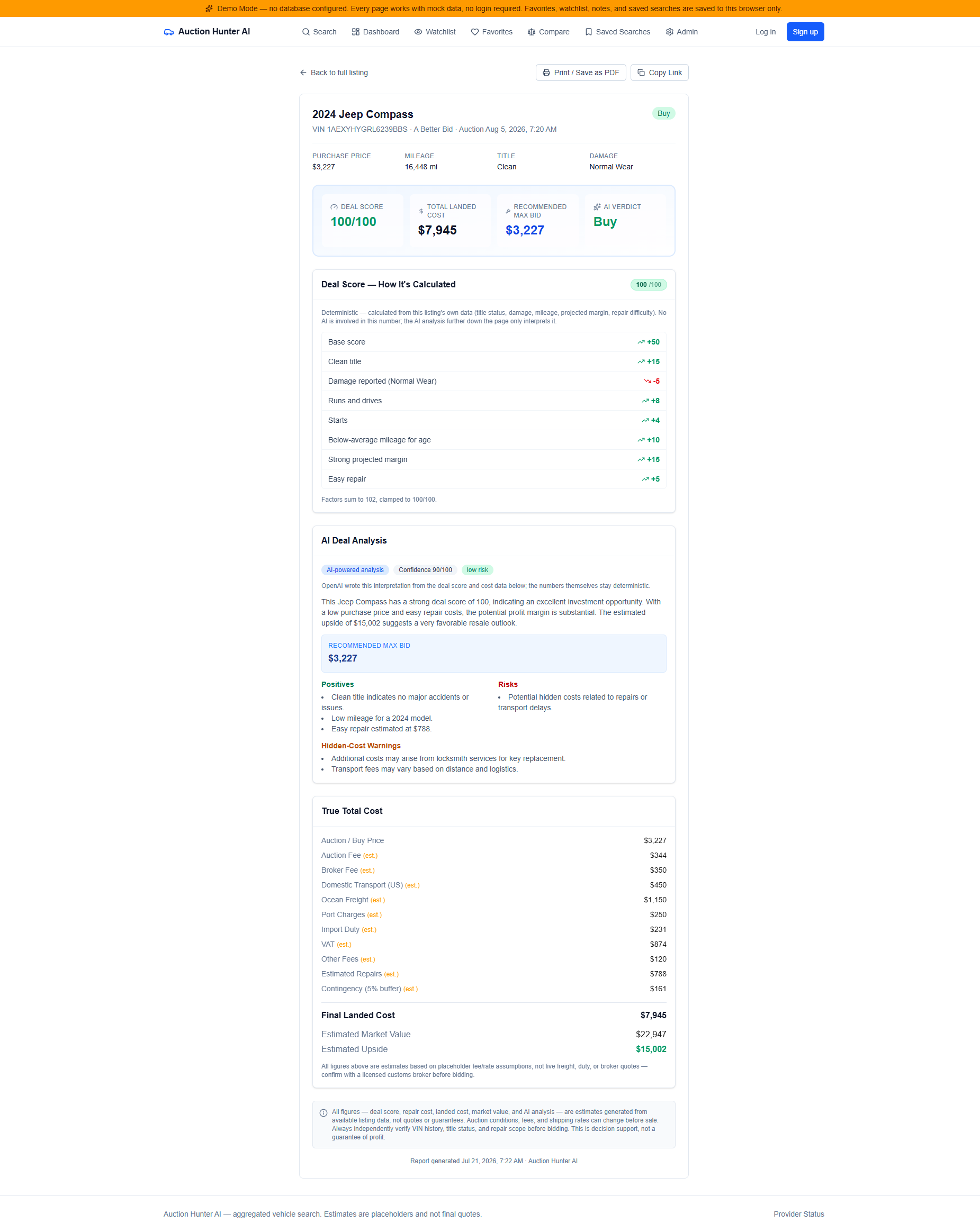
- Calculates the True Total Landed Cost
- Estimates repair expenses
- Calculates import-related costs
- Generates a transparent Deal Score
- Uses OpenAI to explain risks and opportunities
- Suggests a recommended maximum bid
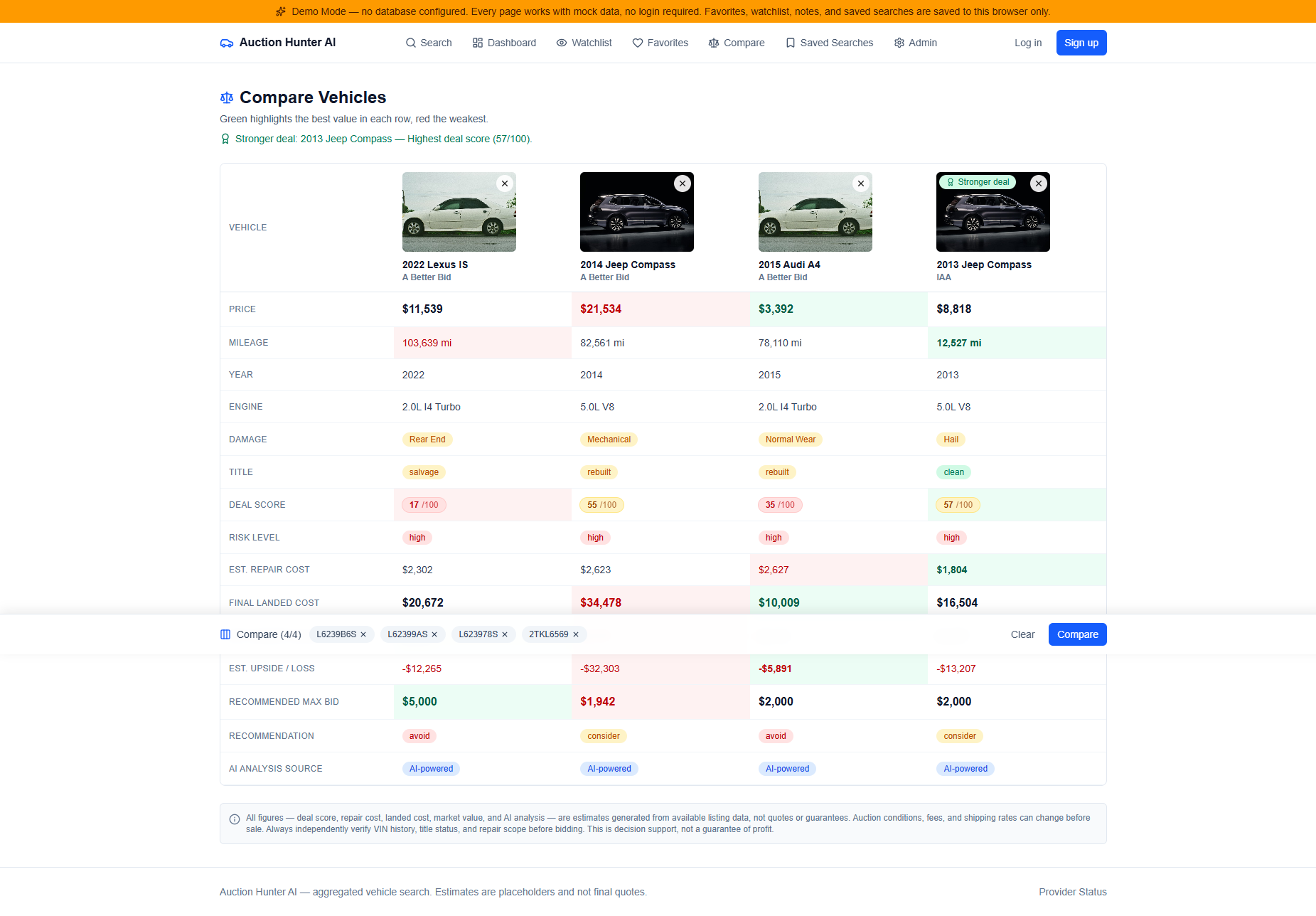
- Allows side-by-side vehicle comparison
- Generates a printable shareable report
The AI does not invent numbers. It interprets deterministic calculations and explains them in natural language.
How we built it
The application was built with Next.js, TypeScript and Prisma using a modular provider architecture.
Vehicle providers, cost calculators and AI providers are all isolated behind interfaces, allowing mock providers to be replaced with production integrations without changing the application architecture.
OpenAI is used server-side to generate structured vehicle analysis while deterministic business logic calculates every financial figure.
During development I used GPT-5.6 for planning, architecture discussions, design decisions, debugging and iterative development. I also worked with Codex during development and repository review, while completing the project after encountering a local Codex sandbox limitation.
Challenges we ran into
One of the biggest challenges was building an AI system that users could trust.
Instead of allowing the language model to generate arbitrary financial numbers, all calculations remain deterministic and the AI only interprets verified data.
Another challenge was creating a fully functional Demo Mode that works even without databases, auction credentials or external services while still demonstrating the complete product experience.
Accomplishments that we're proud of
- Production-quality modular architecture
- Transparent Deal Score explanation
- True Total Cost calculation
- OpenAI-powered vehicle analysis
- Graceful fallback when AI is unavailable
- Printable vehicle reports
- Responsive interface
- Complete Demo Mode requiring no setup
What we learned
Building trustworthy AI requires clearly separating deterministic calculations from AI interpretation.
Users gain far more confidence when every number can be audited while AI focuses on explaining risk, uncertainty and recommendations instead of generating financial values.
What's next
Future development includes:
- Live auction provider integrations
- VIN history integrations
- Real-time auction monitoring
- Telegram notifications
- Historical pricing analytics
- Multi-country import calculations
- Dealer collaboration features
Built With
- codex
- css
- github
- gpt-5.6
- next.js
- nextauth
- node.js
- openai
- postgresql
- prisma
- react
- tailwind
- typescript
- vercel
- vitest
- zod

Log in or sign up for Devpost to join the conversation.