-
-
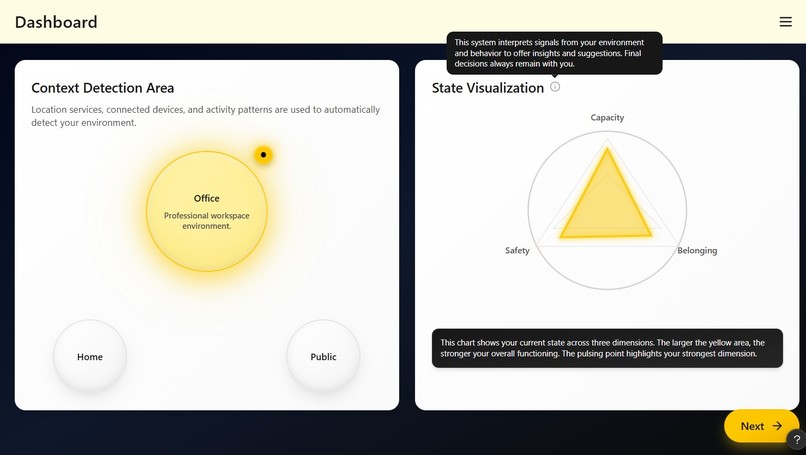
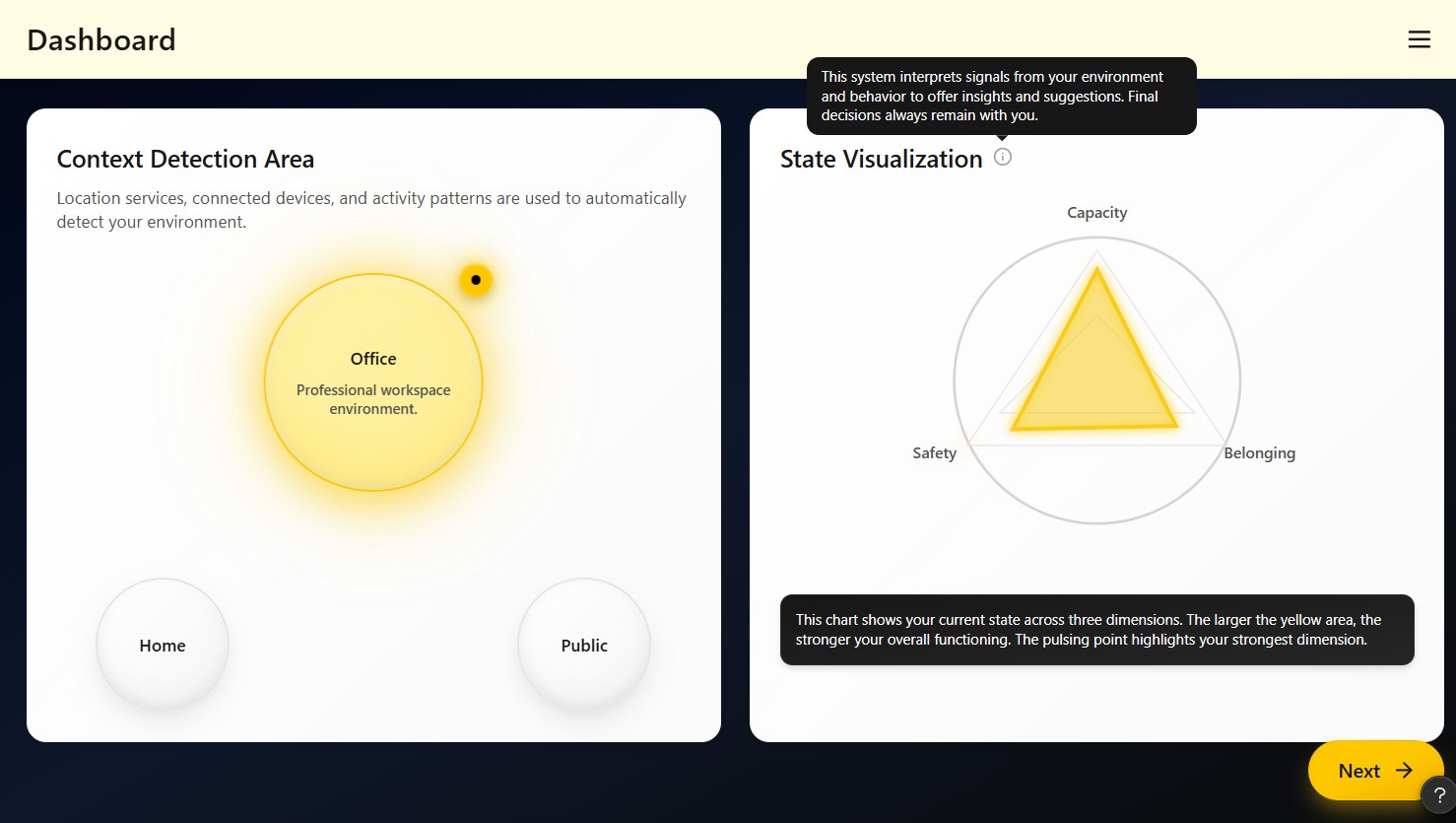
Dashboard Page
-
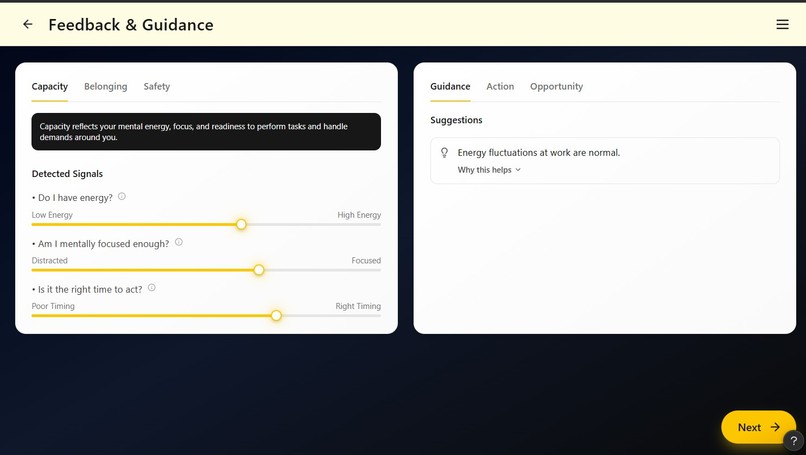
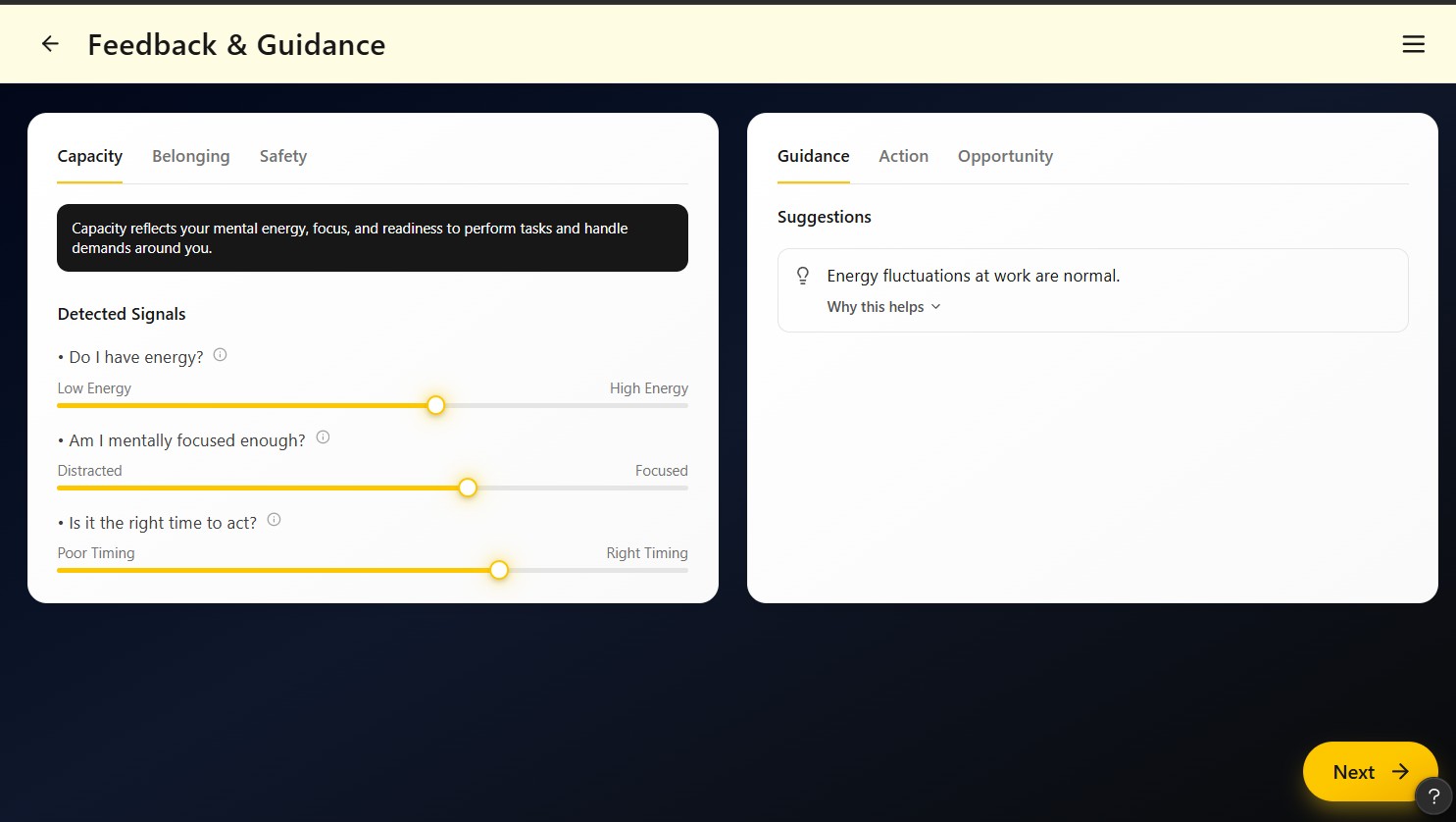
Feedback and Guidance System
-
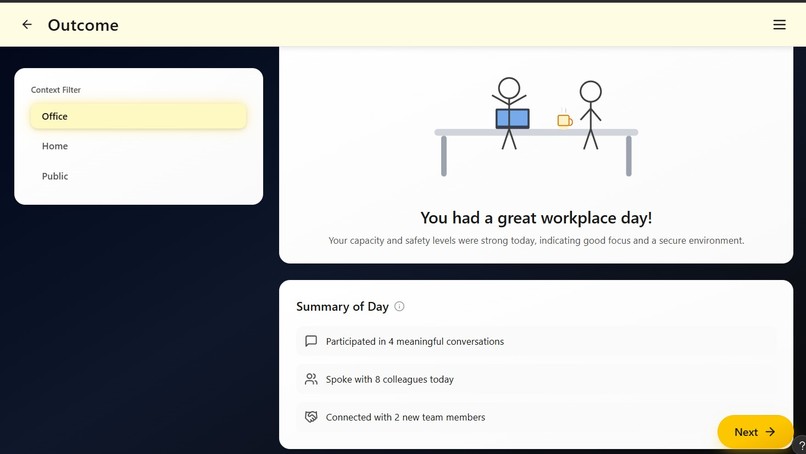
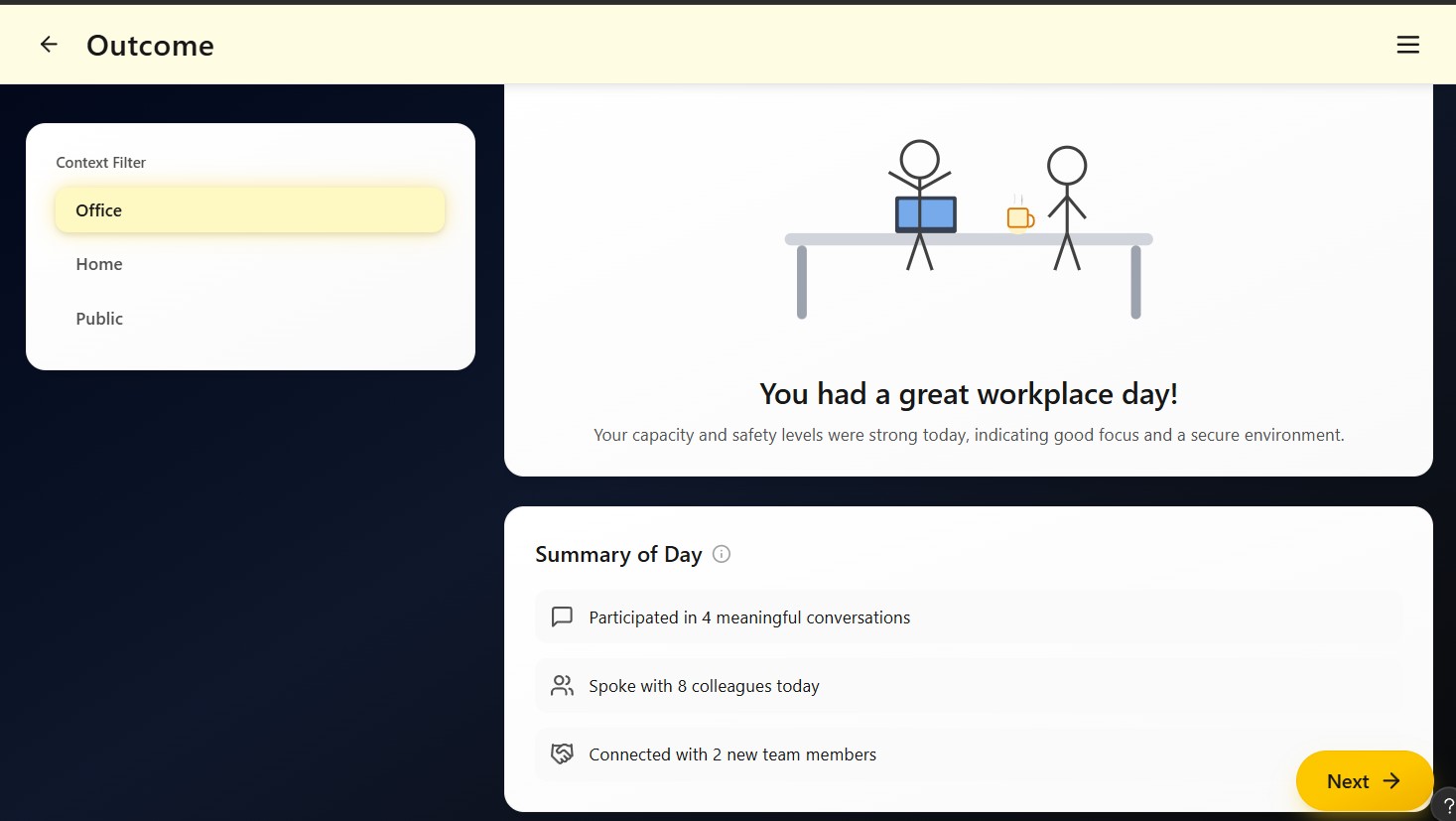
Outcome
-
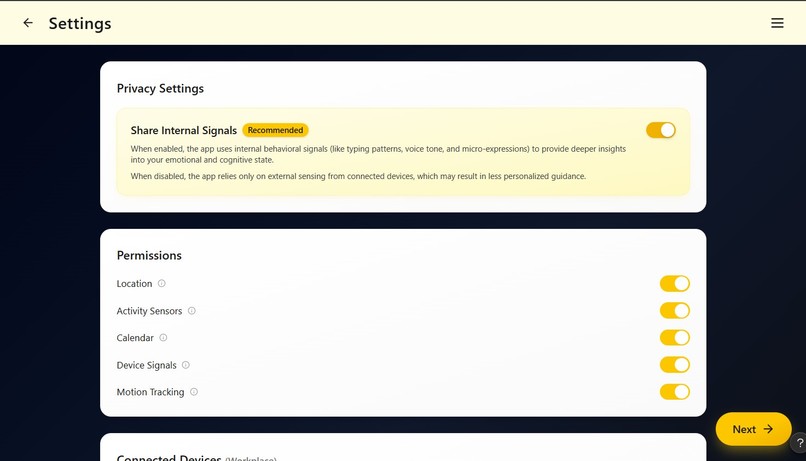
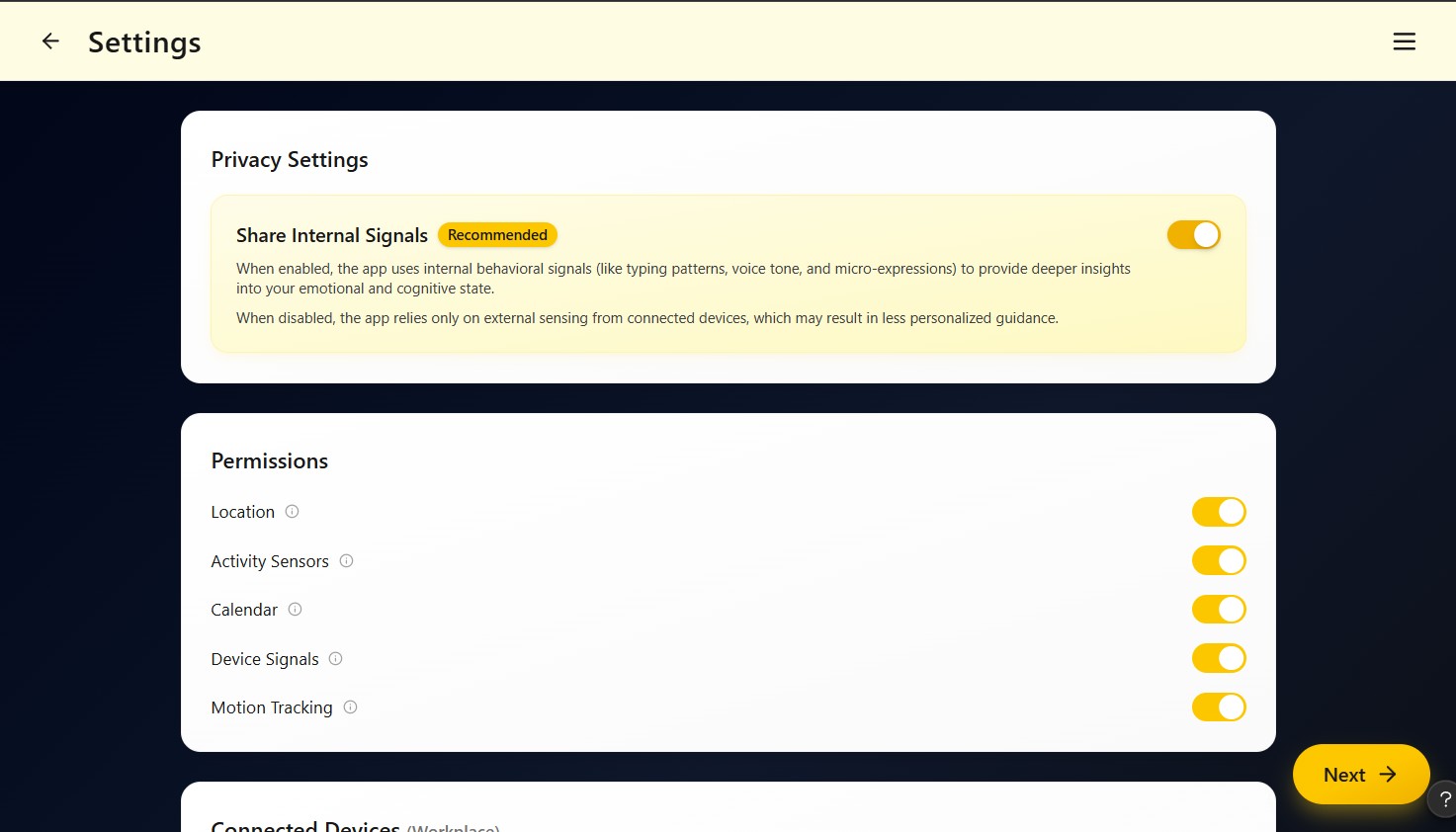
Settings Page
-
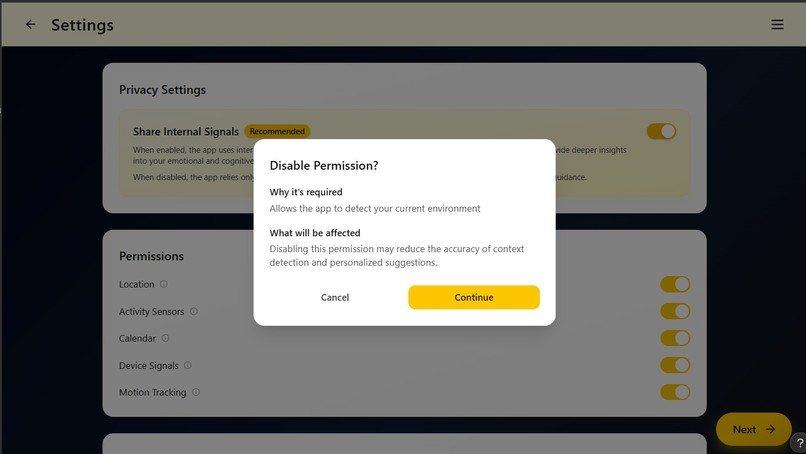
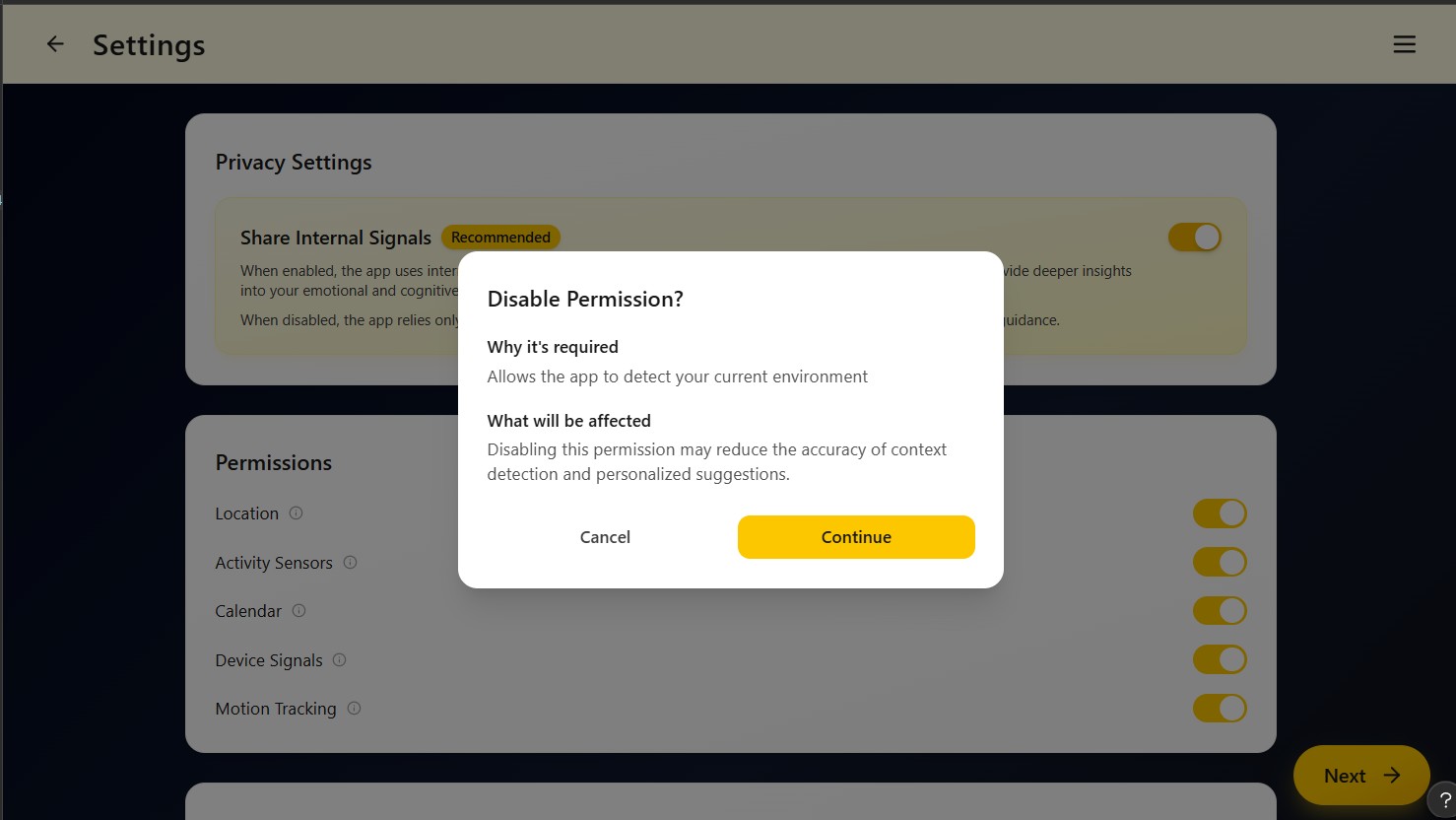
Settings Page with Privacy options
-
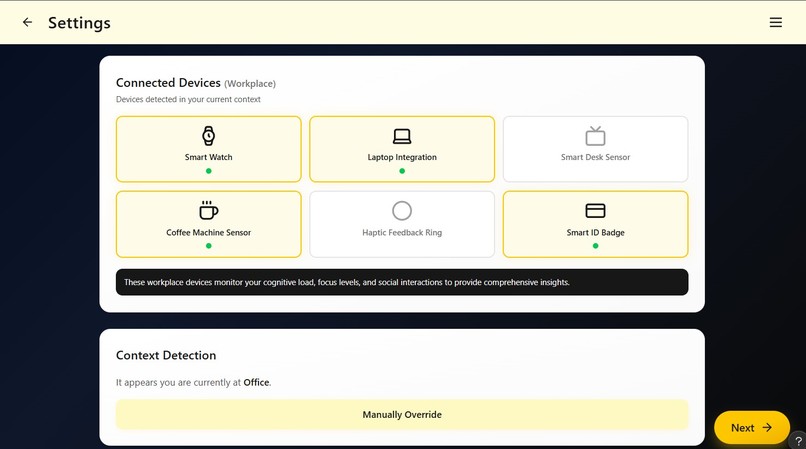
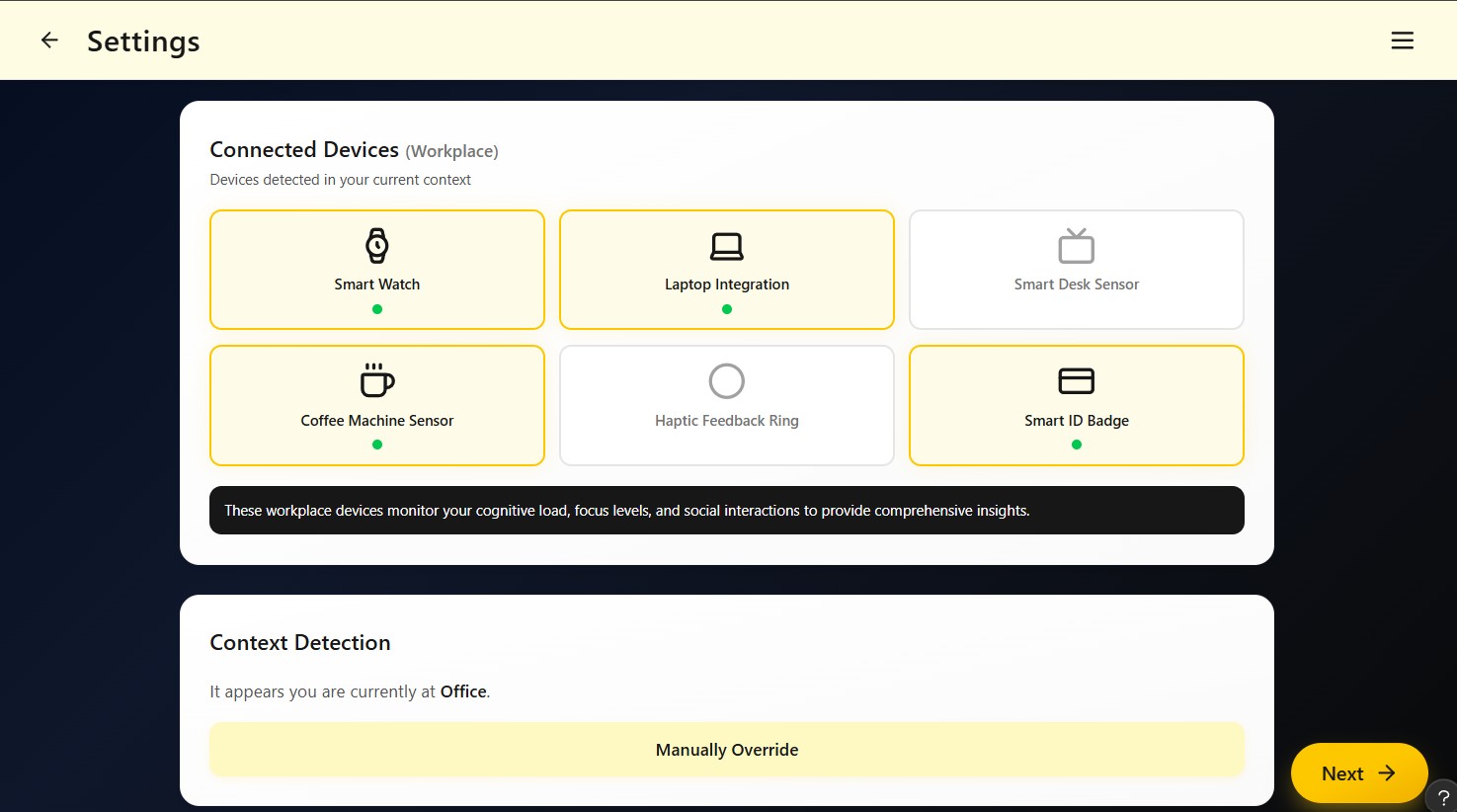
Currently Connected Devices
-
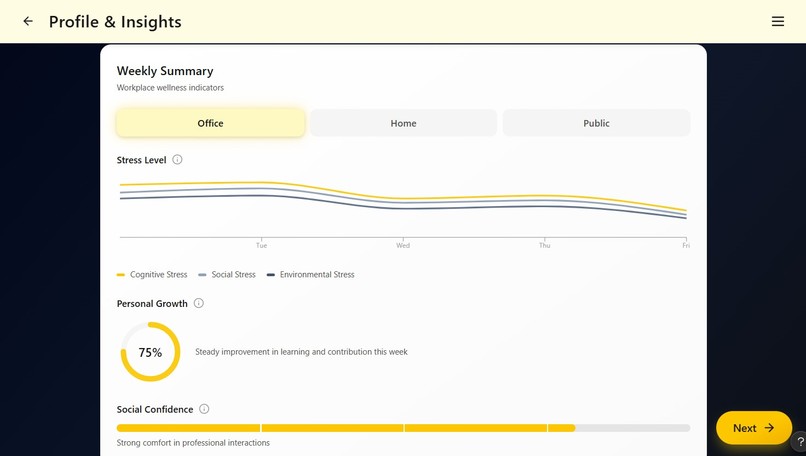
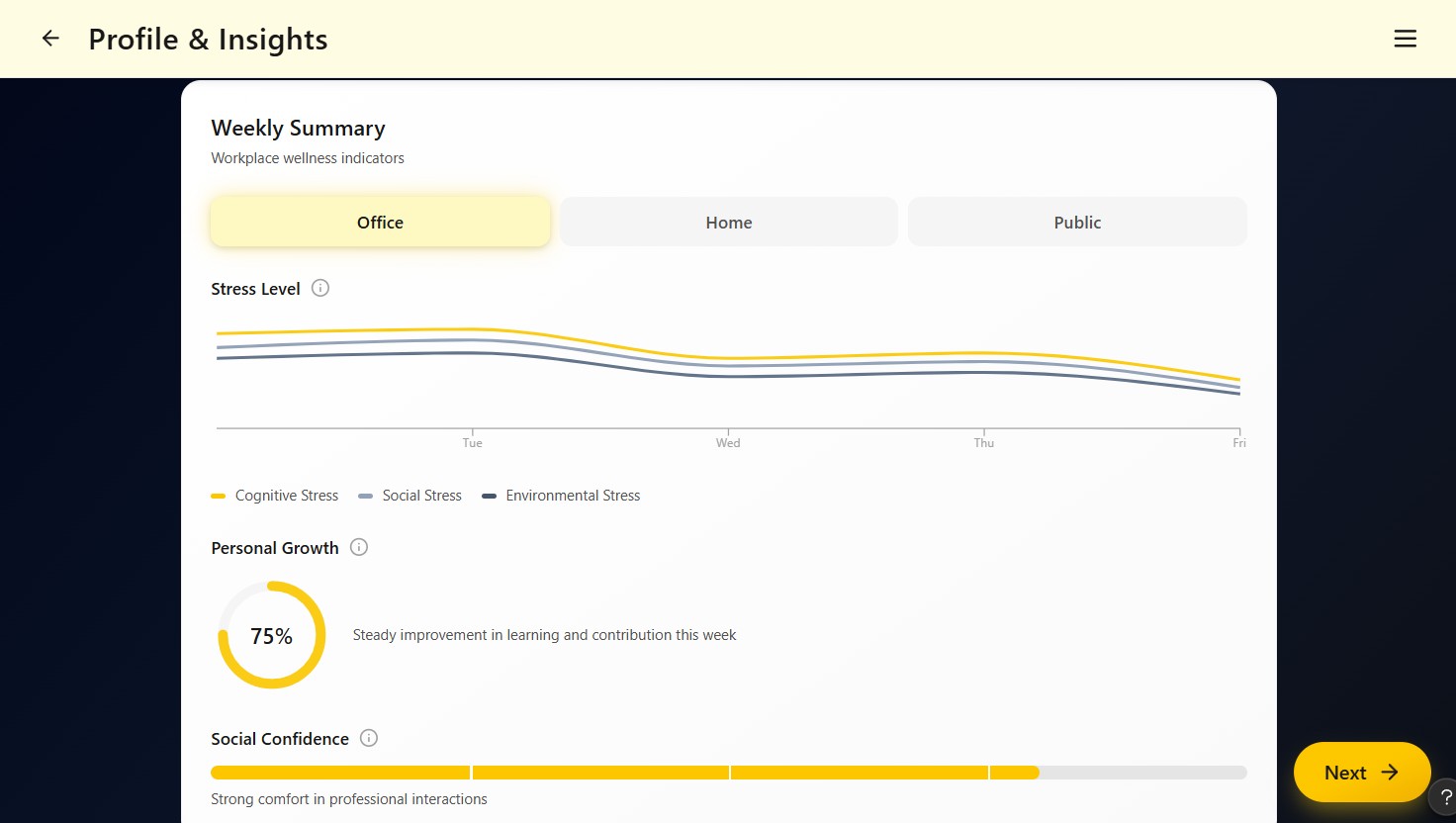
Profile Page with Weekly Summary
-
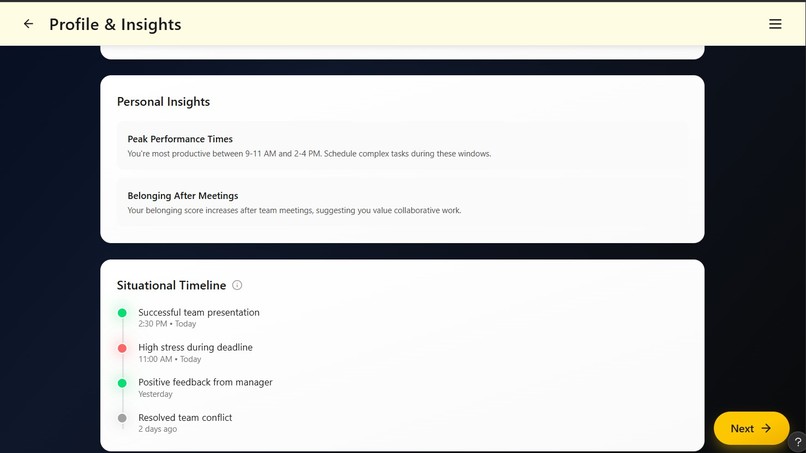
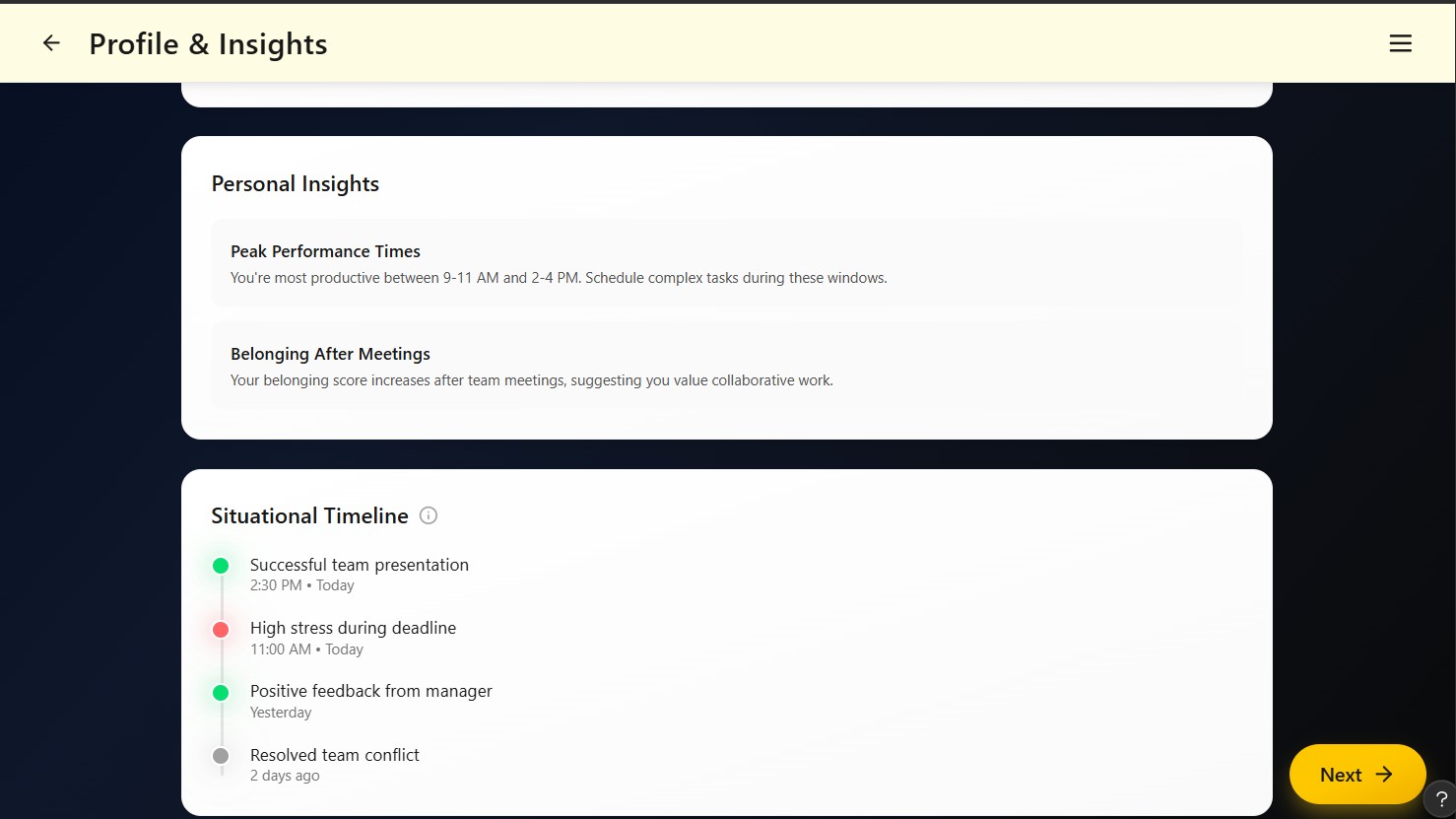
Profile Page
Project Story
Inspiration
Modern environments constantly require people to interpret subtle signals.
- Social cues during conversations
- Personal energy during work or study
- Environmental safety in unfamiliar places
However, many of these signals are difficult to recognize clearly in the moment.
Existing technologies focus on tracking health or productivity, but rarely help users understand the situational context around them.
Some common questions people face daily include:
- Do I have the energy to engage right now?
- Is this the right moment to speak?
- Is this environment comfortable or overwhelming?
These observations inspired the idea of designing a system that improves situational awareness.
Concept
The project explores a system that enhances awareness of three key signals.
- Capacity – mental energy, focus, and readiness to act
- Belonging – comfort and participation within a social setting
- Safety – signals indicating whether an environment feels secure
Together these signals form a new layer of perception that helps users better understand the moment they are in.
Instead of overwhelming users with raw data, the system translates signals into clear situational insights.
Design Approach
The project followed a human-centered design approach focused on everyday environments.
The process involved several steps:
- Researching human behavioral and environmental signals
- Identifying patterns that affect decision-making and comfort
- Simplifying these signals into three core perception layers
- Designing visual scales and contextual interface feedback
The design focused on three common contexts:
- Home
- Workplace
- Public environments
Each context introduces different signals and interaction needs.
Building the Prototype
The prototype was designed as a connected sensing ecosystem.
Different environments provide different types of information:
- Home focuses on recovery and personal energy balance
- Work focuses on collaboration and participation signals
- Public spaces focus on environmental awareness and safety
These signals are interpreted by the system and presented through a unified interface.
The interface prioritizes:
- simple visual indicators
- contextual insights
- minimal cognitive load
Challenges
One major challenge was translating abstract psychological signals into meaningful interactions.
Signals like belonging or safety are subjective and depend heavily on context.
Another challenge was preventing information overload.
To address this, the system was designed to:
- show only relevant insights
- avoid constant notifications
- use simple visual scales instead of complex metrics
Making sure futuristic concepts could work with current technology as well as future inventions was also an important consideration.
What We Learned
This project highlighted that designing new forms of perception is not only about collecting more data.
The greater challenge is interpreting signals in ways that are useful, understandable, and respectful of users.
Key learnings include:
- context strongly influences how signals should be interpreted
- subtle feedback can be more effective than constant alerts
- situational awareness can improve both emotional and behavioral outcomes
The project ultimately explores how technology can move beyond tracking metrics and instead support better awareness of human environments and experiences.
Built With
- figma
- figmamake
- figmaslides

Log in or sign up for Devpost to join the conversation.