Inspiration
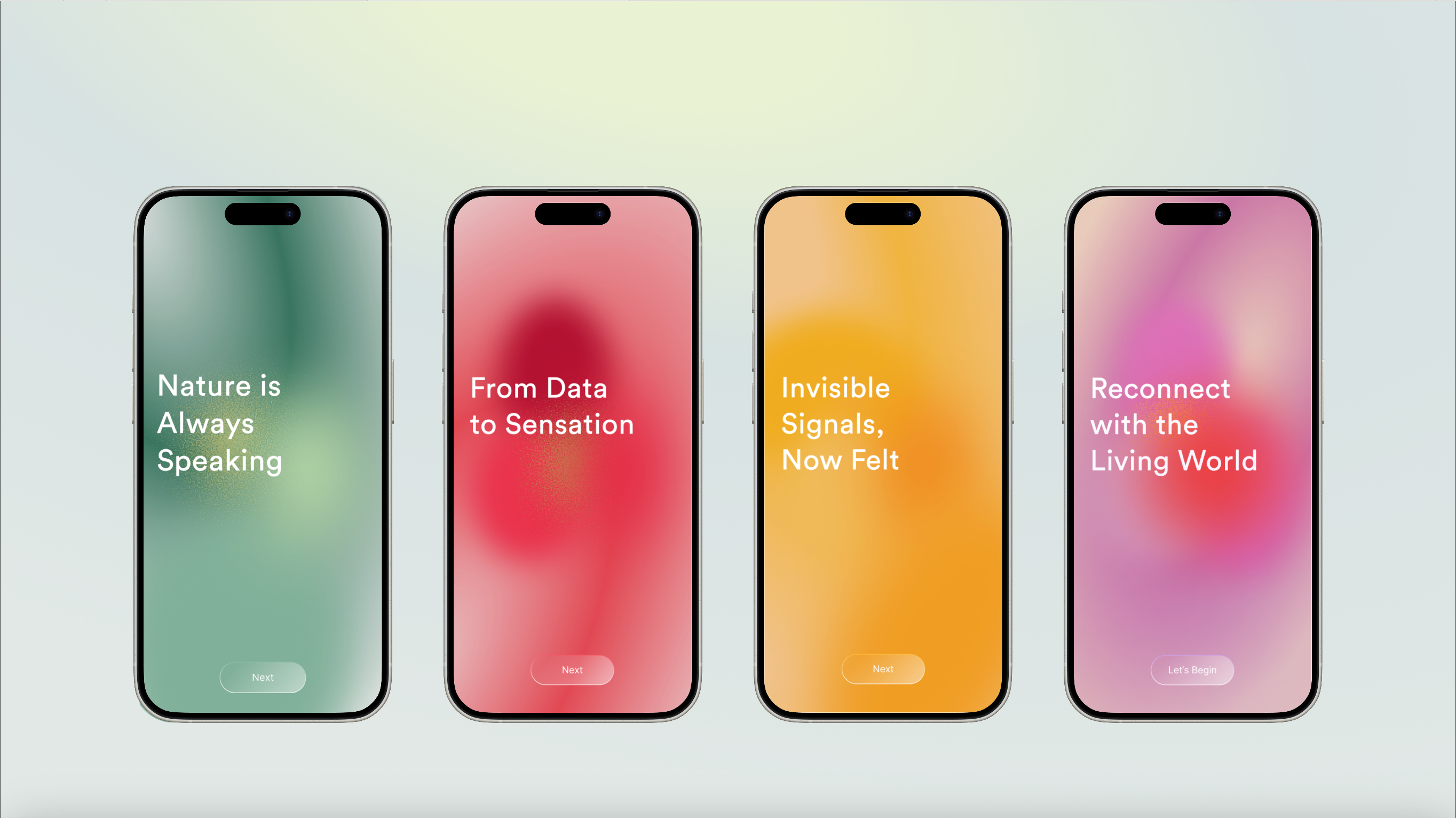
Attune explores how environmental signals can be translated into sensory experiences the body can feel. Our project began with a simple observation: humans are part of nature. Many structures in the human body resemble patterns found in ecosystems. Blood vessels and rivers share branching structures. Human lungs resemble tree branches. Fingerprints echo the rings of a tree trunk. These similarities suggest that the human body and natural systems follow similar patterns of exchange and connection. However, modern environments have gradually distanced us from these rhythms. Many environmental signals that influence ecosystems—such as radiation intensity or ecological stress—are invisible to human perception. We usually understand them only through scientific data or reports. This led us to ask a question: What if the body could sense the environment again? Instead of presenting environmental data through numbers or dashboards, we explored how environmental signals could be translated into sensory experiences that people can feel. Our goal was not to build another environmental monitoring tool, but to explore a new way of reconnecting human perception with the ecosystem.
What it does
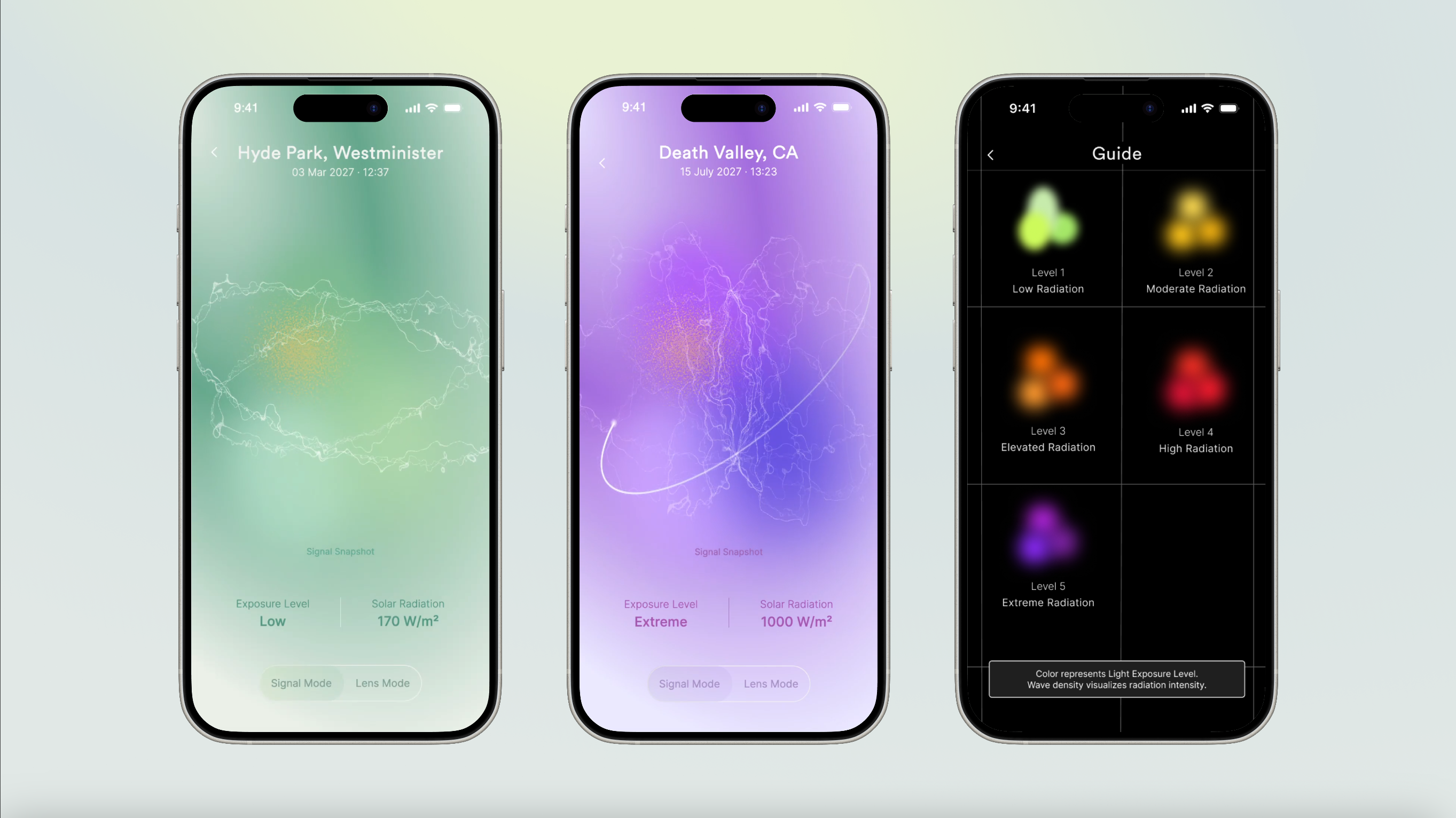
Attune is a system that translates environmental signals into sensory experiences. The tool detects environmental conditions and transforms them into visual and haptic feedback that the body can perceive. The system includes two primary interaction modes and a recording mechanism. Lens Mode allows users to point the device at their surroundings and reveal normally invisible environmental signals through visual overlays. Signal Mode translates environmental data into subtle sensory feedback through vibration and visual cues so that users can feel environmental change through their bodies. When users want to collect a moment from the environment, they activate the Record button on the home screen to enter a recording state. In this state, pressing the physical side button on the phone triggers a signal capture, allowing the user to record a specific environmental moment. These captured signals are then stored in the Gallery, which functions as a personal archive reflecting the user's ecological experiences over time. Together these interactions create a cycle of environmental perception: See → Feel → Capture → Remember.
How we built it
We developed a prototype that integrates environmental sensing with interactive feedback. Environmental data is collected through sensors and processed to identify meaningful changes in ecosystem conditions. These signals are then translated into sensory outputs such as visual patterns and haptic feedback. On the interface side, we designed interaction modes that allow users to explore environmental signals in different ways. Lens Mode focuses on visual exploration, while Signal Mode emphasizes embodied perception through haptic feedback. When users want to preserve a moment from the environment, they activate the Record button on the home interface and use the device's physical side button to trigger a signal capture. Each captured signal is then saved to the Gallery, which acts as a personal ecological archive where users can revisit previously recorded environmental moments. The system combines sensing, interaction design, and narrative experience to create a new form of environmental awareness.
Challenges we ran into
One major challenge was translating complex environmental data into sensory feedback that remains intuitive and comfortable for users. Environmental signals can change frequently and may easily overwhelm users if presented directly. We had to carefully design feedback intensity so that signals remain subtle while still conveying meaningful information. Another challenge was preventing misinterpretation of environmental data. Instead of presenting raw measurements, we focused on communicating environmental states in a way that users can understand intuitively. Finally, we needed to consider ethical implications of environmental sensing. Because environmental data can be connected to locations and personal experiences, we designed the system so that recorded information remains private and locally stored.
Accomplishments that we're proud of
We are proud that the project successfully reframes environmental data as a sensory experience rather than numerical information. Instead of asking users to interpret charts or statistics, the system allows people to feel environmental change directly through their bodies. We are also proud of the narrative design of the experience. The project connects scientific sensing with a philosophical perspective about the relationship between humans and nature. Finally, we developed a working prototype that demonstrates how environmental sensing, interface design, and sensory feedback can work together as a coherent system.
What we learned
Through this project we learned that expanding perception can be a powerful direction for interaction design. When environmental signals are experienced through the body rather than displayed as data, they can create stronger emotional engagement and awareness. We also learned that environmental technologies should not only inform people but also encourage reflection about our relationship with ecosystems. Design can play a role in making invisible processes perceptible and meaningful.
What's next for Attune
Future development of Attune could explore more advanced environmental sensing and richer forms of sensory feedback. We would like to experiment with additional environmental signals such as air quality, temperature changes, and ecosystem activity. Another direction is exploring how long-term ecological archives could help people reflect on their relationship with specific places and environments. Ultimately, Attune could evolve into a platform that helps people reconnect with natural rhythms and better understand the ecosystems they live within.
Built With
- ae
- capcut
- figma
- figmamake
- photoshop
- procreate
- touchdesigner


Log in or sign up for Devpost to join the conversation.