-
-
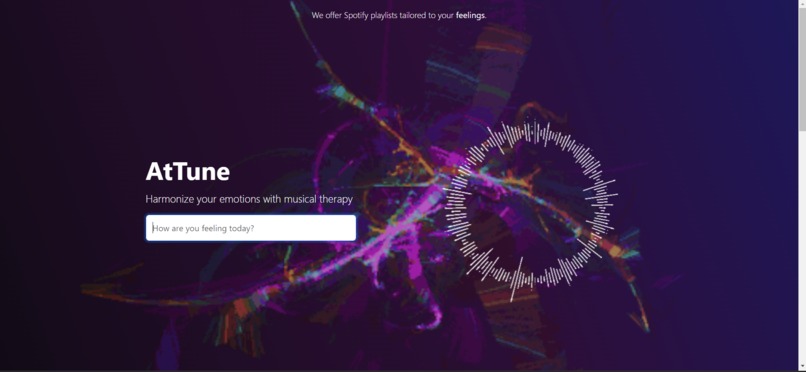
Top of the Page
-
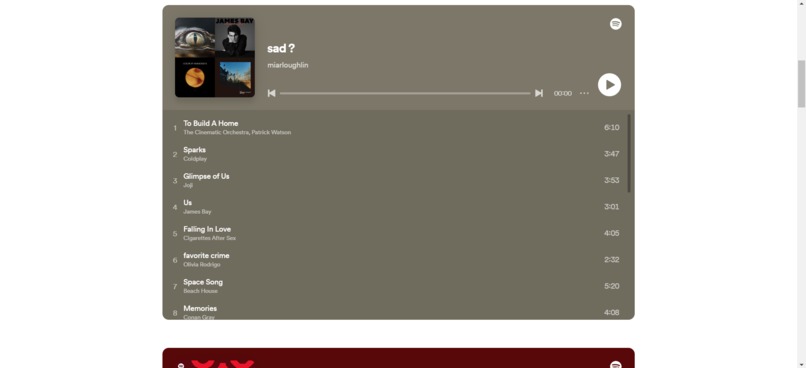
Search Results
-
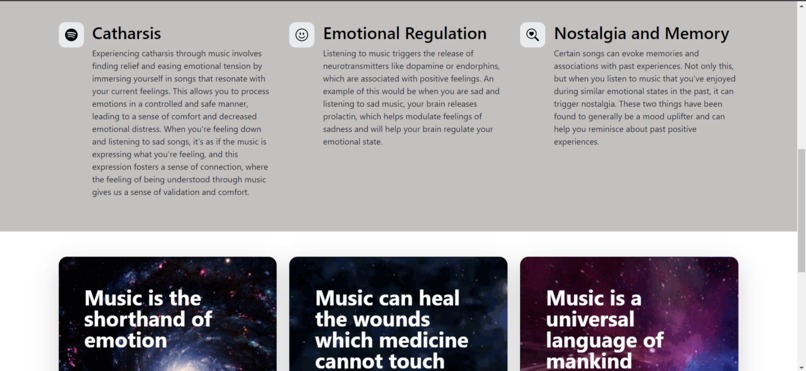
Middle of the page
-
Bottom of the page
Inspiration
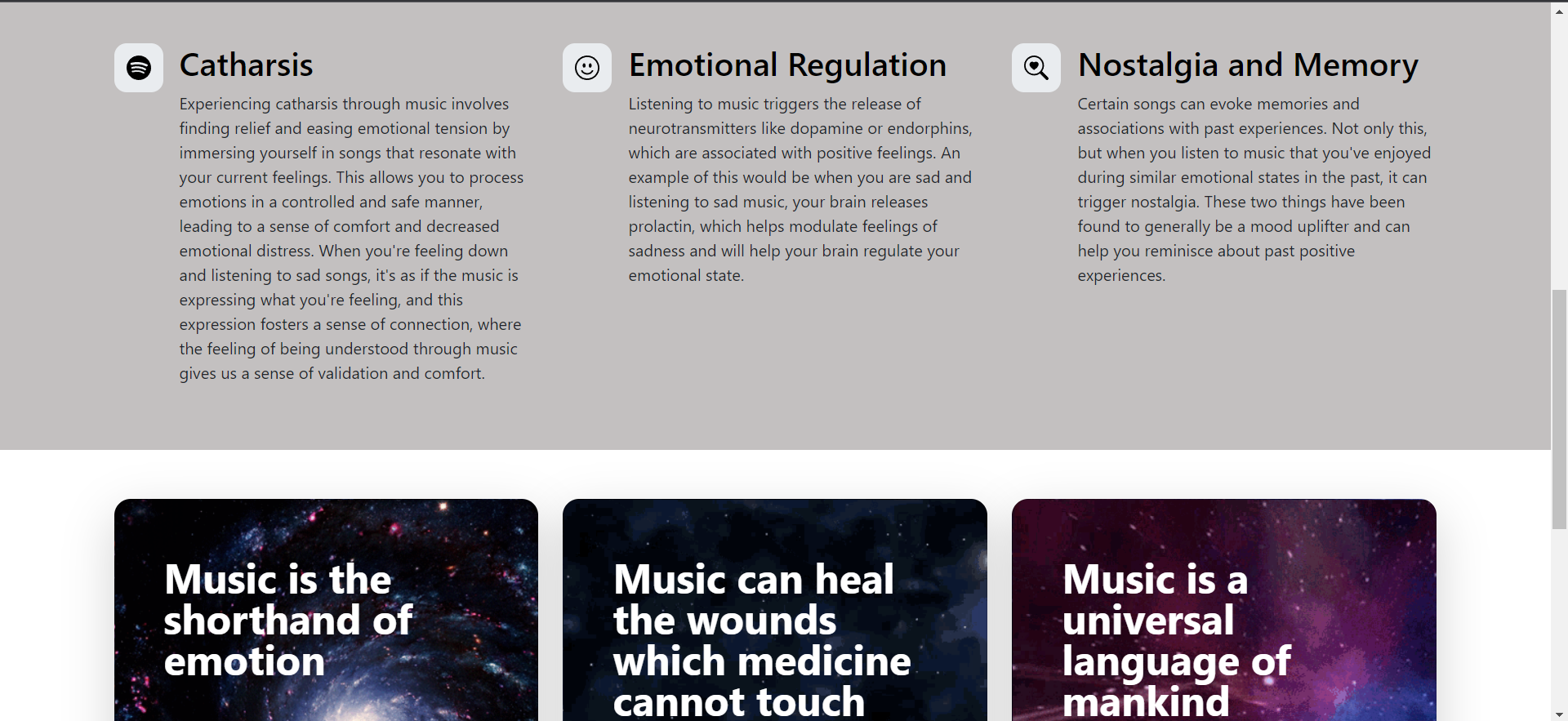
After discovering how music can essentially soothe emotions (e.x. reading upon journals that detail how melancholy songs can comfort listeners and how heavy metal can calm anger), we decided to create a platform that can help listeners who may be feeling down and allow music to do its job: healing. Individuals with mental health problems or intensive fluctuating moods can utilize this platform to channel their emotions through music and enhance their daily lives with more emotional control.
What it does
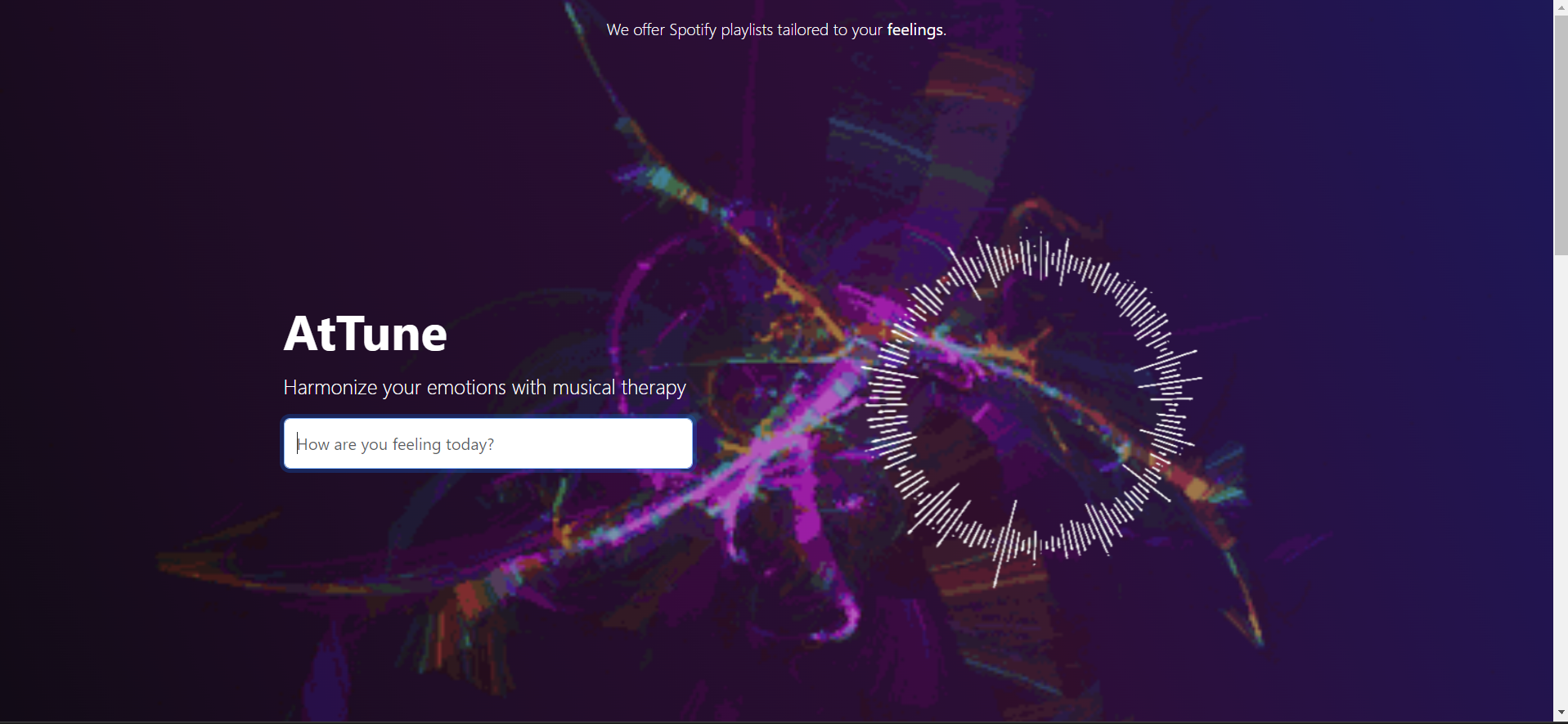
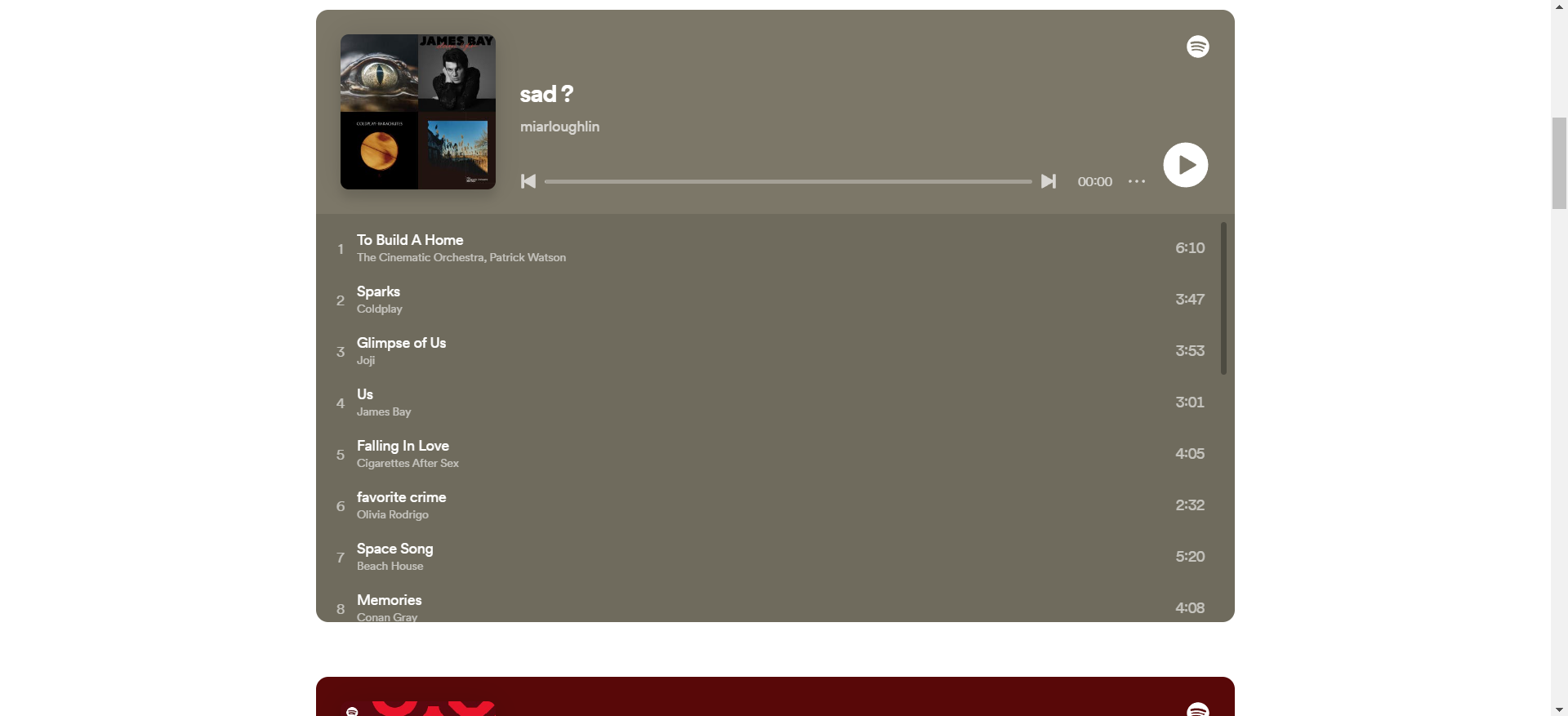
Our platform allows users to enter their current emotion into a search bar, and utilizing the Spotify API, 5 playlists are returned to the user that are tailored for their entered emotion.
How we built it
We developed our front page by combining bootstrap and plain CSS. Our front page prominently features a search bar, which serves as the bridge to our backend. For the backend implementation, we employed Python and established a connection to the frontend using Flask.
Challenges we ran into
During our original idea, we wanted to have the user speak into their microphone and have an AI identify their feelings through their tone. However, this plan came with the drawback of cost or extended waiting times to access such programs. Because of this, it was not very convenient for us to get our hands on an AI that would be able to do this for us. Consequently, brainstorming an alternative unique idea became challenging, leading us to ultimately embrace this submitted concept. Due to scheduling issues, we had to start 9 hours after the beginning of the hackathon, and we are submitting now because of scheduling issues as well.
Accomplishments that we're proud of
We are proud of creating a visually appealing website that functions as well as it currently does, especially on the extra tight time constraint. We are proud of ourselves for gaining sufficient flask and the Spotify API knowledge through tutorials and documentation in this time period.
What we learned
We learned how to use the Spotify API, how to use Flask, and Bootstrap for this project. On top of this, we developed our front-end skills through producing the best looking website we've created so far in our coding careers, as well as the most back-end incorporated project.
What's next for AtTune
For our next developments on AtTune, we plan to implement an API that can take the user's audio input from their microphone (through a click of a button) and determine a single emotion from their tone.


Log in or sign up for Devpost to join the conversation.