
HumanQueue — The Control Plane for Human Boundaries
Inspiration
AI agents are increasingly capable of working autonomously, but there is a critical problem: when an agent needs human judgment, the person may not be present in the original session.
Background agents can become stuck waiting for approval. Important requests can disappear into terminal sessions, and even after a decision is made, returning it safely to the exact waiting execution can be difficult.
HumanQueue explores a simple idea: autonomous work can run anywhere, but human judgment needs a reliable address and a return path.
What it does
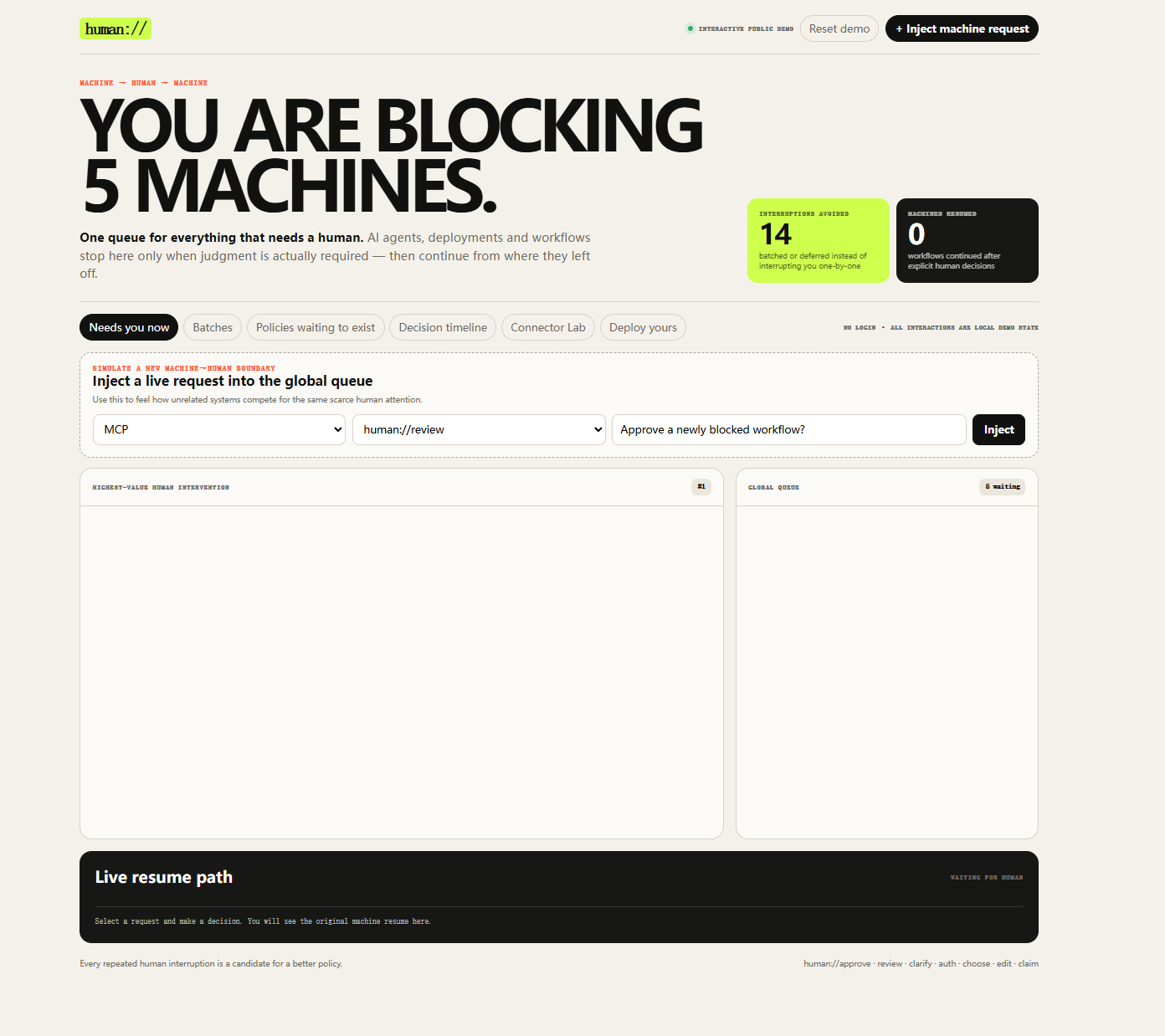
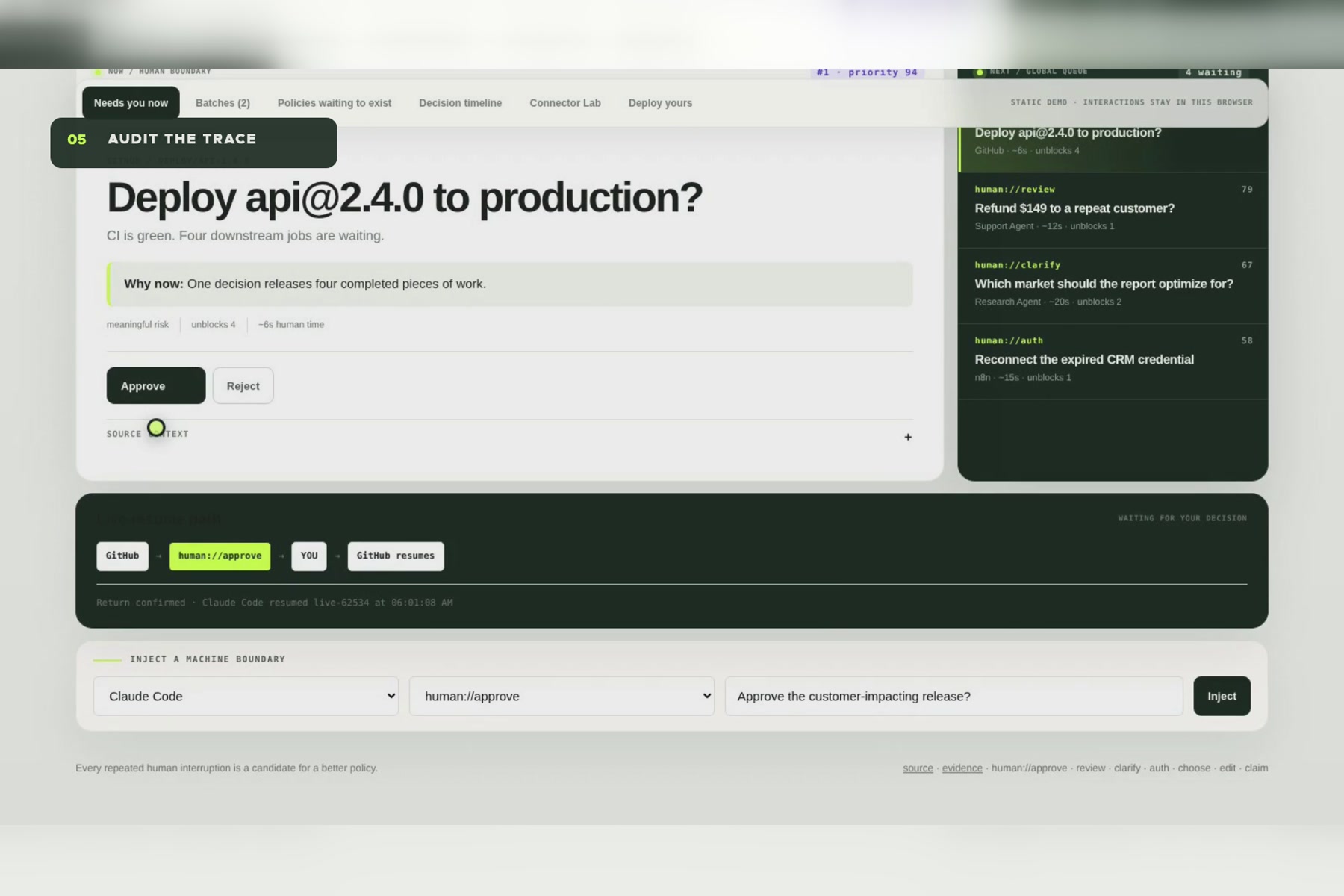
HumanQueue, also known as human://, provides infrastructure for managing human intervention in autonomous workflows.
It enables agents to:
- Create structured requests for human decisions.
- Preserve the identity and context of the waiting execution.
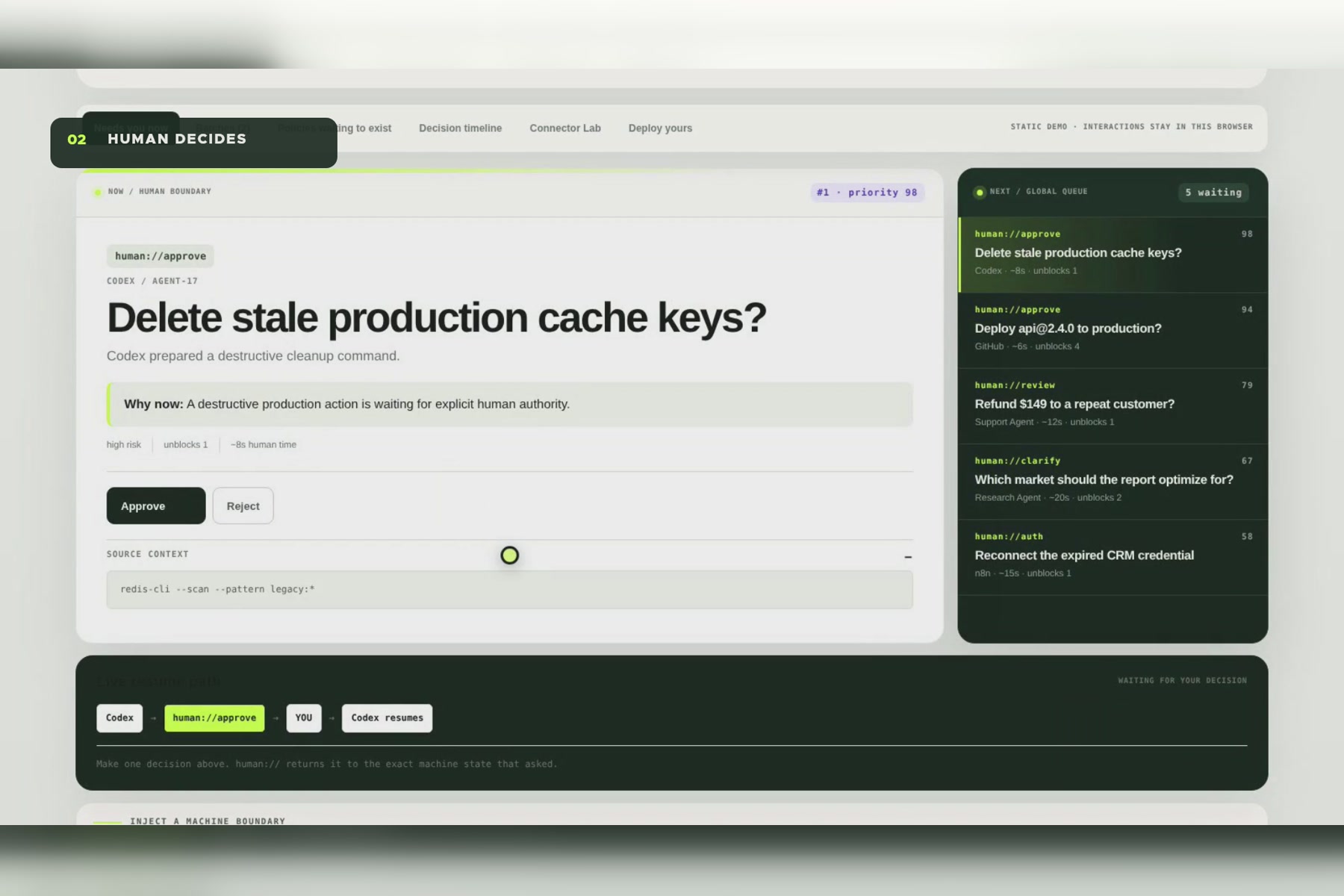
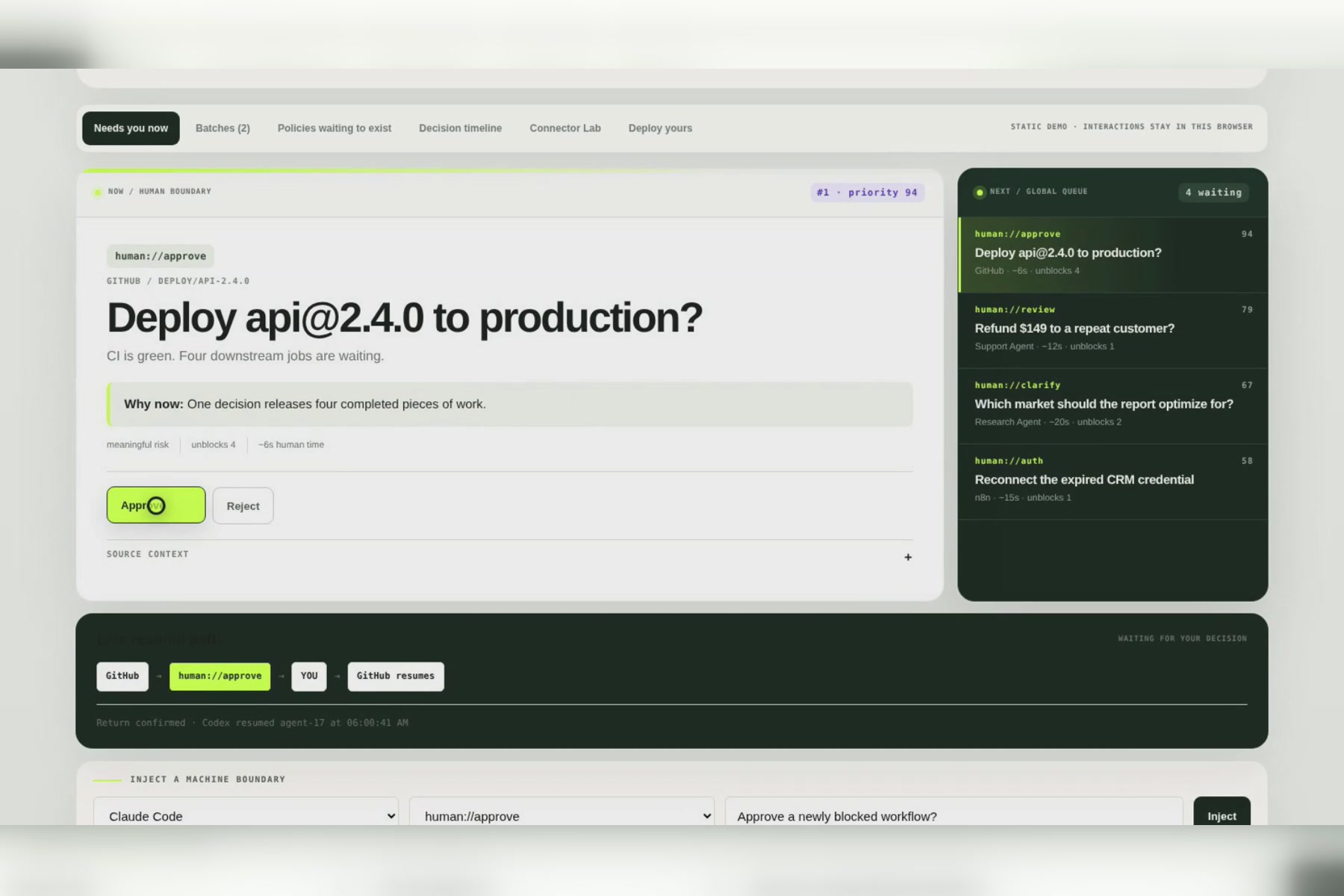
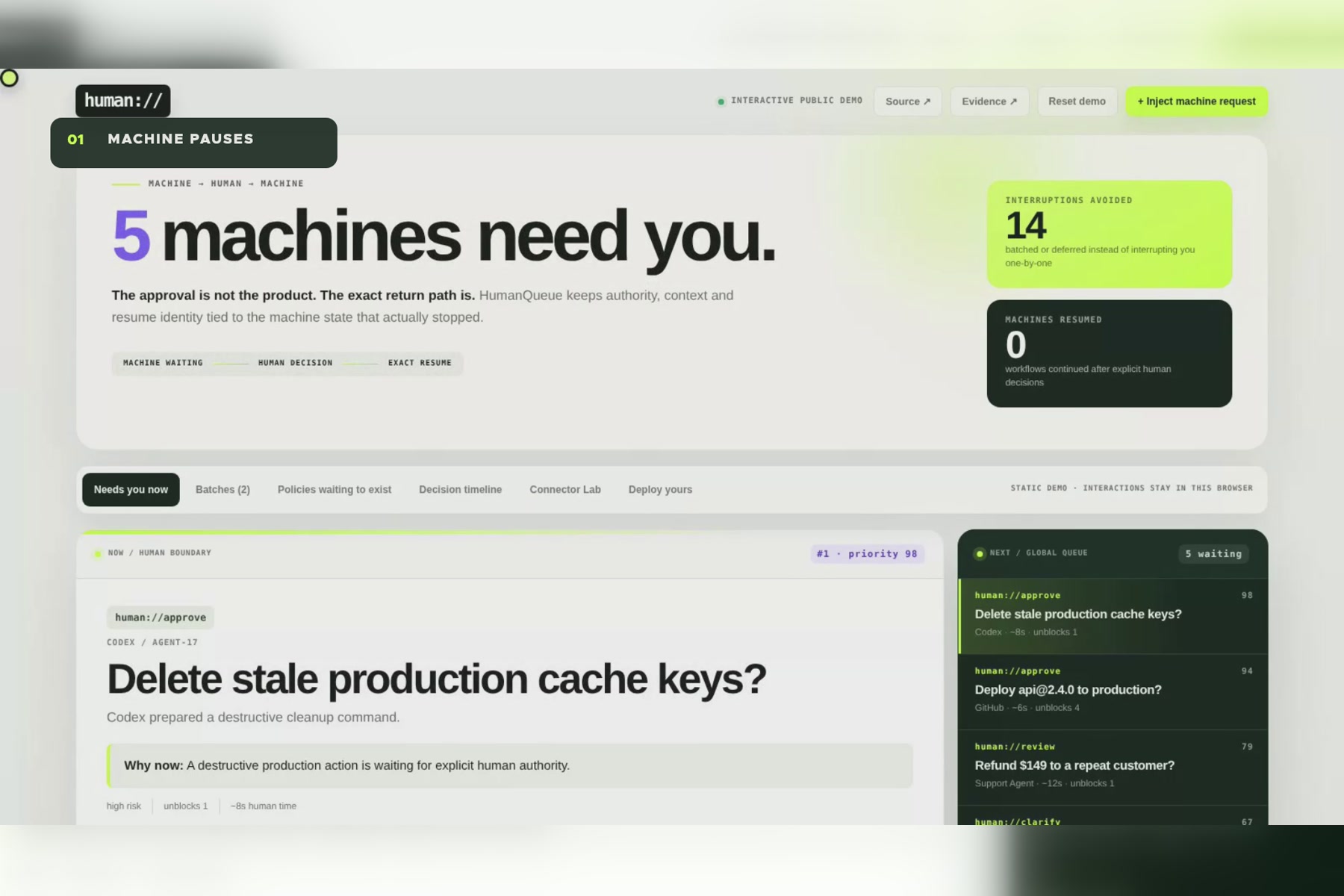
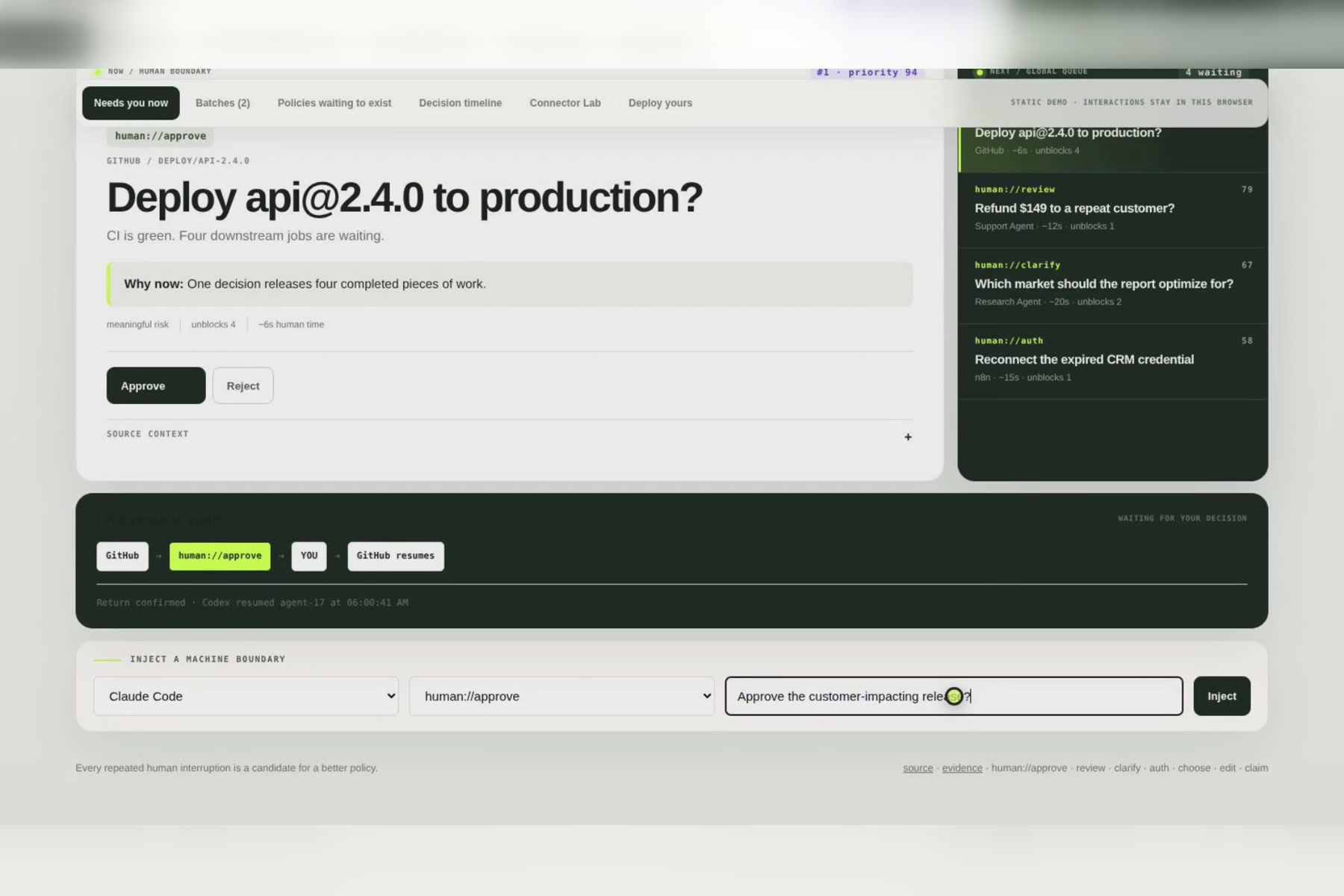
- Present decisions through an operator dashboard.
- Record approvals, rejections, and audit events.
- Resume the appropriate workflow after a decision.
- Handle ambiguous network failures without blindly repeating potentially harmful operations.
The goal is not simply to build another approval inbox. It is to make human intervention a reliable part of autonomous execution.
How we built it
The system uses Python, FastAPI, SQLite, and web technologies.
A persistent gateway manages human-boundary requests, while SDKs and runtime integrations connect agent workflows to the decision lifecycle.
The architecture emphasizes idempotency, durable request identities, auditable decisions, and safe recovery.
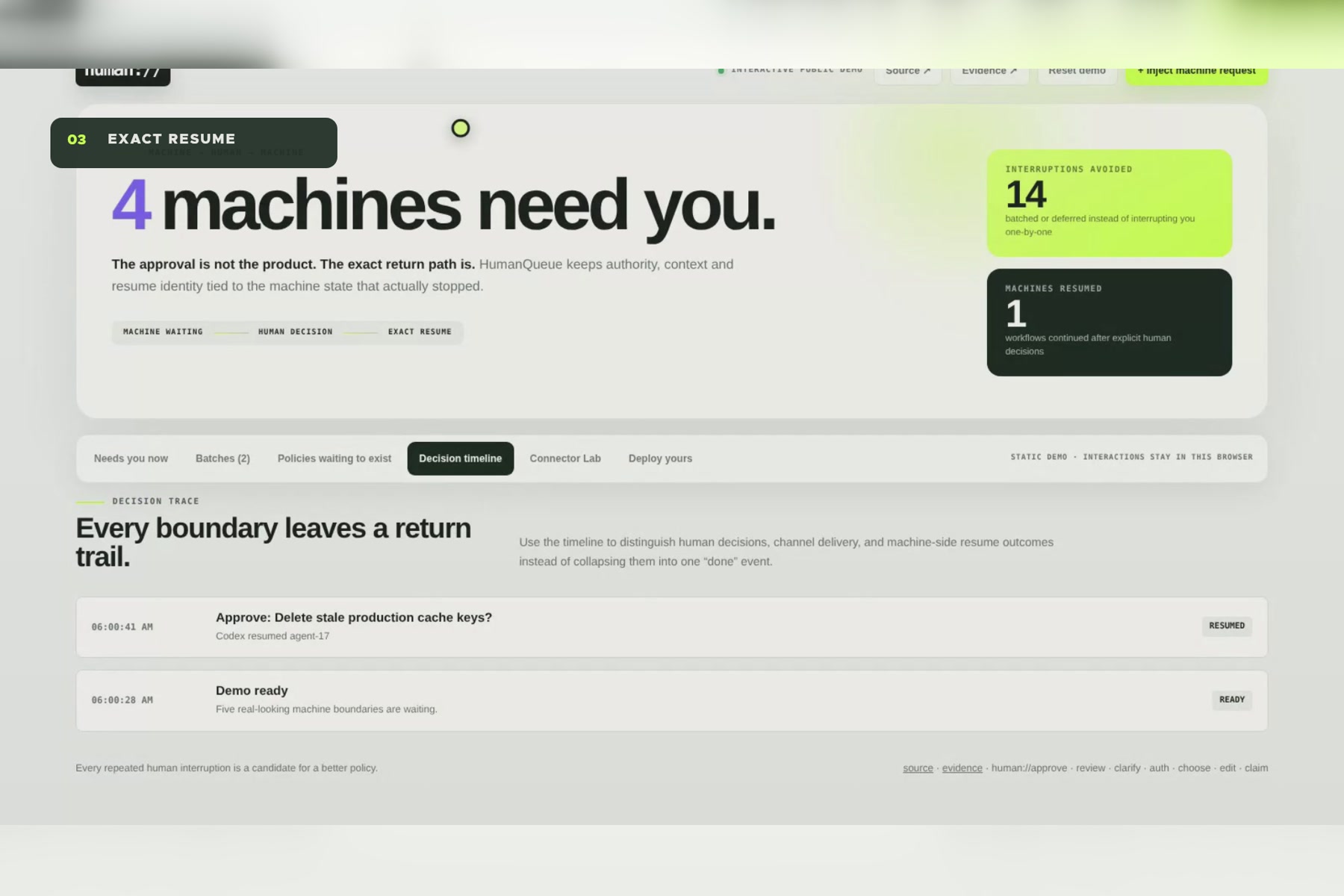
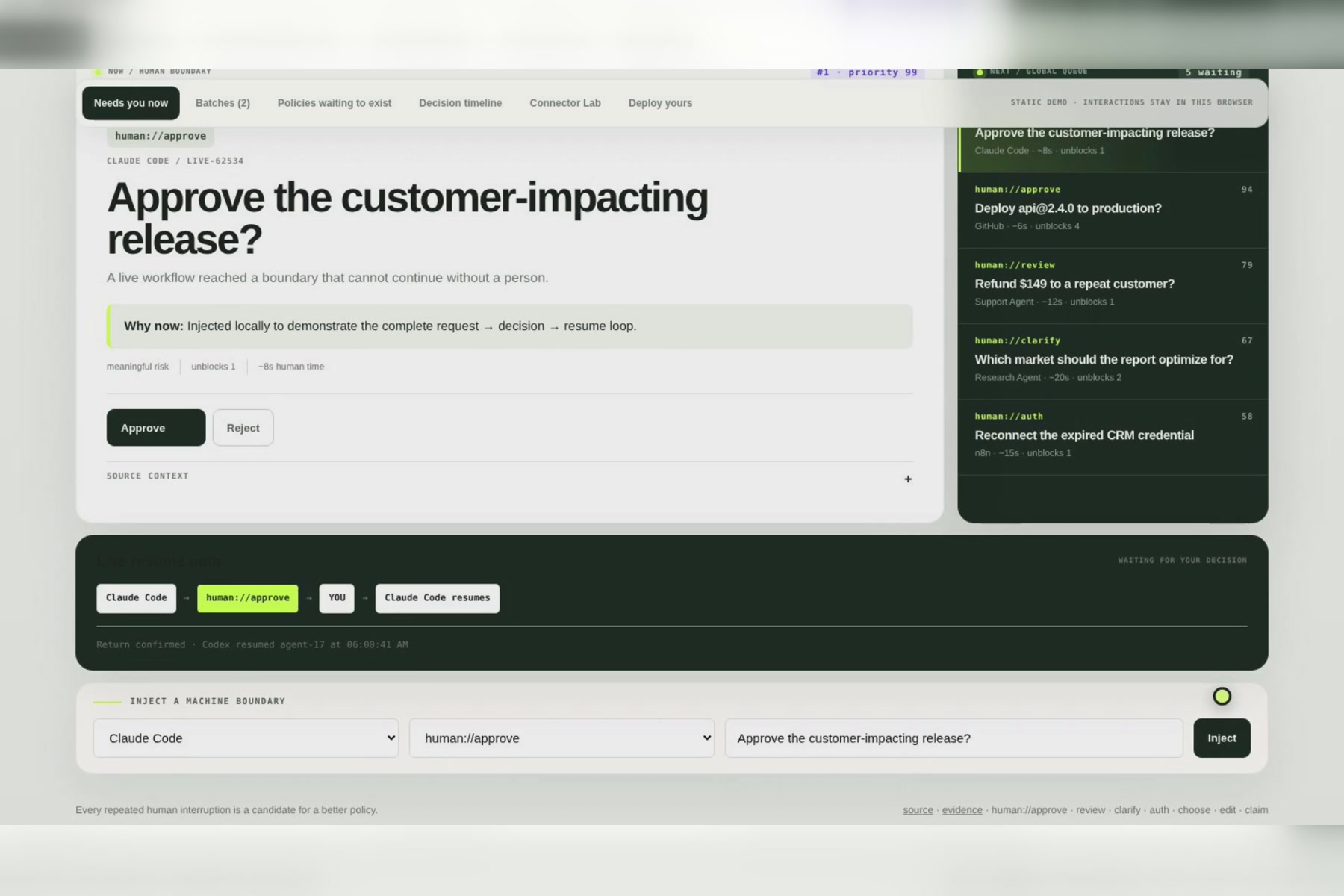
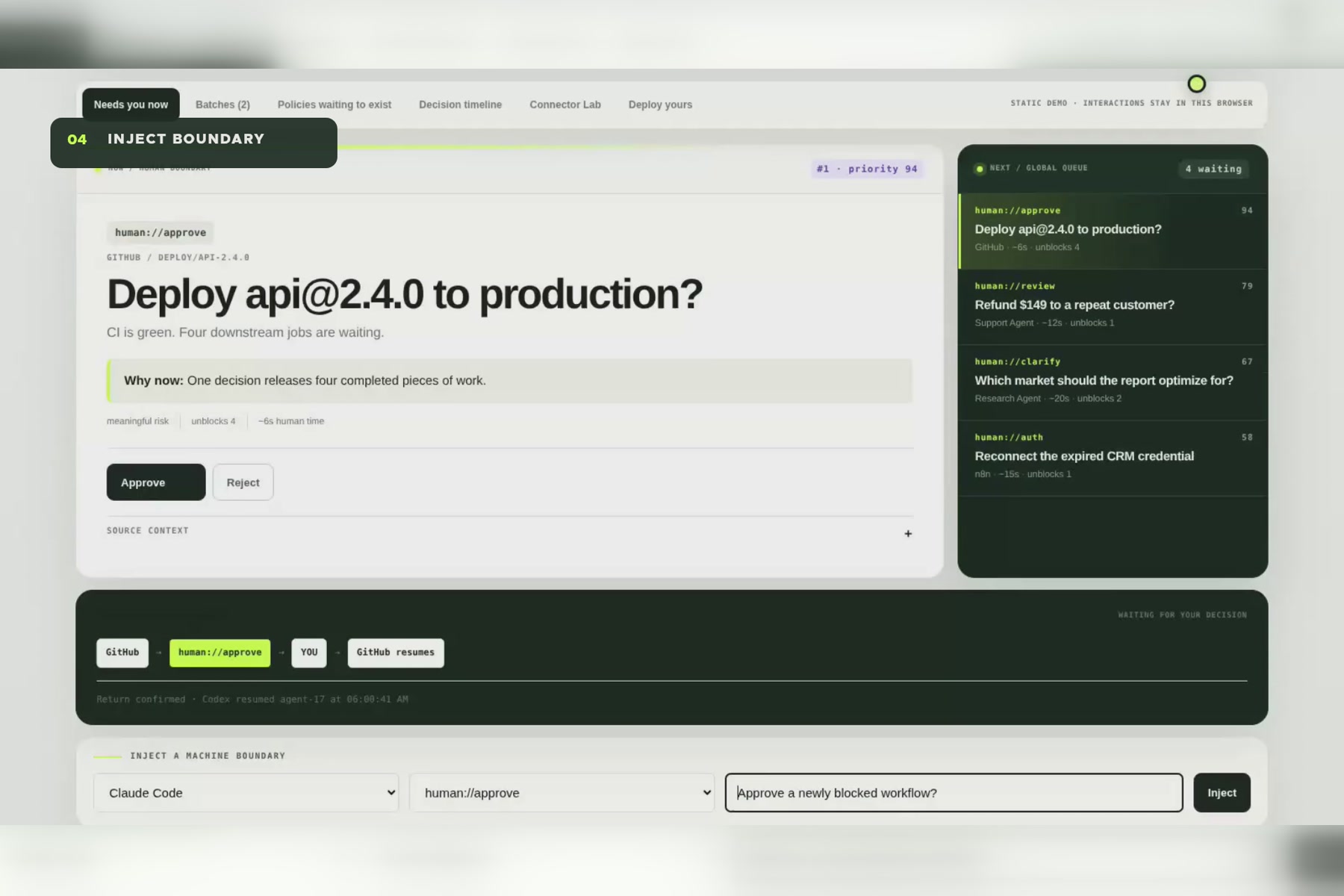
An interactive web demo illustrates how an autonomous agent encounters a human boundary and how a human decision affects the workflow.
Challenges
One major challenge was designing for failures rather than only the happy path.
For example, a network request may succeed while its response is lost. Retrying without preserving identity could create duplicate human obligations.
Another challenge is uncertain execution recovery: an external action may have happened even when its acknowledgement is missing. Automatically repeating it could be dangerous.
These cases require explicit recovery semantics and careful separation between confirmed and uncertain outcomes.
What we learned
Human-in-the-loop infrastructure requires more than an approval button.
Reliable autonomy depends on preserving identity, authority, execution state, and evidence across human-machine boundaries.
We also learned the importance of testing real runtime integrations and failure scenarios instead of relying solely on demonstrations.
What's next
Our priorities include improving runtime compatibility, completing recovery and rollback verification, and validating HumanQueue with independent users.
We are also investigating whether agents can establish that an intervention is necessary before performing a state-changing action.
Our long-term vision is an interoperable human-boundary protocol that helps autonomous systems remain accountable without sacrificing reliability.
Built With
- css3
- fastapi
- github-actions
- html5
- javascript
- python
- rest-api
- sqlite

Log in or sign up for Devpost to join the conversation.