-
-
AttackMathVR
-
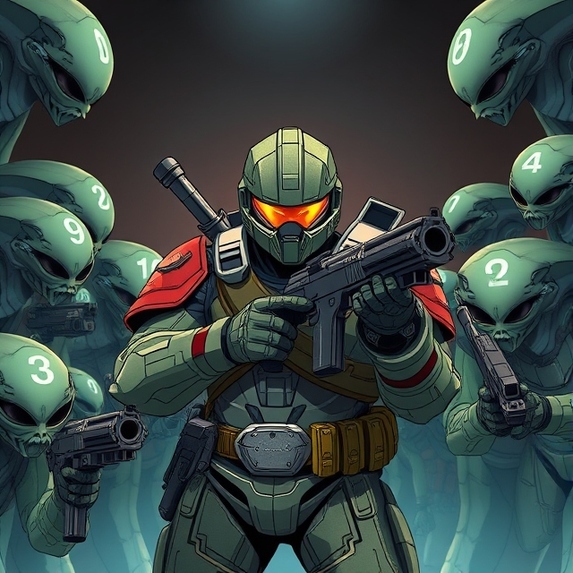
Player Vs Numbered Aliens
-

DoctorMath-Teacher

Inspiration
Attack Math VR was inspired by the classic “Math Blaster” series, combined with the thrilling wave-based gameplay of Call of Duty Zombies. The creator, Sanjay Kumar Rajpoot, has an extensive educational background in Chemical & Nanotechnology Engineering, Physics & Computer Science, and a passion for building STEM-focused learning experiences. Inspired by the desire to help people around the world gain a deeper understanding of math and science, Sanjay merged fast-paced action with educational value.
What it does
Attack Math VR is a virtual reality shooter game that helps players practice basic arithmetic (PEMDAS principles). Players face waves of enemies carrying potential answers to on-screen math problems. Shoot the correct answer to destroy the entire wave in an epic confetti-filled explosion—if you pick the wrong one, you’ll have to deal with them one by one. The result is a frantic, fun, and (secretly) educational VR experience.
How we built it
We constructed Attack Math VR in Unity, leveraging the Meta (Oculus) Integration for Quest devices. We tried out shooter prototypes and mechanics in ShapesXR by studying several tutorials and samples. The game uses:
- C# scripts for wave spawning, math problem generation, and shooting mechanics.
- 3D assets and free environment packs from the Unity Asset Store for a playful world.
- Particles and sound effects to deliver over-the-top explosions and confetti whenever the correct answer is hit.
Throughout development, we remained focused on a balance between fun arcade elements and straightforward arithmetic practice to maintain an engaging educational experience.
Challenges we ran into
- Combining Education & Action
Striking a balance between a frenetic shooter and a focused learning environment was tricky—too simple, and it’s not engaging; too chaotic, and players lose the educational aspect. - VR Optimization
Ensuring smooth performance on standalone VR hardware required careful optimization of assets, lighting, and physics to maintain a fluid framerate. - User Experience (UX)
Designing intuitive controls and interfaces for VR, where accessibility and comfort are paramount, posed unique hurdles.
Accomplishments that we're proud of
- Seamlessly Blending Learning & Gameplay: Players stay engaged by shooting enemies, yet subconsciously absorb basic arithmetic through repeated exposure and practice.
- VR Accessibility: The game runs efficiently on an all-in-one device (Meta Quest), making it easy for others to pick up and explore without cumbersome extra hardware.
- Scalable Foundation: The current prototype can easily expand into additional math concepts, difficulty levels, and even other STEM subjects.
What we learned
- The importance of fluid VR design—from ensuring comfortable player movement to designing user-friendly UIs.
- Balancing educational content with engaging gameplay to maintain player interest.
- Techniques in optimization and performance for mobile VR platforms.
- The value of iterative testing with real players to refine pacing, difficulty, and user controls.
What's next for Attack Math VR
- Expanding Arithmetic Operations: We plan to integrate division, multiplication, fractions, and even basic algebra to cater to various skill levels.
- Additional Modes: Timed challenges, competitive leaderboards, and cooperative multiplayer to foster social interaction.
- Further STEM Integration: Envision adding modules for physics or chemistry, leveraging the wave-based shooter setup to teach fundamental scientific principles.
Ultimately, the goal is to create a VR platform that engages learners of all ages, making complex STEM subjects accessible and enjoyable. With Sanjay Kumar Rajpoot’s passion for science education, Attack Math VR is just the beginning of a broader vision to build VR STEM Education Games to help everyone better understand the rules and nature of the universe.


Log in or sign up for Devpost to join the conversation.