-
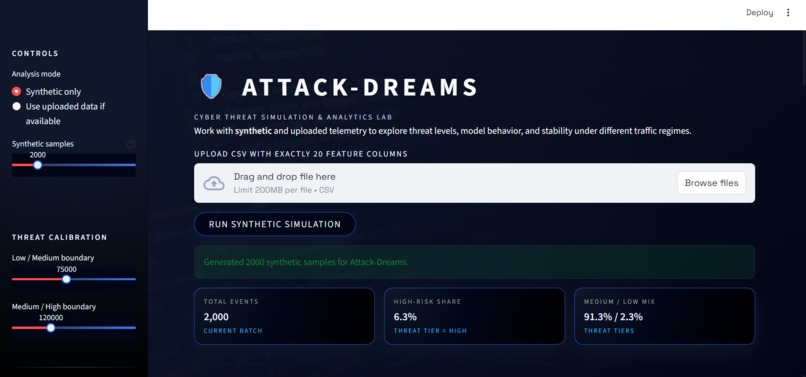
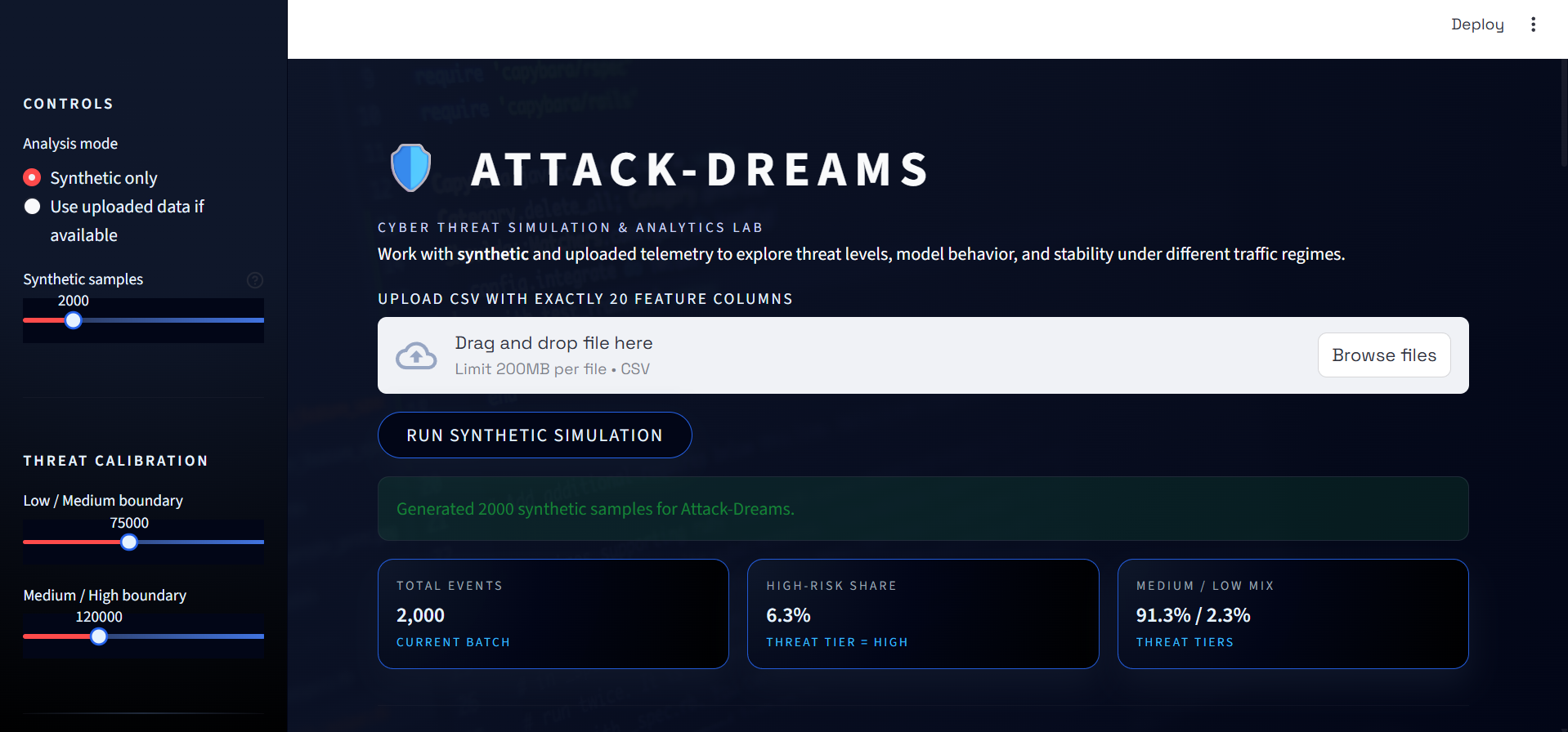
Attack Dreams — a speculative cyber-intelligence interface where an AI imagines fictional cyber attacks before execution.
-
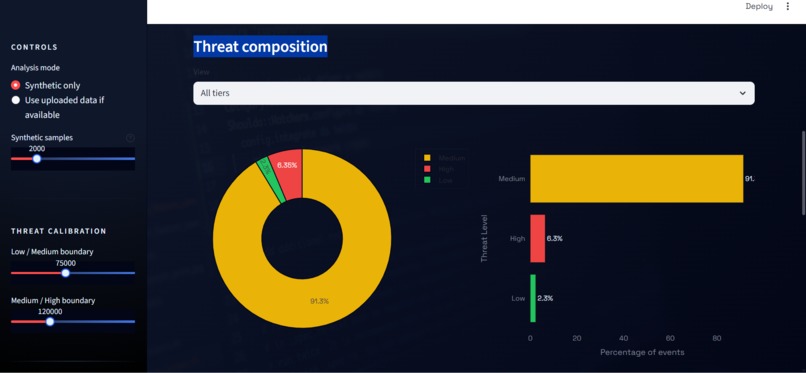
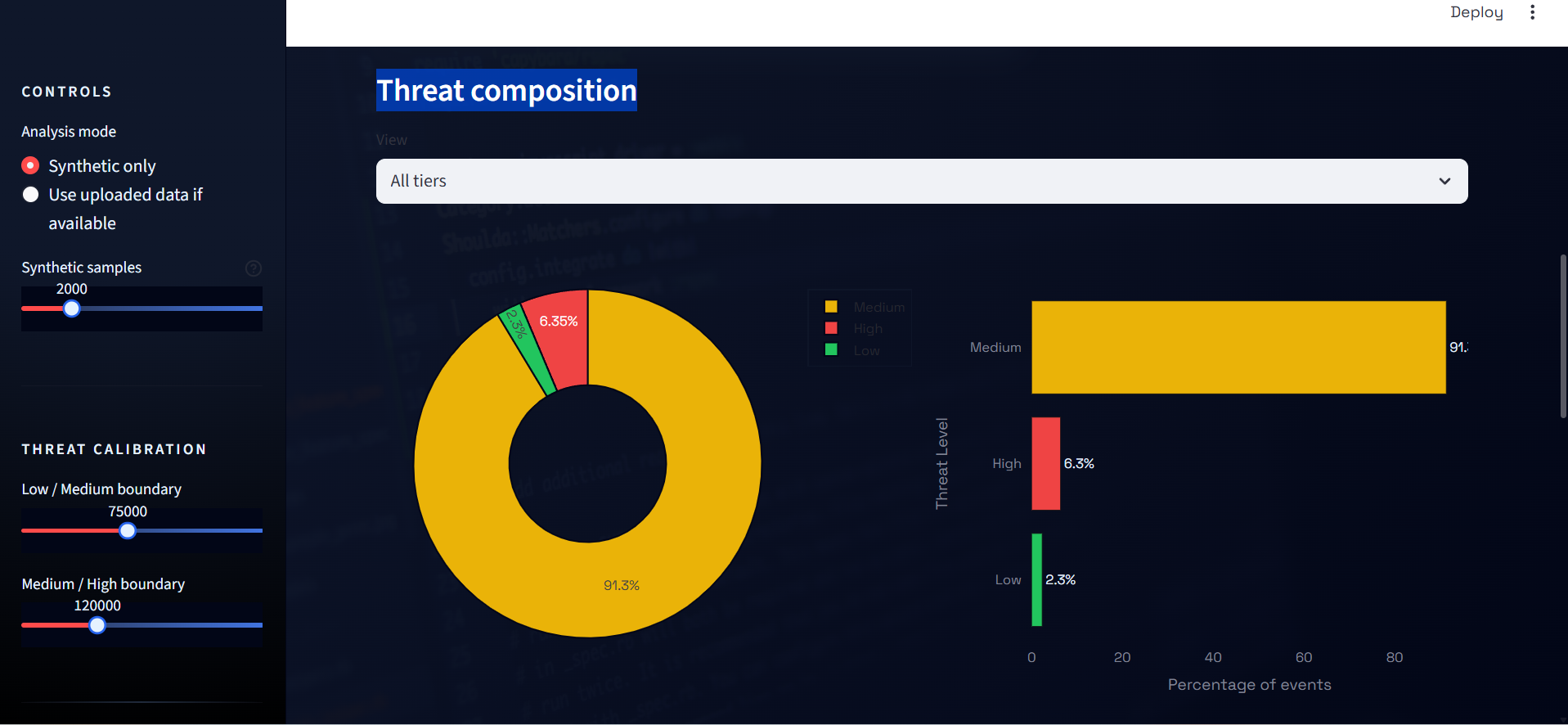
Threat distribution across imagined attack futures generated by the model.
-
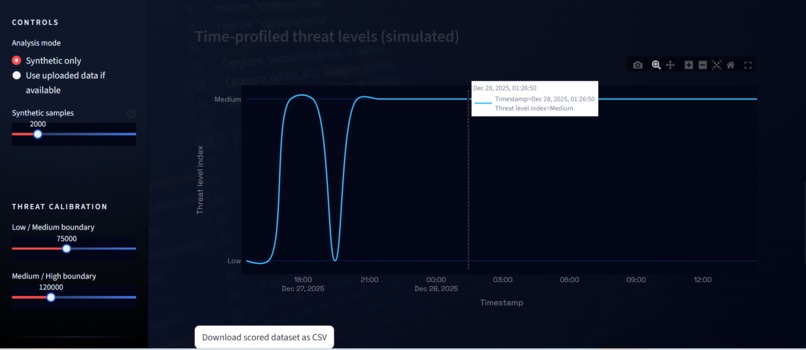
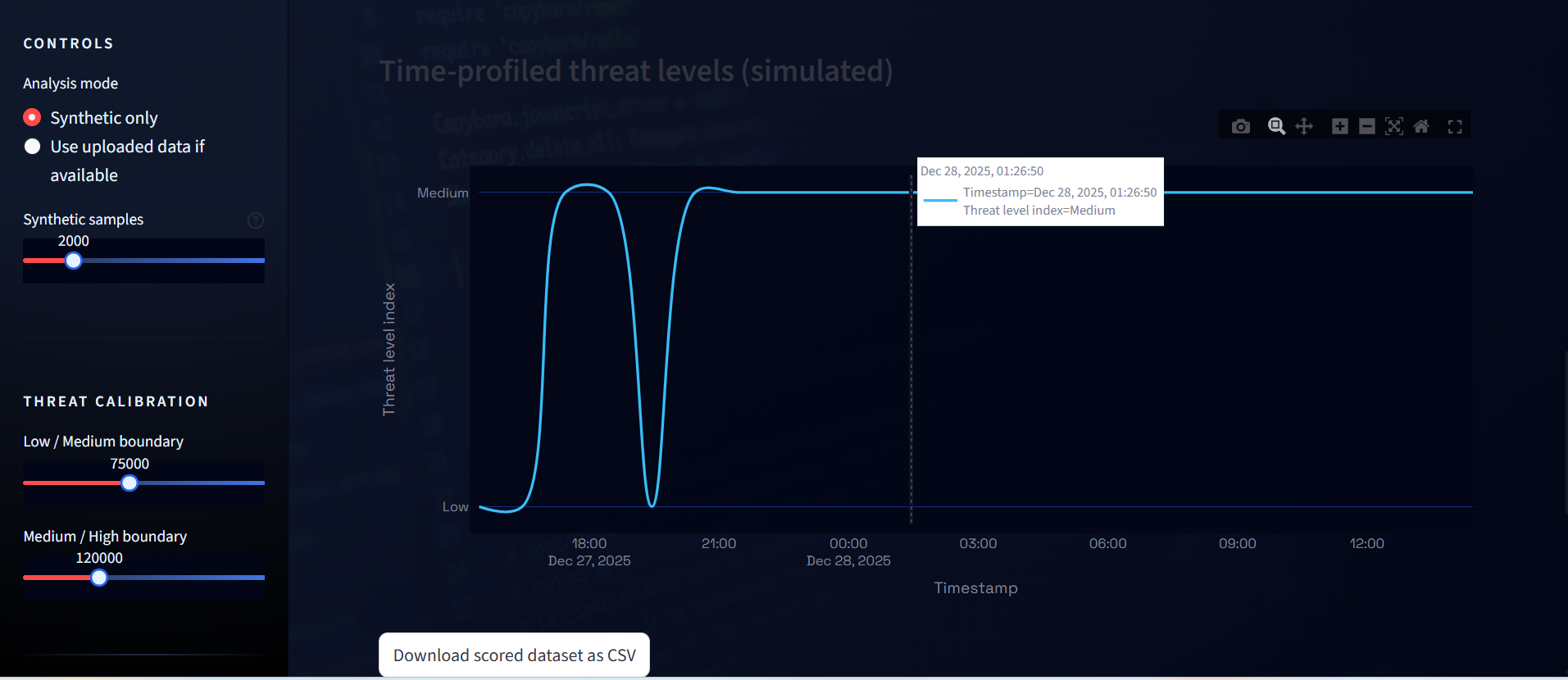
Drift of imagined threat intensity over time as the system continues dreaming.
-
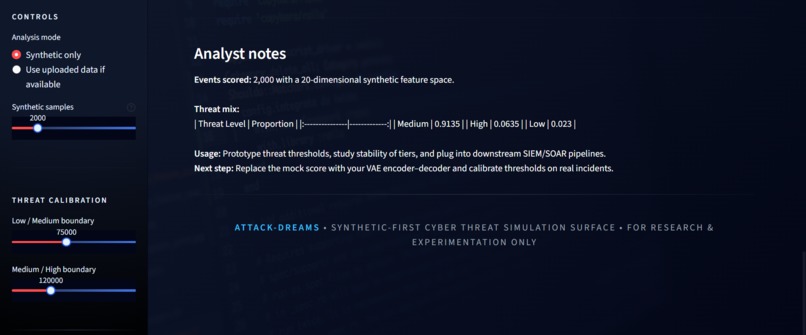
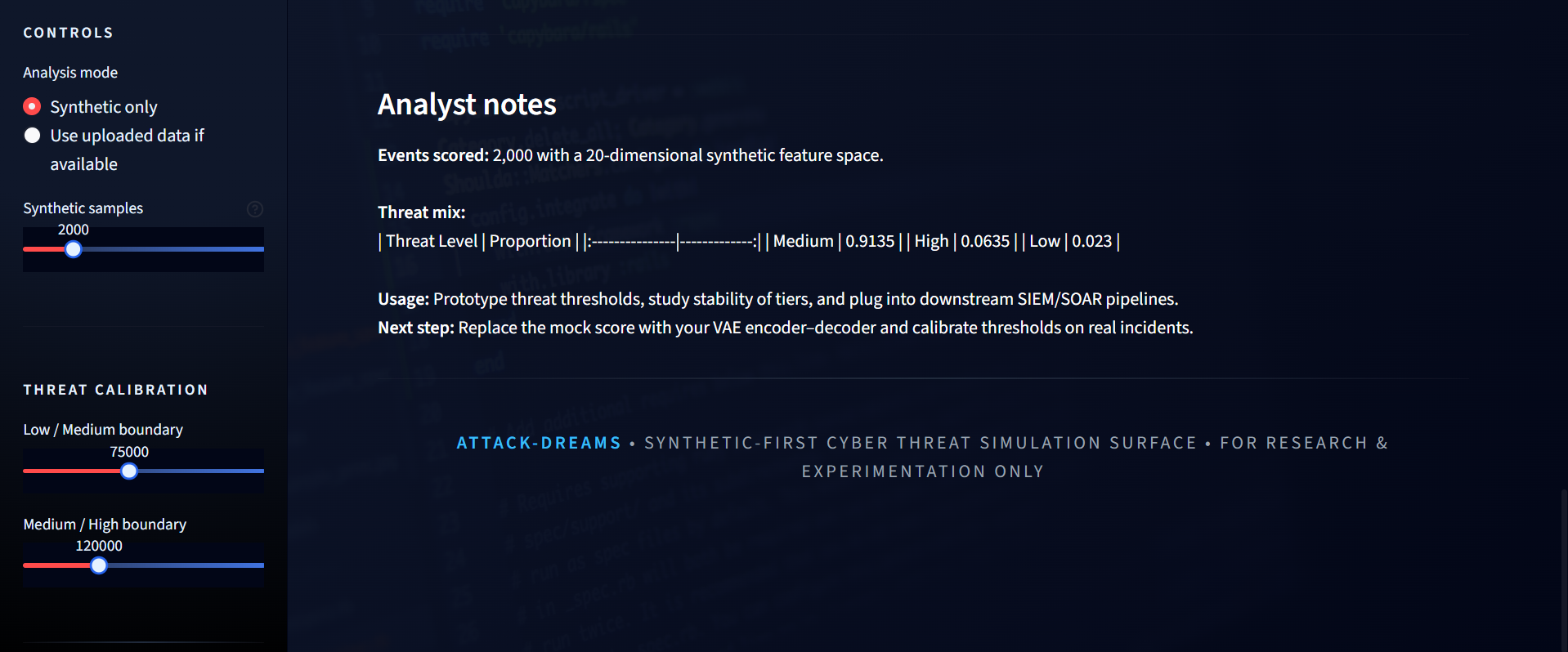
Analytical interpretation layer — framing synthetic outputs as insight, not predictions.
Inspiration
Cybersecurity is full of invisible things — packets, anomalies, risks that exist mostly as abstractions.
I wondered what would happen if, instead of trying to detect attacks, an AI was asked to imagine them.
Attack Dreams began as a late-night experiment: What if a model could generate fictional cyber attack futures — not as predictions, but as premonitions? Not to scare users, but to explore how fragile digital systems can feel when uncertainty is made visible.
This project treats cybersecurity as a space for intuition and foresight, not just accuracy.
What it does
Attack Dreams is a speculative AI system that imagines possible cyber attack scenarios before they exist.
Using a Variational Autoencoder (VAE), the system generates synthetic, fictional network-like patterns representing imagined threat futures. These are visualized through a cinematic, research-style interface inspired by experimental SOC tools.
The system does not perform real detection. All outputs are synthetic and speculative by design.
The goal is to help users:
Explore imagined risk landscapes
Stress-test assumptions
Develop intuition about how systems might fail before certainty arrives
How I built it
The system consists of two layers:
A FastAPI backend that generates synthetic data using a VAE trained on structured, network-style features
A Streamlit frontend designed as a speculative cyber-intelligence interface rather than a traditional dashboard
I intentionally focused on clarity, restraint, and atmosphere — treating the UI as part of the experiment, not just a container for charts.
Challenges & learnings
The hardest part was resisting over-claiming.
It’s tempting to frame everything as “AI-powered detection,” but this project became stronger once I embraced its speculative nature. By being honest about what the system is — and what it isn’t — the idea became clearer and more compelling.
Attack Dreams taught me that AI doesn’t always need to provide answers. Sometimes its value lies in helping humans imagine futures before they become real.

Log in or sign up for Devpost to join the conversation.