-
-
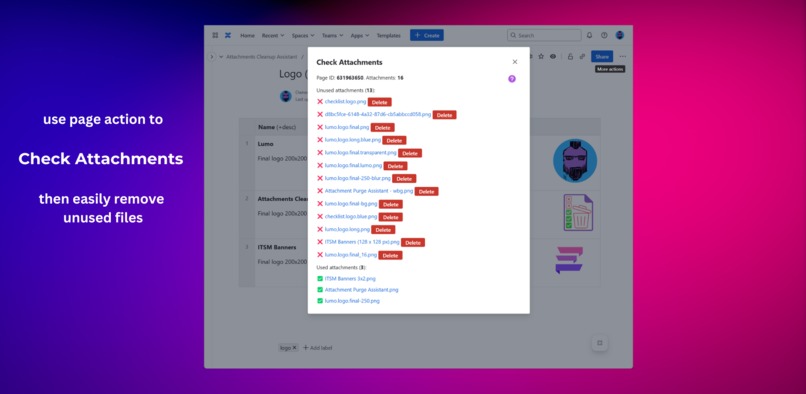
Remove unused attachments
-
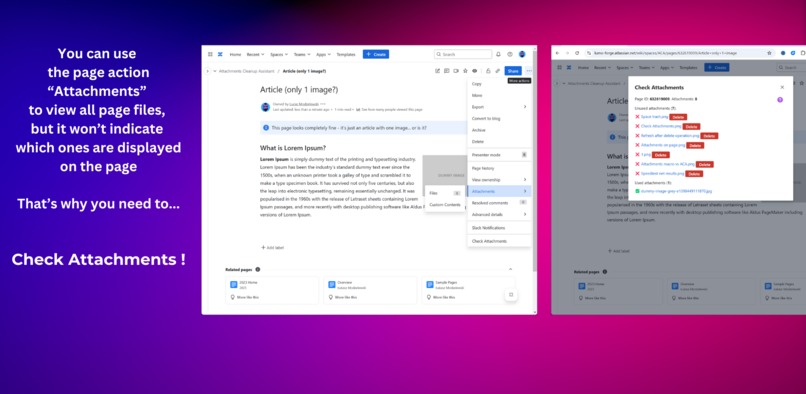
Check pages for not displayed attachments
-
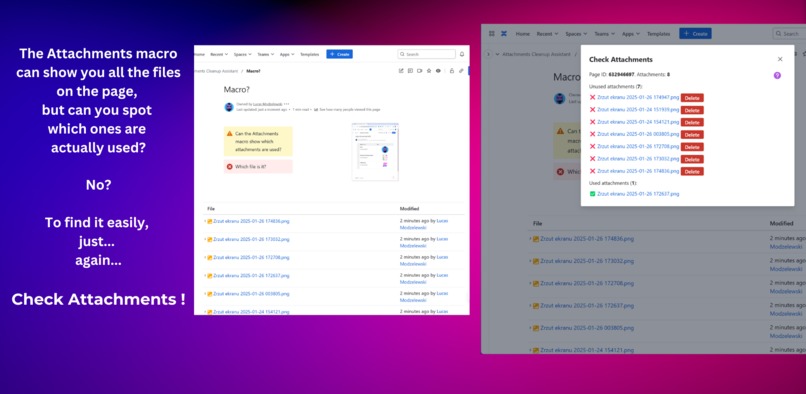
Never lose track of your files!
-
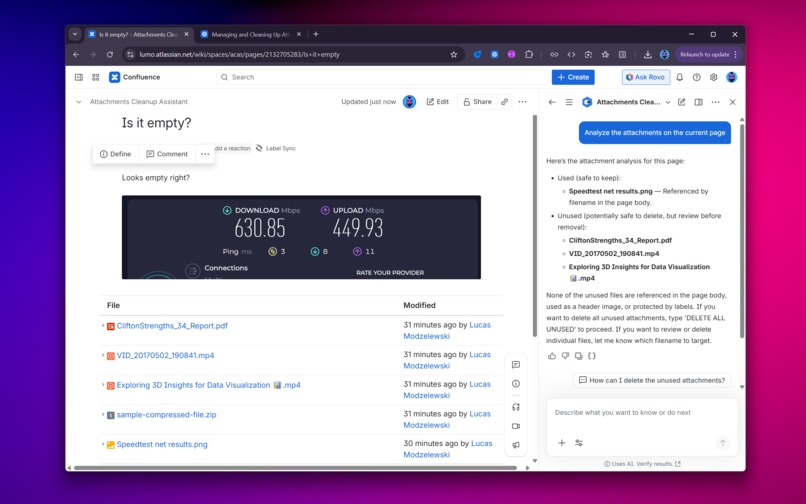
Rovo agent at work
-
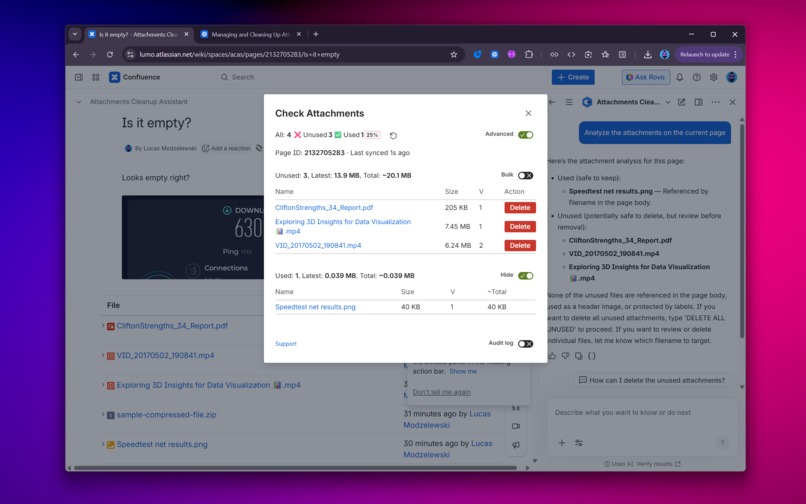
Advanced view ... reclaim some storage!
Inspiration
As Confluence spaces grow, pages accumulate attachments that are no longer needed - outdated images, unused files, and remnants of old templates. These increase storage costs, slow down spaces, and make content harder to maintain.
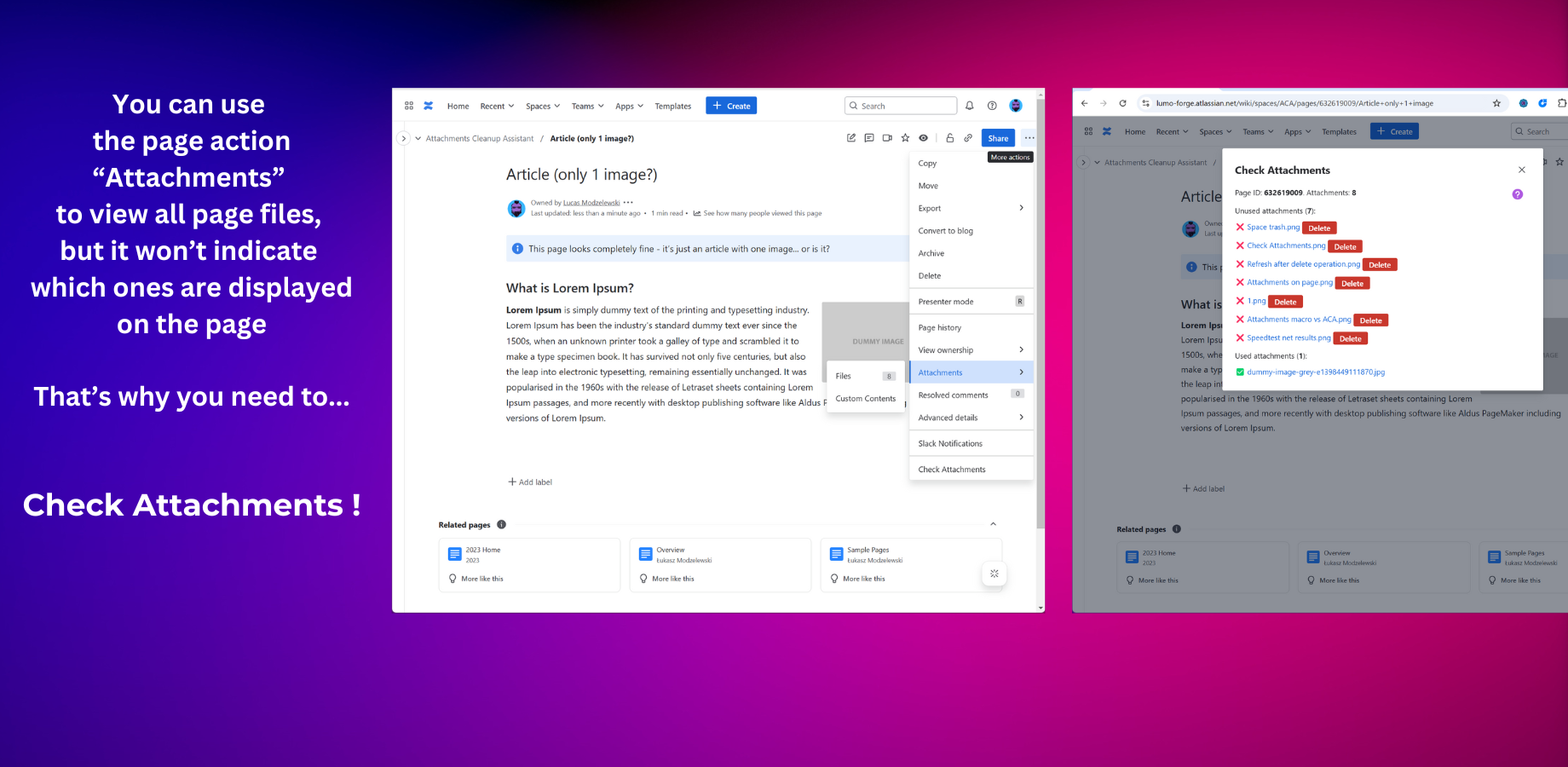
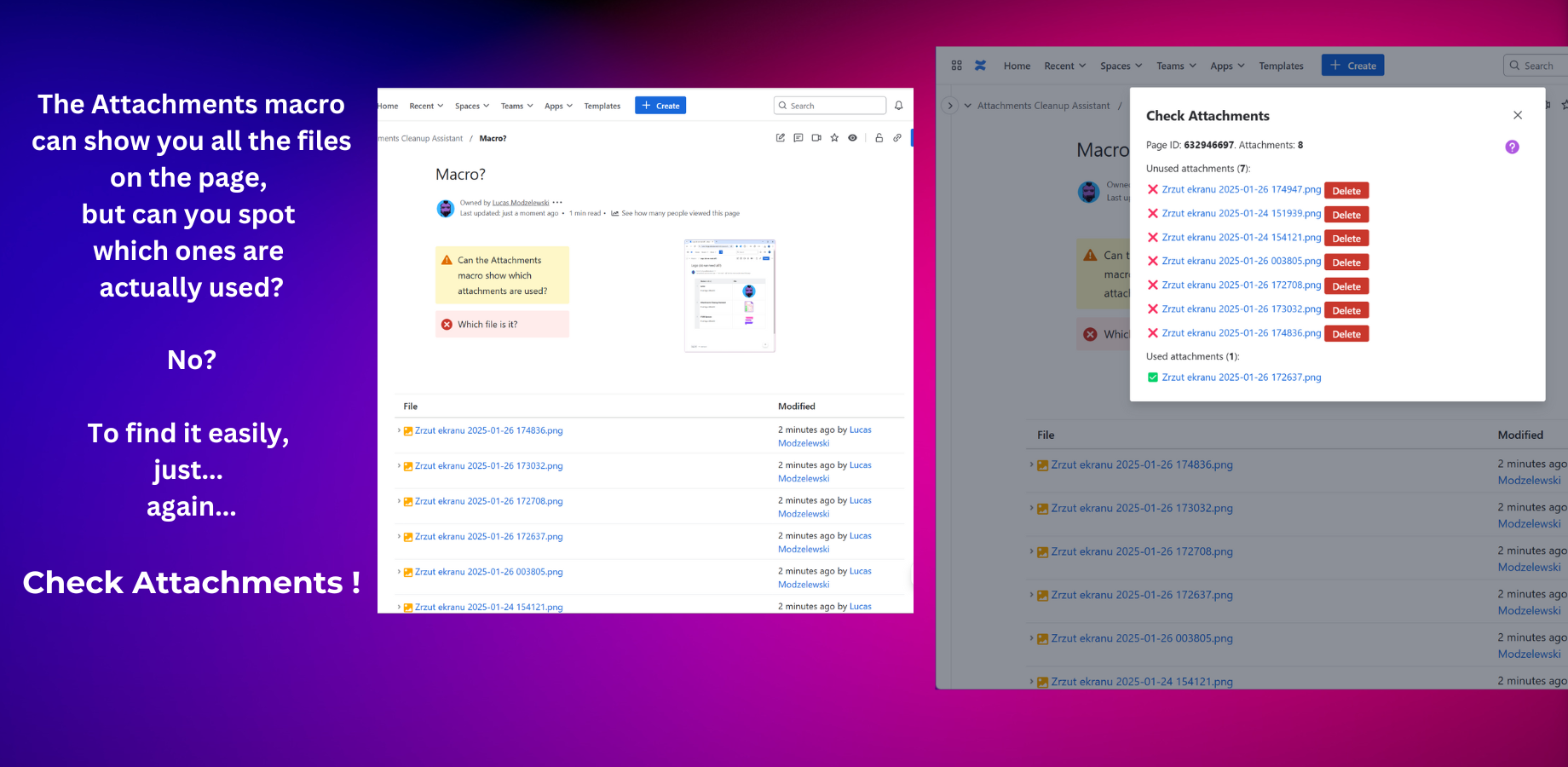
Deleting attachments is risky. It’s often unclear whether a file is still referenced (in the page body, as a header or cover image), reused elsewhere, or protected by conventions or labels. Teams avoid cleanup because a single wrong deletion can silently break content.
We wanted a safe, explainable, and on-platform way to help teams understand which attachments are truly unused - and why.
What it does
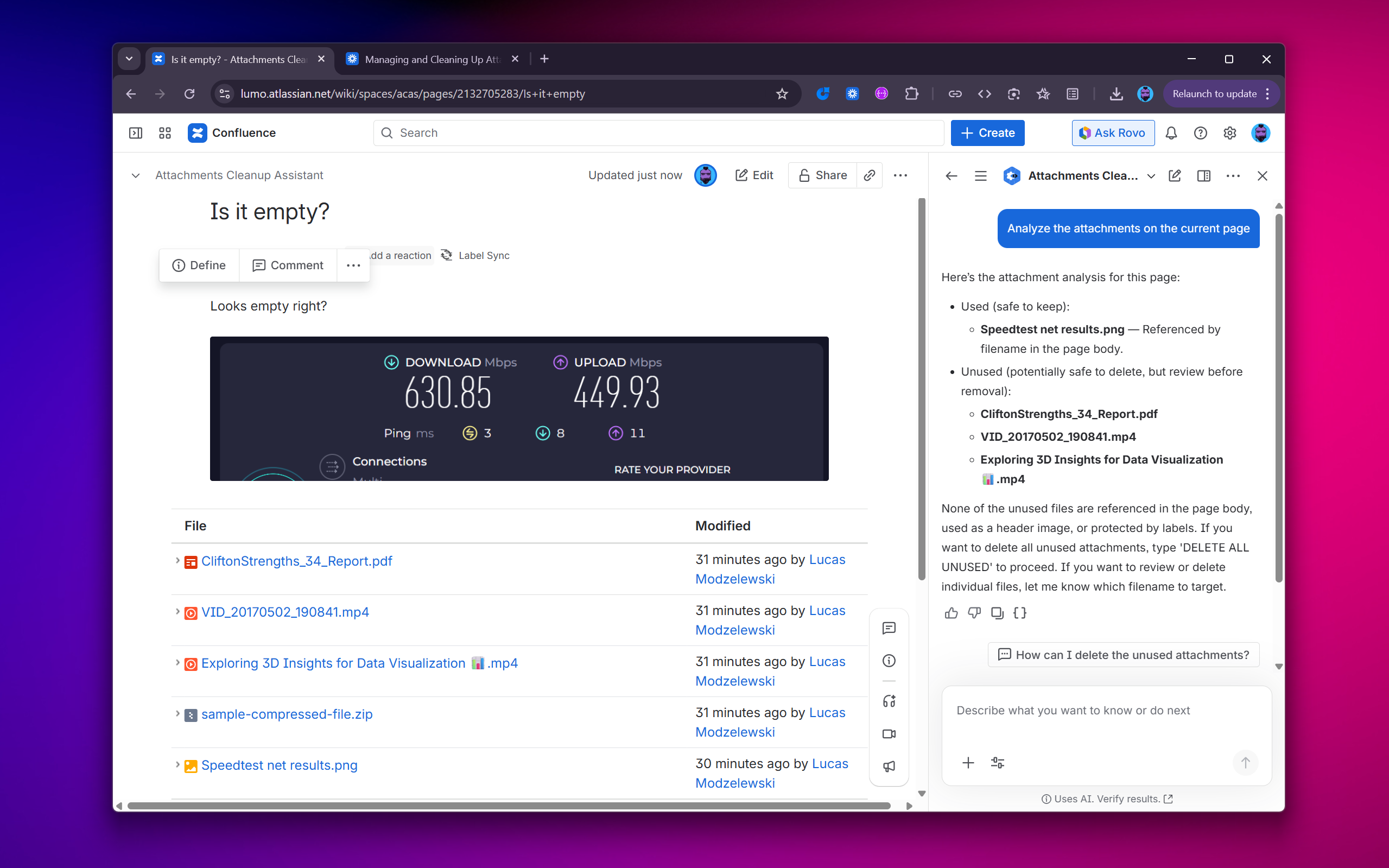
Attachments Cleanup Assistant helps Confluence teams identify and safely clean up unused attachments.
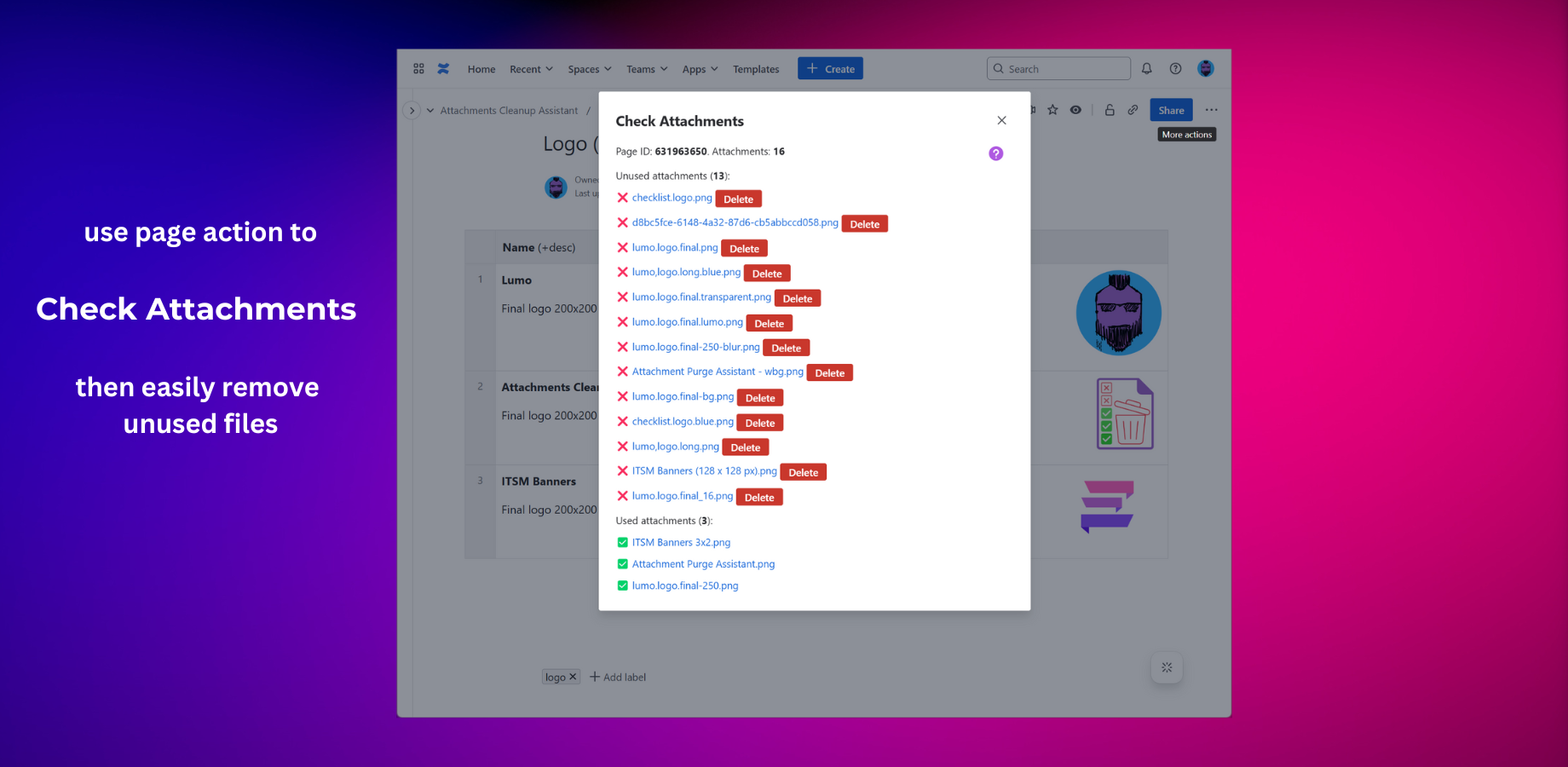
- Scans Confluence pages to detect:
- attachments referenced in the page body (including filename-based hints)
- header and cover image usage
- attachments protected by labels or defined rules
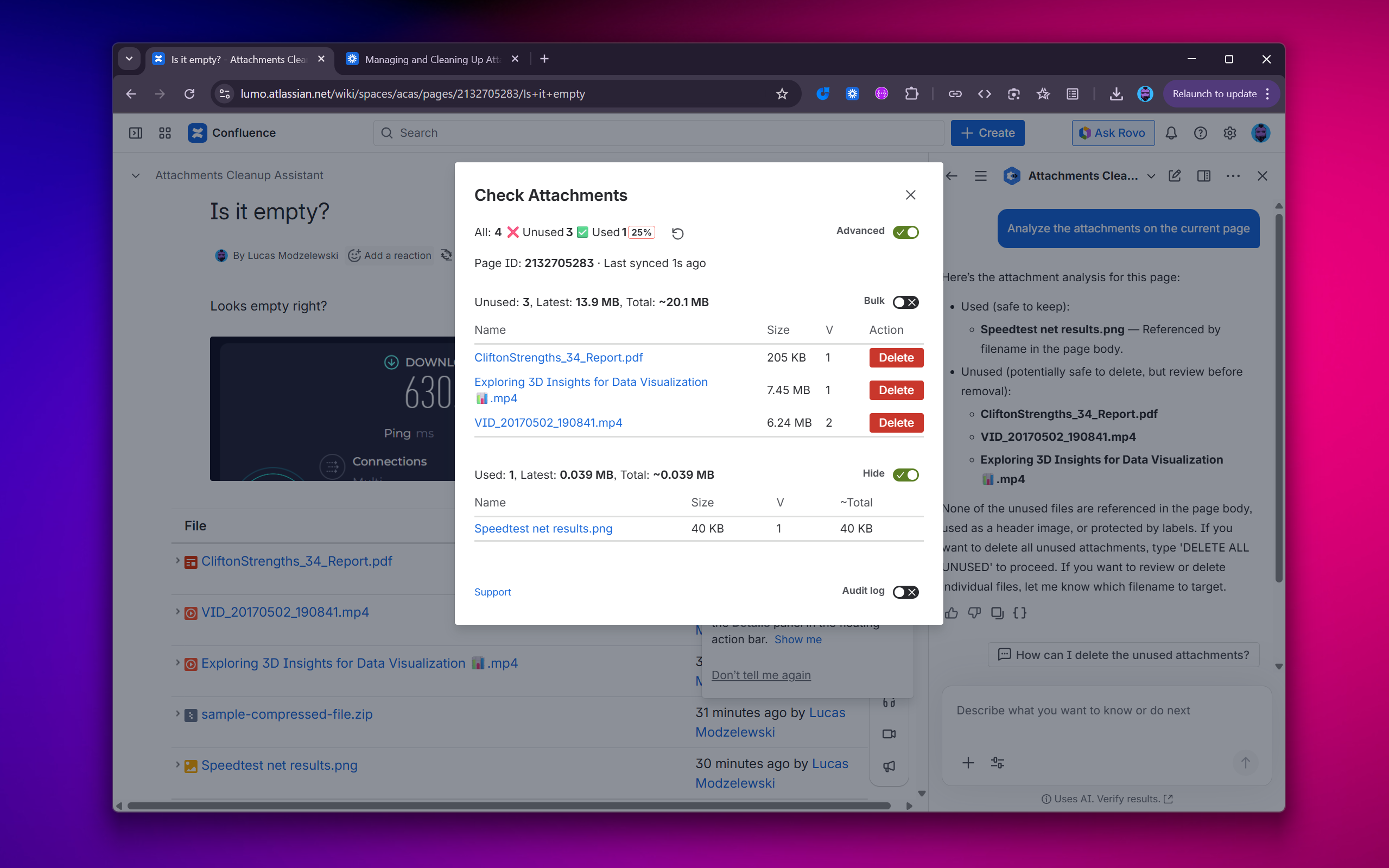
- Classifies attachments as:
- Used
- Unused
- Protected / requires review
- Uses Rovo agent actions to explain why an attachment is considered safe, risky, or protected
- Lets users talk to their data:
- “Why is this attachment unsafe to delete?”
- “What would break if I remove this file?”
- Provides safe cleanup flows:
- single-attachment deletion with explicit confirmation
- bulk cleanup suggestions that are never destructive by default
- Fully permission-aware:
- runs with the initiating user’s permissions
- never exposes content the user cannot access
How we built it
Platform
- Atlassian Forge app for Confluence Cloud
- Custom UI (React) with Forge Bridge and Atlassian design primitives
- Native Rovo agent with action modules for analysis and explanation
Backend
- Page and attachment scanning via Confluence REST APIs
- Deterministic usage detection based on multiple signals:
- in-body references
- header and cover image usage
- high-confidence filename and metadata hints
- Label-based protection rules and conservative risk heuristics
- Permission-aware execution using user-scoped access
- Structured logging and storage-backed configuration
Frontend
- Clear visual indicators for attachment status:
- Used - ✅
- Protected - 🔒
- Unused - ❌
- Review-first UX:
- visible evidence and “why” explanations
- explicit confirmations before any destructive action
- Resilient UI for large spaces and partial data, with accessible components
Challenges we ran into
- Hidden usage detection
Cross-page references are difficult to detect reliably. We prioritized high-signal checks and designed the system to be conservative, encouraging review over automation. - Safety over automation
Full auto-delete is dangerous. The system is designed to explain first and act only with explicit user intent. - Permissions and trust
Actions must respect user visibility. We carefully distinguish re-authentication issues from genuine access restrictions to avoid misleading users. - Scale
Large spaces can contain thousands of attachments. We optimized scans, limited payload sizes, and kept the UI responsive.
Accomplishments that we’re proud of
- A cleanup tool that users can genuinely trust
- Clear, explainable decisions instead of “black box” AI
- Safe defaults that prevent accidental content breakage
- Intuitive, accessible UI with consistent iconography
- Seamless integration into existing Confluence workflows
What we learned
- Fear of breaking content is the biggest blocker to cleanup
- Explainability matters more than automation
- Combining multiple weaker signals is safer than relying on a single assumption
- Small UX details (icons, summaries, wording) significantly improve adoption
What’s next for Attachments Cleanup Assistant
- Space-wide reference detection for deeper reuse insights
- Smarter protection rules for templates and shared assets
- Admin-focused audit logs and cleanup history
- Optional scheduled cleanup suggestions (never automatic deletion)
- Deeper Rovo integrations for guided cleanup and impact analysis across spaces


Log in or sign up for Devpost to join the conversation.