Inspiration
The motivation behind Resume ATS Scorer was to empower job seekers by helping them optimize their resumes for Applicant Tracking Systems, which often filter out qualified candidates based on formatting and keyword usage. We aimed to create an easy-to-use tool that demystifies ATS compatibility and offers actionable feedback for users to improve their chances of landing interviews.
What it does
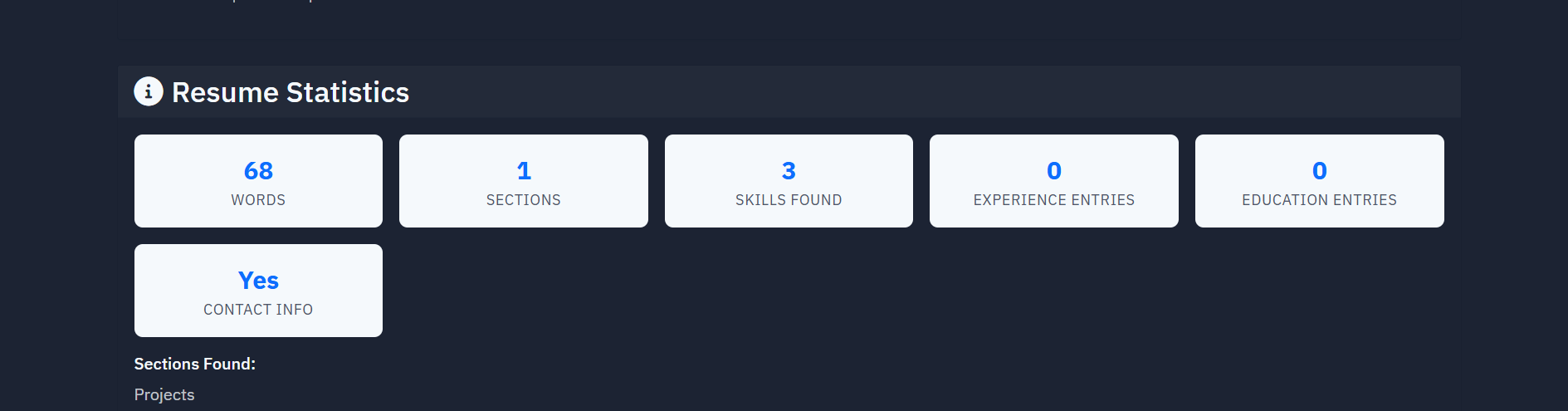
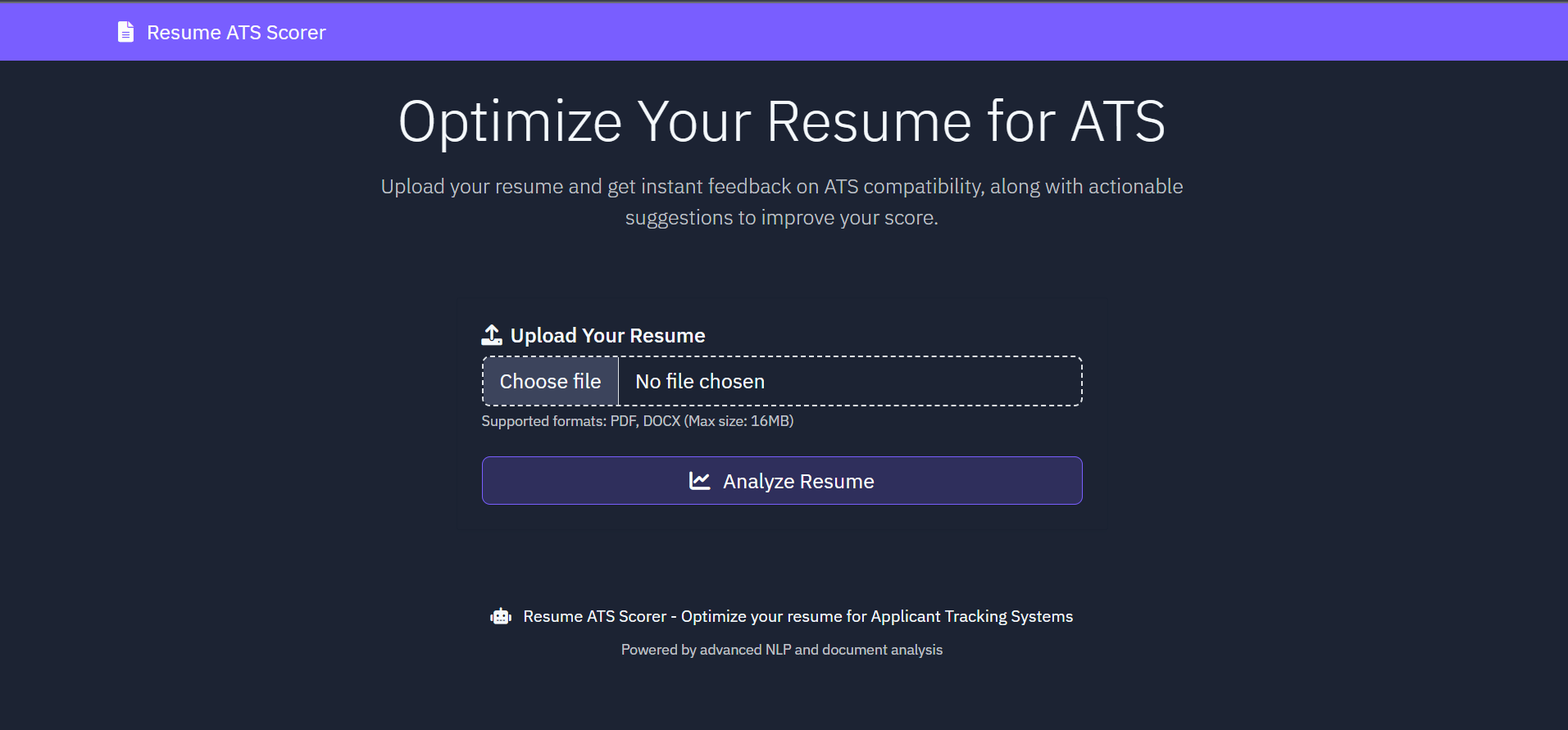
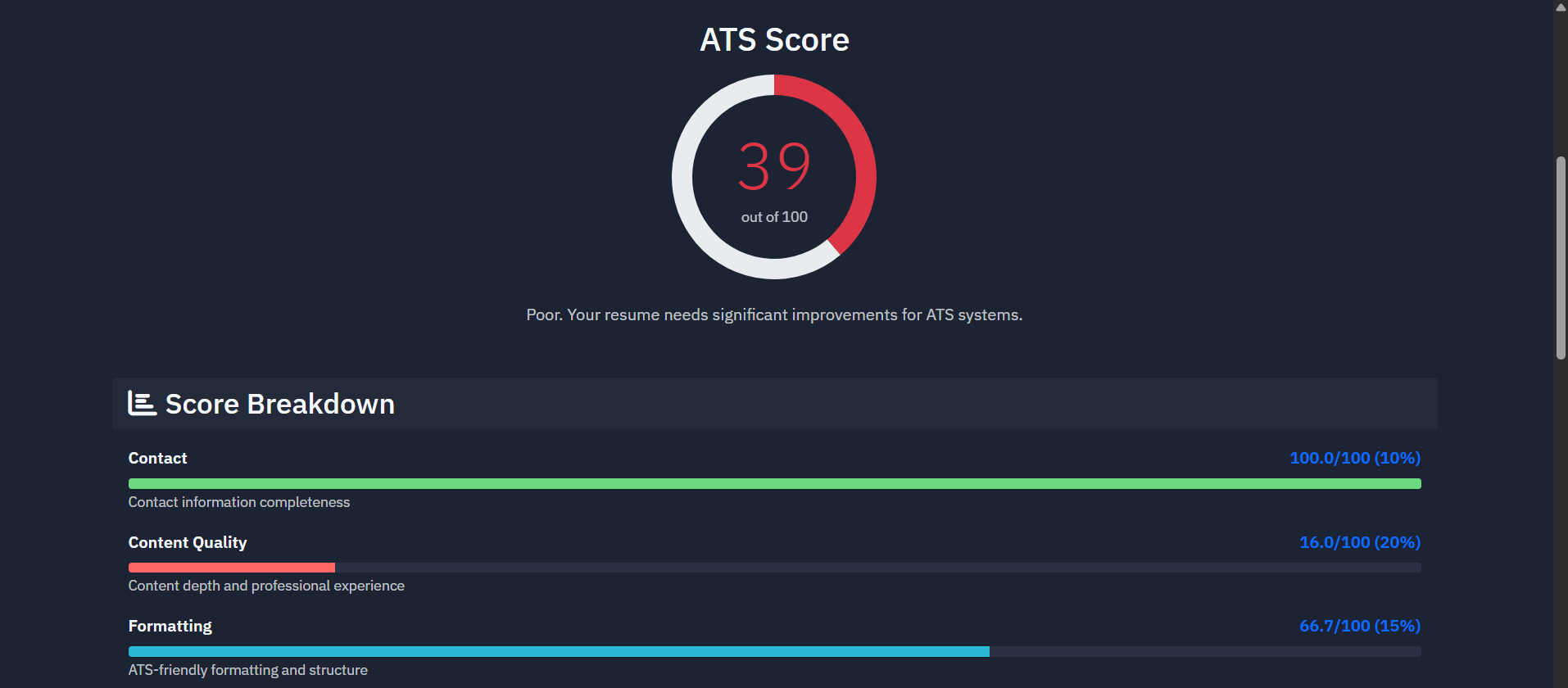
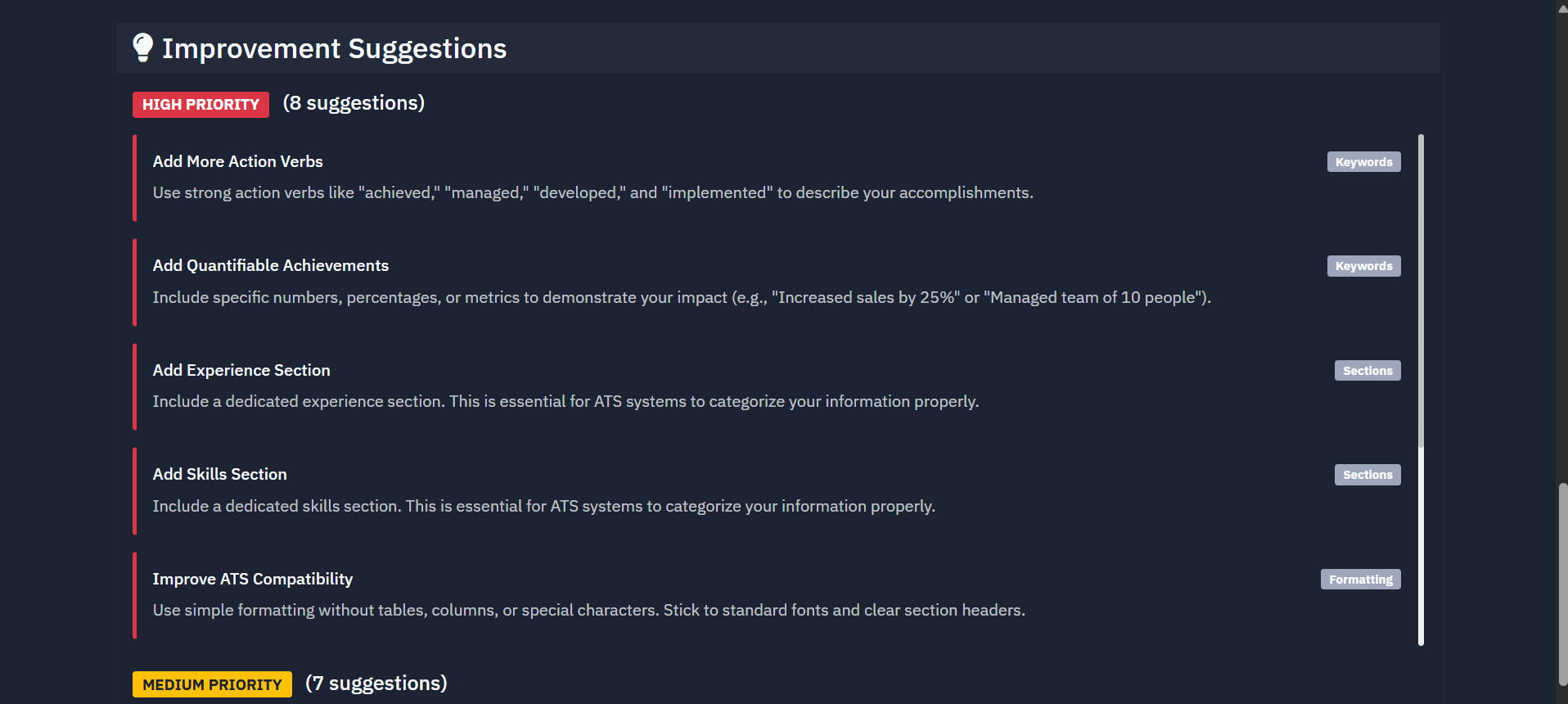
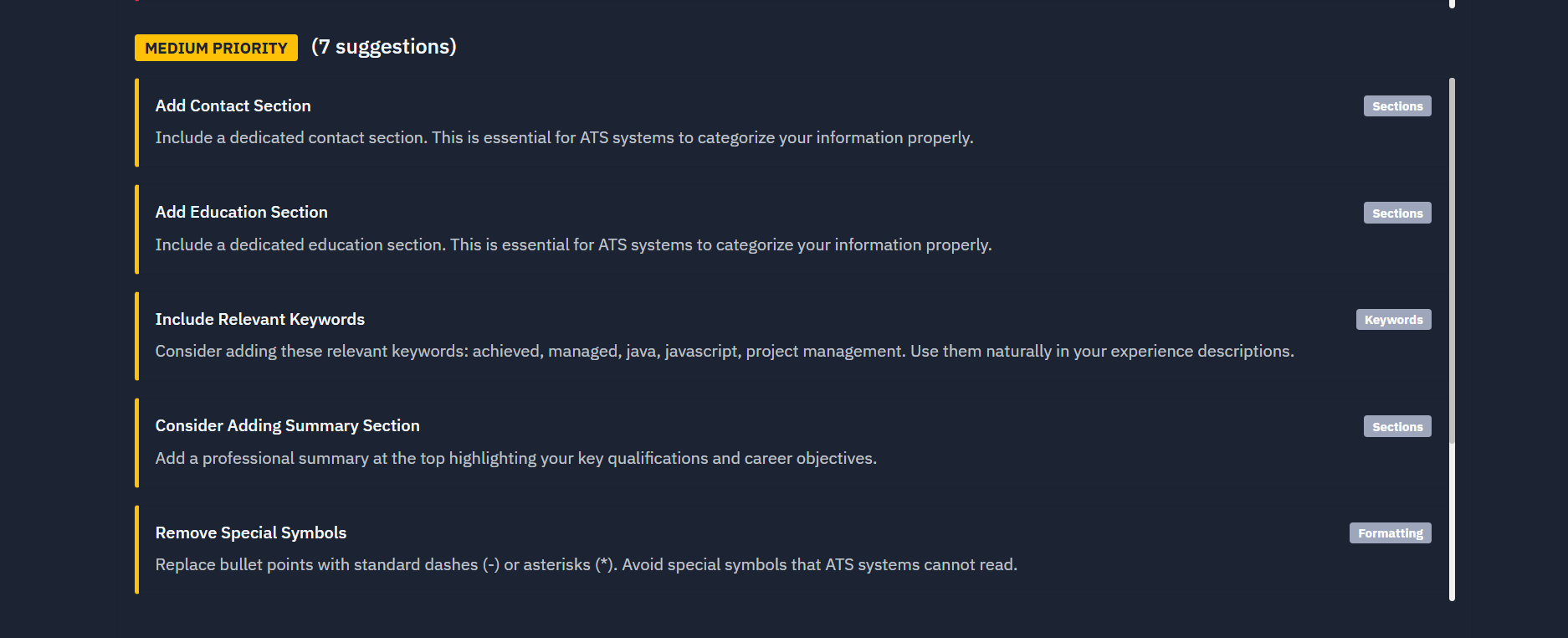
Resume ATS Scorer allows users to upload their resumes in PDF or DOCX format, parses and analyzes the content using NLP techniques, and generates a comprehensive ATS compatibility score based on six key criteria: keywords, sections, formatting, contact info, content quality, and readability. It also provides prioritized, actionable suggestions to help improve the resume for better ATS performance, all accessible through a modern, responsive web interface and a clean API.
How we built it
The backend is built with Flask, utilizing python-docx and PyPDF2 for document parsing, and spaCy for natural language processing and text analysis. Scoring algorithms evaluate each ATS criterion with weighted metrics to produce an overall score, and a suggestions engine generates practical improvement tips. The frontend uses Bootstrap with a dark theme and integrates Chart.js for interactive visualizations of scores and statistics. The app supports secure file uploads with automatic cleanup and exposes RESTful API endpoints for integration.
Challenges we ran into
Parsing diverse resume formats reliably and handling complex layouts without breaking analysis was a major challenge. Balancing detailed score criteria with meaningful, non-overwhelming suggestions required iterative refinement. Ensuring security around file uploads while maintaining usability and handling concurrency during simultaneous uploads demanded robust backend design. Implementing real-time, interactive score visualizations on the frontend while keeping performance optimal also required significant effort.
Accomplishments that we're proud of
We successfully created a comprehensive scoring system that integrates multiple ATS-focused criteria with clear weighting, providing users with transparent, interpretable results. The NLP-powered suggestions engine delivers actionable, prioritized feedback tailored to resume weaknesses, which greatly enhances user experience. The modular project architecture allows easy maintenance and future feature expansion. Employing automated file cleanup and security best practices ensures safe and reliable operation.
What we learned
We gained valuable insights into common ATS filtering mechanisms and the nuances of resume composition affecting ATS parsing. Implementing NLP with spaCy for domain-specific text analysis deepened our understanding of practical language processing applications. Balancing backend processing speed with detailed analysis taught us important lessons in resource optimization. We also learned the critical importance of user-centric design in conveying complex scoring data through intuitive interfaces.
What's next for RESUME ATS SCORER
Future plans include integrating machine learning models to enhance scoring accuracy and provide industry-specific recommendations. We aim to add batch resume processing capabilities and multi-language support to broaden usability. Enhancing the app with resume template suggestions and PDF generation for optimized resumes is planned. Additionally, we will explore integrations with job boards and applicant management systems to streamline users’ job application workflows.

Log in or sign up for Devpost to join the conversation.