-
-
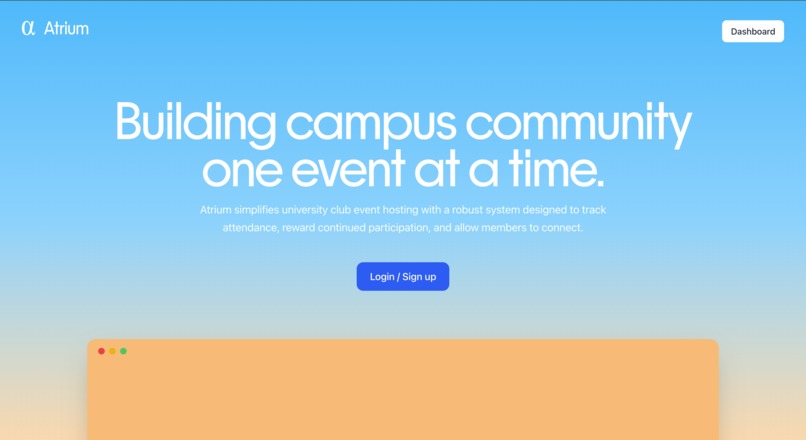
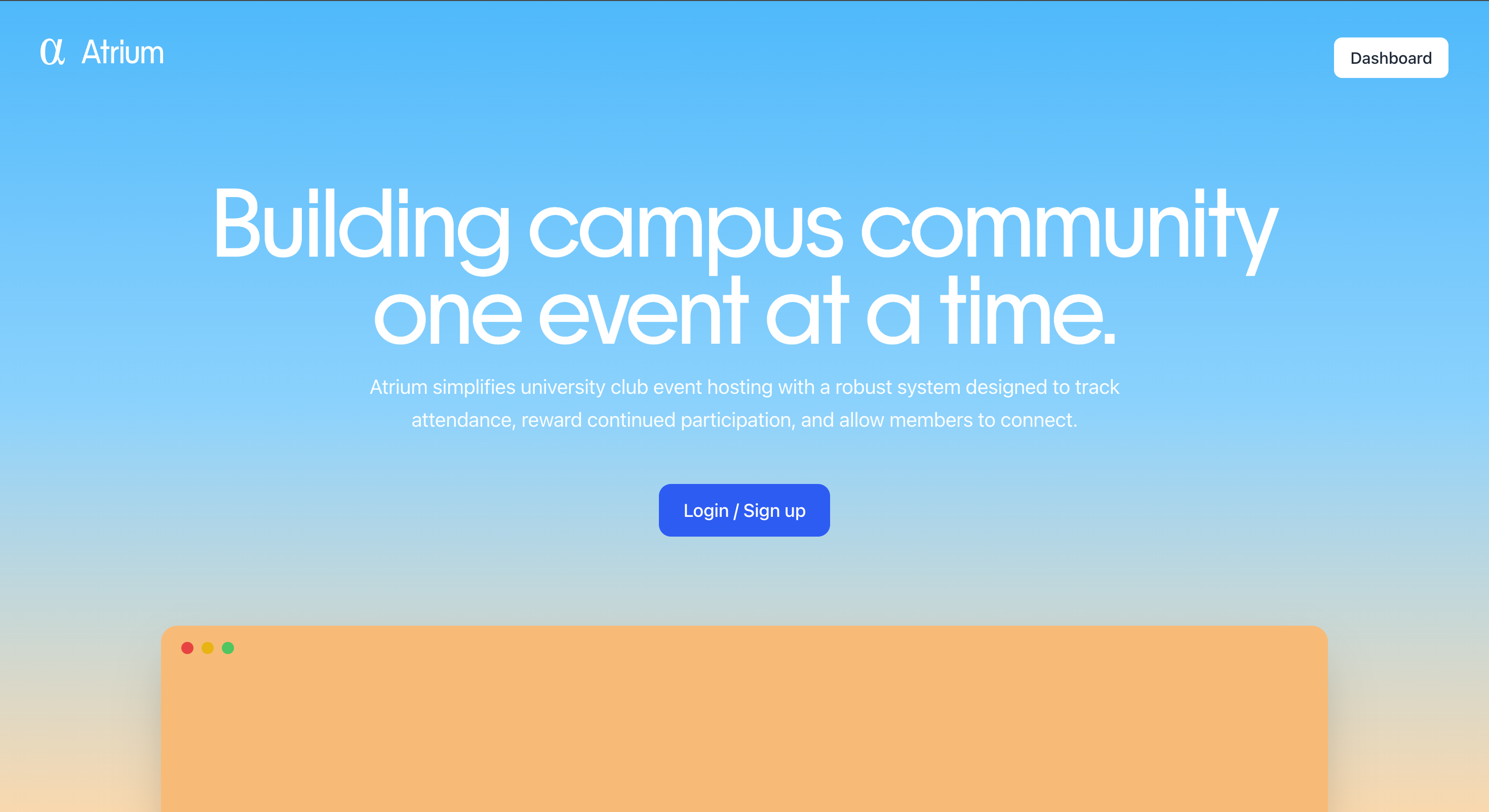
Homepage
-
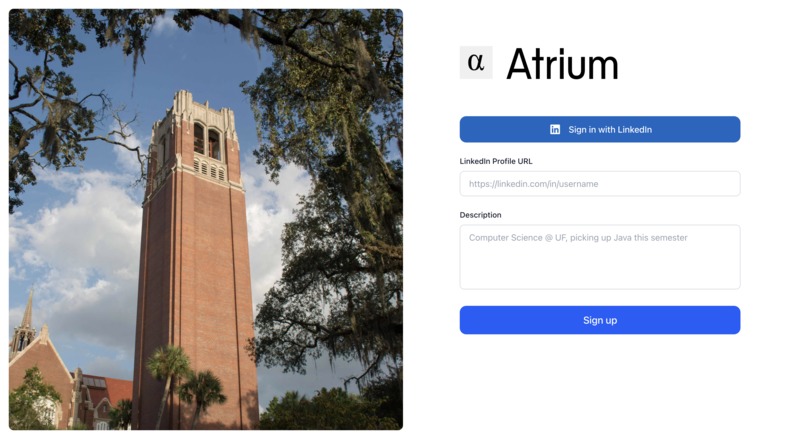
Signup
-
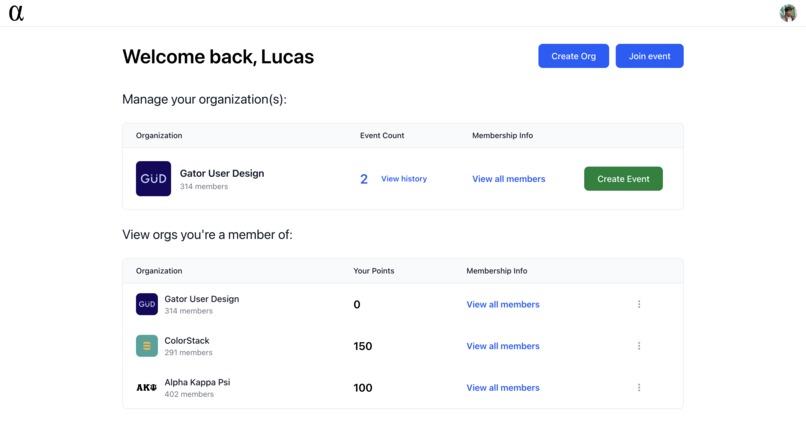
Dashboard
-
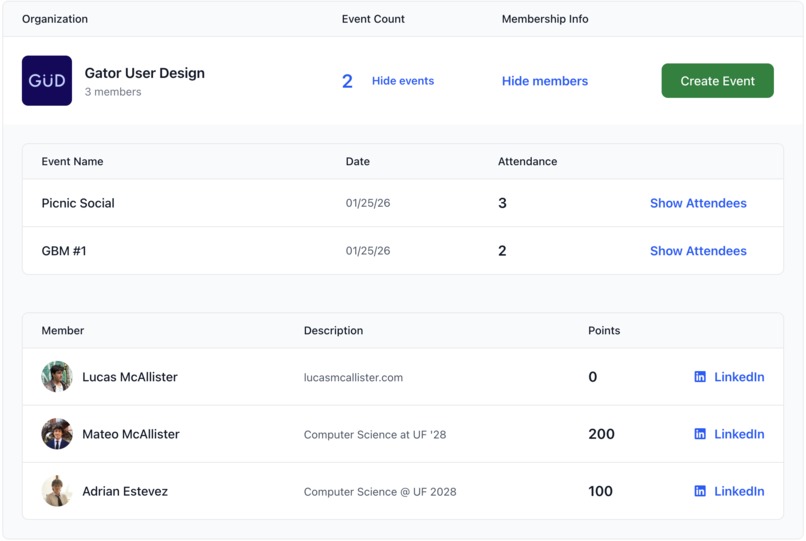
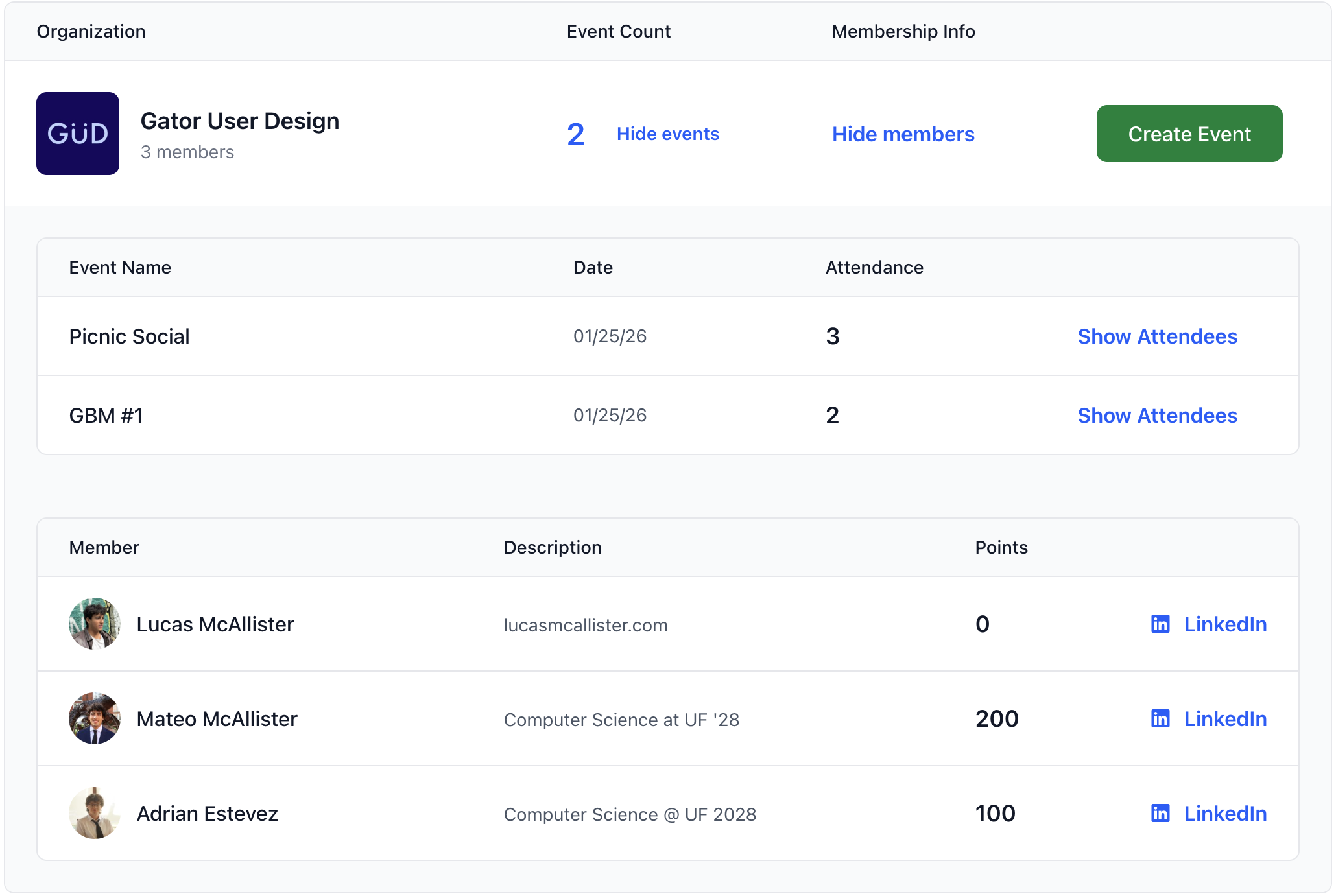
Org management page
-
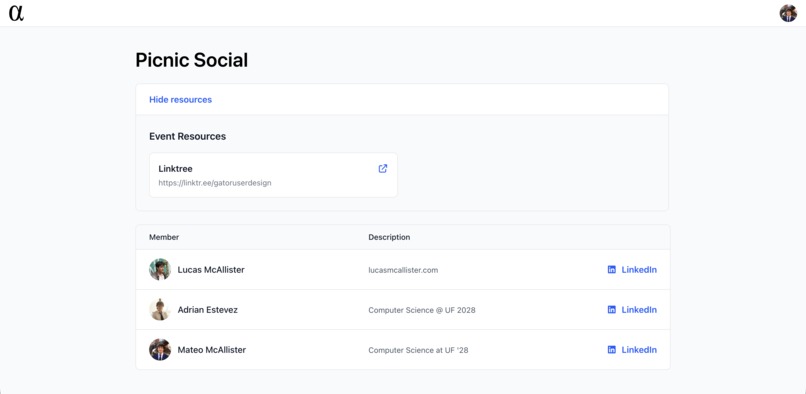
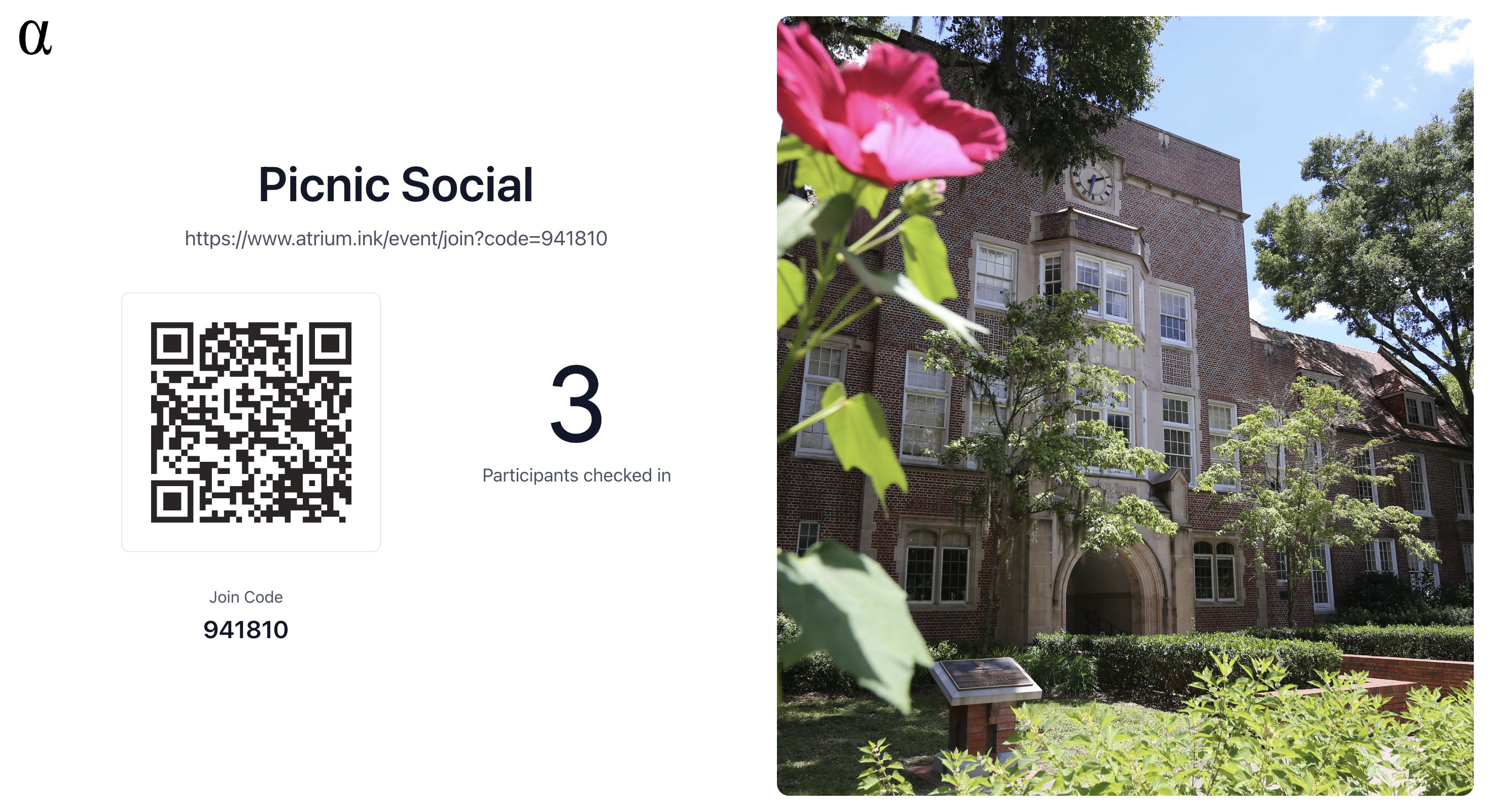
Client side of live event
-
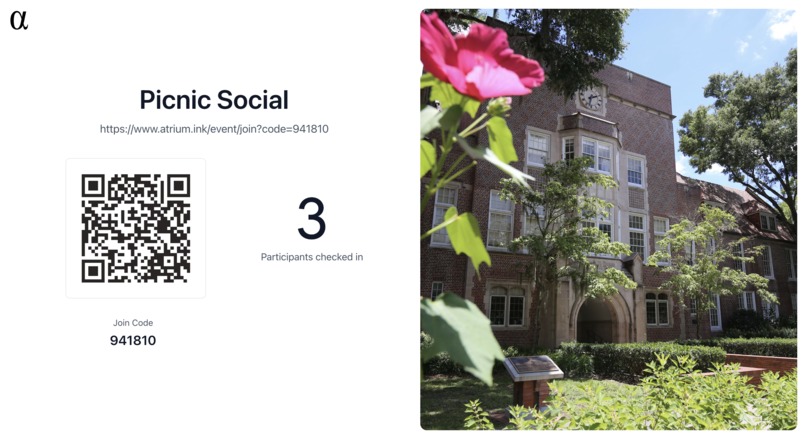
Host side of live event



Inspiration
As a group of 3 sophomore students, we know the critical role that UF's student organizations play in enriching the college experience. However, leaving GBMs can often feel more like an info dump rather than an inviting welcome. Amidst the many attendance links and Google Forms flashed on Promethean boards, there's little opportunity to enjoy the time you have engaging with a club as they intended. With Atrium, we aim to restore the purpose of club meetings and bring you back to the moment.
What it does
Atrium is a platform where organizers can:
- Host live events
- Track and keep a provable record of attendance
- Reward continued participation
and where users can:
- Connect with fellow event participants on LinkedIn
- Automatically collect points for their favorite student orgs
- View resources uploaded by hosts on the fly, without worrying about missing anything.
Core Features:
- Realtime club meeting functionality, including live attendance and member check-in.
- LinkedIn OAuth enables one-click connection and networking between attendees.
- Attendance history and point distribution for attending events.
- Centralizes external resources in one place, allowing users to focus on the event.
How we built it
Challenges we ran into
In our experience, the hardest and most detrimental challenges didn't come from a lack of technical knowledge or getting stuck on a problem for an extended period, they came from difficulties in collaboration, namely in delegating tasks efficiently and ensuring that each of us understood each other's work and kept it at the forefront of our minds when developing. We often found ourselves in situations where some of our blocks of code were incompatible because we didn't communicate effectively and were too focused on solving a specific problem. Our greatest success came when everyone had a shared understanding of each other’s work and how it would eventually converge.
Accomplishments that we're proud of
We are especially proud that we can all say that we believe that this tool has the potential to positively impact the community we live in and it's something we can actually see ourselves using. Another accomplishment we're happy about is the level of progression and growth we've seen in this group. This was only the second hackathon the three of us have been a part of, and we're thrilled by how much we learned and the new skills we were able to apply in this one.
What we learned
- In this project, planning in anticipation of how the database would interact with the code was key. It was important to ensure that the database was set up correctly for all the functionality we were looking for.
- We learned that taking time to visualize user flows and how people would end up interacting with your product made it easier for us to be on the same page and understand each other's code. Before opening our IDEs, we made a sitemap and defined exactly what we'd need to perform a viable demo, which helped us greatly in our collaboration.
- We found that generalizing a lot of our code was effective in our case. Instead of making distinct pages and sinking time into tailoring the experience for both types of users, we found that a lot of their goals overlapped, which made a generalized approach more efficient in the end.
What's next for Atrium
In the short term, we'd love to see how viable it is in a real event setting and learn from how people interact with it. From then, we believe that our live event infrastructure leaves a huge opportunity available, as we're just a stone's throw away from leveling up the experience to include live quizzes, surveys, or other ways for clubs to engage with their members.
In the long term, we'd like to implement more features to greater enhance the connection between clubs and their members, including real life event RSVP, one-click reminders of your favorite club's events, and a more detailed analysis of attendance and participation trends for club owners.
Built With
- figma
- next.js
- postgresql
- react
- supabase
- websockets


Log in or sign up for Devpost to join the conversation.