Inspiration
We were inspired by a simple idea: complex behavior can emerge from very simple rules.
In nature, systems evolve not because they are designed, but because many small interactions compound over time. We wanted to explore that idea directly.
What it does
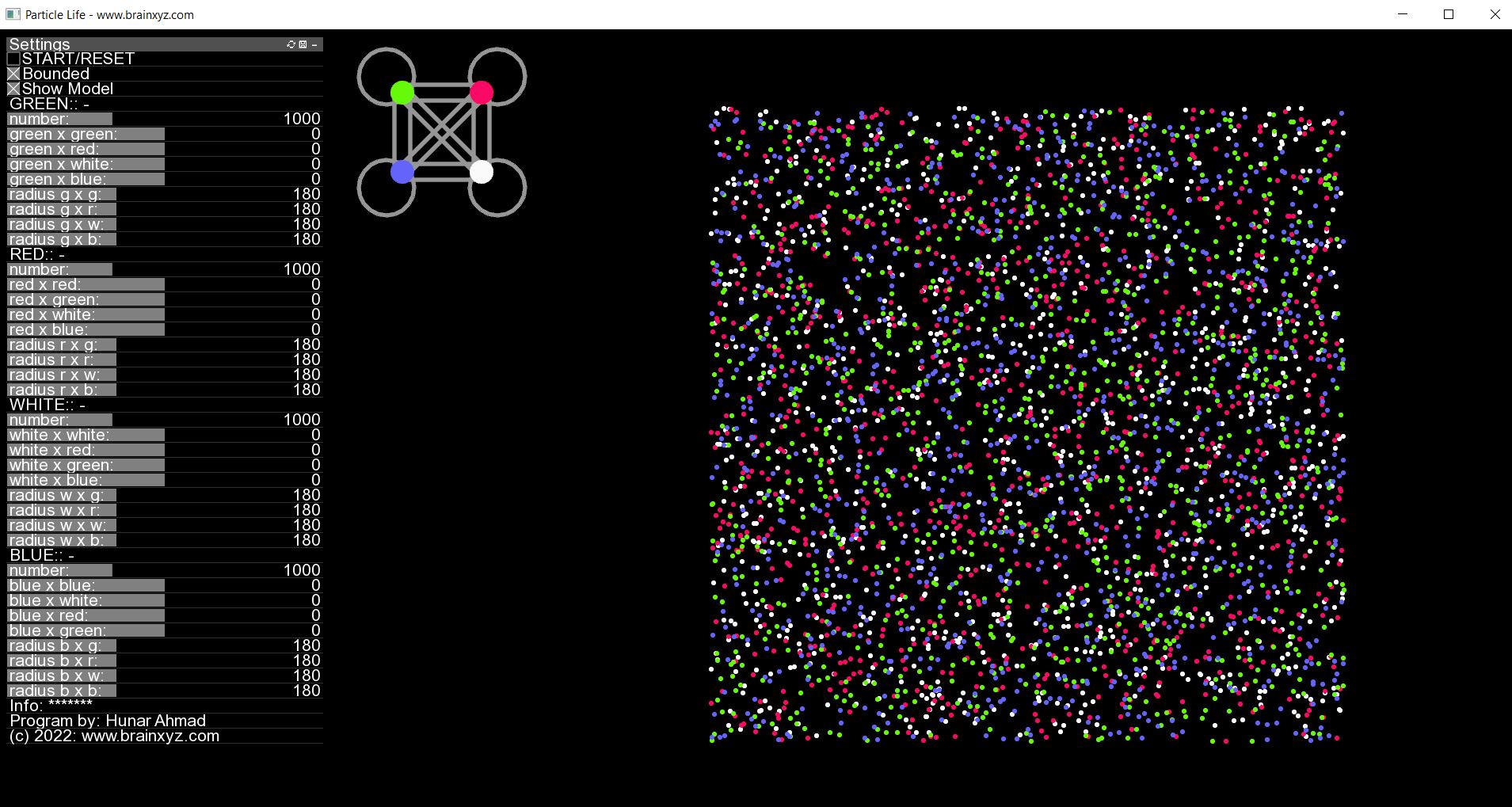
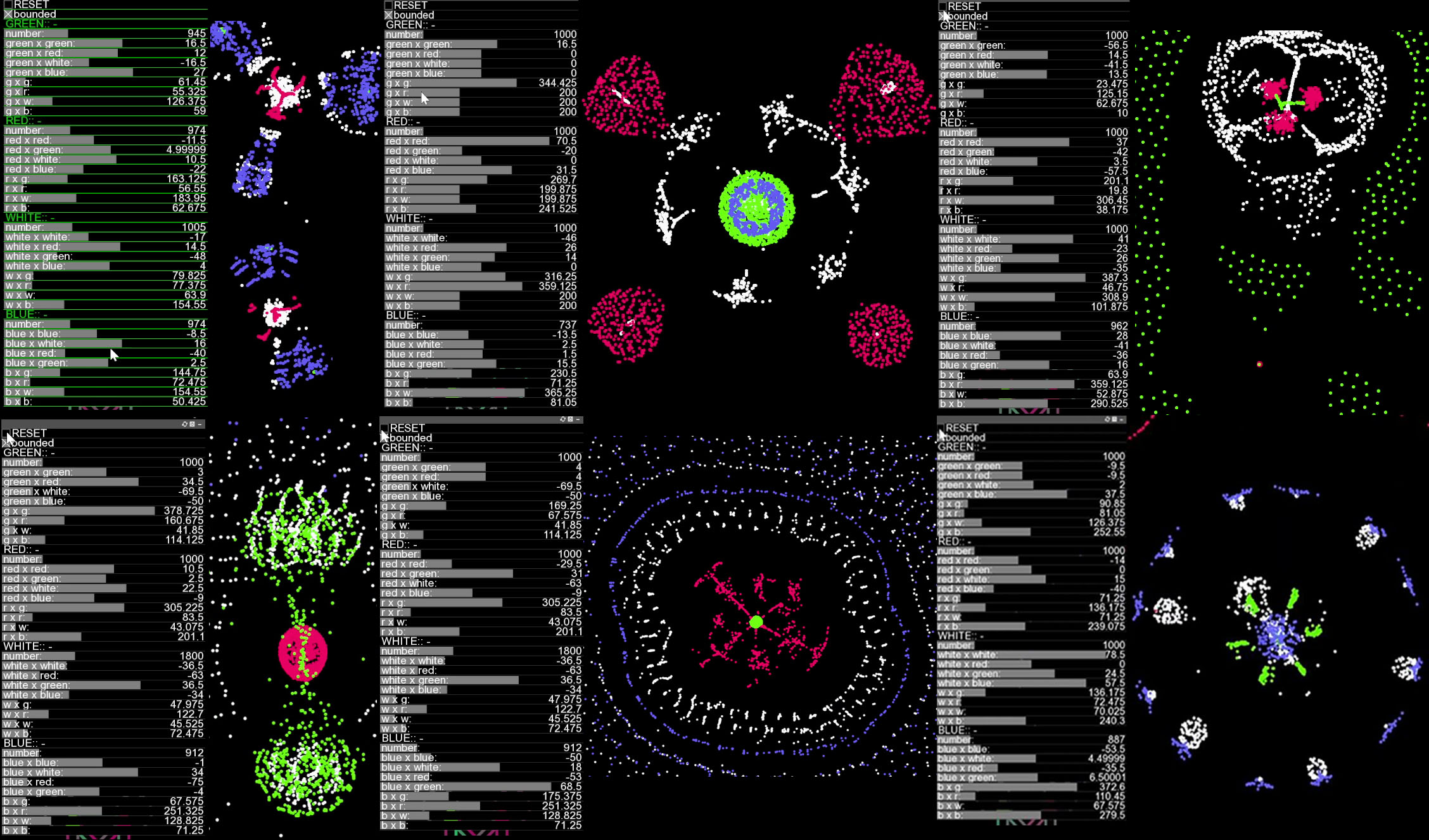
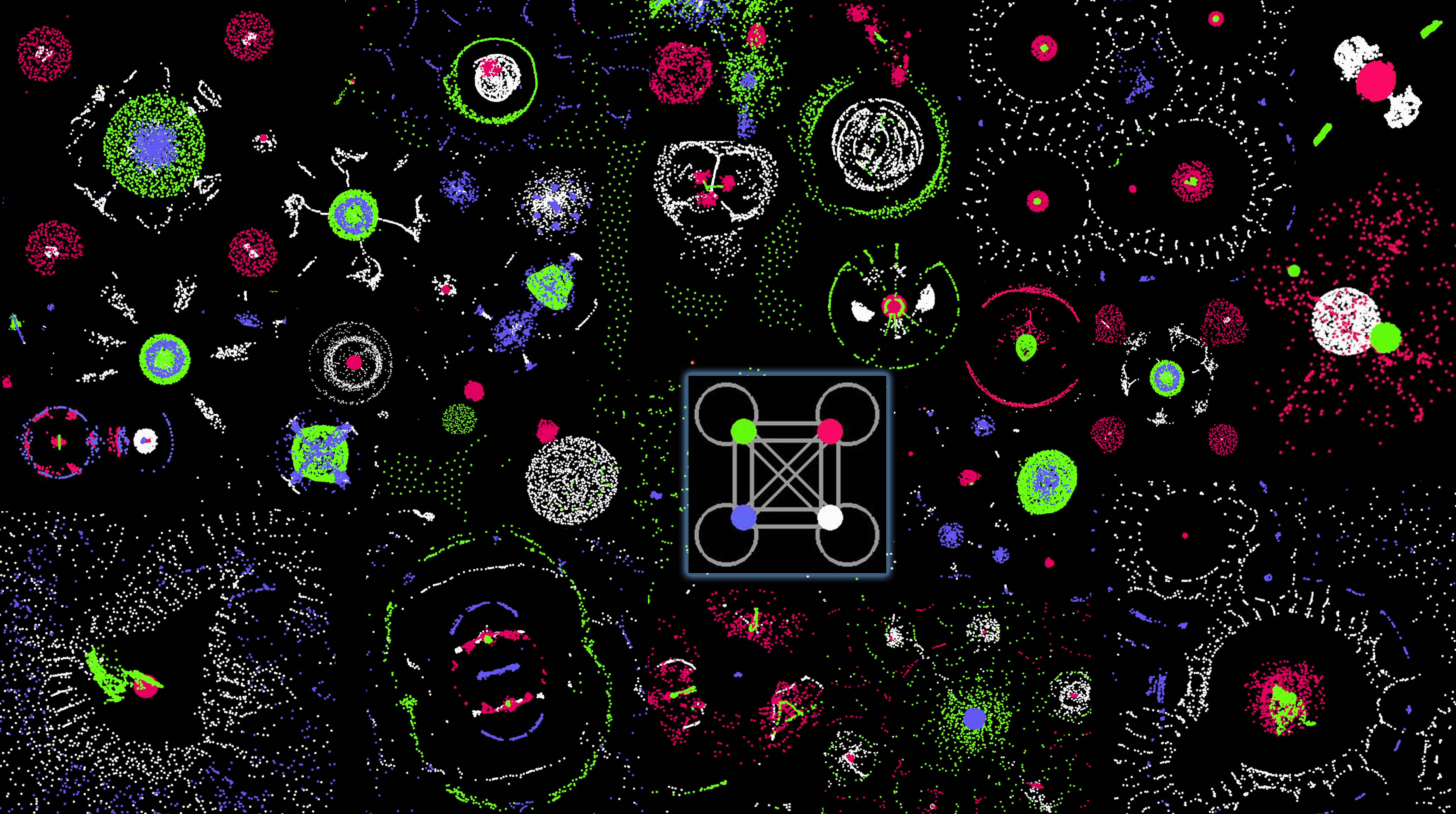
Atomic Simulator is a particle-based system where you define attraction and repulsion rules between atoms and observe how large-scale patterns emerge, stabilize, and collapse.
No behaviors are scripted. All outcomes arise from interaction alone.
How we built it
We modeled each atom with position and velocity: [ \vec{p}_{t+1} = \vec{p}_t + \vec{v}_t ]
Forces between particles are computed from simple distance-based rules: [ \vec{F}{ij} = g{ij} \cdot f(d_{ij}) ]
controls attraction or repulsion between particle types.
Everything else emerges from repeated application of these rules over time.
Challenges we ran into
Performance became a challenge as particle count increased. More importantly, tuning interactions so that collapse felt organic—not random—required careful experimentation.
Accomplishments that we're proud of
Life-like structures emerging without explicit design
Stable systems that naturally drift into instability
Meaningful collapse events that generate new behavior
What we learned
Even when rules are fully known, outcomes can remain unpredictable. Some systems must be run to be understood.
Complexity ⇏ Complicated Rules
What's next for Atomic Simulator
Larger-scale simulations Time-evolving interaction rules Recording and replaying collapse events Exploring layered systems of interacting worlds


Log in or sign up for Devpost to join the conversation.