-
-
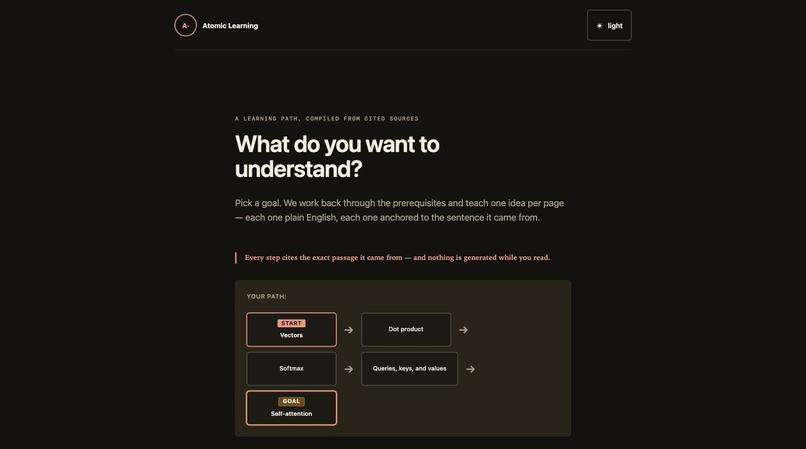
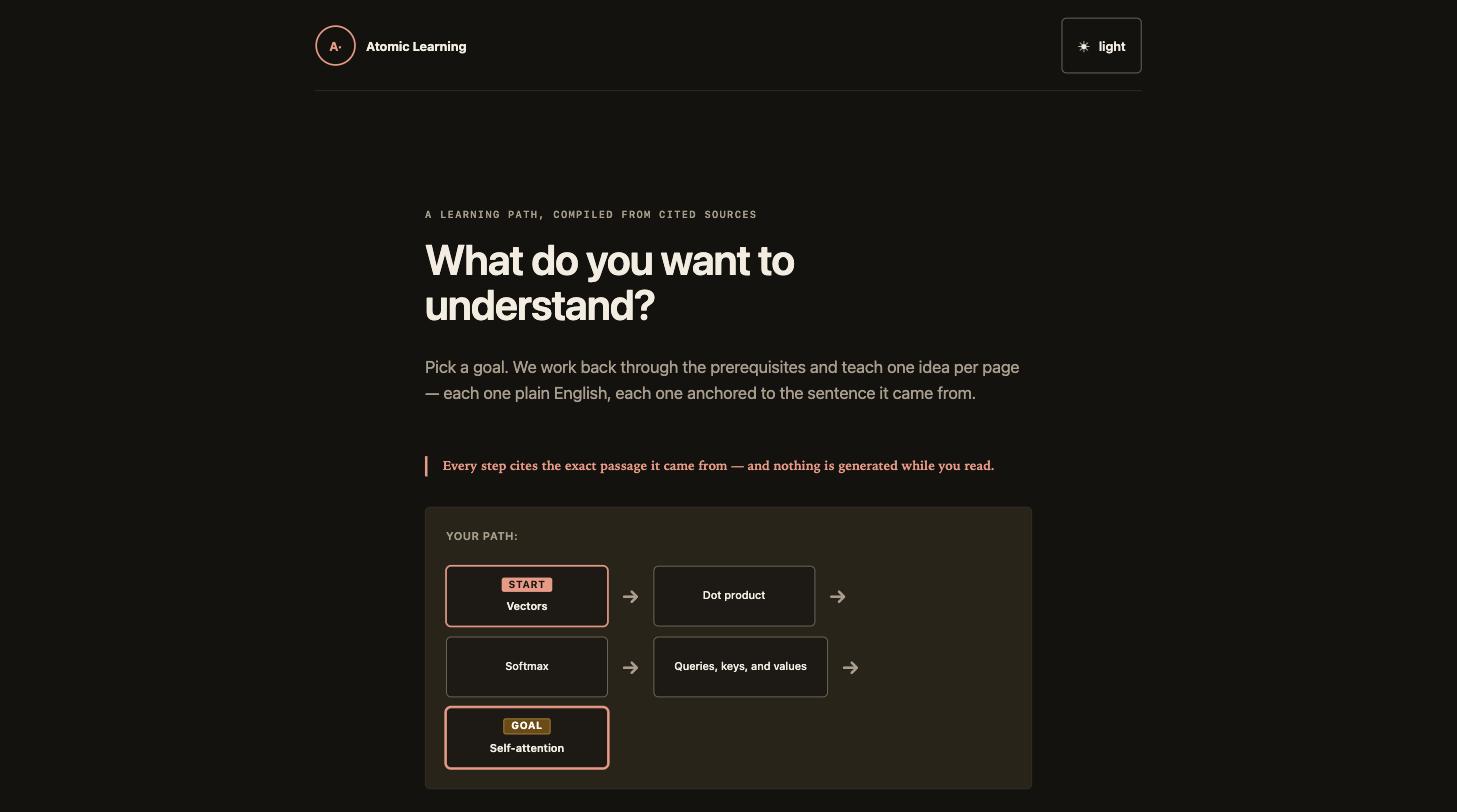
Product Shot
I'm an autistic stay-at-home dad of five kids, many with disabilities, and I've spent the last couple of years of my free time teaching myself AI, development, system architecture, personal knowledge management, and academic research. Being autistic, I've been deceived by a lot of people - my communication difficulties make me easy to take advantage of. The same thing kept happening with my AI: it would tell me it had done a good job when I didn't have the skills to catch its lies in things like code I don't understand. So I started building gating techniques to keep my AI from lying to me, and to keep my token spend light while it works. I'm environmentally conscious, in love with technology, and a poor, struggling father, so I have to make every dollar count. I watch people pour money into chatbots the way they'd fire off text messages, and I've been trying to show my friends and family how to have AI do real work for you: fact-checked and saved to files you keep. It's usually a more technical process than they care to learn.
So I built the opposite. You point it at an openly-licensed textbook and it compiles the material into a graph of the core concepts in the text. These core concepts - Atomic Concepts - are broken down as simply as they can be, with citations to where they came from in the original text. You end up with something you keep and can pick apart, instead of a chat you'll lose track of.
I also needed something to self-validate what I learned. I'm addicted to research, and I've taught myself all of it alone, with no team and no mentor, so I've never had a good way to tell whether what I learned actually works. Build Week gave me a real deadline and a hard standard to hold it to, so I built the thing I care most about and put it up to be tested.
Why it's a Codex story: Codex (GPT-5.6) wrote the core of this repository under adversarial test gates I designed, gates it couldn't talk its way past. They fail the build if a claim isn't grounded in a real source, if a source isn't openly licensed, or if the output isn't byte-reproducible. The same model, GPT-5.6, then runs as the build-time engine inside the product, doing the atomizing and the lesson-writing. I used a mix of tools along the way, especially for the reader interface, but the engine and its gates are Codex's work, and the commit history shows every bit of it.
Who it's for: people who want AI to help them learn but don't trust the output - and who'd rather keep the work AI does for them than talk to a chatbot forever. You get a course you keep and can check sentence by sentence against its real source.
Try it in two minutes:
- Live demo (runs entirely in your browser - nothing is generated while you read): https://beauboorman.github.io/atomic-learning-graph/
- How Codex built it (the kickoff prompt + collaboration record):
docs/kickoff-prompt.md - Code (MIT) + content (CC-BY-SA-4.0): the repo
Built during Build Week. The commit history is the record. GPT-5.6 built its core and powers it. (Codex /feedback session ID: see SUBMISSION.md - also pasted on this form.)
DEVPOST STORY (paste into the project "Story" field)
Inspiration
I'm an autistic stay-at-home dad of five kids, many with disabilities, and I've spent the last couple of years of my free time teaching myself AI, development, system architecture, personal knowledge management, and academic research. Being autistic, I've been deceived by a lot of people - my communication difficulties make me easy to take advantage of. The same thing kept happening with my AI: it would tell me it had done a good job when I didn't have the skills to catch its lies in things like code I don't understand. So I started building gating techniques to keep my AI from lying to me, and to keep my token spend light while it works. I'm environmentally conscious, in love with technology, and a poor, struggling father, so I have to make every dollar count. I watch people pour money into chatbots the way they'd fire off text messages, and I've been trying to show my friends and family how to have AI do real work for you: fact-checked and saved to files you keep. It's usually a more technical process than they care to learn.
I'm the technical friend a lot of people come to when they don't understand something. They tell me I'm good at breaking things down into easy-to-digest information. I lean on a lot of cognitive science when I teach, and I try to hide it behind simple words and comparisons to things people already know. A few of them keep telling me I should start a YouTube channel teaching people how to do things.
I also needed something to self-validate what I learned. I'm addicted to research, and I've taught myself all of it alone, with no team and no mentor, so I've never had a good way to tell whether what I learned actually works. Build Week gave me a real deadline and a hard standard to hold it to, so I built the thing I care most about and put it up to be tested.
What it does
So I built the opposite. You point it at an openly-licensed textbook and it compiles the material into a graph of the core concepts in the text. These core concepts - Atomic Concepts - are broken down as simply as they can be, with citations to where they came from in the original text. You end up with something you keep and can pick apart, instead of a chat you'll lose track of.
It's for people who want AI to help them learn but don't trust the output, and who'd rather keep the work AI does for them than talk to a chatbot forever. You get a course you keep and can check sentence by sentence against its real source, all frozen into a single web page that makes zero AI calls while you read.
How I built it
Codex (GPT-5.6) wrote the core of this repository under adversarial test gates I designed, gates it couldn't talk its way past. They fail the build if a claim isn't grounded in a real source, if a source isn't openly licensed, or if the output isn't byte-reproducible. The same model, GPT-5.6, then runs as the build-time engine inside the product, doing the atomizing and the lesson-writing. I used a mix of tools along the way, especially for the reader interface, but the engine and its gates are Codex's work, and the commit history shows every bit of it.
The finished graph is committed to the repo with its hash pinned, so the exact bytes a reader sees are the exact bytes the build produced. The reader makes no model or network calls at all.
Challenges I ran into
My citation gates check that the words in a lesson appear, word for word, in the real source. But they don't check that a worked example actually shows the concept it claims to. At one point the model wrote an example that was correct math but demonstrated the wrong idea entirely. The gates couldn't catch it, because the words were honestly sourced and only the meaning was off. I caught it by hand, and instead of hiding it, I wrote the correction into the record and started designing a gate that would catch that kind of mistake automatically.
I also ran into token-budget constraints that exposed real gaps in my project management, harness wiring, organization, prompting, and workflows. And I confirmed that I am not a designer. (。◕‿◕。) I really need to work on my design, delivery, and front-end skills.
The other challenge was doing all of this alone, with no team and no mentor, while wrangling a pile of AI tools that didn't always behave. The hardest discipline was keeping everything honest and never making the demo look stronger than the thing it was built on.
What I learned
You can't trust AI by asking it whether it did a good job. Verification has to be structural: the build has to fail when the work is wrong, on its own, without me in the loop. And when there's a gap the automated checks can't see yet, the honest move is to say so out loud and turn it into the next gate, not to paper over it. Build Week was the first real bar I've ever had to hold my self-taught work to, and that mattered to me more than I expected.
This was my first public website, my first YouTube video, my first app, and my first CLI/TUI. It pushed me to do a lot of technical things I thought I could probably do but had never proven. I also learned that I'm probably a lot more skilled than I let myself believe. I should push myself more, through the imposter syndrome and the fear of failing, because I did much better than I thought I would. I think I would have done even better on a lot of this with more time and budget for each piece, and that gives me more confidence to put myself out there.
What's next
Turning that hand-catch into code: a gate where the model writes out the numbers for a worked example and the code checks them, so that kind of mistake becomes impossible instead of something a human has to spot. After that: more tuning, more sources, more subjects, more polished output formats, and a simpler path so someone non-technical can point it at their own material and get a course they can trust. I think the atomizer at the heart of this project is worth spending real time on, because it helps people break down the huge amount of information thrown at them every day. For instance, you could point your RSS feeds at it and end up with a Zettelkasten of your favorite sources that always links back to the original. I'm very passionate about helping people learn things that would otherwise get lost in the noise.

Log in or sign up for Devpost to join the conversation.