🌍 Inspiration
Climate change is no longer a distant problem—it is a daily reality for millions of people living in vulnerable environments. While climate data (temperature, humidity, air quality) is widely available, it is often not translated into meaningful, actionable decisions.
We were inspired by a simple but critical gap:
People don’t just need climate data — they need guidance on what to do.
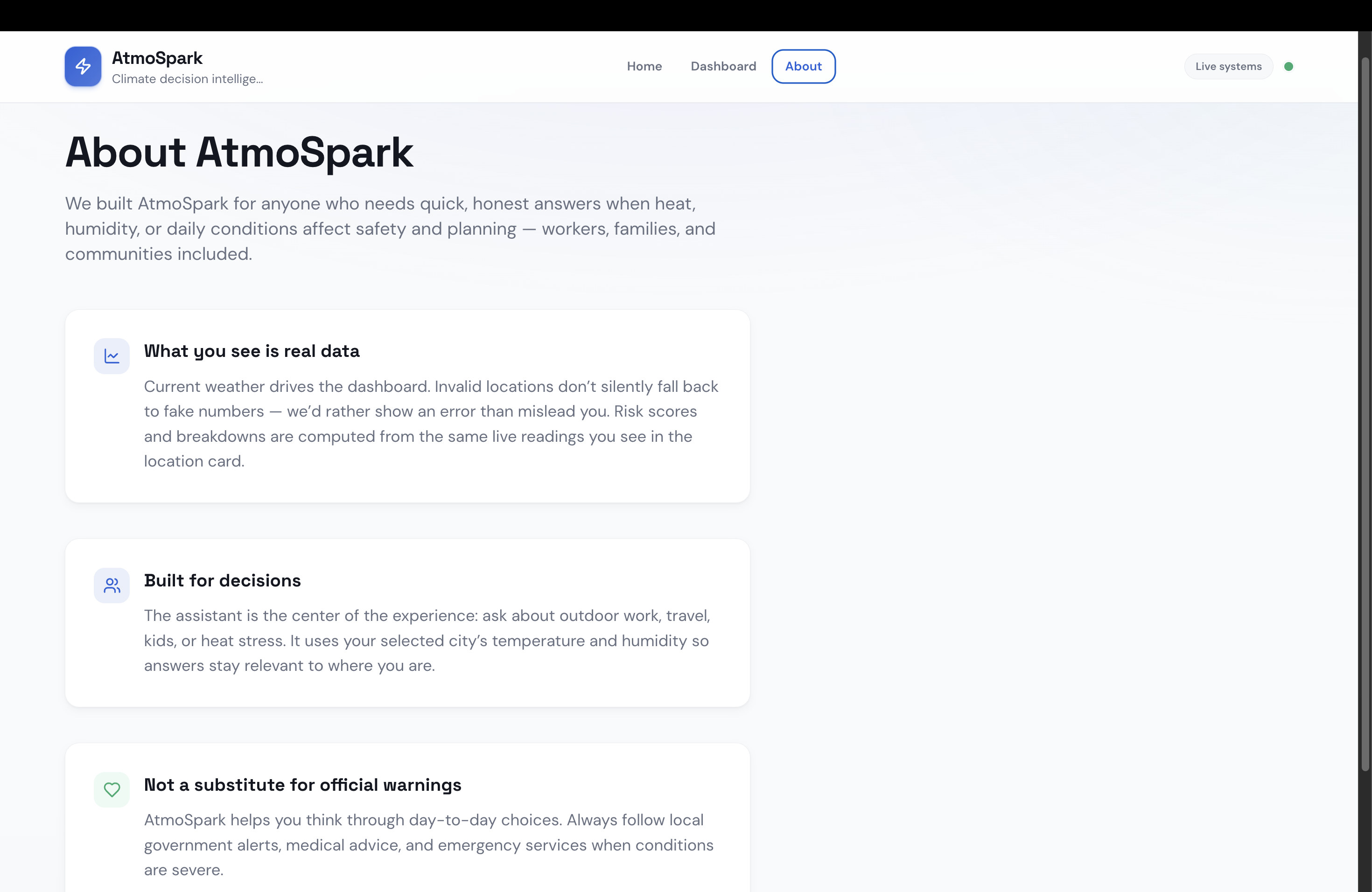
From daily wage workers deciding whether to work outdoors, to families ensuring safety for children and the elderly, timely decisions can directly impact health and livelihood.
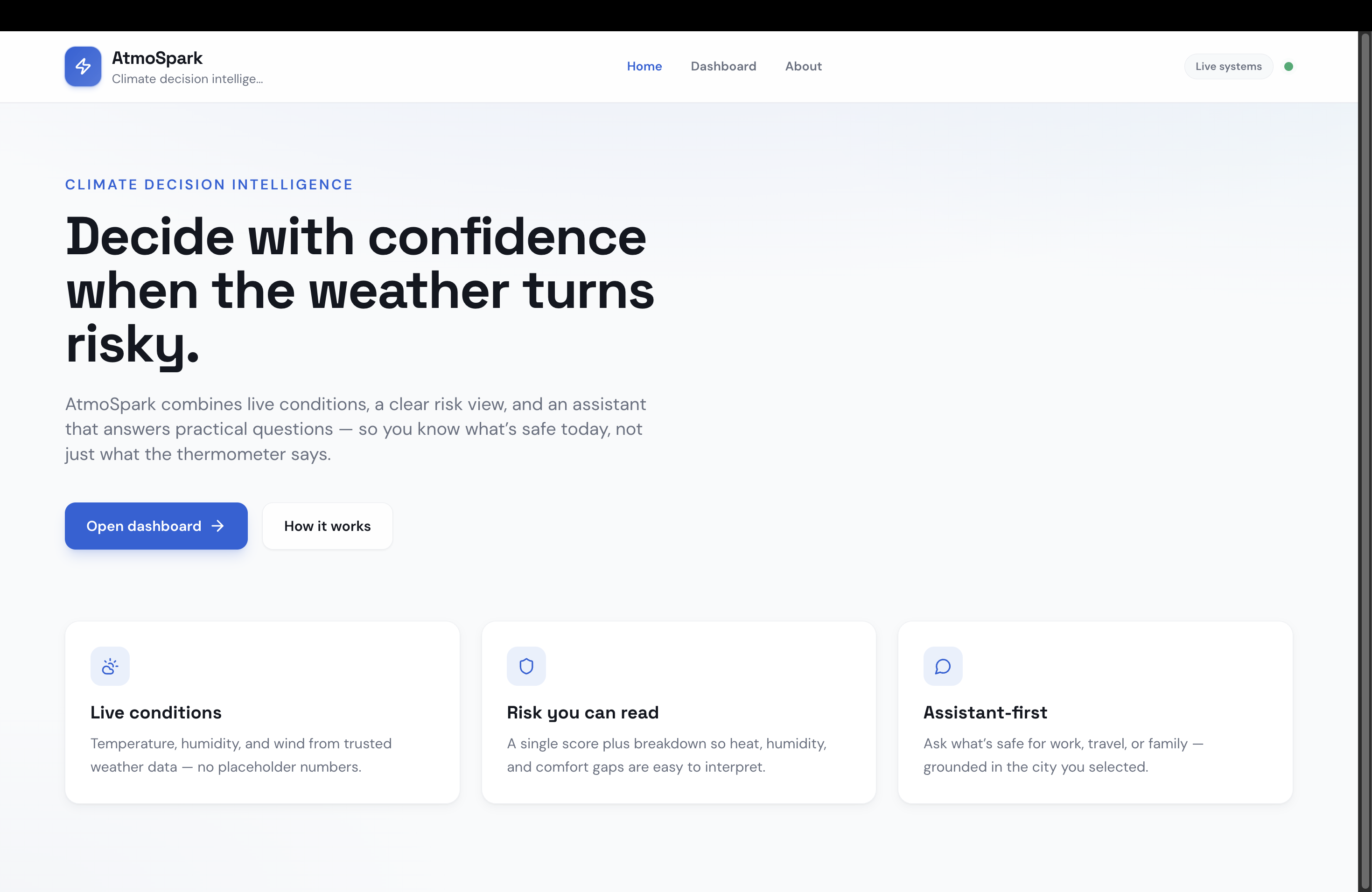
This led to the idea of AtmoSpark — a system that transforms environmental data into real-time, actionable decisions.
💡 What it does
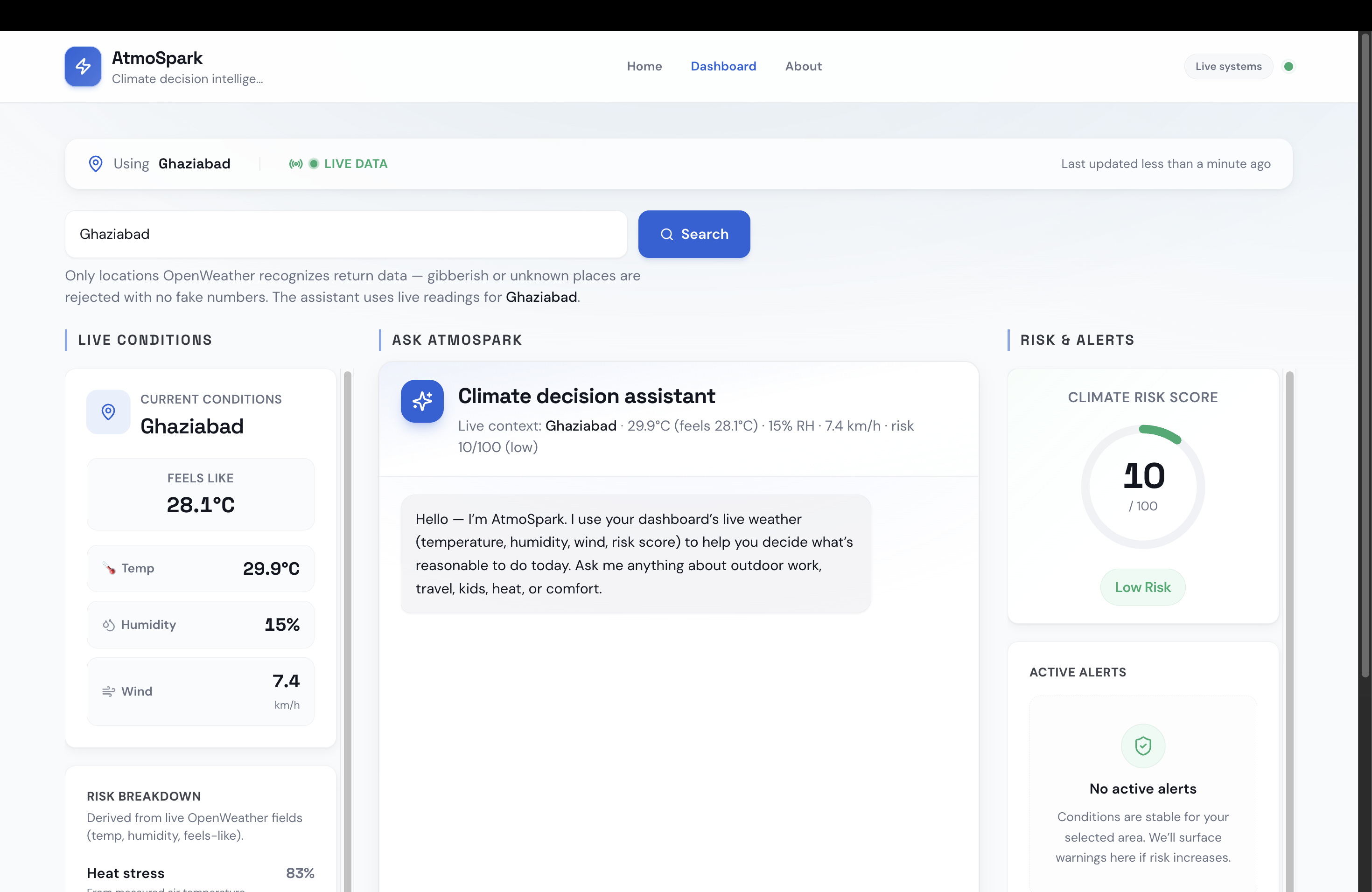
AtmoSpark is a personal climate decision intelligence system that converts real-time environmental data into practical guidance.
It provides:
- 📍 Location-based climate insights
- ⚠️ A dynamic Climate Risk Score (0–100)
- 🚨 Real-time alerts based on conditions
- ✅ Actionable recommendations
- 💬 An intelligent assistant for scenario-based queries
Instead of overwhelming users with raw data, AtmoSpark answers the most important question:
“What should I do right now?”
⚙️ How we built it
We built AtmoSpark as a modern, responsive web application using:
- React + Vite for fast frontend development
- Tailwind CSS for clean, scalable UI
- Framer Motion for smooth animations and interactions
- OpenWeather API for real-time environmental data
- Custom logic engine to compute climate risk and generate insights
- Deployed on Vercel for seamless global access
The system processes real-time data inputs (temperature, humidity, etc.), calculates a risk score, and generates context-aware alerts and recommendations.
The chatbot component simulates intelligent decision support using structured logic tailored to real-world scenarios.
🧠 What we learned
- Translating data → decisions is more impactful than just visualizing data
- UI/UX plays a huge role in making systems feel trustworthy and usable
- Simplicity and reliability are more important than over-engineering
- Building for real-world users requires thinking beyond code
We also learned how to design systems that are not just technically correct, but meaningful and usable under real-world constraints.
⚡ Challenges we ran into
- Integrating real-time APIs while ensuring reliability during failures
- Handling deployment issues (environment variables, API keys)
- Balancing between adding AI features and maintaining system stability
- Designing a UI that is both simple and impactful
One key challenge was ensuring that the system never fails during critical use, which led us to implement fallback logic for robustness.
🚀 Future improvements
- Predictive risk analysis using machine learning
- Disaster alerts (floods, heatwaves, extreme weather)
- Integration with government and public safety systems
- Multi-language support for accessibility
- Mobile-first deployment for wider reach
Our long-term vision is to scale AtmoSpark into a public climate safety platform.
🌱 Impact
AtmoSpark is designed for:
- Climate-vulnerable communities
- Outdoor workers and farmers
- Urban populations facing extreme conditions
By enabling informed, real-time decisions, it helps reduce risk and improve daily safety.
AtmoSpark bridges the gap between climate awareness and climate action.
Built With
- api
- css
- framer
- motion
- openweathermap
- react
- tailwind
- typescript
- vite

Log in or sign up for Devpost to join the conversation.