-
-
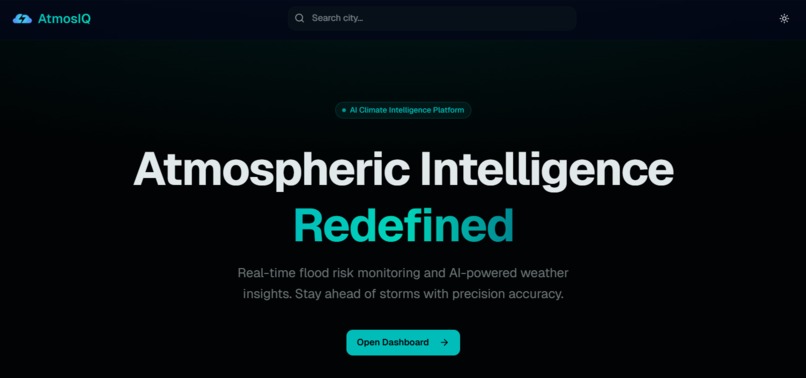
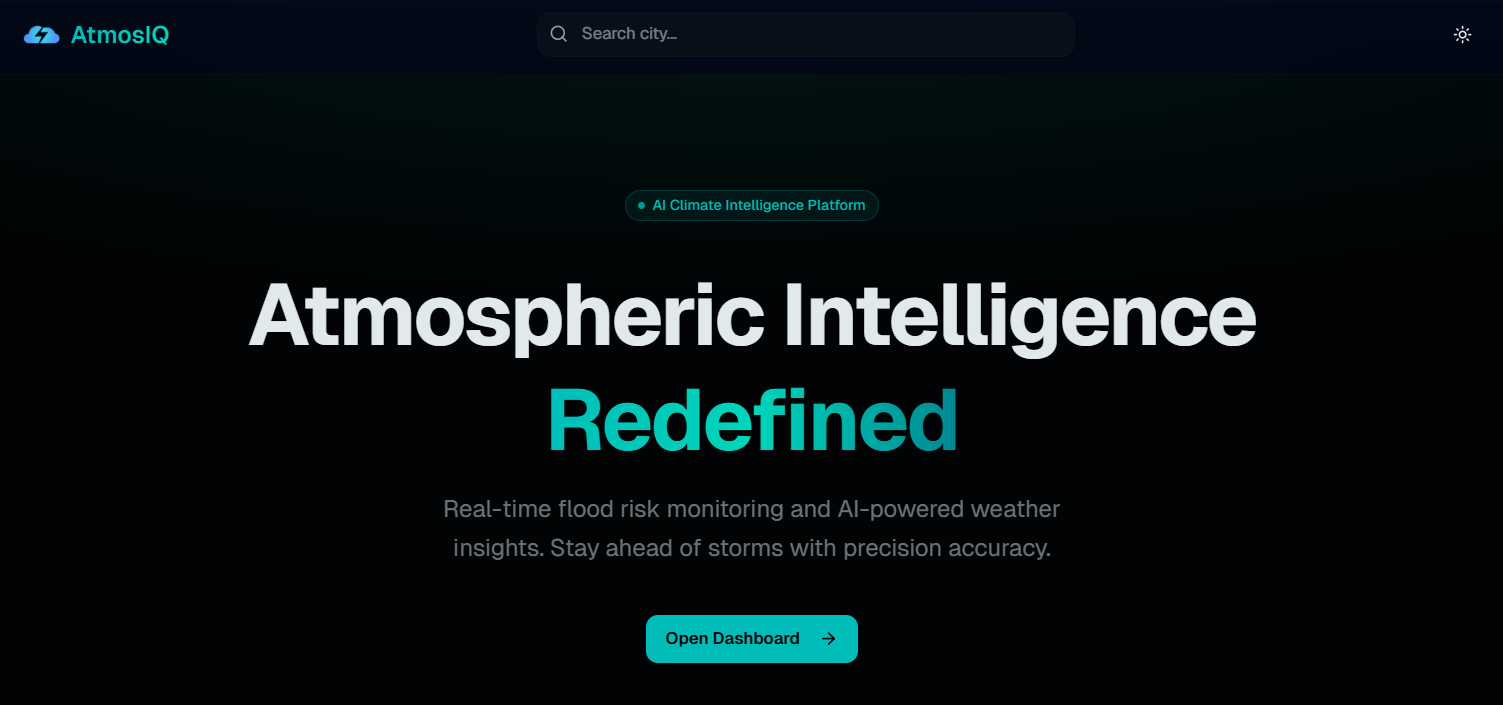
Landing Page
-
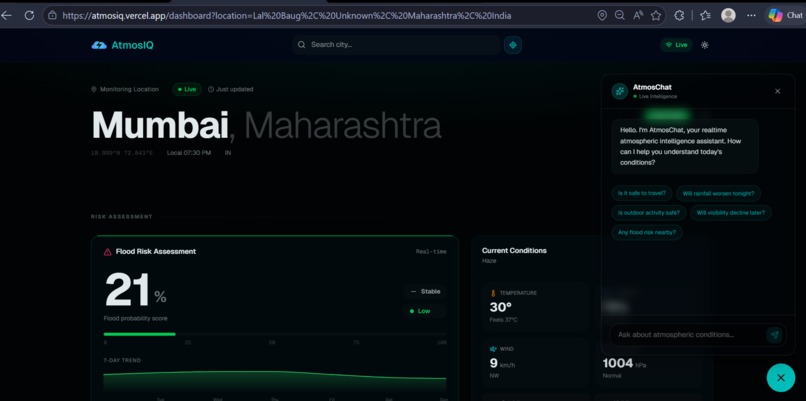
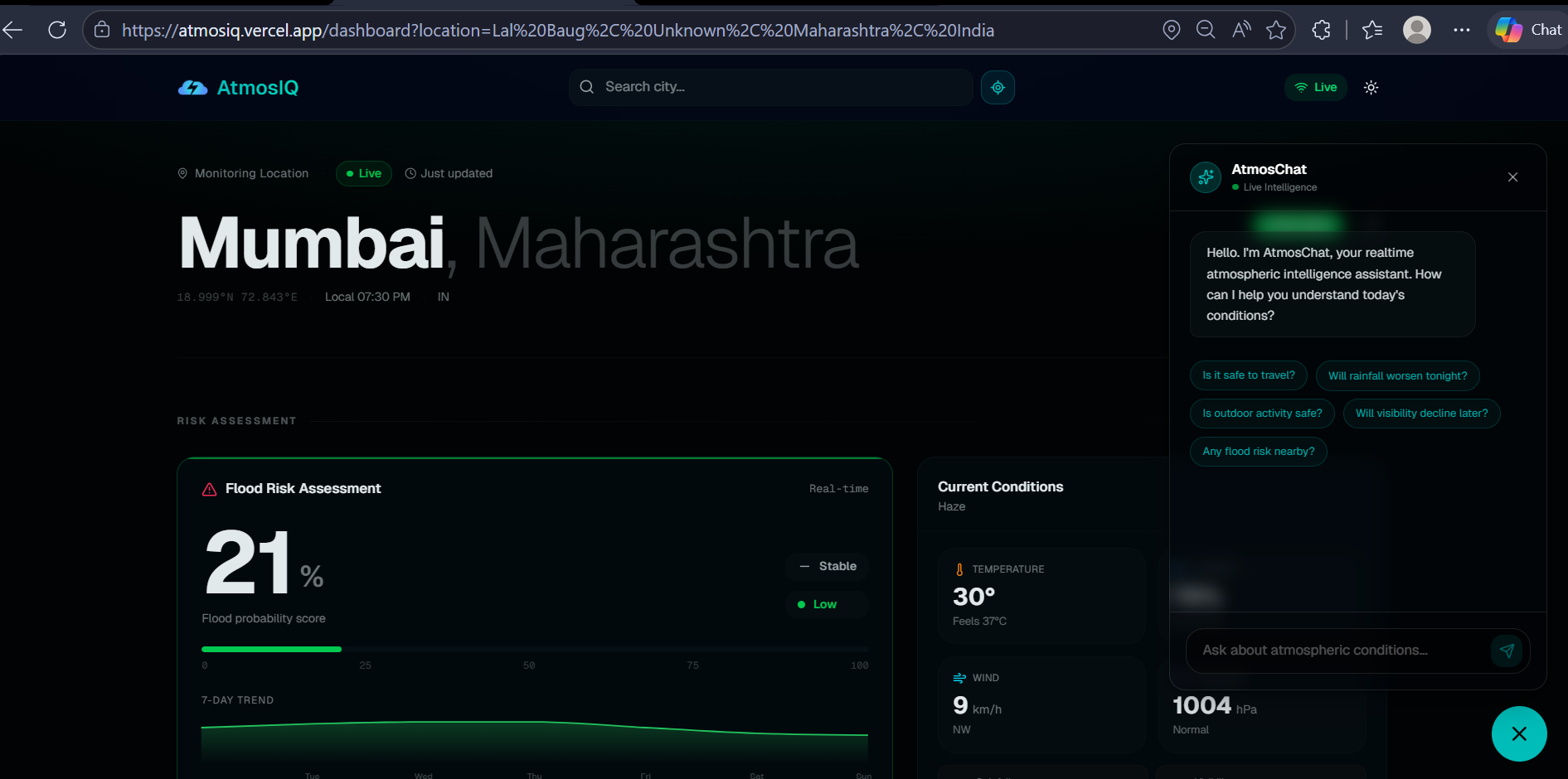
Dashboard and AI Chatbot
-
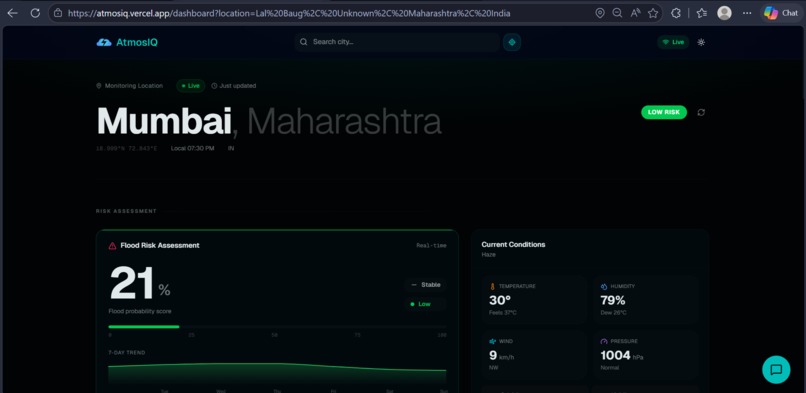
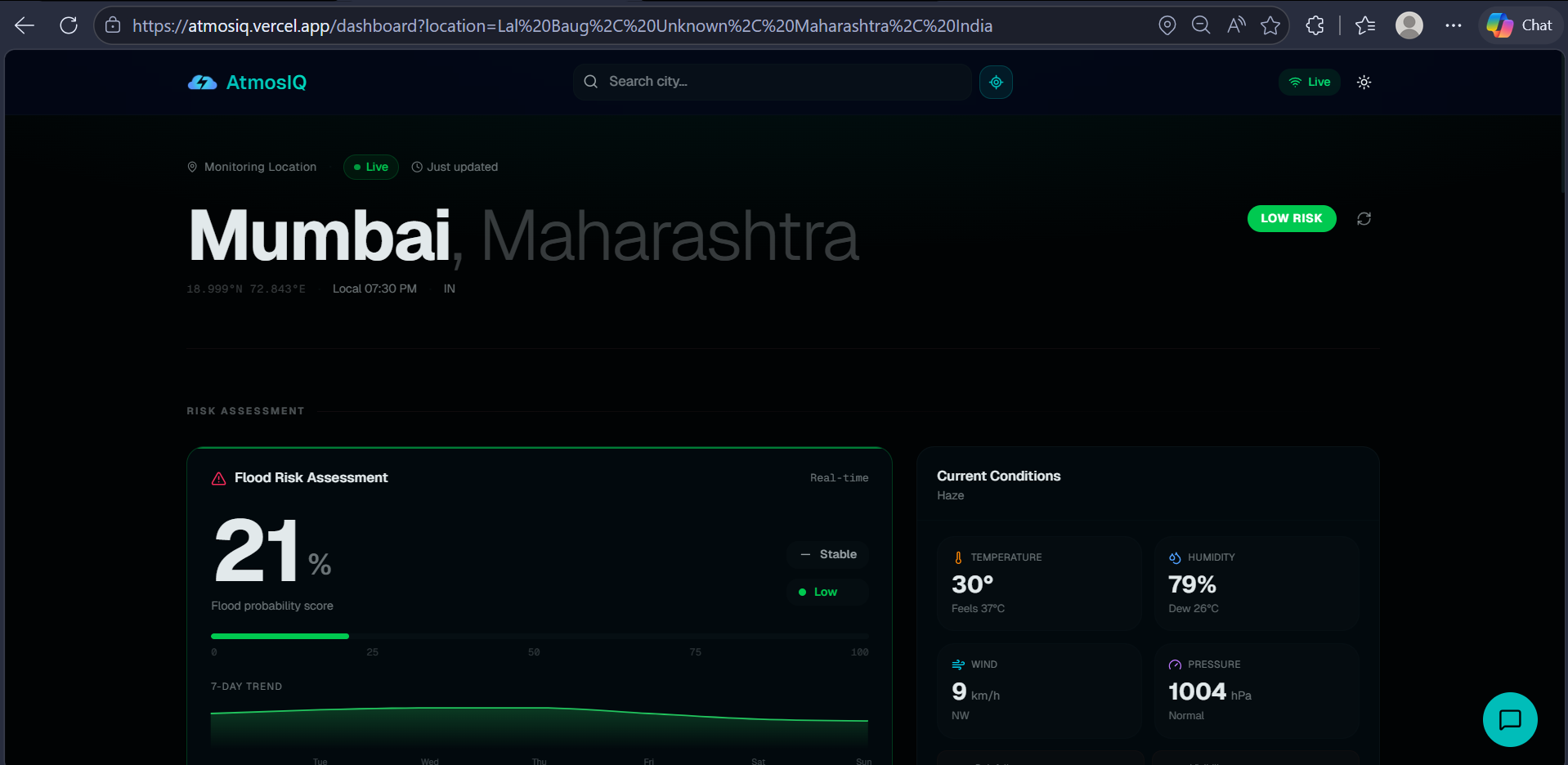
Dashboard and whether Information
-
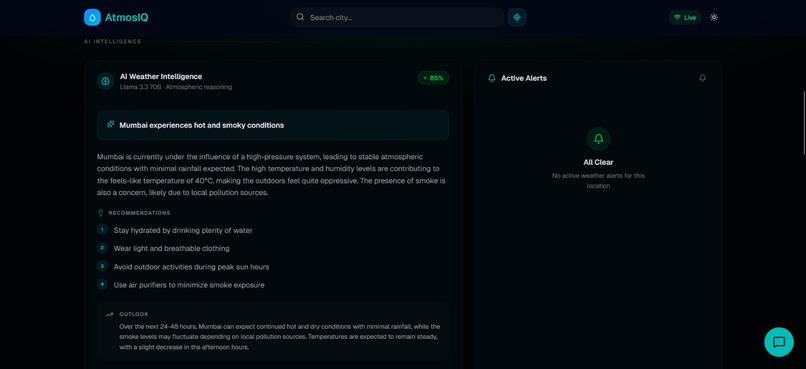
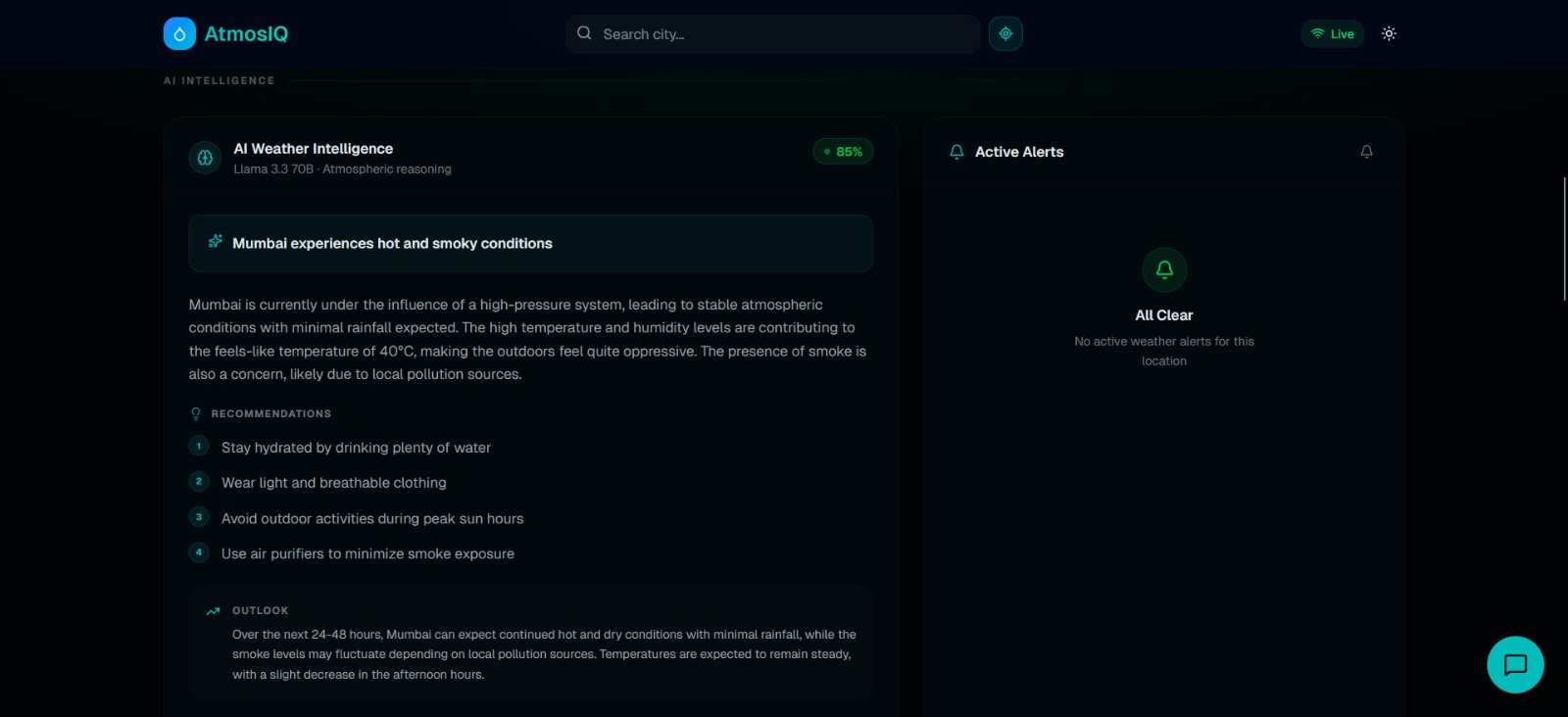
AI Whether Intelligence Section
-
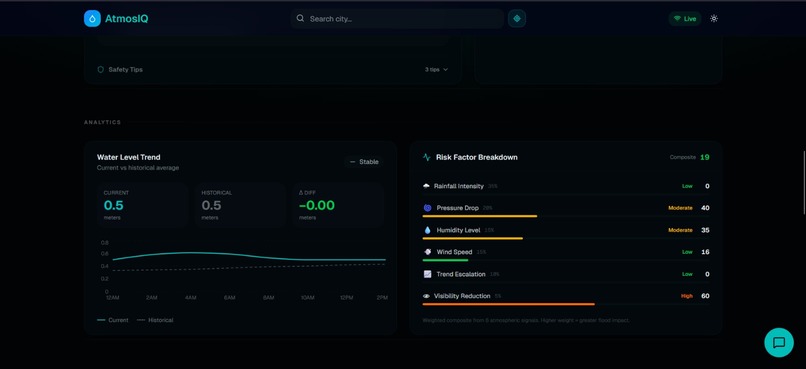
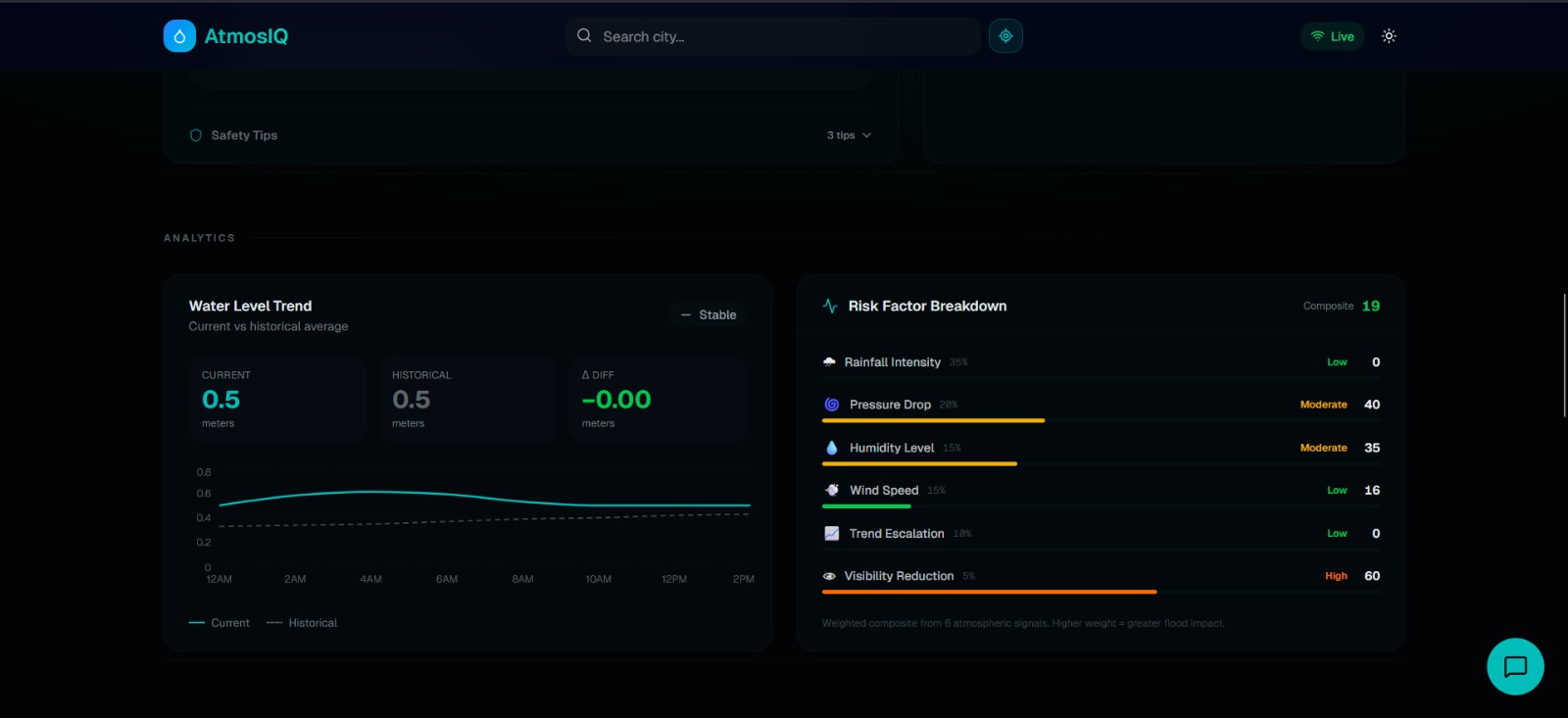
Analytics Section
-
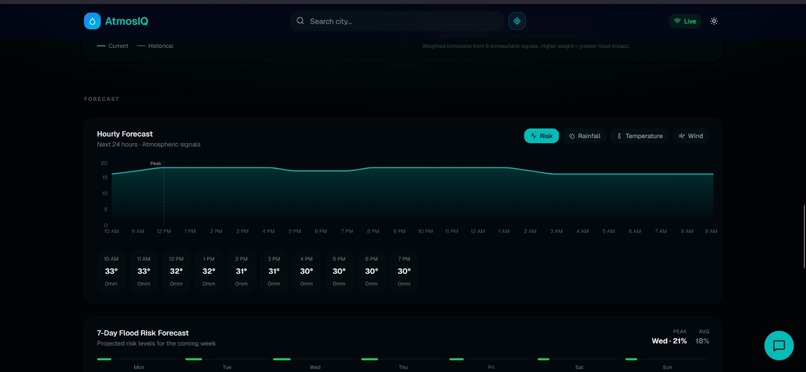
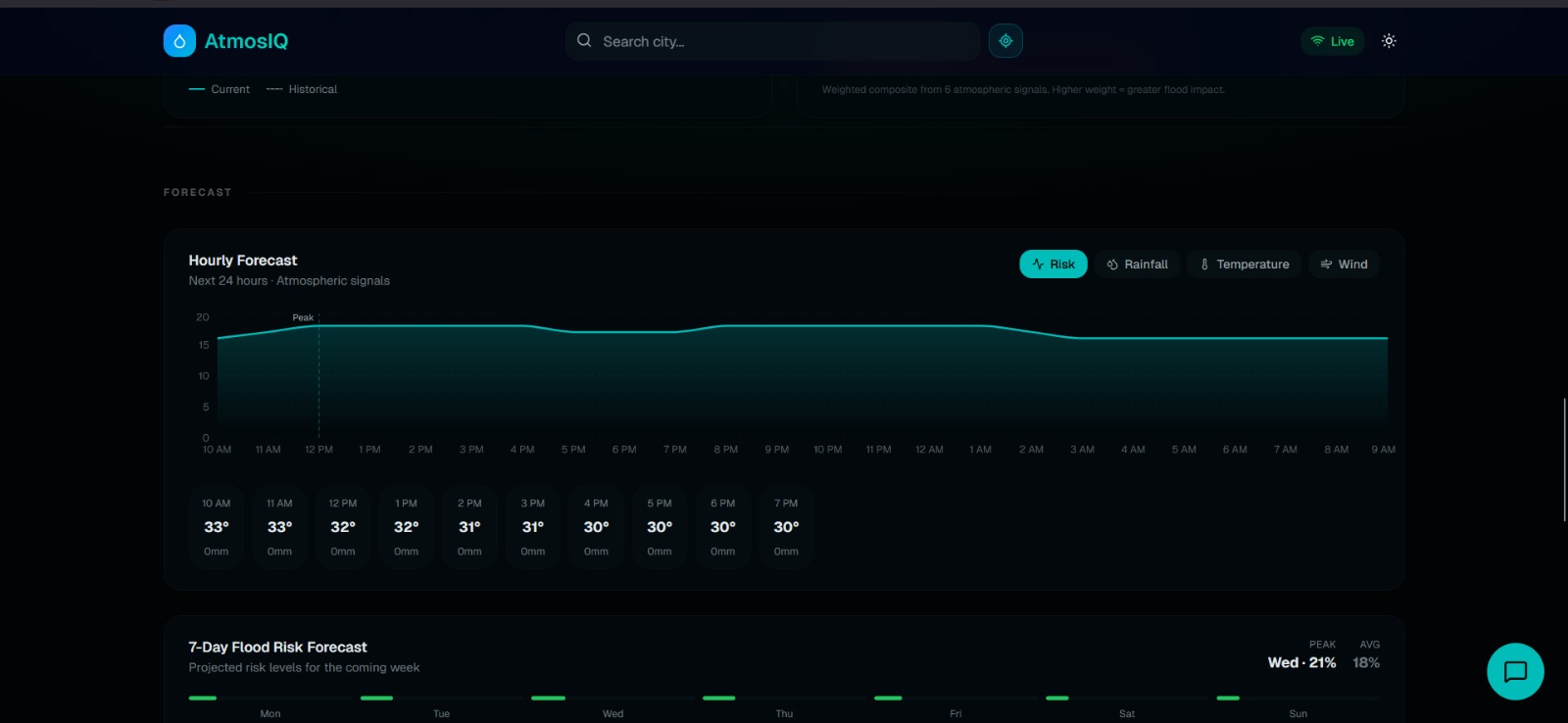
Forecast Section
-
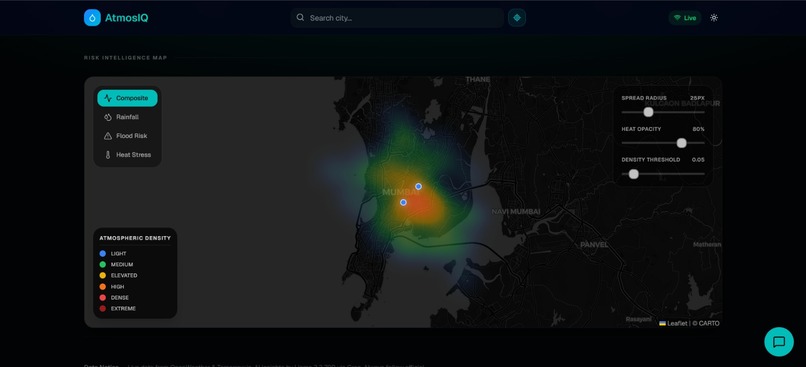
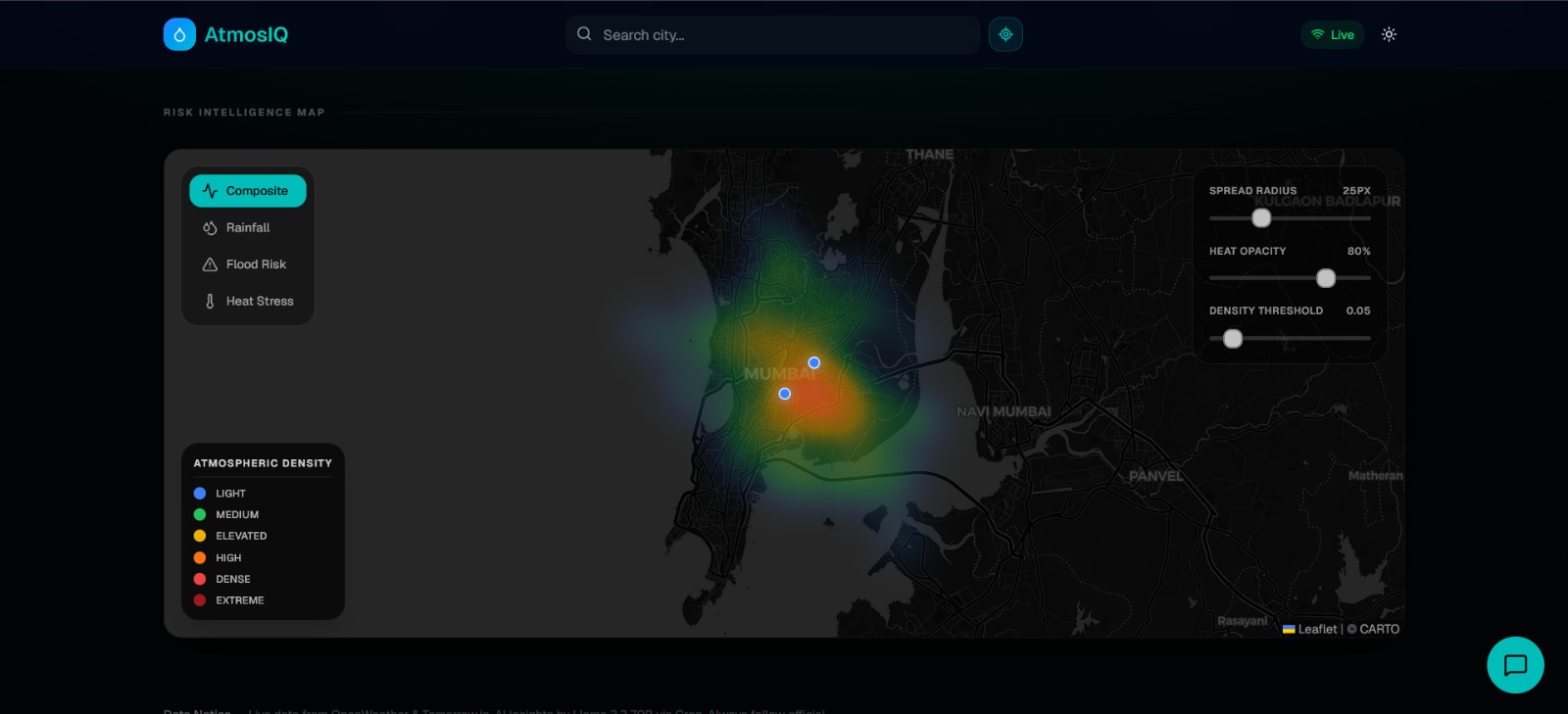
Interactive Atmospheric Intelligence Map Section
Inspiration
Most weather apps today only show numbers like temperature, humidity, or wind speed. While building this project, we wanted to create something that feels more interactive and intelligent instead of just another weather dashboard.
The idea behind AtmosIQ was simple:
“What if weather systems could actually help users understand atmospheric conditions instead of only displaying raw data?”
We were inspired by how unpredictable weather conditions are becoming and how difficult it is for normal users to interpret environmental data properly. We wanted to make weather information feel smarter, cleaner, and easier to interact with.
What it does
AtmosIQ is an AI-powered atmospheric intelligence platform that provides realtime weather insights in a much more interactive way.
The platform allows users to:
- view realtime weather conditions
- explore interactive weather heatmaps
- analyze environmental conditions visually
- receive AI-generated atmospheric insights
- and interact with an intelligent weather assistant called AtmosChat
Instead of just displaying weather statistics, AtmosIQ tries to explain atmospheric conditions in a more understandable and user-friendly way.
How we built it
We built AtmosIQ using:
- Next.js
- Tailwind CSS
- shadcn/ui
- Leaflet
- Leaflet Heatmaps
- OpenWeather API
- Tomorrow.io API
- and Llama 3.3 70B for AI reasoning
The frontend was designed as a modern responsive dashboard with realtime weather visualization and smooth user interactions.
For maps and heatmaps, we used Leaflet along with density-based environmental rendering to create interactive atmospheric visualizations.
We also implemented:
- realtime geolocation
- dynamic weather updates
- AI-powered weather reasoning
- responsive UI/UX
- serverless API routes
- caching and debouncing
- and conversational AI interactions through AtmosChat
Challenges we ran into
One of the biggest challenges was building realistic atmospheric heatmaps.
Most weather APIs only provide point-based weather data instead of full environmental grids, so creating immersive heatmaps required us to generate weighted environmental density layers dynamically.
Another challenge was balancing:
- realtime API fetching
- smooth frontend performance
- and AI response handling
We also faced issues while integrating:
- realtime geolocation
- map rendering
- AI reasoning
- and responsive UI behavior
while keeping the platform fast and stable.
Accomplishments that we're proud of
We are proud that AtmosIQ became much more than a simple weather application.
Some things we are especially proud of:
- building interactive atmospheric heatmaps
- integrating AI-powered weather reasoning
- creating AtmosChat
- implementing realtime environmental visualization
- designing a clean modern UI
- and successfully combining AI + weather + maps into one experience
We are also proud of how polished and product-like the final platform feels.
What we learned
This project taught us a lot about:
- realtime API orchestration
- geospatial visualization
- AI integration
- frontend optimization
- and building scalable serverless applications
We also learned how important it is to balance:
- performance
- design
- functionality
- and realtime responsiveness
especially during hackathon development.
What's next for AtmosIQ
In the future, we would love to expand AtmosIQ into a more advanced environmental intelligence platform.
Some future ideas include:
- advanced weather prediction systems
- flood and wildfire risk analysis
- personalized environmental alerts
- mobile application support
- historical climate analytics
- and smarter AI-powered atmospheric forecasting
Our long-term goal is to make AtmosIQ a platform that helps users understand environmental conditions in a smarter and more interactive way.
Team access verification: As per WeatherWise Hack guidelines, our registered team access codes (last 3 digits) are:
Member 1 (Asmit Samal) – JGQ
Member 2 (Parth More) – F7X
Built With
- framermotion
- groq
- leaflet.heat
- leaflet.js
- llama-3.3
- next.js
- openweather-api
- react
- shadcn/ui
- tailwindcss
- tomorrow.io-api
- typescript
- vercel


Log in or sign up for Devpost to join the conversation.