-
-
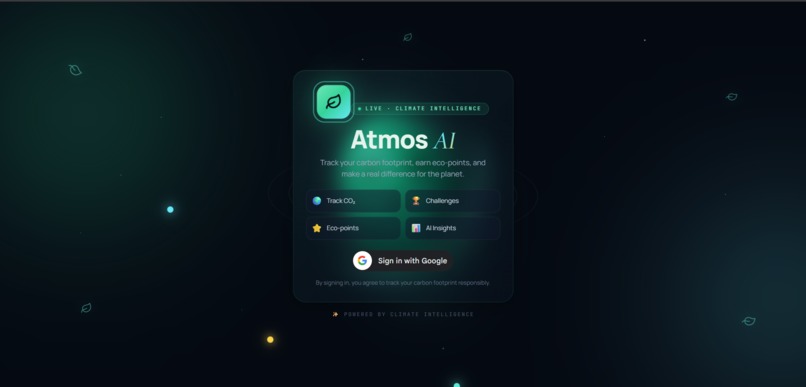
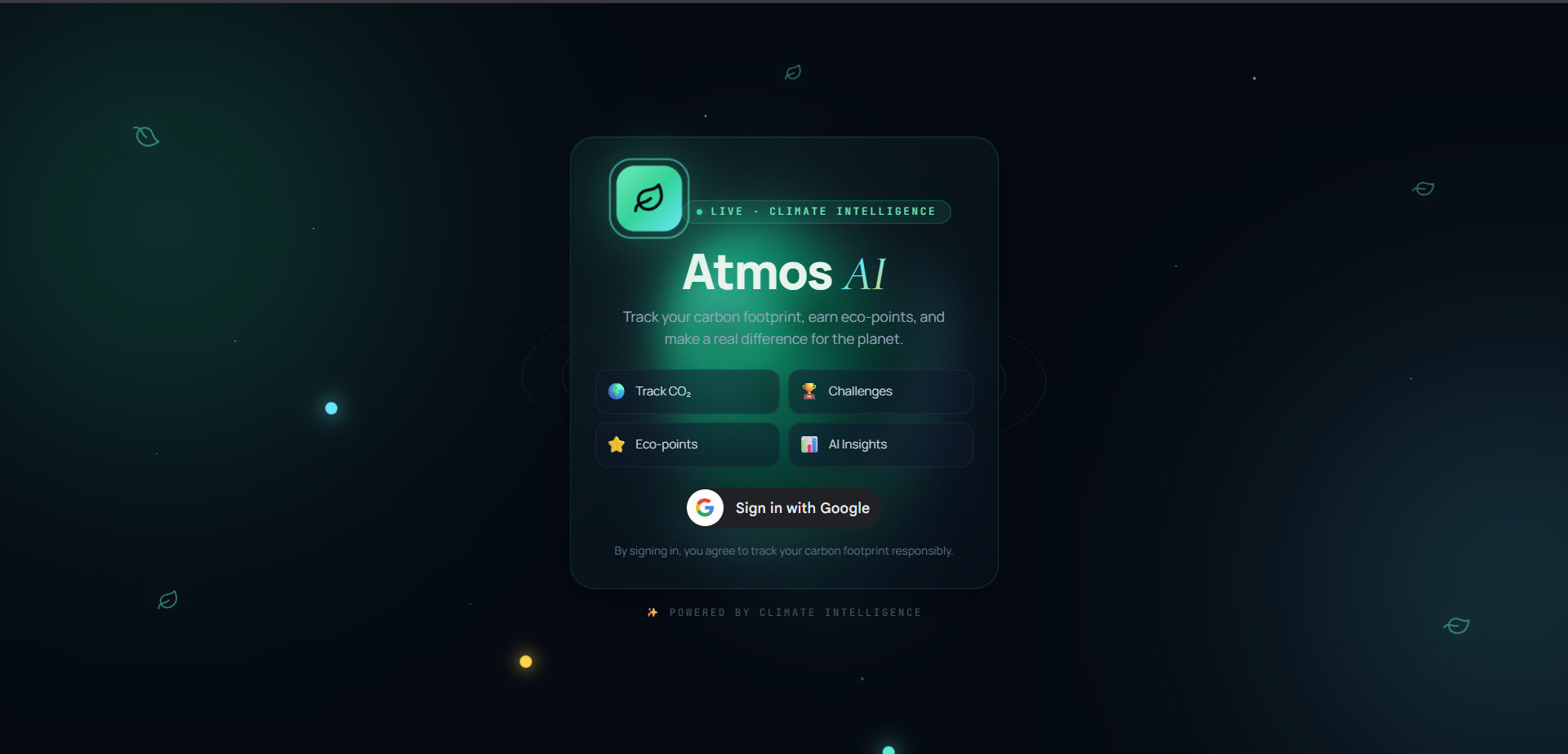
Landing page
-
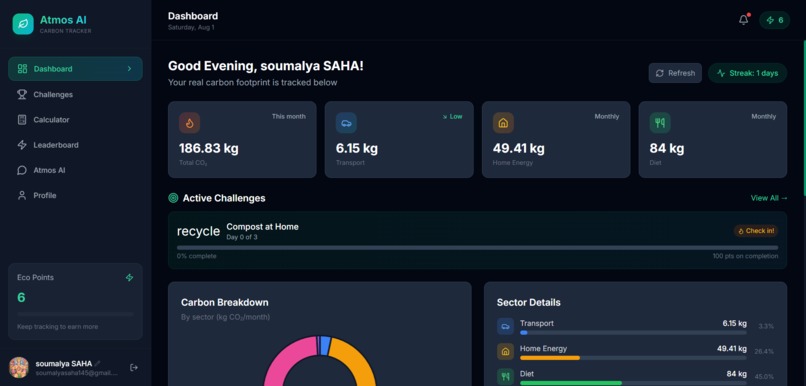
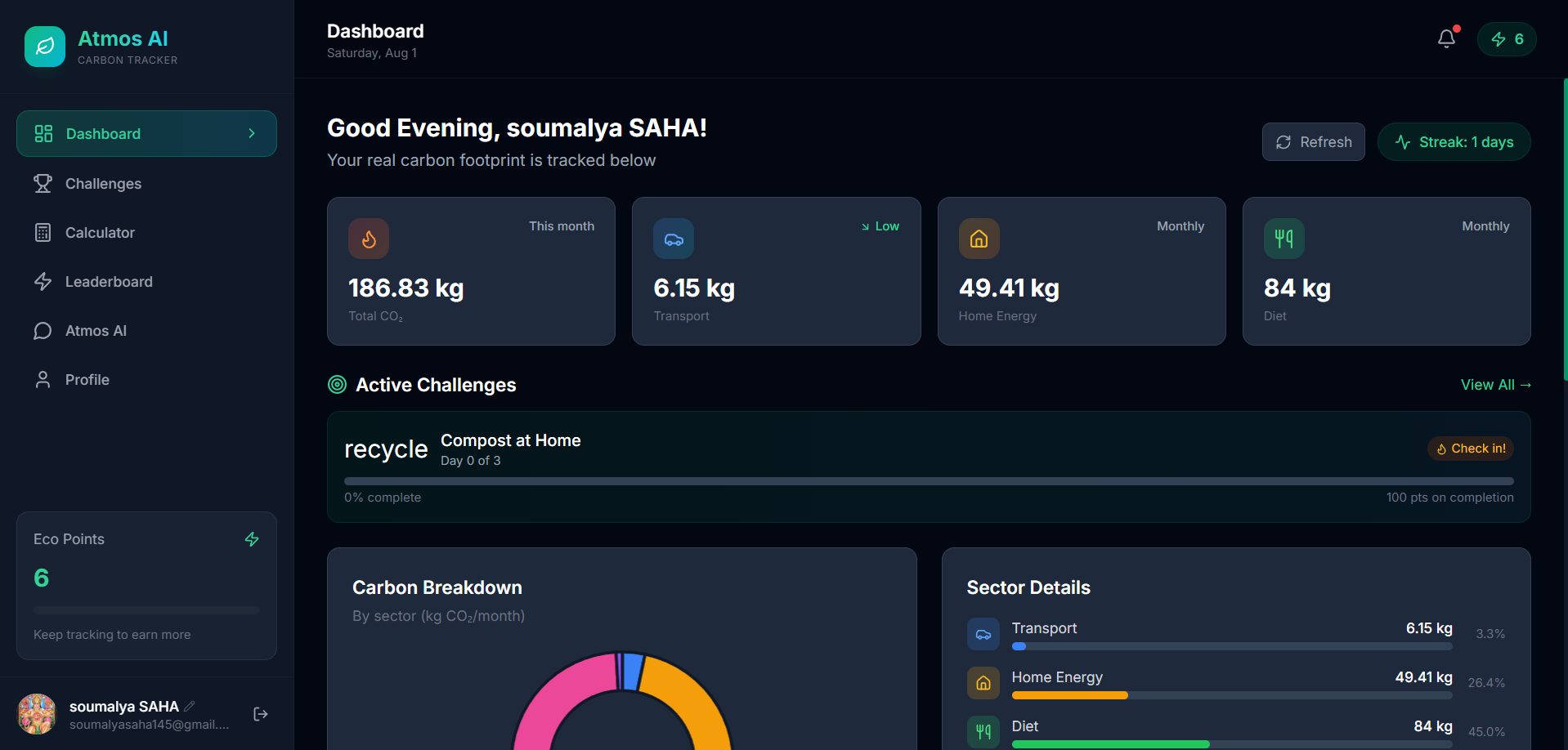
Dashboard
-
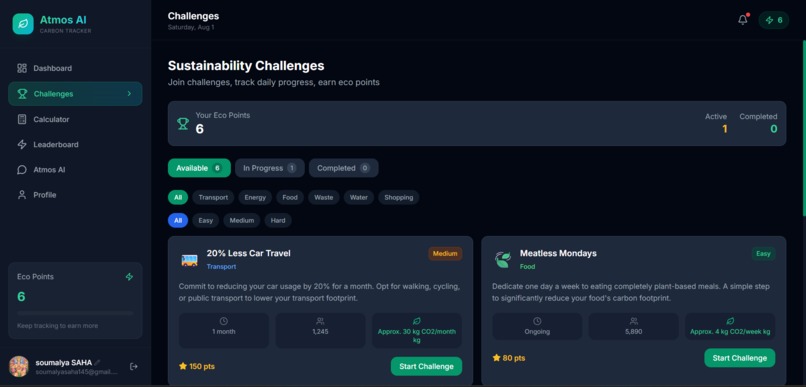
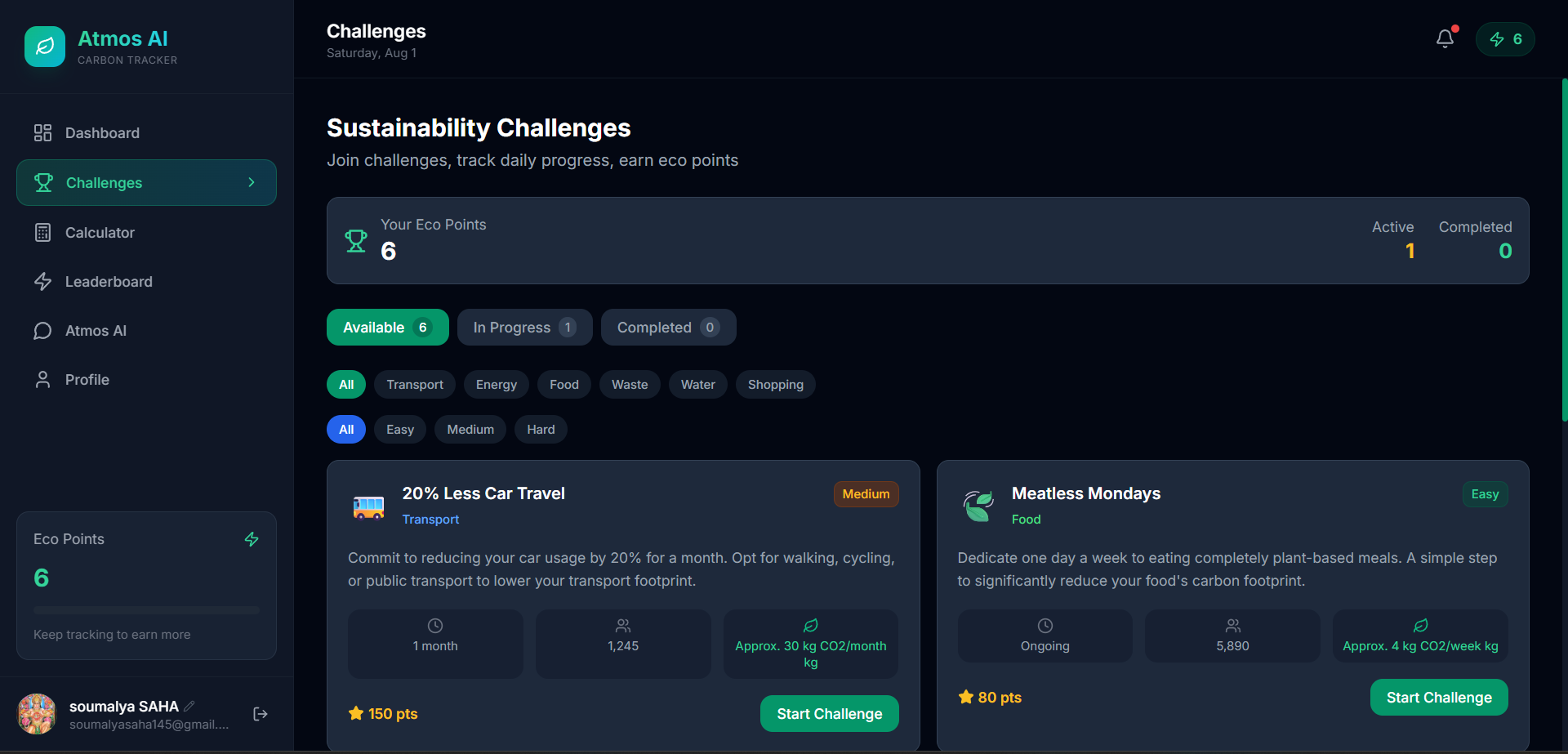
Challenges
-
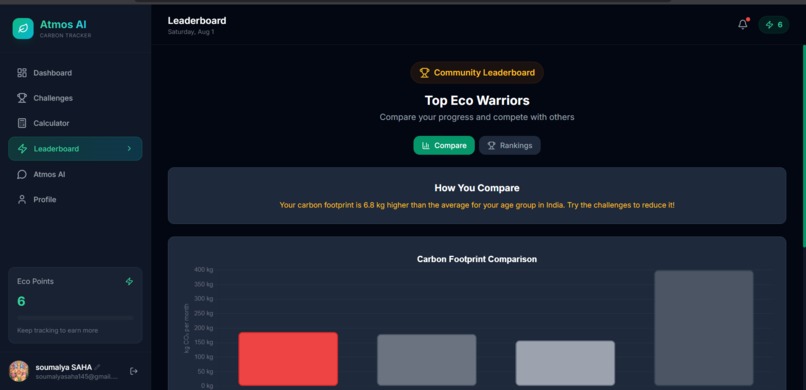
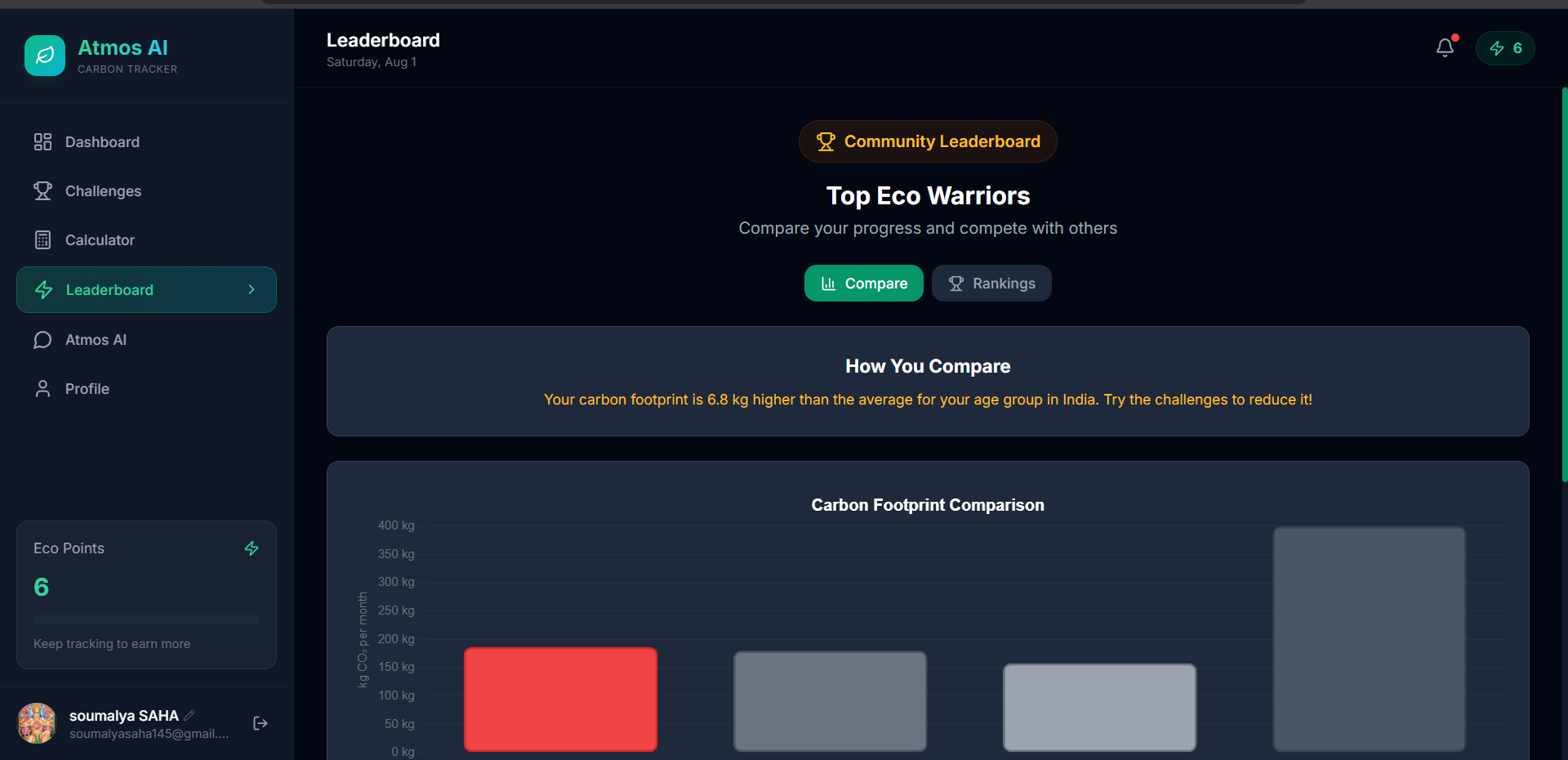
Peer-Group Analytics Module comparing user data against national baselines and regional age-group metrics via Chart.js
-
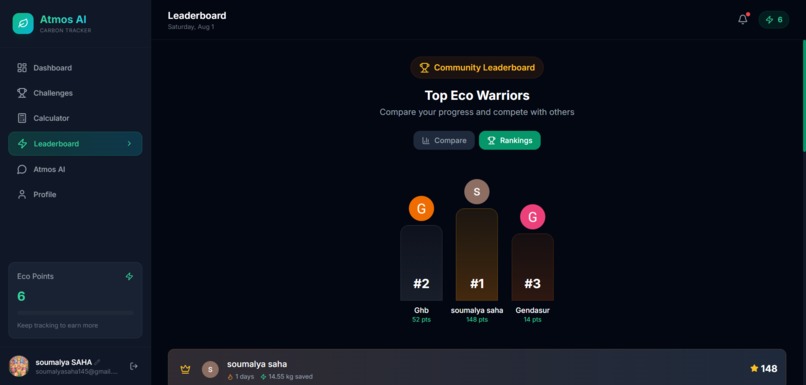
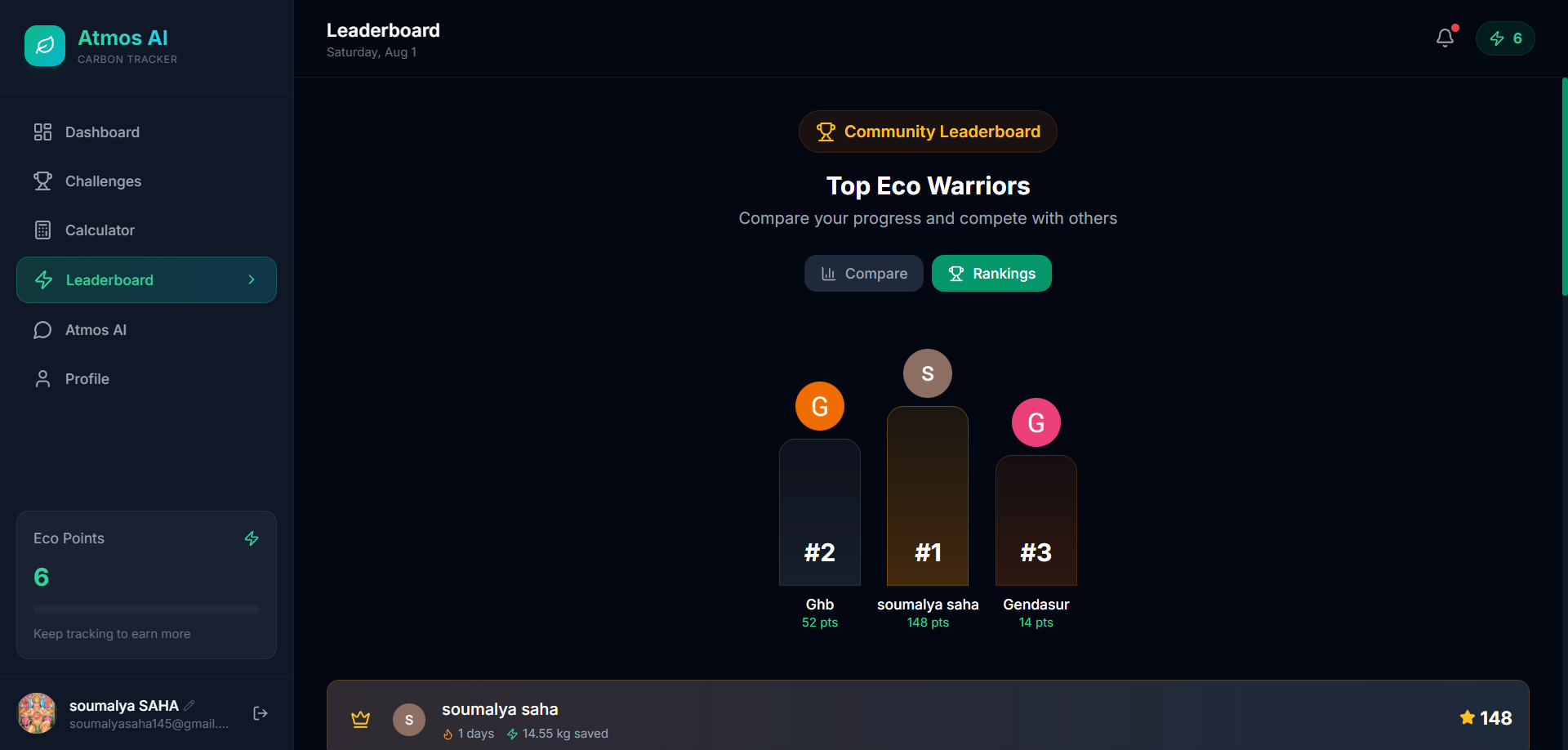
Community Leaderboard Ranking System showing live gamified user podium based on calculated eco-points and active carbon statistics.
-
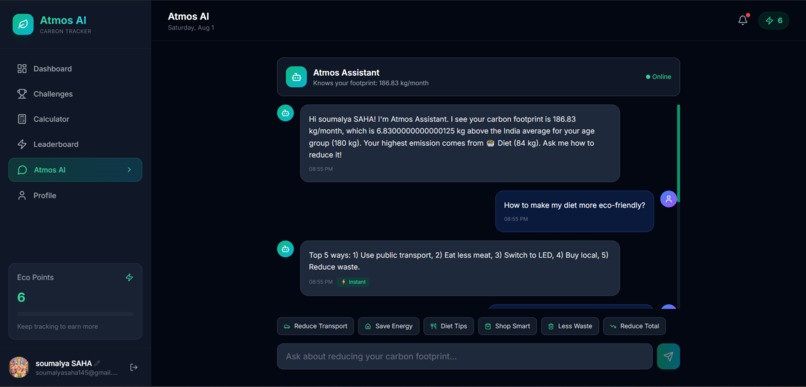
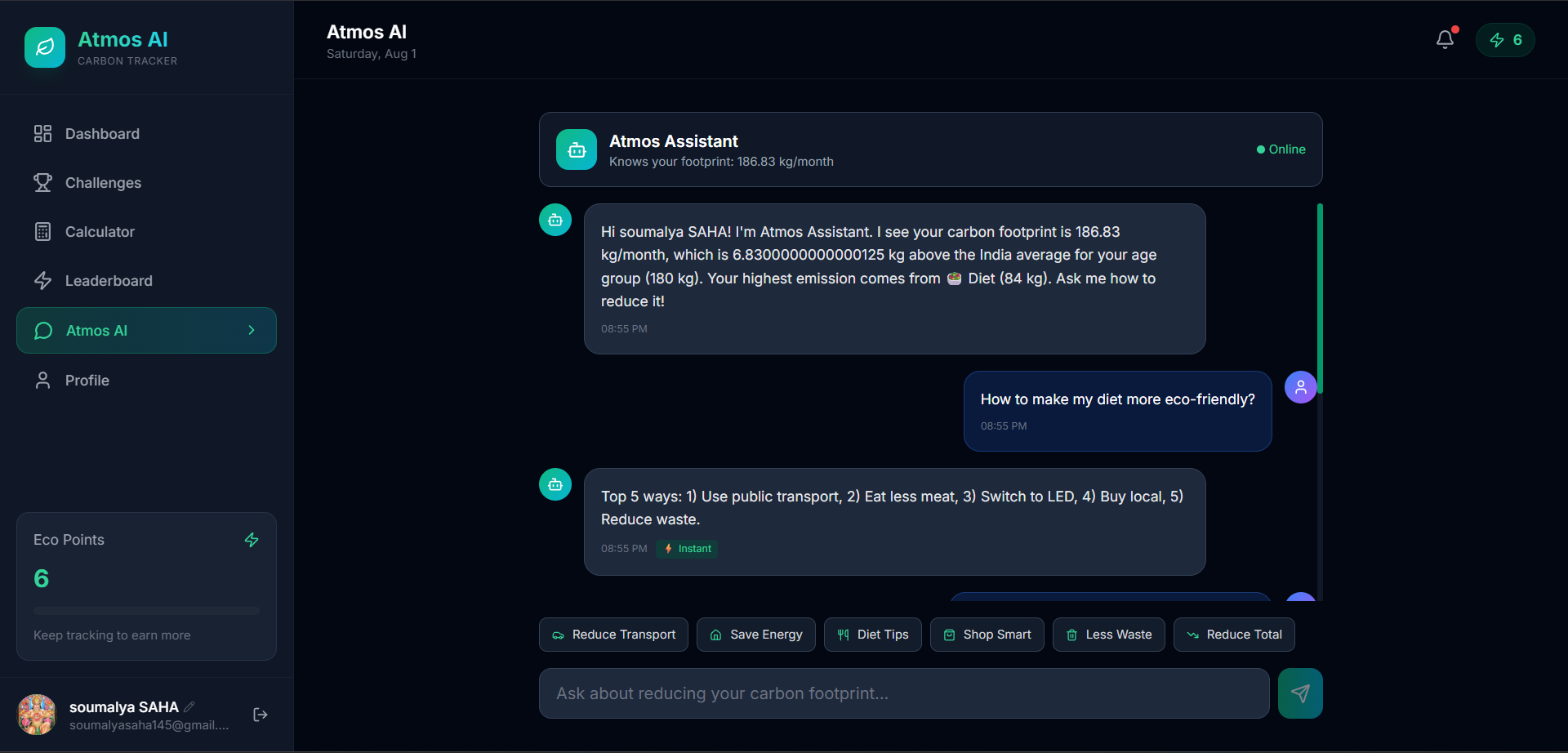
Atmos Assistant Chat powered by Gemini 2.5 Flash, parsing user telemetry data to generate instantaneous, custom carbon mitigation strategies
-
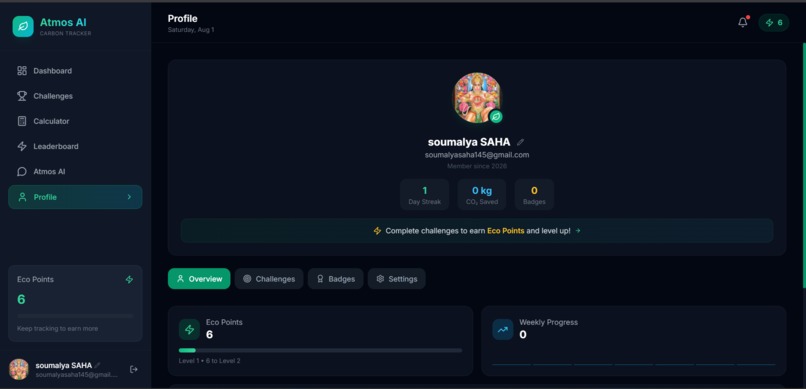
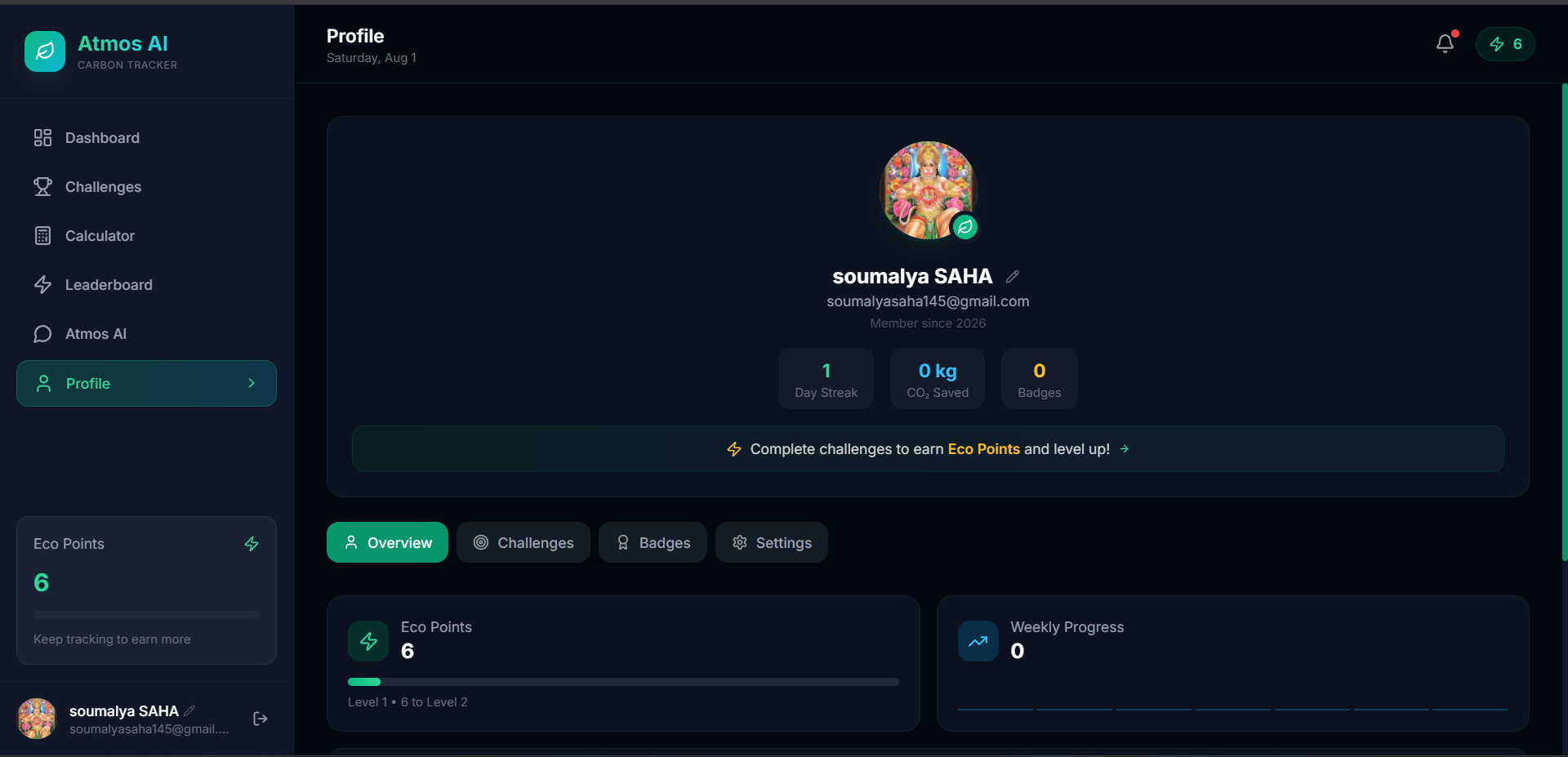
User profile
-
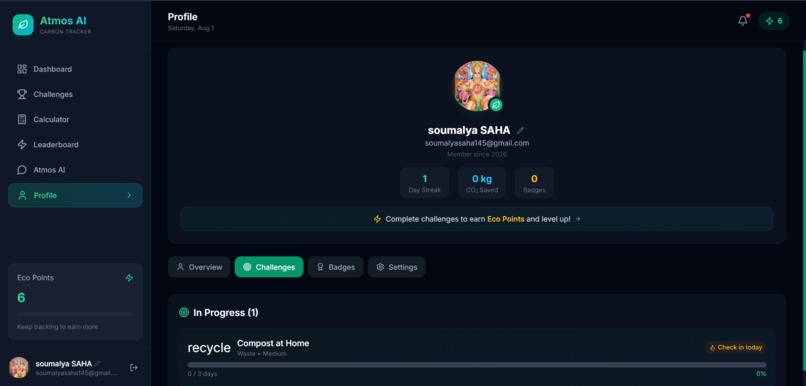
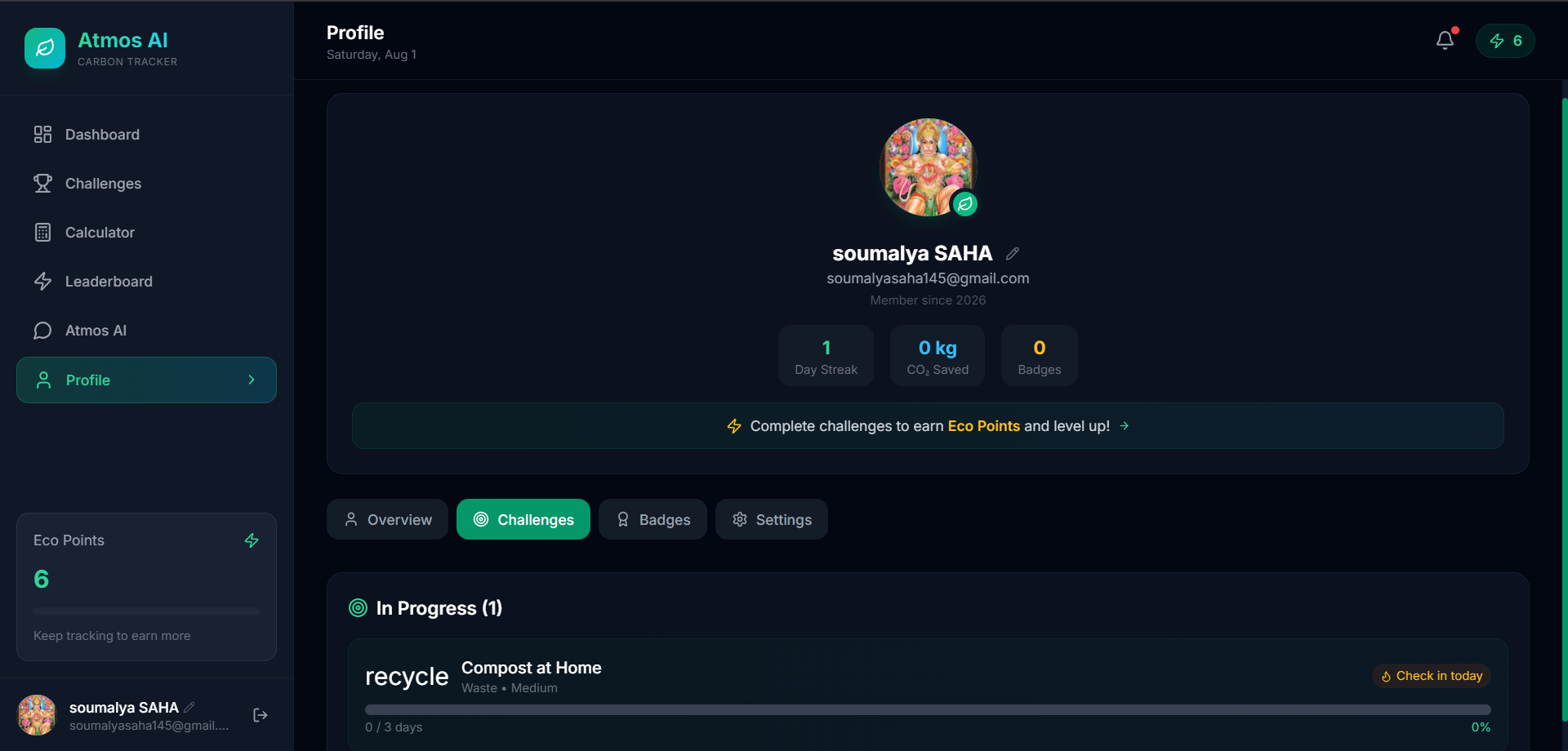
Profile sub-menu displaying the user's active, in-progress sustainability commitments and real-time check-in status trackers.
-
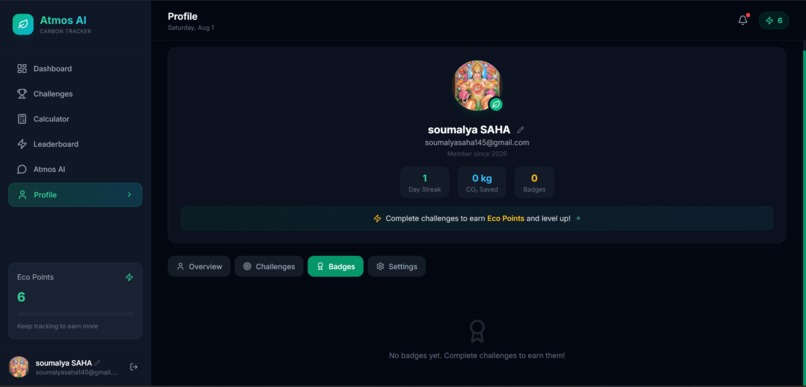
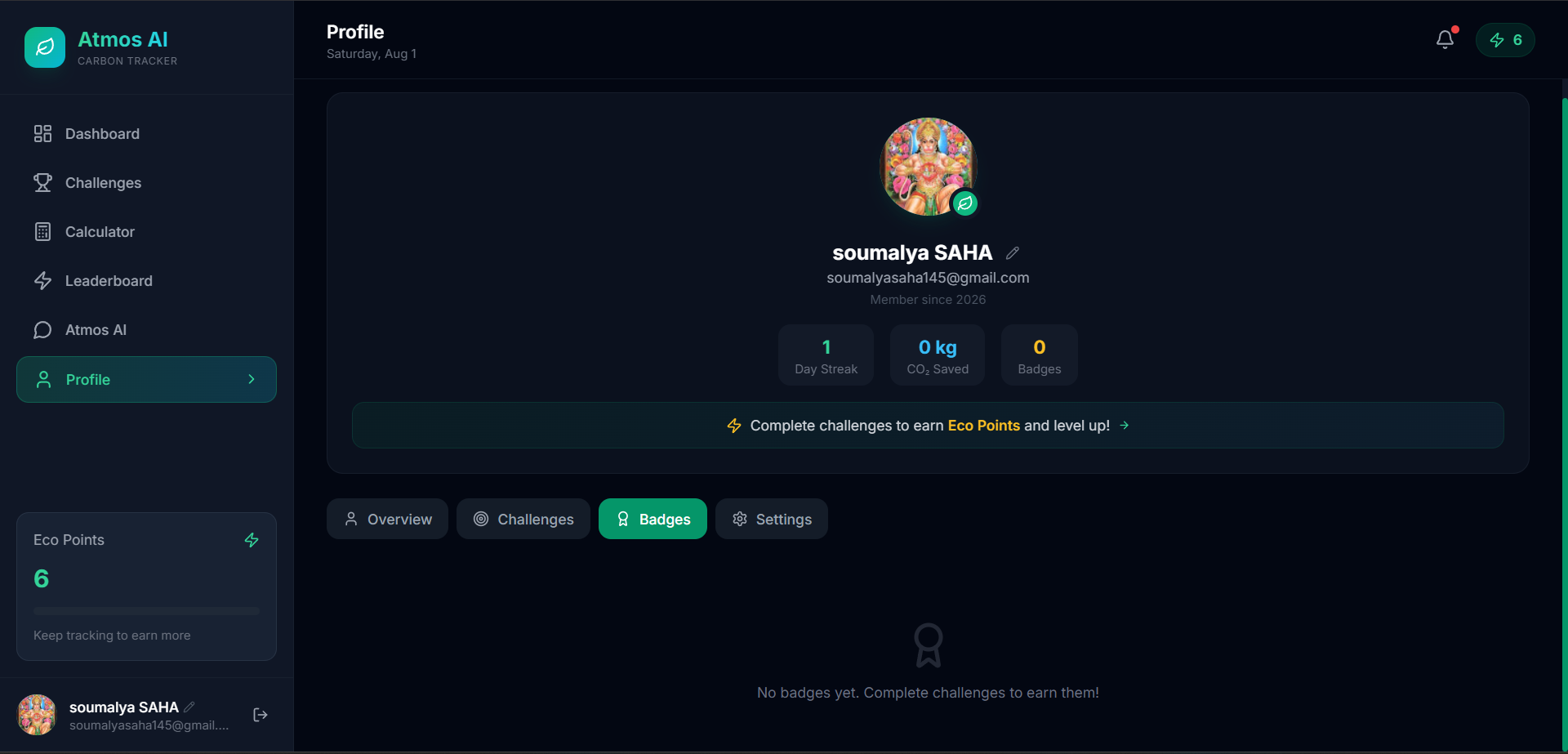
Gamified Badges sub-navigation menu showing conditional fallback states for unearned rewards and collection tracking.
-
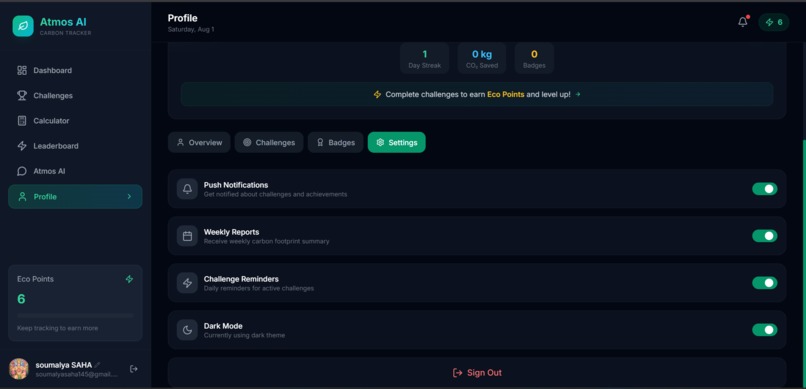
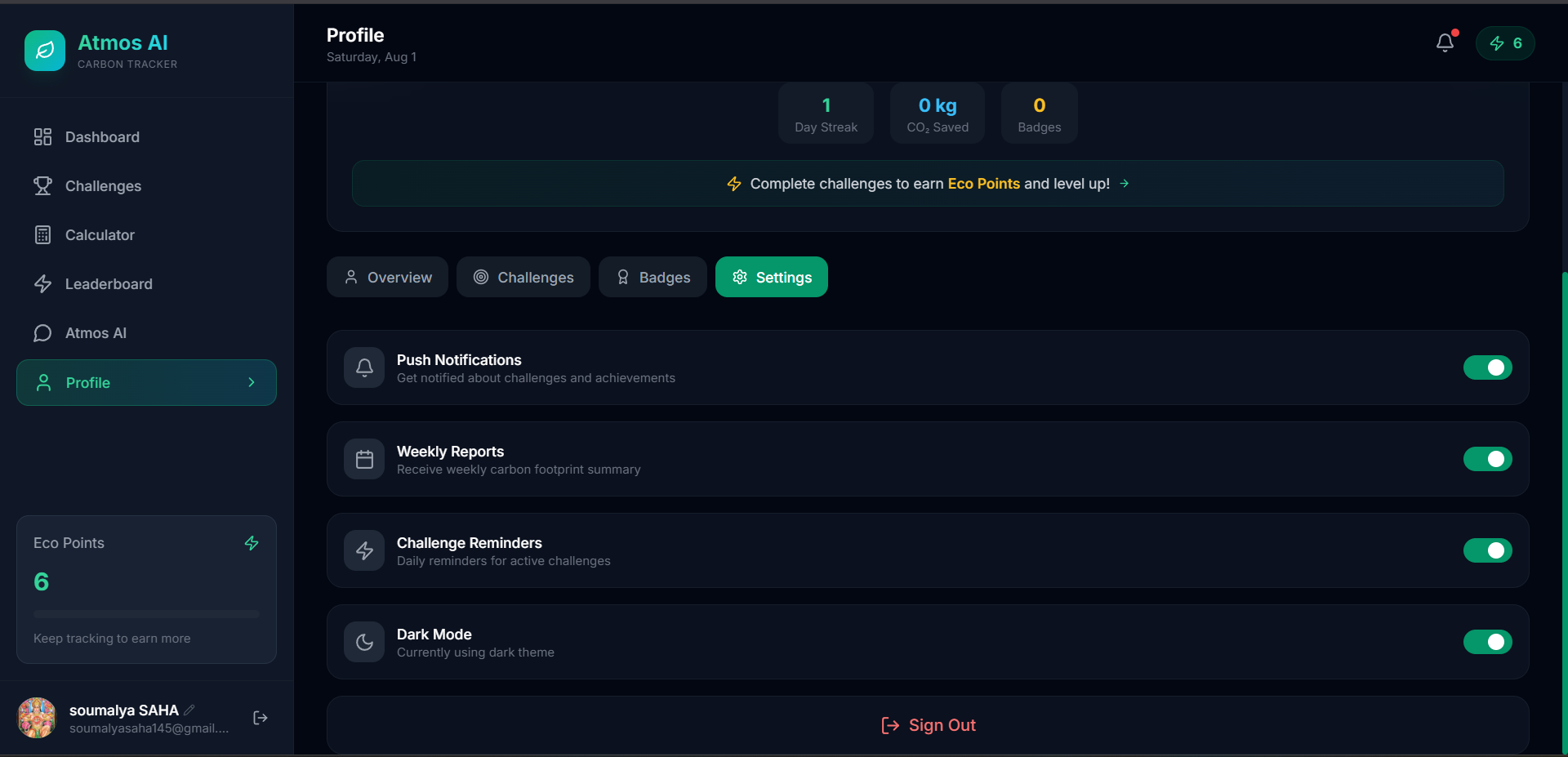
User Settings Interface with integrated UI controls managing user notification states, automated reports, and dark-mode defaults.
💡 Inspiration
Traditional carbon footprint calculators are often boring, static questionnaires that fail to drive real, long-term behavioral change. Most users calculate their carbon score once, feel a brief moment of awareness, and close the tab forever.
We built Atmos AI to fix this exact loop. Inspired by high-engagement wellness applications like Samsung Health, we wanted to build a gamified, privacy-first ecosystem that converts abstract climate data into small, actionable daily habits using the power of AI.
🚀 What it does
Atmos AI is an intelligent, gamified carbon tracking and behavioral optimization ecosystem:
- Gamified Challenges: Active task loops organized across daily impact fields (Transport, Energy, Food, Waste, Water, Shopping) that reward users with profile leveling and community leaderboard ranks.
- AI Conversational Assistant: Built with Gemini 2.5 Flash, the assistant parses live user telemetry data to generate instantaneous, tailor-made environmental mitigation strategies.
- Streak & Retention Mechanics: Uses a backend state machine to enforce a "3-Day Streak Unlock State," keeping users actively engaged.
- Ecosystem Roadmap: Architected to hook into SmartThings IoT to track home appliance energy spikes and the Samsung Health SDK for background transport step emissions.
⚙️ How we built it
Atmos AI is engineered on a modern MERN Stack (React 18, Vite, Tailwind CSS, Node.js, Express, and MongoDB) powered by an advanced multi-LLM processing layer.
Our edge architecture handles footprint generation locally based on India's national baseline emission factors, achieving an offline-first execution model that respects data privacy and cuts remote server calls. The frontend is fully animated using Framer Motion and visualized cleanly with Chart.js.
🧠 Challenges we faced & How we overcame them
- API Costs & Rate Limits (The Biggest Hurdle): Running a real-time conversational AI can quickly choke standard API limits or lead to massive server bills. We solved this by designing a Multi-LLM Hybrid Routing & Load-Balancing array cycling requests across 4 Gemini API keys and 3 Groq API keys concurrently.
- Latency & Duplicate Queries: To prevent hitting external LLM gateways for common queries, we built an intelligent MongoDB Caching Layer. If a user requests general eco-tips or repetitive insights, the system bypasses external endpoints completely, slashing backend overhead by up to 60% and guaranteeing sub-second response times.
🏅 Accomplishments that we're proud of
- Engineering a production-ready API load-balancing architecture that makes the application highly available and incredibly cost-effective.
- Building a truly responsive UI that successfully adopts habit-forming mechanics (DDA - Dynamic Difficulty Adjustment) to ensure carbon-tracking feels like a game, not a chore.
📚 What we learned
We learned the deep complexities of real-world AI orchestration. Building a project isn’t just about writing a system prompt; it’s about edge-computing, mitigating latency, preventing data exposure, and managing API resilience under production loads.
🔮 What's next for Atmos AI
We aim to move past manual logging by finalizing our Samsung Health SDK Integration to capture step counts passively, alongside an active hookup into the SmartThings IoT Smart Home framework to directly analyze real-time home energy grids.


Log in or sign up for Devpost to join the conversation.