-
-
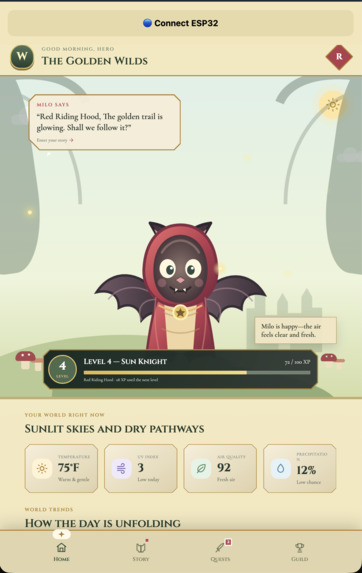
Dashboard
-
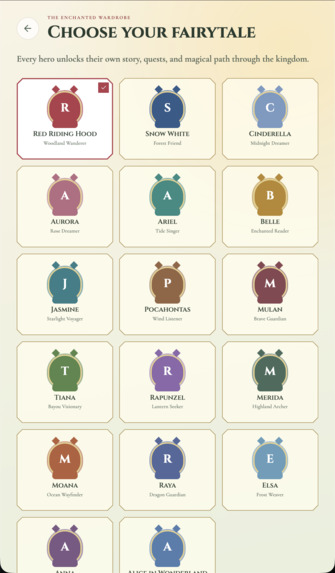
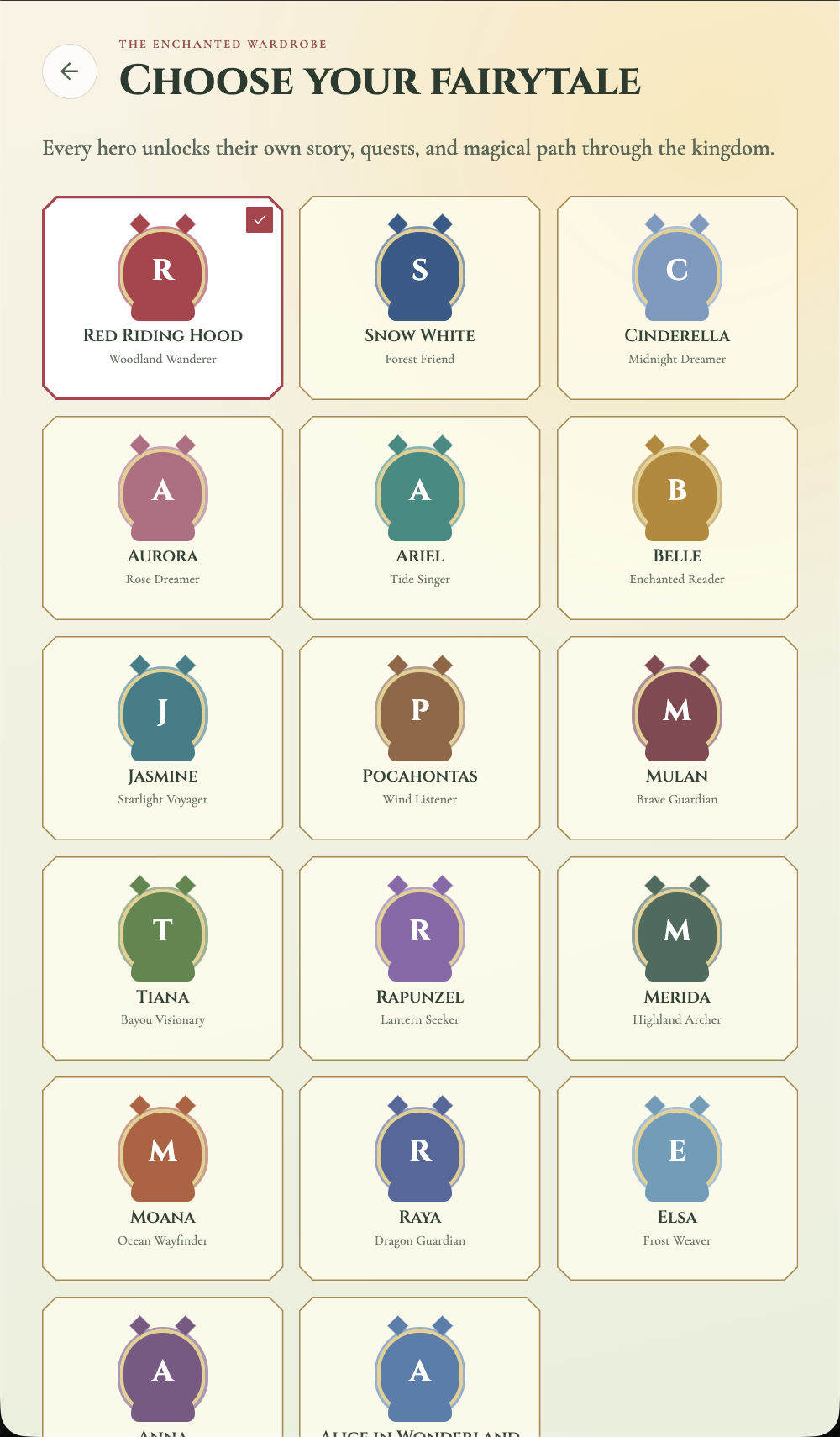
Enchanted Wardrobe
-
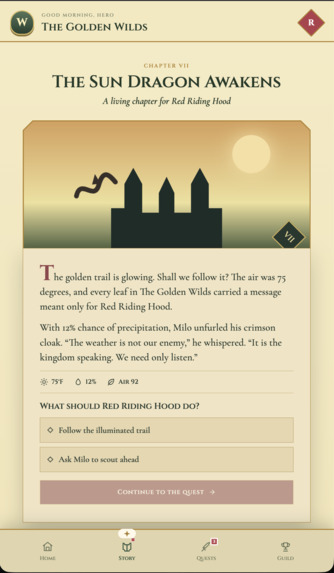
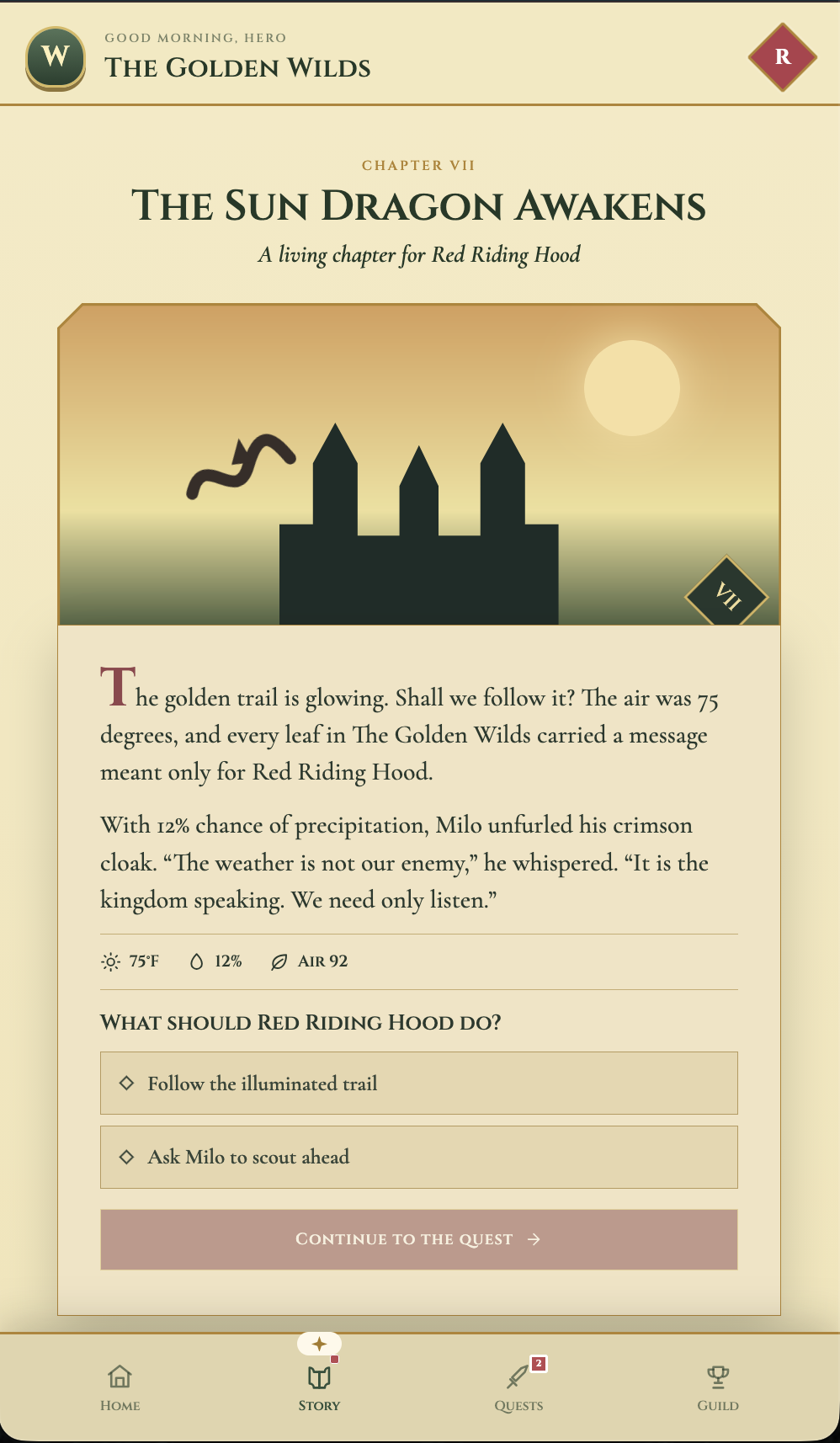
Story
-
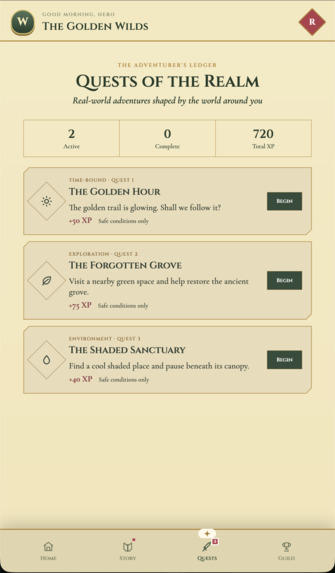
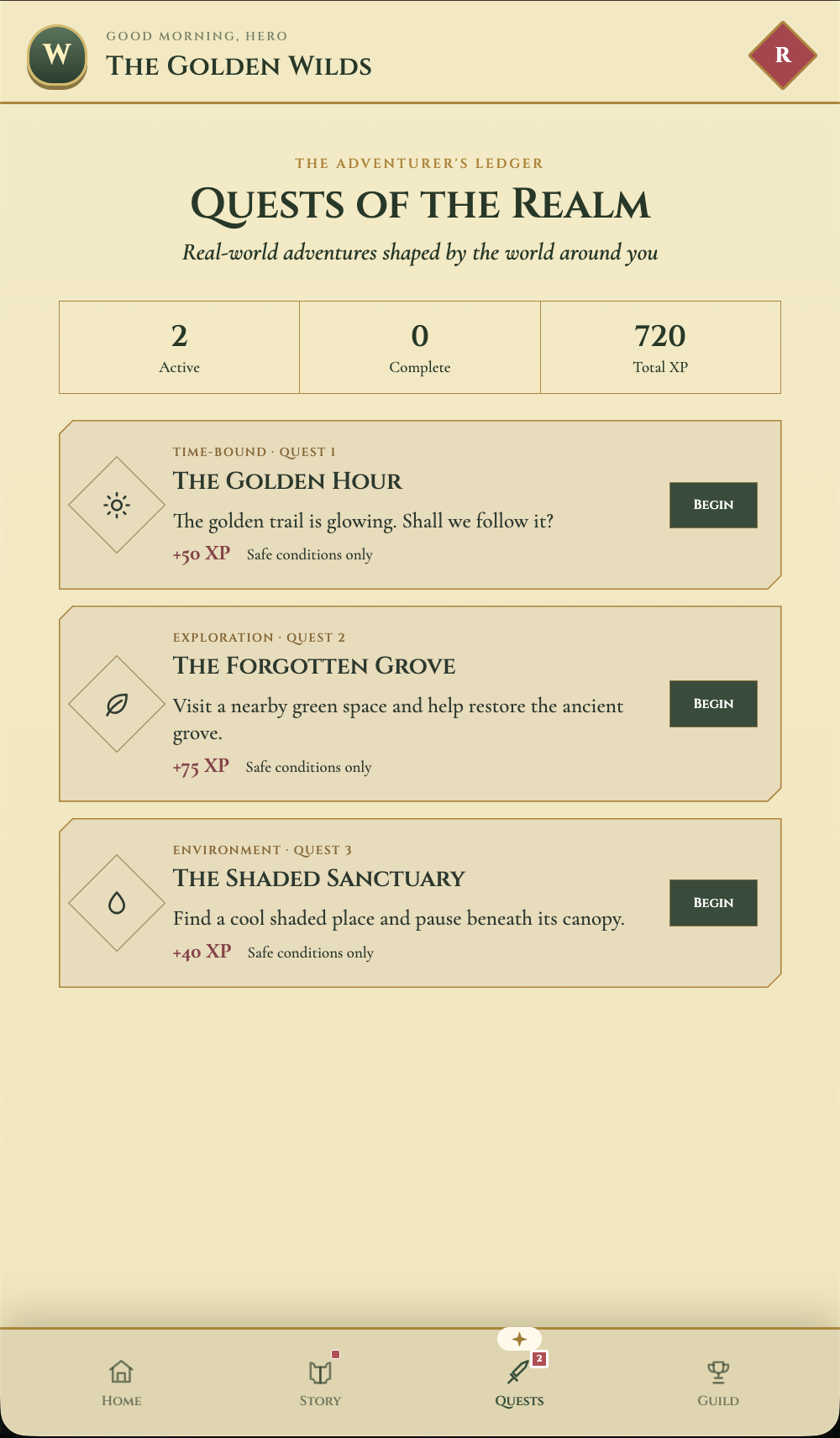
Quests
-
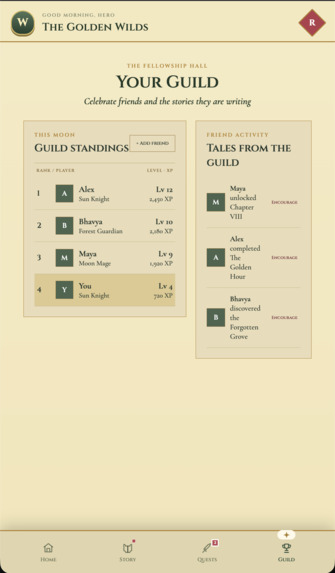
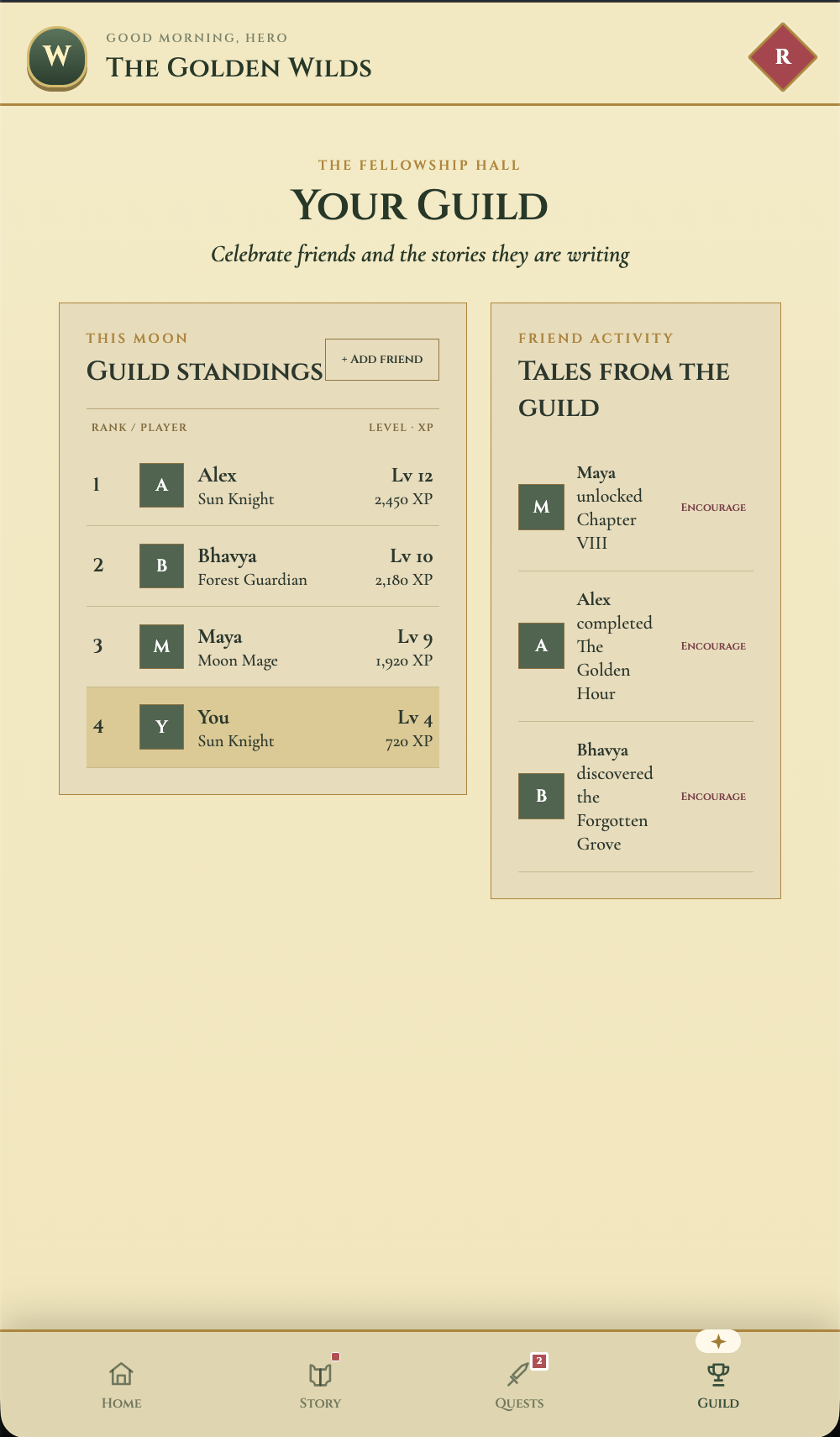
Guild
Inspiration
We were inspired by the idea that people often move through their daily lives without fully noticing the environment around them. From UV exposure and air quality to temperature and humidity, our surroundings affect how we feel and stay healthy, but these changes can be easy to overlook. We wanted to make environmental awareness more engaging by transforming everyday observations into an interactive adventure. With Atmos, we reimagine the world around us as a living fairytale, where real-world environmental conditions shape a fictional kingdom and every day becomes a new story to explore.
What it does
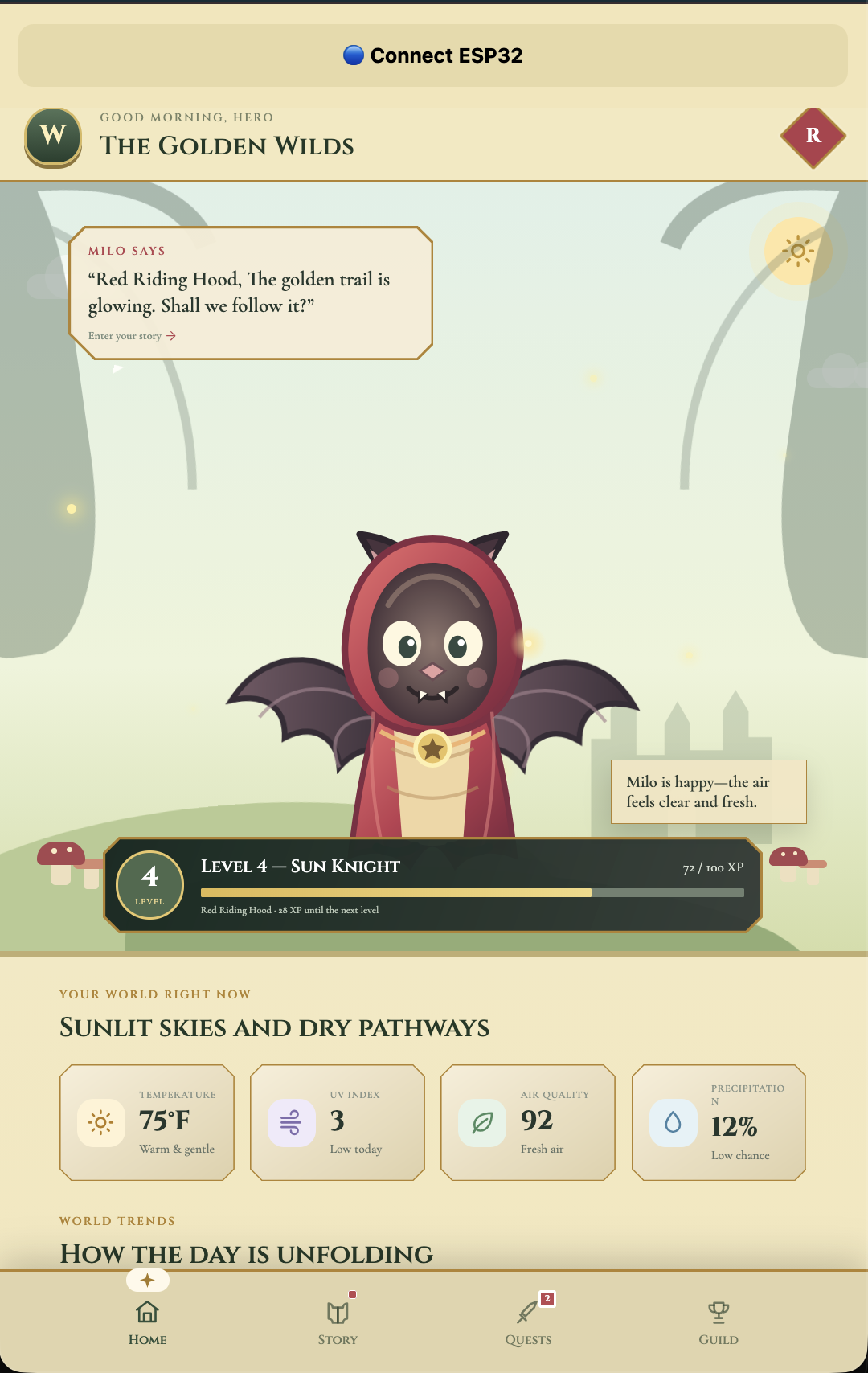
Atmos transforms environmental awareness into a personalized, fairytale-inspired adventure. Using an ESP32 connected to UV, air quality, temperature, and humidity sensors, Atmos collects real-time environmental data that influences the user's fictional world. SerpAPI provides weather information, while Muse AI turns these environmental conditions into an immersive story filled with quests and challenges.
As users explore their surroundings, they discover how the world around them shapes their adventure. Instead of simply viewing environmental statistics, they experience them through a fictional narrative that encourages them to pay closer attention to their environment and make more informed everyday decisions. Atmos bridges the gap between the physical world and digital storytelling, turning ordinary surroundings into extraordinary adventures.
How we built it
We built Atmos using React Native for the front-end and Supabase for database storage and synchronization. We integrated SerpAPI to retrieve weather information and Muse AI to generate fictional stories informed by environmental conditions.
For the hardware component, we connected an ESP32 to UV, air quality, temperature, and humidity sensors using a breadboard. The ESP32 collected environmental readings that informed the virtual world and narrative presented to the user. We then worked to integrate these hardware readings with our app and backend so that real-world conditions could dynamically influence the user's experience.
By combining mobile development, environmental sensors, cloud data storage, weather APIs, and generative AI, we created an experience that connects real-world data with interactive storytelling.
Challenges we ran into
One of our biggest challenges was getting our environmental sensors to connect reliably and provide continuous, real-time readings. We also had to figure out how to transfer the data from the ESP32 into our mobile application so that changes in the physical environment could be reflected in the user's story.
We encountered additional challenges with Supabase and synchronizing weather information retrieved through SerpAPI. Ensuring that updated information was stored correctly and displayed consistently across different devices required us to troubleshoot our data flow and back-end integration.
These challenges pushed us to think carefully about how hardware, APIs, databases, and mobile interfaces communicate with one another, especially when multiple systems need to work together in real time.
Accomplishments that we're proud of
We're proud of bringing together hardware, environmental data, mobile development, and generative AI to create an experience that makes environmental awareness interactive and engaging. Rather than presenting users with isolated sensor readings, Atmos uses real-world conditions as the foundation for a fictional world that evolves around them.
We're also proud of tackling the challenge of connecting physical sensors to a mobile application and integrating multiple external services into one cohesive experience. Most importantly, we developed a concept that reimagines how people can interact with their surroundings, using storytelling and quests to make noticing the world around them feel like an adventure.
What we learned
We learned how to approach the challenges of integrating hardware and software, from collecting sensor readings on an ESP32 to transferring environmental data into a mobile application and storing information in Supabase. We also gained experience working with external APIs and exploring how generative AI can transform structured data into creative, personalized experiences.
Beyond the technical skills, we learned the importance of building reliable data pipelines, testing integrations early, and prioritizing a functional end-to-end experience when working under a tight hackathon deadline. We also discovered how game mechanics and storytelling can make practical information more approachable and encourage users to engage more thoughtfully with the world around them.
What's next for Atmos
We envision Atmos becoming a more dynamic, personalized environmental exploration experience. In the future, we want to expand our quest system so that environmental changes can unlock new storylines, challenges, and discoveries throughout the day.
We also hope to introduce social features that let friends share their adventures, encourage one another, and explore their environments together. Additional improvements could include historical environmental trends, location-aware quests that encourage users to discover nearby parks and other spaces, and more sophisticated AI-generated narratives that adapt to each user's experiences and create more user-defined characters.
Ultimately, our goal is to help people become more aware of their surroundings by changing how they experience the world: not as a collection of background details, but as a living story full of opportunities to explore, discover, and engage.
Built With
- arduino
- react-native
- supabase

Log in or sign up for Devpost to join the conversation.