-
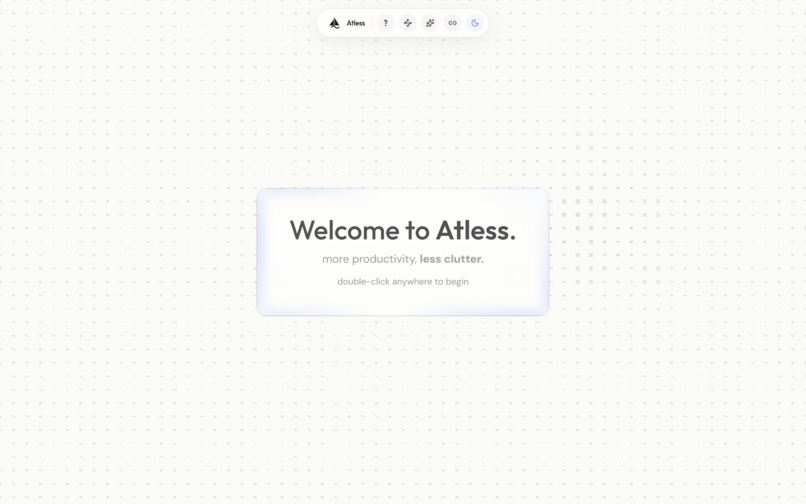
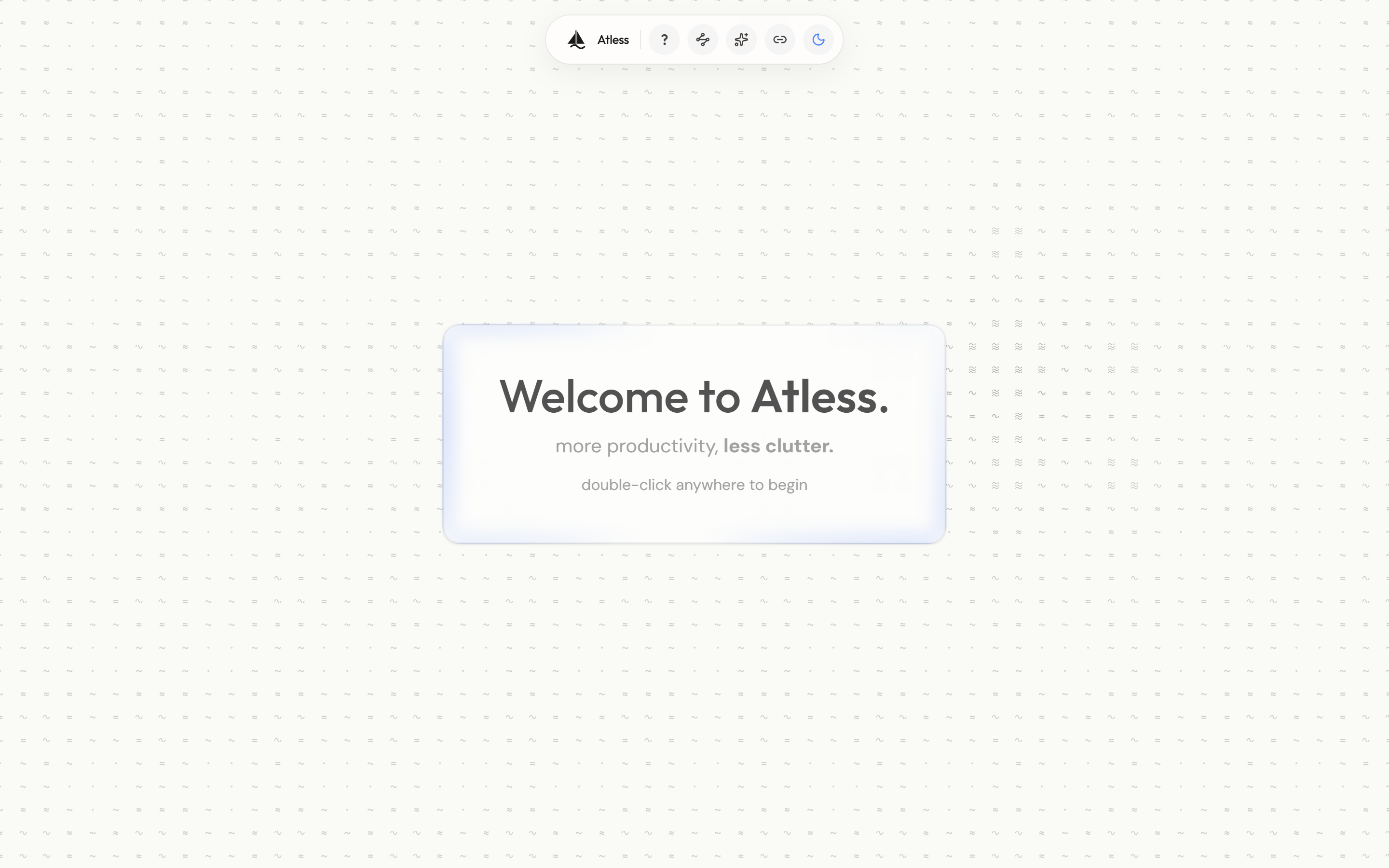
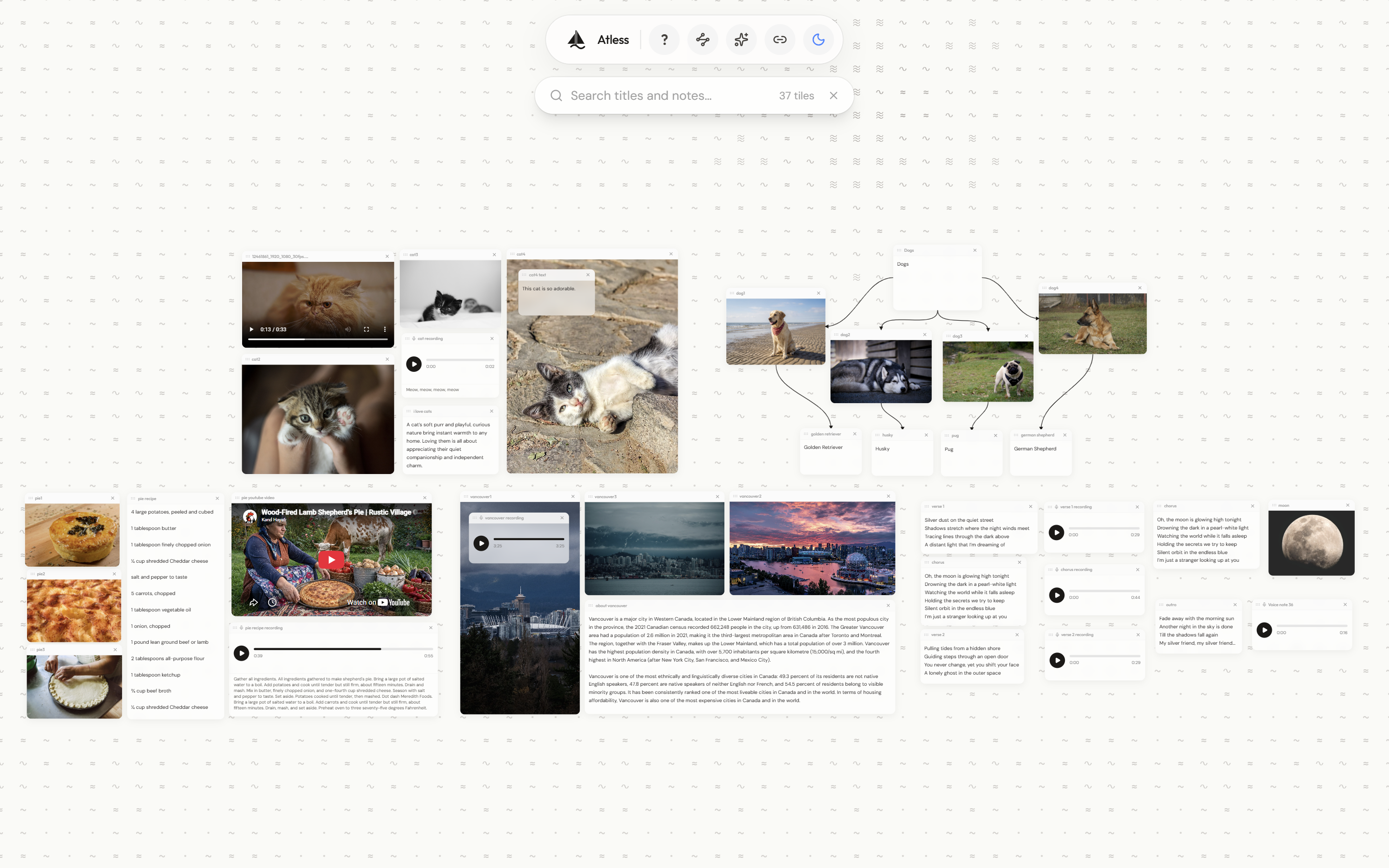
Light Mode
-
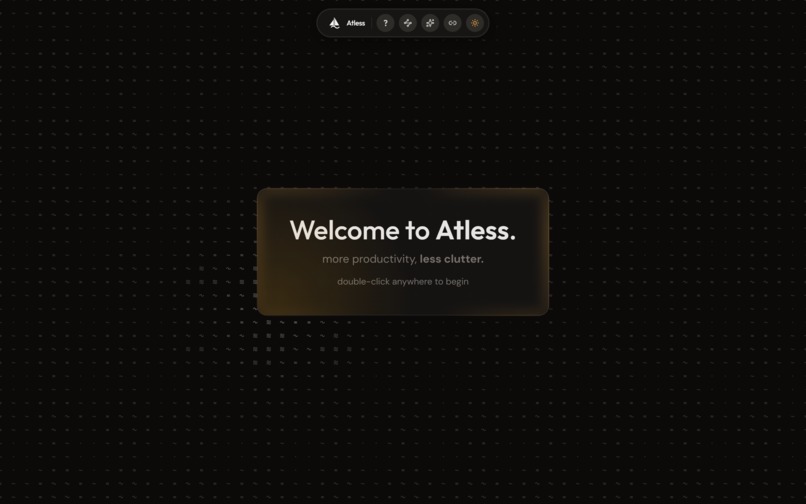
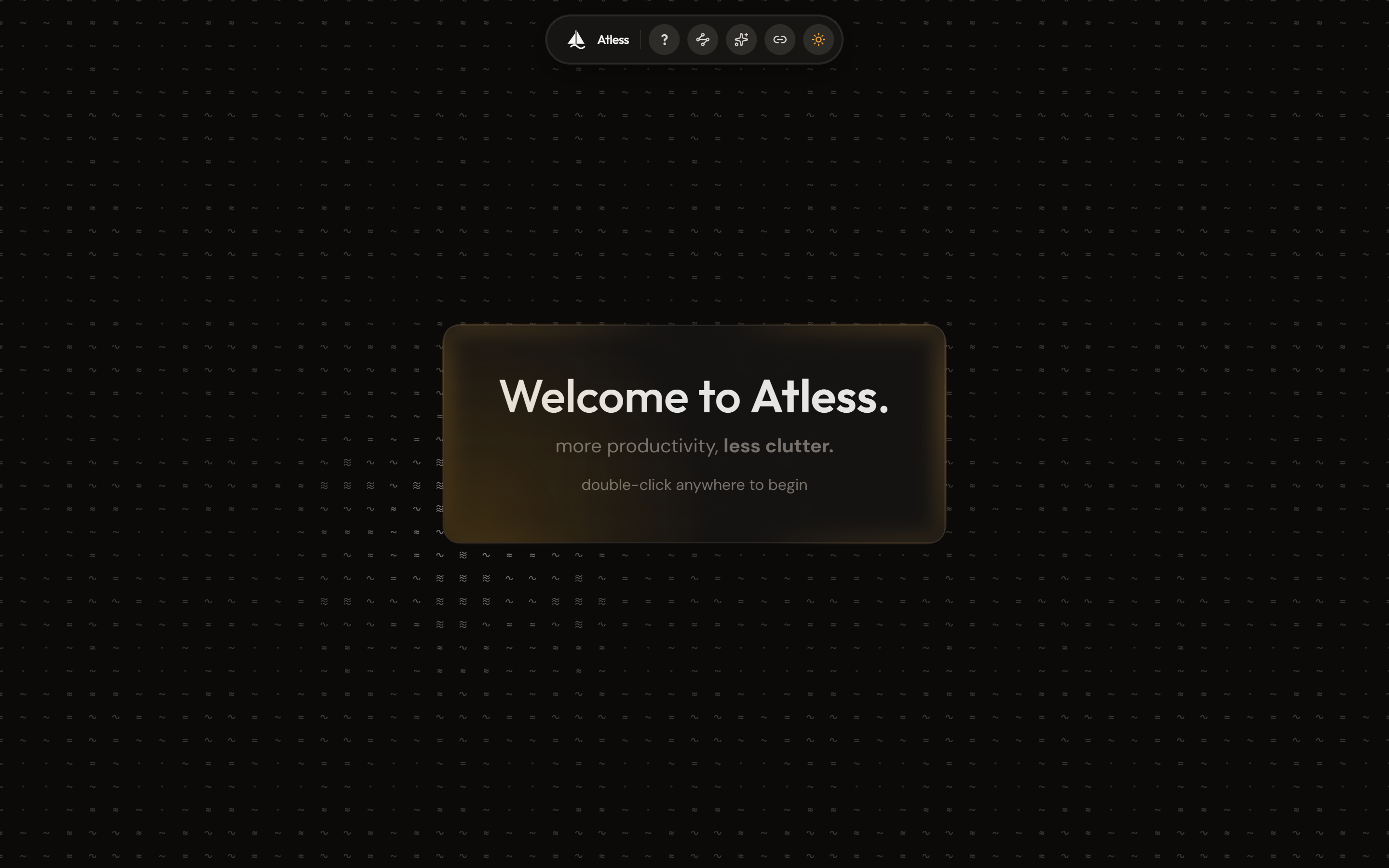
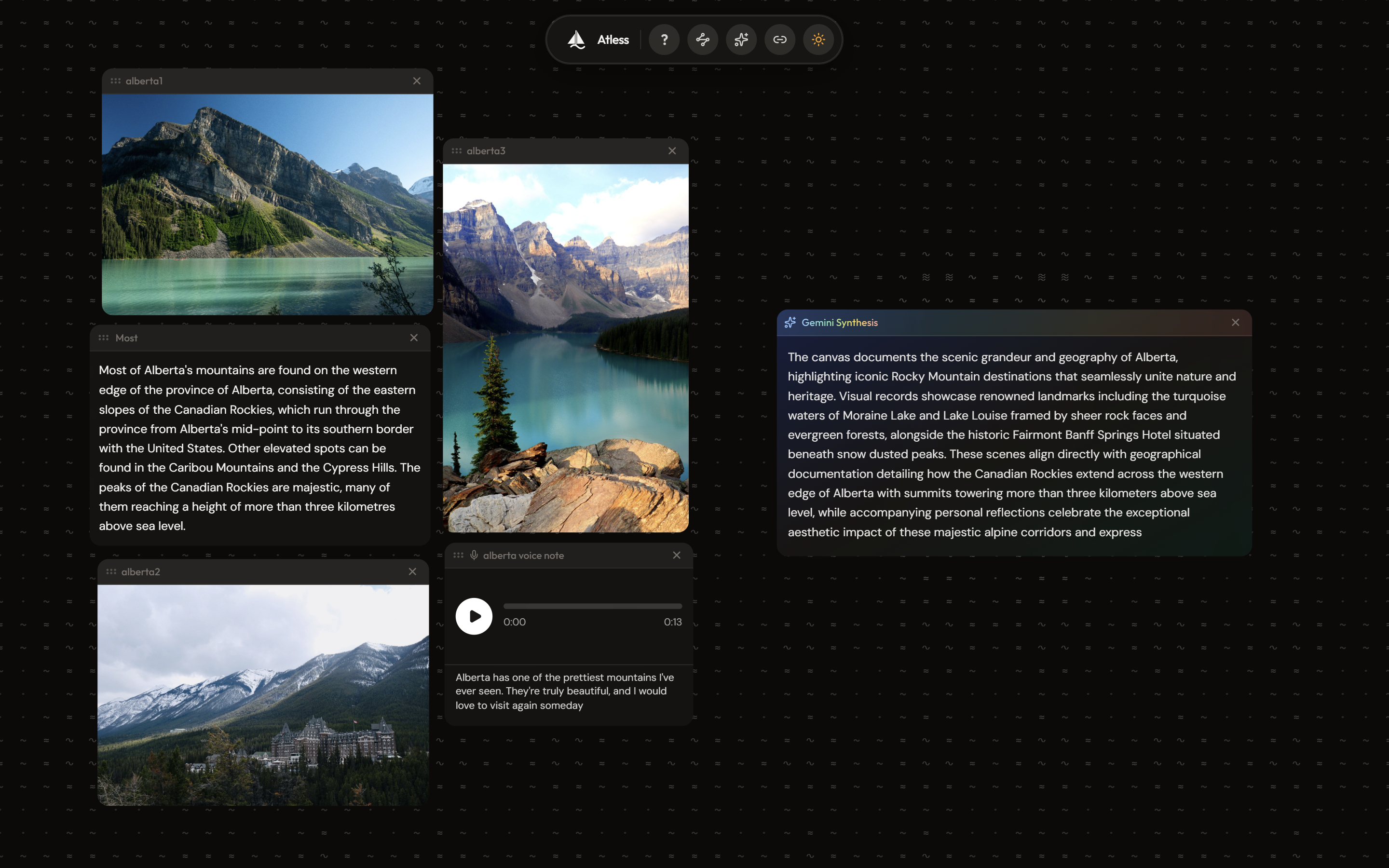
Dark Mode
-
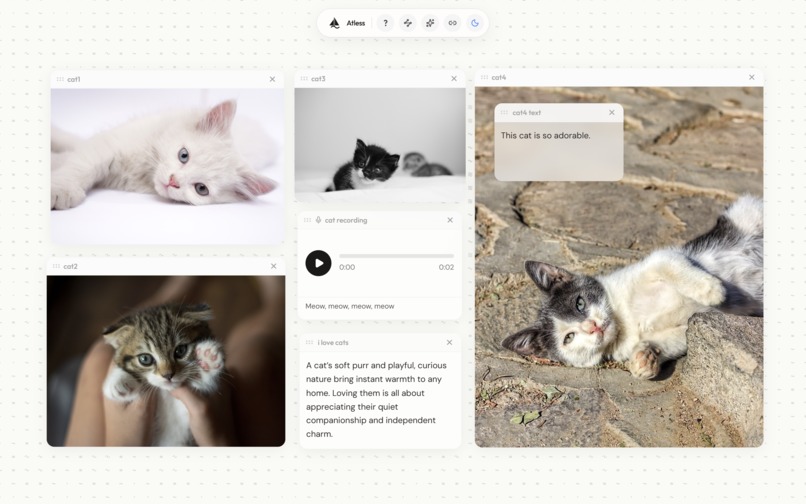
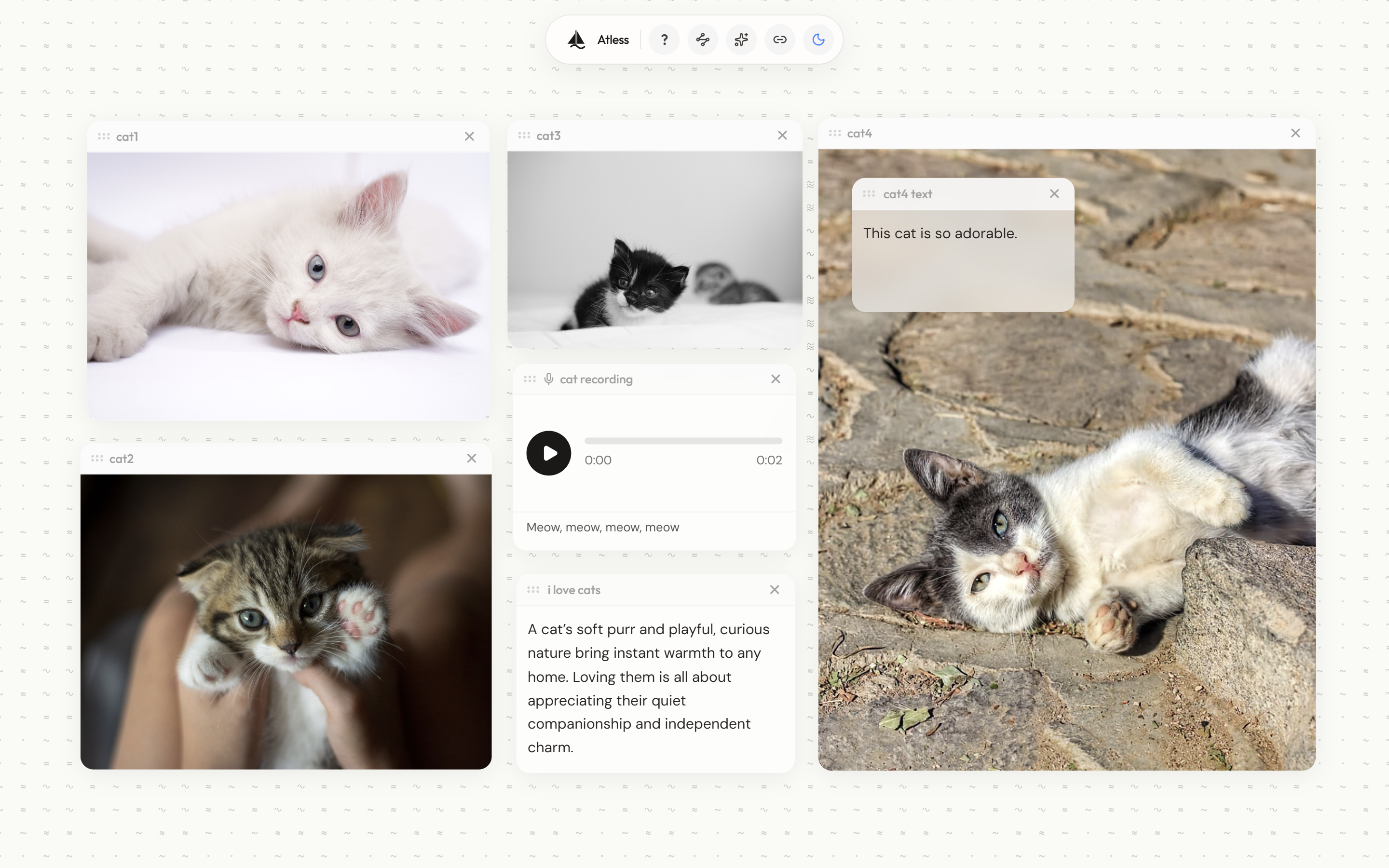
Organize Media
-
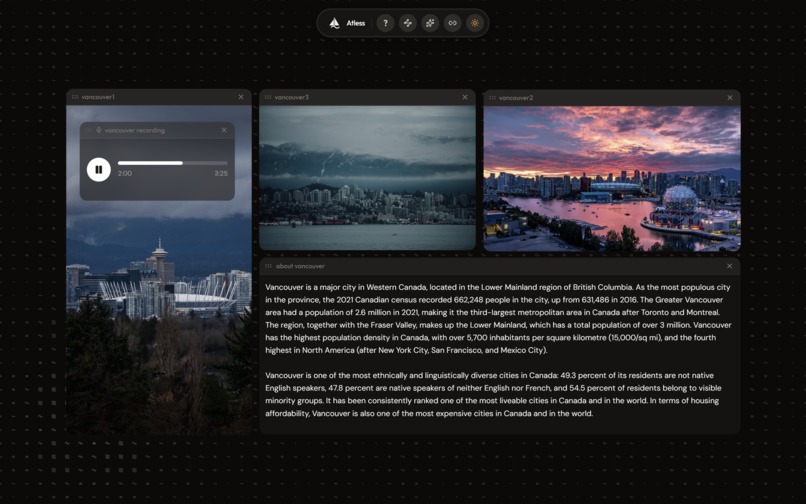
Customize Layout
-
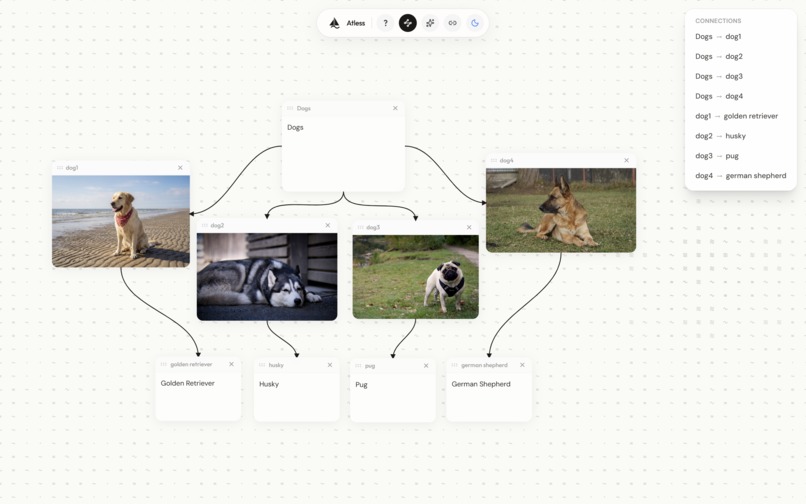
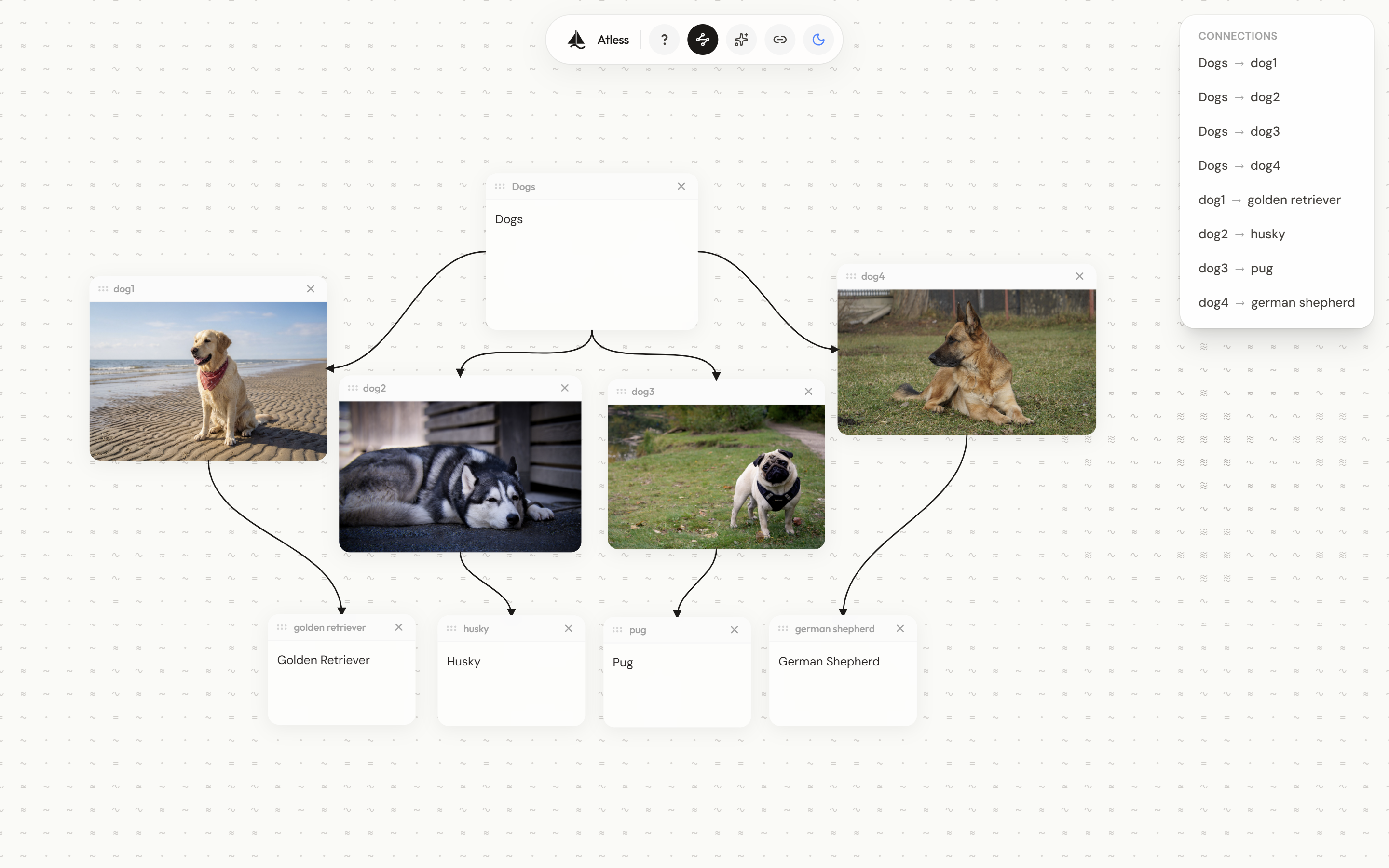
Connect Tiles
-
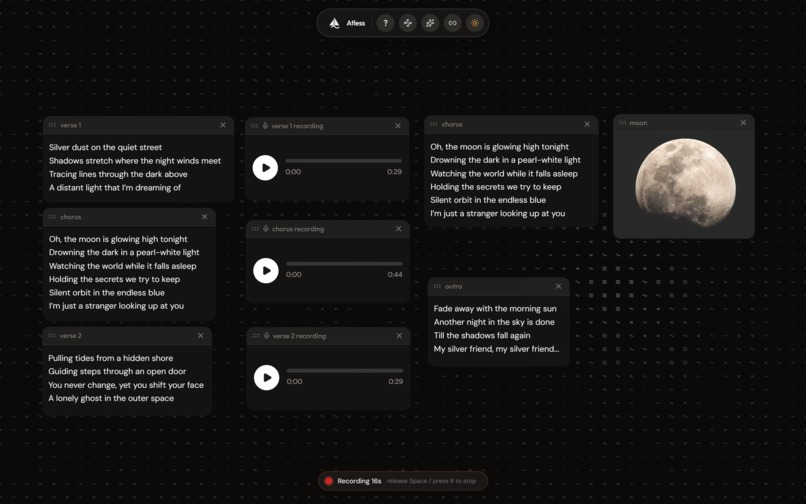
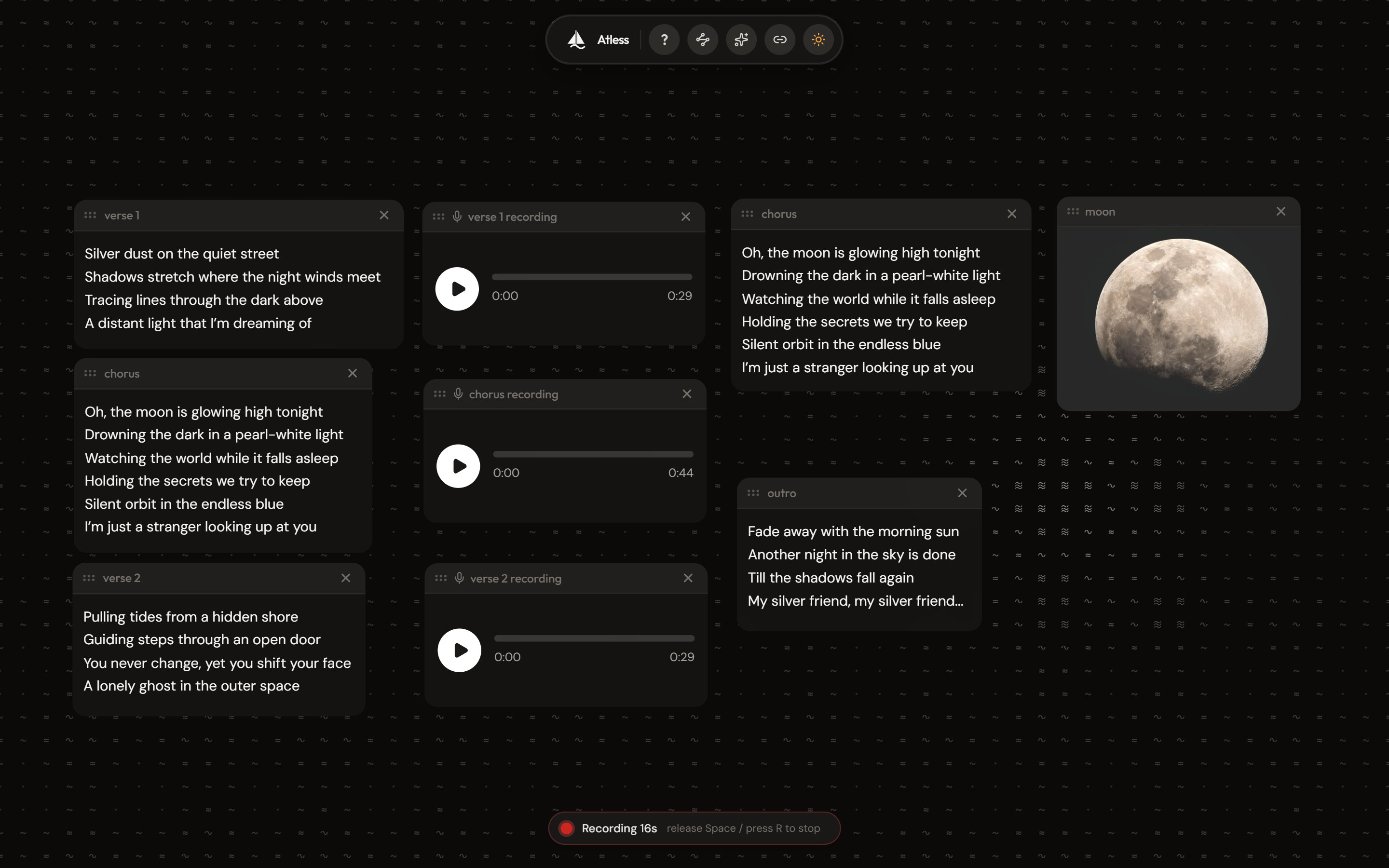
Record Voice Notes
-
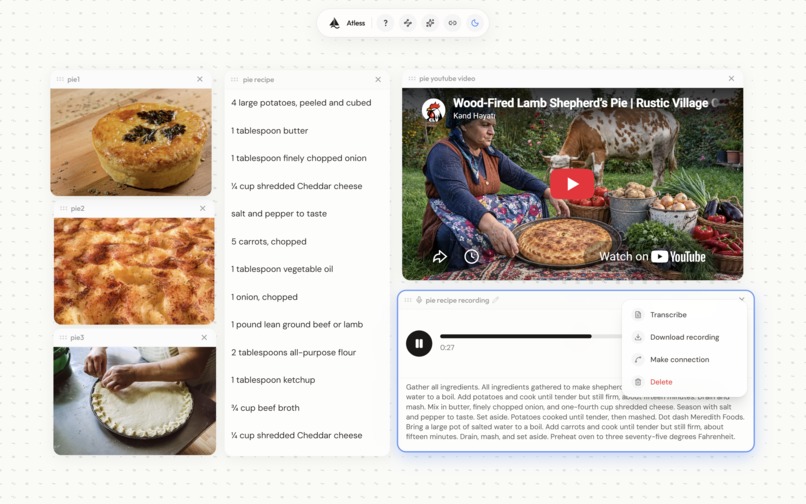
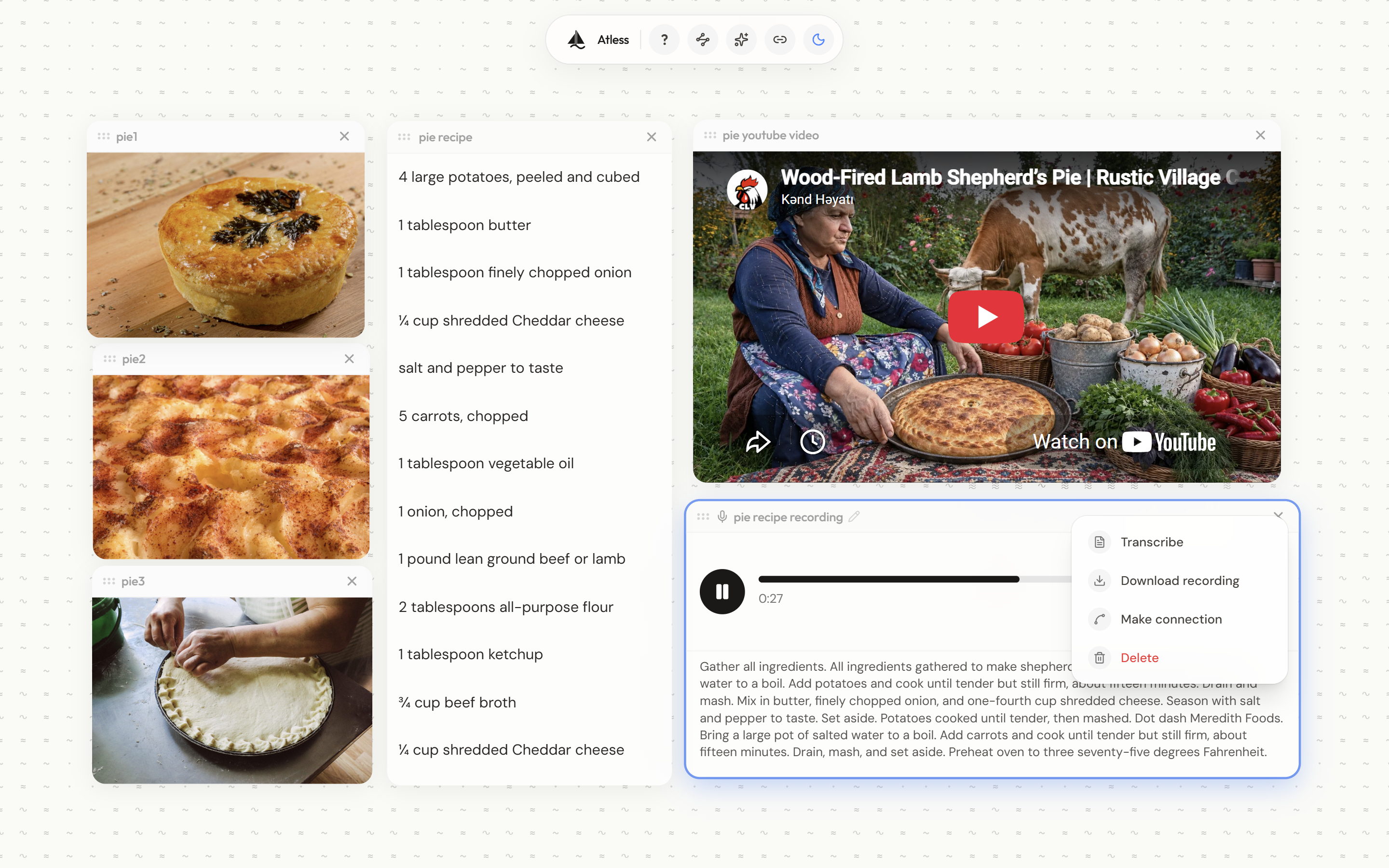
Transcribe Audio
-
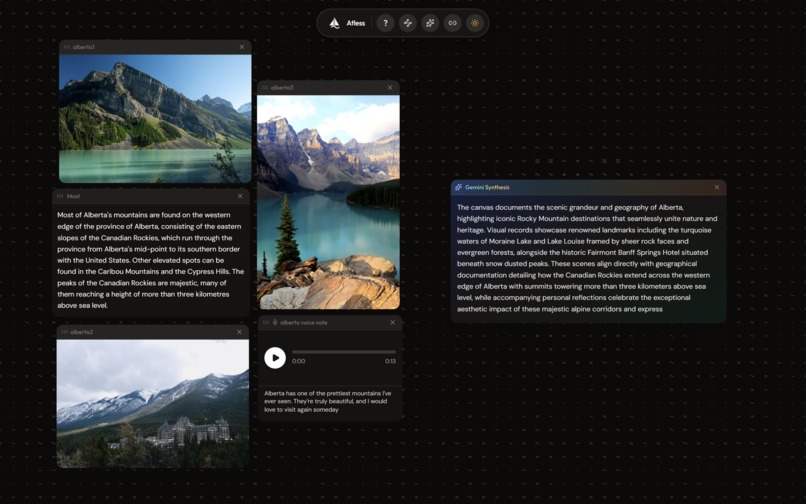
Summarize with Gemini
-
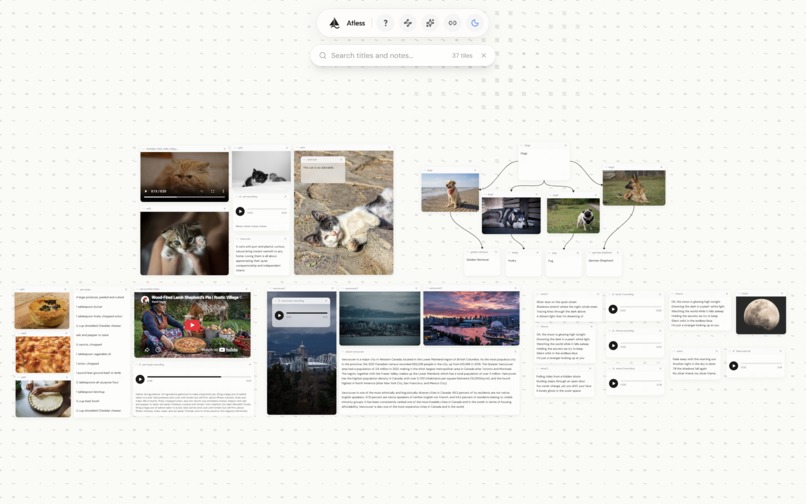
Search Keywords
Inspiration
Most modern visual note-taking and spatial canvas applications have become bloated and over-engineered, buried under endless toolbar menus, distracting ads, and aggressive multi-tier subscriptions. Instead of fostering flow, they create friction. I built Atless to return to first principles: a clean, minimalist, spatial canvas designed for pure productivity and instant creative flow. I wanted a tool with zero clutter, zero bloat, and no unnecessary friction. Just an elegant, infinite canvas where ideas, media, voice notes, and AI-driven insights coexist effortlessly.
What it does
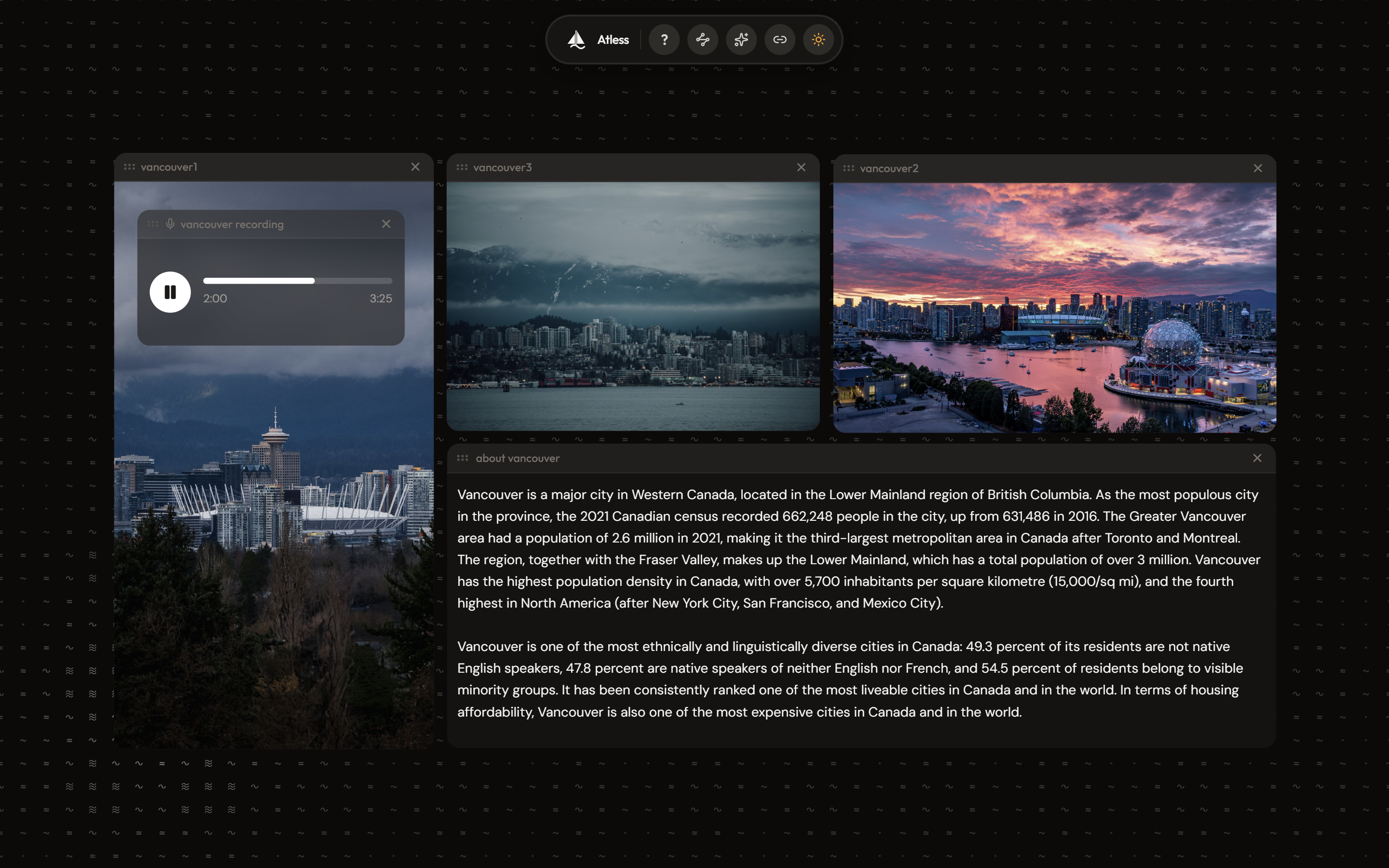
Atless is an intuitive, infinite spatial canvas that lets users visually map out thoughts, organize visual media, record voice notes, and analyze research in real time. Users can drag, resize, nest, and connect text notes, high-resolution media, and audio recordings seamlessly across an infinite grid. Thoughts can be captured on the fly with integrated voice recording, automatic transcription, and instant waveform visualization, while built-in AI models instantly summarize long audio transcripts, extract key takeaways, and synthesize multi-modal research nodes. Users can switch between sleek dark and clean light modes, hide UI controls for immersive focus, organize content using colored visual tags, and instantly export and share visual canvases via custom shareable links.
How I built it
Building Atless required rapid iteration and tight integration between modern web technologies and AI workflows. The application was built with React and Vite for fast hot-module reloading and smooth frame rates across complex canvas interactions, alongside Tailwind CSS and custom CSS variables to handle dark and light themes, fluid drag-and-drop mechanics, and custom audio waveform renderings. Native JavaScript data structures and custom event handlers were leveraged to manage node coordinates, canvas transforms, real-time audio capturing, and dynamic node connections without heavy external dependencies. Furthermore, AI API endpoints were integrated for audio transcription, text summary generation, and interactive node synthesis, all brought together through an AI-assisted development workflow using OpenCode and its Muse Spark 1.3 Free model to rapidly iterate on modular UI components and real-time state syncing.
Challenges I ran into
Translating an idea from my head into a dynamic visual canvas came with subtle edge cases. A single unhandled state update or gesture event during complex node nesting would occasionally break rendering entirely, requiring meticulous debugging, systematic console tracing, and deep inspection of state lifecycles to resolve. Additionally, integrating audio recording, real-time transcription, and live canvas nodes without impacting frame rate or dragging performance proved to be a delicate balancing act. On the administrative side, technical issues with the Devpost client briefly suspended my account without warning right before submission, making the stress of potentially losing the ability to showcase my work test my resolve until methodical troubleshooting got everything back on track.
Accomplishments that I'm proud of
I am incredibly proud to have brought Atless from a blank canvas concept to a fully functional, highly polished prototype in my very first hackathon. I successfully implemented multi-modal node types, including text, images, interactive audio, AI summaries, and tag connections, without compromising performance or aesthetics. Delivering a seamless user experience that feels balanced, modern, and production-ready from day one stands out as a major milestone for this project.
What I learned
Building Atless independently taught me how focused and efficient solo execution can be. While collaborative team environments are incredible for cross-pollinating ideas, taking full ownership of a project from design to code created a deeply personal connection to the work. It forced me to sharpen every layer of my skill set, from visual architecture and state logic to fast troubleshooting under strict deadlines.
What's next for Atless
Looking ahead, I plan to upgrade backend processing to support Gemini Pro for deeper document analysis, vision-based node synthesis, and multi-turn conversational querying directly on the canvas. I also aim to expand static link sharing into multi-user real-time co-creation, enabling teams to brainstorm together on shared infinite spaces. Ultimately, I see Atless evolving into a fully featured productivity suite and startup platform by introducing canvas templates, offline sync, and deep API integrations with external research and developer tools.

Log in or sign up for Devpost to join the conversation.